2023 Oscars Short Films Review: Live-Action

It’s interesting when the Academy deliver their nominations for feature-length films, they’re mostly for English-language films. Most of them being American films. Yet the nominees for the short films categories are often multilingual. For the films nominated for the live-action category, we have  films in French and Danish. We also have three English-language films, but two are from the UK. Not as much foreign language as the animated films but still it tells how these categories are among the most international of them all.

What’s interesting about the short films in the live-action is that many are from up-and-coming directors, as is the common case in this category, but we also have one British film directed by Wes Anderson! Also in the film are renowned star actors like Benedict Cumberbatch, Ben Kingsley, Dev Patel, Ralph Fiennes and Richard Ayoade. The other films also show actors of renown like Brittany Snow, Leif Andree and David Oyelowo. So there’s something about short films that make well-known actors want to pursue them.

Without further ado, here are my thoughts on the Live-Action short films nominated for the Oscars:

The After (dir. Misan Harriman) – Dayo is a successful businessman in London. One day, he drives his daughter to the top floor of a parkade to meet up with his wife. Suddenly a man wielding a knife commits a massacre all over the parkade. The man stabs his daughter to death. The wife, heartbroken, jumps to her death as Dayo fights to restrain him for the police. Time passes. Dayo is resigned from his position and makes his pay an Uber driver. He has cut off all contact from his friends and colleagues and won’t even meet with crisis management counselors. Although he keeps to himself, it’s obvious he’s still hurting on the inside. As he waits for his latest customers at the airport, he takes the picture of his family and sings “Happy Birthday.” The daughter of the family he’s to drive looks very much like his own late daughter. He tries to restrain his emotions at first as the parents make their way to the car. During the drive, the couple are consistently arguing in front of the child, but the daughter is sensing something is wrong with Dayo. Dayo still tries to keep his cool. As he gets out lets the family off at their house, the daughter goes to hug Dayo and Dayo just breaks down. The parents are shocked by what they see and leave him, but Dayo picks himself up.

How do you live again after you’ve lost it all? This is the type of question we don’t normally ask ourselves or don’t want to think about but unfortunately, there are some people who have to do exactly that? This is a story that does a great job of showing the before-and-after of a tragic incident that claims the lives of Dayo’s wife and daughter. Throughout the story, Dayo is the storyteller through his actions and his emotions. Even without dialogue, you can sense what Dayo is saying through his body language. He doesn’t know how to live again or deal with his emotions. It’s right after the breakdown he has after the daughter hugs him that Dayo knows he has to continue on, despite how hard it will be. This film which is the directorial debut film for Misan Harriman tells a gripping story with a profound message. David Oyelowo does an excellent job in his performance in both scenarios of the story. If they could give Oscar nominations for performances in short films, I’d say give one to David!

Invincible (dir. Vincent René-Lortie) – The film begins with a young boy in the driver’s seat in a car named Marc who telephones his mother, but doesn’t say a word. His mother tells him to come home, but police lights flash. Rather than surrender to the police, Marc drives the car off the cliff into the water. Going back weeks earlier, Marc is on a family vacation having fun with his family at the lake. He plays with his little sister but is embarrassed of how she chickens out with her finger over his lighter. This is the last set of fun Marc will spend with him before being sent to the youth detention centre. The first day, Marc can’t stand being in a sweltering room with no way to cool off. He ignites the sprinkler system which the officials put him on a stern warning. A councillor tries to deal with Marc and tells him how he has what it takes to be a smart positive influence on others and can’t understand why he’s always getting in trouble. One day, the official sees progress in Marc and how he helps others. The officials decide to take the boys to a nearby community pool. it appears Marc is having fun with all of them but when the councillor isn’t looking, Marc does his latest escape. Marc runs into a car but as the woman enters a store to call the ambulance, Marc steals it, attempting to take his escape further. As Marc stops, he calls his family. The mother, aware the police are pursuing Marc, pleads for him to return as the sister tests her pain with the candle.

This is a story inspired by a troubled 14 year-old boy from Quebec who killed himself as he drove into a lake in 2008. The story haunted the people in the area for many years. The boy, Marc-Antoine Bernier, was a friend to the director. Here, it appears the director is using his film to bring some respect back to Marc. Marc was an intelligent boy capable of a lot of good, but kept on getting into trouble. We all have known a kid like that in our childhood. Although this is a story inspired by a real-life person and based on true events, there may have been events or happening added to the story. Only Marc knows what really happened. Nevertheless Vincent makes a good effort to redeem Marc from the story he tells and even tries to get us to feel some empathy for him. We’ve all had those years when we were younger when we all felt we were trapped mentally, if not physically. If Vincent doesn’t make you feel empathy for Marc, he does make for an intriguing story. That’s why I make this film my Should Win pick.

Knight Of Fortune (dir. Lasse Lyskjær Noer) – Karl is at a multi-chapel funeral home where he comes to mourn his wife. Left alone, he can’t bring himself to open the casket. He tries to adjust a light but it breaks. Frustrated, he goes to a bathroom where he encounters another widower named Torben. Torben claims he can’t open the casket for his wife. Karl goes with Torben to the chapel and helps open the casket. As Torben attempts to say his “last words,” a family comes in. They’re the real family of the deceased woman including the real widower. They allow Torben and Karl to stay. When the widower is at a loss for words, Torben is able to say the right words as if the woman really was his wife. Karl leaves Torben angrily but he later learns from the funeral directors that Torben lost his wife in a boating accident three years ago and never had a real chance to say goodbye. Outside in a nearby bench, Karl notices Torben. Instead of anger, Karl laughs and invites Torben to the chapel where his wife is. Torben is able to open the casket and Karl is able to say his last goodbyes. As Karl gives his wife one last kiss Torben sings “Knights Of Fortune.”

Another story of loss and coping. Although this story deals with the subject of death in a gentler manner, and even includes humor, We all know that loss is never an easy thing to deal with, but it needs to be dealt with. This is a story of a widower struggling to properly say goodbye encountering an imposter who knows the right words to say goodbye to a woman he’s never really met, but makes like she was his wife. Once Karl learns about Torben that he’s not simply an imposter, but a hurting man who uses funerals of wives to say the goodbyes he always wanted to say to his own wife, could Torben be the very person to help Karl deal with his grief? This is a story of grieving, healing and saying goodbye that is greatly different from other stories. Nevertheless it does offer a message of healing and hope. It’s ironic how this imposter is exactly what Karl needs to properly deal with is loss and say goodbye, and a friendship that really shouldn’t be, happens.

Red, White and Blue (dir. Nazrin Choudhury) – Rachel, a waitress in a diner, looks at a pregnancy test and sees a positive result. Rachel is a single mother who has difficulty to support her two children. She also lives in Arkansas where abortion is illegal, thanks to the overturning of Roe v. Wade. She plans a trip for an abortion procedure in Illinois where it is legal, but it’s more than she can afford. One day, a woman customer who somehow knows what Rachel is dealing with leaves her a tip which makes up the remainder for her abortion trip. Soon, she leaves her son Jake with a friend as she takes her daughter Maddy on this trip. This is the first time out of Arkansas for both of them. Before they go to the clinic, they go to a carnival as it’s just before Maddy’s birthday. Maddy wants a merry-go-round ride, but it’s more than Rachel can afford. She agrees to one ride and Maddy chooses the elephant. At the clinic, Rachel learns she’s late for her appointment but through past recollections and as the receptionist learns the dirty facts, she tries to make it urgent.

No doubt this story is about abortion. Especially in post-Roe v. Wade United States. The thing is this story is more than that. You know the story is about the pursuit of an abortion, but it’s not what you originally think at first. You think it’s about an impoverished mother getting an abortion because she’s two-and-through, but things change as you learn more information. You wonder why on earth would a mother take her young daughter on an abortion trip? Soon you learn there’s more to the reality of unexpected pregnancy and abortion that meets the eye. Including a lot of upsetting truths. It’s also surprising how in a story that has a theme that hits close to home and presents a story that many would find upsetting, it is still able to have a heart-warming ending that works. That is something in film that is very tricky to do, but Choudhury accomplishes it!

The Wonderful Story Of Henry Sugar (dir. Wes Anderson) – Based on a short story written by Roald Dahl, Henry Sugar is the pseudonym of a wealthy bachelor who loves to gamble away his inherited riches. Thing is he never seems to have enough and wonders how can he get more money? He learns the legend of a man from India named Imdad Khan who learned the fine art of levitating and seeing with is eyes closed, thanks to the teachings of a Great Yogi. Thing is as the doctors were studying Imdad, Imdad tells his story and dies suddenly. Henry tries through great lengths to master this technique through all he can learn. Once he finally masters the sight trick, he goes out gambling and wins big! Problem is all this money isn’t making him any happier. At first he thinks the right way to give the money away is to throw it off a balcony. After it causes a riot, police recommend Henry develop a better method. Henry then spends the next twenty years traveling the world, gambling, and donating his winnings to hospitals and orphanages.

This is the last of the five shorts shown in the shorts.tv reel. After seeing four stories that were either depressing, too serious or had dark subject matter, it was refreshing to end the reel with a light-hearted comedy. The story succeeds in making the tale amusing. Already we have a major director directing it and four major actors — Cumberbatch, Kingsley, Fiennes and Patel — acting in it. Nevertheless the story telling, set changes, and the acting of all make it a delight to watch. It makes for a “guilt-free guilty pleasure” as I like to call such things. That’s why I make this film my Will Win pick!

And there you have it. Those are my reviews of the five films nominated in the Oscar category Best Live-Action Short Film for this year. That also completes all my reviews for the Oscar-nominated short films. Those short film categories are usually the hardest to pick a winner. You think you know what will win, but end up surprised in the end. We’ll see how it all goes on March 10th.
VIFF 2015 Review: Hadwin’s Judgement

Hadwin's Judgement is about Grant Hadwin and why he committed his act of what some would call 'ecoterrorism.'
Hadwin’s Judgement is about Grant Hadwin and why he committed his act of what some would call ‘ecoterrorism.’

British Columbia, especially Greater Vancouver, is known for people using radical and even destructive methods to make their statement heard on an issue. One such person who’s lesser known in Grant Hadwin who cut down a beloved tree on the Queen Charlotte Islands in 1997. The documentary Hadwin’s Judgement traces Hadwin’s path from logger to radical to his mysterious disappearance.

The film is almost like a biography of Grant Hadwin and the moments in his life that changed him forever. Grant Hadwin was born in West Vancouver. He came from a logging family and eventually found himself working on the Queen Charlotte Islands. However he soon developed an anger when he saw how much forest was being cut down from the island and how fast with the modern cutting methods. He writes letters of complaints to businesses. He even tries to start his own business which makes products out of decayed wood or wood long cut down but it doesn’t succeed.

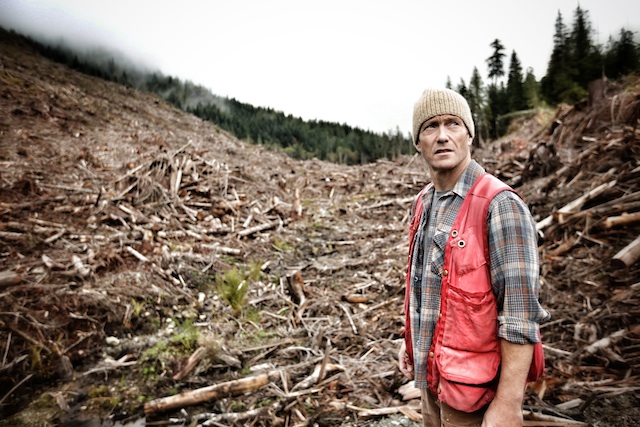
Doug Chjapman plays Grant Hadwin in re-enactments with no dialogue but says it all with his mind.
Doug Chapman plays Grant Hadwin in re-enactments with no dialogue but says it all with his mind.

The deforestation of the area along with his mental instability takes his toll on him and he cuts down the sacred tree of the island– the 1000 year-old Kiidk’yaas (The Golden Spruce)— to send his message. He awaited trial with many a person angry at him. However Grant pursues a kayaking trip up the Boeing Strait. He is never seen again although his broken kayak, letter in lamination and tools have been found intact. He has still never been found dead or alive.

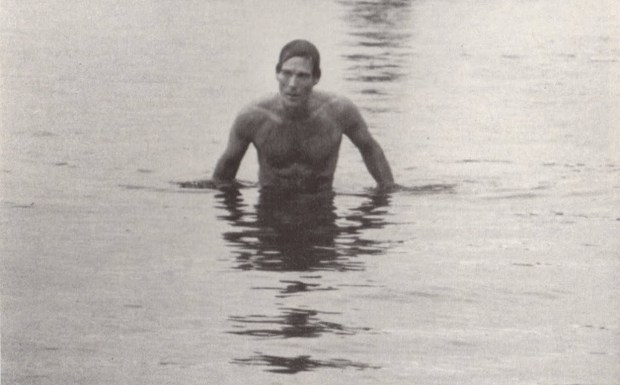
The film is mostly a documentary featuring people who mostly knew Grant during his lifetime. It features co-workers to friends to a local photographer who photographed him swimming just before his disappearance to John Vaillant who wrote an award-winning book on him. It also interviews people of the Haida Gwaii who knew the tree. The Haida Gwaii consider trees to be sacred so it’s no wonder the chopping of that tree would hurt them deeply.

However the film doesn’t just present people interviewed. It also provides people first-hand knowledge of the Haida Gwaii people, their legends and their beliefs. It provides insight to Grant’s feelings around the time and includes narration of the letters he wrote in his protests. It even includes moments in Grant’s life re-enacted by actor Doug Chapman playing Grant. Doug never utters a word of dialogue in his acting but it’s like you’re reading Grant’s mind just with the looks on his face. You could see why Grant would lose his patience with what was happening and do what he did. It still remains a question. Was it Grant’s attitude to the deforestation of the area? Or was it a mental imbalance? Or both? Even I myself wondered if he valued trees so much why would he cut the sacred Golden Spruce down? I later assumed Grant did it possibly to say to all those logging companies: “You want wood so bad? Here’s your wood, bastards!” That’s my belief to why he did it. People snap.

Despite the storytelling, narration and re-enacting of Grant’s moments, the best attribute of the documentary has to be the cinematography. Right from the start, you see images of the rain forest, an aerial view of Queen Charlotte Island and a panoramic shot of the forest. Already images of beauty that tell what this island is all about and why the island’s natural features are important. It’s not just beautiful images like those that make the film but the uglier images too. The film includes footage of the tree cutting mechanisms through all angles. You can see just how they can cut down a whole tree in seconds. You can see why through such mechanisms looms the threat of deforestation. So much cutting in so little time. The film also shows the ugly aftermaths of all the trees cut down. There’s one panoramic view that not only shows a wide forest but of a cut-down area. That’s one of the many eyesores. Other eyesores include closer shots of land that used to be forests, images of piles of dry dead wood and the biggest of all: the Golden Spruce down on the ground with its leaves soaking in the river. Even single images like that of a freighter full of logs tells the story of the land and why Grant Hadwin was compelled to make such a judgement. Shots that included Grant also provided for the storytelling including the site of his broken kayak.

Sasha Snow did a great job in creating a documentary that gives people’s opinions of Grant through all angles and even re-enacts some of his key moments. Sasha not only includes those that know him but the local Haida Gwaii and author Vaillant. Sasha made a lot of smart choices in telling the story such as having an actor act out Grant’s moments instead of showing photographs. In fact we only see one photograph of Grant in the film right at the very end.

Hadwin’s Judgement is more than a documentary. It takes you inside the person, the land, the people of the land and the economic pressures of the times. I don’t know if the film completely supports Hadwin’s decision but it provides the reasons why he did it.


Movie Review: Frozen

Frozen

I’ll admit it’s rather late for me to be reviewing Frozen. I wasn’t interested in it at first. However its success at the box office coupled with its Oscar buzz helped me change my mind.

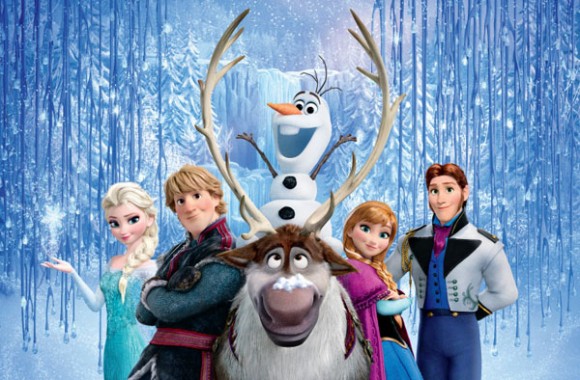
Normally I’d give a description of the film in my reviews but I won’t here since most of you have already seen Frozen by now. I’ll just go in to what I have to say. There are a lot of unique and great aspects of this movie. First is its unexpected twists. You’d first think it would be Kristoff that would save Elsa, Anna and the kingdom but it turns out to be Elsa. Already there are a lot of writers and bloggers comparing Elsa to Merida in Brave in terms of heroine status. I’ll bet you never thought Kristoff would be one of the bad guys. Second is its animation that truly mesmerizes. I was dazzled when I saw Elsa’s snow-spell and even the ‘ Castle Of Ice’ created on screen. Watching Frozen was like being taken to a world of ice at times.

Thirdly is the musical aspect of the movie. For many decades, even as close to about twenty years ago, animated movies were commonly musicals and excelled in telling the stories with catchy songs. From Someday My Prince Will Come in Snow White and the Seven Dwarfs to Hakuna Matata in The Lion King, you could always rely on an animated feature to deliver charming music. When 3D became the staple of animated features, the features were predominantly non-musicals and the movies were more focused on the story and the animation. When was the last animated feature done as a musical that dazzled you? Yeah, that far back. Frozen is the first 3D animated musical that has won the movie-going public by storm. It’s refreshing to see the musical aspect come back in animated movies and even added to 3D animated movies successfully for the first time. I think the success of Frozen will churn out more musical-styled 3D animation features.

Frozen is a welcome relief in terms of animated movies for 2013. This year was a rather quiet year in terms of animated movies. Sure this summer featured the excitement of the comeback of the monsters of Monsters University and Despicable Me 2 took ‘minion mania’ to new heights but there was nothing new to create new buzz. Nor was there anything with writing that stood out. I’m sure that became apparent to a lot of my subscribers when I published my blog about Pixar appearing to have lost its spark. Frozen may have come late in 2013 but it sure came to the rescue. Its excellence is not just in having a thrilling story but also in having excellent animation.

Also Frozen has a bonus aspect: catchy songs. It’s not just something that’s been missing from animated movies but movies in general since the new century. You may remember before the 2000’s came there were many catchy songs that came from movies. Since 2000, the presence of a catchy song or even a hit song from a movie is something that has been very rare. I think the last hit song from a movie before Frozen was Slumdog Millionaire’s Jai Ho. I was especially surprised during 2006 when Dreamgirls was in theatres, none of the songs were released as singles despite Beyonce’s chart-topping prowess at the time. I know most of North America was in a hip-hop coma at the time but still… Frozen helped bring back the catchiness of movie music. Already two versions of Let It Go are on the charts right now: Idina Menzel’s version is currently #18 on the Hot 100 and Demi Lovato’s version is at #56 having peaked at 38. Recently Do You Want To Build A Snowman? started hitting the charts and is now at #57. I guess it’s no wonder that the movie has been re-released in a sing-along version.

It’s hard to pick who first to compliment. First off, I’ll say the animation was top notch. The Walt Disney Animation Studios did an excellent job in creating a charming trip to the past and a mesmerizing world of ice. Secondly, kudos should go to Christophe Beck and Kristin Anderson-Lopez for providing music that was not only entertaining but the catchiest movie music in years. Thirdly a great job in the acting and singling by both Kristen Bell and Idina Menzel. They’re already established actors and they’ve also had musical experience but this has to be the best combined singing/acting efforts from both of them. The supporting actors were also great in their roles too including Jonathan Groff and Santino Fontana. However it’s Josh Gad that steals the show as the goofy Olaf. Finally great acting/writing efforts from Chris Buck, Jennifer Lee and Shane Morris. It was something to take Hans Christian Andersen’s The Snow Queen and turn it into an animated musical. They really delivered a winner. In fact you remember how Disney movies would give animated adaptations of children’s stories like Snow White, Cinderella, Pinocchio and The Lion King and turn them into beloved classics? I think Frozen is destined to go that same route over time.

Funny thing about Frozen is not just simply its current total success with its box office run but its lack of success when it first started. I’ve noticed on Box Office Mojo that it was only on one single theatre when it opened because it didn’t want to compete with the opening of the latest Hunger Games movie. It got better the following week when it was spread across North America and grossed $67.4 million that weekend but it was still in second to the Hunger Games by $7 million. The funny thing is while most movies came and went during the six weekends since, Frozen stuck around in the Top 3 and was even #1 on two different weekends. It was even #2 the weekend of January 31-February2nd: its eleventh weekend. Okay, the sing-along version release may have something to do with it but it just goes to show its lasting power. In fact it wasn’t until this weekend, its thirteenth, that it finally left the Top 5 and currently sits at #8 with a total gross of over $375 million.

Frozen has been the animated movie both moviegoers and fans of film alike have been waiting for all of 2013. It was definitely worth the wait because it delivers in terms of quality and entertainment value. Maybe I should go back for the sing-along version.

A Tale of Two Snow Whites: Seven Dwarfs vs. Huntsman

Most of the time I do reviews of movies. This article is different as I do a side-by-side comparison of two versions of the same story. There’s Snow White And The Seven Dwarfs that generations of moviegoers are familiar with. There’s now Snow White And The Huntsmen that aims to be a modern version of the famous fairy tale character. The question is how do they compare side to side?

First off, let’s run down the first nitty gritty factors of the movies. Snow White And The Seven Dwarfsis more than just a delightful animated

Some present moviegoers would view Disney’s Snow White as too naive.

movie. It’s a part of filmmaking history. It’s the first ever feature-length animated movie. And it was made against incredible odds. Walt Disney took five years to make this movie as it involved a lot of drawings and a lot of effort. It was expensive for its time at $1.5 million and Walt had to take out a lot of loans for this movie. And during the Great Depression to boot. In the end, it became a huge hit in 1937 grossing $8 million worldwide and world propel further animated movies in the future. To this day the American Film Institute still ranks it as the Best Animated Movie ever.

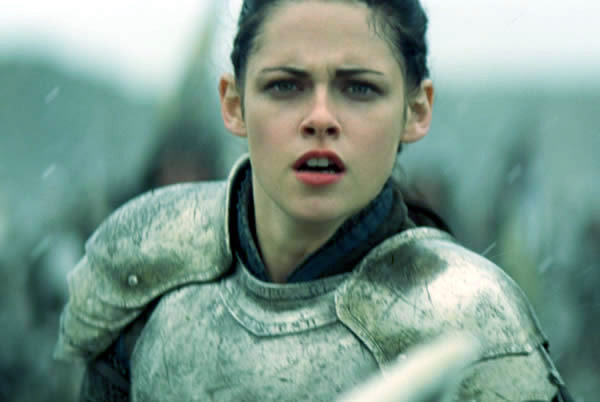
Now Snow White And The Huntsmen isn’t really much of a filmmaking breakthrough. It’s a life-action version of the Snow White story, which has been done before. It features familiar actors Kristen Stewart, Charlize Theron, Chris Hemsworth and Sam Claflin. While this film is not much of a cinematic breakthrough, it is a personal breakthrough for director Rupert Sanders. He has directed commercials and TV episodes in the past. This is his first direction of a feature-length film and it cost $170 million to make. It has so far grossed $152 million at the North American box office: $370 million worldwide.

To compare the actual Snow White character, let’s give a bit of a rundown in terms of the times. First off Snow White And The Huntsmen is done in the present by modern-day director. Snow White And The Seven Dwarfs was released in 1937 and done by Walt Disney. You can be sure both films would be reflective of the ideal female roles for the two main female characters and both would reflect the directors’ visions at the time. The Disney Snow White has a very happy and cheerful attitude but is very naive to the threats that surround her. She lost her parents and is exiled in the woods but still holds her spirits high even after the queen’s assassin tells her to flee. The modern Snow White, played by Kristen Stewart, is a girl scorned. She has had enough of the imprisonment and wants out. However she feels there’s no way out. It isn’t until after she sees an opportunity escape and seizes it that it’s revealed she has a determination in her to fight to be free, even if it means walking through castle sewage to get it.

The reflections of the different types of Snow White characters is also reflective in their biggest desires. Disney’s Snow White wants to be free but she feels she found it in living with the seven dwarfs. Her biggest desire is to find her ‘prince’ as evident in the song ‘Someday My Prince Will Come’. Modern Snow White wants love too but she wants her freedom more. She knows she has to continue fighting even after she is free from the prison. She knows the queen and her men and she knows the threats will continue as long as the queen is alive.

The Snow White of Kristen Stewart could be seen by some as too much of a ‘warrior princess.’

Both Snow Whites are subject to negative opinions from some about the way they’re depicted. First off modern audience goers would find the Disney Snow White, voiced by Adriana Caselotti, as too naive for the present and very lacking in ‘street smarts’. Kristen Stewart’s Snow White could also be subject to negative opinions as Disney fans may feel she lacks the cheerfulness and many other moviegoers could think she makes Snow White into Xena: Warrior Princess.

The character of the queen has a common similarity: beauty. Walt Disney wanted a beautiful queen in his film as part of the reflection of the queen’s desire to be the ‘fairest of all’ and her evil envy of Snow White. We shouldn’t forget that sometimes evil can be disguised as something beautiful. The modern evil queen is given a name, Ravenna, and is played by Charlize Theron who is renowned for her beauty. The dissimilarity between the two evil queens is that the Disney queen is seen as very stockish in her desire to see Snow White dead because of her envy, and only because of that. Ravenna is shown as the killer of Snow White’s father, whom she killed on her wedding day and had Snow White imprisoned. It’s the familiar evil stepmother role in fairy tales. Ravenna is shown not only as a queen of envy over Snow White but as a victim herself. She learns from the mirror that has to destroy Snow White for the sake of her immortality or she will be the mortal one. Even giving Snow White the poisonous apple would show two differing means of disguises. The Disney queen would take a potion to tune her into an old lady. Ravenna would metamorphose into William, son of Duke Hammond, to give Snow White the fatal apple.

The other notable difference of the two Snow Whites is the differing their main supporting character, or characters. In Disney’s Snow White, it was the seven dwarfs. All seven were cute with cute names and charming personalities. They worked hard but they sang, danced and lived cheerfully. They were first surprised to see Snow White and thought of her as an intruder but would come to welcome her, love her, and even avenge her against the queen after she gave Snow White the poisonous apple. In the modern Snow White, the dwarves are seen as a minor supporting character in the movie who assist with the Huntsman in her well-being and warriors with Snow White and the Huntsman against the queen. It’s the Huntsman in the modern Snow White who’s the main supporting character now.

The Huntsman in the modern Snow White is under command from the queen to kill and receive the hand of her brother’s deceased wife in marriage. He learns from Finn, the brother, that it was a false promise and then becomes Snow White’s ally helping her escape with the help of women disfigured by Ravenna and the help of the seven dwarves. The Huntsman is the man who kisses Snow White back to life but it’s not happily ever after yet as they must battle Ravenna before Snow White can be married to the Hunstman. In Disney’s Snow White it is the prince whose kiss revives Snow White and marries her. The Huntsman is only seen at the beginning as the one who tries to kill Snow White but can’t and gives the queen a pig’s heart to trick her into thinking Snow White is dead.

It’s not just the characters themselves that make the two Snow White movies different but also the stories themselves. The beginning especially. In the Disney movie we’re given a storybook narration of what has happened in the past and leads to the beginning with the queen at the mirror saying “Mirror, mirror on the wall…” Snow White and the Huntsman goes back to when Snow White is a young girl and her favorite playmate is the Duke’s son William. Ravenna is prisoner of the Dark Army rescued by the recently widowed King Magnus, father of Snow White. King Magnus is actually killed by Ravenna after he marries her, imprisons Snow White and seized control of the kingdom leaving it lifeless and full of sadness. Even the setting of the forest is different as Disney shows a charming forest full of happy creatures while the modern Snow White shows a nice forest that’s not immune by threats like insects and other dangers.

Snow White And The Seven Dwarfs and Snow White And The Huntsman are two differing movies of the same story. As for which is the best depiction, I can’t say because I have not read the original Snow White story by the Brothers Grimm. Nevertheless both have their entertainment values and one would appeal over another depending on their movie preferences.