VIFF 2023 Shorts Segment Review: Forum 2

With me having to spend the entirety of VIFF in Vancouver this year, I have better chances of completing my three annual VIFF goals. I was able to complete the second of my goals: see a segment of short films. I did so at a “Film Forum” titled Forum 2. Not the most original of titles, but the stories made up for it. On top of it, they’re all from Canadian film makers. Definitely worth checking out:

-Sisters (Ontario – dir. Marisa Hoicka): The film begins with a 1960’s look and it appears to be an instruction film on how to be a “proper woman.” Instead the film is the narrator talking about how her “sister” taught her how to be a powerful woman with what she said and how she lived.

This is a unique short film. It comes in the guise of your stereotypical instructional film on how to be prim and proper, but instead is a story about empowerment. Throughout it all, it never loses that 60’s feel it intends to have. Very good film that does a lot in its brief time.

-Four Mile Creek (Quebec – Dir. Ryan McKenna):****The story begins with the retelling of the Cormier family as they go through Ontario until their eventual settlement to La Salle, Manitoba. Their journey is in the mid-1880’s and during a time of rampant smallpox. While in Ontario, the Cormier children were hit and their eight year-old daughter Aurore died. She was buried in the plains near their house and outside Kenora, Ontario by her father because a priest would not perform the blessing. A century later, a group of University of Winnipeg archivists, including family and one claiming to be haunted by Moise Cormier’s ghost, go on a mission to research and uncover Aurore Cormier’s grave.

This is a docudrama that combines recalling of letters from the Cormier’s to re-enacting of the moments of the family and their smallpox ordeal to those involved in the uncovering telling their story. It’s two films in one and tells a revealing historical story known to few. Impressive and creative.

-Cloud Striker (B.C. – dir. A.W. Hopkins): At an Indian Residential School in 1931, four male students are being punished by the nun. Their crime: speaking in their Indigenous language. One student, Elijah Cloud Striker, is defiant and even uses his Indigenous name in front of the nun. She slaps him and gives him the hardest of the punishment. A man comes to visit. He’s Chief Cloud Striker and he’s looking for his son. Both the nun and the priest try to persuade him to stop but the Chief punches the priest in the face after he hurls the chief a racist slur. The Chief and Elijah make a run for it. Later while resting in a remote area, they talk and wonder why their people aren’t angrier about this

The treatment of Indigenous peoples through the residential school system has scarred our nation like nothing else. Especially since Canada has been dealing with the ugly aftermath this past half-century. It’s unclear if this is based on a true story or if this is a story of an incident the filmmaker wishes had happened. The film is good at retelling ugly things that happened at residential schools and how it hurt peoples. The ending talk between the Chief and Elijah gives an impression of how a lot of Indigenous people feel about this system. That mention from Elijah of two boys being buried is another ugly reminder. Even though the residential school system completely ended in 1996, I’m sure there’s a lot of harbored anger with the system, the Roman Catholic Church, and the Canadian government. This story tells a lot.

-Conviction (Alberta – dir. Bruce Thomas Miller): A former convict named Joseph, an Indigenous man, is released from prison after years of incarceration. He is given a job as a custodian at a thrift store. He is given residence with a man maned Quincy who himself was a former convict and is to look out for him. At his job, he has to deal with co-workers who find him suspicious, a second-in-command who wants to be at odds with him, a customer who hurls an insult at him and traumatic memories of his crimes and his incidents in prison. At the end, Quincy reminds Joseph of what he himself had been through and he’s someone for Joseph to turn to.

We go from a film about the ugliness of Residential Schools to a film about the aftermath. Over time, it became evident the residential schooling system was a terrible idea as it led to substance abuse, homelessness, substance addictions, suicides and crime among the Indigenous people’s. Joseph is like a lot of Indigenous men who want to leave their ugly past behind and want to start a new life, but doesn’t know if he can. The director/writer wrote this script as he himself was going through his own healing of PTSD. It speaks volumes of the struggle they have to go through. Sometimes, Joseph doesn’t know if his freedom is a bigger hell than prison and may feel it’s better to return. At the same time, it’s a reminder there is support along the way from those who also went through what they went through. Excellent story that’s well-acted and gets one thinking.

-Black Box Investigations (B.C. – dir. Paige Smith): A woman buys a disposable camera. She takes all sorts of pictures of her, of her surroundings and of various angles. She buys another with a flash. Again all sorts of weird photos, including inside her mouth. The photos are for all to see.

This is the kind of short film I’d expect to see in a shorts show of MODES. Although I didn’t exactly like this short film, I give the director credit for wanting to play around and want to do something creative and fun.

-Autre Chose (Quebec – dir, Etienne Lacelle): A biker is repairing his motorbike. He had a bad crash the day before. He has a hard time repairing his bike but succeeds. He wants to go for one last ride in the wild. On thing. Just before he leaves, he comes across a strand of long blonde hair on him. It’s a strand of his late girlfriend who died in the crash. He puts it in a small bag and heads off on his bike with a rifle. He drives through the terrain but gets his bike stuck. He tries to camp out and throws his girlfriend’s hair in a bonfire. While out walking the wilderness, he contemplates shooting himself. He doesn’t and moves on. As he comes across a lake, he cleanses himself in it. But as he drives off, he comes across her hair again.

This is a unique short film with no dialogue and lets the images and the sounds tell the story. You can get a sense of what is happening with the story. The images of the story even gets one asking questions. Like did he kill her during the accident? The thought of suicide and the bathing in the lake just after could mean it’s showcasing a chance at redemption. The ending can also send a message that even if redemption is possible, he still has to deal with the unresolved aftermath. The film really gets you thinking and will leave you with questions of your own..

-The Great Kind Mystery (Newfoundland =dir. Ella Morton): Images of Daniel’s Harbour, Newfoundland and its surrounding area are shown as young artist Amy Hull, who is of Mi’kmaq and Inuk descent, tells her story. The stories she tells are of the area of Daniel’s Harbour and its history, her denial of her Indian Status while she was attending university, and of the pride she feels of her ancestry.

This is the third Indigenous-themed short that was part of the segment. The first dealt with oppression of the past, the second dealt with the aftermath and this short deals with the current systemic racism in Canada’s Indian Act. This film is a reminder that Canada still has a long way to go to do things right and drop its racist systematic treatment of Indigenous peoples, especially in these post-Residential School times. This documentary is also a film that inspires hope. Amy is young and resilient and refuses to let racist politics destroy her pride or her identity and pursue her artistic dreams. She embraces her identity despite what has happened to her and won’t bow down. This film, and Amy’s story, is a ray of hope for the future.

-Element (Quebec/Ivory Coast – dir. Will Niava): It’s a hot summer day in Abidjan, the capital city of the Ivory Coast. A group of four young thugs have a hard time trying to make money. Their current business is not doing so well so they decide to get involved in illegal things. As the money gets better, things make a turn for the worse such as in their unity, the leader’s relationship with his girlfriend and even his soul. He even comes across a vision of himself of him dead and all of his loved ones at his funeral. It’s there he emerges from the ocean water and starts a new life, but not without something tragic at the end.

This is a unique story as it tells the story of pursuing life in the fast lane with the mix of spirituality. What the leader experiences is consequences both in the earthly world and the spiritual world. The inclusion of the spiritual world adds to the film and shows a form of spirituality rarely seen by others. It’s rare to see something like that in a film about young thugs trying to live fast. Overall, a great unique drama.

That’s what it was. Eight shorts from eight Canadian directors. Two were from BC, three were from Quebec. Three were from female directors and three were Indigenous themed. Most were dramas, some were experimental and some were even documentaries or docudramas. All of them are unique in the stories they showed and what messages they want to send. Also all of them showcase directors with a promising future.

Those are my thoughts on the eight short films of Forum 2. Some I liked, some I found intriguing, a few I didn’t. All of them did showcase the director’s works and abilities very well.


VIFF 2023 Intro And Review: The Promised Land (Bastarden)

Mads Mikkelsen plays Gustav Kahlen, a settler in 18th Century Denmark in the film The Promised Land.

VIFF INTRO: Normally I do a separate blog for VIFF when it opens. Since the Festival ended on Sunday the 8th, I’ll do a brief summary here. The Vancouver International Film Festival returned. This year, there were no longer films to stream as VIFFaccess is no longer. It became a case cinemas are working to bring crowds back to the theatres. Same with VIFF as its films were shown at seven different facilities. There was a reduced number of films shown at 140. Now that the pandemic is almost over, the arts communities have to downsize in order to rebuild itself. Nevertheless a lot of great films to see coming from 73 nations. A wide selection of Canadian films, Indigenous films, LBGT-themed films, documentaries and an excellent number of films directed by women are yours to watch. And even after the Festival with VIFF repeats just after! The Festival may be over but the reviews are still worth posting as the films could return to the VIFF theatre, get wider release or even be put on a streaming service.

One of my goals of the Vancouver International Film Festival is to see at least one film that’s a nation’s official entry in the Best International Feature Film category for this year’s Oscar race. I did it on my very first VIFF film: Denmark’s The Promised Land. This film already has a lot of buzz, and rightly so.

It’s the middle of the 18th Century in Jutland; territory ruled by Denmark. A peasant man named Ludvig Kahlen of unknown fatherhood sets out to cultivate the untouched heath land in hopes to win honor from the king. Even though the king’s men accept and give him servants, he soon makes an enemy with Frederik Schinkel who owns the land and wants to believe his say supersedes that of the king’s. He also reminds Kahlen that those who attempted to cultivate the land before him have failed. Nevertheless Kahlen is stubborn and is determined to make it work with the minister Anton Eklund and a servant couple. He also meets a dark-skinned Romani orphan girl named Anmai Mus who tries to connect with him, but he rejects her at first with the common racist attitude.

Over time as Kahlen gets better at his work, Schinkel gets more envious and more control-hungry. He even takes the servant husband, has him whipped in his private chamber and executed with boiling water poured on him in a dungeon. All are shocked but Schinkel is remorseless. A distraught Kahlen soon develops an intimacy with the servant’s widow. He even welcomes Anmai Mus in his life and soon it becomes a family-like situation between the three. As for the heath, Kahlen and the two work tirelessly against a stack of odds to make the land work. If it’s not the land that’s hard and lacks fertility, it’s the unpredictable weather, workers that desert and the murder of Eklund by Schinkel’s men.

In the second year, Kahlen gets a new set of settlers from Germany. They are hesitant to help Kahlen out as they view Anmai Mus as a wicked child because of her dark skin. Kahlen is insistent since he has developed a fatherly love for her. Meanwhile problems threaten Kahlen’s goal and his unity with Ann Barbara and Anmai Mus. The jealous Schinkel starts coming onto Ann Barbara and creating a love triangle between her and his cousin wife. In addition, the workers refuse to assist as long as Anmai Mus is there. They consider her bad luck. Kahlen makes a resolution to send her to a boarding school miles away. It works in getting the settlers to work, but Ann Barbara is disgusted how he did this in the name of his pride.

The cultivation of the heath becomes successful, but the envy of Schinkel gets to the point he feels he has to destroy what Kahlen has created. Kahlen’s land and livestock are set ablaze. Kahlen responds by killing some of Schinkel’s men. That leads him to being captured by Schinkel and sentenced to death. The method being whipping and boiled water: the fame fatal punishment Ann Barbara’s husband receives. Kahlen is whipped mercilessly and Schinkel would delight in seeing him burned to death but as Kahlen is put in the dungeon, Schinkel is called to his chamber. Ann Barbara awaits him and promises him an unforgettable night. After a cup of tea, which Ann Barbara poisoned, Schinkel convulses and Ann Barbara has him at his most vulnerable. Ann Barbara does not resist arrest at all for his murder.

Schinkel’s murder is successful in stopping Kahlen’s execution, but Ann Barbara is imprisoned for life hundreds of miles away. Before Kahlen returns to his farm, he takes Anmai Mus away from the boarding school and promises never to let her go. Upon returning to the fame, Kahlen leads and demands the settlers treat Anmai Mus with respect. Over the years, the farm is prosperous and Kahlen earns the title of baron from the king. Also Anmai Mus grows up to be a successful woman who wins the eyes of a young man in the area. It is after her marriage to him and her goodbye to Kahlen that Kahlen knows what he must do. The ending is slow, but it comes with a surprise result.

This is one of those films that is based on a historical person that gets you questioning if it’s real or not. This story of Ludvig Kahlen as he and his wife try to grow a farm and overcome the ruthlessness of landowner Schinkel does appear farfetched in how it plays out. Actually this is based on a novel from Danish writer Ida Jessen. Nevertheless this film does tell a lot about the case of classism and racism. It was as problematic back then as it is today. It will shock many how the settlers viewed the dark-skinned daughter as bad luck, but that’s how most people thought back then. Also seeing how someone who owns the land thinks he has bigger empowerment on situations than the king, we can see examples of people like that in the world.

I’ve seen films based on a novel based on a historic person before. It seems to be a common thing now. Although it is still common to do historical dramas, it’s become more common lately to adapt novels of stories loosely based on historical people. Gets you wondering about the “Based on a true story” factor. In this film, we see a case where a historical figure overcomes racism and adopts a dark-skinned girl. He overcomes classism by making the Heath fertile and marries the widow of his servant. He overcomes geographic odds by cultivating land in Jutland. He also overcomes his own class odds by him, a bastard peasant son who’s normally destined to stay in the peasant class, achieving Baronhood. It’s uncertain how much of this is true or loose fiction, but it is a story to get one thinking.

You can either welcome a loose story of historical figures like this or you can pan it for its inaccuracies or farfetched drama. However you view it, this film plays this story out in a unique style. One can say it plays out in the style of an epic film with all this recreation. Some would even view the film as an unlikely romance. Some even say this story plays out with the common dramatic elements of an American western. It takes a story of a historical person few have heard of and makes people get intrigued by the drama and even anticipate what will happen next. It even adds some comedy with the behavior of people, including Schinkel. The stupidities of Schinkel are behaviors that can easily remind people of bad behavior of some rich people of today. In addition, this story does not end like your typical drama. There are atypical twists at the ending, surprising people who didn’t expect the film to end that way. Maybe sending the message this film isn’t what they thought it would be about.

Top credits go to director Nikolai Arcel. Arcel has already amassed a good reputation with having written for fourteen previous films and directing five. One film he wrote and directed, A Royal Affair, was nominated for an Academy Award. In this film that he directed and co-wrote with Anders Thomas Jensen and Ida Jessen, he goes back into the genre of epic films and delivers a drama that’s grand in spectacle and thrills. Also worthy of top honors is lead actor Mads Mikkelsen. Here he temporarily leaves behind the MCU and Indiana Jones that has catapulted his stardom and returns to Denmark for a character he helps create and enhance with his performance. Also worth admiring is Simon Bennebjerg who creates a villain in Schinkel that succeeds in making you hate him for being evil and laugh at him for being stupid. Additional good performances include Amanda Collin for adding the drama as Ann Barbara and Melina Hagberg for adding in the charm as Anmai Mus. The set designers did an excellent job in recreating the barren land of the 18th Century and the score by Dan Romer adds to the dramatic feel of the film.

Danish film has really had it strong at the Academy Awards in the 21st Century, especially these last ten years. In the Best International Feature Film category, Denmark has achieved two of its four wins, six additional nominations and three years making it into the annual shortlists this Century. Arcel himself had one of his films, A Royal Affair, nominated in that category back in 2012. The Promised Land is the second of his films submitted as Denmark’s official film in this category. This film was even nominated for the Golden Lion at this year’s Venice Film Festival. At that same festival, Arcel was given Honorable Mention for the SIGNIS Award.

Whether it is true or mostly made up, The Promised Land is an intriguing story about classism and racism and the lust. Even a telling story about what it’s like to live under a monarchy. It’s also an unlikely love story.

VIFF 2022: Music Pictures: New Orleans

Blues legend Little Freddie King one of four legendary New Orleans musical acts featured in the documentary Music Pictures: New Orleans

Sometimes if you’re tired of documentaries that try to push a one-sided political message, a musical documentary can fix that. The documentary Music Pictures: New Orleans is an insightful documentary of a town with a century of a music legacy.

The film begins with Irma Thomas. She has been dubbed the Soul Queen Of New Orleans. They show her as she’s finishing up a recording session. She had a Top 40 hit in 1964 with “Wish Someone Would Care.” She’s had many songs and albums on the R & B charts. However she’s often been overlooked by the likes of Aretha Franklin or Tina Turner. She tells of her career. She’s had a career since she was 19. She has had cases where she has been a victim of racism in music. Nevertheless she’s fought on and continues to record. She also tells of living in New Orleans, of her experience, of her loves, of raising a family.

The second part comes after the passing of one of Thomas’ band members. Leading the funeral parade is led by the Treme Brass Band. The vignette then focuses on Treme Brass Band leader Benny Jones. The marching brass band is an important part of New Orleans. They’re the band that would perform during festivals, especially Mardi Gras, and funeral processions. Benny was born in a family of musicians and he always wanted to be a part of it. He even married a woman who had family in music. The film goes into how he founded his first brass band, the Dirty Dozen Brass Band, and then goes into his latest brass band, the Treme Brass Band.

The third vignette focuses on blues legend Little Freddie King. King was actually born in Mississippi and moved to New Orleans when he was 14. He recorded his first album in 1969. In 1976 he did a European Tour with Bo Diddley and John Lee Hooker. However his second album didn’t come until 1996. Since then, he has been more active and has release twelve albums since. King has performed at the New Orleans Jazz and Heritage Festival since 1980 and is a charter member.

The fourth and final vignette is with Ellis Marsalis Jr. He himself is a renowned jazz musician who comes from a family of musicians and is widely regarded as the patriarch in the “First Family Of Jazz.” However in his latest venture, he finds himself working with his youngest son Jason and Jason’s daughter Marley Marsalis in recording his latest album For All We Know. Jason plays xylophone and Marley plays percussion and piano. Returning to a family project was the furthest thing from his mind before this project. Over time, it grew to be something he liked doing and he became happy returning to family roots. In the end we have an album of three generations of Marsalises. Also in the end, it would be Ellis’ last work. Ellis died in April 2020: one of the earliest fatalities of the COVID pandemic. The film also shows images of New Orleans’ legendary night clubs closed because of the pandemic.

For those who like music, New Orleans is a city that has some of the biggest music history. I mean what first comes to mind when you hear New Orleans? Most likely it would be things like Mardi Gras, Dixieland, brass bands. Those that know music will know that it’s the sounds of New Orleans that would be most influential in some of the biggest music of the 20th Century and sounds that are very influential today. The town gave birth to jazz before it took over all of the US. The brass bands of New Orleans are influential in the sound of jazz. New Orleans didn’t give birth to blues, but New Orleans did a lot of shaping of blues. New Orleans has done a lot of shaping of soul music, too.

This documentary is a good reminder of how New Orleans has been quite the shaper of music. It originated sounds and shaped a lot of sounds. This documentary gives good examples of New Orleans musicians and vocalists who have had an impact on these sounds. The film shows a soul legend who is often overlooked, a leader of a legendary brass band, a blues legend, and a jazz father. Through out the documentary, we learn of what led them to their sounds. Some may be for income, some to marry, some because they loved it, each one had their unique story. All of them did talk of the ups and downs. They talk of successes and setbacks. However as we hear each story and listen to the music, we get a good sense of it.

The final vignette of Ellis Marsalis and his family is especially poignant because it’s a reminder that New Orleans should not just be admired for the music of its past. New Orleans is also very much in the present of music and in the future. That is especially made aware in the vignette as he works with son Jason and granddaughter Marley. That was unique that such a vignette was done. The film could have been about Ellis, his life and the careers of his two famous sons Brantford and Wynton, but instead it focused on Ellis with his youngest son and granddaughter. Almost like a legend passing down sounds to the younger generations. And just before his death.

This is a very good work from writer/director Ben Chace. Chace is not known for doing documentary films. His previous films Wah Do Dem and Sin Alas are live-action fiction films and has only previously written and directed a single documentary short. This is his first attempt at a feature-length documentary and it’s impressive. It doesn’t offer any tricks and twists one would see in modern documentaries. Nevertheless it allows the musicians to tell the story. It allows the viewers to hear the music. It allows viewers also to witness other behind-the-scenes looks at making music and working with musicians. It’s a film one who is into music would take a lot of interest in. Especially those that would want to pursue music as a profession. Chace picks out the most signature sounds of New Orleans music, matches them up with New Orleans’ biggest living examples of the sounds, and shows off how they embody the sound of their genre and the sound of New Orleans.

Music Pictures: New Orleans is a great documentary showcasing musicians, both individuals and groups, and how their sound has an impact not only on the sounds of New Orleans but on musical genres as a whole. It’s as much about its past legacy as it is about its present and future.

VIFF 2021 Review – Handle With Care : The Legend Of The Notic Streetball Crew

The Vancouver streetball team ‘The Notic’ are the centre of Handle With Care: The Legend Of The Notic Streetball Crew.

If you’re a fan of streetball, you should know who the Notic are. The documentary Handle With Care: The Legend Of The Notic Streetball Crew tells the story of their formation, rise, fall, afternath and reunification. There more than meets the eye in this film.

The story begins with two Canadian-born brothers from Uganda: Jonathan and David Mubanda. Growing up in a country like Canada, they feel like outsiders. Feelings also shared by Joel ‘Joey’ Haywood, son of Jamaican immigrants. They discover they have a love for basketball and they’re dazzled by watching NBA games and the tricks of the players. They succeed in making their high school’s basketball team and they recreate some of the moves. However even if they play well, it gets on the nerves of their white coaches. One of them tells one of the boys to stop playing ‘jungleball.’

Streetball and 3-on-3 tournaments was something new at the time. That caught the attention of Jeremy Schaulin-Rioux and Kirk Thomas. They were a couple of teenagers graduated from high school and undecided what to do with their lives. Their first dream was to start a punk rock band. However when they saw streetball and the play from these boys, it changed their attention and they saw a new use for their video cameras. Within time, their group of boys who gave themselves the name ‘The Notic’ would grow and include Mohammed Wenn, Jamal Parker, Dauphin Ngongo: also immigrants of first generation Canadians. In 2000, their first video of their play, entitled ‘The Notic Mix Tape’ was released.

The video was intended to just be a video strictly for them and their friends. Over time, they would sell copies of the video on the street. Little did any of them know at the time the sales would skyrocket. But while the popularity of the Notic was growing, so was the size of the group. One was discovered at a 3-by-3 tournament. His name was Andrew Liew: a Bruneian immigrant who went by the name ‘6 Fingaz’ because he had a sixth finger on his left hand! They were also joined by Rory Grace: a white boy with delayed puberty who came from a troubled family background, but delivered some mad skills on court. Rory was nicknamed ‘Disaster.’ Actually all the boys had unique nicknames: Johnny Blaze, Where U At?, David Dazzle, Delight, Kinghandles and Goosebumps.

Next tournament was a streetball tournament in Vancouver in May 2001. That’s where the Notic really got their breakthrough and wowed the crowd. All of them were strutting the stuff and sure enough, Schaulin-Rioux and Thomas had their cameras in hand. They were catching their every move. They also caught their moves as they were ‘chillin’ out by the Surrey Skytrain Station or in the gymnasiums or in their houses. Then they caught a big break as they were invited to a tournament in Seattle. There they stole the show and it was Disaster that blew everyone away with his trickery.

Soon the Notic phenomenon was born. As Schaulin-Rioux and Thomas were busy making their next video, the Notic caught the attention of ESPN and Slam magazine. They were given interviews and Slam! magazine dedicated a seven-page article that included the players and the filmmakers. A website in the UK that promoted streetball had the Notic video on and it got over 100,000 hits a month during its heydays in 2001-2002, kids were coming up to members of the Notic and getting their autographs, even EA Sports recuited them to be the models for their streetball video game where they were paid $5000 each.

Then the Notic 2 was released in 2002, but that’s when the friction was starting. Jermaine was unhappy he was not included as part of the Slam! article. Many of the players were unhappy that their videos were getting a ton of views but they weren’t seeing a single cent for themselves. On top of it, all eight boys were teenagers growing into adults. Soon they were learning that streetball was no way to make a living as an adult. They all had to find their own direction.

Only Joey Haywood took basketball into the colleges. When he didn’t make it into the NBA, he was signed to a Danish basketball league. Joey now holds coaching sessions. The other boys, they found careers or paths of their own. One found work at a mosque in Edmonton, one is a contractor for interiors, another found work in promoting a charity. Rory is the one who had the most trouble since as he felt lost after the split-up of the Notic. He first dabbled in drug dealing and became in addict himself. He spent time in jails and in rehab, but lost custody of his sons. We see as he’s being reunited with his second son. One thing that hasn’t changed with the Notic is they still dazzle and inspire young players from around the world. The spirit of the Notic lives as Schaulin-Rioux and Thomas screen for all members Notic 3 made from kept videotape of Joey.

This is quite a story. It’s the story of a group of boys who were able to dazzle the world with their play of ball. It’s commonly called ‘streetball’ but I’ve often called it ‘freestyle basketball.’ You can look at this story many ways. You could even see the Notic as a group of ‘Next Generation Globetrotters’ straight out of Vancouver. This is a story of young boys who were either immigrants or first generation Canadians trying to find themselves where they felt like a misfit elsewhere. They either felt like they were substandard in school or they were dealt with racism around them. Basketball was their escape. Basketball made them feel like they belonged. Streetball was where they stood out. Their experience as part of the Notic proved to most that yes, they do have what it takes to make it. Eventually they would have to learn they were able to succeed without streetball as adults. However it was being part of the Notic that gave self-confidence to most when they needed it.

The story reminds you that not everything is grand. Schaulin-Rioux and Thomas did acknowledge they were young filmmakers who did not know how far their grainy videos would go. They didn’t know bootleg copies would find themselves around town. They didn’t know uploaded versions of their video would make itself worldwide on the internet. They were young filmmakers who didn’t know about the obstacles and pitfalls of the business. And the eight boys that made up the Notic, you can understand why they would become angered and feel like they were done wrong. Jeremy and Kirk do acknowledge the wrongs they did and that they weren’t as transparent. I guess that exlains why the main title of the documentary is Handle With Care. Also it shows that as Rory saw the Notic as a way out of his troubling family life, it was his everything. When the Notic split up, he was lost and that’s what led to his downward spiral. It’s a story you hear over again of young starts who hit the big time, see it as their everything, and then are lost when the big time disowns them. That was Rory’s case.

This is an excellent documentary from directors Jeremy Schaulin-Rioux and Kirk Thomas. In a lot of ways, it’s a case of a documentary as they are preparing to make the Notic 3. It stars as a case where the two meet with Haywood and come across old videotapes not shown in any previous Notic videos. We shouldn’t forget Notic 3 was never made; the Notic split up before it could be made. At the same time, making Notic 3 was not easy. They had to confront former members who felt they were ripped off in their fame. Jermaine is especially angry. However he makes peace with the two as they acknowledge their past mistakes. In the end, all eight of the former Notic players meet on a basketball court in 2019 to see the screening of Notic 3 and they celebrate reminisce of the old times. When you watch the documentary, you can see it as one of three things. You can see it as the Notic members telling their stories, you can see it as the documenting of the making of Notic 3, or you can see it as Jeremy and Kirk trying to make amends for past business mistakes and trying to make it up to the boys. Either which way, it’s inciteful to watch.

Handle With Care: The Legend Of The Notic Streetball Crew is a documentary worth watching. It will remind you of the heydays of basketball in the 1990’s and early-noughts. However it’s much more. It’s about a group of lost boys who opened doors for themselves by doing something they loved to do. Also it’s two filmmakers set up to make right past wrongs.

VIFF 2020 Review: Inconvenient Indian

Inconvenient Indian allows author Thomas King tell his side of history with his thoughts present, and showcase Indigenous artists paving their own self-controlled direction for the future.

“You have to be careful of the stories you tell, and you have to watch out for the stories you are told.”

-Thomas King

Inconvenient Indian is another documentary I saw at the VIFF. It was another documentary that had something to say.

The film begins with an Indigenous man wearing body makeup and a traditional headdress is on top of a horse in grassland just outside Toronto. He looks onto the buildings of the city. He is not happy. The story then goes to Thomas King in a vintage taxicab driven around downtown Toronto. The theme is the same in both scenes: stolen land. His driver wears a coyote headdress and occasionally glances at the camera. This is a scene that will return many times as the legend moves forward throughout the documentary. During its scenes, it will include King’s parable about a cunning coyote who envies a flock of ducks and plies them with promises, only to continuously ask for more.

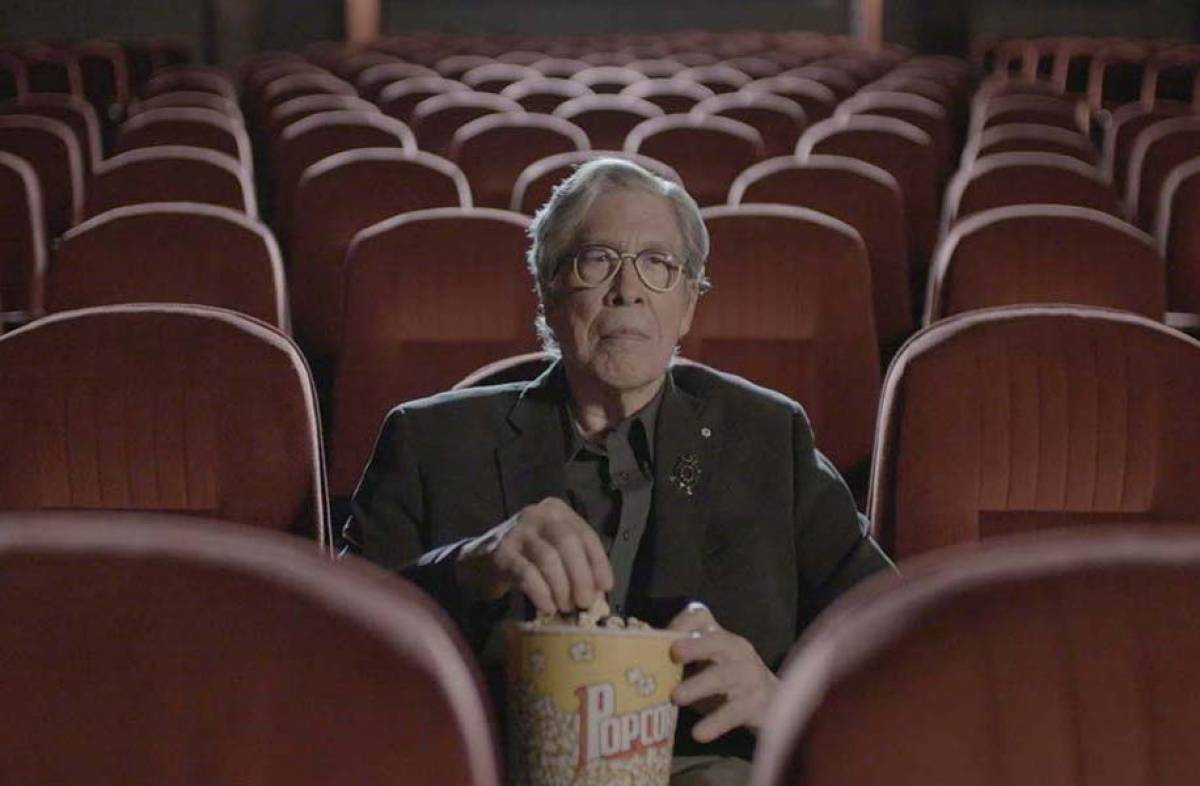
We see King at his destination: a vintage cinema. King seats himself in the middle row alone, popcorn in hand. As King watches the screen diligently, many young Indigenous people also enter the theatre soon after. What they see on screen is beyond displeasing, but infuriating. They see past depictions of Indigenous people that are rude, mocking and insulting. They see Nanook Of The North, which was really a fake documentary where the Inuit played stereotypes. They see various scenes from old ‘Cowboys and Indians’ movies from Hollywood’s Golden Age where the Indigenous person is always seen as the bad guy to fight. The lines from the films are especially abhorrent to hear like ‘Indian on the warpath,’ or ‘The only good Indian is a dead Indian!’

King reminds us: “History is a story we tell about the past.” We’re reminded that elements of popular culture are part of a war against the white powers that be in North America. It’s a battle that goes back centuries when people left the ‘old country’ to create settlements in the New World. They set up their settlements often by fighting Indigenous tribes through wars over their land. I don’t have to explain what happened to their land. One thing to note is that various types of Indigenous people’s ways of life died off. Some tribes of Indigenous peoples died completely. King even regards Indigenous artifacts in museums as, “voiceless objects from the past, unthreatening and without agency.”

Even if it’s not the wars and stolen land, it’s also about a National Government’s past attempts to suppress Indigenous peoples’ identities, languages, heritages and ways of life. The most infamous being the Residential School system. For those outside Canada who don’t know, the Residential School system was a Government-run system where Indigenous children were taken from their homes and brought to white-run schools where they were taught to speak English and live the way of white Canadians. The schools were run by religious clergy: mostly priests and nuns. The children who didn’t do away with the Indigenous language or traits, or found it hard to, were subject to physical and verbal abuse by the teachers. Many children suffered neglect over their well-being (including fatal neglect) and many were also victims of sexual abuse. I myself have come to see residential schools as a form of apartheid.

Problems still continue. The Indian Wars and Residential Schools are a thing of the past, but we’re now dealing with the aftermath. Today you’ll see in the news stories of Indigenous peoples try to battle police and politicians over developments or plans to be done on their land with their protest blockades. Residential Schools created an aftermath of people unable to parent well because they were taken from their homes. The countless abuse they suffered led many of them to alcoholism, drug abuse, crime and suicides. The last twenty years have brought the past of Residential Schools to the forefront of national discussion and efforts for reconciliation to be made. Present problems still continue with lack of clean drinking water and additional poverty on reserves, continued high crime rates and substance abuse rates, and a higher-than-average dropout rate in schools. The documentary reminds you of this.

The documentary also shows you something else. It shows you young Indigenous people in the arts who are taking their culture and the pasts of their people, and even their own pasts, and adapting it into their own artistic expressions. The artists in focus are a Metis cultural painter, a Cree artistic painter, an Innu filmmaker and documentarian, an Inuit filmmaker and VR creator, and a rap duo of various First Nations:

  • Christi Belcourt – Metis artist who specializes in beadwork art and floral patterns. Her patterns carry on the traditions of the Metis and First Nations people, but they’re not all just to please eyes. Some of her art have political messages. She herself is the daughter of a Metis activist and has published some books on First Nations/Metis issues.
  • Kent Monkman – A Cree painter who specializes in painting historical narrative from his point of view. In the film, he speaks his anger of how his people have been treated since European settlements and especially of the creation of Canada in 1867. The paintings in his 2017 exhibition, a response to the Canada 150 celebrations, resemble Baroque or Renaissance Era paintings, but they speak of his anger and wrath of the past history and of the mistrust he has towards today’s powers that be.
  • Alethia Arnaquq-Baril – An Inuk filmmaker. Her films range from short animated films to feature-length documentaries to live-action storytelling. Her films speak volumes of the discrimination, struggles and hardships of the various Indigenous peoples. One of her films, The Grizzlies, played at the VIFF two years ago. Devoted to keeping tradition alive, the film shows her getting a traditional Inuk tattoo applied on her forehead.
  • Nyla Innuksuk – Inuit Film maker and VR creator. Past films include short fiction like a hunter using traditional skills to survive and a short documentary with singer Susan Aglukark. VR work includes work on a VR series allowing the viewer to envision Indigenous life in the future with futuristic characters. The film shows her working on her first feature-length film: a sci-fi story of teen Inuit girls fighting off an alien invasion.
  • A Tribe Called Red – A rap duo whose members are of the Mohawk and Cayuga nations. Rap has always had a reputation of being the voice of the voiceless and A Tribe Called Red use it to speak their voices. Their songs mix modern hip-hop and dance sounds with traditional Indigenous music and beats. Their songs also carry a political message. They themselves are also Indigenous activists who were part of the Canadian Pipeline and Railway Protests from February of this year.

The stories of the above artists and their works are mixed in with images of King’s tale of the coyote with the cab scenes, the images of the Indigenous man riding a horse into Toronto and an Inuit man hunting a seal and making use of everything from the seal he hunted including meat, blood, intestines and fur. A mix of screen narrative, storytelling and real life presented as one.

The final scene of the film shows the young adults and Thomas watching the Indigenous images created by Indigenous actors, directors and writers. They’re happy to an extent. The film then shifts to Indigenous issues and disputes that have happened in recent time. This represents the fight is still ongoing.

Thomas King wrote his narrative The Inconvenient Indian back in 2012. The film isn’t an exact adaptation of the book, but passages of what King says in the book are voiced over in the film. The book itself is an examination of North American history. King even presents the point of view as if Columbus didn’t discover America, America discovered Columbus. He also comes across an eyebrow-raising conclusion ‘White people want land.” Essentially the film reminds us that history seen from two different eyes will have two different points of views. Most white people have been taught the history of North America with the white Colonials looking like the good guys and the Indigenous looking like the savages. We’re reminded of that when we see the predominantly white crowd watch the re-enactment of the Battle Of Little Bighorn leading to Custer’s Last Stand. The film reminds you Indigenous people will see history from a very different outlook. That it’s really the white soldiers that are the savages.

The film does shed a lot of the negative moments of the past; moments many white people in North America still consider triumphs. The film shows how white North American’s and others still like to ‘toy around’ with Indigenous culture. We saw that almost a full year ago how the wealthy Park family in South Korea ‘toyed around’ with it in Parasite. However the film then shifts to Indigenous showing their side of the story and spreading their message through art. Seeing it leaves you convinced this is more than just Indigenous people creating their own art. It’s also them responding to the art and history told by white people in the past. Now they have the power to tell their stories. Now they can speak how they really feel. Now they can tell their version of history through their eyes. Now they can create characters that are a true example of their peoples. Now they can be empowered to create and manage their own media. Now they can create their own visions for the future.

You’re left convinced while watching the documentary that only Indigenous peoples can best create Indigenous stories and Indigenous characters. And understandably so. You watch all the insulting depictions of Indigenous peoples in past Hollywood movies and you’re reminded of this. Even getting an uncomfortable reminder you actually enjoyed seeing that. Even I was uncomfortably reminded of the days as a kid when I played ‘Cowboys And Indians.’ It’s no wonder Marlon Brando had Sacheen Littlefeather refuse the Oscar on his behalf back in 1973. When I think of how we no longer see ‘Cowboys And Indians’ movies anymore, I think Sacheen’s refusal has a lot to do with it. People won’t tolerate insulting or mocking depictions of their race anymore. They will be in the audience and they will let you know it if you dare try.

The film is unique that it blends the history of oppression and genocide with the mix of art created by the Indigenous peoples. A lot of feeling goes into what they create. It’s a lot of feeling that they have from what they’ve experienced in their own lives and what they’ve seen happen to their families and neighbors. The film also shows how art created by Indigenous people can lead to something better in the future for the people. You have the current generation of adults 20-50 who are reviving cultural heritages and languages past generations of their family were forbidden to have. You’ll have young people getting a positive image of Indigenous people instead of always seeing them vilified. The film is as much about hope as it is about outrage.

Top respect should go to Michelle Latimer with adapting King’s narrative and showcasing the various arts. Latimer herself is Metis/Algonquin. She mixed King’s narrative with the showcased arts and artists and the moments of history and infamy very well to create not just a documentary and an exhibition, but a vision for the future. Also I admire the National Film Board of Canada for contributing to this. Usually national film bords will only endorse films that only showcase the positive of their nation. NFB won’t shy away from a film that showcases the negative aspects of a nation, like racism. The film comes straight from the TIFF after winning the Best Canadian Feature Film Award and the Grolsch People’s Choice Award for Best Documentary.

In a year where racism is a hot topic, Inconvenient Indian is a documentary worth seeing. It shows what the powerful effect of a depiction of a race in entertainment media can do to a race. And how a race responds with their own art.

Oscars 2019 Best Picture Review: 1917

1917 Chapman mackay
A journey to deliver a message to stop a battle during World War I leads to an intriguing drama in 1917.

There has been a lot of anticipation of what will win Best Picture for the past two months. Lately the recently-released 1917 has become the front-runner. Does it have what it takes to win it?

One thing we should keep in mind is that this is not a completely true story that takes place during World War I on April 6, 1917. This is a story about a messenger delivering a message during the war. According to Sam Mendes, this is a story that has been lodged with him as a child. It’s quite likely the stories came while listening to the tales his grandfather, Lance Corporal Alfred H. Mendes, would tell. In fact he dedicates the film to him ‘for telling us the stories.’

Another thing we should remember about World War I is not just how it would be the most brutal war in history before World War II, but also of how it changed how wars are fought. In the past, soldiers would fight on horses with swords. Here in World War I, it was mostly ammunition related which made horse fighting useless from this point on. Also with the airplane being invented back in 1903, this was the first war ever that would involve airfighting. That would present a new danger for soldiers fighting on the ground as they would also have to avoid shooting from the air.

We should also take into account that despite the advances in warfare, communication between infantries were limited. It seems odd to see the need for a message to stop a battle to be sent through two men. I remember seeing messages submitted in such fashion in Lincoln which was set during the Civil War. One in today’s modern world would find ‘walking’ this message from the trenches to former enemy territory to the infantry to be an odd thing, considering the technologies we now have. We shouldn’t forget that during World War I, the most communication they had was either Morse Code or landline telephone. As you would see when the scene approaches, the infantry of which the leader would need to receive the message would have no access to any of those forms of communication. Telephone lines were cut out in the field and ‘walking’ the message to the infantry would be the only way they can be reached.

We’ve seen war movies in the past. Most war movies consist of frequent battles and action scenes. Mostly to stir up excitement for the purpose of being an action movie. This is a different story. This is a message of two men who are given the responsibility to deliver a message to a battalion to cease fighting and prevent huge loss. This is not just a message a soldier has to relay to prevent a devastating battle, but one in which threatens his brother. Blake not only must deliver the message but have someone else as the second should one die. He chooses his best friend Schofield who’s reluctant at first. The two put themselves out in the mission but encounter danger after danger. Blake is stabbed to death and then it becomes Schofield’s mission to deliver the message. This is a story that focuses less on battles and more on getting a task done. If you get into the story, you will see this is a task which will put one in the middle of the horrors of war. This being a war movie, there are scenes of action and intensity. Those are scenes that can’t be compromised in a war movie and there’s no compromise here. This film also shows a lot of the horrors and devastations caused during World War I like a devastated town, a brutal plane crash, rat-infested areas, bodies left around decaying, and even how every soldier had to see people from another army as the enemy. No exceptions. This story is a telling account of what those fighting in the war had to deal with.

I know I’ve seen many films by Steven Spielberg where he not only tells a war story but also shows how the war was done back then. Often when he does his story that occurs during times of war, it’s like we receive a lesson of how war was done and are even reminded of the politics and hostilities of the time. Sam Mendes takes a different approach in telling his story in 1917. It’s not as telling as how World War I was done as a Spielberg movie would be, but it does remind you of many horrors a soldier would endure. Keep in mind, this is a single story of a message to be delivered and the treacherous journey to deliver it. One can go through enough horrors in that one journey to know how much war is hell. Even the stories from one person is enough to be a telling account.

Mendes does do something in which Spielberg never did in any of his war movies. Mendes makes this a ‘follow-around’ story. I’ve seen films which have been cases where the story is told by following the lead protagonist around. It’s added to the story in most cases. Here in this film, it not only tells the story but makes one part of the journey. It makes the audience experience the horrors and dangers as they happen. Another addition to the story is how it makes like this film is all one take. It’s not really a single take for almost two hours. In fact I saw in Birdman how they’re able to make a film set in real-time appear to be only one take through some cinematography and editing angles. This is the same here where it does an excellent job of making it look like one take from start to finish. There are many times in which the story is done in real-time and there are time elapses where the audience won’t notice. Nevertheless it works for the film and for the storytelling.

Top acclaim has to go to Sam Mendes. I have something to tell you all. Back when I first arrived in Vancouver, I celebrated my first weekend there watching American Beauty in the movie theatres. It left me captivated from start to finish and I never checked my watch once! Which was rarely the case for me back then. That film, as well as other films that made 1999 a landmark year for film, and the Oscar race that followed would kick-start my enthusiasm for film and the Oscar Race.

Mendes does an excellent job in directing the story and using multiple angles that add to the story instead of distract. The story in which he co-wrote with Krysty Wilson-Cairns is actually the very first feature-length film script both have written! Wilson-Cairns however has had more experience as she’s written for television and various short films. This is a unique story and a unique way in filmmaking of telling the story. The story succeeds in delivering excitement and intensity as the viewer watches it. The journey ends in a manner different from how the viewer would expect it to end, but it ends on the right note. It even ends on a personal note as Schofield confronts Blake with the bad news. The ending is possibly the most human note of the film and it reminds you of the dignity of the soldiers who sacrificed their lives to fight or prevent tyranny. I admire Mendes and Wilson-Cairns for incorporating that in the story.

As for acting, this is a film that doesn’t allow too much in terms of a developed ensemble cast. Many action films and war films usually don’t have room for well-developed acting; it’s mostly action-oriented. Even the role of the protagonist Schofield, played by George MacKay, is not exactly a role with too much dimension. I do give it credit as the film is more about the story than it is about the characters. Nevertheless I do admire for MacKay delivering a solid performance with a role that lacked dimension. Actually he succeeds in giving the role its most feeling at the very end. The acting of the main supporting role of Dean-Charles Chapman was also very good. His role was given more feeling as this was the character’s brother he was most concerned about. Chapman also does a good job with his role. Most of the other supporting roles had minimal screen time in the film. Nevertheless the performances of Colin Firth, Benedict Cumberbatch, Robert Maaser and Richard Madden were well-acted despite how limited their roles were.

The film also has a lot of stand-out technical efforts too. First is the cinematography of Roger Deakins which is unique for a war-film and it adds to the thrills and excitement. Next is the film editing by Lee Smith who successfully makes it look like a single take. Next is set designers Lee Sandales and Dennis Gassner for recreating the trenches, battlefields and sunken bridges of the war. Another of top acclaim is the score from Thomas Newman. Newman has composed scores for six of Mendes’ seven films and this is his fourth Oscar nomination for a score for a Mendes film. The score fits the intensity of the story and moments of action. Finally the visual effects team did an excellent job of recreating the war and the battle scenes.

1917 isn’t your typical war movie. It’s a movie that takes you on the journey and involves you in the drama. It even reminds you of the horror while restoring your belief in humanity.

And there you have it! That’s the last of my reviews of the Best Picture nominees! This makes it nineteen straight years of seeing all the Best Picture nominees before Oscar Night! Just a review of the Oscar Shorts and my Oscar-winner predictions yet to come.

Oscars 2017 Best Picture Review: Phantom Thread

Phantom Thread
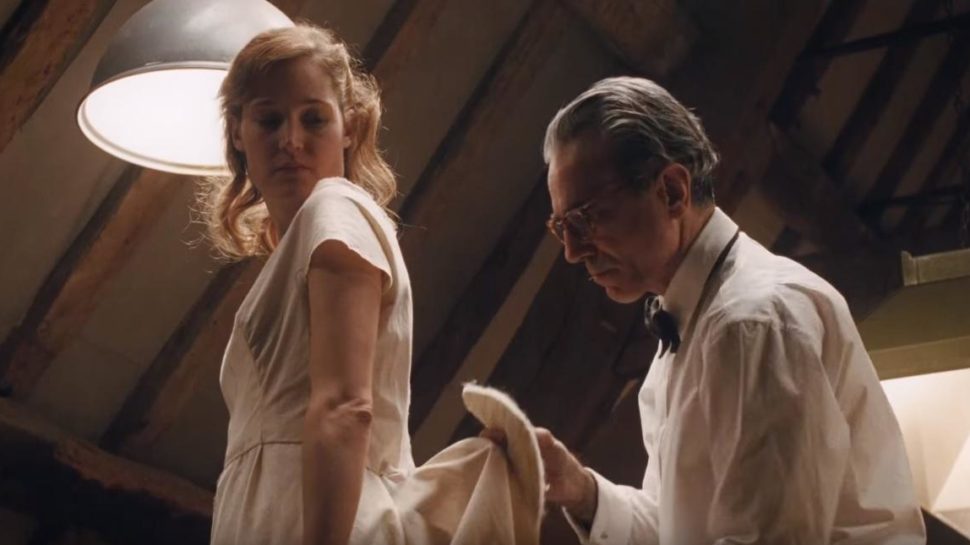
Fashion designer  Reynolds Woodcock (Daniel Day_lewis) is about to be swept away by his ‘assistant’ (played by Vicky Kreips) in Phantom Thread.


This year, there have been some good romances and some not-so-charming romances. Phantom Thread is one of those romances that is quite off the wall, but also one of the most beautiful of the year.

Reynolds Woodcock is a top British fashion designer of the 1950’s. His fashions attract the high society with its charm, originality and impressive design. Reynolds, however, is unmarried in his 50’s. His sister Cyril, who manages his business in a very controlling manner, knows this too well. She knows it may have to do with his pride, but she senses it may be to do about his mother’s death, which he constantly thinks of. Reynolds is also noted for stitching hidden messages into his fashions.

One day, he drives off from his business and goes to a restaurant for breakfast. He meets a charming young waitress named Alma. He asks her out and she accepts. As the relationship grows, Alma moves in, but wants to act as his muse and his assistant as well as be his love interest. Reynolds is mistrustful at first, but he grows to earn her trust.

Alma actually becomes one of his best helps to his business and helping to put on fashion shows. She also works well as a cook, dealing with Reynolds’ hard-to-please picky demands. However, Alma wants more than just to be a cook and assistant. She wants Reynolds’ love. She cooks him a romantic dinner, but Reynolds just lashes out how the meal is prepared and insists he will not put up with any deviations.

Alma is hurt, but knows just the thing to get back her control. Just while Reynolds is getting a wedding dress prepared for the Belgian royal family, she takes some of the poisonous mushrooms, crushes them, and mixes it in with his tea. Soon Reynolds begins to hallucinate the ghost of his mother and collapses over the wedding dress. Alma agrees to take care of him, despite the chance the mushrooms may be revealed. As Reynolds recovers, he is deeply moved by Alma’s devotion and asks her to marry her.

Alma and Reynolds are married. The marriage begins wonderfully, but it soon leads to bickering and fighting. Reynolds even makes it clear he feels Alma is becoming an interference to his business. Not even Alma leaving the place to go to a New Years Eve ball changes his mind. One day, Alma creates an omelet made with the poisonous mushrooms. Reynolds knows they are poisonous. Alma confesses to him she wants him to be weak and vulnerable so she can take care of him, help him recover, and then poison him again. Reynolds accept. She then envisions her future with Reynolds as he’s sick in bed and she’s confessing everything to the doctor.

This is definitely a bizarre romance. It’s about the feelings of love and love-sickness. It’s about a young common woman wanting to win the love of a fashion designer who’s a control freak and a man of immense pride. It’s about the battle of control between the two. Those don’t exactly sound like the elements of a winning romance, but Paul Thomas Anderson makes it work.

He sets it in an atmosphere of high society and high fashion. He creates the appropriate atmosphere for both the romance, the tension and the madness. Despite all that happens, in all the craziness and the differences between the two people, the movie ends with you feeling this love is so right. The two were actually made for each other, even though he’s poisoned and in bed. I think that’s it. I think Anderson wanted to create a romance about love sickness and make it oddly charming and oddly fitting. Sure, she’s going to poison him constantly from then on, but she seems like the right woman for him. She’s definitely the one woman who knows how to take his immense pride away from him. It’s very odd how a woman as sinister as her ends up being his fitting soul mate! The film even gives an appropriate ending where Alma envisions the future of the two together. Perhaps it’s for us the audience to envision our own future of the romance.

Top credits go to writer/director Paul Thomas Anderson. I’ve never thought of a director like Anderson to be able to create a good romance. Here he doesn’t simply create a good romance, but also a story loaded with charm despite its eccentricities. He does a good job of capturing the feelings of romance as well as the feel of tension within the marriage and makes it work on screen. Also excellent is the acting from Daniel Day-Lewis of a fashion designer torn between love and his pride towards his status. Some say this may be Day-Lewis’ acting role as he is talking of retirement. If that holds out to be true, this role will definitely be one of his best portrayals of an original character. Vicky Krieps is very good as the sinister yet charming love interest, but the one actress who upstages Day-Lewis is Lesley Manvile. Playing the sister, she works well both when she’s the observant one who says nothing and when she’s one who has something to say. She does a lot with a part that appears to be very little at first.

For technical credits, top credits go to costume designer Mark Bridges. For a romance about a big-name fashion designer, you need to have dresses that stand out and show why he’s the best in his field, and Bridges delivers! Also excellent is the composed music of Radiohead’s Jonny Greenwood that captures both the dramatic elements and romantic elements of the film.

Phantom Thread does make it look odd for a story like this to work as a romance, but Paul Thomas Anderson made it work. He makes the sinister side of love sickness work.

Oscars 2017 Best Picture Review: Darkest Hour

Darkest Hour
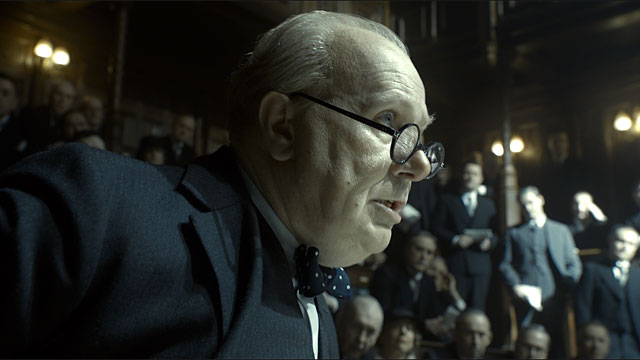
Darkest Hour is the story of Winston Churchill (played by Gary Oldman) and his struggle to convince the people of the UK that fighting Hitler is the right thing to do.

Usually around the latter part of the year, historical dramas are common for release. Darkest Hour is one, focusing on Winston Churchill and World War II. The question is does it fare well as a film? And does it have relevance to the present?

The film is set in May 1940. World War II had just begun eight months ago with the fall of Poland. France is next. The film hits hard in the UK as they fear war is looming. It hits so hard, Prime Minister Neville Chamberlain is pressured by the opposing Labour Party to resign for not doing enough. Neville needs to find a successor, but his first choice, Lord Halifax, declines. He goes for his second choice: Winston Churchill.

Now Winston Churchill was seen as a bad choice as the successor to Chamberlain. He has a bad record with his roles in the Admiralty, the Gallipolli Campaign During The First World War, his views on India, and his support for Edward VIII during the Abdication Crisis. Even his own personal manner is of question as he is oafish and has a reputation for infidelity and a quick temper. He’s even temperamental to his new secretary when she mishears him, but his wife Clementine gets him to come to his senses.

King George VI encourages Churchill to form a coalition government along with Halifax and Chamberlain. Churchill’s first response to Hitler’s invasion of France is fast and immediate: no surrender to Hitler and fight if we have to. He made it clear on May 13 1940 in his ‘blood, toil, tears, and sweat’ speech.

The speech is not well-received by the Parliament. They think he’s delusional. The Nazi army is too powerful. It even gets flack from King George VI. The French Prime Minister thinks he’s delusional for not admitting the Allies lost in the Battle Of France. People in his party offer Churchill to accept Hitler’s offer to negotiate for a peaceful end to the War, but Churchill declines. He does not trust Hitler.

The situation gets frustrating to the point both Halifax and Chamberlain are looking to use the Italian Ambassador as a route to negotiate peace with Hitler. Both plan to resign from the Government if Churchill doesn’t comply, hoping to cause a ‘vote of non-confidence’ to allow Halifax to become Prime Minister. Meanwhile Churchill is trying to seek support from the US with President Franklin Roosevelt, but he declines as the US signed an international agreement preventing military action in Europe years ago.

However war is pressing. The UK find themselves in battles in Dunkirk and Calais. Churchill, against the wishes of the War Brigade, orders a 30th Infantry Brigade in Calais to organize a suicide attack to distract the Nazis allowing the soldiers in Dunkirk to evacuate.

The defeat at Calais causes the War Cabinet to want to negotiate with Germany. However as Churchill is about to make his way to Parliament, he receives support from his wife, support from King George VI fearing exile if Germany wins, and support from a group of citizens in the London Underground he takes to parliament. Even members of the Outer Cabinet and other members of Parliament give him their support. News comes that the evacuation in Dunkirk ‘Operation Dynamo’ is successful. At parliament in front of cabinet members and members of the War Cabinet, Churchill delivers his speech of ‘we shall fight on the beaches’ to the support and applause of all, even Halifax and Chamberlain.

Lately there have been a lot of biographical films that don’t thoroughly focus on the person’s life, but instead focuses on the one moment that defined them as a person. We saw in Lincoln how getting the Emancipation Proclamation made constitutional and the political fight to get it done is what defined Abraham Lincoln the most. We saw in Capote that it was the making of In Cold Blood that would become Truman Capote’s biggest legacy of a writer, and would eventually lead to his downfall. Here we see the period of one month how Churchill couldn’t just simply say that Hitler needed to be fought, but had to convince the people and especially the parliament that fighting him is the right thing.

Such a situation in our world history is not uncommon. If you remember Lincoln, you will remember that Abraham Lincoln had to do political campaigning in order to get the Emancipation Proclamation made constitutional. The Proclamation itself was up for vote in the House. Just a reminder that even the most righteous political laws still have to go through the same political processes. Even for powerful speeches, it’s about saying it at the right time and the results to follow. We may remember how back in 1987, Ronald Reagan stood at the Berlin Wall and said, “Mr. Gorbachev, tear down this wall!” This is something JFK could have told Nikita Khruschev to do, or Nixon telling Brezhnev to do, or even Reagan himself telling Brezhnev or Andropov to do, but it would not result. The Soviet leaders were just that stubborn and dead-set on their rigid ways and dismiss what the POTUSes said at hot air. But Reagan said that just during a time when it appeared the Cold War appeared to be thawing and Gorbachev was the first Soviet leader to appear cooperative with the US, but not without its friction. That sentence is memorable because the Wall did come down in a matter of two years.

Here in Darkest Hour, we see another example of how words that are true in conviction and the right thing to say still faced political opposition. When Churchill was placed as Prime Minister, he didn’t waste time in speaking his opposition to Hitler and that the UK should not surrender. However those in the office all thought his words were deluded. They knew of the Nazi army and the invasions it’s caused already in less than a year. Hitler and the Nazi army were just that menacing. They also saw the efforts, or lack thereof, from the previous Prime Minister fail. On top of that, France had just fallen to the Nazis. They were simply afraid.

It was easy for people to think of Churchill’s words as deluded. He already had a reputation in the British parliament of being quite the buffoon. In fact the opening scene of the film shows his buffoonish nature. Churchill knew in his heart that the UK had to fight the Nazis, but he had to convince the British parliament. And he had to do it fast. Over time, more tyranny from the Nazis occurred and the UK was feeling the heat. Churchill was denied support from US president Franklin Roosevelt because of an agreement signed the year before. That negotiation for peace from the Germans would seem like something one would cave into and it was easy to see why the British politicians thought it right, even though we all know it to be wrong.

The last fifteen minutes of the film just as Churchill is about to deliver the ‘fight on the beaches’ is a very powerful scene as it shows how Churchill is able to win support in his stance from his wife, the King of England and even people on the subway as he makes his way to parliament. I don’t know if that really happened to Churchill in real life, but that subway scene is a powerful scene. Sometimes I think that scene is telling me that all too often, the common person has a better sense of what’s right than the people in power.

For the most part, the film is as much of a biographical drama as it is an historic drama. The film is very much about the speeches of Churchill and the start of the mission of British forces to fight Nazi Germany. The film not only focuses on Churchill’s quest to fight in the war, but his quest to convince the people in political power to believe him. It focuses on Churchill as a man of great conviction, but also a man of noticeable flaws. That had a lot to do with why people first thought he was a madman or deluded. It reminds you that a head of state can sometimes be reduced to a pawn in their political building. The film does remind people of the common saying that: ‘What’s right isn’t always what’s popular and what’s popular isn’t always what’s right.” Churchill knew in his heart he was right, but he had to fight to make it believed by all. It was necessary as the Battle of Dunkirk would soon happen

It’s interesting how Darkest Hour is release in the same year Dunkirk is. I find it very appropriate because it was actually just right after the Battle Of Dunkirk and the subsequent evacuation that Churchill delivered his speech of “We shall fight on the beaches.” The fight on the beaches of Dunkirk and the evacuation and rescue mission was the first significant sign of what the UK needed to do to win against the Nazis. Churchill was there to pay all respect to those heroes, the survivors and fatalities, who were a part of it.

Director Joe Wright and writer Anthony McCarten deliver a very good historical story. However there are times when it does feel like it’s completely restricted to being about Winston Churchill. I understand what the story is all about, but they could have explored some additional angles to go with it. Without a doubt, the film is owned by Gary Oldman. He does an excellent job of delivering a performance of Winston Churchill. His depiction of Churchill first appears cartoonish at the beginning, but the depth and dimension develops over the film and he really comes out shining.

Although the film is dominated by the portrayal of Winston Churchill, there are supporting performances from Kristin Scott Thomas as Clementine Churchill and Lily James as Elizabeth Layton that are able to steal the moment. Also capturing the moment are Ben Mendelsohn as King George who slowly supports Churchill and Ronald Pickup as Neville Chamberlain who supports Churchill despite his own political downfall. The film also does an excellent job in the technical aspects such as the Production Design to reconstruct parliament, costuming from Jacqueline Durran and the makeup and hairstylists to fit the era, the cinematography from Bruno Delbonnel and the musical score from Dario Marianelli which capture the intensity and triumphs of the moments.

Darkest Hour is more than just an historical drama or biographical drama. It’s an excellent film about standing by your convictions without crossing the line of being preachy.

VIFF 2017 Review: The Party

The Party
Patricia Clarkson (left) and Kristin Scott Thomas face the chaos at what is supposed to be a celebration in The Party.

Can you imagine a party where everything that could go wrong does? The British comedy The Party is a film that shows exactly that!

The film begins with Janet waiting for her party to begin. She just won a seat in parliament. The party is expected to be a private one with her husband Bill, best friend April and her husband Gottfried, close couple Martha and Jinny and her son Tom. Bill is frail and not in the most pleasant of moods. April has a very blunt mouth and isn’t afraid to say what she believes to be true, no matter how spiteful. Gottfried appears not to be with his wits. Tom is trying to keep his cocaine habit a secret. The couple of Martha and Jinny appear to be the only guests who have it together. Of course, they’re happy as they’re expecting triplets.

The party is supposed to go smooth, but April appears to be saying something to start a spat anytime soon. Gottfried is always embarrassing April. Tom’s frustrations about his marriage are becoming obvious. Nevertheless Janet is toasted by all.

Then the chaos begins. Janet first receives a text from a man wanting her back in her life, to which she declines. Bill announces he’s dying to all. Janet is broken, but he’s vague on what his condition is.  Only Gottfried appears to believe him and is willing to help him. Then unfaithfulness has been revealed about both Martha and Jinny and it threatens not just their relationship, but the birth of their children. Then Bill admits to Janet, he’s been seeing another woman. Janet is infuriated. Only Gottfried stands by his side. Tom does more coke and contemplates hosting himself, but later throws the gun in the garbage. Janet is upset by the whole thing with no one but April to give her words of comfort. However Janet soon finds Tom’s gun in the garbage. Then Bill reveals to Tom the ‘other woman’ is his wife. Tom responds by punching Bill. Bill appears dead on the floor and is being resuscitated. Martha and Jinny try to look like the happy couple they were. Then Janet goes to the door after hearing the doorbell. It’s the other man. To which, she points the gun at him: “You said you loved me. You liar!”

At first, I thought The Party would be a political film. I was tempted to think that at first glance. Instead it became the perfect location for a single-location film. It does a very good job in packing in just about anything and everything that can destroy all seven involved in the story. One thing does lead to another and the results are crazy. However a story like this about a party where everything goes wrong for everybody has to have situations that don’t come across as ridiculous. You have enough slapstick movies doing that.

To make a party where everything goes wrong, but still look intelligent takes a lot of effort in writing. It succeeds in doing that. The characters in which the actors adapt had to make the comedic situations work. The situations looked quite believable, despite the banality of all of them happening at once. Even the most bizarre situations didn’t come across as looking stupid. This is one of the best over-the-top comedies I’ve seen in a long time. The over-the-top elements aren’t even physical or slapstick; it’s all about the story and characters. Even filming this comedy in black and white added to the film.

The biggest accolades in making this bizarre story work goes to writer/director Sally Potter. This story packs in a lot of comedic punch that appears to work every time and does not cross over the line into stupidity and ridiculous. It takes a lot of effort to create something like that and make it work, and Potter made it work. Everyone who saw it the same time I saw it was laughing a lot. It’s hard to pick who the biggest performer was. Kristin Scott Thomas was definitely the protagonist, but Patricia Clarkson was able to steal the show with whatever she said each time. Bruno Ganz and Timothy Spall owned their moments by playing their characters well. Cherry Jones and Emily Mortimer also grabbed their moments, and Cillian Murphy knew how to come out of nowhere to get his moments too. Basically it’s not on the strength of a single actor, but of all seven in the ensemble. They all made this comedy work with whatever they did or said.

The Party is 71 minutes of tragicomedy energy of the best kind. It’s a reminder of how writing rather than cheap one-liners is what works best in comedy. I guarantee you will be laughing.

Triple Movie Review: Trainwreck, Vacation and Me And Earl And The Dying Girl

Okay, I said I’d do double-movie reviews reflecting a common theme. I actually would like to try something different: a triple-movie review. All three are comedies from this summer. All had a pre-opening buzz to them and all had mixed results. I know summer’s long over but I don’t mind publishing this now as this is more of a movie ‘summary than a movie review.

Amy Schumer and Bill Hader star as an unlikely couple in the unlikely romantic comedy Trainwreck.

Trainwreck

Okay. I’ll start with a film that had medium-sized buzz. The film featured a rising comedic talent named Amy Schumer who also wrote the script. The film was directed by Judd Apatow who has delivered some of the best comedies in the last 10 years like the 40 Year-Old Virgin, Knocked Up and Bridesmaids. Here he and Amy both deliver the best comedy of the summer.

Part of it was giving it a common situation of the offspring of negligent parents. One daughter, Kim,  has things together and is making the effort to make a family. The other, Amy who is actually the prime source of the film’s humor, is a successful writer but lives irresponsibly and has a negative outlook on just about everything and everyone. Much like her father. That explains why she writes for a magazine an awful lot like Maxim. The humor comes when her attitude and habits are challenged with the situations she encounters and meets Mr. Right as the subject of her latest article.

A lot of it is Judd’s direction but a lot of it is Amy’s humor. Amy is a comedian who is not afraid to play idiotic women. Here Amy shows a character that has been devastated by a divorce in her childhood and never picked herself up. Her father said at the divorce “Monogamy’s not possible.” Here she lives it for herself and feels all the guys in her life have the same attitude. Even before she meets Dr. Aaron Connors, she gets a wake-up call from an athlete she has a one-night-stand with. She tells him banging every girl in the world is every guy’s dream but the athlete tells her “It’s not mine.” That was the first sign she needed changing but she was afraid to do it. It’s the encounter of Aaron that changes her but with difficulty as she still hangs on to her bad habits like drinking, toking up and fooling around.

It’s not just about the main situations in Amy Townsend’s path to love that make the story. There’s some unexpected humor too. There’s the feisty father in a nursing home. Then there’s his funeral where Amy starts the eulogy with “My father was an asshole,” but ends with “My father was the best father ever.” I’ve never seen a eulogy like that. There’s the addition of the homeless man Amy occasionally sees on the streets daily. The crude humor from the man blends in with the story well. There’s Amy’s relationship with her sister Kim’s step-family whom she doesn’t take to well, especially her socially awkward step-nephew Allister. There’s even the inclusion of pro-athletes in the movie that helps make the story that more fun. Hey, Amare Stoudemire isn’t the only one in there.

Amy is not the comedic performance to make the film. Colin Quinn adds his bit in as the irresponsible father whom Amy seems to model her own life with. He’s a father feisty to the end. Bill Hader was a good choice for playing the doctor and the love interest of Amy. However it was odd to see Bill play a character that was low-key in terms of comedy. I’ve seen him do more outlandish stuff in the past. I think he wanted to play it conservative here. Brie Larson was also good as Kim, the sister who has it together. Tilda Swinton was also good at playing the cold boss of Amy’s, Dianna. Makes you wonder who the brains behind all these men’s magazines are. Additional humor was added from Dave Attell as Noam, the homeless guy who Amy’s generous to.

Trainwreck is a rarity. A comedy that pulls the right kind of punches, delivers the right kind of shock without becoming too clumsy and sticks to its situation and characters. It also propels Amy Schumer to be a rising comedic talent for the future. My fav comedy of the summer. besides I like awkward romances.

Me Earl DyingMe And Earl And The Dying Girl

Me And Earl And The Dying Girl sounds like an awkward title. Even shocking. But the story actually turns out to be good if you give it a chance. This film won a comedic film award this year’s Sundance Film Fest.

The story is centered around Greg Gaines, a high school senior in Pittsburgh on the verge of graduating and heading to college. However he’s frustrated about what he wants to do with the rest of his life. Adding to the frustration is a mother who comes across as a ‘nagging machine,’ teachers who put pressure on him and the various cliques of students from the jocks to the drama dweebs to the loner freaks to his long time crush. Already that is one humorous element of the film. Senior year, the pressures to graduate and go to college, and the difficulty of fitting in with the other students. Funny how those of us long graduated can identify and laugh at the difficulties Greg is going through. Because we’ve all been there!

It’s not just about fitting in. It also included his friendship with Earl: a childhood friend whom Greg makes films with together. Humorous short films often relying on goofy and even crude humor.

The film’s humor isn’t just in things we can identify with but also in unusual situations. There’s Rachel, who learns she has leukemia. I’m sure all of us knew a kid in our high school days who had to fight cancer. However Greg is compelled to befriend her just to stop his mother from nagging. Over time we see the friendship grow from something Greg is forced to do into something real.

The film shows the positive aspects in the friendship between Greg and Rachel, Greg and Earl, and Greg, Earl and Rachel. Nevertheless the friendships do face a challenge as Rachel’s’ condition worsens and she decides to take herself off the medicine. That leads to a boiling point between the two that also leads to the end (albeit temporary) to the friendship of Greg and Earl as well as Greg being confronted by the fact his college acceptance had been declined because he spent too much time with Rachel.

I guess that’s what the film’s best attribute is. The film’s best quality is Greg’s situations resembling situations most of us all went through when we were 17 where we’d try to fit into school, try to decide what to do with our lives and try to make the best of situations. Even situations many of us don’t normally go through like befriending a cancer patient didn’t appear to deviate too much from our own lives.

It’s not to say it was all humorous. The scene where Rachel blurts out the hard truth about Greg befriending Rachel reminds us of how at 17 we would inhesitantly say brutal truths to people we either loved or hated out of our moods. Even the friction between Greg and Earl brings back ugly memories of us.

This was a very good comedy based off the book from Jesse Andrews with Alfonso Gomez-Rejon directing. They do a good job of creating a dark comedy of a high school scenario most of us can relate to with a twist. Befriending the terminally-ill Rachel was intended to be more humorous than tragic and I feel it hit a lot of right spots even when it didn’t compromise some of the more difficult elements. The friendship of Earl was also given good attention instead of having Earl be the ‘token black guy’ like in so many indie movies. Earl had a significant part in this movie.

The acting itself also made the movie. Thomas Mann did a very good job of playing a frustrated teenager who had a lot of growing up to do and achieved a lot of it in the span of a school year. Olivia Cooke did well as Rachel by making her look like a person trying to stay positive despite her terminal illness but imperfectly being the teenager she is. Ronald Cyler II is also good as the no-nonsense Earl who is a good friend but isn’t afraid to be brutally honest with Greg.

Me And Earl And The Dying Girl is a dark comedy full of ironies. It tries to make humor out of a tragedy in the middle of your typical teenage drama. It appears to have made the right moves.

VacationVacation

Even before Vacation hit theaters, even before I saw the trailer, I questioned whether this was a good idea. Seeing the trailer worsened my perception of the movie. However seeing it for myself convinced me this was the biggest waste of money I did this summer.

The film first seems like a good concept: Rusty Griswold, married with children now wants to take his own family to WalleyWorld. However it’s all downhill from here. The biggest faults come from writers/directors Jonathan Goldstein and John Francis Daley. They take the Vacation movie formula and appear to have sabotage it with the lewdest, rudest, crudest humor you can come up with. There were many scenes I found hard to watch. Add to the mix unlikeable characters for Kevin Griswold as the foul-mouthed jerk of a younger son and James Griswold as the weenie of an older son and of course Rusty which I will get to later. Even Debbie Griswold was a turn-off with some of her stupidity.

Another big fault was the super-stocky character of Rusty Griswold delivered by Ed Helms. I’ve seen Ed do funnier stuff such as in the first Hangover when he did a more reserved character. I also saw him do a funny stock character as the idiotic kingpin in We’re The Millers. Here, his stocky character of Rusty Griswold was a complete miss. Just completely unfunny from the dialogue he’s given to the stocky delivery. He comes across looking idiotic. You’ll notice it at the beginning when he does his pilot job. You’ll get a bigger sense soon after when he talks to his sons about ‘boys having a vagina.’ Yes, sensing trouble that soon in the movie.

However the biggest thing that annoys me about Ed Helms’ performance is that he sabotages the role of Rusty. I’ve seen the other vacation movies and Rusty appeared to have a head on his shoulders. Even his stupidities in the other Vacation movies weren’t as different from the stupidities of other boys his age. Here, it gives the impression that Rusty went stupid overnight: even stupider than Clark ever was. There were even many times I left the theatre thinking this this may not have intended to be a movie of the Vacation series but an Ed Helms movie instead.

And since we’re on the topic of the Vacation series, the film gives the appearance near the end that it’s trying to have the ‘passing of the torch’ of the Vacation series from Clark to Rusty. Yes, that scene where Rusty is given Clark’s station wagon form the original 1983 National Lampoon’s Vacation while Russ and the fam stay at Clark and Ellen’s B&B in San Francisco with an appearance from Clark and Ellen themselves: Chevy Chase and Beverly D’Angelo. The whole movie from start to finish and Ed Helms’ irritating acting shows it’s unworthy of such a passing of the torch.’ It has no feel of the other Vacation movies and often feels like it’s going for the shock laughs and fails miserably.

I will admit there was a scene or two I found with a decent amount of humor like the four cops from the four states at ‘Four States Corner.’ However most of the time it feels like the humor is there to disgust us or make us sick rather than play into the movie. Don’t get me wrong. I’ve seen mean-spirited, punch-below-the-belt humor done well but that’s something the likes of the South Park duo or Seth MacFarlane know how to ace and all those involved with Vacation fail consistently.

Vacation appears like it’s trying to do a lot of things. Try to be the latest in the vacation series, try to propel Ed Helms’ stardom or try to ‘entertain’ us with shock humor. Whatever it tries to do, it fails in every which way.

In conclusion, Trainwreck was the surprise comedic delight of the summer, Me and Earl And The Dying Girl was the offbeat comedy of the summer and Vacation was the comedy fail of the summer. There you go for summer comedies.