VIFF 2025 Review: Free Leonard Peltier

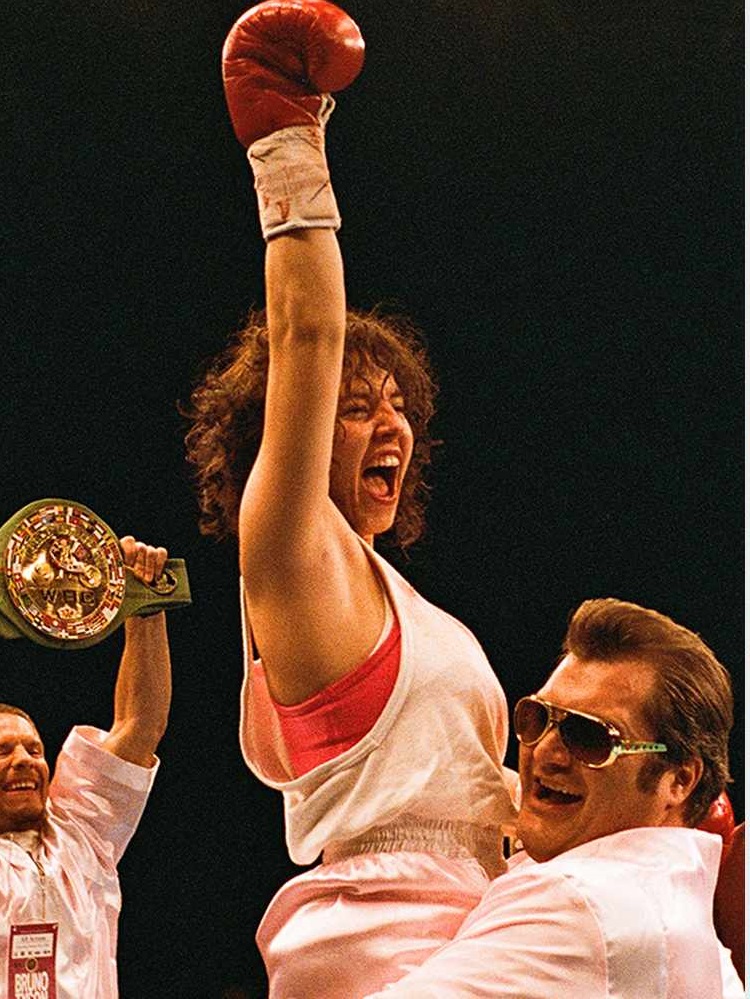
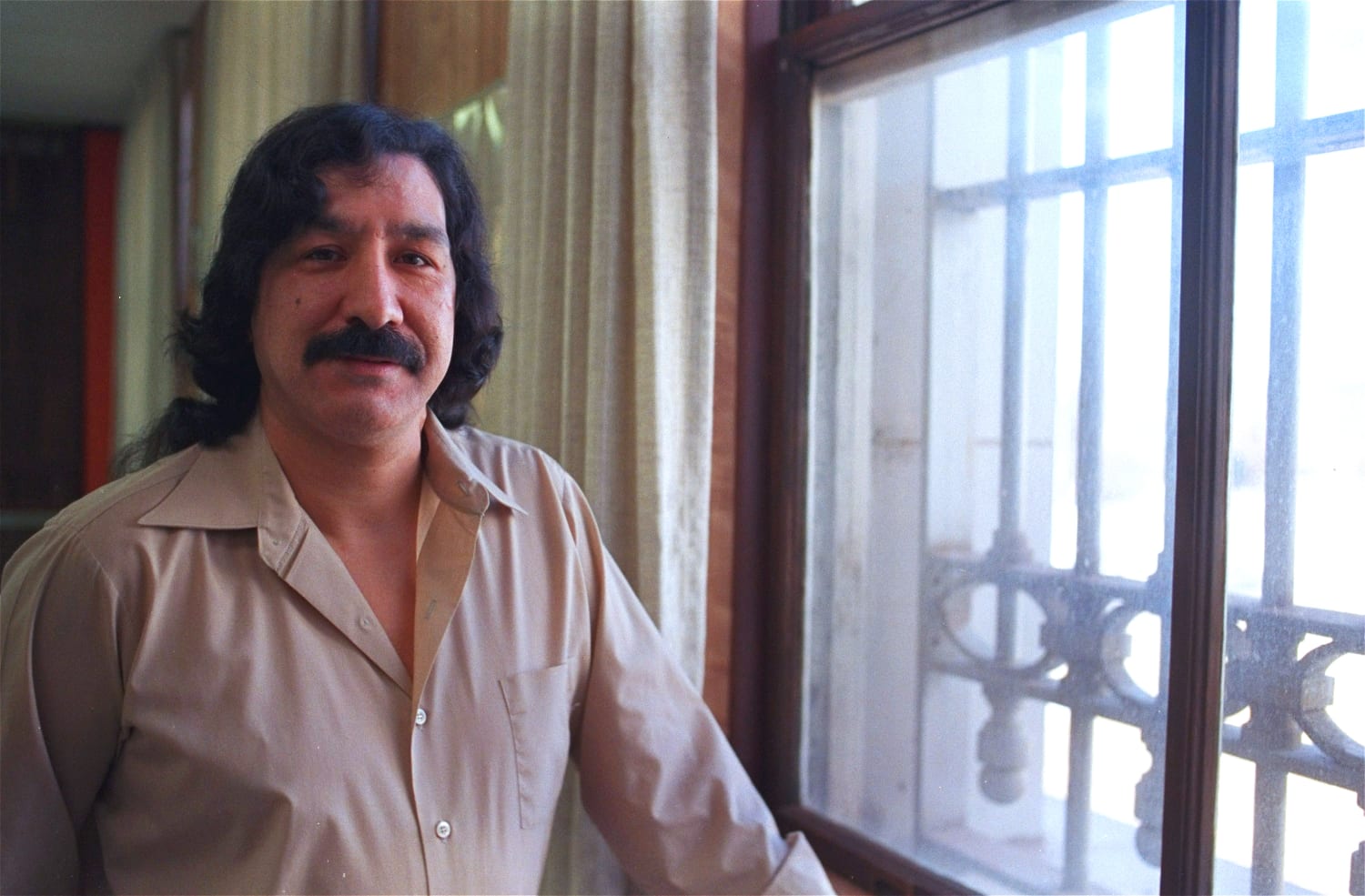
Free Leonard Peltier is about the accused crime of Indigenous activist Leonard Peltier, his imprisonment and his fight for freedom that lasted half a century.

The first documentary I saw at this year’s VIFF was Free Leonard Peltier. At a time when Canada has been made to face the music of what they’ve done to Indigenous people, Leonard’s story will remind you that the plight of the people is not strictly a Canadian problem.

The film begins with a group of American Indigenous activists on a travel. They are traveling to Florida in hopes that fellow activist Leonard Peltier be pardoned and freed just as Joe Biden is about to leave the presidency on January 20, 2025. Trying to get Peltier freed from a double-murder from 1975 he denies and most believe he’s wrongfully accused for has been going on for the last half-century. Many believe it’s Leonard’s last chance at any freedom as he just turned 80 years old and he’s ailing.

The story of the Leonard Peltier case is told through friends, family and allies of Peltier from the American Indian Movement (AIM). Footage of a 1989 news interview is also shown where Leonard states his own case. Leonard’s early life was like that of many American Indigenous people for over a century. He was born on a reserve in North Dakota to a large family and forced into a Residential School 150 miles away from his place of birth where he and others were taught to assimilate. The Bureau of Indian Affairs (BIA) dictated his life and the lives of American indigenous peoples. After he left his schooling behind in 1965, he became a man of various trades doing welding, construction or auto work.

In the late-1960’s, Indigenous activism was growing and the group AIM was founded. Leonard first started with local activism where he was elected tribal chairman of a reservation and he was introduced to AIM from a colleague. His biggest activism in that time was his appearance at 1972’s Trail Of Broken Treaties. Over time, activism became more violent and a group called the Guardians Of the Oglala Nation, or GOON, was founded. Peltier was also involved in violent conflicts and was even charged with attempted murder for an unrelated incident.

During his wait for the trial, FBI agents entered the Pine Ridge Reservation in pursuit of a man named Jimmy Eagle on June 26, 1975 wanted for theft and assault. Two FBI agents named Ronald Williams and Jack Coler were pursuing a Chevrolet with AIM members Peltier, Norman Charles and Joe Stuntz. Charles had met with the two FBI the day before and they told him of their intended pursuit. As the Chevrolet entered the ranch, the three men quickly parked the car and ran out, and that’s when a firefight between the three men and the two FBI ensued. Williams and Coler were shot to death in the shootout. Stuntz was shot to death later that day by a BIA agent. Peltier took Coler’s pistol after he died. The shootout would come to be remembered as the Battle At Wounded Knee.

In the aftermath, the FBI went to arrest three AIM members who were present at the shootout at the time: Dino Butler, Peltier and Robert Robideau. All three were AIM members and all three stole the firearms form the two FBI agents after they were killed. After Peltier was bailed out, he sought refuge in Canada, but it was unsuccessful as Hinton, Alberta RCMP agreed to extradite him back to the United States. In the end, Butler and Robideau were acquitted on grounds of self-defense but Peltier was found guilty. He was sentenced to two life terms and seven years.

In the years that followed would be a long arduous process from friends, family, Indigenous activists, human rights foundations and AIM members to get Leonard Peltier free from a crime he insisted he was innocent of. Over the decades, there was evidence proving that Peltier did not shoot any of the officers. At the same time, the FBI appeared to be playing games as they had one Indigenous women sign an affidavit claiming she was his girlfriend and he confessed to her the shooting. Truth is she didn’t even know him. They also withheld evidence and shred important documents clearing Peltier.

In later decades, Peltier would make pleas of clemency with active Presidents of the United States. Rays of hope first came in 1999 when President Bill Clinton said he would be looking into the Leonard Peltier case and have him cleared and freed. This case for clemency received support from many world leaders like Bishop Desmond Tutu and the Dalai Lama. The hope faded as the FBI held a backlash where family of FBI and their allies staged a demonstration claiming that freeing Peltier would do a dishonor to the FBI agents. Their manipulation of making this a Leonard Peltier vs. the FBI case succeeded in keeping him in prison. Peltier continued to make please with clemency with presidents in the years that followed. All would be unsuccessful.

In the 2020’s, Peltier’s health was failing. Painting and drawing, one of his passions he was able to do for decades in prison, was something he could no longer do. Joe Biden was seen as his last chance for clemency in his lifetime, especially since his friends and family knew he would not get any clemency from Trump when he re-enters the White House. Friends and family built a house for Peltier at the Turtle Mountain Indian Reservation in Belcourt, North Dakota where he could live after his release. January 19, 2025 was the last day of Biden’s presidency and the supporters at the beginning of the film are waiting to hear the news they hope to hear. Biden reduces Peltier’s sentence from life imprisonment to house arrest. They celebrate knowing he will soon stop being a prisoner.

This is a good documentary as it reminds you of a common problem in the world. Not just in Canada, in the US or in the Americas, but the whole world. The problem is nations being unable to deal with their indigenous peoples or tribal peoples well. Living in Canada, I am very familiar with news stories of how badly the Canadian government has mistreated the Indigenous peoples and how they’re doing a lackluster job to make amends and right past wrongs. The United States is just as guilty of that. They had a residential school system too, they have most of them living on reservations, they have a government that appears unable to listen to them and they’ve even had ‘Indian Wars.’ One can see how the story of the struggle of Leonard Peltier can be something all American Indigenous people can understand and relate to.

The story itself is well-told. I was first introduced to the Leonard Peltier case in 1994 through the music video of “Freedom” by the American band Rage Against The Machine. Peltier’s case has been an inspiration for many songs and films and this documentary is only the latest. In this documentary, we have news footage of the events involving the shootout, arrest, imprisonment and an interview from Peltier in 1989. We also have interviews from surviving friends and family members, Indigenous activists and even attorneys and paralegals who have worked with the Peltier case. The story becomes clear that Peltier’s imprisonment appears to have been used by the FBI just to simply give resolve to the deceased officers’ families and to protect the FBI from looking bad in the eyes of the public. The film’s inclusion of Peltier’s statement of his case makes the shootout look like a case of self-defense. Even though he has always maintained he never shot the officers, he has also stated he would defend himself and his people. One can see why the FBI would fear someone like him.

This is a very informative documentary by Jesse Short Bull and David France. They not only show the Peltier story, but they show how important the Peltier case is to his friends and allies. This is a case that’s taken so long to resolve and it’s at the point friends are even willing to travel from North Dakota to Florida by car in hopes of hearing the good news they’ve been waiting since 1976 to hear. Having AI recreate the incident with film appearing like satellite images re-enacting the heist will get you thinking of the case itself and have you try to make up your own mind about it.

This documentary has received a lot of renown this year. It got a lot of attention at the Sundance festival in January and its biggest acclaim came at the Thessaloniki Documentary Film Festival where it won three awards including the FIPRESCI Prize and the Amnesty International Award.

Free Leonard Peltier is a story about the common racism felt by Indigenous peoples in North America. It’s also a story of hope that what’s wrong can be corrected over time.

Oscars 2024 Short Films Review: Documentary

You’re not done with watching the short films until you’ve seen the documentaries. Many of this year’s mix of nominees are of dark subject matter and are bound to spark discussion. There are two lighter documentaries based on the theme of music. Anyways, here are my thoughts on the nominees for Best Documentary Short Film:

Death By Numbers (dir. Kim A. Snyder) -The film focuses on Samantha Fuentes: poet, writer, school shooting survivor. She was a student at Parkland High School when on February 14, 2018, she was shot by shooter Nikolas Cruz. She was lucky to not be one of the 17 killed but she was among the 17 injured. Through her writings and her conversations with people, we hear her express her fears and her feelings as events involving this happen in 2022. There’s the trial for the sentencing, there’s the day of the verdict and there’s the day of the victim’s testimonies. As each event is approaching and each event passes, we see and hear Sam express her many feelings.

This is something you don’t often hear. This is the story of a person injured in school shooting, survived it, and has to face her attacker in court. The Parkland High School shooting has the highest fatality rate of all school shootings in the United States. The film shows the audience Samantha’s style of writing as she goes through her feelings before the testimony. They’re feelings of hurt, anger, sorrow, frustration, hatred for the shooter and her fears of the future. Her memories are haunting as she goes back to the day when she expected it to be another Valentine’s Day to seeing her attacker in the face before she was shot to remembering seeing two dead classmates. Then the moment where she finally breaks her silence. The film keeps you in the intensity of it all. That’s why I make this my Should Win pick.

I Am Ready, Warden (dir. Smriti Mundhra) – This is a chronological film focusing on the looming execution of John Henry Ramirez for the 2004 murder of Corpus Christi gas station attendant Pablo Castro. The film begins six days before the execution. John knows he’s about to die, but is relaxed about it. Also part of the film is Adam Castro, the son of the man John murdered in 2004, Jan Trujillo, a church leader who dealt with John during the last few years, Seth Kreutzer, the lawyer who’s trying to make a last-minute attempt to stop his execution, and 16 year-old son Israel Ramirez.

The film goes through the various feelings of the people involved. Six days before the execution is expected, Adam wants his death sentence carried out, Jan wants his to be spared and Israel wants him to live. Three days before the execution, Jan has her petition to Governor Abbott ready and Seth has his case ready to submit while Adam is still insistent on the death penalty. Then the day of the execution. John gives Israel one last phone call. Israel is in tears. Jan and her group show up along with Seth at the chamber. Adam listens into the broadcast. He’s waited for this day but when he hears John is dead, he doesn’t know if he should be happy or not. He’s in tears. The funeral for John happens. Then in an epilogue, we see Adam listen to the recorded apology from John made the day he was executed. Adam is left with mixed feelings but in the end, he accepts his apology.

It is a story of an upcoming execution. One of eighteen executions that occurred in the United States in 2022. This film could start a discussion about capital punishment. Beyond that, this film is a unique story because it starts with six days before the scheduled date. We learn of the crime John committed, how he fled to Mexico immediately, his eventual capture, trial and sentence. We see opinions from the sides of many people: the son of the man killed, the minister of the church John was counseled through while in prison, and the lawyer and advocates aiming for one last chance to stop his execution. We then see them again with three days to go and hear their feelings. Then the day of the execution. We learn John had a son. The son Izzy is introduced into the story. And then feelings after the execution. It’s unique not just for the very many angles of opinion we see and hear about John, but we learn of John himself and how he doesn’t fit the common terrible image of a death row inmate. In many ways the film could be seen as the redemption of Ramirez. It’s for you to decide. That’s why I decide this film is my WILL WIN pick.

Incident (dir. Bill Morrison) – The film starts with images of a zoom from Google maps to a street corner of Chicago on July 14, 2018. Soon, we see a police shooting happening. The man shot is Harith ‘Snoop’ Augustus who works at a nearby barbershop. The film then shows various angles of the aftermath from various police body cameras to surveillance footage. The film then goes back fifteen minutes earlier. It was a calm street corner, but there’s a high police presence as a heated trial involving a police brutality incident is awaiting its verdict. The film tells about Illinois’ various laws involving concealed carry and points out the five officers at the corner at the time. Two were probationary. Then we see the altercation that occurred and the actions of the officers. It’s filled with footage from both the ambulances, the angry onlookers and the officers who took the shooters away. The film ends with one more angle to view the shooting and if Snoop did attempt to pull a gun, as the two officers claimed he did.

Without a doubt, the story is about the corruption of the police force. The film does show the hidden racism of the officers as they think an African-American man is about to pull a gun on them. Snoop had a valid card to conceal. The film also shows their impulsiveness and incompetence as the two officers closest to snoop failed to turn their body cameras on. It also shows their irresponsibility as they try and make up excuses and defend what they did. As we learn the officers only got a slap on the wrist as punishment, the film also focuses on the problem of the protectiveness of the police: the ‘Blue Shield’ as it’s commonly called. It appears the point of the while film is to expose the truth and the problem. Watching the footage, you can form your own opinion about the incident with Snoop. Whatever opinion it is, you can agree Snoop did not deserve to die.

Instruments Of A Beating Heart (dir. Ema Ryan Yamazaki) – The film focuses on Ayame. She is a six year-old girl about to move on to the second grade. As part of the welcoming of the new first graders, there’s an opportunity to give them a musical greeting. The students greet them by playing Ode To Joy. Ayame wants to be part of it. She loses out on playing the drum but she wins playing the cymbals. Over the days, they have the rehearsal. Ayame is the one musician who is the most off. The music teacher verbally scolds her for not practicing. Ayame cried and loses confidence that she can have it right in time. Her teacher believes in her and the classmates are willing to help. In the end, all the students including Ayame deliver a great performance.

The film tells the uninterrupted, unnarrated story of a young six year-old girl simply trying to play the cymbal for the upcoming show. As we see the story, we learn a lot more. We also see schooling in Japan. We see it’s not just about teaching the children reading and math and, in this case, music. We also see them teach a set of values. We see them teach competition, but still befriend your rivals. We see them teach the importance of one learning what they need, but of others teaming up to help the other. We see a teacher shame Ayame for not practicing but also reminding her that she is able to do it. Even with the lunch break, we see the school placing importance on nutrition. As you watch the film, you’ll see it’s more than just a little girl playing the cymbal. It’s about moulding the young into being people for others as much as promoting achieving for one’s self.

The Only Girl In The Orchestra (dir. Molly O’Brien) -This film is a look at Orin O’Brien as she is approaching her retirement from the New York Philharmonic Orchestra for 55 years. A double bass player, Orin is a history maker. She is the first female musician with the New York Philharmonic. Most of the men did not like the idea of a female musician but conductor Leonard Bernstein loved her playing. The film goes through her childhood being the daughter of Hollywood actors, her pursuit of the double bass in her younger years, her joining the orchestra and years of performing, her teaching career, and her retirement from the orchestra. The film goes shows a lot like her teaching other students, her appearance at various events, the living conditions that cause her to move and the difficulties of having to give away her older basses.

After you see many a short documentary with a heavy topic, you will find this film a welcome relief. Finally something that’s not heavy and is a nice introspective. This film is actually directed by her niece Molly. The film takes into the out-of-the-ordinary life of Orin from the daughter of Hollywood actors to holding her own as a musician and conquering the sexism of the time. The film shows her career and her teaching with younger students as she passes on her knowledge to the next generation. The film shows as she retires from the New York Philharmonic and has difficulty deciding what to do after that. In some ways, the film is not just an intimate autobiography, but it’s also a portrait of a musician and their love for music. It’s possible this film could be the Most Likely Upsetter receiving votes from voters that prefer lighter fare.

And there you have it. That’s my review of the films in the category of Best Documentary Short Subject. That completes my reviewing of the short films nominated for the Oscars. If you want to check them out yourself, just go to shorts.tv .

Oscars 2024 Short Films Review: Live-Action

With the Oscar nominations come the annual showing of the nominated short films. Once again, I had the luck of seeing the short films nominated for this year’s Academy Awards. Only one is an American-made film. The rest are from multiple countries. Here’s my review of the films nominated for Best Live-Action Short Film for 2024:

A Lien (dirs. Davit Cutler-Kreutz and Sam Cutler-Kreutz) – The story begins with a family, Oscar, Sophia and their daughter Nina, arriving early for an overseas trip. The trip is for all of them to get their passports. Since there are separate interviews per adult, Nina is with Oscar. Sophia has no problem getting her passport but problems are with Oscar. Turns out his appointment is a set-up with an ICE agent. They know Oscar is illegal and is getting ready to deport Oscar and possibly Nina. Things become of huge concern to Sophia as she doesn’t know why Oscar’s passport is taking so long until she finds out what’s happening.

The story is definitely on the topic of illegal immigrants and ICE cracking down. It’s a big topic as the Trump administration returns to the White House and promises the biggest deportations in US history. The focus here is on the tactic of set-up appointments where they are able to trick the alleged illegal into their trap. Even with the topic, this story presents itself in a heat-of-the-moment crisis situation where the audience fears for the worst as Sophie fears for the worst. Also seeing how Nina could be deported along with Oscar, it will make one think about what’s happening. It makes one think more harm will come from this than good. That’s why I pick this film as my Should Win pick and my WILL WIN pick.

Anuja (dir. Adam J. Graves) – Anuja is a nine year-old girl in Delhi who is a victim of child labor. She and her older sister Palak are both orphaned and they work as sewers at a garment factory to pay their rent. One day, their boss Mr. Verma calls Anuja to the office as a local schoolteacher, Mr. Mishra, has been impressed with Anuja. Mr. Mishra offers her to take an entrance exam to attend a boarding school with paid scholarship, but Mr. Verma wants to keep her for his labor. Palak lets Anuja in on a secret. Palak has made bags out of scraps to see so she can get married but she’s willing to sell them for Anuja for the *400 fee for the exam. Palak wants Anuja to seize this way out. There comes a problem. The morning of the exam will happen soon and Mr. Verma is so impressed with Anuja’s math skills, he wants her there every morning or else she or Palak will be fired. In the end, Anuja makes a crucial decision the day of the exam.

This story is a good story about child labor. The topic of child labor is an uncomfortable one since they’re too young, overworked, underpaid and they miss out on benefits like a good education. This story is one that shows of the hope of a way out, but not without the menacing boss threatening her. Even you yourself will be concerned of what Anuja’s next move will be. The story ends in an ambiguous way as it lets the audience decide for themselves what Anuja’s choice is. It takes you to the heat of that moment in both the classroom, the sweatshop’s office and where Anuja is. A smart way of ending the film.

I’m Not A Robot (dis. Victoria Warmerdam) – The film begins at a music office. One of the workers, a producer named Lara, receives an alert to restart her laptop. The update gives her CAPTCHA code after CAPTCHA code to verify her authenticity. Frustrated how the CAPTCHAs are never ending, she calls tech support, but they give her the news it’s confirmed she’s a robot. A different test consisting of many personal questions confirms she’s 87% likely to be a robot. She consults her boyfriend Daniel about this. The talk between her and Daniel is interfering with an important meeting at her record label since even he can’t confirm she’s not a robot. Even a new worker at work named Pam, but she makes things worse by telling her she’s a robot created by Daniel five years ago to be his girlfriend. It gets to the point there’s only one last thing to do. Even as she meets up with Daniel on the top level of a parkade, she’s told she’s unable to end her life. Will a suicide jump from that parkade confirm if she’s human or a bot?

Of all the nominated films in this category, this is the only comedy. This takes us into a scenario of “What if?” What if there really was a living breathing bot of a human being and they didn’t know it? What if they learned they were a bot even from their loved one? It plays around with that idea. It takes us into the moment and it gets us laughing as each situation gets weirder and weirder. It’s a good laugh break and a good film in itself too.

The Last Ranger (dir. Cindy Lee) – Khuselwa is a ranger at a game reserve in South Africa. She works alongside her fellow ranger Robert to preserve the wildlife and protect from poachers. It is during the COVID pandemic and Robert tells her they’re running out of funds and may have to cease operations, but Khuselwa refuses to stop as her job is her passion.

One day, she sees her young friend Litha walking as she is to sell her father’s carvings. She offers her a ride in the humvee and shows her the animals, including the two rhinos she adores. Both of them notice poachers attempting to go after their horns for sale on the black market. Khuselwa goes to arrest while Litha videotapes. After one of the poachers saws of the horn of a rhino, It becomes a shootout between Khuselwa and the poachers that leave her mortally wounded. After the battle, Litha learns that one of the poachers is her father. Litha is infuriated but her father begs forgiveness. As years pass, Litha is now a ranger with Robert.

This is a story worth telling as it’s of an illegal operation that is still happening now. Poaching of endangered wild animals in Africa as riches for their bodies, hides and body parts are offered. This tells of the story of a common poaching incident but it also tells of bonds between friends, father and daughter and a bond of ranger to animals. There are some rangers who are willing to give their lives for the well-being of animals. Khuselwa was one of those and she’s passed on her values and passion to Litha as she died that day. This makes for an informative story about animal protection as it’s also a good coming of age story of the girl.

The Man Who Could Not Remain Silent (dir. Nebojsa Slijepcevic) – The film begins on a train trip from Belgrade, Serbia to Bar, Montenegro in 1993 in what is still Yugoslavia and during some of the most intense days of the Balkan Wars. A man named Dragan is with four other people of various ages in the same train car. The train trip is stopped suddenly as the White Eagles army have come to inspect the train and will drag out any ‘suspicious’ passengers. One person in the car, the teenager Milan, tells Dragan he has no documentation. Dragan assures him no one in the car will hurt him. As a commander enters the car, Dragan unsuccessfully tries to rebuff him and has to watch as all passengers are inspected. With no papers, Milan is ordered out of the car until Tomo, a Croat army veteran, stops the commander and questions his authority. In turn, it’s Tomo taken off the train to be questioned while Milan is able to return to his seat. Dragan watches as Tomo is led off.

This is a story that reminds us of the Balkan war, a war that deserves not to be forgotten. The story is an example of the brutality and of the ethnic cleaning attempts that happened in the various areas. It’s also a story of goodwill as a Croat army veteran is willing to allow himself to be sacrificed so that the teenager without documents is allowed to live. All through the witnessing of one man who was just simply a passenger. It’s a story that tells a lot. This film won the short film Palme d’Or at Cannes and is the film I feel will be the Most Likely Upsetter.

And there you go. That’s my look at the films nominated in the category of Best Live-Action Short Film. I will be having one blog per category for the short films reviews so animation will be next.

Oscars 2024 Best Picture Reviews: Part One

Ten is not a set number for the number of Best Pictures nominees. Nevertheless it’s still nice to have ten as the total of nominees.

This year, there are a wide variety of films nominated from science fiction to two musicals to a musicography to a dark comedy to a horror movie to many types of dramas. Here  are my first two reviews of the Best Pictures nominees:

Anora

This is quite the unexpected comedy that delivers an unexpected sad ending. A sad ending was anticipated but the sad ending we got was not the one anticipated. It seems odd to have a story about a stripper/hooker marrying a rich kid to be one of the best films of the year but Sean Baker has developed a reputation for directing films about people in the sex trade. This is quite the story itself. We have a stripper who plays a ‘love kitten’ day after day for lusting men, but craves real love. We have a billionaire’s son who’s too spoiled, immature and careless to get it about life and love. He thinks marrying Anora is easy like that and he can live the same irresponsible life again, but he has a lot to learn. We have Igor, the henchman hired by the Zacharovs to have the marriage annulled, but Igor becomes the first person to see Anora as a human being throughout this whole ordeal. We also have the Zacharovs who are so obsessed with their money and power, they think they can do whatever they want. This is the kind of story that brings a lot to the table to talk about.

It’s hard to pinpoint the exact theme of the story because there’s so many topics and themes this story presents a point about. One could be the theme of sex workers. As I mentioned, Baker’s films often deal with sex workers. Here we see the case of a sex worker who is treated like a piece of meat and there are times her true feelings are shown. There are moments we stop seeing Anora as ‘this thing’ and start seeing her as a person. There’s also the case of wealth and privilege. Not only do we see wealthy people having the best luxuries but we see them having a privileged son living a careless irresponsible life, we see how the rich devalue marriage both with Vanja’s eloping of Anora and the Zacharov’s own marriage, we see how being a henchman to the Zacharovs means having to leave a christening of your godchild because your boss demands so, and we also see how the rich Zacharovs know that their money gives them power and uses it against Anora. Especially when the mother insists the family doesn’t apologize to anyone just as Igor points out Vanya owes Anora an apology for the eloping. It’s quite the irony when a stripper or prostitute has a better sense of what marriage is all about than a billionaire’s son. Or even his parents.

Often overlooked, I feel one of the top themes in the film is love. We have Anora, a stripper who pretends to love the men she sleeps with, but she craves real love. We have Vanya, whom Anora thinks she found love with as she spends weeks with him and easily falls for his marriage proposal. Anora is oblivious Vanya wants to marry an American so he doesn’t have to return to Russia and work his father’s business. Even the scenes as Vanya’s playing video games after the two marry hinds at Vanya’s irresponsibility. We also have Anora’s delusion with the marriage. Even though Vanya continues to play video games after they marry, she still thinks she met her love. We have the Zacharovs who view their son marrying a sex worker to be a disgrace to the family. We also see scenes which make you question the Zacharov’s own marriage. Finally we have Igor who becomes the first person to see Anora as a human being instead of ‘that thing.’ It was made obvious in the scene where Igor says Vanya owes Anora an apology. That ending where he allows her to stay at the Zacharovs one last night to sleep, bathe and pack and the ending scene as he’s about to drop her off is also an irony. He’s first hired as a henchman to stop the marriage, even if it means brute force, and now he actually has feelings for Anora. A shock to us all, and to a disheartened Anora as well.

This is the big breakthrough film Sean Baker has been waiting for. The film world has known Baker for a long time as one knocking on the door. He’s delivered small breakthrough films before with 2015’s Tangerine and 2017’s The Florida Project. Here, he directs a story that’s intriguing and unpredictable. It first seems like a film that would give us a cartoonish story but as the film progresses, the story is a lot deeper and it’s not the story we thought it was. Also worthy of top acclaim is lead actress Mikey Madison. If you thought you’d never shed tears for the character of a stripper, you will be wrong. It’s remarkable we have a film where the character of a stripper is shown to have real three-dimensional feelings, but Mikey’s performance of Anora was deep and revealing and we actually start feelings for her. He go from seeing her as ‘that thing’ to seeing her as a frail hurt person. Also excellent is Yura Borisov. Nobody expects any of the henchmen to have feelings for Anora, but Yura catches us by surprise. It’s also he who makes the movie into something we didn’t expect. Also good is Mark Eydelshteyn in playing Vanya. His portrayal as an immature irresponsible spoiled rich son makes you want to hate him in the end. Both Aleksey Serebryakov and Darya Ekamasova are great at Vanya’s parents. They also succeed in making you hate them as much as you’ll hate Vanya. We can see why Vanya is a spoiled brat.

Anora is not your typical story of a prostitute or a stripper. It’s a story of a love gone wrong and ends with a love you don’t know if it should be. Those who see it won’t forget it.

The Brutalist

We’ve seen stories about the difficulties of achieving the American Dream before. Some are harder than others. This film takes a cynical look at an architect who achieved his American Dream. We have a Jewish architect who left post-Holocaust Hungary to find refuge in the United States and achieve his success there. We see how he has to fight his demons like his infidelity, family members that are petty, harrowing memories that cause him to take heroin, a difficult market for his Bauhaus style, rival architects, people that want to use him and above all, his own egotism. It’s not at all a pretty sight to see but it does tell a good story of a man hoping to pursue his greatness in the United States.

The thing that makes this film is not just the telling of Laszlo Toth’s story, but how it’s presented. The film begins as Laszlo’s ship sails past Ellis Island and he sees the Statue Of Liberty, but from his angle, he has to look at it upside down. He has to struggle to achieve his dream by eating at soup kitchens, living at the YMCA, embraced and then neglected by a family member who’s a successful business man, and having to prostitute himself at times. His breakthrough comes by fluke as it was the renovation unapproved by Harrison Van Buren where they first meet, and the meeting is bad. It’s after Harrison discovers who Laszlo is and of Laszlo’s pre-war success in Hungary that he’s willing to take him on. It’s not an easy task as it involves years of work and labor, supplies cancellations, dirty work form Harrison, his friendship with Gordon put to the test and Laszlo’s own ego coming to light. Then there’s how Laszlo’s attempt on success threatens his marriage to Erszebet as she has now arrived in the United States. She knows his secrets and she says she’s fine with it, but it will become obvious she’s not. His success threatens family unity with the niece as the daughter adopted after the Holocaust.

The crazy thing about the film having a half-hour intermission may have some question its purpose. We should remember many decades ago, it was common for long movies to have intermissions. This film’s intermission is very successful not only in dividing the movie properly, but give you the feeling you’re watching two different films. The first half focuses on Laszlo’s arrival, his attempt to make it in the United States, the dirty obstacles he has to face and his big break. And right while he’s writing to Erzsebet with the hopes of her coming to the United States. At the end of the intermission comes a new scenario. As Erzsebet finally arrives in the United States with niece Zsofia, there’s the added pressure of keeping a family together. Especially since Laszlo can’t keep his secrets to Erzsebet any more and she has a disability to deal with. Over time, she senses things like Laszlo’s ego and how Harrison wants to make a pet out of him. Despite being confined to a wheelchair, Erzsebet is able to muster the strength to use her walker to confront Harrison about his mistreatment of Laszlo. The ending epilogue is also something as Laszlo is saluted for his work, in Italy. It’s like he achieved his American Dream but had to achieve it at a harrowing cost and he had to get his honor from outside the US.

This is an accomplishment from Brady Corbet. Younger adults may remember his teen actor days in films like Thirteen and Thunderbirds. Like a lot of young actors, Corbet felt the need to make films of his own. This is Corbet’s fourth feature film. This film that he directs and co-wrote the story with wife Mona Fastvold is definitely something. It mixes some classic film styles while telling the story of a Holocaust survivor’s pursuit of the American Dream. There have been films where the American Dream has been achieved at a big cost before, but this film meshes Laszlo’s pursuit with the shaping of the United States and most notably Pennsylvania after World War II. As the US shapes itself after the war, Laszlo attempts to shape his success in the US, but at a huge price that comes at the cost of him, his dignity and his marriage. Right at the end as they have the tribute gala in the epilogue, you wonder if this should be a happy occasion or not with what Laszlo has gone through.

Excellent performance from Adrien Brody. Remember him from 2003’s The Pianist? He appears to have kept it low-key since. This year, he comes back with another performance of a lifetime where he shows Laszlo to be a creative man and a troubled man. He will make you hate him as much as he will break your heart. Also great is Felicity Jones as Erzsebet. It’s the appearance of Erzsebet that most turns this film into two films in one. With her arrival comes the change of environment. She appears to be one who will most interfere with Laszlo’s success and even a victim of his own selfishness but in the end, she’s the best person Laszlo needs during his most troubling time. Guy Pearce is also great as the deceptive Harrison. He’s excellent in portraying an all-American businessman who welcomes Laszlo and his talents, but as long as something’s in it for him and is willing to make a toy of Laszlo. Additional excellent acting comes from Raffey Cassidy, as the niece Zsofia who’s mute at first but soon develops her ability to talk, and from Isaach de Bankole as Gordon, Laszlo’s first friend and business associate who Laszlo later turns on in his success. Excellent technical merits are the cinematography of Lol Crawley, the production design of Judy Becker and the musical score from Daniel Blumberg.

It’s easy to see why The Brutalist is a heavy favorite to win Best Picture. It combines a graphic disturbing story of one man’s pursuit of the the American Dream and shows it in a stylish artistic fashion. Hard to outdo it.

And there’s my look at the first two Best Picture nominees for this year. If you’ve seen them, you can understand why they’ve won most of the Best Picture awards.

VIFF 2024 Review: The Piano Lesson

Samuel L. Jackson (left) and Ray Fisher (right) are among those that debate the heirloom status of a piano in The Piano Lesson.

You feel that? That’s your family. That’s your blood.

Every year, the VIFF features films that are bound to spark a lot of Oscar buzz. One that I saw is The Piano Lesson. The story and acting are bound to stimulate a lot of buzz this Oscar season.

The film begins during the Fourth-Of-July 1911 in a Mississippi town. As the white residents are celebrating, an African-American resident and a group of his friends are trying to put a piano in a truck. Why? After the fireworks and celebrations, the white residents burn Sutter’s house down and kill the African-American man inside.

The film moves forward to the summer of 1936 right in the middle of the depression. Boy Willie and Lymon have arrived in Pittsburgh and stop at the Doaker Charles household: household of his uncle. Unfortunately, Boy Willie tells sister Berneice about the death of Sutter back in Mississippi. Berneice, who’s recently widowed, is infuriated and demand her brother leave, accusing him of shoving Sutter down a well. Before Boy Willie leaves, he wakes her daughter Maretha as Berneice claims to see Sutter’s ghost.

In the Doaker Charles household, Lymon notices that piano that was saved. It’s not just any piano but engraved on it are the images of Willie’s and Berneice’s ancestors. Ancestors who were enslaved and carved in so they’re never forgotten. On a piano Willie wants to sell to buy Sutter’s land. Land where his ancestors toiled as those slaves engraved on that piano. Doaker Charles insists Berneice won’t comply and Berneice is infuriated with the plan as well as Willie’s prospective buyers list. Despite the fallout, Willie believes he will convince her but as Maretha comes to Willie at the piano, he teaches her a few things. Including the boogie-woogie.

As Wining Boy visits with Doaker, Boy Willie and Lymon return to announce they found a buyer. Not only is Boy Willie told Sutter will cheat him, but pasts and future desires come to light. It’s revealed the story of Lymon and Boy Willie’s terms in prison are exposed. Although they want to buy Sutter’s land, Lymon wants to be up North because of better treatment, but Willie reminds him that despite the North is not as racist, it still exists. As Wining Boy, who made a career as an entertainer, is asked to play the piano, Wining Boy declines feeling being solely as a piano player is nothing but a burden.

The story of the piano is finally told by Doaker. The piano was an anniversary present from Sutter to his wife. The piano was bought in a slave trade and a mother and child were the currency. Over time, Mrs. Sutter missed the slaves and Mr. Sutter had the sold slaves’ husband/father carve their likeness in the piano as he was a carpenter. On that Fourth of July 1911, it was Boy Willie’s father who stole the piano and he was killed by the whites in retaliation. Willie brushes the stories aside as something from the past but as Willie and Lymon try to move the piano to weigh it, Sutter’s ghost is heard. Berneice tries to stop Willie from ‘selling his soul’ but as the two argue, Mareitha is exposed to the ghosts and screams in terror.

The next day, Doaker tells Wining Boy that he saw the ghost of Sutter playing the piano and feels Berneice should discard the ‘cursed’ piano before it can traumatize more of the family. Wining Boy doesn’t agree. After a successful watermelon sale by Willie and Lymon, Wining Boy tries to distract them of their opportunism by selling them is suit and shoes, claiming it attracts women. That same day, Reverend Avery Brown meets with Berneice. He’s been hoping to win her love and tells her she needs to stop hurting over the past, especially her husband’s death. Berenice changes the subject by trying to get Brown to be a reverend and try to get the ghosts out of the house. Instead, Avery tells her by the piano not to be afraid of her family’s spirits. Berneice then tells Rev. Brown the story of the piano. It’s a story that involves her father’s blood and her mother’s tears and she refuses to expose her hurt to all.

Boy Willie returns to the house with Grace: a woman he just hooked up with. An infuriated Berneice demands them out. Just as they leave, Lymon enters. Lymon is disheartened over his feeling he’s not that good at attracting women and confesses his feeling to women to Berneice. Berneice kissed Lymon and is finally comfortable with letting go of her late husband.

The following morning Boy Willie and Lymon are ready to take the piano for selling but Uncle Doaker stops him. Boy Willie confronts Doaker and tells him how he’s determined to sell it. The day of the selling of the piano is inching closer and closer and Willie is excited without caring what Berneice things. That is, until Berneice enters with her late husband’s gun. As Doaker and Rev. Brown see the confrontation, they urge the two to talk it out. Right there, the ghost of Sutter is revealed to all in the house. Rev. Brown tries to pray the ghost out of the house but doesn’t succeed. As Berenice sees this, she then knows she needs to play the piano again as a plea to her ancestors. As she finally play it, the ghost of Sutton disappears and the calm returns to the house. Willie then decides to move back to Mississippi but tells Berenice to keep playing or else he and Sutter will return. Before leaving, Mareitha is given a lesson.

There’s no question the story is about racism. It’s a unique story as it is about one set of family members who are originally from Mississippi, which was a slave state and still faces harsh hostile racism, and another set of family who live in Pittsburgh, which never was a slave state but had its own racism. The story is also about a piano. Carved on the piano are the ancestors of the family. Ancestors who were slaves. One set of the family wants the piano kept because the images of the ancestors maintain a link to the family blood. Others of the family want it sold because it’s an ugly reminder of the slavery their ancestors have endured. Past memories even come to the point images of ghosts of the family are involved. They don’t know how to deal with this. In the meantime, it’s in the middle of the Great Depression where buying the recently-deceased slave owner’s land depends on the sale of the piano.

August Wilson did an excellent job when he wrote this play. The piano lesson isn’t just about a young girl being taught how to play the piano on a family piano. It’s an excellent story about how an African-American family, and their struggle to deal with racism and their family’s horrific past are all encompassed in a single piano. We have Berneice who values the piano. She knows her grandfather carved the family in it, her father died so it can be theirs, but she’s reluctant to play it. There’s Boy Willie who wants to sell the piano so he can buy Sutter’s land. Already there’s a case of the difficulty of dealing with a past of slavery. Berneice considers the piano sacred and a symbol of her family. Boy Willie sees it as a bad memory of slavery and he feels selling it to buy the land his ancestors were enslaved on will be revenge. A case of a brother and sister who don’t know how to deal with the past. Berneice being widowed and having to deal with the ghost of Sutter adds to its theme. It’s right in the moment of the ghost’s presence that both Berneice and Boy Willie have to make resolve both with their family’s past of slavery and the past as a whole.

Those that have seen the play before will be able to understand the film well. The scenes that were added in the film adds to the story and helps those that have never seen the stage play before get a better sense of all that happened in the past. Those that have never seen the play before and may not attend theatre as of may find the story a bit confusing. They may not understand about the piano or the presence of ghosts and even get confused of what genre the film is.

This is the third of three plays of August Wilson Denzel Washington has helped bring to screen. The thing is of the three, this is the film that’s the least fluid and the least together. This is also the first feature length film done by his son Malcolm. Malcolm has mostly directed short films in the past. His lack of experience shows in directing an unsteady adaptation of the play. The adaptation he co-wrote with Virgil Williams who is more experienced at writing is a good adaptation to the screen but its imperfections are noticeable.

One thing that shines biggest in the film is the acting. The best coming from Danielle Deadwyler. She did an excellent job of playing the troubled Berneice who first can’t seem to let go or make resolve with tragedies of the past, but finds it in herself at the end. Her performance was the strongest quality. Also excellent is the performance of John David Washington. He does a great job of playing the character most confused with the situation and what to do with it, and the need to stop having a hard heart. Also excellent is Samuel L. Jackson as the uncle trying to settle the score and try to get Boy Willie to leave his stubbornness behind.. His role as a man caught in the middle of a difficult problem helped add to the film as well. The production design by David Bomba, the costuming from Francine Jamison-Tanchuk and the music from Alexandre Desplat also add to the story and the times.

The Piano Lesson is another ambitious effort to bring August Wilson’s greatest plays to the screen. The film is adapted well but the errors are noticeable. The best thing is the acting is top calibre. Those who watch it will be impressed.

VIFF 2024 Shorts Segment Review: Forum 3

Once again, I achieved a VIFF goal when I attended Short Forum 3. This forum of eight shorts is more international and has a wide variety of styles and subject matter.

Jane’s In The Freezer (USA – dir: Caleb Joye): It’s a quiet day at the pier at the lake in Detroit. A woman who’s just gazing tried to develop conversation. Her name is Jane. The conversation doesn’t last long. She goes to the mall. At one store, she pretends she’s a worker and helps to assist with a customer’s purchases. While at the liquor store, she sees a man she claims is her son and tries to ide herself from him. After he’s gone, she sets up a dating profile on a website and goes to a nearby bar where she hopes to meet someone new. All the young men ignore her or reject her passes.

The main theme of this short film is about loneliness. It’s a common topic nowadays as it seems that it’s at an all-time high thanks to modern technology. In this story, we have a middle-aged woman trying to connect with someone. Anyone. No matter where she goes, she’s either ignored or shunned. She looks for constant opportunities to make some new friends or a new love time and time again and looks like she won’t stop. She also appears like she’s either trying to either hide or recover from a past where she estranged herself from her son. The film succeeds in getting the viewer to feel sorry for her and also wonder what her past was.

My Dog Is Dead (Japan – dirs: Tasuku Matsunaga and Takehiro Senda): Riko is a young woman in the big city of Tokyo who lives with her boyfriend Yoshiki. Just recently, she received a phone call from her mother that her dog Koppe died. She has to return back to her town. Yoshiki agrees to take her there but views the trip as tedious. She’s quiet but he treats it like a road trip and they frequently squabble over the choice of radio station. At the private memorial service with Riko, her mother and Yoshiki, Riko is in tears but Yoshiki gives her an odd look.

The film is as much about the boyfriend in the relationship as it is about the trip home. Things appear normal in the relationship but that appears to change after Koppe’s death. Riko wants to mourn Koppe one last time but it appears Yoshiki thinks it’s odd. Even that change of radio stations sends a message that maybe he’s not the right boyfriend for her and has an immature side about him. It’s a story that says as much from the images as it does from the dialogue.

Shoes And Hooves (Hungary – dir: Viktoria Traub): An animated story, pedicurist Paula has been in search for love but has always felt inferior because her upper body is human and her lower body is horse-like. She lives in a world full of full-humans, full-animals and those like her who are half-and-half. One day, she meets an alligator man named Arnold. On the first date, there’s a sense of chemistry between the two, mostly from Arnold, but Paula senses the relationship is doomed.

This is a unique story about self-image and self-acceptance. Paula needs to deal with her insecurities and her desires. With it being an animated film, it tells its story in an array of creative story telling mixed with unique imagery and metamorphosis that only animation can do. It’s as good of a creative story with a message as it is dazzling to watch for the visuals.

Nemo 1 (Canada – dir: Alberic Aurteneche): The only documentary of the eight films here. The film is shot around the Chittagong Ship Breaking Yards in Chittagong, Bangladesh along the Bay Of Bengal where ‘dead ships’ are scrapped for recycling metal. The film gives a good look as the Nemo 1 ship is the latest ship being scrapped from the various areas being broken to how high above the waters or ground they have to work. Then words from a Bangladeshi writer are shown as images of other older scrapped ships are shown. The film ends with ugly details of this yard.

There is no dialogue or spoken word here as far as the images of the ships. Only the spoken word parts are spoken. This documentary is about the images we see and the accompanying music. We see something so big and something we don’t know if we should find disturbing or not. The inclusion of the spoken word is a philosophical message of what happens if we do wrong. Unfortunately, wrong is happening as the work is deadly and the year cuts safety corners. This documentary has a lot to say and says it in its style.

Tayal Forest Club (Taiwan – dir: Laha Mebow): In a small Taiwanese town, a teenaged tribal boy named Yukan buys a bottle of wine at the store. He goes with his best friend Watan on a nature trek to the forest and to offer the wine to his ancestors. It’s a good escape from Yukan’s drunken father. They leave the town but not after passing the town drunk. As they go in the forest, they have fun until they learn their wine offering is missing. Within hours, the two find themselves lost in the night. What will happen? Soon a spirit man comes who looks like the town drunkard. Soon they are safe.

This is a good story of two young Taiwanese tribal teens. It’s also a reminder to us of how it’s not just in Canada and the Americas where Indigenous people or tribal peoples face discrimination. It’s a worldwide problem. There you see two teen friends who are misfits just like the other tribal peoples in their town. As they go out in their trek in the wilderness, they learned they forgot their wine offering and end up lost, but they get a connection to the nature that other Taiwanese wouldn’t know. Their tribal connection helps lead them home.

-Chuff Chuff Chuff (dir: Chao Koi Wang): A man from Hong Kong appears to be on a train asleep as the train passes through forest land. He wakes up and sees his home being like it’s inside a train car. He thinks it’s just a dream but the Cantonese-speaking woman reminds him it’s not. What he sees on the TV screen of the view from a train car is really happening.

This is a surprisingly fast film (six minutes). At first you will wonder what this film is about. I’m sure you can’t get the full message after watching a six-minute film. You will need to think about it more after watching. It appears the film is about a case of the common barrier of dreaming and reality and of how it’s not as far apart in this world. The addition of the turtle in the living room floor adds to the concept of the two wanting what’s out of reach.

-Nietzschean Suicide (Iran – dir: Payam Kurdistani): It’s in the 1930’s. The pharmacist, who is expecting his wife to give birth soon, is one who works strictly by the book and won’t play games. When he learns the town midwife is coming to him for a death wish requesting cyanide, he refutes her pleas, declining her fake prescription. Soon his son is born and he’s being sued by a client for agreeing to something ‘Nietzschean.’ He’s now ready to grant the midwife her wish in a unique way.

This is a unique drama as it does capture the cold feelings of the time. The silence adds to the intensity of the situation of the midwife’s death wish and the pharmacist caught between waiting for his son to be born and what he feels is the right thing to do. It keeps the viewer interested in what will happen next and will he give in?

-Darker (USA – dir: Matazi Weathers): Los Angeles is in a dystopian time. A pandemic has taken over and caused people to return to their homes. There’s word of a prison riot that is spiraling out of control. The riot grows to fire and unrest on the streets. At the same time, black insurgents and trans hackers along with their allies promote an uprising.

This film doesn’t exactly have a beginning, middle or end. It looks more like it captures a moment of when all hell breaks loose. Not just any hell. A hell fueled by the anger of racism and other types of discrimination. Images of the riots of 2020 and news stories talking of 1992 give the sense this film is sending a message. If we don’t solve the problem of racism and other forms of discrimination, all hell will break loose again and it will be worse than ever.

And there you go! That’s my look at the eight films as part of VIFF’s Short Forum 3. There was only one Canadian film. There were four Asian films, two American and one European. Most were dramas. There was one documentary and one animated film. All eight films are unique in their own ways and all are very creative.

VIFF 2024 Review: Luther – Never Too Much

Luther: Never Too Much is an intriguing documentary of Luther Vandross whose music we remember, but we didn’t know the whole story.

I’m sure most of us who were teens from the 80’s or 90’s will remember the music of Luther Vandross. The documentary Luther: Never Too Much is a documentary that showcases the R&B legend’s career but also tell us of personal sides of the singer we never knew.

The film starts by showing Luther performing on stage and then focuses on his childhood. Luther comes across as the type of child which music was born in him. He was born in a housing project in Manhattan to a father who was a former singer and mother who was a nurse. At three, he taught himself how to play piano by ear thanks to having his own record player. At 9 and shortly after the death of his father, the family moved to a rough area of the Bronx. His older sister Patricia sang for the group The Crests, most famous for the hit 16 Candles. His sisters took him to the Apollo theatre to see acts perform for free. For Luther, that was his way of escaping the threat of street life. There, he not only got to see legends perform on stage but he studied the performers, their movements and their singing.

As an adult, music was so much a passion for Luther, he dropped out of college to pursue it. Despite trying to make it in the music business being very tough, Luther was very driven. He led a Patti LaBelle fan club, finally got on stage at the Apollo as part of the group Shades Of Jade, and then formed his own vocal group Listen My Brother. Listen My Brother got to perform on some of the very first Sesame Street episodes! Vandross tried other routes in music such as writing songs for Patti Labelle and the Blue Belles, Roberta Flack, Bette Midler, Diana Ross, Donny Hathaway and Chaka Khan. He also sang back-up for artists like Gary Glitter, David Bowie, Carly Simon, Donna Summer, Sister Sledge and Flack. He would also create jingles for many commercials, including many fast food franchises.

The whole time, many felt Vandross had what it took to make it as a solo singer with his singing and his drive. There were some critics who felt his weight is what kept him from having star potential. The turning point was when in 1980, he was ‘fired’ by Roberta Flack as he was a back-up singer on his album. Flack told him he was too good to be a back-up singer. He deserved better. It’s that move that finally started his drive to make it as a solo singer. The first crack as his singing career started in the summer of 1981 with his album Never Too Much. It went double platinum and the title song hit #1 on Billboard’s R&B chart and #33 on the Hot 100. That would be the situation through the first years of his solo career. His songs would become big hits on the R&B chart but would very rarely hit the Top 40 on the pop chart. The album also helped him achieve his first two Grammy nominations.

Vandross would get more notice in the public eye as he continued to release music over the years. Becoming known as the ‘Velvet Voice,’ his Grammy nominations made him one to watch. His jingle singing would be made fun of by Eddie Murphy in his comedic monologue of singers. Of which, Vandross responded by singing his KFC jingle while Murphy was in the audience. Vandross would also get nasty flack about his weight. His concerts drew huge attendance and his hits started getting bigger on the pop chart despite not making the Top 10. On the negative side, he would get more Grammy nominations and wouldn’t win. His weight was a constant struggle throughout his life and it appeared in the mid-80’s he was finally losing weight. Then in 1986, he drove recklessly with Jimmy Salvemini, a singer he was working with, and his manager brother Larry. The car spun out of control and crashed, killing Larry. Vandross was badly injured, was sued by the Salvemini family, and returned to overeating.

In late-1989, his fortune made a turn for the better. He released a Greatest Hits album co-titled ‘The Best of Love.’ The compilation went triple-platinum and it gave the hit Here And Now that became his first-ever US pop Top 10 hit, peaking at #6. The hit also helped Luther win his first Grammy after nine previous nominations. Further pop success continued with the album Power Of Love in 1991. The album peaked at #7 on pop albums, certified double-platinum, spawned two more Top 10 hits on the pop chart and won two more Grammies. Additional pop success came over the years with two more Top 10 duets with Janet Jackson and Mariah Carey.

Despite all the success, Vandross was still going through a lot of personal problems. He had health problems, continuing struggles with his weight and difficulty confronting his sexuality. The early-90’s saw the rise of hip hop and its eventual revolution with the African American music scene. Vandross’ career soon faded and he would be dropped from Epic records. In the early 2000’s, Vandross made less public appearances and was quietly teaming up with Richard Marx to create what would be his last album: Dance with My Father. The album went double-platinum and the title song went platinum and would win the Grammy for Song Of The Year. Unfortunately a year earlier, he had a stroke that left him bound to a wheelchair and unable to sing. Vandross’ mother accepted the award on his behalf. After two years of struggling with the effects of his stroke and diabetes, he died in 2005 at the age of 53. His funeral was well-attended by legends of R & B like Aretha Franklin, Patti LaBelle, Dionne Warwick and Stevie Wonder.

This documentary is more than just a common biographical film of a musician. It’s also a good focus at a lot of garbage musicians face in the music business. Luther was an excellent singer, musician and songwriter, but making it in the business was hard. The music business always gives its performers commercial expectations or else they will dropped in favor of a rising star with better selling potential. All too often, talented people get overlooked by singers or performers with better looks. All too often when a record label looks to hire a solo male singer, they expect him to look like a “Prince Charming” or a “Mr. Hot Stuff.”

Luther was the case of person who loved music so much, he was determined to make it whatever way we could. Even as he was frequently shunned because of his weight n the 70’s, his musical work, back-up singing and songwriting ability is what made him be active in the business. Even after he made it, he still faced the difficulty of racism in the music business, pressures from his record label and personal setbacks. His biggest problems were about his weight and his closeted sexuality. In the 80’s and 90’s, he was in the public eye and judged. If he was overweight, he was ridiculed in the press. When he lost weight in the mid-80’s, he was rumored to have AIDS. He would admit in talk shows that food would be his drug or source of solace. As for his sexuality, it was a case back in the 80’s and 90’s that a male singer with a romantic voice couldn’t come out. He had to keep it hidden throughout his life. It’s only after his death it came to light.

The film is as good at showing some of the problems Vandross faced in his music career as it is about his music. It was good at showcasing his many achievements. Many of which, some of his biggest fans wouldn’t have known about. The film is also very good at getting even some of the most personal information about Luther from some of the people Vandross was closest to from musical colleagues to family members. As a musical documentary, it doesn’t offer too much in terms of a new and different way of presenting its story. There are times it feels like the common formula in music documentaries. Also in terms of chronology, I noticed there were times in which some of the musical events in his career weren’t shown in fluid chronology. Whenever the film focused on a particular year, some songs were shown years before their release.

This film is a good achievement from Dawn Porter. Porter is known as a documentarian whose works primarily focus on African American subject matter. It started in 2013 with Gideon’s Army and still continues well. She also has in plans a documentary of the Mandela’s coming up. Here in this documentary, she does an excellent job of presenting a life of a man who loved music and had to make a profession of it however he could and was lucky enough to be a famous singer. She also presents well the personal troubles and difficulties Vandross went through. The documentary of Vandross’ life and career also makes a good lesson to wannabe musicians who want to make a career. The obstacles he went through are common big names in the music business go through and have to overcome. It’s easy to see how so many either don’t make it or get swallowed alive even if they do.

Luther: Never Too Much is an intriguing look at an R&B great that shows the singer’s drive, his fame, and his struggles, both physical and personal. His story is showcased in a format common in music documentaries but it presents its story very well.

VIFF 2024 Review: The Thinking Game

The Thinking Game is a documentary that makes understanding A.I. pioneer Demis Hassabis to be as much about trying to understand how A. I. came to be and how it evolved to what we have now.

The topic of A.I. is something to provoke a lot of discussion. Some will regard it as a revolutionary breakthrough in technology. Others see it as a threat that devalues human abilities. The documentary The Thinking Game gives an insight into A.I. as navigated by one of its biggest pioneers.

The film begins with a look at Demis Hassabis: the British CEO of the technology company AlphaGo. It shows of his current working with A.I. and also his intrigue of developing AGI: Artificial General Intelligence. As we learn more about attempts to develop AGI, which is like A.I. but appears closer in developing the feelings similar to that of humans, we are introduced to Hassabis and his intrigue with the human mind. Hassabis was born to a Greek-Cypriot father and a Singaporean-Chinese mother in 1976. He grew up in East London and his above-average intelligence was noticed as he developed a love for chess. Soon he became the second-ranked chess player in the world for his age range and a chess master at 13.

Everything changed one day during a chess tournament he played in. It was a game when he was thirteen that he lost and he was out of the tournament. He was sad about it, but did not leave the playing area. While sitting, it got him thinking of all these people around him still playing and all the brain power going on. It got him thinking of a human’s brain power. Are there any limits to what human thinking can solve? Soon Hassabis bought a computer with his chess winnings and learned programming from books. One day, he won a contest to win a job at a video game company: Bullfrog Productions. Soon he helped with Bullfrog’s work and invented a game of his own: Theme park.

Theme Park became a hit and helped him make enough money to attend Queen’s College at Cambridge. College was difficult because he wanted to study artificial intelligence and he was chastised by the professors about it. He did graduate from Queens College with a Computer Science Tripos. He also went to the University College London where he achieved a PhD in Neuroscience. In between and after his stints at college, he continued his work in video games and programming going from Lionhead Studios to founding his own game studios Elixir. His fascination with the human mind never left him. He felt that through computers, he can create something with artificial intelligence that can even tap into human emotions. Something commonly referred to as Artificial General Intelligence, or AGI.

In 2010, Hassabis and his colleagues Shane Legg and Mustafa Suleyman created the artificial intelligence laboratory DeepMind. The activity on artificial intelligence at DeepMind started when Hassabis worked ways to get a computer to play old video games from the 1970’s and 1980’s. The AI system was taught nothing of the game and would have to learn by constant play. Over time, the A.I.’s learning system worked and they would master the games. Interest in DeepMind grew and it attracted investors like Elon Musk and would be owned by Google from 2013 to 2014. Then in late-2015, they created AlphaGo: a computerized version of the game Go with A.I. as the opponent. They would soon challenge the world’s highest-ranked Go players to matches and win.

For DeepMind, it was enough to declare victory. For someone like Demis Hassabis, it wasn’t enough. Hassabis has a lot of ambitions on his mind. One of which was protein folding. Solving the problem can help with solving Alzheimer’s, dementia and developing new drugs. Hassabis and his colleagues would create the program AlphaFold to perform the predictions of protein structures. For years, it was all trial and error. As one of the colleagues put it, they were the best in the world at it but they were awful. Then during the pandemic while everyone had to isolate and work at home, the code was cracked. It doesn’t end there for Hassabis as it appears he wants to crack every uncracked code that’s out there.

A.I. and A.G.I. are two things that are admired for what they do and despised for what they do. Through computer technology, they’re able to solve a lot of problems human’s either can’t solve or can’t solve fast enough. Because of that, many people see this as a threat to humanity, especially in terms of employment and the constant automating of jobs. Even Hassabis himself has been both praised for his discoveries and achievements and vilified by some in aiding something that many feel devalues human abilities. There are many people from his co-workers to journalists to his former professors that ask the big question when will it stop? Yet Hassabis comes across as the type who doesn’t want to stop until everything’s all solved.

This film actually spends more time focusing on Hassabis and his accomplishments than on the subjects of A.I. and A.G.I. The film showcases Hassabis as someone who many feel deserves the praise equal to that of other computer technology pioneers like Bill Gates and Mark Zuckerberg. Sometimes the film shows Hassabis as having acclaim ‘unsung’ compared to the two. The film also shows Hassabis as one of those child geniuses who was able to find a way to make better use of his brain than winning chess tournaments. It does show Hassabis to display a lot of genius traits both in action and personality but it doesn’t show him to be as much of an eccentric like many other famous geniuses.

The film is able to mesh Hassabis’ life story of how he went from a chess prodigy to being on the forefront of A.I. development with the current developments of A.G.I. his current lab. It chronicles his achievements while it also shows how workers in his lab are working to perfect his A.G.I. technologies to match human feelings and emotions. It doesn’t spend a lot of time on the news stories involving his lab and of A.I. research. It also spends a small amount of time on people who feel threatened by the latest wave of A.I. technologies. Especially the actors who went on strike last year. The film does leave out the times Hassabis has focused on the topic of existential risk from A.I. which Hassabis has spoken out and warned against. Hassabis has even stated the risk from extinction from A.I. is as much worthy of concern as nuclear war or another pandemic, but there’s no mention of it in the film here.

It’s interesting that this documentary comes out in the very year Hassabis and his AlphaFold partner John Jumper were awarded the Nobel Prize in Chemistry for the very protein structure prediction they were experimenting on in this documentary. The documentary does make it interesting how meshing games with work appears to be Demis’ life. He calls chess a good thinking game as a child, does game development as a teenager and young adult, uses A.I. to challenge people at chess, then using A. I. to challenge the world’s best Go players, to using A.I. to work protein structures. It seems like everything Demis has worked on in his lifetime appears to be another ‘thinking game.’ Leaving the film, maybe the film shows that science itself in all of its trials, errors and experimentations has always been a ‘thinking game.’

Director Greg Kohs delivers a documentary some could find intriguing or some could find to be missing information. It does a good job in getting us to see Demis’ achievements in a topic that has many people intrigued in. It can also lead people to scratch their head about what this film is about. Is it about Demis? Is it about A.I. or A.G.I.? Is it about his inventions and contributions? Is it about a person we’re to blame for what threatens us now? Is it even the world through Demis’ eyes? Or even is it about science as a whole with all the many failures before the successes?

The Thinking Game is an ambiguous documentary that is as much about A. I. evolving over the decades as it’s a biographical film of Demis Hassabis. It doesn’t focus too much on the controversies of A.I. Instead it focuses on Demis’ intrigue into A.I. and how it would greatly pave the way to what we have now. Whether it rightly or wrongly glorifies Hassabis, that’s up for the viewer to decide.

VIFF 2024 Review: Bird

Young Bailey (played by Nykiya Adams, right) is a 12 year-old girl seeking her own identity and away from her father (played by Barry Keoghan) in Bird.

The first film I saw at 2024’s Vancouver Film Festival was Bird. It’s the latest film from renowned British director Andrea Arnold. How well does it make for a film?

Bailey is a 12 year-old girl living in the slums of North Kent. Despite living in bad conditions, she likes taking pictures and videos whenever she notices beauty. Especially beauty in nature. Bailey lives in a slummy house with her father Bug. Bug is what you’d call a ‘kidult.’ He even takes her home from school on a scooter. One day Debs, a woman his father only dated briefly, moves into the home. She’s also shocked and unhappy to find out he wants to marry her. She’s so unhappy with it, she won’t wear the pink outfit her father wants her to wear at the wedding. That leads Bug to get abusive on her, and Bailey runs off.

Bailey runs a long distance away from her neighborhood. She doesn’t only want to be away from her father but everyone she knows. Bailey finds herself in a field where horses are raised. It’s the perfect place to be alone and be captivated by nature. Suddenly she sees a stranger in the field. It’s a man in a dress who dances around like a crazy you’d see on the street. When Bailey comes face to face with him, she wants to avoid him. She later learns this man calls himself Bird and he has a message to deliver.

Bailey returns to her neighborhood but wants to avoid her father. She wants to stay at the flat with her half-brother Hunter and his girlfriend. Hunter is friendlier to Bailey than her father, but she can already tell Hunter is a bad enough influence. She tries to meet up with school friends but learns some are engaging in gang activities. She noticed another thing too. Bird is in her neighborhood. She meets face to face with him by chance. She also sees Bird from Hunter’s apartment. Bird stands atop the porch of the nearby apartment, just standing on top. She fears Bird might jump.

Over time, Bird and Bailey develop a friendship. She also learns that Bird is trying to look for his long-estranged father. One night Bailey decides to spend some time at her mother’s place after watching Bug snort cocaine. She happily meets with her younger step-siblings but learns that her mother’s new boyfriend is extremely violent and very threatening. It’s after he threatens Bailey that she has to run out.

Over time, things get better for Bailey. On the morning Bailey menstruates for the first time, Debs is able to talk to her about menstruating and give her some tampons. Another day, Bailey is able to take her younger siblings from her mother’s side out to the beach. She makes a great mother figure. Also while she herself is in the water, she finds herself in a moment of freedom.

Bug brings Bailey and all of his friends for a wedding rehearsal. Bailey is uncomfortable there. That day, she agrees to help Bird fulfil his goal of meeting face to face with his estranged father. It will be a long bus ride to a town very far out but Bailey is willing to help him. Once in town, Bailey and Bird finally get to the location of Bird’s written message. The father doesn’t notice Bird. Bailey steps in to insist to the man who has a new wife that Bird is his long-lost son.

The two return back to Kent appearing disappointed things didn’t go the way it should have. Bailey and Bird spend the night over at their mother’s place, hoping her violent boyfriend is not there. Unfortunately, he is there during the night and he assaults her mother. When Bird steps in, Bird becomes his latest punching bag. The fight escalates that it goes outdoors. Bailey notices something shocking. Bird sprouts feathers, like a bird. When the man attempts to assault Bird, Bird fights back like a bird! After beating the man unconscious, Bird flies off with the man in his claws like a bird carrying their prey. Bailey is shocked by it all.

Months later, Bug marries Debs in a court. Bailey is there in the pink outfit. That evening, the wedding happens at a bar consisting of singing performances from Bug and his friends. As Bailey takes a break from the events, she notices Bird paid a visit, wings and all. It’s a meeting of parting where he thanks Bailey for her help and bids farewell. The ending sends a message of a new beginning.

One of the focuses of the story is the difficulty of a 12 year-old girl trying to find herself. Being twelve is not easy as one is going from child to teenager. It has its own difficulties for girls. Imagine being a 12 year-old mixed race girl living in one of England’s ugliest slums and with toxic family situations and a neighborhood full of bad influences. You can imagine it would be difficult. A girl like Bailey would definitely be prone to the frustrations. Despite that, Bailey and her imaginative thinking are sources that can lead to something hopeful in the future. In fact that brief scene at the beginning of the cruise ship passing by being seen from her window is one sign Bailey is sensing something is better for her out there.

It’s her belief in something better and something hopeful in the future that keeps her going. It’s also her meeting with Bird that she helps to develop a stronger sense of herself. It’s very hard to believe that meeting with an eccentric like Bird would be the best thing for her. It’s through Bird that she’s able to discover that better things for her are out there. It’s as she helps Bird with his situation with his father that she’s able to be a stronger figure to her own family. She’s also able to show she’s a loyal friend by being determined to help Bird reunite with her father and it’s through her friendship with Bird she learns things about herself she never knew.. To think it was a chance meeting of two strangers who would be the least likely to form a friendship that turned out to be the best thing for Bailey. One who uses her imagination for her pictures and videos and the other who lives and dances out his imagination. It’s as Bird gains his wings, Bailey is able get her sense of self. Also the end of the film is both a moment of goodbye and a passing of the torch.

The story plays out well. It keeps making Bailey the prime source of the story, as it should, and it showcases her growth and her maturity over the time. It also showcases the troubles and the difficulties she goes through in both her personal life and the lives surrounding those she associates with. There are a few times when the story isn’t as steady or scenes not as fluid as it should be. Sometimes the story itself can be made confusing. Nevertheless it does all come together at the end. It makes sense that Bailey’s growth coincides with the engagement of Bug and Debs and ends with their marriage. The addition of Bird as an influence on her life also adds to the story of Bailey’s growth.

This is a good unique film from British director Andrea Arnold. Arnold first burst on the scene 20 year ago when her short film ‘Wasp’ won the Oscar for Best Live-Action Short Film. Since then, her films like Fish Tank, Wuthering Heights and American Honey have caught a lot of attention. Her latest film which she both writes and directs is a story that has a lot of ironies and twists, but it’s also smart and touching. It’s a story that shows Bailey for her uniqueness and for her common traits as a 12 year-old girl. It’s not that often a filmmaker is willing to do such a story. It’s great to see Andrea do it. Making the story work is young newcomer Nykiya Adams. This is her first acting role and having a fish actress in the role of Bailey works for the film. Nykiya did a great job in holding the film together as she did in her role as Bailey. Barry Keoghan did a great job in his role as Bug. It’s hard to picture Barry playing a thug from the slums but he masters the role and plays Bug well with his stupidities and vulnerabilities. Also excellent is Franz Rogowski. He played a believable eccentric with animalistic type of behaviors and kept Bird from looking wooden. The music added in the film also added to the quality of the film. It helped with the angry energy at times.

Bird is a unique coming-of-age story of a twelve year-long girl from the slums and her friendship with a person she’d be unlikely to befriend. It’s a unique story of a chance encounter that changes her forever.

Paris 2024: Fourteen To Watch

Paris will join London as the only two cities to host the Summer Olympics three times.

On Friday, July 26th, the Games Off The XXXIIIrd Olympiad will open in Paris, France. This will be the third time Paris will have hosted the Summer Olympics, having hosted in 1900 and 1924.

One thing about these Olympics Games is these will now be back to full crowds. You may remember the Tokyo Games were delayed by a year and had to be held without spectators. You may also remember the Beijing Winter Olympics were also quite limited in spectators. Now that the pandemic has been mostly tamed down, Paris can be a free-for-all and the crowds are back. Also I got back my ambition to do pre-Olympic blogging. Something I haven’t done since the 2018 Winter Games.

With every Olympics comes many an athlete or team that will be heavy favorites or athletes of curiosity. Here’s my look at fourteen athletes at the Paris Games who you should keep an eye on.

-Noah Lyles/USA – Athletics: The American sprinters have been struggling to get themselves back to the top for almost 20 years. First there was the setback of Usain Bolt and other Jamaicans. Then there was Italy’s Marcell Jacobs winning in Tokyo and the men’s really team failing to qualify for the final. Seeking to put the US back on top is 27 year-old Noah Lyles. Back at the Tokyo Games, promise was noticed as he won a bronze in the 200 metres. At last year’s World Championships, he won the 100m, 200m and was part of the winning American relay team.

This season, Lyles is ranked World #1 in both the 100m and 200m and even recently ran a personal best in the 100m of 9.81. Lyles will have rivals in Paris. In the 100m, he will be up against Jamaica’s Kishane Thompson and Kenya’s Ferdinand Omanyala who have posted faster times this year. Expecting to challenge Lyles in the 200 is Tokyo silver medalist Kenneth Bednarek who finished second to him at the US Olympic trials. Also rivaling him is Botswana’s Letsile Tebogo who finished second to him at the 2023 Worlds in the 100 and third in the 200. If all goes well for Lyles, he could be one of the stars of Paris.

-Sha’Carri Richardson/USA – Athletics: Many will remember before the Tokyo Olympics, there was a lot of news of Richardson being disqualified from the Olympic team for testing positive for marijuana. It was a shock to many. Sha’Carri was undoubtedly disappointed. Unnoticed at the time was the then 21 year-old sprinter was still young and her best years were still to come. At last year’s World Championships, her talent arrived when she won the 100m, finished third in the 200m and was part of the US’s winning relay team.

For most of this year, Sha’Carri has kept it low-key. She hasn’t been to too many competitions and bypassed the Diamond League this year. She did prove herself to be a force in the 100m in Paris after winning the US Olympic trials in 10.71. Her main rival Sherlock’s Jackson of Jamaica is injured but that won’t stop her from having rivals in Paris like Ivory Coast’s Marie-Josee Talou-Smith, St. Lucia’s Julien Alfred and Jamaican legend Shelly-Anne Fraser-Price looking for one last Olympic gold. Paris could be Sha’Carri’s moment and the possible start.of a long legendary career.

-Yaroslava Mahuchikh/Ukraine – Athletics: Back at the Tokyo Olympics, Yaroslava was 19 years old and seen as a rising talent with her bronze medal in the high jump. Then the war started months later. Many Ukrainian athletes had to find new ways to train or even leave Ukraine to seek refuge in another country. Mahuchikh first traveled by car to Belgrade to compete at the World Indoor Championships. Shortly after, she found refuge in Germany to resume training. Since her move, her career skyrocketed with silver at the 2022 World Outdoor Championships and then gold last year. Just last month, Mahuchikh broke the 37 year-old world record in the women’s high jump!

She is a heavy favorite to win the high jump in Paris, but she will have competition. She will face rivalry from Australia’s Nicola Olyslagers who beat her at this year’s World Indoor Championships as well as another Australian: 2022 World Champion Eleanor Patterson. Whatever happens, Mahuchikh’s triumphs are not limited to inside the athletics arena.

-Sydney McLaughlin-Levrone/USA and Karsten Warholm/Norway – Athletics: The biggest action in athletics at the Tokyo Olympics came in both the men’s and the women’s 400m hurdles. In both events, the winner broke the world record by a huge margin, the second-place finisher finished in a time faster than the pre-Olympic world record and the third-place finisher’s time was a small fraction short of that pre-Olympic world record!

It’s interesting to see what has happened since to both men’s winner Karsten Warholm and women’s winner Sydney McLaughlin. Both won their hurdles event at a World Championship since. Walholm has still continued his consistency with major victories, and won the 2023 World championships but finished 7th at the 2022 Worlds. McLaughlin has also won the 2022 Worlds and has even knocked almost a full second off the world record since Tokyo. She missed the 2023 Worlds due to a knee injury. Both runners will face rivalry here in Paris. For Warholm, the two other medalists from Tokyo — US’s Rai Benjamin and Brazil’s Allison dos Santos — will rival him in Paris.  McLauglin’s top rivalry will come from 2023 World Champion Femke Bol of the Netherlands and her own teammate Shamier Little. Only time will tell if both repeat as Olympic champion here in Paris, and if they break the world record again.

-Eliud Kipchode/Kenya – Athletics: One thing about social media these past ten years is that there are so many athletes being promoted as GOATs. One of which is Eliud Kipchode who’s commonly seen as the GOAT of marathon running. Personally I still want to think of Abebe Bikila as the GOAT but Kipchode’s feat of eleven major marathon victories, four Olympic medals including two marathon gold’s, and breaking the world record twice, it’s very tempting to call him the GOAT. Even his time-trial marathon run under two hours sparked buzz.

The crazy thing about marathon races, especially at the Olympics, is that it is the hardest to predict. Many favorites have succumbed to the course or the weather conditions and unknowns have often ended up the winners. Despite his illustrious career spanning almost two decades, Kipchode will face rivalries from 2023 World Champion Victor Kiplangat of Uganda and from his own teammate Benson Kipruto who has won the fastest marathon time this year. Whatever the result, Kipchode will add to his greatness here in Paris.

-Simone Biles/USA – Gymnastics: Simone Biles is an athlete loved by many, shunned by others. For many years, she was dominant in gymnastics having won a stack of World Championships and at the 2016 Rio Olympics, she was the queen winning four golds and a bronze. In between Rio and Tokyo was the revelation of the predator doctor Larry Nassar. Biles was one of his former patients who testified against him. Then at the Tokyo Olympics, she had a mental lapse called the ‘twisties’ and needed to bypass most of the competition. She did leave Tokyo with a silver and a bronze, but many people, most of whom don’t understand the dangers of gymnastics, labeled her a quitter or a loser. She would come back at the 2023 Worlds winning four golds and a silver.

Despite being the queen, she will face challenges from Brazil’s Rebecca Andrade and from her own American teammates in Jordan Chiles and defending Olympic all-around champion Sunisa Lee. Whatever happens in Paris, it will add to Simone’s greatness.

-Carlos Alcaraz/Spain – Tennis: One thing about tennis is right while there are a lot of greats, there are also young guns looking to dethrone them. One of which is Spain’s Carlos Alcaraz. Right at a time that seems dominated by Rafael Nadal and Novak Djokovic, Alcaraz appears poised to dethrone them.  The 21 year-old has already won singles titles in Wimbledon, the US Open and most recently his first French Open victory. The latter is an advantage as the Olympic tennis competition will also be in the Roland Garros arena.

One thing about Olympic tennis is that most favorites have not won the gold medal and many times, unknown players have become Olympic champion. In fact, Djokovic’s only Olympic medal is a silver from 2008. Djokovic is one of Alcaraz’s rivals here in Paris. Also in the tournament are challenges from Germany’s Alexander Zverev and Norway’s Casper Ruud. Paris should be another chance for Alcaraz to make a name for himself in the tennis world.

-Julien Alfred/St. Lucia – Athletics: One of the things I like to do each summer Olympics is keep an eye out for any athletes that just might win their nation’s first-ever medal. One with good chances is 23 year-old Julien Alfred from the Caribbean island of St. Lucia. Her talent was first noticed at the 2018 Youth Olympic Games when she won silver.in the 100m. When she enrolled at U of Texas and became part of the Longhorns track team, that’s when things improved. She won a silver medal at the 2022 Commonwealth Games and at last year’s World Championships, she finished fifth in the 100m and fourth in the 200m.

In the 100, her rivals include Sha’Carri, Shelly-Anne Fraser-Price and Marie-Josee Talon-Smith. In the 200, she will face challenges from Jamaica’s Shericka Jackson, the US’s Gabrielle Thomas and the UK’s Daryll Neita. The Olympics are known for upsets and Julien Alfred could prove to be one of the top upsetters in Paris.

-Spain Women’s National Football Team: When it comes to a nation like Spain, you figure they would greatly support their men’s football team but greatly overlook their women’s team. Over the last five years, the RFEF started taking their women more seriously. After the 2019 Women’s World Cup, Spain’s women’s team made huge improvements in the sport and even won the Women’s Works Cup last year. Despite the growing success of the team, the sexism the team has been facing has been greatly exposed. Before the WWC, players boycotted the team because of a lack of a tactical preparation and a controlling environment. After they won the WWC, there was the incident at the trophy ceremony where RFEF president Luis Rubiales kissed player Jenni Hermoso on the lips, unconsentually. The controversy sparked outrage in Spain which led Rubiales to resign and paved the way for better equality with Spain’s women’s team.

One thing about the reigning WWC champion is that they’ve never won the Olympic gold medal. Spain aims to end that bad luck curse. They could face tight rivalry from the WWC fourth-place team Australia and from the US and Germany who hope to improve greatly after their WWC disappointments. Even host-nation France could be a threat. Anything is possible at the 2024 Olympics and Spain’s team could just achieve another victory here.

Four From The Host Nation

France’s athletes have competed in every Summer Olympic games except 1904 and have won a total of 751 medals: 223 of them gold. That medal haul puts them 5th in the all-time total of Summer Olympic medals. The sports where they’ve won their most gold medals are in fencing, cycling (which they have the most total medals), judo, equestrian and sailing. Here in Paris, the French team look to greatly add to their legacy. Here are four athletes representing France to look out for:

-Leon Marchand/France – Swimming: France’s swimmers have won a total of 43 medals. Eight of them gold. So far no French swimmer has won two individual event gold medals. The possibility looks great for Leon Marchand. Back at the Tokyo Olympics, he was 19 at the time and didn’t win a medal. Since then, he has become the fastest all-around swimmer in the world. He has won the World Championships of both 2022 and 2023 in both individual medley events: 200m and 400m. 2023 had added bonuses as he broke Michael Phelps’ world record in the 400 from the 2008 Olympics and he also won a bonus gold in the 200m butterfly.

He will face rivalry here in Paris from the UK’s Duncan Scott and the US’s Carson Foster in the IM races. In the 200 fly, he will face rivalry from defending Olympic champion Krisztok Milak of Hungary and Tokyo silver medalist Tomoru Honda of Japan. If all goes well, Marchand should be able to delight the home-nation crowd.

-Joris Daudet, Sylvain André and Romain Mahieu/France – BMX Cycling: Usually when you think of France and cycling, you think road racing like the Tour De France. Even though France is still big in road racing, it has recently developed as a force in BMX racing! Franch riders have won a medal at every World Championships since 2016 and they’ve won the last two: Romain Mahieu winning last year and veteran Joris Daudet Winning this year. The caliber of talent of France’s BMX racers is so jam-packed, last year’s Worlds silver medalist Arthur Pilard didn’t make the Olympic team. Instead this year’s Worlds bronze medalist Sylvain André will be competing in Paris.

The most interesting thing is all three were finalists at the Tokyo Olympics. Despite the big predictions, it will all boil down to the races. In fact, Daudet has won World Championship medals since 2011 but has never won an Olympic medal. The anticipated sweep of the medals will face a challenge from defending Olympic champion Noel Kimmann and 2022 World Champion Simon Marquardt from Switzerland. Anything can happen in Paris and the French BMXers can deliver a performance for the ages.

And there you have it. There’s my look at foreign athletes to look out for at the upcoming Paris Olympics. My blog of Canadians to look out forl is coming soon.