The Times They Are A Changing

Change is good. So they say. Change is sometimes good, sometimes bad, but it’s unavoidable. There will be two notable changes–one in Greater Vancouver and the other all across Canada–that are products of the signs of the times.

CANADA POST’S FIVE-YEAR PLAN

Mailing a letter in Canada became a lot more expensive as of March 31st.

It’s been official since March 31st to be exact. However it was in November when the news hit the fan. Then Canada Post announced major changes that would take place: some that would take place within months and some within years. One was the reduction, if not the complete elimination, of mail home delivery and designating it to neighborhood post office boxes. This was something to affect 80% of Canadian households over a five year time. Another was a do-away with thousands of postal jobs. Canada Post plans to ‘retire’ jobs just as many of its employees are reaching retirement age rather than have huge layoffs. However the biggest news had to be huge increases to the price of postage–the biggest ever in Canada Post’s history– for the average customer. One example is the price of single Canadian stamp for a simple basic letter anywhere in Canada to be $1 each or $8.50 for a book of ten. That’s up from $.63 each the year before.

No kidding it was a shock to all those that heard it. But in all fairness, it’s pretty much a sign of the times, albeit a rude sign. When you look at it, less people–especially the young– send out lettermail. They send it via email, whether it be in the form or regular mail-style communication or greeting cards. Even payments are sent by cheque less often and have mostly been replaced by wired payments. In fact Canada Post announced the billions of dollars in total it has lost over the last few years. If you saw things through Canada Post’s point of view, you could understand why these shocking changes. One increase in postal use has occurred in recent years has been the increase in parcels and packages. You can thank modern technology for that too. More specifically online shopping that has resulted in the increased packages. that’s one thing that’s keeping the postal workers in business and working.

Before Canada Post would make changes they’ve been intending to do for a long time, they consulted the public. They had group meetings with people from all around the country. They even invited feedback via email. So this isn’t something that they did as run-of-the-mill. They actually paid attention to what was out there and took note. However it’s not to say they may have missed some details. The biggest flack came in concern of elderly people who can’t make it to those anticipated boxes, or not without huge effort.

If there’s one saving grace about this, it’s that businesses get a bigger break from this. Businesses also have their own dealings with the new postal rate increases. Fortunately Canada Post is very understanding how businesses rely on paper mail. I myself work for a business that sends out a lot of paper mail and I know of the graces given to businesses. One is postal rates given to businesses using indicia print mail. Businesses can pay anywhere between five to twenty percent less than what the average customer pays at the counter. One example is while the average person pays $.85 per stamp for a book of ten, businesses can pay $.75 per piece even if it’s just one to go. The savings get even better in terms of bulk mailing on the Electronic Shipping Tools (EST). Sending bulk mail via EST was already a good savings before as businesses could save two cents per piece as long as the batch was a minimum of 5000: a savings of at least $100 per batch. Now the price is $.70 per piece–a savings of five cents each– and the batch minimum for this savings has been reduced to 1000. It looks as though Canada Post was most prepared for businesses and did what it could so they wouldn’t take as huge a blow as the customer.

No doubt there have been complaints about this all. I cannot blame the people for complaining. In fact I don’t like paying $1 for a single stamp, and this is as a basic customer. Nevertheless I think of all the changes that have occurred on how people deal with mail, especially in terms of technology, and I sometimes feel like saying to them: “If you decrease the postal system’s usefulness to yourself and others, you have this coming.” Sometimes I really feel like saying just that. One more thing. American conservatives have liked the new system and some are considering it as a template for changes in the American postal system.

Oh, a footnote. You know how I mentioned Canada Post’s plans to ‘retire’ certain positions than lay off. Well there were was an announcement of a certain number of carriers in three major Canadian cities being laid off. I guess they didn’t want to wait.

TRANSLINK GOES ELECTRONIC

The Compass card from TransLink. The program was expected to start January 1st but still lacks a definite start date.

Okay, I’ve already talked about one change that’s already happened. Now I’ll talk about a change that was supposed to have happened fully already but is only happening partially. For those who don’t know Greater Vancouver transit system, people simply buy their tickets and board the trains. Sounds like a good opportunity for freeloading but Transit Police frequently board the trains to inspect. Those caught without proof of appropriate fare get fined $160. Buses are pretty regular where customers pay up front, allowing little opportunity for fare evasion.

Just two years ago, Greater Vancouver’s transit authority TransLink started set up of new turnstiles for the Skytrains. It’s not just for the sake of restricting access to people who have paid their fare but also to equip for for the new electronic way of boarding transit. TransLink announced plans to start the new Compass program where people use a computer sensor card to tap in and tap out of buses and trains. Compass cards and their value are paid for at special fare booths at Skytrain stations. The cards are a lot like how some use a chip credit card to tap in their charge at some terminals.

TransLink had plans for the program to start on January 1, 2014. However they invited people from the general public to become testers of the Compass card system during a three-week period starting in September 2013 and ending October 1st. I was one of the people who signed up to volunteer and I was selected to participate in the testing period. I received my card in the mail and used it tapping in and out of buses and SkyTrains. Tapping in wasn’t the hard part. Tapping out was as I forgot at least five times completely. There were a few times I’d forget to tap out of the SkyTrain and then head back to the turnstile to register.

One purpose was for TransLink to get an understanding of people’s transportation patterns. Another was to get a sense of how transit passengers dealt with and felt about the upcoming system. they even invited emails under usernames to get the feedback they wanted. It was a mixed bag of what to expect. Even before the testing period, I remember one bus driver saying that the Compass system is going to create mayhem. I take that with a grain of salt because I’ve lived in Vancouver long enough to know there are lots of Vancouverites that mourn “Doomsday!” over everything.Actually I’ve seen people in Quebec City use a fob-style method of payment on buses as far back as 2009. I’m sure there are many more cities in Canada and around the world that have adopted their own electronic fare system. So this Compass thing is actually something Vancouver and TransLink should have caught onto a long time ago. However I don’t feel Compass should replace fare payments as some people may not need the card due to infrequent TransLink travel. Compass is more for people like me who bus day in-day out.

One drawback about this is that TransLink users that were part of an employee pass program–where employees received passes for a monthly fee that was a 15% discount from monthly bus pass rates– were told the employee pass program would expire December 31st of the year. Many people, including myself, were disappointed but TransLink made it clear that this was a sale and sales do end. The public were told people would pay a monthly rate via Compass that’s less than that of the current regular bus passes.

Anyways it’s May, more than four months after the original planned date of the Compass changeover, and I’m still waiting. I’m also back to paying the regular monthly bus pass rate.  Compass may not be available to the general public as of yet but it is open to certain people. Some people who are part of disability programs or assistance programs already have access to Compass as the general public are still waiting. TransLink even admits on their website that they’re ‘rolling out Compass one group at a time.’ Now that we’re talking about TransLink’s website, TransLink also has a section on their website devoted to Compass and their answers to FAQs like security and privacy concerns. One thing that’s still unanswered is the start date for the general public. They say the start will be spring/summer 2014. It’s already May and there’s no official start date yet. Guess it’s just the waiting game right now.

So there you have it. Changed happening in 2014. One nationwide, one strictly in Greater Vancouver. One partially for the better, one for the worse. One happened on their projected start date, one is still four months past it’s official start. Both however are signs of the changing times and changing needs of the public.

Oscars 2013 Shorts Review

CinemaI saw the Oscar-nominated shorts yesterday and this makes it the sixth year in a row I’ve seen them. However it almost wasn’t the case. By the time I arrived for the first segment, for the animated shorts, news was they were all sold out and those interested had to stand in a rush line. By the time the rush line were allowed, only those with orange tickets could get in. That had me waiting for a bit longer. Fortunately I was able to get in but I was probably the fourth-last in and my friend the third-last.

Nevertheless I was able to see all the shorts. And I’m able to give you all my thoughts as well as my picks for what Should Win and what Will Win:

BEST ANIMATED SHORT FILM:

  • Get A Horse! – dir. Lauren MacMullan – If you’ve seen Frozen, you’ve already seen this short. At first you think this is a Disney cartoon from the 1930’s until Peg-Leg Pete gets nasty with Mickey and punches him off through the theatre screen and into the present as 3D. The whole story is a battle between the good characters and Peg-Leg Pete which has them all going from the black-and-white past to the 3D color present with humorous results. Very entertaining and funny and that’s why I pick it as my Will Win pick.
  • Mr. Hublot – dirs. Laurent Witz & Alexandre Espigares – This is very unique and also quite futuristic. It’s of a robot man who has a robot dog as a pet. He’s man’s best friend but gets bigger and bigger over time. So what’s Mr. Hublot to do? The short is more focused on the animation than in telling the story. It comes off as both intriguing and quite charming.
  • Feral – dir. Daniel Sousa – This may remind some of the 1960’s French film The Wild Child. This 2D film is of a boy found in the wilds of the wood by a hunter. He is taken and raised to be a human but finds at times he has to rely on his animal skills for survival. This short reminds us that not all the stories involve humor. Some are dark. This 2D short does capture the darkness of the story and one can get an understanding of it without any dialogue.
  • Possessions  – dir. Shuhei Morita – This is a unique style of Japanese anime: not of the style we commonly call ‘anime.’ This was not too focused on the plot as it was about the style of animation and the entertainment factor. Nevertheless very colorful and very entertaining. It also included a lot of elements of Japanese culture which I really liked. That’s why I give it my Should Win pick.
  • Room On The Broom – dir. Jan Lachauer & Max Lang – This is another entertaining short from the team of animators responsible for the Gruffalo shorts. Here they tell a different story of a witch with a broom whom she first uses for herself and her cat. Soon other animals find a place on it until it becomes too small and it stars to break. Features voices of Simon Pegg, Gillian Anderson, Timothy Spall and Sally Hawkins. Very charming story which is great for all ages. It will also remind you of the Gruffalo shorts.

BEST LIVE-ACTION SHORT FILM:

  • Helium – dir. Anders Walter – This Danish short is of Alfred, a dying boy striking an unlikely friendship with Enzo, the hospital janitor. Enzo tells him the story of a place called Helium where he’s about to head to. The place is a wonderful fantasy world. The problem is that Alfred’s condition worsens as the story nears its end. Enzo has to tell Alfred about his trip to Helium before he dies but Enzo being a janitor is not allowed in the area. The story keeps from being your typical story of a dying child that pulls at your heartstrings. Instead it aims for a happy ending. It’s as much a nice trip to a fantasy world as it is a drama. That’s why I give it my Should Win pick. It could pull an upset to the one I think will win.
  • The Voorman Problem – dir. Mark Gill – This British short stars appearing as a drama but comes off as a surprise in the end. Dr. Williams feels he’s dealing with yet another mentally ill person when he’s dealing with a man named Voorman. Voorman tells him all sorts of bizarre and eccentric things, even how he destroyed the country of Belgium. Dr. Williams tells his encounters to his wife but is in for a surprise. A bigger surprise awaits him in what would be his last interview with Voorman. The best quality is its unpredictability and surprise ending.
  • Just Before Losing Everything – dir. Xavier Legrand – This French short starts off as a melodrama that you think is about the young boy Julien. Instead things take  sharp turn as Julien’s mother Miriam picks him up and his sister who leaves her boyfriend in tears. Turns out the mother is hiding herself and her children from her abusive husband and seeks the department store she works at as her refuge. Then her husband shows up. Excellent drama that’s very true to life and you don’t know what will happen next, even though you hope for the best result. That’s why this is my Will Win prediction.
  • That Wasn’t Me – dir. Esteban Crespo – The story begins as international doctors going to work in a village in Africa only to be held at gunpoint by child soldiers and then held hostage by an angry and accusative warlord. Frequent flash-forwards to when the young boy soldier is all grown up and telling his story to an audience. The drama of what takes place and how he’s able to escape is a painful reminder of child soldiers but also a message of hope that they can find a way out. Very well-played out and passes on a good message.
  • Do I Have To Take Care Of Everything? – dir. Selma Vilhunen – This Finnish short is actually a comedy. A family overslept and is late for a wedding. they’re in a rush to dress themselves and their children. The parents get themselves ready fine but their daughters end up in Halloween costumes. They forgot their present so they take their plant instead. even after they drop it while running to the church and smash the pot, they still take the plant there. The ending is a hilarious surprise. Definitely the funniest of the five and succeeds in entertaining in the seven minutes it has.

And there you have it. My thoughts and predictions of the five nominees from both shorts categories. Any of the five can win. I remember last year the ones I thought would win didn’t. We’ll just see which ones win on Oscar night. For those that want to know my predictions for all the other categories, click here.

Oscars 2013: And The Winner Is…

Like my chocolate Oscar? Find out who wins the real ones Sunday.
Like my chocolate Oscar?
Find out who wins the real ones Sunday.

Yep, the Oscars will be given out this Sunday. Those of you who were offended by Seth MacFarlane’s hosting last year, it’s your fault. You should know Seth is known for his envelope-pushing humor as demonstrated over the years in The Family Guy, American Dad and Ted. And he wasn’t going to soften anything for the Oscars. That’s his style.

Anyways enough of last year. This year will be hosted by Ellen DeGeneres. She’s an entertainer most can trust and she even proved herself a good Oscar host seven years ago.

Once again, I’ve seen all the Best Picture nominees. This makes it the thirteenth year in a row in which I’ve done such. And I’m ready again to make my predictions for who Should Win and Will Win. Also all the Best Picture nominees as well as some of the other predictions will feature links to my full reviews of the movie. Anyways here I go:

BEST PICTURE:

For this, I will give a brief review of the nominees one by one. As I said earlier, if you click on the titles you’ll get my full reviews:

  •  American Hustle– It seems as though these past two years, there’s been at least one film the critics just love but I can’t understand why all the rage. Last year was Django Unchained. This year it’s American Hustle. It’s because it does not make a lot of sense what this movie is to be about. No real focus. Or if there is, it doesn’t make it clear to us.
  • Captain Phillips– This is the most underrated movie of the nine nominees. The best quality is that it takes a no-nonsense approach and makes one think that these moments are actually happening. The terrorists were very believable. The doctors and armed forces were very believable in their roles. And Tom Hanks was excellent. It was a shame he wasn’t nominated for Best Actor.
  • Dallas Buyers Club– This is the best of the indie films. Matthew McConaughey and Jaret Leto do great character acting in a story that will not only keep one intrigued but also have one thinking about a topic that’s still present today: a drug system slow to approve. Deserving of a Best Picture nomination but lacking aspects for the win.
  • Gravity-This was thrilling and entertaining from start to finish. It featured excellent acting from Sandra Bullock and a lot of qualities in both filmmaking and visual effects seen before. It has finished behind Twelve Years A Slave at major awards shows. However I’m well-convinced that it could win it here, especially with all the directing awards Alfonso Cuaron has won. That’s why this is my Will Win pick.
  • Her-This is an odd movie that manages to charm and actually make sense. However it doesn’t look Best Picture-worthy against the main favorites of this year. Not that it matters too much to Spike.
  • Nebraska-This is my sentimental favorite. This is another winner from Alexander Payne. However it’s up against other movies with bigger buzz and a bigger box office draw. We shouldn’t forget that sometimes a low box office performance can decrease a film’s Oscar buzz.
  • Philomena-This is an very good story with very good acting. Even the story doesn’t come out as harsh as one would anticipate at the beginning. However this doesn’t appear to be Best Picture-worthy. Not while there are other nominated films with more muscle and more juice.
  • Twelve Years A Slave-I thought it was excellent and astonishing for its brutally truthful depiction of slavery. It has a lot of human elements in the film too. That’s why this is my Should Win pick. It has won loads of Best Picture accolades but I think it may stop short at the Oscars because of Gravity‘s Best Director boost. That’s one key ingredient that helps for the win of Best Picture.
  • The Wolf Of Wall Street-Once again, Scorsese shells out a film that’s sure to create an impact and has all the making of a Best Picture nominee. However the film is too over-the-top to deserve the Oscar win. There are times in which I wonder if some scenes were included in for the sake of shock value.

BEST DIRECTOR:

-Should Win: Steve McQueen – Twelve Years A Slave – I hope in the future, Steve includes his middle name or middle initial in the credits to differentiate himself from the Steve McQueen. Anyways if I were a member of the Academy, he’d get my vote for his unflinching and brutal portrayal of slavery during the 18th century. I also give him the credit for making this film a human story as well.

-Will Win: Alfonso Cuaron – Gravity – Cuaron has received most of the directing accolades this year and rightly so. Firstly because he directs a film that intensely focuses on a single character, rarely taking its eyes off her. Secondly, because he directs a film that’s intended to flawlessly look like a trip in space. He works the simulation to a tee. I didn’t notice a technical glitch at all. It completely convinced me Ryan and Matt were in space.

BEST ACTOR:

-Should Win: Bruce Dern – Nebraska – This was a tough call between him and Chiwetel Ejiofor in Twelve Years A Slave but I went with Bruce. Firstly because he played a character whom many moviegoers would feel for. Secondly because portraying an elderly man with memory loss and senility takes a lot of physical acting effort on its part. Bruce was believable from start to finish.

-Will Win: Matthew McConaughey – Dallas Buyers Club – I may feel that Bruce Dern and Chiwetel were the best leading male performances of the year but McConaughey is not undeserving of the Oscar. He portrayed an excellent role that was challenging in terms of both character acting and physical acting. he also had to lose a lot of weight for that role too. Great job.

BEST ACTRESS:

-Should Win and Will Win:  Cate Blanchett – Blue Jasmine Okay I know I’m making my call just a day after finally seeing Blue Jasmine but I wanted to find out what all the buzz is about and it got my answer. Cate played an excellent character whom will make us want to laugh at, look down upon, but also feel for them in the end. That was a complicated deal that Cate pulled off.

BEST SUPPORTING ACTOR:

-Should Win and Will Win:  Jared Leto – Dallas Buyers Club – I know his performance has been all the rage with the awards juries. And rightly so. His performance was complicated as he had to play a transsexual character that was both comical and tragic. Not only did he succeed in that, he also succeeded  in stealing the movie from Matthew McConaughey at times. Great job.

BEST SUPPORTING ACTRESS:

-Should Win: Lupita Nyong’o – Twelve Years A Slave – Oddly enough, she’s not the only big screen debut performance to get nominated. Barkhad Abdi in Captain Phillips is the other. Lupita succeeds in giving the audience a character one can feel sympathy for without guilt. You can see the torture, both physical and mental, in her.

-Will Win: Jennifer Lawrence – American Hustle – Jennifer Lawrence has quite the resume stacked up at the tender age of 23. Already she’s been nominated by the Academy three times including one from last year that won Best Actress. It’s a tight race between her and Lupita but I think she’ll win. Even though I want Lupita to win, I don’t think Jennifer’s undeserving. Playing that ‘Wife Of A Thousand Leagues’ was quite the character.

BEST ORIGINAL SCREENPLAY:

-Should Win: Bob Nelson – Nebraska – This was a stronger year for original scripts than last year. I took a liking to this script of all the original script nominees. Firstly because it has all the makings for a cheesy movie but it becomes a work of excellence instead. Secondly because it succeeds in having the audience feel for the protagonist. I was very impressed.

-Will Win: Spike Jonze – Her – Spike is usually known for offbeat films with eccentric scripts thanks tho the likes of Charlie Kaufman. Here Spike does one of his own. It does have an unusual story line but it is one that oddly makes sense and even offers a glimpse into the future. I just hope people don’t end up dating computerized personas.

BEST ADAPTED SCREENPLAY:

-Should Win & Will Win:  John Ridley – Twelve Years A Slave – The original scripts may have had the competitive edge this year but the adapted screenplays were also very strong.  The best of the bunch was the script from Twelve Years A Slave. It was excellent for its intensity and brutal truthfulness about slavery.

Just Three More:

BEST ANIMATED FEATURE:

-Should Win and Will Win: Frozen – Okay, I admit this is the only nominee in the Animated Feature category I’ve seen. I still consider it a remarkable film with funny characters, charming songs and mesmerizing animation. And to think it’s still in the Box Office Top 10 just 14 weeks after its original release! Talk about a phenomenon.

Bonus Prediction:  Since we’re on the topic of Frozen, I predict the song Let It Go to win the Best Original Song category. I can’t think of another song this year, or even in the past five years for that matter, that has been as catchy.

BEST FOREIGN LANGUAGE FILM:

-Should Win and Will Win: The Great Beauty (Italy) – Okay I admit that just like Frozen, this is the only nominee in this category I’ve seen. Nevertheless it is a great intimate story with intriguing characters and awesome cinematography. I was very impressed when I saw it Tuesday night. Hard to find a movie that will challenge it.

Here are some of my predictions for the other categories. In these, I will only predict who I think Will Win:

BEST ART DIRECTION:

Catherine Martin & Beverly Dunn – The Great Gatsby

BEST CINEMATOGRAPHY:

Emmanuel Lubezki – Gravity

BEST COSTUME DESIGN:

Patricia Norris – Twelve Years A Slave

BEST DOCUMENTARY FEATURE:

20 Feet From Stardom

BEST FILM EDITING:

Alfonso Cuaron & Mark Sanger – Gravity

BEST MAKEUP:

Dallas Buyers Club

BEST ORIGINAL SCORE:

Steven Price – Gravity

BEST SOUND MIXING:

Gravity

BEST SOUND EDITING:

Gravity

BEST VISUAL EFFECTS:

Gravity

BEST ANIMATED SHORT and BEST LIVE ACTION SHORT:

Click Here For Predictions

BEST DOCUMENTARY SHORT:

Prison Terminal: The Last Days Of Private Jack Hall

And there you have it. My predictions for Sunday’s Oscars. Winners to be decided there and then. Let’s hope the wins go to the right movies. Also let’s hope Ellen delivers another winning show.

Oh yeah, here’s a bonus:

Other Nominated Movies I’ve Reviewed:

Saving Mr. Banks

Before Midnight

Star Trek Into Darkness

Iron Man 3

DVD Review: Blue Jasmine

Cate Blanchett plays Jasmine, a socialite with all the wrong moves, in Blue Jasmine.

I’ll admit I did not see Blue Jasmine when it first came out in theatres. The Oscar buzz for it prompted me to watch the DVD. I’m glad it did and now I know why it’s buzzing.

Jasmine comes off a plane from New York to San Francisco. She tells the elderly female passenger next to her the story of how she used to be a top socialite in New York but is near broke and hoping to start a new life. She appears to have impressed the passenger but we learn in a conversation to her husband she didn’t welcome herself to Jasmine. Jasmine then goes to her sister Ginger’s apartment. The bizarre thing is Jasmine hardly ever gives Ginger any contact but is now seeing her because of her dire straits. It’s funny since Ginger–whom is actually sister to Jasmine via her parents’ adoption–always credited Jasmine as having the good genes. The problem is that even though Jasmine is drowning in debt, she’s still set in her opulent ways.

Frequently Jasmine flashes back to her luxurious past with her husband Hal and her stepson Danny. Life was good for Jasmine and Hal appeared to be very successful as an investor It’s years ago when Ginger and her original husband Augie come to visit her in New York that things started to decline. First Jasmine offers an investment opportunity for Augie through Hal with the $200,000 he won in the lottery: money Augie was planning to use to start a business opportunity for himself. Augie and Ginger thought they’re being treated by Jasmine with a stay at the Marriott and their car and driver but Jasmine put them there because they cramped her style. It’s right during one of their sightseeing tours they noticed Hal kissing another woman.

It later became clear that Hal is a fraudster who would eventually get arrested, convicted of fraud, sentenced to prison and later committing suicide. Augie’s money was lost and it led to Augie and Ginger’s divorce. Ginger forgives Jasmine even though Augie is still resentful but is now dating a mechanic named Chili, a man Jasmine resents at first sight and gives Ginger snide remarks about him. The remarks cause Ginger to leave Chili much to his hurt.

Jasmine comes to San Francisco in hopes of starting a new life. She missed completing her anthropology degree because she fell for Hal. She wants to become an interior designer but has to take courses online and lacks computer skills. She reluctantly takes a job as a receptionist at a dentist’s office. Nevertheless it does not work out as Jasmine finds the job too stressful for her and receives unwelcomed sexual advances from the dentist.

Things do improve for Jasmine as she falls in love with a wealthy widower named Dwight who’s a diplomat with plans to become a congressman. Ginger also meets a new love named Al at the same party. Jasmine is able to win Dwight’s affection through lies of her being married to a doctor who died of a heart attack. The lies fall through when Augie bumps into them on the street and tells the whole story, including the details that her stepson Danny is working in a record store in Oakland. Right in the car ride home Dwight calls off the engagement and leaves Jasmine on the street. She visits Danny at the record store to no avail. Danny didn’t even want Jasmine to know his whereabouts. He wants to leave the past behind which means never seeing Jasmine again.

It’s right in a flashback at the end we learn of when Jasmine confronted Hal of his many affairs. Hal confesses he wants to divorce her in favor of a teenage maid for Danny. That was when she called the police and had Hal arrested for fraud which led to his imprisonment and suicide. In the end, Jasmine has to face the music for what she did to Danny, to Augie, for her interference with the love between Ginger and Chili, and herself in general.

It seems odd at first to see a Woody Allen movie classified as a drama. We’re all used to Woody Allen doing comedies. Mind you it’s after seeing this movie that there are a lot of elements that are darker than what one would expect in a Woody Allen film. It succeeds in not being too comical and even serious in some of the harsher parts of the movie. Nevertheless there are a lot of comical elements in this film despite the situation.

If there’s one thing that it does have in common with Woody Allen movies, it’s that it ends completely unexpectedly. It’s bizarre that you think things are going to go better for Jasmine in the end. Instead it all ends up worse, she fails at making peace with whatever wrongs of the past she did, whatever improvements in her own life fell through the cracks and she’s left all alone. She’s even confronted of her real name: Jeanette. She is the type of rich phony whom could easily charm and impress anyone but had a lot to hide and hid it well at the time. In the end, she has nothing left to hide and no one left to charm. She goes from being the life of the party to a person not even one on a park bench would want to be around. It’s also surprising since Jasmine would remind some of Scarlet O’Hara in Gone with The Wind. Sure, Scarlett lost it all in the end too but she still held her head high at the very end with a sense of hope. Here, you don’t see a hint of ‘Tomorrow is another day’ in Jasmine.

Sometimes I think it’s not just a story to do about a socialite who gets a reality check but sometimes I think it’s a message from Woody Allen. For all intents and purposes, you’d probably know that Woody Allen is not the type who likes to go to big Hollywood parties. He hardly even makes visits to the Academy Awards. Sometimes I think his is his statement about the social scene and the phonies involved with it. It’s also a story with a lot of good relevance. It may have been more relevant had it been done ten years ago as Paris Hilton was constantly embarrassing moment after embarrassing moment upon herself, and getting more famous off of it in the meantime. Nevertheless it still does show relevance as Kim Kardashian’s exploits still make a lot of copy, if not the same hugeness of copy as say two years ago.

Yes, Woody Allen did a very good job of directing and writing this story but it was Cate Blanchett who did the greatest effort in making the character of Jasmine. The interesting thing is that Cate succeeds in making Jasmine to be the charismatic but snooty, phony, superficial, self-indulgent, materialistic socialite who deserves to be looked down upon. But she does something else. Right at the very end, she succeeds in making us actually feel from sympathy for Jasmine. Sure she went from impressing everybody to causing great personal and financial harm to others and ending up with nobody. But for some reason, the end scene actually succeeds in making us feel for Jasmine. What was it? Her willingness to try to do better? Her coming to her senses too much too late? Whatever it was, that was something hard to do and I give Cate great kudos for pulling that off. I think that’s why she has that edge in the Oscar race.

The best supporting performance has to go to Sally Hawkins as Ginger: the sister that’s supposedly the inferior one but comes off as the winner in the end. Sally also did a very good job of character acting and made Ginger into a believable and colorful personality. Finally we see which sister has the ‘good genes.’ The female leading roles were the best of the film but the male roles were also great from Alec Baldwin playing the scamming superficial Hal, to Bobby Canavale as the ‘inferior’ Chili, to Michael Stuhlbarg as the sleazy dentist, to Peter Saarsgard as the politician Jasmine has a second-chance with to Andrew Dice Clay as the distraught ex-husband of Ginger (and I hardly noticed any of the ‘Dice Man’ in him). The women ruled the movie but the male supporting roles also added to the story and contained character flares of their own. The movie didn’t really have too many stand-out technical aspects but the scenic cinematography and the music tracks added to the movies charm.

Blue Jasmine has all the ingredients of a Woody Allen movie. Only it’s more of a drama than a comedy. Nevertheless it’s something Woody and the actors pull off excellently to make it work.

Movie Review: The Great Beauty (La Grande Bellezza)

Toni Servillo plays an aging journalist/socialite pondering what could have been in the Italian film The Great Beauty.
Toni Servillo plays an aging journalist/socialite pondering how his life could’ve been in the Italian film The Great Beauty.

Just when I thought I saw all the movies I had to see for this year’s Oscar season, I learned The Great Beauty is around for a limited time. Now it wasn’t a serious Best Picture contender but it is a favorite to win the Best Foreign Language Picture category.

The film begins with Jep Gambardella having his 65th birthday party. Jep started his fame by writing a novel only to turn to writing cultural columns and becoming a top socialite in Rome since. He has been a popular fixture in all of Rome with holding the most expensive and most debaucherous parties on his apartment overlooking the Coliseum. The birthday party he has is well-attended and well-celebrated however Jep feels a sense of unfulfillment. The sense of unfulfillment continues after he meets face-to-face with a performance artist he’s about to pan, only for her to tell him off. It continues even further when he meets up with the man who married his first love from back in the early-70’s. He reveals to Jep she just died and she always loved him.

It’s then Jep decides to take a break from the party scene and retreat into a trip of knowledge. He takes in aspects of life in the many places he goes to: weddings, funerals, magic shows, visiting relics of Ancient Rome and the Renaissance, and even viewing the wreck of the Costa Concordia. He discovers from others about their passions and why it matters to them, even if they don’t become rich and famous from it. He visits artworks and learns from them and their lives. He meets with one friend who does a disappearing act with a giraffe. He witnesses the daughter of a rich friend of his paint out her frustration and anger with an abstract painting on a huge canvas. He meets a man whose father took a picture of him every day of his life and has the pictures plastered around a Roman palace. He even meets a 104 year-old nun who has cared for the sick throughout her life and still holds the same amount of faith.

However life does take some changes along the way. He does come into conflict with some of his rich friends when he questions their lives. He gets involved with friction with his mentally-ill son to the point his son commits suicide. His artistic friend decides to leave Rome after 40 years because the inspiration is no longer there. He never learns about why his first love left him as her husband threw away her memoirs.

The film is a very deep film as it reflects on a man who ‘made it’ and cashed out into the world of socializing and column-writing. It focuses on his reflecting on what could’ve been for him. The constant question from others on why he hasn’t written his second book adds to that lingering feel. The memories of him with his first love adds to the wonder of what could have been. Often when he sees the passions of others–whether it be a rich girl painting out her anger, a friend doing a magic trick, or even an elderly nun making every effort to live out her faith– he gets a sense of why people live out their passions. It’s a common theme in which many people feel once they look back on their lives often with regret and that lingering question of ‘what if.’

Paolo Sorrentino did an excellent job of directing and co-writing this original script with Umberto Contarello. I’m not too familiar with Sorrentino’s works but I know that he has a good resume for a young director. Three of his films have been entered into the Cannes Film Festival and two have been nominated for the Palme d’Or including this one, which lost to Blue Is The Warmest Color. He has even done an English-language film with Sean Penn entitled This Must Be The Place. His next productions as Rio, I Love You which is a continuation of the I Love You series of movies and In The Future which is slated to star Michael Caine.

Toni Servillo did an excellent job playing Jep in all of his dimensions. You could really sense the feelings inside of Jep that Tony embodied excellently. The supporting acting was also excellent, especially from Carlo Verdone as Romano and Sabrina Ferilli as Ramona. There were also great performances of significance and scene stealing from Giovanna Vignola as the secretary with Dwarfism and Giusi Merli as the elderly nun still full of spiritual passion. There were other great qualities to the film including excellent cinematography featuring the best of Rome and all of Italy. Another addition to the film was the mix of music from modern to classical. The classical pieces really stood out as they presented many scenes best and added to the theme of the film.

I have to say The Great Beauty adds to the greatness of Italian film that has been prevalent in past years. I know how Italian film really came to the attention with directors like Federico Fellini, Vittorio De Sica and Roberto Rossellini coming to exposure many decades ago. Italian film seemed to be continuing towards greatness and influence in recent classic films like Cinema Paradiso, Il Postino and Life Is Beautiful. However it took a bit of a back seat in the past ten years as there hasn’t been a film or director in that time that dazzled the world by storm. Paolo Sorrentino and The Great Beauty looks to change that. Many critics have said it resembles many great Italian films of the past. It has won many awards in film festivals and even beat out Blue Is The Warmest Color for wins at the European Film Awards and the Golden Globes. It looks to be a heavy favorite for the Oscar as there doesn’t seem to be any other film to challenge. Even if there was, it would still rank as one of the top films of the year.

The Great Beauty is an excellent cinematic reflection of an aging socialite. Its deep story set against thematic scenes and beautiful cinematography makes it one worth seeing.

Oscars 2013 Best Picture Review: American Hustle

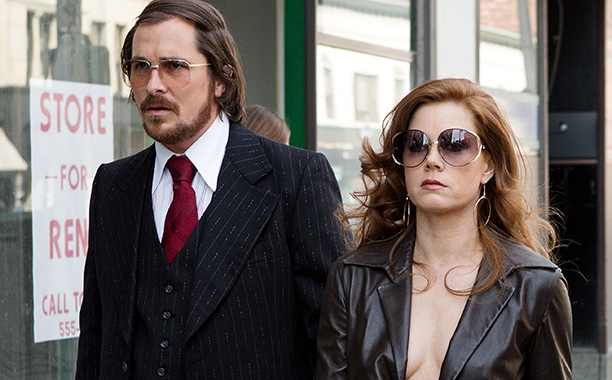
Christian Bale and Amy Adams are partners in crime in American Hustle.
Christian Bale and Amy Adams are partners in crime in a 1978 sting in American Hustle.

American Hustle has a lot to attract crowds by the looks of the premieres: big name actors, 70’s setting, crime story, lots to stimulate excitement. The question is does it deliver?

The story is set in 1978 in New York. Irving Rosenfeld is a dry cleaning store owner as a profession, con on the side. His love interest is Sydney Prosser, a mid-western girl who came to the Big Apple to redefine herself. Once into the relationship, he reveals his ‘other side.’ She decides to be his partner in crime posing as a British aristocrat: Lady Edith Greensley. Even though they are a perfect match, he’s hesitant to leave his six year-old son Danny or divorce his young wife Rosalyn.

FBI agent Richie DeMaso has been keeping his eye on the pair and their scheming and even arrests Irving on a loan scan only to bargain Irving into lining up four additional arrests. Sydney is up on the heist, feeling she can manipulate Richie in the process. Also in the scheme is Irving talking about a wealthy Arab sheikh looking for investors. One person suggests the sheikh do business with Camden mayor Carmine Polito who’s helping to revitalize gambling in Atlantic City, a person

The funny thing is while Richie doesn’t seem to have what it takes to get Carmine, Sydney and Irving do. Richie wants to entrap despite the objections of his boss at a law firm. Sydney is able to help an FBI secretary manipulate $2,000,000 of wired money for the operation. The boss at the law firm is so impressed, he finally gets Richie’s approval. Richie is unable to win over Carmine at a meeting but Irving is with his sheikh story to the point Irving and Carmine become friends. The meeting with Carmine and the Irving’s Mexican friend disguised as the sheikh works.

Problem is Irving’s set-up with Carmine and the sheikh catches the attention of a Mafia overlord named Tellegio who is second-in-command to Meyer Lansky. Tellegio is more demanding as he demands the sheikh become an American citizen with Carmine expediting the process with bribery if needed, and a $10,000,000 wire transfer to prove the sheikh’s legitimacy. Richie agrees, eager to get Tellegio but Irving knows the operation is doomed.

Further signs of a downfall are seen as Richie, who falls in love with Lady Edith, learns of the truth of Sydney and becomes violent. Irving tried to stop Richie’s abuse and the deal but Richie tells them there’s no way out. If Tellegio learns the truth, he’ll kill Irving, Sydney, Rosalynn and Danny. To cause huger friction, Rosalynn starts an affair with a mobster. The mobster wants the deal with the sheikh to be true while Rosalynn knows the whole story and wants a divorce.

In the end, it turns out arrests are made successfully on members of congress and a lot of dirty secrets confessed on tape. A lot of things are lost too, like a chance to entrap Tellegio, Richie’s status with the FBI, Irving’s earned friendship with Carmine and his marriage to Rosalyn.

The thing about the film is one is left with the question of what is the point of this movie? Is the movie trying to tell of a crime heist that flopped? Is it trying to tell a political message about corruption? Is it trying to make the actors do showy acting? Is it trying to be a retro-70’s movie that captures the feel and sound of that decade? I’m left confused.

Another question is if this movie is trying to be a David O. Russell ego trip? This had me wondering because if you notice, American Hustle has actors in his previous two movies–The Fighter and Silver Linings Playbook–acting in major roles. In fact the four Oscar nominated performances from this movie come from actors who have already received an Oscar or an Oscar nod for a performance in either The Fighter or Silver Linings Playbook. It almost seemed like it was packages as a ‘David O. Russell all-stars’ collaboration. I will acknowledge that Russell is the director that has most made the biggest impact on films in the past five years but still…

On a more positive note, I give them credit for saying “Some of these events actually happened.” at the beginning. It’s way less misleading than saying “Based on a true story.” I read in Wikipedia that it’s based on the FBI’s ABSCAM operation from the late-1970’s/early 1980’s. I never read anything about those operations but it does capture my intrigue about them and what the real story was.

On an additional note, I saw this just a month after I saw The Wolf Of Wall Street which also featured interesting and colorful characters based in New York/New Jersey. Seeing those two movies this past while really made me wonder about the behavior of people from New York City. Hey, I don’t want to think stereotypical thoughts of other people but it still makes you wonder.

I know I talked about my question of Russell’s intentions of directing. I also question the script Russell co-wrote with Eric Warren Singer. Sure, Russell knows how to direct actors. In fact eleven of the last eighty Oscar nominations in the acting categories over the past four years came from a performance in one of his films. Nevertheless the showy acting distracts from the story line. Even if Russell wanted to deliver a story that was more character-oriented than plot-oriented, the performances were too distracting for it to make much sense. Even some of the 70’s elements like the disco dancing between Irving and Sydney made me question whether that was intended to be part of the story or trying to get a 70’s feel.

As for the acting, I won’t completely blame the actors for the over-the-top showiness, not even the ones who were nominated for Oscars. I heard Russell encouraged some of the actors to improvise their roles. Christian Bale appeared to be the one lead role that most had it together. Amy Adams also showed some elements of control of story over ‘showtime-style acting. Not to mention she also did a good job playing her least sweet character I can think of. Bradley Cooper’s role was a bit confusing and was one of the prime distractors of the movie. Jennifer Lawrence was also another top distractor. One thing I most give credit for is Lawrence again does a great job of playing a woman years older than her. Jeremy Renner however had one of the most underrated performances of the movie. He was the one who most delivered in character acting that worked for the movie rather than distract. Looking back, I just wonder if the film was to do about some New York people with actual ‘drama queen’ personalities. Nevertheless it didn’t stop them from distracting me from the plot.

I know that I talked a lot of how the movie sometimes focuses more on giving a 70’s feel than telling the story at times. The inclusion of the various 70’s songs during certain scenes–most notably Goodbye Yellow-Brick Road in the scene where Rosalyn and Sydney meet eyes for the first time–had a lot to do with me questioning if the movie was telling a story or a 70’s throwback movie. Even the placement of certain songs in certain scenes had me wondering if it fit the story right. One thing I do give credit for is that in terms of the clothes, the hair, and the set designs, this is the most 70’s-like I’ve seen. I hardly ever sensed a trace of the modern times which is what a lot of aptly-named 70’s throwback movies often include. That has to be the one flawless thing of the movie.

American Hustle is a movie that will leave you scratching your head. If it’s trying to tell you a story of an FBI sting, it sure got lost in the showy character acting or the 70’s throwback elements.

Russia’s Winter Olympic Legacy

I know there was a lot of talk about whether the Olympic Games should have been held in Russia despite the political problems at the time. I too have my concerns about having them in Russia, especially with the amount of money Vladimir Putin spent on them. However back when I was younger I used to have the belief that if a nation demonstrates their sporting prowess in the Olympic arena, then they’ve earned the right to host an Olympics. Yes that was a naive rationale I had those decades ago but that rationale would sure work for Russia.

THE FIRST SIGNS

Before the current Russian Federation and before the legendary USSR, Russia first competed as the Russian Empire. It only competed in three Olympic Games–1900, 1908 and 1912– and won a total of eight medals: only one of them gold. Nevertheless that gold was unique because it was in the sport of figure skating. Remember how I mentioned that the London Games of 1908 was one of two Summer Olympics to host figure skating until the first Winter Olympics took place in 1924? Well Russian Nikolai Panin won the gold medal in the men’s special figures event.

Then in 1917, the Russian Empire was no longer and became the Union of Soviet Socialist Republics. Athletes in the USSR were paid the same wages as all Russians who worked. That made them ineligible to compete in all Olympic Games between the two World Wars. Despite Soviet athletes being denied Olympic glory, an athletic revolution was happening inside the USSR at the time that would take the world by storm, provided the Olympic door would open one day.

THE RUSSIANS ARE COMING

In 1952 thanks to some IOC tweeking by President Avery Brundage who ironically was staunchly pro-amateur and slapped Olympic athletes who accepted money with big punishments including a ban from all Olympic competition, the USSR was allowed to compete at the Summer Olympics in Helsinki. They received the second-highest total of medals and would serve notice to the United States that they’d be their most legendary Olympic rival of all-time. They would have to wait until 1956 to compete at the Winter Olympics for the first time but their prowess at the Summer Games of 1952 would send a message to the sporting world.

The Italian resort town of Cortina d’Ampezzo would serve as the host for the 1956 Winter Olympics. The Soviet Union sent 53 athletes to those Olympics and walked away with the most medals. They had won six of the 24 events–including one speed skating event where two Soviets tied for the gold–and a total medal haul of sixteen. The Soviets reigned supreme in speed skating winning three of the four events. Before 1956, the medals of cross country skiing were divided by the Norwegians, Swedes and Finns. The Soviets gave them all a new rival as they came out on top winning seven of the eighteen medals including two golds. However it was hockey where the Soviets would give its biggest signs of the revolution. Before 1956, Team Canada had won hockey gold in all but one previous Olympics. Now Canada finally had a major hockey rival as the USSR won the gold beating Canada 2-0.

THE USSR’S HUGE LEGACY

Soviet dominance at the Winter Olympics would continue for decades. There would only be two Winter Olympics where the USSR wouldn’t be the top medal winner. That would be 1968 when Norway came out on top and 1984 when East Germany ruled those Games. The Soviets would also set a Winter Olympic record in golds in 1976 when the team won a total of 13. Out of the 38 events in 1976 that’s roughly one gold for every three events. Those 13 would remain untouched until the Norwegian team of 2002 equaled it and unbroken until the Canadian team of 2010 broke it with 14.

The most famous winter Olympic legacy of Soviet athletes probably came from its hockey players with Vladislav Tretiak (bottom, third from right) considered the best goalie in history.
The most famous Winter Olympic legacy of Soviet athletes probably came from its hockey players with Vladislav Tretiak(bottom, third from right) considered the best goalie in history.

From 1960 to 1988, Soviet athletes shined like no other country winning a total of 194 medals, 78 of them gold. Cross country skiing was where they experienced their biggest success with three skiers winning three golds in a single Olympics: Klaudia Boyarskikh in 1964, Galina Kulakova in 1972 and Nikolai Zimyatov in 1980. Speed skating was the second biggest medal-winning sport. The biggest feat by a Soviet was Lidia Skoblikova who won a total of six gold medals including winning all four event in 1964. Biathlon was also a sport the USSR exceled in as they won every men’s relay since it was introduced in 1968 and would include many individual champions.

Figure skating was good for the USSR but its biggest accomplishment was in the pairs event where they churned out gold medal-winning pair after pair starting with the Protopopovs in 1964 and ended with Gordeyeva and Grinkov in 1988. Irina Rodnina would win three golds with two male partners between 1972 and 1980. Ice dancing was its second most dominant as it would win gold three of the four times it was contested until 1988. Only a superpair like Britain’s Torvill and Dean could break their dominance.

However if there was one sport where the USSR defined ‘dominance,’ it was ice hockey. From its first Olympics in 1956 to 1988, the Soviet hockey team showed its dominance like no other. The dominance was helped in terms of Olympic rules. The best Soviet players were allowed to be eligible for Olympic competition. The best Canadian and American players weren’t because playing in the NHL made one professional and in those days, an athlete couldn’t make a single penny off their sport if they wanted to compete in the Olympics. That allowed for them to win seven of the nine Olympic competitions during that time. They only times they lost the gold was in Olympic Games which the US hosted and won the gold: Squaw Valley in 1960 and the famous ‘Miracle On Ice’ in Lake Placid in 1980. Their most powerful was during the 70’s whose players at the time were believed to be even better than the best NHL pros. Their dominance through the 70’s and early 80’s came greatly from goalie Vladislav Tretiak whom many considered to be the greatest hockey goalie ever.

1992: THE USSR’S LAST HURRAH

Funny thing is whenever I return to Olympic Square whenever I visit Calgary. They have plaques listing all of the medal winners during those Games. Funny thing is they also list the three-letter Olympic nation codes that go with them. Some of which are codes of nations during the ‘Cold War,’ like the GDR (East Germany), YUG (Yugoslavia), TCH (Czechoslovakia), and the URS (Soviet Union).Unknown at the time of the Calgary Olympics of 1988, countries of the Eastern Bloc would undergo a revolution where Comunism would be overthrown either diplomatically as in Poland and Hungary or aggressively as in Romania. The USSR was showing signs of kinder gentler Communism under Gorbachev’s Glasnost and Perestroika but that didn’t come without its problems, like republics wanting their own independence. In August 1991 while Gorbachev was outside hte USSR, a group of Communists staged a mutiny in the Kremlin returning the Union to the hard-line Communist rule. Gorbachev returned declaring the death of Communism and the end to the USSR.

When the 1992 Albertville Winter Games opened, the Parade Of Nations showed the signs of the New World Order: Germany was reunified, Yugoslavia was still together but Croatia and Slovenia sent their own teams, Czechoslovakia competed in their last Olympics together and the Baltic countries of Estonia, Latvia and Lithuania that was part of the USSR sent their own teams. The most notable change was the republics of the USSR competing as the Unified Team. They competed under the Olympic flag and if ever one of their athletes won a gold medal, the Olympic hymn was played.

129 athletes from five of the twelve republics competed for the Unified Team. The women in cross country skiing were dominant with Lyubov Egorova winning two individual events and anchoring the relay. Figure skating showed continued dominance with a win in pairs and ice dance. Also for the first time came a gold medal in men’s figure skating by Ukrainian Viktor Petrenko. Until then, the highest a Soviet male skater won was a silver. There some signs of Soviet dominance wearing off with the political changes. There were gold medalists in biathlon but the men’s relay team didn’t win gold for the first time ever. There were no medals won by Unified athletes in men’s cross country skiing or long track speed skating. Even the hockey team suffered a loss to Czechoslovakia in the preliminaries. However the team came back to win gold.

RUSSIA: A NEW CHAPTER OF WINTER PROWESS

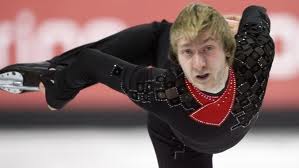
Russia's new Winter Olympic era: While the USSR never produced a gold medallist in men's figure skating, Russia produced four including Evgeny Plushenko.
Russia’s new Winter Olympic era: While the USSR never produced a gold medallist in men’s figure skating, Russia produced four including Evgeny Plushenko.

It was at the 1994 Lillehammer Games that all the republics of the former USSR first competed for their own national teams. National flags were flown at victory ceremonies as well as their national anthem played. Russia fielded a team of 113 athletes and they showed a continuation of the prowess. While host country Norway won the most total medals, Russia won the most golds with 11.  Russia won three of the four figure skating events. Lyubov Egorova was back winning two events and anchoring the relay to gold. Biathlon prowess was still alive as the men won the two individual events and the women won the relay. Speed skating strength returned as they won five medals including two gold. Russia also showed skill in sports either new on the Olympic program like two medals in freestyle skiing or even in traditional Olympic sports the USSR never fared well in like alpine skiing where a female skier won a silver. Hockey however would mark its biggest changing of the guard as the Russian team would fail to win a medal.

Success for Russia’s winter athletes would continue long after the end of the USSR. However Russia would often have cases where they’d have a strong team one Winter Olympics and a so-so team the next. Nagano in 1998 would show excellent success as the Russians would win 18 medals including nine gold. The Russian women completely swept all five cross country skiing events with Larisa Lazutina winning two individual event golds, two other medals in the other two individual events and was part of the gold medal-winning relay. Russia again won three of the four figure skating events and their men’s hockey team returned to prowess albeit losing the gold to the Czechs 1-0 in the final.

The Russian team would first show signs of struggle in Salt Lake City in 2002. Sure they won two figure skating events and two cross country skiing events but their overall medal total was 13 medals including five golds. The medal total was so disappointing to Russia, the president of the Russian Olympic Committee refused to have the athletes march or dance around on field during the closing ceremony. Turin in 2006 showed a return to the winter muscle as they finished fourth in the medal tally with 22 medals including eight golds. They won two golds in biathlon and cross country skiing each and won three of the four figure skating events. They also won their first ever sledding medals with silvers in men’s four man bobsled and men’s luge. However Vancouver 2010 was a return to the down side as the team won fifteen medals including only three gold in biathlon and cross country skiing. They failed to win a medal in men’s hockey and failed to win pairs figure skating for the first time since 1960. You could understand why Putin wanted a grand team for Sochi.

THE SOCHI GAMES SUCCESS

I will only give a brief rundown of Russia’s success here in Sochi because I’m planning more of a discussion in a full blog specifically about the Sochi Games. The opening of the Sochi Olympics showed a salute to athletes of the past with speed skater Lidia Skoblikova and hockey player Vyacheslav Fetisov carrying the Olympic flag. The Olympic torch was lit by pairs figure skater Irina Rodnina and goalie Vladislav Tretiak: former Soviet athletes that not only won three Olympic golds but also are considered the best ever in their sport. Sochi definitely showed a return to Russia’s prowess in winter sport. They were back in pairs figure skating, won their first ever ladies figure skating title, showed prowess in speed skating for the first time and even won their first-ever bobsledding gold. More to come on this in my final Sochi blog.

Russia has always had a legacy in Winter sport whether it be as the USSR or as the Russian Federation. The Sochi Games further proved that legacy and also provided a future for that legacy in the years to come.

WORKS CITED:

WIKIPEDIA: Soviet Union at the Olympics. Wikipedia.com. 2014. Wikimedia Foundation Inc.  <http://en.wikipedia.org/wiki/Soviet _Union_at_the_Winter_Olympics>

WIKIPEDIA: Unified Team at the Winter Olympics. Wikipedia.com. 2014. Wikimedia Foundation Inc. <http://en.wikipedia.org/wiki/Unified _Team_at_the_Winter_Olympics>

WIKIPEDIA: Russia at the Olympics. Wikipedia.com. 2014. Wikimedia Foundation Inc. <http://en.wikipedia.org/wiki/Russia_at_the_Olympics>

Movie Review: Frozen

Frozen

I’ll admit it’s rather late for me to be reviewing Frozen. I wasn’t interested in it at first. However its success at the box office coupled with its Oscar buzz helped me change my mind.

Normally I’d give a description of the film in my reviews but I won’t here since most of you have already seen Frozen by now. I’ll just go in to what I have to say. There are a lot of unique and great aspects of this movie. First is its unexpected twists. You’d first think it would be Kristoff that would save Elsa, Anna and the kingdom but it turns out to be Elsa. Already there are a lot of writers and bloggers comparing Elsa to Merida in Brave in terms of heroine status. I’ll bet you never thought Kristoff would be one of the bad guys. Second is its animation that truly mesmerizes. I was dazzled when I saw Elsa’s snow-spell and even the ‘ Castle Of Ice’ created on screen. Watching Frozen was like being taken to a world of ice at times.

Thirdly is the musical aspect of the movie. For many decades, even as close to about twenty years ago, animated movies were commonly musicals and excelled in telling the stories with catchy songs. From Someday My Prince Will Come in Snow White and the Seven Dwarfs to Hakuna Matata in The Lion King, you could always rely on an animated feature to deliver charming music. When 3D became the staple of animated features, the features were predominantly non-musicals and the movies were more focused on the story and the animation. When was the last animated feature done as a musical that dazzled you? Yeah, that far back. Frozen is the first 3D animated musical that has won the movie-going public by storm. It’s refreshing to see the musical aspect come back in animated movies and even added to 3D animated movies successfully for the first time. I think the success of Frozen will churn out more musical-styled 3D animation features.

Frozen is a welcome relief in terms of animated movies for 2013. This year was a rather quiet year in terms of animated movies. Sure this summer featured the excitement of the comeback of the monsters of Monsters University and Despicable Me 2 took ‘minion mania’ to new heights but there was nothing new to create new buzz. Nor was there anything with writing that stood out. I’m sure that became apparent to a lot of my subscribers when I published my blog about Pixar appearing to have lost its spark. Frozen may have come late in 2013 but it sure came to the rescue. Its excellence is not just in having a thrilling story but also in having excellent animation.

Also Frozen has a bonus aspect: catchy songs. It’s not just something that’s been missing from animated movies but movies in general since the new century. You may remember before the 2000’s came there were many catchy songs that came from movies. Since 2000, the presence of a catchy song or even a hit song from a movie is something that has been very rare. I think the last hit song from a movie before Frozen was Slumdog Millionaire’s Jai Ho. I was especially surprised during 2006 when Dreamgirls was in theatres, none of the songs were released as singles despite Beyonce’s chart-topping prowess at the time. I know most of North America was in a hip-hop coma at the time but still… Frozen helped bring back the catchiness of movie music. Already two versions of Let It Go are on the charts right now: Idina Menzel’s version is currently #18 on the Hot 100 and Demi Lovato’s version is at #56 having peaked at 38. Recently Do You Want To Build A Snowman? started hitting the charts and is now at #57. I guess it’s no wonder that the movie has been re-released in a sing-along version.

It’s hard to pick who first to compliment. First off, I’ll say the animation was top notch. The Walt Disney Animation Studios did an excellent job in creating a charming trip to the past and a mesmerizing world of ice. Secondly, kudos should go to Christophe Beck and Kristin Anderson-Lopez for providing music that was not only entertaining but the catchiest movie music in years. Thirdly a great job in the acting and singling by both Kristen Bell and Idina Menzel. They’re already established actors and they’ve also had musical experience but this has to be the best combined singing/acting efforts from both of them. The supporting actors were also great in their roles too including Jonathan Groff and Santino Fontana. However it’s Josh Gad that steals the show as the goofy Olaf. Finally great acting/writing efforts from Chris Buck, Jennifer Lee and Shane Morris. It was something to take Hans Christian Andersen’s The Snow Queen and turn it into an animated musical. They really delivered a winner. In fact you remember how Disney movies would give animated adaptations of children’s stories like Snow White, Cinderella, Pinocchio and The Lion King and turn them into beloved classics? I think Frozen is destined to go that same route over time.

Funny thing about Frozen is not just simply its current total success with its box office run but its lack of success when it first started. I’ve noticed on Box Office Mojo that it was only on one single theatre when it opened because it didn’t want to compete with the opening of the latest Hunger Games movie. It got better the following week when it was spread across North America and grossed $67.4 million that weekend but it was still in second to the Hunger Games by $7 million. The funny thing is while most movies came and went during the six weekends since, Frozen stuck around in the Top 3 and was even #1 on two different weekends. It was even #2 the weekend of January 31-February2nd: its eleventh weekend. Okay, the sing-along version release may have something to do with it but it just goes to show its lasting power. In fact it wasn’t until this weekend, its thirteenth, that it finally left the Top 5 and currently sits at #8 with a total gross of over $375 million.

Frozen has been the animated movie both moviegoers and fans of film alike have been waiting for all of 2013. It was definitely worth the wait because it delivers in terms of quality and entertainment value. Maybe I should go back for the sing-along version.

Oscars 2013 Best Picture Review: Philomena

Judi Dench plays Philomena Lee, an Irish woman looking for he long lost son, in Philomena.
Judi Dench plays Philomena Lee, an Irish woman looking for her long lost son, in Philomena.

The premise of Philomena may make many people nervous about seeing it. The questions before watching it will be “Will it be too disturbing?” or “Will the Catholic Church get knocked on screen again?” There’s only one way to find out.

The film begins in 1951 with a teenage Philomena Lee. She meets a young boy at a town fair whom she completely falls for that one day. Fast forward to 2004. Martin Sixsmith is an unemployed journalist since the Labour Party, the party he works as a government advisor, is beset by scandal. He goes to a party and meets the daughter of Philomena Lee who encourages him to write a story about her mother who was forced to give up her baby boy Anthony more than 50 years ago. Martin is uninterested in writing a human interest story and is more intent on writing a book on Russian history. However it’s after he meets Philomena and hears her story about how it all happened that he changes his mind and investigates further.

Once she was pregnant, she was sent by her father to Sean Ross Abbey, a mother-and-baby home that young unwed pregnant girls were sent to. It was terrible to live there while under the orders of the strict Sister Hildegarde, especially if she was assigned to do the laundries for four year to cover her stay. Nevertheless she was able to see her baby Anthony whom grew attached to her friend’s girl Mary. Then one day Philomena saw Mary and Anthony adopted out of the house. All Philomena could do was watch in heartbreak 30 feet away as her infant son was taken away.

Philomena had tried for years to find out what happened to her son by visiting the convent to no avail. Martin goes with Philomena to the convent only to hear from the nuns the records were lost in a fire years earlier. It’s over at the pub they hear from locals that the records were purposely destroyed in a fire and the children were sold to rich Americans. It’s after Martin’s searches in Ireland coming to a dead end that he decides on an arduous task. He decides to get the answers by visiting the United States and having Philomena accompany him.

Upon arrival in the United States, he learns through various search sites that Anthony and Mary were adopted by Doc and Marge Hess who renamed him Michael. Michael grew up to be a lawyer and a senior official to the Republic Party during the administrations of Ronald Reagan and George Bush Sr. He also learns news of heartbreak. Michael died in 1995 at the age of 43. The news naturally breaks Philomena’s heart but soon she wants to meet with people who knew Michael.

She meets one colleague and learns Michael was gay and died of AIDS. She meets up with Mary who grew up with Michael and eventually became a mother. Mary reveals Michael had a boyfriend named Pete Olsson. Pete is unwilling to cooperate despite Martin’s please but it’s not until Philomena pleads face to face with Pete that he complies. The visit with Pete is warm as he tells her of Michael’s childhood and even shows home videos. It’s when Philomena sees a video of Michael at the Sean Ross Abbey that she learns Michael tried looking for her while he was dying. She also learns he was buried over at the Abbey.

It’s then when Martin and Philomena return to the Abbey where it all started. It’s there where Martin can confront Sister Hildegard for being strict on the girls and being deceptive to both Philomena and Michael, whom she told Michael he was abandoned and they lost contact with the mother. Hildegard is unrepentant but surprisingly Philomena approaches her and forgives her. It’s right at Michael’s grave that she can finally meet the son she’s always looked for and finally make peace with her past.

The best quality of the movie is its unpredictability for those who’ve never learned the story. There may be some who have already learned the story of Philomena Lee but most who haven’t. If you don’t, then this movie will surprise you in many areas. It’s not just about Philomena’s search but learning of her son and what happened in the end. The film is full of moments. Moments of happiness, moments of tension, moments of relief, moments of surprise, moments of sadness and moments of humor. The film shows that the trip Philomena went on was not just about leaning about what came of her son but also her own personal journey of healing. A healing that needed to happen and occurred in unexpected ways.

Another great quality is the portrayal of the characters themselves. Philomena comes across as a very likeable and charming woman. Nevertheless one would question how smart she is at times and even question her faith if it’s just routine or even strong. Philomena is seen as simple and sometimes blames herself for a lot of wrongs in her life. However she comes across at the end as a stronger person than one would originally think. The biggest surprise is it would be Martin who most seems to have problems and issues while Philomena, who is the one who actually endured trauma, who still smiles at life in the end despite the harshness she went through.

Martin himself comes across as your typical egotistical journalist who appears to want to destroy the Catholic Church with his pen but somehow has a softening of heart once Philomena comes into his life. He will first make one wonder what his true intentions of helping Philomena learn of her son is: to really help Philomena or to get a great story published. In the end, he comes off as rather likeable for a journalist. Proof that even a journalist can have a heart!

I know there may be some Catholic readers that may be hesitant about seeing this film and the way the Catholic Church is portrayed. Yes, it’s surprising that Catholics would be more concerned about their depiction of the Church in a film that’s not by Martin Scorsese than whether Scorsese’s latest has another slamming of the Catholic Church in his latest. Even I myself was a bit concerned about seeing this as I saw The Magdalene Sisters ten years ago and it really was a nasty depiction of nuns and priests as well as a harsh but true look at the abuse the girls received. Philomena doesn’t show the girls in the laundries suffering abuse. It shows then doing the laundry but it does show the heartbreak of a teenage Philomena as she sees Anthony taken away from a distant window. It also shows Sister Hildegard to be unapologetic for all she’s done, not even for the girls that died during childbirth.

Actually in retrospect, I think it makes the Catholic Church look like the bad guy while the Catholic faith comes across as a positive thing in the end. One will first think of Philomena’s Catholic faith as something too ritualistic or forced upon her and even prone to break at one point but one will see in the end that it’s her faith that helps her through her hard times. In fact Philomena’s response to why she forgives Sister Hildegard in from of Martin will astonish the audience and will surprise many about how forgiveness is actually a form of personal strength.  As for The Wolf Of Wall Street, Catholics should relax as the most there is in it is a joke about nuns which is the tamest taunting of the Catholic church I’ve seen is a Scorsese movie in years. I feel Philomena’s story of her search is an uplifting story of hurt and eventual healing.

Without a doubt, the standout of the film is the performance of Judi Dench. Judi is one of those actresses who really knows how to excel with age. I may have seen better acting performances from her but her portrayal of Philomena was excellent in showing the many dimensions of Philomena Lee as well as adding a charm to her. Steve Coogan was also very good in what I feel to be the best acting I’ve seen from him. His role as Martin didn’t have the same dimension as Philomena but it was a very good performance. Coogan also did a very good job of scriptwriting with Jeff Pope. The story keeps one interested especially for those who don’t know the story of Philomena Lee. Stephen Frears may not as done as spectacular job in directing as Judi did in acting and as Jeff and Steve did in writing but it is worthy of respect. It may not be as great as his Oscar-nominated directing in The Queen but it’s still a very good job. Finally, Alexandre Desplat does it again in making the film with his score composition.

Philomena may first appear like a harsh movie about a woman hurt by her past and finally looking for answers. In the end it turns out to be more bittersweet than harsh and will leave one feeling Philomena did win in the end.

Sochi 2014: Making Press For More Than Just The Games

The Sochi Olympics has made news who won what medals. And a lot more.

DISCLAIMER: I’ll admit that I originally planned to post this blog on the day of the opening ceremonies. In retrospect, I’m glad that I waited until the halfway point because I learned more about them in the last while.

The Olympic Games are being held in Sochi, Russia from February 7th to 23rd. 2800 athletes from 88 countries will be competing in the 98 medal events in fifteen different sports. In this, I will look at the city of Sochi, the new events, what Russia and especially Putin plan to get out of these games and the side-news that has been making headlines before the Olympics.

SOCHI THE CITY:

Sochi is a city in Russia with a population of 420,000. Sochi sits at the foot of the Sochi River on the east coast of the Black Sea just 20 miles north of the Russia-Georgia border with the Caucasus Mountains on the horizon. The city had been formed over various years of wars and conquering tribes. It was after both  the Caucasus War and the Russo-Turkish War that was ceded to the Russians back in 1829. British intervention would occur in monitoring the weapons of the war. The Fort of Alexandria would be constructed in 1838 at the mouth of the Sochi River. That would later have an impact on forming the city. Many more forts would be set up close to the Fort of Alexandria including the Fort Dakhovsky. Fighting would continue until the end of the Caucasus War in 1864.

Starting in 1866 people of various ethnicities settled around the coast of the Black Sea. In 1874 the first Russian Orthodox church was built on the former Fort Dakhovsky and the settlement was renamed the Dakhovsky Posad. The Sochi Lighthouse was built in 1890 and the Dahkovsky Posad renamed themselves the Sochi Posad and incorporated themselves into the Black Sea governate. Sochi opened its first sea resort in 1909 and the town was granted full town status in 1917. Then came the war between Russia and Georgia. The war ended in 1923 with Sochi declared Russian territory. Joseph Stalin helped promote Sochi as a fashionable resort. After the fall of the USSR, Sochi has been promoted in Russia as the capital of summer.

THE GAMES AND THEIR HOPES:

These Olympic Games cost $51 billion to build: $39 million more than originally anticipated and more than any other Olympic Games in history. This was not only for the sake of building more facilities for hosting events. This also included telecommunications improvements in the region, power infrastructure upgrades, transportation improvements on all means of transportation, over 10,000 additional hotel rooms and six additional post offices.

The Olympic sites have been divided into two clusters: the Coastal Cluster inside the town and the Mountain Cluster into the Caucasus Mountains. The Coastal Cluster consists of the Olympic Park containing the Olympic Flame, the Fisht Olympic Stadium, two hockey arenas, a figure skating arena, a speed skating oval, a curling centre, the Olympic village, and the International broadcasting centre. The Mountain Cluster–located in the area called Krasnaya Polyana or ‘Red Hills’–consists of five venues including a Nordic skiing complex, a ski jumping centre, an alpine resort including an extreme park for snowboarding and freestyle skiing, a sliding centre and an Olympic village.

This isn’t all completely in vain for the sake of these seventeen days, or at least they’re not intended to be. The city of Sochi is expecting to make big improvements and grow considerably after the Olympic Games. Fisht Olympic Stadium plans to be continued as a football facility after the Olympics and is even one of the venues for the 2018 World Cup. The city of Sochi itself is signed on to be host of the Russian Formula 1 Grand Prix from 2014 to 2020. The RusSki Gorki ski jumping hills are to be used as a training facility for jumpers and two smaller hills for youth training are planned to be added after the Games. The ski hills at Rosa Khutor have been designed by a 1972 Olympic champion and plan to be part of future World Cup seasons. In fact Vladimir Putin is hoping to have Sochi become a winter resort that can compete with the resorts of France, Switzerland and Italy. In fact Putin had a conversation with one world leader where he said: “The rich travel to France and Switzerland to go skiing. Why not Krasnaya Polyana?”

Even as shown in the Opening Ceremonies, the Games hope to present a positive picture of Russia especially since it has made a lot of bad news in terms of politics, social problems, alcoholism, poverty, crime and even terrorism. Putin is hoping to improve ties with other countries. Putin is also hoping to improve the family structure in Russia with declining birth rates. Putin is also hoping these Games will stimulate the Russian economy. Let’s hope those $51 billion pay off, Vlad.

Even for venues planned for just those seventeen days, they too have post-games uses planned for them. The Bolshoi Ice Dome, the biggest of the hockey/skating venues, has plans for further ice events and concerts. Shayba Arena is a temporary hockey venue which is planned to be dismantled and shipped off to another city. The Iceberg Skating Palace has two post-games options of remaining an ice arena or a cycling velodrome. The Adler Oval for speed skating is slated to be an exhibition centre after the Games. The Ice Cube Curling Centre plans to stay a sports facility but can be moved to another location. Whether the plans will follow through and whether they will pay off in the end is something only the future will tell.

NEW TO THE PROGRAM:

Back in Vancouver there were 86 events. Here in Sochi there were an additional 12 events added to the program:

  • Figure Skating Team Event-There will be three mixed events where both men and women compete together contested for the first time here in Sochi. The Figure Skating Team event consists of ten countries competing in both short programs and free skates of men’s singles, ladies’ singles, pairs and dance. Points are based on the country’s entry’s placeage in each program. Team with the highest total of points wins the gold.
  • Freestyle Skiing Halfpipe (men and women)- The halfpipe event that’s one of the highlights of the snowboarding events have now been added to freestyle skiing.
  • Slopestyle events in snowboarding and freestyle skiing (men and women)- It’s like skateboarding on snow. Consists of first skiing or boarding on rails and then doing daring jumps off the three kickers. Points are scored on difficulty and execution.
  • Snowboarding Parallel Slalom (men and women)- Since 2002, snowboarding has had the Parallel Giant Slalom where two racers are paired together for two runs with last racer standing as winner. This Olympics marks the debut of the Parallel Slalom with tighter turns. Same method of deciding the winner as the Parallel Giant Slalom.
  • Biathlon Mixed Relay-two women on each team ski and shoot for 6 km, two men ski and shoot for 7.5 km. Not even cross-country skiing has a mixed relay.
  • Luge Team Relay-the relay consists of a men’s singles sledder going down first, touches a touch-sensitive pad that releases the gate for the next sled, the ladies’ singled sledder, to go down and then she touches the pad to let the men’s doubles sled go. The team with the fastest combined time wins.
  • Women’s ski jumping (normal hill)-You may remember before the 2010 Vancouver Olympics there was a brouhaha about getting Women’s Ski Jumping added to the Olympic program. The IOC decided the event wasn’t competitive enough to be added to those Games. Since then the event has become competitive enough to be added to the Olympic program. Women will compete in one event: the normal hill.

GAMES PROBLEMS:

With every Olympic Games come problems and they will get a lot of notice in the months leading up to an Olympic Games. Same with Sochi and there were two issues that received huge notice:

PUTIN’S ANTI-GAY LAWS

The administration of Vladimir Putin has not sit well with the many human rights groups on various issues but the biggest firestorm in the last few months came because of recent laws passed against the GLBT population and didn’t appear to make tourists immune to those laws. The laws were the prevention of distribution of “propaganda of non-traditional sexual relations” to minors, which effectively makes it illegal to suggest that gay relationships are equal to heterosexual relationships or to distribute material on gay rights and even bans gay pride parades. The media has reported of an arrest of a gay rights activist and an increase in ‘hate crimes’ against the GLBT population including against GLBT minors.

The laws have been protested against a multitude of people including GLBT rights activists and their supporters, famous celebrities like Lady Gaga and 27 Nobel Prize winners from arts and sciences. Putin has responded to the pressure by saying that GLBT tourist during the Sochi Olympics will not be under threat. Some heads of state chose not to come to these Olympic Games allegedly because of the laws. Thomas Bach wants to keep the Olympic arena free of politics just like past presidents of the IOC and has even threatened to ban athletes who protest the laws. As harsh as that is, we shouldn’t forget we’re dealing with the same IOC that punished the two black sprinters from 1968 that gave the ‘black power’ salute on the victory podium. I’m sure most of you know the story. Bach has responded back to the protests both in pre-Olympic announcements and in his speech during the opening ceremonies: “Have the courage to address your disagreements in a peaceful, direct political dialogue and not on the backs of these athletes.”

My Personal Vent: Personally I wasn’t happy about all those protests over Putin’s anti-gay laws. Now, don’t get me wrong. Yes, it is a problem. However it’s one of a whole whack of human rights problems inside the Russian Federation under Putin right now. The GLBT community isn’t the only set of people being hit hard or legally punished in Putin’s regime. Remember the free speech problem many months ago involving feminist punk band Pussy Riot? Even that’s one of many. The reason why I found it irritating is because I saw it as another case of the GLBT community ‘hijacking’ issues. Much the same way they ‘hijacked’ the issue of Eminem’s lyrics in 2000 while the GLBT people were one of many groups of people verbally slammed in Eminem’s records. And how they ‘hijacked’ the bullying suicides issue in 2010. It didn’t last as recent suicides from bullying involving non-GLBT teens like Amanda Todd and Rehtaeh Parsons reminded the public that bullying suicides occur indiscriminately. I don’t have a problem with pre-Olympic protests but I do wish other groups of people were just as loud at speaking their concerns rather than GLBT activists hogging the show.

ETHNIC CIRCASSIAN DISSENT:

A bit of a history lesson. The Circassian peoples used to have the area around Sochi and the Krasnaya Polyana as their own centuries ago. Unfortunately most Circassians were killed during the genocide and ethnic cleansing of the Russian-Circassian War from 1763 to 1864. Today there are 900,000 ethnic Circassians in Russia.

Some Circassian groups objected to the Games being held on land that was held by their ancestors before the war. There are two other factors that also leave many Circassians unhappy with the Games. One is the fact the Games are being held in 2014 which coincides with the 150th anniversary of the end of the Russian-Circassian war. The second being events held on the Krasnaya Polyana which were named the ‘Red Hills’ because of the bloodshed of a group of Circassians that attempted to return to their homes in a bloody battle in 1864.

Reactions amongst Circassians have been mixed. Some demand the Games be moved outside Russia unless Russia apologizes. Some accept the Games but want symbols of Circassian history be included the same way indigenous culture was included in past Games like Vancouver in 2010 and Sydney in 2000. There has been no response as to what has been done in this matter.

THREATS OF TERRORISM

The threat of terrorism has been taken seriously since the death of 11 Israeli athletes at the 1972 Munich Olympics. Sochi is located in an area prone to terrorism. It’s located close to a set of provinces in the North Caucasus such as Chechnya, Dagestan and Ingushetia to name a few. A lot of them have been fighting over their rights of their ethnicity and of their religion. Chechnya has been in the news the most firstly because of the First Chechen War that occurred between 1994 and 1996 just as Russia was defining itself in the post-USSR era. Wars have continued and Putin has responded with many human rights group call brutal force.

Islamic Chechen terrorists have declared a jihad and created a lot of terrorism since the First Chechen War which first started with hotel bombings in Russia in 1999 and has consisted of many incidents since. Most within the past five years like numerous car bombs, an express train bombing, Moscow subway bombings, an attack on Chechen parliament, a bombing at Moscow’s international airport and even links to last year’s Boston Marathon bombing.

The Chechen Islamist commander Dokka Umarov called for an attack in the Games back in July 2013 stating that the Games will be held: “on the bones of many Muslims killed.” Athletes that were to compete before the Games and many national Olympic Committees received threatening e-mails from terrorist groups threatening to blow them up. It got to the point the US ski and snowboard agency hired a private security agency to protect them during the Games. Even the US government added to the scare a week before when they talked about the possibility of ‘toothpaste bombs’ that can be made in tubes of toothpaste of 100ml or more.

Security during these Games will be handled by 40,000 law enforcement officials including police and the Russian Armed Forces. Putin even signed a Presidential Decree at the beginning of the year declaring that any protest in Sochi or the surrounding areas be approved by the Federal Security Services. There’s also an unmanned aerial vehicle squadron with defense rockets to protect Olympic airspace. There are four gunboats along the Black Sea to protect the coastline. Forces are also set up along the Russia-Georgia border and even the US has agreed to lend Navy ships and other assets for security purposes.

The closest thing to an incident was on February 7th during the opening ceremonies when a Pegasus Air Line from Kharkiv, Ukraine to Istanbul, Turkey was hijacked by a person claiming to have a bomb and wanted it flown to Sochi. The plane arrived at its destination in Istanbul and the passenger was arrested with no weapons or bombs found on the place. Since then there have been no incidents occurring.

The Sochi Olympics sure made a lot of news in the months leading up to their opening. They are currently making news mostly for the good in the days of competition held. The Games end on February 23rd with the Paralympics opening on March 7th. It remains to be seen whether the Games will pay off, whether they will continue to run smoothly without incident and whether Sochi and Russia itself make improvements in the months and years after.

WORK CITED:

WIKIPEDIA: 2014 Winter Olympics. Wikipedia.com. 2014. Wikimedia Foundation Inc. <http://en.wikipedia.org/wiki/2014_Winter_Olympics>