Movie Review: War Witch (Rebelle)

Rebelle

This is the third year in a row a film representing Canada has been nominated for the Best Foreign Language Film Oscar. The film’s title is Rebelle (English title: War Witch) and it’s a surprisingly good film.

The film is set in Southern Africa: possibly the Congo. Komona is a young pregnant girl at fourteen telling her life story to her unborn baby. It all starts at 12 where she is captured by the rebel army and ordered to become a child soldier. The first order she’s given is to kill her parents. Since then she’s now the war lord’s. She’s constantly on the battlefront with the rebel squad’s killing missions. Her killing prowess wins her praise from the rebel leader Commandant-Rebelle and he even names her ‘War Witch’. However she’s haunted by the ghosts of those she killed. Including her parents.

At 13, she meets Magicien: a boy with albinism who will change her life forever. The two fall in love and agree to escape. Magicien wants to marry her but she insists on the promise she made to her uncle; if a man is to marry her, he must give her a white rooster. It almost appears to be an impossible task until Magicien comes across a community of people with albinism. There he finds a man willing to give him a white rooster. There’s just one catch. The rooster has to be let free and he has to catch it. Magicien accepts the challenge with the villagers watching. After a lengthy try, he does catch it. Komoma is his.

Soon the solitude and hope for a better future is under threat. She still has images of the ghosts of her parents. And the warlords capture Magicien and Komona. They order her to kill Magicien but she can’t bring herself to do so. Magicien is then killed by the war lords and she is kept captive. She knows she would have to kill her way out. She succeeds so just after the ‘rape trap’ she created works on the soldier who almost raped her. She escapes after killing him to the help of her uncle and aunt. It’s after the birth of her child she has to find a way to make peace with the past and rid herself of her parents’ ghosts for herself and her child.

A common theme shown in films and movies is seeing the images of beauty and hope in the midst of ugliness. This film features a modern ugliness in the world: child soldiers in African countries participating in fighting. It may be a civil war or a rebel mission but it’s ugly. Many like Komona are ordered to kill their parents and are a permanent part of the army. It’s a childhood stolen. Even some of the girl soldiers end up being victims of rape amongst the leaders. This film does show the ugliness that Komona experiences but it also shows moments of hope that she can break free from her captivity. We see it in her romance with Magicien. It’s a unique moment when two children ordered to be killers drop their guns and fall in love. We see it in the birth of her baby. We see it in the end as she’s on a truck full of people cradling her baby. Moments of beauty in the ugliest of time is the film’s biggest quality. We see it and feel it.

Another accomplishment of the film is its ability to make what’s normally unwatchable watchable. No one wants to see a child soldier who’s forced to kill her won parents. No one wants to see a child being raped, even though the actual act of intercourse is hidden. Nobody wants to see a young girl giving birth in the middle of nowhere. It’s realities but the type of realities that we don’t want to know about. What redeems it is the images of hope I just talked about. It’s those qualities in the movie that makes a movie full of unwatchable realities be watchable.

The direction and writing of Kim Nguyen is the best quality of the film. Born of a Vietnamese father and a Quebecois mother, this is only his fourth feature film but this looks to be the one he’s able to make a name for himself. This film shows all the right moments and presents the story excellently to the point that the images of the ghosts are seen as an important part of the film instead of something ridiculous. Also good is the acting of actress Rachel Mwanza. Interestingly is that she herself was abandoned by her parts and was a street child in the Congo. She did an excellent acting job here with no phoniness. The acting of Alain Lino Mic El Bastien and Serge Kanyinda was also very good. The inclusion of both a score and African folk music also added to the atmosphere of the film.

Rebelle has already generated a lot of buzz outside of its Oscar nomination. It was in competition for the Golden Bear award at last year’s Berlin Film Festival and Rachel Mwanza won a Silver Bear for her acting performance as well as a Best Actress award at the Tribeca Film Festival. Other accolades it has received are Best Film from the Cambridge Film Festival, ranked in the Top 5 foreign language films for the National Board of Review awards and nominated for five Canadian Screen Awards; Canada’s own Oscars formerly known as the Genies.

Seeing how a movie situated in Africa makes for some interesting discussion how it can become an official entry in the Best Foreign Language Film category for Canada. It is because director Kim Nguyen is from Quebec. If you have seen the film, you’d notice that none of it is situated in Canada nor is there any mention of Canada in the screenplay. There’s some dialogue in French with the rest being in Lingala but that’s it. The Best Foreign Language Film category is a category that is always under frequent debate. First there’s the imposed limit of one film for every country submitting an entry into that category. Then there’s the language question. I guess it will continue to be a topic of discussion over the years.

Rebelle is an excellent story of finding hope and the survival of the human spirit in one of the darkest situations in the world around right now. Its story of love and hope is its best quality and makes it all that more memorable.
Oscars 2012 Best Picture Nominee: Les Miserables

Les Miserables

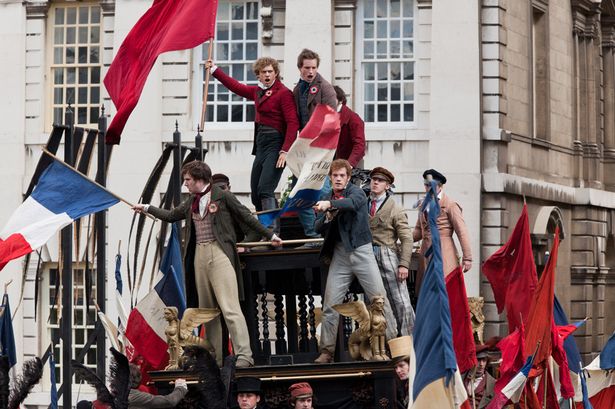
How many of you are familiar with the Broadway musical Les Miserables? Lots of you, I’m sure. Yes, Les Miserables was the one Broadway musical phenomenon from the 1980’s that could even have Andrew Lloyd Webber looking over his shoulder. When you heard that the musical finally would have a film adaptation, how many of you looked forward to seeing it? I’m sure a lot of you have including me, but does it deliver to movie crowds and especially to fans of the musical?

One thing I’ve learned about hit musicals being adapted to the big screen is that it’s a very tricky job. The whole filmmaking crew has the job of dealing with the fact the fans of the musicals want something that won’t disappoint them. The scriptwriter has the duty to make a script that includes the musical’s most popular songs mixed with the emotions of the characters in each scene. The director has the duty of making the songs, the emotions, the setting and the theme fit into a 2 1/2 hour long movie. The actors have the duty of delivering a performance that’s both believable and entertaining in both their acting and their singing, especially when a camera is filming them up close and it will be seen by all.

For the record, I saw the stage musical when it came to Canada in 1995. Most of the numbers possessed the same energy, spirit and emotion that was present in the stage musical. The only number I thought was lacking the same spirit was “Master Of The House”. That was the one number that had the least spirit and flavor that was present in the musical. Also Gavroche didn’t make that grand of an introduction. I know he does so in the stage musical but he just didn’t seem to grab you attention at the beginning the way he does on stage.

One thing I have to say about the film version is that it gave me a better understanding of what the musical is all about. Back when I first saw it on stage, I didn’t fully understand it. Now that I’m older and my attention span is better, I can understand it’s about redemption and the triumph and trials of justice in a world devoid of morals and justice. It was entertaining to watch on stage but it was through seeing it on film that it’s like a story from a Dickens novel where a man makes a promise to a dying woman and keeps his promise despite his trials and rivals until the end.

We should remember that there are many loyalists of the musical Les Miserables who hold the stage production dearly to themselves. The musical version of the Victor Hugo novel began in Paris in 1980 by Claude-Michel Schonberg and Alain Boulbil and became a musical on Broadway in 1985 thanks to the translations of Herbert Kretzmer. If you remember Broadway back in 1985 there were two types of musicals: those of Andrew Lloyd Webber that go on to charm the word and every other musical. Ever since it’s been released it’s become a huge Broadway phenomenon that could even rival some of Webber’s most legendary musicals. Every city it touched, it drew huge crowds. So you can imagine that when the film version of the musical came out, there would be a lot of pressure placed by fans of the musicals. It’s like that with any musical where loyal fans expect it done excellently if not perfect. There have been many musical adaptations that have been hits and misses in terms of comparing it with the stage play. Chicago and Hairspray are two examples where the film version hit. Rent and Nine are two examples of the film version missing. I myself have seen the stage production. I personally was impressed by it and I don’t see anything that would let anyone loyal to the stage musical down. I feel Tom Hooper and the producers did a very good job with it. I talked earlier about the energy of most of the songs still there. That had to be the best quality in terms of keeping it true.

There has been some flack from Tweeters and some fans of the musical about the use of actors in the movie. You’ve heard the disses: “Actors trying to sing.” I do give them partial credit because many actors had to learn singing for the sake of getting acting jobs in musicals. In fact John Travolta even made it clear after Saturday Night Fever that if you wanted to get acting work in New York, you had to sing, dance and act. Don’t forget that if there were singers in the film, there would be disses like: ‘singers trying to act.’

Anyways getting to the nitty gritty, one can notice those that are able to sing their roles gracefully from the actors just trying to sing. Russell Crowe gave his best effort as Javert but often came across as too forced and sometimes uncomfortable at what he was doing. Eddie Redmayne also didn’t look too comfortable performing as Marius. That’s the risk when you take when you insist on singing your parts instead of ADR. Hugh Jackman did an excellent job not just in singing and acting as Jean Valjean but also for being consistent in having the biggest role in the musical. Anne Hathaway as Fantine was however the best at combining both singing and acting in their role and coming across the most gracefully. In fact it was her performance of “I Dreamed A Dream” that stood out above all others. It’s no surprise to me if she wins the Oscar. The lead actors were not the only ones who impressed. Helena Bonham Carter and Sacha Baron Cohen did a good job in their supporting roles. Daniel Huttlestone was a good scene stealer as Gavroche is supposed to be. If there’s any fresh face that could rival the veterans, it’s Samantha Barks that was excellent in her supporting performance as Eponine.

Tom Hooper was given the difficult task of taking the musical and putting it on screen and he succeeded very well in doing it. William Nicholson also had the challenge of turning the script and songs of the musical and turning it into something for the big screen. He did a very good job of it retaining the spirit of the musical and of the songs. Also noticeable is that there are some scenes of dialogue. The stage musical doesn’t have that. Good to see he added those small parts of dialogue without dulling or upsetting the musical. As I said before, the music was great with Schonberg, Boulbil and Kretzmer even composing a new song ‘Suddenly’. The technical aspects like the sets, costuming, cinematography and sound mixing were also top notch.

Les Miserables finally has its chance to hit the big screen and faced a huge whack of pressures expected on any adaptation of a legendary Broadway musical before opening. The end result is an accomplishment, if not a triumph.

Movie Review: Django Unchained

Django Unchained movie still

If you’ve seen Lincoln already, you’ve already seen one man’s approach to slavery. Now Django Unchained is another man’s approach to slavery that’s more what Quentin Tarantino had in mind and not what you’d expect.

The film starts with the Speck brothers walking a group of male slaves down across Texas in 1858, three years before the Civil War. Their journey is interrupted by Dr. King Schultz who appears to be a traveling dentist. He offers to buy one of the slaves, Django Freemen. Before the Specks can refuse Schultz shoots one of the Speck brothers to death, shoots the other leaving him in pain and frees the other slaves to let them kill the wounded Speck.

Schultz confesses to Django he’s no longer a dentist but a bounty hunter who kills fugitives for reward money whenever the opportunity arises. He especially chose Django because he can help identify his next targets, the three ruthless Brittle brothers. Schultz admits he hates slavery and offers Django to help with freedom, $75 and a horse as a reward. Django assists successfully in helping Schultz shoot down the Brittles.

Not only does Django get his promised rewards but Schultz hires him as his bounty hunting associate. This comes as Schultz learns that Django has a wife: Broomhilda ‘Hildy’ von Shaft who is also a slave now owned by a separate owner. Schultz is hoping making Django his associate will reunite him with Hildy. Schultz does a good job in training him and Django is fully ready with the shooting skills and the desire for blood. His first operation on Smitty Bacall is a success from hundreds of feet above off a cliff. Django and Schultz are successful in other bounty shootings too and soon learn Hildy is owned by plantation owner Calvin Candie. Once arriving as his plantation, Candyland, we learn Calvin is a charming but brutal man who has his male ‘mandingo’ slaves fight to the death for his entertainment pleasure.

The two try to pose as ‘mandingo’ purchasers to Candie however the purchase turns real when they witness a slave mauled to death by angry dogs. They then ask for Hildy as an addition. Candie agrees to the sale but it raises the suspicion of Candie’s staunch slave Stephen who suspects Django knows Hildy and is up to something with this sale. Upon the advise of Stephen, a drunken ruthless Candie gives Schultz a deal: Hildy for $12,000 or death. Schultz agrees and shoots Candie after the offer. A shootout occurs with Schultz shot and Django shooting many of and many of Candie’s men dead only to end when Stephen threatens to kill Hildy is he doesn’t surrender.

Django is sent to punishment by Stephen and Candie’s sister working as a coal miner worked to his death. That’s what Stephen thinks as Django is able to outsmart the slave drivers, kill them and take their dynamite. This comes for the set up at the end for Django’s revenge on Stephen and all those at the plantation. Even though most people know what the ending will be, it’s the style that it’s done in that’s the treat of the movie.

One thing about this movie is that it’s not supposed to be the answer to slavery. It’s not supposed to be even a version of how slavery should have been solved all along. What this movie is basically is Quentin doing what he does best: a revenge movie done in his style. I’ve been an admirer of him since Pulp Fiction. I remember when I first saw it near the end of 1994. I was a college student of the time and Pulp Fiction was a movie that impressed people of my generation. I came from a generation that was strongly anti-censorship and looked at commercialism in movies as a downgrade in creativity and an attempt to soften the authentic. When Pulp Fiction came out, we were impressed. Finally a movie where the director/writer has complete creative control and it excels. Finally a movie that takes filmmaking to new levels as filmmaking should. Finally a film that pushes envelopes as us Generation Xers in college felt all art should. Finally a movie that makes original pay off at the box office. Finally an independent movie that could make the Hollywood fare at the time look like a laughing stock. Finally a film that doesn’t censor itself and doesn’t bow down to pressures of ratings boards or family values groups and it excels. In the end, Pulp Fiction has been hailed by most as the best film of the 1990’s.

Eighteen years have passed since Pulp Fiction has been released. While most directors have had a flare last for a number of years only to flare out over time, Tarantino never did. He still delivers movies that know how to charm and even enchant. Also while it appears that there’s a lack of taking film in new directions right now and more interest in creating a box office winner, Tarantino is still one who dares to stand out, take risks and do things his way. One thing I’ve come to know of Quentin Tarantino’s movies over the years is that he aims to deliver a film in style. It’s seen very clear in the films he shows that he attempts to tell a story via film noir or blaxploitation or spaghetti western style. He wants to deliver a stylized story as he’s done in his past movies and he does it again here.

Another thing Quentin does in his films that he does again here is deliver a movie with stylized characters with eerily charming personalities and deliver their acting with style. We see it with the characters of Django Freeman, Dr. Schultz, Calvin Candie, Hildy and Stephen. All of them have their personalities in their likeable traits and their hateable traits. All also deliver in their stylized acting without coming off as ridiculous. Few times can an actor get away with doing such a showy stylized character in movie performances without looking ridiculous or over-the-top. It’s here in Quentin Tarantino movies where it works the best. It’s funny because when I learned Django was about a slave getting revenge, I was expecting the actors to play characters with mannerisms from the 1850’s. Not in a Tarantino movie.

Also noticeable is how Quentin works to avoid the sentimental and touching in his films and it’s seen again here. The two where I got the biggest sense of this was firstly the scene where Django shot Smitty Bacall from a cliff and we see Smitty’s son coming to him on the ground. There’s no scene of the son’s reaction. The second was the scene where Hildy saw Django after being away from him for so long. I was expecting Hildy to be in tears and embrace him. Instead she faints at the sight of him. Not what I expected but should’ve in a Tarantino movie.

If there’s one glitch to comment about the movie, it’s that it’s yet another revenge flick from Tarantino. Back in the 90’s his films had the focus of the criminal mind. I was good with that. In the 21st Century, his movies have been focused on the theme of revenge, from the Kill Bill series to the Death Proof part of the Grindhouse movie to Inglourious Basterds. I didn’t have a problem with that because it was done entertainingly and even enchantingly at times in some scenes. Here it was a case where I went with the feel “Not another revenge story from Quentin Tarantino.” I’ll admit that it was a very stylishly done movie that delivers in entertainment value but seeing Tarantino toy around with the theme of revenge once again gives me the impression he’s masturbating to that theme a little too gratuitously.

Don’t get me wrong. I’m not trying to say in my review that this is the movie that is the turning point for my respect for Tarantino. In fact I still consider him one of the best filmmakers out right now. I would however like to see him work with other themes too. Like many people, I feel one trait that makes for a great director is one that can do many genres well. Steven Spielberg is an example of a director that can do a multitude of film genres. Martin Scorsese may be famous for gangster films but he showed he can do other styles of film well too, even family movies. Ang Lee is another filmmaker that has demonstrated versatility. I would like to see Tarantino become more versatile in the films he delivers. This may sound odd coming from a fan of his movies but I’d like to see him try it.

Okay, enough of me both praising and sacking Quentin. The film’s acting consists of character acting that knows how to be stylish without coming across as ridiculously showy. Jamie Foxx was impressive as Django Freeman. The only problem is that he was constantly upstaged by the supporting players. Christoph Waltz delivered excellently as King Schultz with all of his charming arrogance who somehow had a heart. Leonardo DiCaprio also was phenomenal as the charmingly hateable Calvin Candie. Samuel L. Jackson was excellent as the hateable Stephen: the former slave who now owns and beats his own. He makes you want his payback in the end. Kerry Washington was also good as Hildy but her character lacked the depth and style the leading male characters had. The sets were perfect in fitting the time. Even the springy tooth on Dr. Schultz’s coach looked less ridiculous over time. The music mix was also excellent. Another trait of Tarantino’s movies is the inclusion of music that enhances, stylizes and even enchants in the movie’s story and Quentin delivered again. It was a mix of original music and of songs from decades past that blend like magic into the film.

One would assume a movie like this would be one to cause controversy. And they’re right. This movie has had people speaking out against it on the subject of either the violence or the subject of slavery or the use of racial slurs. The most outspoken critic has been director Spike Lee. Spike has been critical of Quentin Tarantino in the past for the use of a certain racial slur in Pulp Fiction. Spike hasn’t really spoken about the use of that slur in Django but he has spoken about the movie itself and has declared it: “an insult to my ancestors.” This is particularly questionable since there are African American actors in leading roles. If they felt it was an insult to their ancestors, they would have refused to be in the movie. Besides I’ve always gotten the impression Spike Lee wants the world to think he’s the voice of all of black America simply because of Do The Right Thing. Fortunately the controversy hasn’t generated too much news overload.

It’s interesting while Lincoln showcased justice given to slavery, Django Unchained is about one slave’s revenge. Ironic how both are released in the same year and both have expectations to win the Best Picture Oscar. As for Django, it’s starting to feel redundant to see another Tarantino revenge flick but his stylized filmmaking compensates for that and delivers a winner of a movie for the most part. Not for all to see but it will entertain those that do see it.

Movie Review: Life Of Pi

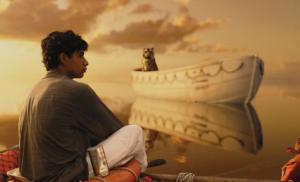
Pi Patel and the tiger Richard Parker learn to survive in Life Of Pi.
Pi Patel and the tiger Richard Parker learn to survive in the Pacific Ocean in Life Of Pi.

“I suppose in the end, the whole of life becomes an act of letting go. But what always hurts the most is not taking a moment to say goodbye.”

Life Of Pi is a novel by Yann Martel you may have already read or not. It now hits the big screen just eleven years after its publishing and is directed by Ang Lee. How well does it entertain?

Pi Patel is a man of fascination for a young Montreal writer. The writer was refered to him by a man in India named Mamaji and one day he’s fortunate to meet Pi in his own Montreal home and he tells him his story:

Pi Patel was born in India and named after the legendary French pool Piscine Molitor. Having the name Piscine Patel was not easy as he would have to endure taunts from his classmates. Then on the first day of school at the age of eleven, he decided he would be known as Pi from now on. He’d even try to recite all the numbers that make up pi to get it through to their heads.

Pi grew up with a wealthy family in India. His family owned a zoo and he experienced a love for the animals. Nevertheless he was taught to fear the wild ones. The zookeeper gave Pi a lesson in wild animals as a child after he tried to feed a bengal tiger who is named Richard Parker by the zookeeper.

Also during his childhood, Pi developed an interest in religion and experiencing God. He was born and raised a Hindu but would soon experience Roman Catholicism and Islam. As a teen he falls in love with a girl named Anandi. However all that has to change as Pi’s family has lost the zoo to land owners. The family decides to move to Canada and sell the zoo animals.

The family travel across the Pacific in a Japanese freighter named the Tsimtsum. The trip is mostly calm except for having a bigoted cook. However tragedy strikes as the ship is caught in a storm in the middle of the Marianas Trench. The ship sinks taking Pi’s family and the crew with them. Pi miraculously survives and manages to get himself in a lifeboat. Pi’s lifeboat overcomes the storm but there’s one surprise: his lifeboat includes a hyena, a zebra and orangutan. The hyena soon kills both the zebra and the orangutan only to find himself killed by the tiger Richard Parker who comes out of nowhere.

So that’s all it is: a lifeboat, Pi and the tiger Richard Parker. He’s able to retrieve the food and water supplies from the lifeboat. He builds a raft tied to the boat to keep a distance from Richard Parker. Pi soon loses much of the food supplies after a whale dives near them so Pi is left with no choice but to fish and collect rain water for Richard Parker and himself. The fish was hard as Pi is a vegetarian through his Hindu upbringing. Over time he realizes that Richard Parker is as vital to his survival as Pi is to Richard Parker’s.

After months at sea they find an island. It seems like a relief. It’s a floating island full of animals, a forest and fresh water. It seems like relief until they learn that the ‘fresh’ water turns acidic in the night and the island has carnivorous plants. They must return to sailing.

The lifeboat does reach land: the coast of Mexico after a total of 227 days. Richard Parker discovers a jungle for him to live in. Pi hopes Richard Parker will acknowledge him before entering but instead walks into the jungle without looking back. Mexican rescuers discover a weak exhausted Pi crying because Richard Parker walked away without him. Recovering in his hospital bed, Japanese insurance agents ask Pi for the story but don’t buy the story with the animals. Pi then gives a second story consisting of his mother, a sailor with a broken leg and the ship’s cook to the same story line. They’re left with the dilemma which story to believe as does the young novelist.

It does seem odd that the movie is tiled the Life Of Pi but the movie focuses mostly on Pi lost at sea for nine months. I think that was the point that there’s always one moment or one situation in a person’s life that seems to define them more than any other moment in their time. It turns out it was Pi surviving in the Pacific Ocean with Richard Parker in the boat. It seems appropriate that this was his moment especially since he was named after a swimming pool and it the Pacific Ocean–the biggest swimming pool in the world–that he’s able to prove what he’s made of. The movie is also a testament of Pi’s character as well. He wouldn’t put up with being mocked because of his name. He was determined to survive at sea despite losing all his family and despite dealing with a life boat with a wild tiger. And he appears to the local novelist as if he was never scathed. I think the incident did a lot to change Pi and helped him to tough things out and move past tragedy.

The movie may be about one boy’s will to survive but it’s also about Pi’s ability to tell a story. He’s good at telling stories about others and about his own life. It’s his storytelling ability at a young age where he gives the Japanese ship authorities two different stories of the sinking that shows Pi’s biggest gift. That could be the best reason for his survival. I will admit that the story overall does seem like an over-the-top story. A teenage boy surviving in a lifeboat with a tiger for over nine months in the Pacific Ocean, surviving typhoons and whale dives, finding temporary relief on an Atlantis-like island, and Richard Parker disappearing in the Mexican forest never to be seen again. Nevertheless this is what’s best about seeing a movie in a cinema. It makes you a believer of that story for two hours. I really enjoyed seeing that movie. It was escapism at its best.

The acting was quite good. Suraj Sharma did a very good job of acting for an actor so young and especially for a debut. You could bet the hardest part had to be simulating the tiger in the boat. I’m sure that in the scenes the actual tiger was used, the tiger had to be well-trained if he was to work in a movie. Ang Lee did a very good job of directing. I mentioned in my review of Hugo of how many renowned directors have done family movies in the last ten years and Ang is the latest. Directing a family fantasia like this and doing an excellent job of it adds to his versatility as a director. He’s already established himself as a maverick director with movies like Sense And Sensibility, Crouching Tiger, Hidden Dragon, Brokeback Mountain and now this.

David Magee did a very good job in adapting the book to screen. The storyline itself is one that can easily appeal to families as some of the most famous family movies have been animal stories. Magee does a good job in creating such a story to charm people of all ages. Claudio Miranda delivers some of the best cinematography of the year. The music of Mychael Danna adds to the film’s magic. The biggest ingredient of the film’s magic has to be the visual effects. The creation of storms, the simulating of the ship sinking, the simulating of animals, the mysterious island, that had to be the biggest and best quality in adding to the magic of the movie. And to have it in 3D is a bonus addition to the magic.

I hate to compare the Life Of Pi to Hugo in terms of which is the bigger family movie masterpiece. Life Of Pi is a masterpiece of its own and makes for a great escape for the whole family. Definitely worth seeing.

Movie Review: Silver Linings Playbook

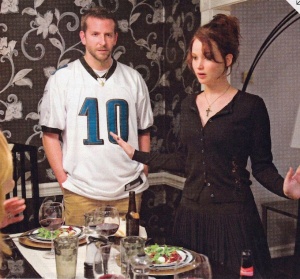
Bradley Cooper and Jennifer Lawrence shine in Silver Linings Playbook.

“I was a big slut but I’m not anymore. There will always be a part of me that is dirty and sloppy, but I like that, just like all the other parts of myself. I can forgive. Can you say the same for yourself? Can you forgive? Are you capable of that?”

Do you think it’s possible to do a comedy about dealing with bipolar disorder? Silver Linings Playbook makes the attempt to make a comedy out of it and succeeds.

We meet Pat Solitano Jr.: a Philadelphia man with bipolar disorder who was just release form a mental institute after eight months following having given a brutal beating to the man who had an affair with his wife. The incident has hit him with hard consequences. Besides being institutionalized, he lost his job, his wife Nikki has put a restraining order on him thus him living with his parents. And adding to the difficulty, his father Pat Sr. is out of work and resorts on gambling for income and hopefully launching a restaurant. His parents give him strict orders to take his medicine and see a therapist. It starts off rocky as he neglects his medicine and throws violent raging fits such as two incidents at 3 in the morning in front of his parents and when he hears My Cherie Amour, the song played when he caught his wife with his coworker. He does however see his therapist Dr. Patel but doesn’t open up to him too much.

One night, he’s invited to dinner with his friend Ronnie and his wife. He meets Tiffany, a young widow who also has a neurosis condition of her own and also lost her job because of it. Over time, Pat and Tiffany develop a friendship and the friendship becomes closer when it’s obvious she can work with his condition for the better. He even offers to have her relay letters to Nikki. She agrees to as long as he’s willing to be a partner for her in an upcoming Latin dance contest. He also agrees and things get better. It’s through the friendship that Pat is able to open up to Tiffany. Tiffany is even willing to let Pat know that right after she lost her husband, she slept with ever man at her job, which explains why she lost it. Pat hopes that the dance competition will get him to win Nikki back. Tiffany even assists in motivation by giving him a typed letter from Nikki.

Things take a turn for the worse when Pat Sr. asks Pat to come to an Eagles game as a ‘good luck charm’ because he bet a lot of money. Pat agrees but that would mean missing out on the dance practice with Tiffany. It turns out to be a bad idea as Pat sees Dr. Patel with a group of Indo-American Eagles fans. Young males throw bigoted slurs at them, which leads to a fight where Pat gets involved and gets carried off by the police. The Eagles lose the game and Pat Sr. loses the bet big time. Tiffany then gets in on this by telling Pat Sr. and all that their dance practices together are better good luck charms for Philadelphia sports games. So a final bet is made: The Flyers win against the Dallas Cowboys and Pat and Tiffany score at least a 5 in the dance competition. Pat is nervous about it until he rereads the letter from Nikki. Tiffany even says Nikki will be at the competition and is willing to lift the restraining order if they score well.

The day of the game and the competition approaches. Both Pat and Tiffany are nervous, as expected. Nikki arrives to see the dance competition but Tiffany is horrified. Why? She said Nikki would be there, right? The family is busy paying attention to the game at first while Tiffany tries to calm herself down with drinks. Pat is able to spot her in time for the dance and before she could drink any more. The game ends with the Flyers winning and the two are able to score a 5.0 in the dance. Pat Sr. won the bet and will get the restaurant and Pat Jr will get his restraining order lifted. But just when you think things will end as you think it will, it doesn’t and leads to an ending that’s a lot happier and ending you feel it right.

This movie is a surprise. Normally you’d think that making a movie about dealing with bipolarism would not make for a good movie, never mind a comedy, but it does. I believe the biggest reason why this movie is so well is that it does show the negative sides of bipolarism and people reacting to personal tragedies but it shows a ray of light. It shows both the bipolar person and the person dealing with tragedy as 3D people instead of types. It shows them both as people struggling with their setbacks and weaknesses and people trying to fight it out. It shows the unique chemistry between the two that helps them triumph over their difficulties and eventually win both to the other in the end.

It was a big effort to make these two types main characters for a comedy but a romantic comedy… and it succeeds. Tiffany was the perfect one who knew how to make Pat overcome his condition. It was evident that Halloween night when Pat thought he was hearing My Cherie Amour again but Tiffany let him know he was not hearing that song. She was also able to get it through to his family that dance training with her was very helpful in winning the games Philadelphia played. She was also able to use a fake letter from Nikki to give him the motivation even thought it risked biting her in the end. You could tell that Tiffany was more for him than Nikki. A bipolar and a promiscuous widow makes for a bizarre pairing for a romantic comedy but it works here.

The best quality of the movie had to be the acting. Bradley Cooper has to have delivered the best performance of his career. He succeeded in making a 3-dimensional person with bipolarism and make him a character that first appears hateable but become more likeable later on and whom you want to succeed in the end. Jennifer Lawrence gives a performance nothing short of remarkable. It’s not just about doing a character who’s an emotionally-fragile person trying to be the one in control but also doing a character many years older than her (she’s 22) and look convincing, and she does it. If she wins the Oscar, I will not be surprised. Robert De Niro also did a good job as the struggling father who has problems of his own. Jacki Weaver also did an excellent job as the mother even though she didn’t have the showiest of roles. Good supporting turns from Anupam Kher and Chris Tucker add to one of the best acting ensembles of the year.

David O. Russell did a marvelous job in both writing the screenplay and directing the film. His follow-up to The Fighter also delivers excellently and has to be one of the best this year. What you think would be as expected doesn’t and works for the better in the film. Very good adaptation. The other standout feature in the movie is the music. There’s the score from Danny Elfman along with previously released songs. Many of which are already familiar. Its blend into the story works well.

Silver Linings Playbook makes an unlikely pair of characters for a romance movie turn out to be possibly the best romance of the year. Very smart, very sensible, very human and very winning. Definitely amongst the best of the year.

Movie Review: Anna Karenina

Keira Knightly plays Anna in the latest film adaptation of Anna Karenina.

How many of you are familiar with the novel Anna Karenina? I’m sure a lot of you are. Mostly because it was required reading in high school in a lot of schools. Did you know that Anna Karenina has been adapted to the cinema a total of thirteen times including twice starring Greta Garbo? Now Anna Karenina returns to the big screen again directed by Joe Wright and with Keira Knightly as Anna. The question is can you make a movie that’s been done twelve times before winsome to present crowds?

The films prime focus is on Anna living a privileged life thanks to her marriage to a government official but she is unhappy in her marriage. It showcases her fling with cavalry officer Count Vronsky whom she falls for at the train station which starts a fling that not only threatens her marriage but her social status and mostly chance of ever seeing her son again whom she dearly loves. She continues to see the count and even bear his child only to have her heart broken and ultimately fated to a tragic end.
 
The films subplot is on Kitty, Anna’s 18 year-old sister-in-law, and Kostya who prefers country life to the aristocracy. Kostya proposes to Kitty but she wants to have her fun at her young age, especially since she’s being pursued by other men like Count Vronsky. She becomes heartbroken when Vronsky leaves her for Anna and Kostya if left for months to labor in the country yards. It isn’t until months later that he is able to confront Kitty and convey his feelings to her. It is then that Kitty and Kostya were meant to be.

The point of the movie wasn’t simply to tell the story of Anna Karenina again but to tell it in a creative and styled manner. At the beginning you could tell that this would be a movie with a different twist to telling the novel. I mean a novel that’s already been adapted to the big screen twelve times before needs to have the latest adaptation anything but redundant. It presents the scenarios of Anna as a stage and frequently going from scene to scene as going from stage to stage. It creates a lot of the acting and dancing in a stand-out method, even quirky and eccentric. It gives the audience the impression of what’s really going on even if they’re dancing or ‘not really’ having sex.

I’m sure this unique twist is what the director and scriptwriter had in mind. Both of which have already established themselves. Joe Wright has been renowned for directing Pride And Prejudice, Atonement, The Soloist and Hanna. Tom Stoppard has established himself in writing with a multitude of plays and has even won an Oscar for writing the screenplay of Shakespeare In Love. The film’s styling and sometimes quirky way of playing out the novel would remind many of Moulin Rouge. The only thing is it makes it look like they’re trying too hard to make this adaptation stand out and be original. There are many times in which the quirkiness and the stylings don’t work their best and we’re unsure whether the film is trying to portray a message, tell the story or just simply put on a show.

One thing that went well was the acting. Keira again delivers a good performance even though I’ve seen better from her. She’s no stranger to Joe Wright’s movies as she played the leading female in Pride And Prejudice and Atonement. The latter earned her first and only Oscar nomination. Jude Law was also impressive even if a backdrop character. This is the most mature role I’ve seen Aaron Taylor-Johnson perform in and he was good. The cinematography by Seamus McGarvey was not 100%. But the music by Dario Marianelli fit the movie well.
 
The recent release of Anna Karenina tries to not be your typical film adaptation of the legendary novel but it tries too hard to be creative and unique. It becomes evident when the creative elements just don’t mix. 

Movie Review: Wreck-It Ralph

Wreck-It-Ralph

I am bad

And that’s good.

I will never be good

And that’s not bad.

There is no one

I’d rather be

Than me.

I saw Wreck-It Ralph many weeks after its original release. I know it’s late but I finally had the chance to see it. I’ve always wanted to but I waiting too long. Now that I’ve finally seen it, here’s what I think of it.

Wreck-It Ralph is a video game villain in the early 80’s game Fix It Felix Jr. He wrecks the apartment that Felix fixes. Every time Felix completes the fixing, the tenants celebrate by throwing Ralph off the top of the building. It’s been like that for the thirty years Fix It Felix Jr.has been in Litwak’s Family Fun Centre and Arcade. When the arcade closes, all the arcade characters stop what they’re doing and lead normal lives even to travel between game to game. In Fix It Felix Jr., the tenants go to sleep and Ralph sleeps in a pile of bricks. Thirty years of this is very overbearing for Ralph as he tells his story at a ‘Bad-Anon’ meeting for video game bad guys like House Of The Dead’s Cyril, Street Fighter’s Zangief and the ghost of Pac-Man. The Bad Anon group try to reassure Ralph that his villain status is good like theirs but it doesn’t help much especially since Felix and the tenants are celebrating their 30th Anniversary at Litwak’s and leave Ralph completely out of the picture.

So what does Ralph do? He tries to find a video game to make himself a hero. He pursues it in Hero’s Duty, an army game where soldiers shoot cyber bugs in pursuit of a medal of honor. Ralph does a clumsy job but receives the medal. Finally a hero. Only problem is Ralph accidentally hatched a Cybug during that time. This also leaves Fix It Felix’s game malfunctioning and in the danger of being taken out for good. This would leave Felix and the apartment tenants homeless. Any video game taken out of Litwak’s leaves the characters homeless. Just ask Q-Bert.

Ralph continues on amongst video games where he finds himself in a candy-themed kart-racing game called Sugar Rush. Here he meets a bratty girl named Vannelope who likes teasing Ralph and dreams of racing. She even steals his medal in order to race in the game. Problem is she’s not allowed to race according to King Candy, the King of the game. Ralph wants her to race in order to win his medal back. In the meantime, one of the Cybugs is in danger of multiplying inside Sugar Rush and both Fix It Felix and Sargent Calhoun, the female sergeant in Hero’s Duty, are searching for Ralph: Felix to get him back to the game for it to function and Calhoun to stop the Cybug from multiplying and destroying the Sugar Rush game.

Ralph soon learns Vannelope lives in Diet Cola mountain shunned away by the racers. He helps build a car for Vannelope and teaches her how to race for the win. In the meantime troubles mount. Sargent notices the Cybugs have multiplied and could wreck the Sugar Rush scenery. Felix searches for Ralph and falls in love with Calhoun only to remind her of a previous relationship. King Candy offers to give Ralph back his medal to prevent Vannelope from racing as she is a ‘glitch’. He smashes it up right in front of Vannelope. And the tenants of Fix It Felix’s apartment pack their bags anticipating the worst. Looks like Ralph wrecked more than what he bargained for.

Things change when Ralph notices on the Sugar Rush game unit’s side–noticeable because Fix-It Felix’s screen faces Sugar Rush– that Vannelope was intended to be in the game in the first place. Ralph then proceeds to do the right things. He breaks Felix out of the prison King Candy put him in and gets him to fix Vannelope’s car. He then gets Vannelope out of the dungeon and gets her racing. Soon Ralph, Felix and Calhoun have to fight the Cybugs while Vannelope attempts to chase down King Candy while he leads the race. Soon it’s revealed that King Candy is the incarnation of Turbo: a racing character from an early 80’s racing game that went on to sabotage other video games upon his declining popularity. The race and the battle with the bugs lead to a somewhat predictable ending that does manage to both thrill, entertain and will leave the audience happy with the ending.

This is one example of how a fun movie like this can have excellent and creative writing. It was great to see how it was able to create ‘lives’ for these video game characters and even help given them focuses from their point of view. Mind you it had to do such in order to make such a storyline like this work. It also had to take in consideration of the cyber world of not only living in a video game but going from game to game to even being one of the games unplugged for good. The sign on a ‘homeless’ Q-Bert was also a good example of creating ‘lives’ for characters of video games past. Interesting universe of Litwak’s arcade. Makes it fun and entertaining to watch. What’s also great about this is that the story is like a maze of stories and plots coming together and making for a story that’s not too confusing and fun to watch. It all comes together in the end.

This is one of three animated features released by Disney this year. The first was Brave which was done by the Pixar studios. The second was Frankenweenie done by Tim Burton Productions and this was done by Walt Disney Studios. No doubt this has been Disney’s year in this genre. The film is co-written by Pixar writer Jim Reardon and directed by Rich Moore: writer for episodes of Futurama and The Critic. The film features vocal talents of John C. Reilly, Sarah Silverman and Ed O’Neil. The film features a music score by Henry Jackman and songs from Skrillex, Owl City and AKB48. Ironically the film’s theme song Wreck-It Wreck-It Ralph! is performed by Buckner & Garcia, the duo responsible for the 1982 novelty hit PacMan Fever.

For me I consider this movie a salute to video games from its early heydays of the 1980s to the present. I’ve often said the 80’s is to video games what the 50’s is to rock and roll. It was a fun romp into the world of video games while having an excellent story to go with it. Another thing too. As you may have noticed, video game movies have had a history of being lousy. Super Mario Brothers, Street Fighter, Mortal Kombat and its sequel: all lousy and forgettable even if a hit. Now we finally have a video game movie that’s as well-written and well-acted as it is entertaining. And to think it’s mostly featuring characters of fictional video games. It took a while but glad one finally came along.

Wreck-It Ralph is one of the best animated movies of the year. A creative take on video games past and present, real and fictional. It gives audiences young and old entertainment enjoyment. Also it’s a reminder that video game villains have feelings too. Never forget that.

Movie Review: Lincoln

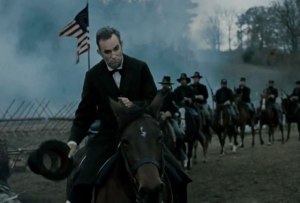
lincoln-2

I’m sure almost all of us are familiar with Abraham Lincoln. Even if you don’t live in the United States, you must have learned about him and his presidency somehow. Steven Spielberg has directed the epic biographic movie of Lincoln. Will it show the Lincoln we know or the Lincoln we don’t know?

It’s January 1865. Lincoln has been re-elected President back in November. However the Civil War is entering its fifth year. It has been the most brutal war on American soil in terms of destruction and fatalities. The Emancipation Proclamation, the law completely abolishing slavery, is being debated in the US House of Representatives. Politicians from both the American states and the Confederate states debate it. Both sided stand firm in their beliefs. Meanwhile Abraham Lincoln and Thaddeus Stevens–a strongly anti-slavery Republican who demanded total war on the Confederate States– are waiting and debating as the Proclamation is nearing its vote into law as the Thirteenth Amendment. However the Republicans want the vote delayed because they fear the outcome and want the War to end. Lincoln doesn’t want to wait. He wants slavery over before the Confederate States can be reintegrated.

This takes an impact on how people view Lincoln. Lincoln is one president who’s willing to meet with Civil war soldiers on the ‘Yankee’ side and hear the stories they have to tell. Many politicians view him as a wise communicator who always has an interesting tale of past history that will make one think about the present. However Lincoln loses some appeal as he’s unable to convince Republican Party founder Francis Blair in his method of dealing with the Confederates instead of peace negotiations. He even senses possible political tension in Stevens desire for racial equality included with ending slavery, fearing the Thirteenth Amendment won’t pass. He a meets up with Secretary of State William Seward with a plan to convince the Democrats to support the amendment with offers of federal jobs.

His family life is also impacted by this all too. Lincoln is adored by his youngest son Tad. His wife Mary is known for her outlandish mouth and is frequently involved with spats with Abraham and even breaks down whenever their late son Willie comes up in conversation, especially since it’s possible their oldest son Robert might have to fight. Meanwhile Robert returns home from his law studies as he had just been named Union Captain to General Ulysses Grant. He’s studying to be a lawyer like his father but is willing to fight in the war if he has to. That leaves Abraham very uncomfortable and even coming to some confrontations with Robert.

Then the day comes for the Emancipation proclamation to be voted upon. Lincoln has gone far to get this voted upon fast to the point of even instructing Confederate envoys to be kept out of Washington. This was a moment of focus for all the nation. In the end, the Emancipation proclamation was voted into law by a margin of just two votes and the abolition of slavery was sealed as the Thirteenth Amendment of the American Constitution. People outside the White House, both black and white, celebrated. Lincoln finally meets with the Confederate envoys after the vote but they were willing to rejoin the Union if they could prevent the amendment from becoming law. Lincoln sent the message: “Slavery’s done.”

It would take time for the Civil War to end: April of 1865 to be exact. Then on April 14, 1865 Lincoln is in a meeting discussing measures to give suffrage to blacks when he is reminded Mary is waiting for him at Ford’s Theatre. That night…the rest is infamy. Nevertheless we’re reminded of the man who is an integral part of history with a flashback to his Second Inaugural Address.

The best thing about the film is that it does not just focus on Lincoln the maverick politician but Abraham Lincoln the person. He was a friendly talker and did his best to be a good father and a loyal husband but he was also stern in what he believed. It was not perfect because he wanted the Emancipation Proclamation to pass but knew that mention of equality for blacks would deter many Representatives from giving it a ‘Yay’ vote.  He was as much a strategist as he was an idealist. He knew any chances of equality would be a step-by-step procedure and emancipation was the first step. He knew of the bloody war happening and of the Confederate’s rebellion but he knew it had to be done.

Another excellent quality of this film is that it shows the political climate of the time. We should remember that the United States of America wasn’t even a century old at the time and slavery had existed in the South long before the United States of America was formed. There were many laws and disputes debating free states and slave states over the years to the point that slavery was going to reach its end but the South refused it to the point they would form their own nation: The Confederate States of America. The North, the United States, wanted to see slavery end throughout the whole United States and were even willing to have this war to make it happen even in the South. The South, the Confederates, knew that they would lose but they valued slavery to the point that they were willing to fight for it in such a brutal war. Even though they knew they were losing, they were willing to fight for it over these four long years and despite the huge losses they suffered.

The debates in the House Of Representative from the various states’ Representatives showcased the ideologies both the United States and the Confederate States felt. Nowadays we all can’t imagine slavery from happening but back then the South valued slavery to the point they would try to start their own independent nation and fight a long bloody war to keep it alive. And even the politicians in the American offices upheld their convictions in debates. The film also reminds us that the Emancipation Proclamation may have been written by Thaddeus Stevens and introduced to the House Of Representatives by Lincoln but it required the House to vote it into law. It almost didn’t happened and if it didn’t, Lincoln may have gone down in history as one of the lesser Presidents of the United States. We’re reminded in the film what kind of gamble Lincoln was making.

Another thing to notice in the film is Spielberg’s infatuation with war. We have seen it before with World War II with Saving Private Ryan and Empire Of The Sun, World War I with War Horse and we see now see Spielberg’s depiction of the Civil War and it has a lot of details. It details the artillery that was used at the time. It details the gruesome destruction and bloodshed that occurred. It even depicted the communication between officers and of relaying news to soldiers via Morse Code. Spielberg does it again.

Spielberg gives another directing effort under his belt. Already we know Spielberg to master sci-fi thrillers, sci-fi family adventures, and war dramas. Now he creates an ideological drama that focuses less on the war and more on the focus of the historic individual and the times he was facing. The film did an excellent job in focusing on the political climate of the times as much as the main politicians involved. The film however couldn’t have been done without the excellent acting. Daniel Day-Lewis gave an excellent performance as Abraham. The may have focused mostly on a single month of Lincoln’s presidency but his performance spoke volumes of the President we thought we knew. The movie however was stolen frequently by Tommy Lee Jones as Thaddeus Stevens. Tommy Lee did a great job in showing Stevens in his mannerisms, beliefs and how fierce of a man of conviction he was. Sally Field was also excellent as the troubled Mary Lincoln. History has documented her as a woman with mental illness. Field’s performances showcase her outlandish personality but also shows her as a woman both troubled by her losses and fearing for her future. Joseph Gordon Levitt was not so good at undoing his body and talking from modern mannerisms but he was better at conveying Robert the person in his ambitions and fears.

The screenplay by Tony Kushner is an excellent adaptation which is able to make that one month in 1865 to be the defining month in the legacy of Abraham Lincoln. It was as much focused on political details as it was on the people involved. John Williams delivers another fitting score to his list of movie scores. Janusz Kaminski gave good cinematography but there were many times I felt the use of zoom-ups were excessive. The depictions of war in the movie were mostly graphic only at the very beginning but were very well-detailed in not just the battles taking place on screen.

Lincoln is a surprising outlook on a president we’ve all come to know and celebrate but didn’t completely know. It’s also an excellent presentation of the political climate of the times. This reminds us of his celebrated greatness and how much of a gamble he made not just with his life but his political status to achieve it. Definitely worth seeing.

Movie Review: Argo

“So you want to come to Hollywood, act like a big shot without actually doing anything? You’ll fit right in.”

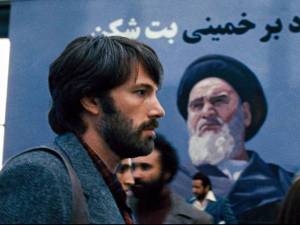
Argo is a story about an important moment in American History: The Iran Hostage Crisis. This focuses on the part that would be known as The Canadian Caper. What we get is more than just a reenactment of history.

The film starts in November of 1979. Iran has gone through its Islamic Revolution. The Shah had been dethroned. Ayatollah Khomeini was the figure of a revolution of Islam in the country and the people wanted justice. They wanted the Shah tried and hanged and were outraged he was housed in the United States, which was already denounced by Khomeini as ‘The Great Satan’. On November 4th, Iranians stormed the American embassy, captured at least 50 Americans and held them hostage. Some managed to escape and six were given refuge in the Canadian embassy under Ken Taylor.

More than ten weeks would pass and the Americans held hostage were still held captive facing an unknown fate with a kangaroo court of Iranian students. Those six in the Canadian embassy were still being sheltered with a future just as uncertain. Now it was a matter of finding them ways of getting them all out safe and sound. Some Americans thought military intervention and even a war was the thing to do but it would cause more bloodshed to the American and even could lead to the embassy being bombed. This was an embarrassment weighing heavily on the entire United States at the time. President Jimmy Carter made it clear he will not back down to terrorist demands. That left the CIA to decide what actions to pursue especially as time was running out and the fates of all were uncertain.

Enter CIA Tony Mendez. He hears about the six from people at the CIA table trying to devise rescue plans for the six. None come up as good ideas. It’s when he’s talking to his son from his failing marriage that his son’s talk of science fiction entertainment sparks an idea about a fake film production as the rescue mission. First: find the right Hollywood people for the idea. He finds it in makeup artist John Chambers and film producer Lester Siegel. Second: find the right movie title and subject line. Siegel finds it in a rejected script titled Argo. Third: give all those in refuge Canadian identities and a trial run through the local bazaar. Tony himself poses as the director. Fourth: know the ins and outs of how to make it out of Iran. One thing we’re reminded is there are guards at the airport who could arrest any American or even a citizen with an American name in their documents for possible connection to the Shah. It all sounds good but it’s not going to be easy. CIA may feel this mission is not as important as the main issues to deal with. Cooperation from the Canadian government would have to occur. President Carter giving the okay on the Swissair plane tickets to get them out would have to happen. The Hollywood people would have to be there whenever a guard questions Kevin, Tony’s guise. And this all has to be done before the Iranian people find out the secret of the hidden Americans and they eventually will. Will this mission succeed? History has already told us so. Nevertheless it’s all how it plays out in the film.

The best quality of the movie is not just its redirectioning of the events of the time but capturing the pressure of the moment. I was a child when the hostage crisis occurred and I knew that the six would all make it out alive. I knew the Shah would eventually be moved to Egypt where he’d spend his last months. I knew that all the other American hostages would be freed almost a full year after the six escaped. Nevertheless watching the movie made me forget all the facts I knew and made me wonder what will happen next? Will they succeed in their mission? Will something go wrong? It captures the sense of everything that was happening at the moment. It also captures the reasons why such an operation was necessary instead of an act of war. It captured the reasons why a war would only escalate the situation. This was not a simple political situation. This was a moment in history almost reminiscent to the French Revolution of 1789 where it was a revolution of the people consisting of a kangaroo court of trial, verdict and sentencing of even death. Anything more than the Canadian Caper would be disastrous and bloody. Anything less would be disastrous and humiliating.

Meanwhile it’s not just about a rescue mission. It’s also about people and what they mean to others. There’s Tony, a CIA agent who has the responsibility of these Americans in their hand. He’s also a father who values his time with his son even though it’s not often. There are the hostages who are fearing for their lives and nervous if this mission will fail. Especially the Lijeks, a married couple. There are all those involved in the mission–Tony, the six Americans, the film producers and the CIA–that feel the weight of this mission and know it’s can’t fail. Not with the eyes and hopes of all the USA watching. This was as much a human story as it was a thriller.

Often when a piece of history is reenacted on the big screen, it’s often a question if this moment is relevant today. I feel it is. Khomeini may have died in 1989 but anti-American sentiment is still present in many of the predominantly Muslim countries. The Iranian people have calmed down a lot since the Islamic Revolution of the late 70’s and have become somewhat more American-friendly, if imperfect. Nevertheless Mahmoud Ahmadinejad, the current President of Iran, is a man who idolizes Khomeini and his beliefs. We should keep in mind Ahmadinejad was 22 when the shah was overthrown and the Islamic Revolution began. Ahmadinejad has spoken narcissistically and even eccentrically about the ‘end of the American empire’ and has spoken openly about his nuclear ambitions. Most Iranians do not accept Ahmadinejad’s views but they’re either too afraid to speak or they’ve been punished criminally. This comes at a tense time as the US is trying to improve relations with the Muslim world. So I can see what happened in Argo quite possible to happen again now.

Ben Affleck did an excellent job in directing the movie. He took a smart script from Chris Terrio and directed an excellent movie out of it that was as much thought provoking as it was thrilling. He did a very good job of acting too. I liked how right during the very first scene I saw Ben play a role instead of coming across in typical Ben Affleck style. Mind you Ben was not the complete standout. Alan Arkin gave a great turn as Lester Siegel that stole the show many times. John Goodman was also a show stealer as John Chambers. Victor Garber also held his own as Canadian ambassador Ken Taylor.The script from Chris Terrio was also smart, funny at times, touching and thrilling. It also did a very good job of capturing the chaos of the times from the riots in the town to people being hanged from cranes. The inclusion of news footage added to the drama both before and after. Even hearing Jimmy carter speak during the credits added to the story and its significance in history. Other standout efforts are Rodrigo Prieto in cinematography and Alexandre Desplat in film scoring.

Argo is a movie about a piece of history that we often forget but is very relevant towards the poitical situation in the world now. Seeing it played out on screen does more than just retell history.

Movie Review: The Master

The Master looks like it’s meant as a depiction of a religious leader of a controversial religion. The question is how true is it? And does it succeed in getting the message across?

Freddie Quell is a Navy veteran who returns home from World War II with an uncertain future and unsettled behavior. How unsettled? He gets violent at the drop of a hat. He’s an easy drunk whose favorite drink is a personal mix of alcohol and other various chemicals. He’s sexually obsessed with sex to the point he masturbates frequently and loves making women out of beach sand just to seduce. Life back in the US is not easy for him to get back to normal. He loses his job as a photographer after starting a fight with one of his customers. He loses a farming job after one of the elderly farmhands gets poisoned from his drinking concoction. Is there any chance for him?

One day he stows away on a ship but it’s not just any ship. This ship is a yacht owned by Lancaster Dodd, a religious leader of a philosophical movement called ‘The Cause’. Dodd allows Freddie to watch the marriage of Dodd’s daughter as long as he makes his mysterious brew for him. Dodd sees a way of getting Freddie into the movement. Dodd asks some deep questions about Freddie and his past, called Processing, which he hopes to heal Freddie’s traumas. Freddie tells Dodd some dark truths about his past and Dodd doesn’t flinch like most. Freddie is blown away by Dodd while Dodd takes a liking to Freddie. Dodd agrees to make Freddie part of The Cause and Freddie becomes an active member in it recruiting other people.

The one problem is that members of The Cause are hoping to improve Freddie’s irrational behavior and he shows no signs of improvement. One example is Freddie assaults a man at a hotel some time after he questions Dodd for his beliefs. Dodd’s wife Peggy tries to make a deal with him that he quits drinking if he wishes to stay. He agrees but shows no intention to quit. Freddie even criticizes Dodd’s son for rejecting his father’s teaching but the son believes he makes it up as he goes along. Dodd is later arrested for practicing medicine without a license and Freddie is arrested for assaulting the officers pursuing Dodd. The time in the jail cell is hard as Dodd and Freddie are in opposite cells. Dodd tries to calm a violent Freddie down but Freddie questions him in a tirade and accuses him of being a fake. Both trade insults in the end. Freddie and Dodd reconcile upon release but those in ‘The Cause’ become more suspicious of him.

Freddie continues with The Cause and its exercises but becomes more frustrated when the results don’t work. Freddie helps Dodd in spreading the word on the street and on the radio. However things turn nasty when Freddie assaults a book publisher who criticizes Dodd’s book. Dodd himself event becomes temperamental around critics of his books.

Already there are strong signals that Freddie is ready to leave The Cause. It came when Dodd gave his colleagues an exercise of motorcycling in the desert to an object in the distance and Freddie cycles away. Freddie returns home to rekindle his relationship with Doris, his girlfriend he wrote to during the war, but learns she married and started a family in the seven years since she lost contact with Freddie. However Freddie has a dream of Dodd telephoning him in a movie theatre and telling him he’s in England and Freddie must join as soon as possible. Freddie goes to England and finds Dodd with wife Peggy. Peggy believes Freddie should leave The Cause since he’s made no improvement. Dodd agrees but still taking a liking to Freddie and gives him an ultimatum: stay and devote his whole life to The Cause or leave and never come back. Freddie leaves and is left to follow his own path.

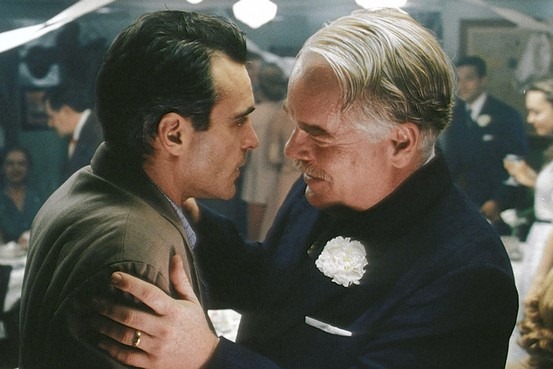
The film appears to be a depiction of the Church of Scientology and its leader L. Ron Hubbard. There are a lot of similarities to it: Hoffman’s resemblance to Hubbard and the film set in 1950, the same year Hubbard set up his church. Anderson will admit that Lancaster Dodd is a lot like L. Ron Hubbard but not intended to be a direct depiction of him: “This is not the L. Ron Hubbard story.” Some people in the Church Of Scientology had spoken concerns of the film. Anderson even screened the film for Tom Cruise who had acted in Anderson’s Magnolia and had concerns of his own. Nevertheless there has been no talk of lawsuits from the Church of Scientology. Whatever the situation, I can’t say because I never attended the Church of Scientology in my lifetime.

Once again Paul Thomas Anderson writes and directs an excellent effort. Ever since he burst onto the filmmaking scene with Boogie Nights, he was continued to impress with Magnolia, Punch Drunk Love, There Will Be Blood and now again with The Master. One thing Paul Thomas Anderson succeeds in doing again is captivating a svengali-like character. We’ve seen it before in There Will Be Blood where he was able to capture Daniel Plainview and his desire to use and manipulate his way to the top and ultimately face a downfall. We see it here again in Lancaster Dodd who succeeds in being the one in control and convince his followers to his sayings, even if they know they’re a lie. Philip Seymour Hoffman does his own part in making this svengali-like character come to life. He fills the character up with the charming controllingness very common in many svengali-like figures or leader-like characters. That’s a common trait of Philip Seymour Hoffman to embody the character completely. He’s done it in the past to exceptional results and he does it again here.

Just as good at capturing a character is Joaquin Phoenix. He did a good job of playing a very lost character: a navy officer returning from World War II disturbed and uncoothed in behavior. This movie is just as much about the controlled as it is about the controller and Joaquin did a great job in holding his own well despite the easy upstagings of Hoffman. Also good at stealing the scene was Amy Adams. She did an excellent job of playing the wife who was both a controller and the controlled. Another standout effort of the film was the original music of Radiohead’s Jonny Greenwood. He has done music before for There Will Be Blood and he does another excellent work.

As for the movie, it wasn’t that big of a hit at the box office. That’s one of the difficulties of films around the Oscar period from now leading up to the beginning of the new year. Most of the top contending movies for the Academy Awards consist of movies with standout efforts in acting, directing and  scriptwriting. However they face the difficulties of trying to win a crowd at the box office which is loaded with mostly commercial fare and the stuff to attract big crowds. It’s trying to compete for that attention amongst the noise. The Master hasn’t been so fortunate. It has only made $15 million at the box office. That’s part of the trials of putting serious fare out.

The Master is a very intriguing movie resembling a popular religious movement and its founder. It could shed a light on the movement and even capture what the founder may be like but it does more, and that’s its best quality.