2023 Oscars Best Picture Review: American Fiction

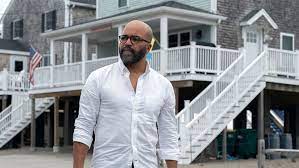
Jeffrey Wright portrays a serious African American writer who faces pressure from a white-dominated entertainment society in the comedy American Fiction.

DISCLAIMER: This is from a blog of four reviews I originally posted on March 2, 2024. The original blog has been removed.

Not that often are the Academy Awards friendly to comedy films. American Fiction is just the type of comedy that can do the trick.

Those of you on social media must be very familiar with the #OscarsSoWhite campaign. Despite there being seven acting nominees that are racial minorities this year, we need to have things more consistent over the years. Focusing back on the film, the Oscars and their lack of consistency in making their nominees diverse is just one of the problems with Hollywood and the entertainment system as a whole in dealing with racial minorities. Hollywood is gratefully responsible for this. Those who’ve seen classic films of the past will have seen a negative or mocking depiction of a racial minority. Awareness groups in the last decade have helped to make Hollywood think twice about how racial minorities are depicted in entertainment. Even though they won’t stop an insulting depiction from happening again, they will raise hell when it does and make people think twice.

In this film, it’s very obvious the theme of the film is about African-Americans depicted in all forms of arts and entertainment. It’s not only about how they’re depicted in entertainment. It’s also about an entertainment system where top sales and ratings are the bottom line. African Americans have various personalities and life goals and directions, but it’s always about the images that sell the most. And that’s the problem Thelonious “Monk” Ellison has to deal with. His novels are of excellent quality and good for how they give a good atypical depiction of African American life. Nevertheless there’s the problem of his works not selling. That frustrates him to the point he feels he has to sell out and do a “gangsta” novel. I’m sure many others feel the same pressure.

The film is a humorous look of an African-American author trying to get respect in the literary world which all-too-often seems to favor quantity over quality. It spoofs the whole system and how the white-dominated public treats works from African-Americans from his latest manuscript being rejected for not being “black enough” to his books being sold in the African-American section of a bookstore to his adding clout to his author’s guise as a criminal on the run from the law to a jury of a book festival consisting mostly of white limousine liberals lauding his upcoming novel. It also includes the irony of the one African-American member of the jury, rival author Sintara Golden, panning his novel as pandering. Meanwhile Monk himself finds her novel pandering.

Although the story is obviously about a significant topic, the story also has a lot of personal elements for Monk. This story is also about the author’s difficulty of trying to create and market his breakthrough novel right during a load of sudden complications in his life. He’s put on a sabbatical by his college because of his frequent confrontations with students. While reuniting with his family in Boston, his sister suddenly dies. His mother’s Alzheimer’s worsens and she needs to be placed in a care facility. The maid who he grew up with has to leave her job and eventually marries. His brother is going through a divorce and drug addiction after his wife caught him with another man. In addition, he is developing a relationship with an established lawyer named Coraline but the relationship ends as he disagrees with her about Sintara’s book. Try plugging a breakthrough novel with all this happening!

Top respect should go to director/writer Cord Jefferson. This film is actually based from a 2001 novel Erasure. Jefferson does a great job in satirizing the difficulty of trying to make it as a “black writer” from the difficulty of doing his work his way to the pressure of dropping his artistic integrity and selling out by writing a pandering “gangsta” work to the “liberal elite” (full of mostly white people) taking it as serious literature worthy of acclaim to the media machine building up the hype to Monk taking his pandering further to add to the hype. It’s both funny and smart at the same time. Mixed with its humor, it’s very much an eye opener about the pressures African-Americans go through to make it in arts and entertainment. It pokes fun at the expectations of what African-American literature is expected to be from the elite of the arts who are mostly not African-American and an entertainment industry where top sales have always been the bottom line. It also pokes fun at the “liberal elite” who are mostly of white people who want diversity but are clueless in how to do it right, despite being the ones pulling the strings. Despite the themes, it also includes the human elements like Monk’s connection with his family and love interest and how it helps him understand himself better as a writer and as a person. Even that element of Monk dealing with his ‘genius’ characteristic adds to the story.

Respect should also go to Jeffrey Wright in playing Monk Ellison. It’s not an easy thing to do a comedic performance with intelligence, even though the story does just that. Wright does a great job of a ‘genius’ writer who feels compelled to throw away his dignity as he’s on a sabbatical and just sell out with a pandering novel. At the same time, Wright adds dimension with his role as Monk tries to keep family ties together and tries to start a relationship with Coraline, only for his ‘genius’ characteristics to interfere. That’s quite an effort to do and to keep comedic for the sake of the film. There are some great supporting performances. First is from Sterling K. Brown as the brother dealing with the frustrating addiction and troubling changes in his life. There’s Lessie Uggams as the mother with Alzheimer’s robbing her of her quality of life but also able to say something to help Monk get a better focus of himself. There’s also Erika Alexander as the girlfriend who knows how to draw the line with Monk’s attitude and arrogance. With the musical score of Laura Karpman added in, you have a winning film.

American Fiction is just the intelligent comedy we need right now. It makes the difficulties of African Americans trying to make it in arts mixed with the attitudes of the mostly-white elites in the business look like the circus that it is. At the same time, it makes it as much about the author as a friend and a member of the family and his difficulty with his personality interfering with that. Already I declare this the Comedy Of The Year.
2023 Oscars Best Picture Review: Anatomy Of A Fall (Anatomie d’Une Chute)

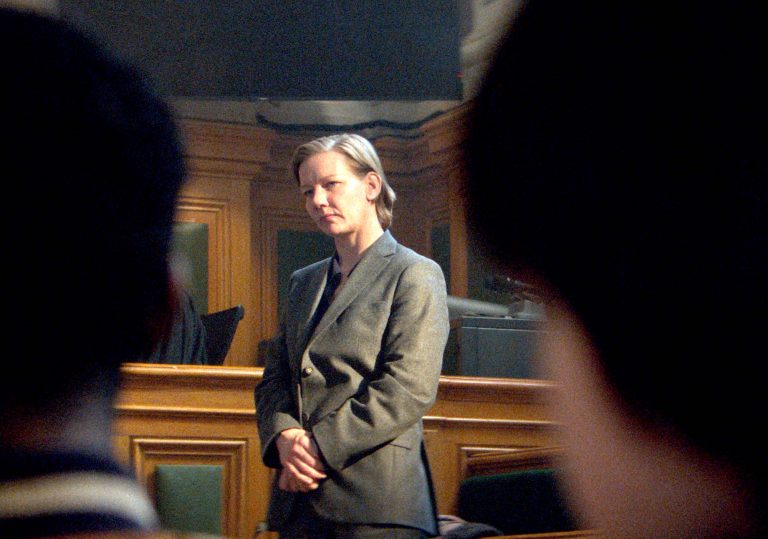
Sandra Huller plays writer Sandra Voyter suspected of killing her husband in the courtroom thriller Anatomy Of A Fall.

DISCLAIMER: This is from a blog of four reviews I originally posted on March 2, 2024. The original blog has been removed.

Anatomy Of A Fall first appears to be a common courtroom drama with a story of intrigue. Over time, you’ll learn it’s a film that’s a lot more.

Courtroom dramas have caught our intrigue time and time again. We’re presented with a criminal scenario or a legal scenario, but it’s up for us to decide whether they’re guilty or innocent or who to side with in a dispute. We learn the verdict and we’re left to decide if it’s the right verdict or not. This story is a unique story. It presents a case of a death from a fall. The deceased is the French husband of a German novelist. The fall happens from a chateau in a remote mountainous area of Grenoble. The first to notice the fall is the seeing-eye dog of the blind son. Questions arise. We learn of the troubled marriage. People turn against the woman. The prosecutor is determined to prove her guilty. The son watches despite his blindness, and seems like he doesn’t know what to think. Could he hold the truth? Could his seeing-eye dog also provide clues to the truth?

This isn’t simply a story of whether Samuel’s death is a murder, a suicide or an accident. It’s a story that develops over time with each new fact exposed, opinions from people in the story coming about, and your own opinions being formed. As we learn of Sandra Voyter, her turbulent marriage, and her recent liaisons, some of us are tempted to look down upon her and even suspect her of possible murder. As we learn about Samuel and his immaturities and later of his depression over the last few years, will that change our mind? The film is as much about how we see things and see people as it is about our story itself. Even possibly exposing sexist attitudes we didn’t think we had. There’s even the angle of the trial as seen through Daniel: the child caught in the middle. A blind boy, he has the biggest sense of the friction his parents have been going through. He lost his father and he’s at risk of losing his mother if she’s found guilty. During the time, he doesn’t know what to think of his mother and often feels lonely. Almost as if Snoop, his seeing-eye dog, is the only one who loves him and he can trust. Sometimes your concern shifts from how Sandra will be found by the courts to what will happen to Daniel. It’s like the film is two stories in one. Even Daniel’s testimony at the end will make you reconsider your stance in the case.

Top respect goes to director/writer Justine Triet. Triet has become only the eighth female director to be nominated for the Best Director Oscar. This film is actually a project she co-wrote with Arthur Haran for actress Sandra Huller to star in after the two worked together in 2019’s Sibyl. She creates a great story that presents a death and the question if it’s an accident or a murder. She presents it as a story of a French-speaking wife and a German-speaking husband who use English as a common ground to sort things out, but it adds friction. The death, the courtroom drama, the turbulent marriage, the communication barrier, and the son caught in the middle adds to the story. Even the ending which allows you to draw your own conclusion of the incident adds to the film.

Along with Triet, there was great acting from Sandra Huller. Her acting in this story helps create the character along with the actions and allows the audience to make their decisions in the case. Huller is as much of a storyteller as Triet herself. Also great is the performance of Milo Machado-Graner: the son caught in the middle. There are many times in the story, some thanks to camera shots of the courtroom drama, where one can think the film is as much about Daniel as it is about Sandra. He’s trying to make sense of what is happening. He is suspicious of his mother but is scared he will lose it all. There are times he tries to be tough with him teaching himself piano by sound clips, but you can tell he could break down. It seems like the dog Snoop is his one friend, especially with his sheltered upbringing. Graner makes him a boy you want to hug. Adding to the film is Messi The Dog as Snoop. Through Messi, we see Snoop is more than Daniel’s seeing-eye dog and best friend. He’s also one that hold clues to what could expose the truth. Additional great acting performances include Samuel Theis as Samuel Maleski, the husband that struggled with mental illness whose struggles threatened the family, and Antoine Reinartz as the prosecutor who will get you wondering if he wants justice done or simply to have Sandra found guilty.

This film has been lauded with buzz since the Cannes Film Festival. The film won the Palme d’Or at the and Triet became only the third female director in history to win. You know how I talked about Messi The Dog adding to the story? At Cannes, Messi was even given the Golden Dog Award for his efforts! Even after Cannes, film festival after film festival it was entered in would have this come away as the big winner. The film also won six European Film Awards. The film was not France’s official submission in the Best International Feature Film category. I assumed it’s because there’s too much English in the film, but other articles are suggesting there may be politicking.

Anatomy Of A Fall is a great legal drama that tells the story of a death in question and doesn’t only leave its fate to the juries, but for the audience to decide for themselves what they believe to be the truth. Even Triet herself won’t say if Sandra is guilty or not. All your call!

2023 Oscars Short Films Review: Live-Action

It’s interesting when the Academy deliver their nominations for feature-length films, they’re mostly for English-language films. Most of them being American films. Yet the nominees for the short films categories are often multilingual. For the films nominated for the live-action category, we have  films in French and Danish. We also have three English-language films, but two are from the UK. Not as much foreign language as the animated films but still it tells how these categories are among the most international of them all.

What’s interesting about the short films in the live-action is that many are from up-and-coming directors, as is the common case in this category, but we also have one British film directed by Wes Anderson! Also in the film are renowned star actors like Benedict Cumberbatch, Ben Kingsley, Dev Patel, Ralph Fiennes and Richard Ayoade. The other films also show actors of renown like Brittany Snow, Leif Andree and David Oyelowo. So there’s something about short films that make well-known actors want to pursue them.

Without further ado, here are my thoughts on the Live-Action short films nominated for the Oscars:

The After (dir. Misan Harriman) – Dayo is a successful businessman in London. One day, he drives his daughter to the top floor of a parkade to meet up with his wife. Suddenly a man wielding a knife commits a massacre all over the parkade. The man stabs his daughter to death. The wife, heartbroken, jumps to her death as Dayo fights to restrain him for the police. Time passes. Dayo is resigned from his position and makes his pay an Uber driver. He has cut off all contact from his friends and colleagues and won’t even meet with crisis management counselors. Although he keeps to himself, it’s obvious he’s still hurting on the inside. As he waits for his latest customers at the airport, he takes the picture of his family and sings “Happy Birthday.” The daughter of the family he’s to drive looks very much like his own late daughter. He tries to restrain his emotions at first as the parents make their way to the car. During the drive, the couple are consistently arguing in front of the child, but the daughter is sensing something is wrong with Dayo. Dayo still tries to keep his cool. As he gets out lets the family off at their house, the daughter goes to hug Dayo and Dayo just breaks down. The parents are shocked by what they see and leave him, but Dayo picks himself up.

How do you live again after you’ve lost it all? This is the type of question we don’t normally ask ourselves or don’t want to think about but unfortunately, there are some people who have to do exactly that? This is a story that does a great job of showing the before-and-after of a tragic incident that claims the lives of Dayo’s wife and daughter. Throughout the story, Dayo is the storyteller through his actions and his emotions. Even without dialogue, you can sense what Dayo is saying through his body language. He doesn’t know how to live again or deal with his emotions. It’s right after the breakdown he has after the daughter hugs him that Dayo knows he has to continue on, despite how hard it will be. This film which is the directorial debut film for Misan Harriman tells a gripping story with a profound message. David Oyelowo does an excellent job in his performance in both scenarios of the story. If they could give Oscar nominations for performances in short films, I’d say give one to David!

Invincible (dir. Vincent René-Lortie) – The film begins with a young boy in the driver’s seat in a car named Marc who telephones his mother, but doesn’t say a word. His mother tells him to come home, but police lights flash. Rather than surrender to the police, Marc drives the car off the cliff into the water. Going back weeks earlier, Marc is on a family vacation having fun with his family at the lake. He plays with his little sister but is embarrassed of how she chickens out with her finger over his lighter. This is the last set of fun Marc will spend with him before being sent to the youth detention centre. The first day, Marc can’t stand being in a sweltering room with no way to cool off. He ignites the sprinkler system which the officials put him on a stern warning. A councillor tries to deal with Marc and tells him how he has what it takes to be a smart positive influence on others and can’t understand why he’s always getting in trouble. One day, the official sees progress in Marc and how he helps others. The officials decide to take the boys to a nearby community pool. it appears Marc is having fun with all of them but when the councillor isn’t looking, Marc does his latest escape. Marc runs into a car but as the woman enters a store to call the ambulance, Marc steals it, attempting to take his escape further. As Marc stops, he calls his family. The mother, aware the police are pursuing Marc, pleads for him to return as the sister tests her pain with the candle.

This is a story inspired by a troubled 14 year-old boy from Quebec who killed himself as he drove into a lake in 2008. The story haunted the people in the area for many years. The boy, Marc-Antoine Bernier, was a friend to the director. Here, it appears the director is using his film to bring some respect back to Marc. Marc was an intelligent boy capable of a lot of good, but kept on getting into trouble. We all have known a kid like that in our childhood. Although this is a story inspired by a real-life person and based on true events, there may have been events or happening added to the story. Only Marc knows what really happened. Nevertheless Vincent makes a good effort to redeem Marc from the story he tells and even tries to get us to feel some empathy for him. We’ve all had those years when we were younger when we all felt we were trapped mentally, if not physically. If Vincent doesn’t make you feel empathy for Marc, he does make for an intriguing story. That’s why I make this film my Should Win pick.

Knight Of Fortune (dir. Lasse Lyskjær Noer) – Karl is at a multi-chapel funeral home where he comes to mourn his wife. Left alone, he can’t bring himself to open the casket. He tries to adjust a light but it breaks. Frustrated, he goes to a bathroom where he encounters another widower named Torben. Torben claims he can’t open the casket for his wife. Karl goes with Torben to the chapel and helps open the casket. As Torben attempts to say his “last words,” a family comes in. They’re the real family of the deceased woman including the real widower. They allow Torben and Karl to stay. When the widower is at a loss for words, Torben is able to say the right words as if the woman really was his wife. Karl leaves Torben angrily but he later learns from the funeral directors that Torben lost his wife in a boating accident three years ago and never had a real chance to say goodbye. Outside in a nearby bench, Karl notices Torben. Instead of anger, Karl laughs and invites Torben to the chapel where his wife is. Torben is able to open the casket and Karl is able to say his last goodbyes. As Karl gives his wife one last kiss Torben sings “Knights Of Fortune.”

Another story of loss and coping. Although this story deals with the subject of death in a gentler manner, and even includes humor, We all know that loss is never an easy thing to deal with, but it needs to be dealt with. This is a story of a widower struggling to properly say goodbye encountering an imposter who knows the right words to say goodbye to a woman he’s never really met, but makes like she was his wife. Once Karl learns about Torben that he’s not simply an imposter, but a hurting man who uses funerals of wives to say the goodbyes he always wanted to say to his own wife, could Torben be the very person to help Karl deal with his grief? This is a story of grieving, healing and saying goodbye that is greatly different from other stories. Nevertheless it does offer a message of healing and hope. It’s ironic how this imposter is exactly what Karl needs to properly deal with is loss and say goodbye, and a friendship that really shouldn’t be, happens.

Red, White and Blue (dir. Nazrin Choudhury) – Rachel, a waitress in a diner, looks at a pregnancy test and sees a positive result. Rachel is a single mother who has difficulty to support her two children. She also lives in Arkansas where abortion is illegal, thanks to the overturning of Roe v. Wade. She plans a trip for an abortion procedure in Illinois where it is legal, but it’s more than she can afford. One day, a woman customer who somehow knows what Rachel is dealing with leaves her a tip which makes up the remainder for her abortion trip. Soon, she leaves her son Jake with a friend as she takes her daughter Maddy on this trip. This is the first time out of Arkansas for both of them. Before they go to the clinic, they go to a carnival as it’s just before Maddy’s birthday. Maddy wants a merry-go-round ride, but it’s more than Rachel can afford. She agrees to one ride and Maddy chooses the elephant. At the clinic, Rachel learns she’s late for her appointment but through past recollections and as the receptionist learns the dirty facts, she tries to make it urgent.

No doubt this story is about abortion. Especially in post-Roe v. Wade United States. The thing is this story is more than that. You know the story is about the pursuit of an abortion, but it’s not what you originally think at first. You think it’s about an impoverished mother getting an abortion because she’s two-and-through, but things change as you learn more information. You wonder why on earth would a mother take her young daughter on an abortion trip? Soon you learn there’s more to the reality of unexpected pregnancy and abortion that meets the eye. Including a lot of upsetting truths. It’s also surprising how in a story that has a theme that hits close to home and presents a story that many would find upsetting, it is still able to have a heart-warming ending that works. That is something in film that is very tricky to do, but Choudhury accomplishes it!

The Wonderful Story Of Henry Sugar (dir. Wes Anderson) – Based on a short story written by Roald Dahl, Henry Sugar is the pseudonym of a wealthy bachelor who loves to gamble away his inherited riches. Thing is he never seems to have enough and wonders how can he get more money? He learns the legend of a man from India named Imdad Khan who learned the fine art of levitating and seeing with is eyes closed, thanks to the teachings of a Great Yogi. Thing is as the doctors were studying Imdad, Imdad tells his story and dies suddenly. Henry tries through great lengths to master this technique through all he can learn. Once he finally masters the sight trick, he goes out gambling and wins big! Problem is all this money isn’t making him any happier. At first he thinks the right way to give the money away is to throw it off a balcony. After it causes a riot, police recommend Henry develop a better method. Henry then spends the next twenty years traveling the world, gambling, and donating his winnings to hospitals and orphanages.

This is the last of the five shorts shown in the shorts.tv reel. After seeing four stories that were either depressing, too serious or had dark subject matter, it was refreshing to end the reel with a light-hearted comedy. The story succeeds in making the tale amusing. Already we have a major director directing it and four major actors — Cumberbatch, Kingsley, Fiennes and Patel — acting in it. Nevertheless the story telling, set changes, and the acting of all make it a delight to watch. It makes for a “guilt-free guilty pleasure” as I like to call such things. That’s why I make this film my Will Win pick!

And there you have it. Those are my reviews of the five films nominated in the Oscar category Best Live-Action Short Film for this year. That also completes all my reviews for the Oscar-nominated short films. Those short film categories are usually the hardest to pick a winner. You think you know what will win, but end up surprised in the end. We’ll see how it all goes on March 10th.

2023 Oscars Short Films Review: Animation

It’s interesting with seeing the reels of the shorts films, the Animation nominees are often the ones with the least total running time. They go by so fast, the shorts.tv reel add in a couple of other shortlisted films that got their honorable mention.

Anyways without further chit-chat, here are my reviews of the nominated animated shorts:

Letter To A Pig (dir. Tai Kantor) – The story begins telling of a boy hiding in a pig sty from Nazis who seek to put him in a concentration camp. The Nazis can’t find him. Fast-forward many decades later. The man tells his story to school students on Holocaust Memorial Day. He tells of how he credits the pigs in the pig sty for saving his life. He even wrote a letter to the pig. As he reads it aloud, one boy gives a taunting “oink,” while a female student listens intensely. As she engages herself in the story, she imagines herself and her classmates coming across a giant almost monstrous pig and them holding him prisoner in a trap. As they hold the pig prisoner, she can feel her nose metamorphose into a pig snout. Soon she feels sympathy for the pig and lets the pig go. As the pig is set free, he shrinks into a piglet and she hugs him.

This is an impressive story. It’s a story of a man who tells how a sty of pigs — animals he had been taught his whole life to regard as filthy and disgusting — helped spare him from dying in the Holocaust. As the young girl hears the story, she reflects on her own feelings of human hatred directed towards a pig in her mind and how she develops sympathy soon after and learns to love the pig. The story has its themes of collective trauma, fear and identity. It’s done in an impressive style that consists of a mix of 2D pencil drawings with minor colorization and mixing it with live-action images. The film is as much about the imagery as it is about the story. That’s why I give it my Will Win pick.

Ninety-Five Senses (dirs. Jared and Jerusha Hess) – The story begins with a man telling his views of human senses and colorful images about from the words he tells. At first you get the impression, this man is friendly. Then you hear his story. This man is on death row having his last meal. The capital offence he committed was arson of a repair shop he was fired from. He loved the jobs, but couldn’t handle being fired. He responded by setting it ablaze, forgetting the shop was also a house where the family lived above. As he anticipates his last meal, he looks over his past with regret, but also a sign of hope in the afterlife. He even has an outlook of how all once a person died, each of the five senses fade in their own way one by one. After a life of only five senses, he looks forward to the 95 senses in the afterlife.

It’s very rare you hear a story of a man awaiting execution to be told with a light-hearted spirit or even with some optimism. Never mind including humor. The man, voiced by Tim Blake Nelson, does a great job in telling his story without it becoming a common “Sob Story” you’d expect from a Death Row inmate. The story comes with some surprises for those who watch, like you wonder how a man that sounds so friendly would end up on Death Row. The film even ends on a humorous note. The story not only tells of the incident and of his observations and hope, but it does so in including in all five of the human senses. The story is told through six different animation styles and a multitude of colors that’s a delight to watch, despite the dark subject matter.

Our Uniform (dir. Yegane Moghaddam) – This film is where Yegane tells her story of growing up as a girl in Iran right after the Islamic Revolution. She talks of how the female teachers taught the girls to shout anti-American, anti-Israel and anti-UK messages on a daily basis. She talks of the uniform she was required to wear at school and of how the women there were firm in how all girls should wear their clothes in a proper manner and have all their hair hidden in a hijab. She talks of the difficulty she had in the hijab covering her hair that was longer than the hijab cloth, which got on the women’s nerves. She reflects on how growing up, she was taught under the new revolution to feel like she was inferior to men or below men.

No question this is a film of how a girl was indoctrinated with sexism not simply at a school, but from a system implemented by the ruling regime. The theme of the story is to do about clothing and the strict religious regulations of how girls should wear their clothing according to the new regime. The story is told with stop-motion imagery using clothes or fabrics of the clothes she wore as a child. The images drawn or painted on the clothes as well as the stop-motion movements of the clothes do a great job of telling her story. The use of clothing in the animation of telling the story is vital since clothing has a lot to do with what life was like under the regime. It makes the images as vital to the story as Yegane’s retelling. Hiding all your hair in a hijab and wearing a dress that covered everything was the new law in Iran and the film shows it in a unique way.

Pachyderme (dir. Stephanie Clement) – A woman retells her story of how as a young girl, she would often stay at the cabin of her grandparents. Her grandfather’s stern manner leaves her with a feel of fear and discomfort. The cabin was located by a lake. The cabin bedroom she sleeps in has a displayed elephant tusk the grandfather names “Pachyderme,” pointing in its direction in the hall. The room would give the girl and eerie sense about it through the wood imagery and the creaking of the boards. Even though the grandparents would say there’s nothing to fear, she felt there were monsters to take her. She goes to a lake where a woman had drowned some time earlier and feels spirits drawing her to its depths. Some time later, the grandfather dies and Pachyderme is split in two. As she returns to the cabin following her grandmother’s death, she takes both pieces of Pachyderme to the lake to bury it in the water. One of the two pieces is not completely immersed.

This film has to be the darkest of the five. In reading articles about it, it deals with the subject of incest. Incest itself is disturbing enough for audiences so it makes sense that it’s told through subtle imagery and storytelling that hides the actual facts. The theme of how she regards her grandfather as a monster and how it’s represented in Pachyderme adds to the storytelling, including the burial at sea. The ending where she attempts to bury the two pieces of Pachyderme in the water remind us she can bury a horrific memory like her grandfather’s terrible ways, but the small piece sticking out reminds us the bad memory can’t completely be buried. The imagery of the story is told through 2D images that appear as common images one would remember from storybooks they read. Possibly the monster that is her grandfather is epitomized through the common images of monsters we read in our children’s books of the past. It’s charming in its imagery as it is disturbing to see and listen to the harrowing story.

War Is Over! Inspired By The Music Of John And Yoko (dir. Dave Mullins) – The film starts in a battlefield of war. One soldier has a chess set where he appears to play by himself. After he makes his move, he writes his move on a piece of paper and attaches it to the leg of a messenger bird. The bird flies to “enemy territory” and gives the message to an “enemy” soldier who also has a chessboard and looks like he’s playing by himself. After he makes his move, he writes his move to a message for the messenger bird to deliver. Over time, the intrigue grows with the soldiers on both camps. As the bird delivers message after message, the anticipation on what the next move will be or who will win appears to quell the enmity between both sides. Then checkmate! But the sergeant is disgusted by what he sees. He reminds the camp they’re enemies and the battle must begin now. The soldiers on both sides line up with bayonets and all ready to do battle against the “enemy.” The battle begins and bloodshed ensues. On the field one soldier notices the messenger bird is shot dead. Just as the two soldiers from the chess game confront each other, it’s there from a message that slips out that one realizes the other is his chess rival. They drop their guns. All drop their guns when they see the written message “War Is Over.”

This is a creative story Dave Mullins directs and co-wrote with Sean Ono Lennon and Brad Booker produces through the inspiration of John Lennon’s legendary Christmas song and the message “War is over if you want it.” The one 3D-computer animated film nominated in this category this year, this is a film with a montage appearing to have a World War I setting and sends a message that still matters today. There may be a winner in a chess game but there are no winners in war. The scene where all the soldiers are intrigued and excited by a chess game against a player from the “enemy” side sends the message that enmity is something war creates and provokes, and is often unnecessary. The ending where the bloody battle is instantly ended with the written message “War Is Over” also sends a message of how many battles are in vain. The story first seems to be a story that’s either cute or “fluffy,” but the ending of the bloody battle with “Merry Christmas (War Is Over)” sends a significant message that is as important today as it was when John and Yoko recorded it back then. That’s why I give it my Should Win pick.

And there you have it. That’s my review of the five films nominated for Best Animated Short Film. Interesting that in a time where animated features appear to be dominated by 3D computer animation, only one of the five nominated films is such. That’s what I like best about this category. It opens itself up to various styles of animation, rather than going with one that’s all the rage.

My Predictions For The 2023 Academy Award Nominations

And just like that, another year goes by and we have a completely brand new Oscar race. On Wednesday morning, we will learn of the Oscar nominations. The day when we learn of the contenders for the Best Picture and the ‘final five’ for all the other categories. There have been a lot of surprises and shockers with the other awards shows and their nomination announcements. Funny how their shockers get dwarfed by the shocks and snubs of the Academy Award nominations. Some people are fearing another surprise nomination like Andrea Riseborough’s last year. If you remember that, the nomination was so surprising and shocking, the AMPAS even held an inquiry about it and its campaigning. What can I say? The more the Academy starts cracking down on unfair campaigning strategies, the more creative campaigners get in achieving ‘new ways.’

This year’s Oscar awards will be awarded on Sunday, March 10th. That should give a good forty days between the nominations and wins. In the meantime, here are my predictions for this year’s Academy Award nominations:

BEST PICTURE
American Fiction
Anatomy Of Al Fall
Barbie
The Holdovers
Killers Of The Flower Moon
Maestro
Oppenheimer
Poor Things
Saltburn
The Zone Of Interest

BEST DIRECTOR
Bradley Cooper – Maestro
Greta Gerwig – Barbie
Yorgos Lanthimos – Poor Things
Christopher Nolan – Oppenheimer
Martin Scorsese – Killers Of The Flower Moon

BEST ACTOR
Bradley Cooper – Maestro
Colman Domingo – Rustin
Paul Giamatti – The Holdovers
Barry Keoghan – Saltburn
Cillian Murphy – Oppenheimer

BEST ACTRESS
Lily Gladstone – Killers Of The Flower Moon
Sandra Huller – Anatomy Of A Fall
Carey Mulligan – Maestro
Margot Robbie – Barbie
Emma Stone – Poor Things

BEST SUPPORTING ACTOR
Sterling K. Brown – American Fiction
Robert de Niro – Killers Of The Flower Moon
Robert Downey Jr. – Oppenheimer
Ryan Gosling – Barbie
Mark Ruffalo – Poor Things

BEST SUPPORTING ACTRESS
Emily Blunt – Oppenheimer
Danielle Brooks – The Color Purple
Jodie Foster – Nyad
Rosamund Pike – Saltburn
Da’Vine Joyce Randolph – The Holdovers

BEST ORIGINAL SCREENPLAY
Sammy Burch – May December
Bradley Cooper and Josh Singer – Maestro
David Hemingson – The Holdovers
Celine Song – Past Lives
Justine Triet and Arthur Harari – Anatomy Of A Fall 

BEST ADAPTED SCREENPLAY
Greta Gerwig and Noah Baumbach – Barbie
Andrew Haigh – All Of Us Strangers
Cord Jefferson – American Fiction
Christopher Nolan – Oppenheimer
Eric Roth, Martin Scorsese and David Grann – Killers Of The Flower Moon

BEST ANIMATED FEATURE
The Boy And The Heron
Elemental
Ernest and Celestine: A Trip To Gibberitia
Nimona
SpiderMan: Across The SpiderVerse

BEST CINEMATOGRAPHY
Matthew Libatique – Maestro
Hoyte van Hoytema – Oppenheimer
Rodrigo Prieto – Killers Of The Flower Moon
Robbie Ryan – Poor Things
Linus Sandgren – Saltburn

BEST COSTUME DESIGN
Jacqueline Durran – Barbie
Ellen Mirojnick – Oppenheimer
Holly Waddington – Poor Things
Jacqueline West – Killers Of The Flower Moon
Janty Yates and David Crossman – Napoleon

BEST DOCUMENTARY FEATURE
American Symphony
Beyond Utopia
The Eternal Memory
Still: A Michael J. Fox Movie
20 Days In Mariupol

BEST FILM EDITING
Nick Houy – Barbie
Jennifer Lame – Oppenheimer
Yorgos Mavropsaridis – Poor Things
Thelma Schoonmaker – Killers Of The Flower Moon
Michelle Tesoro – Maestro

BEST INTERNATIONAL FEATURE FILM
Fallen Leaves – Finland
Society Of The Snow – Spain
The Taste Of Things – France
20 Days In Mariupol – Ukraine
The Zone Of Interest – United Kingdom

BEST MAKEUP and HAIRSTYLING
Golda
Killers Of The Flower Moon
Maestro
Oppenheimer
Poor Things

BEST ORIGINAL SCORE
Ludwig Goransson – Oppenheimer
Daniel Pemberton – SpiderMan: Across The SpiderVerse
Robbie Robertson – Killers Of The Flower Moon
Mark Ronson and Andrew Wyatt – Barbie
John Williams – Indiana Jones And The Dial Of Destiny

BEST ORIGINAL SONG
“The Fire Inside” – Flamin’ Hot
“I’m Just Ken” – Barbie
“It Never Went Away” – American Symphony
“Road To Freedom” – Rustin
“What Was I Made For?” – Barbie

BEST PRODUCTION DESIGN
Asteroid City
Barbie
Killers Of The Flower Moon

Oppenheimer
Poor Things

BEST SOUND
Barbie
Ferrari
Killers Of The Flower Moon

Maestro
Oppenheimer

BEST VISUAL EFFECTS
The Creator
Guardians Of The Galaxy – Volume 3
Indiana Jones And The Dial Of Destiny
Mission Impossible – Dead Reckoning: Part One
SpiderMan: Across The SpiderVerse

BEST ANIMATED SHORT FILM
Eeva
Letter To A Pig
Once Upon A Studio
Pete
WAR IS OVER! Inspired By The Music of John And Yoko

BEST DOCUMENTARY SHORT
The ABC’s Of Book Banning
The Barber Of Little Rock
Deciding Vote
The Last Repair Shop
Last Song From Kabul

BEST LIVE-ACTION SHORT
The After
The Anne Frank Gift Shop
The Shepherd
Strange Way Of Life
The Wonder Story of Henry Sugar

Just like I did in past years, I not only did predictions for the nominees but also possible upsetters in most of the categories. Those who’ve tracked Oscar nominations over the years will be very familiar with upsetters. So here are my picks for the potential upsetters:

BEST PICTURE
The Color Purple
May December
Past Lives

BEST DIRECTOR
Jonathan Glazer – The Zone Of Interest
Alexander Payne – The Holdovers

BEST ACTOR
Jeffrey Wright – American Fiction
Leonardo DiCaprio – Killers Of The Flower Moon

BEST ACTRESS
Fantasia Barrino – The Color Purple
Annette Bening – Nyad

BEST SUPPORTING ACTOR
Willem Dafoe – Poor Things
Charles Melton – May December

BEST SUPPORTING ACTRESS
Penelope Cruz – Ferrari
America Ferrara – Barbie

BEST ORIGINAL SCREENPLAY
Alex Convery – Air

BEST ADAPTED SCREENPLAY
Jonathan Glazer and Martin Amis – The Zone Of Interest
Tony McNamara – Poor Things

BEST ANIMATED FEATURE
Super Mario Brothers Movie
Teenage Mutant Ninja Turtles: Mutant Mayhem

BEST CINEMATOGRAPHY
Rodrigo Prieto – Barbie

BEST COSTUME DESIGN
Lindy Hemming – Wonka
Francine Jamison-Tanchuk – The Color Purple

BEST DOCUMENTARY FEATURE
Bobi Wine: The People’s President

BEST FILM EDITING
Laurent Senecal – Anatomy Of A Fall

BEST INTERNATIONAL FEATURE FILM
Io Capitano – Italy
The Teacher’s Lounge – Germany

BEST MAKEUP and HAIRSTYLING
Napoleon

BEST ORIGINAL SCORE
Jerskin Fendrix – Poor Things

BEST ORIGINAL SONG
“Dance The Night” – Barbie
“Superpower (I)” – The Color Purple

BEST PRODUCTION DESIGN
Saltburn

BEST SOUND
Mission Impossible – Dead Reckoning: Part One
Napoleon

BEST VISUAL EFFECTS
Napoleon
Poor Things

Those are my predictions for the nominations for the 2023 Academy Awards. The nominees will be revealed the morning of Tuesday the 23rd. Makes who wonder what will create more social media action? The ones that got nominated or the ones that got snubbed? Stay toond!