VIFF 2025 Shorts Segment Review: Forum 3 – The peripheral core

One thing about being into cinema is that it will give you a liking for short films. I saw a second segment or forum of shorts at the VIFF entitled The peripheral core. This segment, the third Forum segment, consisted of eight films that are very similar, very different, but tell a lot.

-Resistance Meditation (dir. Sara Wylie): In this documentary, we see a woman (possibly director Wylie) sleeping in bed. As she sleeps, Wylie talks about sleeping and how the time on the clock we follow is ‘corporate time.’ As she lays in bad, we learn she has a disability and she calls her sleep here ‘crip time.’ It’s not just for her sleep, but to rebel against the demands of the capitalist world.

Simply put, this is a five-minute documentary where the filmmaker has something to say. Although I don’t completely agree with her opinion about ‘corporate time,’ I like how she makes her statement in a creative way. It makes sense to present filming of sleeping and her speaking her belief about time, disability and rebelling against it.

-A Very Straight Neck (Japan – dir. Neo Sora): A woman wakes up from her sleep and has terrible neck pain. The dream she has haunts her. Her dream was she was lying face-down on the sidewalk of a busy street and the world passes around her. Even crumbling out of its existence in her mind.

This is a picturesque short film which the focus is on unspoken images and the main character narrating in the background. The biggest quality is the visuals as it adds to the story and creates the mood of what she’s trying to say. Sometimes we can understand the pain she’s going through. Very well done.

-Not Enough for the Love Inside (Brazil – dirs. Marcelo Matos de Oliveira and Wallace Nogueira): Cassio and Otto are both gay couple in Bahia, Brazil and both became blind recently. Cassio is unemployed while Otto is able to participate with a theatre group. Through all that happens in the story and Cassio’s body language, one can’t help but notice the relationship appears doomed to end.

The biggest quality of the film is the body language. I don’t know if both became blind from the same incident or from separate incidents, but you can understand how sudden changes can affect a relationship. The body language in the film is as valuable to the story as the dialogue itself. It creates the negative vibe of a relationship that is starting to fall apart.

-The Sphinx (USA – dir. Jesse Pavdeen): Harold is a young adult locksmith by profession, but he has a problem. He was born without a nose and he needs to wear a prosthetic. His nose falls off during a date, but his date doesn’t mind. She encourages him to come to a party. Things get worse when the people at the party want him to show ‘his true self.’ He takes his nose off and they all laugh. He runs to his estranged mother’s house, but she has the door locked with seven locks. Meeting with his father exposes the secret.

When you have short films, you should expect a bizarre comedy or two. Harold is seen as The Sphinx as The Sphinx itself has its nose missing. I’ve seen stories of missing body parts or weird body parts before, but this comedy does a unique job in showing one young man’s flaw and how the world treats him. Even his mother who has cut herself off from everyone. It’s a bizarre story that’s humorous too.

-Confluence (Canada – dirs. Charlene Moore and Oliver Darrius Merrick King): This is a documentary made by Indigenous members of the Winnipeg Film Group for their 50th anniversary. As images of parts of Winnipeg are shown on screen, the Indigenous members of the Group talk about various topics like their land and colonizing, being an Indigenous person, filmmaking as an Indigenous person and even envisioning the future and pondering ideas of what to film next.

I’m from Winnipeg and I remember the Winnipeg Film Group and how it took a modest area in an office building back in the 1990’s. The Group has grown a lot. This documentary is important because in recent decades, the Indigenous peoples are getting more into the arts and holding their own. Film has a bright future in Winnipeg, but the Indigenous filmmakers show the most promise and most envisioning. It’s good to hear them speak their minds about the topics as we view images of Winnipeg.

-In My Hand (Norway – dirs. Marja Helander and Liselotte Wajstedt): The film begins with a re-enactment of Norwegian Sami activist Niillas Somby waking up in prison with his amputated arm bandaged. Niillas narrated how he spent 21 years in prison and was involved greatly with Sami activism. He also talks of the accidental battery explosion from 1981 that led to the loss of his arm. He also talks of the time he went to Canada cleverly disguised as a white man and with a fake passport. The film ends in the present with present-day Niillas and today’s Sami activists.

This is another film that showcases the racism felt by a nation’s first peoples. In this case, it’s the Sami peoples of the Nordic nations. Niillas Somby tells his story about what it was like to be a Sami activist and of some of the illegal things he did in his life. We hear Somby narrate as the moments are re-enacted in front of us. This is a valuable story in learning about their struggle and has a message worth hearing.

-Cocotte Coulombe, Filmmaker (Canada – dir. Charles-Francois Asselin): Charles-Francois has always known his unmarried deaf aunt Cocotte. He does remember her bringing a film camera to family events. It’s after her death that he discovered she had taken lots of family films. As he watches the family films of hers, he discovers this was they way she communicated her love to them.

This documentary is great at telling its story. Cocotte’s family films play in the background as Charles-Francois tells his story of Cocotte and his recent discovery of the films. It’s an intimate story of how a film maker himself learns how home videos were not just a hobby for Cocotte, but also the means for a deaf family member to show her love to them. It was nice to watch.

-We Were The Scenery (USA – dir. Christopher Radcliff): In 1978, Hoa Thi Le and Hue Nguyen Che were Vietnamese refugees in a refugee camp in the Philippines. During that time in that same place, Francis Ford Coppola was filming Apocalypse Now and wanted to use the refugees as extras for the film. Le and Che rewatch Apocalypse Now and during the scenes, they point themselves out and mention of other people they knew personally as their appearances come on screen.

This is one documentary one would not expect. Most of us who saw Apocalypse Now probably never bothered to notice the extras were from a Vietnamese refugee camp. It was great to hear the story of how a couple who are married were those very extras and they saw it as just a way to make some extra money. It’s also a smart choice the director had them tell their story in Vietnamese. Although they are now American citizens, telling their story in Vietnamese only adds to this documentary.

And that was my experience with the short films from Forum 3: The peripheral core. Interesting how with this forum, five of the eight films were documentaries. Although I prefer watching live-action, I still found the documentaries intriguing to watch. Whatever the documentaries had to say, they said it well in their own way. For the live-action, they were unique to watch as well.
Oscars 2024 Best Picture Reviews: Part Five

All this writing does get tiring after awhile. Despite it, I have no problem blogging my thoughts on the Best Picture nominees. So here’s my fifth and last blog on the nominees:

The Substance

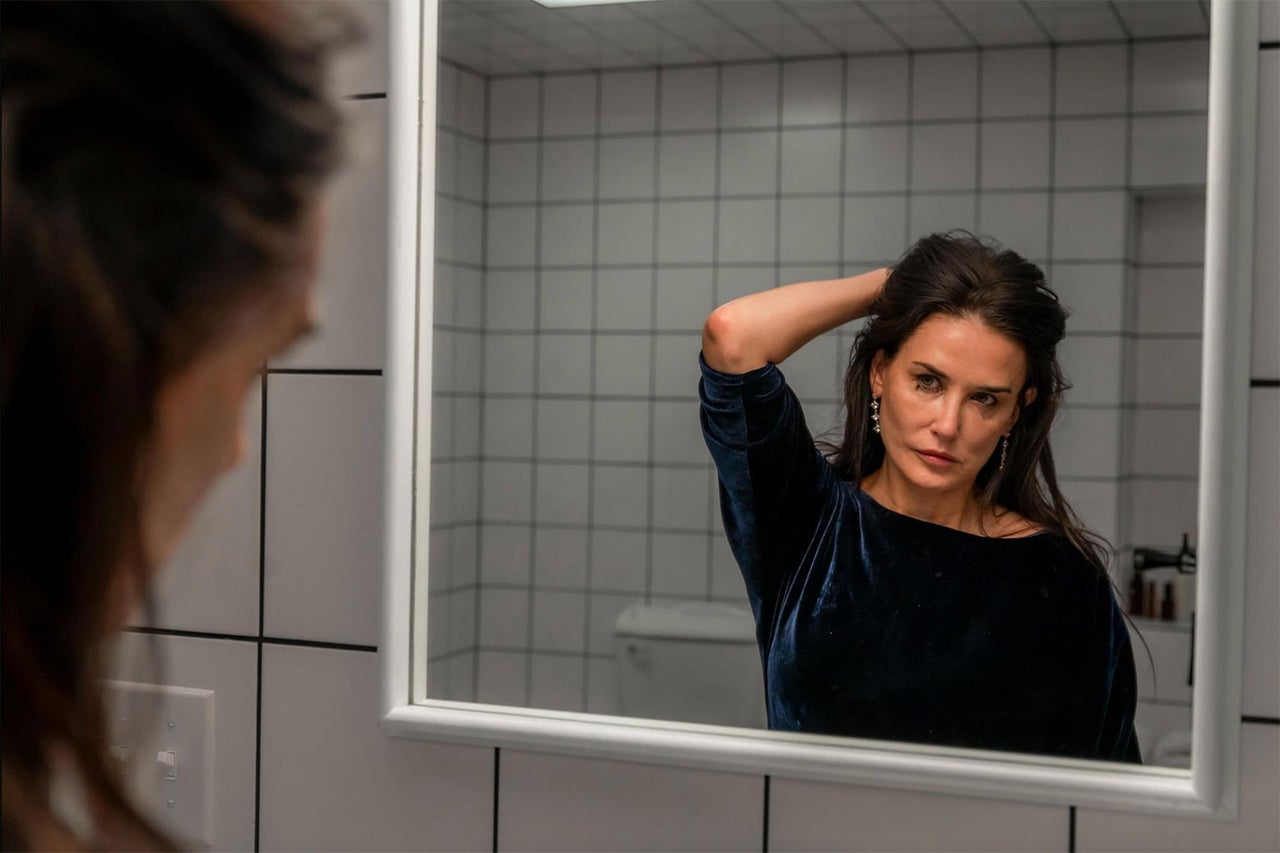
If you were to have a debate on the one genre of film that the Oscars seems to neglect the most, I’ll bet horror will come out on top. Only seven horror films have been good enough to get nominated for Best Picture. The Substance becomes the latest. Actually it was also a nominee for the Palme d’Or at Cannes. It tells the story of movie star Elisabeth Sparkle whose career has ended and feels a certain substance recommended from a doctor can do that very trick. It gives her another person coming out of her: Sue. The other person is half her age and the two are to switch lives every seven days. Problem is the other person is getting all the benefits her life used to have, like her old job back and attracting rich men. Sue also starts violating the directions of the medicines and using Elisabeth more and more. As New Year’s is coming and Sue is expected to be the star of the New Year’s Eve special, mayhem erupts. I can’t describe any more of the bizarreness without delivering a spoiler or two.

What makes this horror film better than most horror films is that it has a common theme. The theme is of the ageism and sexism women face in showbusiness from managers dealing with show’s ratings to stakeholders who expect to win to crowds who expect a picture-perfect princess and will throw her away when they get bored  with her, replacing her with a new next big thing. That is very evident throughout the film as we hear what her boss Harvey says, of what casting directors say and of what the crowd expects. The thing is Elisabeth takes her rejection badly because we soon learn her stardom is the only thing in her life. She has nothing else. She feels if she takes this substance, she can get her life back. Problem is she gets another life. Instead of it being a case like the two are one, as instructed from that substance, one vies for control of the other and it’s reduced to hate between the two. I gotta say carrying on a habit of one is active one week while the other is active the next week, that would be something hard to keep up without error. There’s bound to be a slip-up and boy will it be messy.

Now I know most of you will say you’ve seen all sorts of horror movies and that you’ve been shocked by this stuff before. I guarantee you that you will be either shocked or surprised. You have a feeling that this switching of bodies will have a ness-up sooner or later but I’m sure the mess-up you thought would happen didn’t or went a different way. Even that New Year’s Eve show, you probably expected it to wreak some sort of havoc, but I’ll bet it’s not the havoc you expected to happen. It also seems the New Year’s Eve show incident with all its goriness is a case of Elisabeth getting revenge with those who threw her away. The story has a lot of common elements you have seen in past horror movies but it succeeds in having many an unpredictable or unexpected moment. That’s what makes this horror film special. The shocks and gory scenes you anticipated but didn’t expect it to play out the way you thought it would. Even the ending, which I will not spoil at all, plays itself out in unexpected fashion.

Top accolades have to go to director/writer Coralie Fargeat. Upon Fargeat’s nomination, the 2020’s five female nominations in the Best Director category equal the total of all previous years combined. This is actually the second feature-length film Fargeat has directed. Here, Fargeat succeeds in delivering a thriller of a horror film that says a lot about its theme and has many of the silent scenes do a lot of talking of the story. Fargeat proves that women can do horror films! And a gory bloodbath of one to boot!

Making the film work is Demi Moore. She does an excellent job of playing an insecure movie star whose career is her life and takes a medicine that could end up being the death of her. Her character switch to the tormented monster of herself was also incredible. It would not surprise me if she wins the Oscar. Also great is Margaret Qualley for playing Sue who’s supposed to be one with Elisabeth but her new-found fame prevents her and starts using Elisabeth, only to pay in the end. Also great is Dennis Quaid. His performance as Harvey the manager is cartoonish, but Fargeat wants it that way for the vibe of the movie. He did a great job in being both comical and hateable at the same time. For the technical achievements, there’s Benjamin Kracun and his cinematography which adds to the storytelling, make-up artist Pierre-Olivier Persin delivering the right makeup for the right gory scenes, the visual effects team for the insane special effects and Raffertie for the perfect techno score for the film.

The Substance is just the horror film you need. It’s a way better story than most horror films you’ve seen and it will deliver the unexpected. I guarantee you.

Wicked: Part One

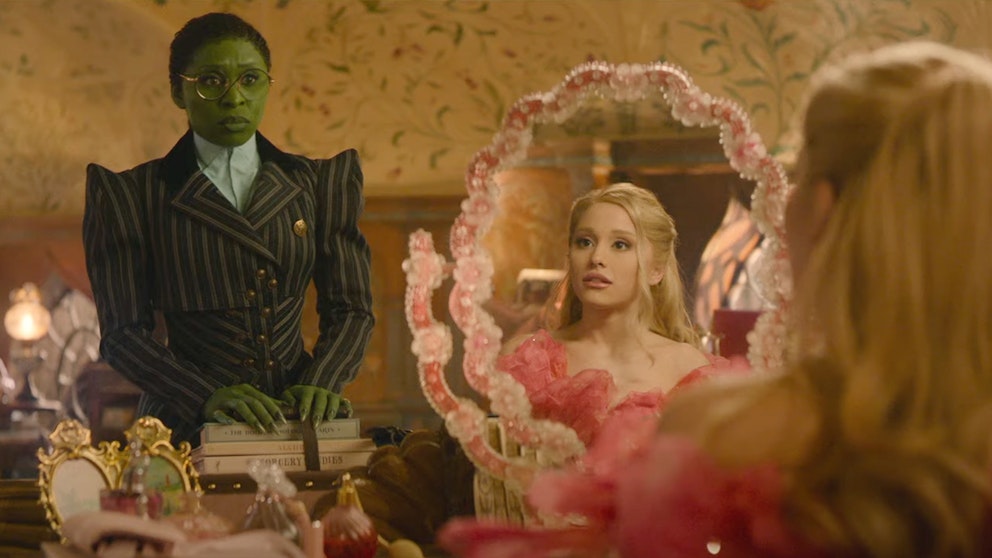
This movie is bound to attract two standout audiences: those that liked the musical in its theatrical run and those Wizard Of Oz fans that are intrigued of a prequel. It’s interesting how The Wizard Of Oz story has enchanted people for over a century. To have a prequel-like story of how the witch and Glinda met in school is bound to catch people’s intrigue. Even ask questions. Like was the witch’s name really Elphaba? Even the character who would become the wicked witch of the east would have a name: Nessarose. Was high school just as bad in Oz as it is in real life? You mean the witch didn’t really start as evil? You mean Glinda’s real name is Galinda? How was Glinda able to befriend the witch? It really has you thinking. It will even have you thinking about the Wizard Of Oz too. Since the musical has been popular for twenty years, I feel the film adaptation came out at the right time. It does make one wonder why the film is billed as Wicked: Part One and if a Part Two is needed instead of the whole musical in one film.

In watching part one, it begins with the people of Oz celebrating the witch’s death and Glinda given a hero’s welcome. Then the revelation of the secret that Glinda knew the witch in high school. That’s where Glinda tells her story. Throughout the story, we learn how the witch was born the black sheep, or in this case green sheep, of the family while her younger sister was seen as a princess. Even the wheelchair didn’t harm Nessarose’s princess image. When high school begins, Elphaba gets singled out and nobody wants to befriend. As Glinda unintentionally becomes Elphaba’s roommate, Glinda becomes a positive influence on Elphaba and helps her find her true self, use her intelligence to be a force for good, and ultimately bring down the corruption happening in Oz. The film ends with Elphaba singing about her turn to fly and it sets up for a ‘To Be Continued’ ending.

Although this film is just a part one of a musical, the film itself is a good story of the popular girl befriending the misfit girl and bringing out the best in her. It’s also a good nerd-to-queen story for Elphaba. Even having the ability popular boy Fiyero. Near the end where we learn of how Oz is imprisoning animals and Elphaba learns of the corruption going on from the Wizard, it’s there where she learns to take a stand for what she believes in and her rebellious side comes out of her shell. It’s right at the end she flies off and celebrates her personal identity and her new-found confidence in herself as Glinda supports her on. As a film itself instead of a Part One, it works as a story about finding one’s confidence, learning to embrace being different and make your best qualities winning qualities. As a musical, it’s entertaining and colorful from start to finish. It may not have the same vibe as the classic Wizard Of Oz but it will entertain you.

And there’s the film as the Wizard Of Oz prequel. Many of us who have seen or read The Wizard Of Oz but never seen Wicked onstage, like myself, will know how it all turned out. The sister is killed by Dorothy’s house, Glinda makes Dorothy a hero, the witch (who doesn’t have the name Elphaba) wants revenge on Dorothy and to get her sister’s ruby slippers, chases Dorothy down her trip to Oz and threatens her and her friends along the way, and is killed by a splash of water. If you have not seen the musical like I have, the film will get you thinking how did Elphaba become evil? Did Nessarose also become evil? If Elphaba and Glinda befriended each other in high school, how did they have their eventual falling out? This film succeeds in getting us to anticipate it all in the ‘prequel sequel’ which is expected in Winter 2025 and will be titled Wicked: For Good.

This is a great accomplishment for director Jon M. Chu. In the last fifteen years, the films he has directed have been a wide range like dance films like the two Step Up sequels, action film G.I. Joe: Retaliation, music film Jem And The Holograms and romantic comedy Crazy Rich Asians. Here he tries his luck with a Broadway musical with the screenplay adapted by Winnie Holzman and Dana Fox. He succeeds greatly in making it entertaining for audiences to watch and for making for a dazzling story. It’s not an easy task to adapt a musical to the screen but he does it very well.

Top credit goes to Cynthia Erivo for playing Elphaba. Cynthia has established herself as a triple-threat in entertainment and one of the biggest rising talents around. Here, she does it again as she not only captures the role well but is also able to play young convincingly and sing excellently. This should add to her achievements. Also great is Ariana Grande. Although I’m not a fan of her or her music, she appeared to be the best choice to play Glinda in this movie adaptation. She is very good at capturing Glinda’s princess side, sings the songs very well, and plays the part excellently as well. Also great is newcomer Jonathan Bailey. Although he doesn’t stand out as much as Elphaba or Glinda, he does a great job of playing popular rebel Fiyero and makes his singing and dancing look effortless. The supporting performances of Michelle Yeoh as Madame Morrible and Jeff Goldblum as the Wizard, added to the film despite the small amount of screen time.

You can’t give accolades to Wicked if you don’t include the top technical qualities. There’s the editing work of Myron Kerstein which makes the film work right. There’s the costuming from Paul Tazewell which goes beyond what one would expect to being costumes and outfits you’d see in Oz. There’s also the makeup and hairstyling team that makes for the dazzling hairstyles, the original score from John Powell and Stephen Schwartz that blends in excellently with the songs and the visual effects team that does a great job in bringing back the magic of Oz, and then some.

Wicked is a great adaptation of a musical that will dazzle many a crowd. Whether you’re a fan of musicals, or a fan of Wicked, a fan of The Wizard Of Oz or even a fan of the stars, you will enjoy it.

And there you have it! This is my last blog of reviews of the Best Picture contenders for the 2024 Academy Awards. My blogs where I review the nominated short films are coming soon.

Movie Review – Spider-Man: Into The Spider-Verse

Spider-Verse
Spider-Man: Into The Spider-Verse is about a teen who becomes a Spider-Man and becomes part of a ‘Spider-team.’

We’ve seen many live-action films of Spider-Man in this century. This year, we had an animated twist with the Spider-Man story with Spider-Man: Into The Spider-Verse. The big question is will this story work? Or will it be an insult to Spider-Man fans?

Miles Morales is having the difficulty of going to a special private school, which includes a dorm. He doesn’t want to go to that school, but his police-officer father insists because of his intelligence. After school, Miles visits his uncle Aaron Davis to watch him spray paint graffiti, but is bitten by a radioactive spider. Miles son learns he has superpowers of his own.

Miles goes searching in the same area for the spider, but comes across a particle accelerator built by Wilson Fisk who desires to find the universe where his deceased wife and son are. Soon Peter Parker as Spider-man appears to destroy it, but is confronted by Fisk’s enforcers Green Goblin and Prowler. It’s a losing battle for Spider-Man as he lays dying, but hands Miles the USB drive to disable the accelerator before he dies. While still trying to learn his abilities, Miles damages the USB.

The whole of New York is in mourning over the death of Peter Parker. While at the grave, Miles meets up with Peter B. Parker: a down-and-out Spider-man who’s divorced from his wife. Peter B. had just been dropped out of the accelerator. To get back in, he agrees to train Miles. They soon learn after breaking into Kingpin’s laboratory and confronted by Fisk’s female associate in crime, Peter will die if he doesn’t get back into the accelerator to his universe.

Soon they’re rescued by Gwen Stacy: Miles’ classmate and also part of the universe. Gwen brings them to Peter’s Aunt May, whom Peter thought was dead. May is sheltering other displaced and deteriorating heroes of the Spider-Verse like Spider-Man Noir, Peni Parker and Spider-Ham, the spider bit by a radioactive pig. Miles attempts to help them, but his lack of experience with his new-found powers gives the Spider-Verse members a lack of confidence.

Things get worse for Miles as he learns his uncle Aaron is Prowler. He returns to May’s house, where Peni has the drive prepared, but he is followed by the team of villains of Wilson Fisk. Miles is able to free but is captured by Prowler. When Miles unmasks himself, Aaron is willing to be killed by Fisk rather than kill Miles. Miles’ father makes the conclusion Spider-Man killed Aaron.

The Spider-people retreat to Miles’ dorm and Peter B. webs him up and his mouth, feeling he doesn’t have what it takes to battle Fisk. Miles’ father, thinking that Miles isn’t talking, confesses his feelings for him and tries to make peace. However Miles soon learns he can master his powers.

Miles then goes to Aunt May where he’s able to help the other Spider-people work the accelerator and get back to their universe. However they leave Miles to defeat Fisk, insuring him they believe in him. Miles does face the courage to defeat Fisk, help the Spider-people return to their dimensions, and his team and make peace with his father.

Now one thing few people except die-hard Marvel comics fans knew about was that the Spider-Verse was not a new thing. The Spider-Verse came to be back in 2014. So those who think that this is something new and original, they’re wrong. In fact the Spider-Verse includes a Gwen Stacey. However one will be entertained by the Spider-Verse. This is rare in a movie that we get to see six ‘Spider-beings’ get together and be heroes. However the story does put the focus on one individual: Miles Morales, the new person into the Spider-Verse. It is a shame because we were just starting to get into this Spider-Verse. Nevertheless the movie allows it mostly to be Miles’ story and the other members of the Spider-Verse give Miles his chance to prove himself.

The story is very good as it does have a good beginning, middle and end. It actually had to have more of an extended beginning because it’s not just Miles who is affected by the radioactive spider, but five others too. Also it uses the death of a Peter Parker/Spider-Man set the road up for the story of the Spider-Verse to come. The story is not just about the Spider-Verse or even solely about Miles’ role in it. It’s also about family relations too. Miles has a hard time with his father sending him to a private school he hates. Miles idolizes his uncle Aaron, but would have to soon learn that Miles is The Prowler and keep it a secret from his father. That part of the story adds into the drama. However with this being an animated telling of the Spider-Verse, the story has to have humor in it. There’s no shortage of that here.

As for the animation, the animation is excellent. It’s not just 3D animation, but a mesh of comic-book images that add to the film. The mix of the imagery adds into the story, especially with this being a Marvel comic story.

Kudos to Phil Lord and Rodney Rothman for bringing the Spider-Verse to the big screen and creating a story that’s entertaining but not too confusing with all these Spider-beings. The directing team of Persichetti/Ramsey/Rothman do a great job of making the film work in both the story and its imagery. The vocal talent was very good, but top marks go to Shameik Moore for his performance as Miles Morales. He had the big task of being the voice of the lead and he did an excellent job. Mahershala Ali and Bryan Tyree Henry were both great as the uncle and father, respectively. Hailee Steinfeld was a scene-stealer as Gwen Stacy as was John Mulaney as Peter Porker.

Spider-Man: Into The Spider-Verse was the animated movie we all needed this year in which the only winning animated movies seemed to be sequels. This animated story of a team of ‘Spider-Beings’ all teaming up at once and then doing their own duties did not do any damage to the Spider-Man story at all. Instead it added an entertaining twist. Stan Lee would be proud.

DVD Review: Zootopia

zootopia
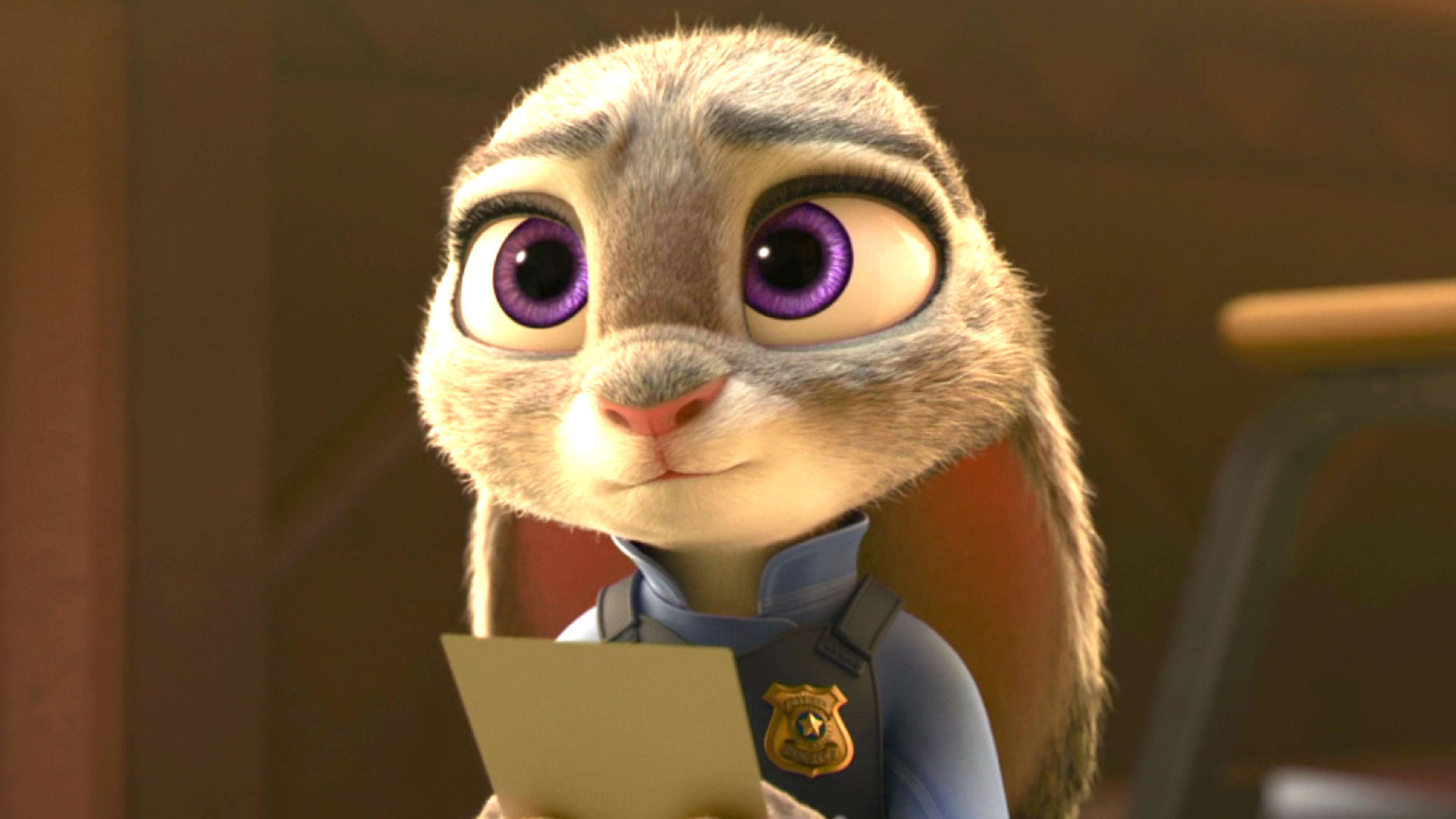
Judy Hopps, voiced by Ginnifer Goodwin, faces up to life in the big city in Zootopia.

I admit it. I bypassed Zootopia when it first came out in March 2016. It’s common for me to be ‘all Oscared out’ at that time and I’d be too tired to go to the movies. However its buzz leading up to the Oscars led me to want to see it. I’m glad I finally had the chance.

The film has a very entertaining premise with a rabbit trying to succeed as a policewoman in a multi-species city. To make it work, the film had to create the city of Zootopia and make it work with all the animal species there. Disney is already renowned for its talking animals and having such would work here. However to have them in the city of Zootopia and existing together in its various areas took a lot of thought to arrange it properly. On top of that, having someone like Judy Hopps just move in adds to the complexity. As she experiences Zootopia and what it has to offer, we experience it too.

One thing about this movie is that with it coming from Walt Disney Studios, you know it has to have the ‘Disney Vibe’ to it. You know, the look, sound, and feel of a Disney show. All the shows on the Disney Channel are known for having that vibe. It’s evident as all the actresses act like Minnie Mouse. So it becomes expected that a film from Walt Disney Studios looks, sounds and feels like a Disney film. There’s no shortage of the Disney Vibe in Zootopia. Even with it being set in the present times, the Disney feel is very much there.

Top praise should go to directors Byron Howard and Rich Moore for directing an excellent animated film. The two have had past experience doing Disney films and Howard even goes as far back as Disney’s 2D animation days. Both Howard and Moore are two of seven who wrote the story for Zootopia of which, storywriters Jared Bush and Phil Johnston would do the final script. The final result is something entertaining and flawless. The vocal talents were also excellent with Ginnifer Goodwin as Judy Hopps, Jason Bateman as Nick Wilde and Idris Elba as Chief Bogo.

This is another plus for the Walt Disney Studios. For so many decades, they had the reputation of being the top animation studio in the business. However they faced a serious challenge from Disney partner Pixar once they became the game changer by making 3D animation the new norm. WDS knew they had to make the transition to 3D but it wasn’t easy. It was almost like Pixar was the professor and those at WDS were the students for a long time. However it’s become evident that Walt Disney Studios is now able to hold its own in 3D animation as it has delivered stellar hits in the last five years like Wreck-It-Ralph and Frozen. It even looks like it’s beating Pixar at its own game! Zootopia is another accomplishment for WDS as it continues to reclaim its #1 status in animation. Besides anything less than #1 should be taken as an insult by Disney.

Zootopia looks to be the top favorite to win the Oscar for Best Animated Feature. It’s top competition appears to come from Kubo And The Two Strings. Kubo has won most of the awards in that category but Zootopia has claimed most of the major awards like the Critics Choice, the Golden Globe, the Producers Guild and the Annie Award. However Kubo has won the National Board of Review and most recently the BAFTA. The Oscar result should be interesting.

Zootopia is another hit for Disney. It’s sweet and entertaining but smart and well thought-out. It’s easy to see why it’s arguably the top animated movie of the year.


Movie Review: Beavis and Butt-Head Do America (1996)

27818_BeavisButtheadDoAmerica_Images_613x463
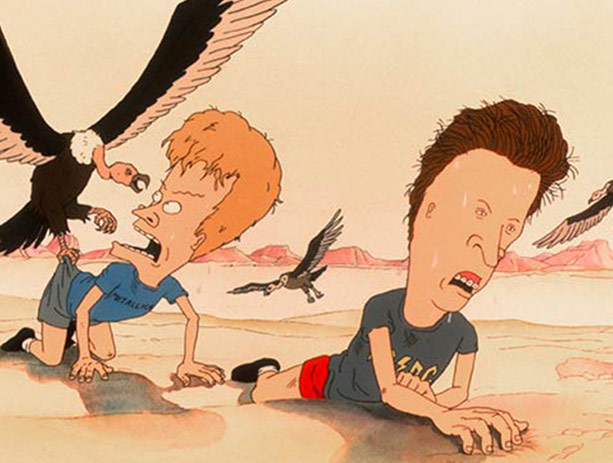
Death Valley is one of the unexpected stops for Beavis and Butt-Head as the two Do America.

Remember Beavis and Butt-Head? Yes, the two stupid teens who somehow could make us laugh. As most of you remember, they had a feature-length film from 1996 entitled Beavis and Butt-Head do America. I had the luck to see it on the big screen in theatres.

The story is about Beavis and Butt-Head first losing their television. With nothing else to do, they go around town searching for it. However they find themselves with a drunken criminal, Muddy Grimes, who had just been done wrong by his girlfriend Dallas and wants revenge. He thinks B&B are the two hired to do the job and sends them to Las Vegas to off her.

While in Vegas, the two first make fools of themselves on the dance floor only to be led to their hotel suite: right next door to Dallas. However Dallas is one step ahead of Muddy and is able to get the two to transport a small electronic capsule which unknowing to them actually contains anthrax.

The FBI learn of B&B having the anthrax capsule and are on pursuit of them. Nevertheless they’re led astray as B&B constantly go off-path to various other areas of the U.S. such as the Hoover Dam, the Grand Canyon, Yellowstone Park and Death Valley. The latter they encounter their long-lost fathers: former Motley Crue roadies.

Things become more bizarre as they meet up with a vengeful Muddy who wants to kill the two only to learn he mistook B&B for his real accomplices. Meanwhile the FBI are after B&B and the capsule and are ready to get them as they near Washington D.C. The ending sets up for what everyone would expect to be the takedown of the two only to have things change by their unwitting and temperamental neighbor. In the end, Beavis and Butt-Head save the day and are rewarded by President Bill Clinton. They return home to find their TV and return to being their stupid selves.

I remember when the project first came out, it was originally thought to be a challenge to have a consistent entertaining feature-length film of Beavis and Butt-Head. Those who remember the TV show from MTV will remember that the show was about the brainless duo going into situations that were both mind-numbing but very entertaining in a stupid kind of way. That and their critiquing of music videos where they came across as your typical teen male bozo horndogs. The series created by Mike Judge and aired on MTV turned out to be just what the young wanted as it charmed crowds from 1993 to its end in 1997.

However the series also freaked parents out and would cause a lot of debate over television ratings and parental friendliness of shows, especially after it made headlines for a lot of young people recreating a lot of destructive incidents of the show: two of which proved to be fatal. Despite the copycat incidents, Mike Judge refused to believe that his show was responsible and would ask where the parents were. The controversy surrounding the show however would be reason why there’s that scene at the end of Bill Clinton rewarding B&B for their ‘service to the country’ and saying: “You exemplify a fine new crop of young Americans who will grow into the leaders of this great country.” Talk about the right shock stuff at the right time. Mind you that’s what 90’s entertainment was all about: entertainment that rattled cages, wreaked havoc, got people’s blood boiling…but came out winners because of it.

Once B&B became a phenomenon in 1993, it paved the way for the chance for a feature-length film. Mind you it would not be easy. It had to be a consistent script that would fit the big-screen right. That would mean an actual story instead of the typical ‘incidents’ as in the series. Plus the flavor of the two characters could not be lost. The two disgustingly charming underachievers had to start that way at the film and stay that way at the end despite whatever happens throughout.

You could imagine Mike Judge and his writing team would have to make a lot of choices and some were noticeable: include Anderson, have a big of Van Driessen, have a surprise for McVicker and everyone, leave out Buzz-Cut, Daria and Stewart, include their long-lost dads, keep out music video critiquing. Yes, it was a challenge. Plus there was having actors for the right fit for the roles like Demi Moore and Bruce Willis, big names at the time, rising star Greg Kinnear, loyal fan David Letterman who gave the two an appearance on his show, and character-actors Robert Stack and Cloris Leachman. In the end, it turned out to be a winning result and it not only charmed fans but received appreciation from critics as well. Watching it in the theatres again this summer got me laughing once again.

However this leads to the big question. Does Beavis and Butt-Head Do America stand the test of time all these years later? I don’t think it does. Firstly today’s young people may not get why B&B was just just what we needed back in the 90’s. Those of us from the 80’s and 90’s remember headbangers at school and teenagers who were idiotic, clueless and even violence-obsessed. Beavis and Butt-Head were the epitome of those teenage male stupids who impulsively loved violence and used their penis instead of their head. Teenagers change over the decades and over the various waves of pop culture and I don’t think today’s teens would get B&B. In fact the show was brought back to MTV a few years ago but it didn’t even last a full season.

Secondly, I feel the biggest reason why B&B don’t stand the test of time too much is because of the shock value and envelope-pushing they did in their time. Look at entertainment nowadays. We have a lot more now than what was around 20 years ago. We have the internet which allows for free speech that’s as unlimited as it gets. We have YouTube where one can post all sorts of videos of all sorts of things. We also have channels strictly devoted to cartoons that pave the way for more adult-oriented cartoon shows than before.

Beavis and Butt-Head came during a time when there were no cartoon channels. Most adult-oriented cartoons would have to soften themselves up if they wanted to be shown on the networks. MTV was the network that dared to show a cartoon as irreverent as Beavis and Butt-Head. B&B hit the airwaves just three years after The Simpsons were rattling cages with Homer’s stupidity and Bart’s sass-mouth and just a year after Ren and Stimpy took cartoon weirdness to new levels. B&B and MTV were the right fit, especially with their music video critiques. They ruled cartoon irreverence during their entirety. However their irreverence would actually pale in comparison to the irreverence of today. In fact it wouldn’t even take a year after the films release for South Park and it’s first season consisting of Stan’s Gay Dog, Cartman dressing up as Hitler and Mr. Hankey The Christmas Poo to outdo all the irreverence and envelope-pushing Beavis and Butt-Head did in their entirety. That’s the fates of entertainment and why Beavis and Butt-Head would now be seen as something to yawn at. Heck, even the whole channel of MTV is struggling right now but that’s another subject.

Beavis and Butt-Head Do America may now lack the the shock value, the envelope-pushing and the irreverent punch it had in its time. Nevertheless it can still entertain loyal fans of the show that still love it after all these years.

Movie Review: Still Alice

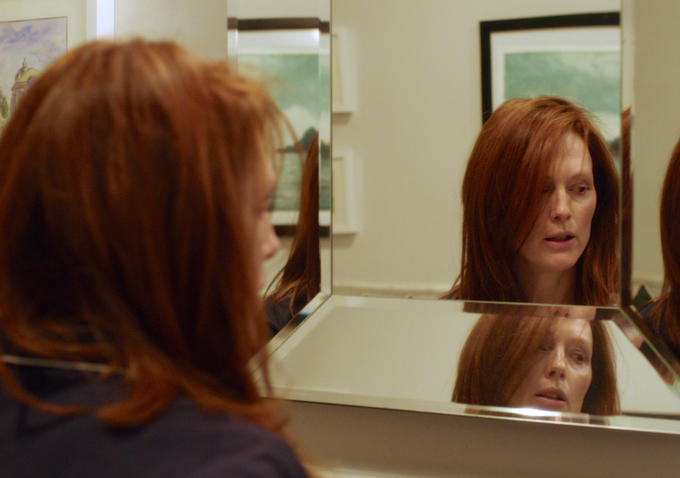
Julianne Moore plays Alice Howland, a 50 year-old woman fighting early Alzheimer's in Still Alice.
Julianne Moore plays Alice Howland, a 50 year-old woman coping with Alzheimer’s in Still Alice.

“I wish I had cancer. At least then people wear pink ribbons for you, and they go on long walks.”

It’s always a question whether it’s possible to have a film about Alzheimer’s Disease that’s watchable. The latest film making that attempt is Still Alice. I believe it does so.

Alice Howland is a 50 year-old woman who appears to have it made: a college professor who just published a book on linguistics, an active person recreationally, a wife to a loving and supportive husband and a mother to three adult children. One of which is married and about to be a mother to twins. However something goes noticeably wrong during a lecture about her book. She has a mental lapse she mistakes for an effect of alcohol. Soon there are more mental lapses, especially while jogging around campus and while giving lectures. Even reintroducing herself to Tom’s girlfriend causes people to wonder. Alice seeks a doctor’s attention immediately. She’s given the news: Alzheimer’s. She’s victim to a gene that brings on Alzheimer’s at an early age.

The family is devastated to hear the news. The children even have to get tested to see if they carry the gene. Anna bares the gene but her yet-to-be-born twins are immune. Nevertheless the family tries to go about the best they can while trying to be a help to Alice. However the changes are as hard for them as it is for Alice herself. Firstly Alice will have to give up her professor job. Going to an Alzheimer’s ward in a nursing and witnessing the patients leaves her upset about her future to the point she plans her own suicide using a marked bottle full of pills and a video file on her computer named ‘Butterfly’ of herself instructing her to take all the pills in the bottle. Family friction happens over time as her husband John notices changes in her thinking and Lydia overreacts after she learns Alice went through her theatre notes.

However things get better over time. John learns how to work with her fading abilities and become patient with her even in the case of her cellphone she misplaced a month earlier. Anna gives birth to the twins and she’s able to hold one of them. Her relationship with Lydia grows as Lydia shares her plays with her and gets Alice to see her perform in Angels In America where Alice feels the play. Even Alice is able to give a lecture to the local Alzheimer’s association where she delivers a speech she wrote herself and uses a highlighter to mark the notes she read as John and her son Tom watch. The speech is near perfect.

Over time she continues to acquire inner strength just as the disease is continuing to impair her brain even further to the point she needs a caretaker while John is gone. However it’s by chance that while her caretaker is away, she comes across the ‘Butterfly’ video on her laptop. She obeys the video and even takes the laptop with her as she searches for the bottle. However the suicide attempt fails as the pills still all over the bathroom floor. The film ends with her still alive but will get you questioning if it ended right.

The film is more than just about Alzheimer’s. It’s about having it at a very young age and trying to be able to deal with it and its debilitating effects. You can’t blame Alice for being distraught on hearing the news, especially when she has so much going for her. Just a bit of trivia here: even though 50 seems awfully young to have Alzheimer’s, we should remember the first subject Dr. Alois Alzheimer studied in the disease that bears his name was a 51 year-old German woman. It almost seems understandable to some that Alice sets her own suicide up to happen when the time appears right. However it’s about acquiring inner strength over time. Yes, Alice’s years are numbered and the disease is taking a toll on her mind and her body but she becomes a stronger person over time. It makes like the suicide attempt look like the wrong thing to do after what she’s fought out.

The movie is also about family relations during Alzheimer’s. For those who have a loved one with this disease, you would know how much it affects the whole family and even hurts deeply. It’s even harder to bear when the gene that causes early Alzheimer’s is present in other family members, just like how it’s also present in Alice’s oldest daughter Anna. The frustrations are there in the Howlands as Lydia doesn’t know what to make when she learns Alice went through her script notes. Even John feels the frustration as being the husband. Nevertheless the family unit becomes stronger over time and they continue to function the best ways that they can. Lydia’s connection with Alice through her theatre work helps Alice still keep in touch with the world even as the disease continues to take its toll. Anna even tries to let the fact she bares the gene not bother her and continue to live her life as a wife and mother of newborn twins. That scene where Alice is holding her grandchild is one of the more poignant moments of the film.

Without a question, the film belongs to Julianne Moore. Her ability to give an Alzheimer’s victim a personality and a will of her own while fighting the destructive nature of the disease has to be the actress performance of the year without an equal. She did a top notch job and deserves the Oscar. None of the supporting performances can pare up to the caliber of Julianne’s performance but Kristen Stewart’s performance of the actress daughter with extreme emotions who connects with her mother through the art of theatre has to be the best of the supporting performances and has more range than even the character of John, despite how good of a job Alec Baldwin does. Kate Bosworth was good as the daughter with the same gene trying to live her life normally but it could have been developed more. Hunter Parrish’s role as Tom the son was the most underdeveloped role in the film but he does a very good job with what little he has. Richard Glatzer and Wash Westmoreland do a good job of directing and writing despite making this film appear to be a film of a single acting role dominating for the most part. I’ll admit I haven’t read the novel by Lisa Genova so I can’t say if they adapted it right or not.

SPOILER ALERT: They say the ending is one of the trickiest things to do in a film. I will have to say the scene of the suicide attempt ended rather flat and led into scenes that will leave one wondering if the film makes it look like a good thing the attempt failed or a bad thing. That scene where Alice is with John having ice cream dwelling on how she used to be very smart will have you wondering as will the end scene where she’s with Lydia and she can hardly talk. It also makes you wonder if it ended right. But I think that may have been the point. I think Richard and Wash ended the film that way so we can make our own judgment whether Alice continuing to live is the right thing or the wrong thing.

Still Alice makes for a very watchable movie about Alzheimer’s even if it does appear at times to be dominated by Julianne Moore’s acting. Nevertheless her role is one that leads to a performance meant to shine and she does just that.

Oscars 2014 Best Picture Review: The Imitation Game

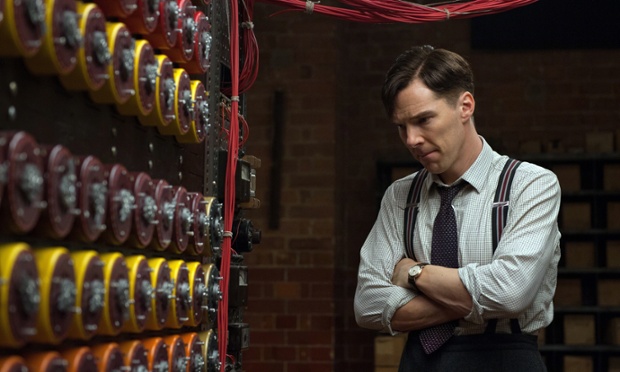
Benedict Cumberbatch plays mathematician/inventor Alan Turing through many angles in The Imitation Game.

“Am I a machine? Am I a war hero? Am I a criminal?”

The Imitation Game is a film that presents us a story of legendary scientist Alan Turing. It shows who he is and his life but also sheds light on many things we didn’t know.

The film opens in 1951 with Alan being investigated by detectives Nock and Staehl. This takes the film back to moments of the past starting in 1939. World War II has started and Turing applies to become part of the cryptography team at Bletchley Park. His ability to decode things and his knowledge that the Nazis use a code called Enigma impressed Commander Alasdair Dennison so much, he brings him on with the team of Hugh Alexander, John Cairncross, Peter Hilton, Keith Furman and Charles Richards.

Turing is difficult to work with as he distances himself from his colleagues. He has an idea for a machine to decipher Enigma but Commander Dennison doesn’t approve. Turing writes to Winston Churchill asking for assistance. Churchill is so impressed with Turing’s idea, he declares him the leader upon which he fires Furman and Richards. He uses a crossword puzzle to find his replacement. Upon which he hires a woman, Cambridge graduate Joan Clarke. Joan however has to deal with her overbearing parents as they don’t want her to work with men and marry immediately. However Turing is convinced enough she’s the right person for the job to the point he provides her a room to stay and work with female clerks while he shares his plans with her.

Difficulties continue as the code of Enigma needs to be reached. First the Germans change the code daily so that the enemies don’t succeed in breaking it. Secondly, Dennison is infuriated with the machine which Turing names Christopher and wants it destroyed and Turing fired. It’s only after the team threaten to leave if Turing is fired that he’s able to continue. Joan is pressured by her parents to either marry or leave her job, to which Turing proposes to her. On top of it, Turing’s team know of his homosexuality but promise to keep it secret.

Even after results happen and Christopher is able to successfully decipher Enigma, the solutions don’t start there. They can’t make it obvious to the Germans that they know Enigma so they have to carefully plan their strategies of attack even if it means considerable time later. Turing learns Cairncross is a spy for the Soviets but is told to keep it a secret or else Cairncross will expose his homosexuality. The place becomes too dangerous for Joan to stay and Turing tells her to leave, outing himself to her and even saying he was only interested in her as a co-worker. Joan leaves angrily. World War II was won and the cryptographers plans are burned.

The film progresses to the 1950’s when Turing was arrested first pursued for hiding confidential information only for them to uncover his homosexuality. His homosexuality was as much of a challenge as his eccentric way of thinking even as far back as his school days when he would be bullied. Fortunately a boy named Christopher befriended him and encouraged him with his coding and shared feelings with him. Unfortunately Christopher died before Alan had a chance to tell him he loved him. At the end, he’s shown with his final struggle with his homosexuality just before his eventual suicide as he’s sentenced to chemical castration: a sentence he chose over two years prison time. In his home where he secludes himself with his own concocted version of the machine Christopher, it’s Joan who comes to him in the end offering moral support and reminding him how significant he was because he was ‘not normal.’

Some would first come to the movie thinking it’s about him and his lifestyle. Some would first think this is autobiographical. It’s more. It presents the story of Alan and his eccentrically intelligent and creative thinking. It presents Alan’s side of the story from beginning to end focusing on the three biggest events in his life: in 1928 as a teenager when he’s first given support of his eccentric imaginative thinking and first learns of his homosexuality; during World War II and the story of the moment and invention that defined him; and in 1951 with Scotland Yard’s trying to link him of a crime only to discover his secret that would lead to his tragic fate. The focus of the story is especially clear at the beginning when Alan asks us: “Are you paying attention?” The film also presents why it was so important for this machine to crack Enigma had to be created as Alan would remind us it wasn’t simply against the War but against time. Especially for the UK which was suffering terribly. It also presents their strategy for helping to win the war as soon as they could.

It’s also very much about Alan the person as it is about Alan and the team working to crack the code. It presents Alan’s intelligence as creative in which he can decipher things through his work on crossword puzzles. It presents Alan as one who also has a very unlikable side including a ruthlessness his coworkers found hard to deal with though they stick with him because they feel he’s the only one who can succeed at cracking the code. They can’t stand him but they believe in him. It especially presents Alan’s homosexuality as for why he was about to go on trial. As he is about to be tried, he looks back on his life for when he was part of the mission to his schoolboy days and his encouragement from Christopher: the one person who truly understood him. It ends with Joan, the one colleague who knew him best and deserves to desert him after what he said to her but comes in the end to remind him of his significance to this world.

It’s obvious that Alan was able to solve Enigma in time but appeared unable to solve himself and even doubt his self-worth just after his sentencing of ‘chemical castration.’ A common thing as we see all too often in history how some of history’s biggest heroes would eventually become rejected by the people and even die lonely. Nevertheless we’re reminded that he still had people willing to stand by him even as he felt worthless. Especially Joan as she reminds him after he becomes a recluse after his defamation: “Do you know, this morning I was on a train that went through a city that wouldn’t exist if it wasn’t for you. I bought a ticket from a man who would likely be dead if it wasn’t for you. I read up, on my work, a whole field of scientific inquiry that only exists because of you.”

The movie tries to show more of what Alan Turing did as an effort to combat the war rather than focus on his lifestyle. Actually the movie does show about the struggle with his homosexuality throughout his life. His first difficulty came in high school as he fell in love with his friend Christopher and had to pass notes in his special code to him. We should remember that Alan was not beaten up in high school because he was gay but because of his intellectual eccentricities where it first showed its presence. He had continued difficulty during his work as even though his colleagues were supportive of him, they did remind him he could lose his job and be imprisoned because of it. Joan appeared to be the one who dealt with it best as she was not afraid to be in a sham marriage with him especially since it would help get her parents off her case. Then we see at the end as Alan has to deal with his ‘chemical castration’ which would eventually lead to his suicide at 41. We should remember those were the times. It’s because of the criminalization of homosexuality in the past that we had the pride movements that spawned out of the 70’s and are what they are today.

Benedict Cumberbatch did an excellent job in his portrayal of Turing. His performance was full of dimension for a person who was hard to like and had quite an imagination but quite smart and even troubled in the end. It’s a role where he not only acts off of his actors but us the audience too filling us in on all the details and making us think too. You can tell when Alan as narrator tells us to pay attention. Of the supporting players, it’s Keira Knightly as Joan who shines the best as the one who not only helps decipher Enigma but is the one person who can decipher Alan as a person in the end. The actors making up the cryptography team–Matthew Beard, Matthew Goode and Allen Leech– did great both as a team unit and in their own individual moments. Other standout supporting performances came from Rory Kinnear as detective Nick and young Alex Lawther who did a remarkable job playing the young Alan Turing.

Also deserving of acclaim is director Morten Tyldum. Very experienced in his home-country of Norway, this is actually his first direction of a English language feature and it’s an excellent first-effort. Also excellent is the script from Graham Moore. He did an excellent job in creating the story off of Andrew Hodges’ biography setting the three periods of Alan’s life that defined him most and piecing it all together. It succeeds in keeping us interested. Technical aspects were also excellent such as the set design, costuming, cinematography and the composed score by Alexandre Desplat.

The Imitation Game is a unique story about a scientist who went from a hero to a criminal of his time. It tells the story through his eyes and leaves us both interested and getting us to think as well. That’s the movie’s best quality.