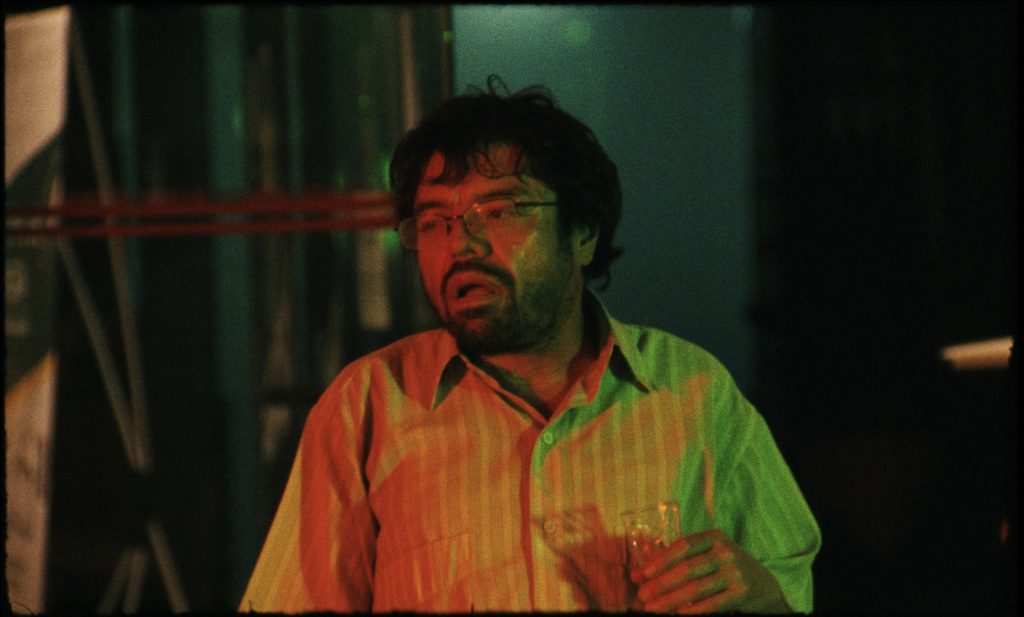
VIFF 2025 Review: A Poet (Un poeta)

Ubeimar Rios plays an aging poet who is a troubled man who can’t seem to do anything right in A Poet.

I started my film watching at this year’s Vancouver International Film Festival with the Colombian film A Poet. It is a very bizarre story of not just the poet but the people in his life and who he intersects with.

Poetry has been Oscar Restrepo’s life but as he’s aging, he needs to face the fact he can’t make a living off it. He’s written two books of poetry as a young adult, but stopped after. Any job he’s tried, he’s been down on his luck. The guild of poets he’s with look down upon him, his 15 year-old daughter Daniela has no real relation with him, and even his ailing mother wonders what’s wrong with him. It’s gotten to the point his siblings want him to change his life around and get a job. He still has that dream in him of being as great of a Colombian poet as Jose Asuncion Silva.

One day, the guild of poets offer him a teaching job at a high school. As he’s teaching a class, he learns one of his students, a girl named Yurlady, has a gift for writing poetry and drawing. As he looks at her notebook, he is astounded by her work and sees a lot of promise in her. He looks at it as an opportunity to be a mentor to her to get a poetry scholarship. As he tutors her, he spends time outside of classes with her and tries to get to know her, her family, her bad living conditions, and her works. He sees a lot of potential in her to be the renowned poet he never could be.

Over time, problems arise with Oscar and his tutelage. A lot of students say he taught classes after he had been drinking. The guild notices him spending too much outside time with Yurlady and reminds him that could harm his reputation in his new job and even provoke nasty rumors. Even Yurlady questions Oscar in making a career in poetry. Especially since she has a huge extended family to support in the future.

Soon Oscar helps Yurlady get a spot on a national talk show to promote an upcoming meeting of young poets. The appearance is a success for her. Then the night of the poetry reading features a group of young and established poets from various backgrounds. The meeting is attended by Yurlady and some of her classmates. Yurlady’s reading goes well. In the evening, Oscar gets drunk with his colleagues and forgets about Yurlady. Later that evening, Oscar finds out Yurlady got sloppy drunk and is vomiting nonstop. Instead of staying with her at the hotel all night, he takes a cab and drops her off at her home’s doorstep.

That’s when the rumors get worse. That Oscar was careless, that he copulated with her. Oscar is fired from his job. The guild of poets will offer an out-of-court settlement for what happened provided Yurlady does a video explaining everything. Just in the middle of shooting, Oscar blockades and insists it not happen for personal reasons. The problem Oscar causes is so embarrassing, they give the family a cash payment settlement. Oscar is so defamed after that, Daniela wants nothing to do with him.

Just when it appears all is lost and as his mother’s health condition is deteriorating, Daniela finds something at her home. It’s her missing notebook that Yurlady found in Oscar’s car weeks earlier. Daniela sees Yurlady used the book to do poetry and drawings of her own. She also notices Yurlady wrote a letter to her specifically telling the whole truth of what did and did not happen that night. The letter also mentions about how she really feels about poetry. She loves doing it, but it’s not the passion Oscar wants her to have. It’s after that Daniela welcomes Oscar back into her life, but demands he smarten up. It’s at the very end with a family tragedy that the full reconciliation happens.

This film is both a drama and a comedy. Oscar and his character is what gives the film the biggest comedic elements. He’s a poet and a fail of a person. He’s like a lot of people in the arts in which they’re good at their craft, but they’re their own worst enemy. Often you will find them failing at everything else. Even making an alcoholic of themselves. That’s Oscar. The funny things is as you watch Oscar, you will see a lot of personality traits and habits that will remind you of a lot of poets in the past. I’ve even joked that poets are ‘too suicidal.’

Oscar is not as suicidal as your common poet but he is his own worst enemy, can’t think properly, can’t succeed at anything else, and finds himself back on the bottle again and again. He feels since he failed as a father to his daughter and as a poet, he can be seen as a mentor to at least one person in his life. He feels he can mentor a promising poet and share his dream of poetry with her and help her become a great. It first appears he failed at that too as he continues to make dumb decisions like making a minor part of the poetry scene. In the end, he made things worse for him and those around him. That appears to be the common theme of the film: Oscar feeling like a failure. We see it in how he messes up time and time again. We also see it as he looks at images of the poet Silva and the writer Bukowski of how he laments over his failure at literary greatness.

The film also has drama as it’s about his strained family relations and his own desire to want to be liked and admired. It’s also of his complicated redemption. It’s through Yurlady and his daughter’s notebook that he gets his unlikely redemption. It’s like the flower blooming out of a ground of ashes. It’s like the mess-up Oscar had with Yurlady eventually becomes what starts the path of the resolve between Oscar and Daniela. It is right at the ending it appears Oscar has the chance to redeem himself and really turn his life around for his family and his daughter.

This film is a great work from director/writer Simon Mesa Soto. His first feature film, 2021’s Amparo was an impressive breakthrough for him. Here, he follows it up with another great story about a troubled man who appears to be art itself in all of its triumphs and devastations, despite struggling to better himself as a poet and constantly messing up as a person. It’s a film that will impress you when and where you least expect it. Also it will become the story you didn’t expect it to be.

Possibly the most surprising thing of this film is that for the lead actors, this is their first-ever film roles. You wouldn’t notice it! Ubeimar Rios was great as Oscar. Playing a poet who is a man-child and makes life hard for everyone is quite an accomplishment for a first role. Also great is Rebeca Andrade for playing Yurlady. She did well not only as the young girl with dreams, but as the one person who could be a solution to Oscar in an unexpected way. Great performances also include Allisson Correa as the teenage daughter caught in the middle of this mess and Margarita Soto as the mother who tries to get Oscar’s head together.

This film is Colombia’s official entry for this year’s Oscar race in the category of Best International Feature Film. Additional awards the film has won are the Cannes Film Festival Jury Award of Un Certain Regard, Horizon’s Award at the San Sebastian Film Festival, the CineCoPro Award at the Munich Film Fest, and winner of the Bright Horizons Award at the Melbourne Film Festival.

The film A Poet is a unique comedy that’s also a sad comedy. It’s about a man who appears to be a poor excuse for a human being, but gets an unlikely redemption.
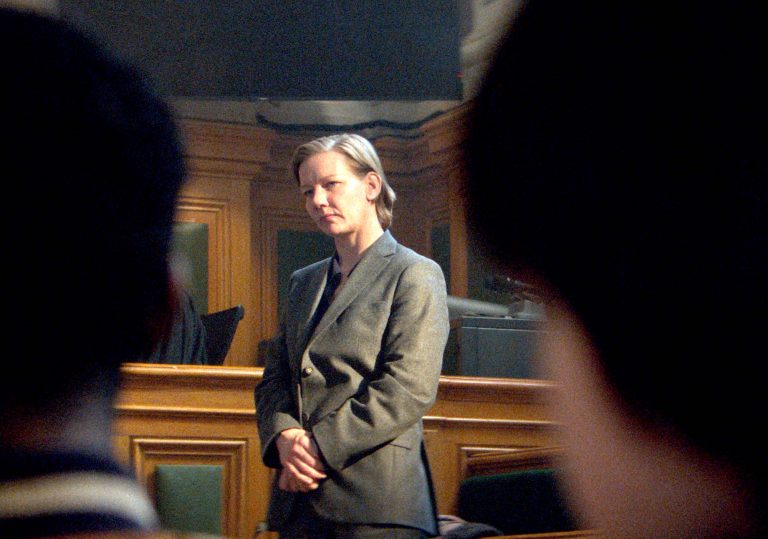
2023 Oscars Best Picture Review: Anatomy Of A Fall (Anatomie d’Une Chute)

Sandra Huller plays writer Sandra Voyter suspected of killing her husband in the courtroom thriller Anatomy Of A Fall.

DISCLAIMER: This is from a blog of four reviews I originally posted on March 2, 2024. The original blog has been removed.

Anatomy Of A Fall first appears to be a common courtroom drama with a story of intrigue. Over time, you’ll learn it’s a film that’s a lot more.

Courtroom dramas have caught our intrigue time and time again. We’re presented with a criminal scenario or a legal scenario, but it’s up for us to decide whether they’re guilty or innocent or who to side with in a dispute. We learn the verdict and we’re left to decide if it’s the right verdict or not. This story is a unique story. It presents a case of a death from a fall. The deceased is the French husband of a German novelist. The fall happens from a chateau in a remote mountainous area of Grenoble. The first to notice the fall is the seeing-eye dog of the blind son. Questions arise. We learn of the troubled marriage. People turn against the woman. The prosecutor is determined to prove her guilty. The son watches despite his blindness, and seems like he doesn’t know what to think. Could he hold the truth? Could his seeing-eye dog also provide clues to the truth?

This isn’t simply a story of whether Samuel’s death is a murder, a suicide or an accident. It’s a story that develops over time with each new fact exposed, opinions from people in the story coming about, and your own opinions being formed. As we learn of Sandra Voyter, her turbulent marriage, and her recent liaisons, some of us are tempted to look down upon her and even suspect her of possible murder. As we learn about Samuel and his immaturities and later of his depression over the last few years, will that change our mind? The film is as much about how we see things and see people as it is about our story itself. Even possibly exposing sexist attitudes we didn’t think we had. There’s even the angle of the trial as seen through Daniel: the child caught in the middle. A blind boy, he has the biggest sense of the friction his parents have been going through. He lost his father and he’s at risk of losing his mother if she’s found guilty. During the time, he doesn’t know what to think of his mother and often feels lonely. Almost as if Snoop, his seeing-eye dog, is the only one who loves him and he can trust. Sometimes your concern shifts from how Sandra will be found by the courts to what will happen to Daniel. It’s like the film is two stories in one. Even Daniel’s testimony at the end will make you reconsider your stance in the case.

Top respect goes to director/writer Justine Triet. Triet has become only the eighth female director to be nominated for the Best Director Oscar. This film is actually a project she co-wrote with Arthur Haran for actress Sandra Huller to star in after the two worked together in 2019’s Sibyl. She creates a great story that presents a death and the question if it’s an accident or a murder. She presents it as a story of a French-speaking wife and a German-speaking husband who use English as a common ground to sort things out, but it adds friction. The death, the courtroom drama, the turbulent marriage, the communication barrier, and the son caught in the middle adds to the story. Even the ending which allows you to draw your own conclusion of the incident adds to the film.

Along with Triet, there was great acting from Sandra Huller. Her acting in this story helps create the character along with the actions and allows the audience to make their decisions in the case. Huller is as much of a storyteller as Triet herself. Also great is the performance of Milo Machado-Graner: the son caught in the middle. There are many times in the story, some thanks to camera shots of the courtroom drama, where one can think the film is as much about Daniel as it is about Sandra. He’s trying to make sense of what is happening. He is suspicious of his mother but is scared he will lose it all. There are times he tries to be tough with him teaching himself piano by sound clips, but you can tell he could break down. It seems like the dog Snoop is his one friend, especially with his sheltered upbringing. Graner makes him a boy you want to hug. Adding to the film is Messi The Dog as Snoop. Through Messi, we see Snoop is more than Daniel’s seeing-eye dog and best friend. He’s also one that hold clues to what could expose the truth. Additional great acting performances include Samuel Theis as Samuel Maleski, the husband that struggled with mental illness whose struggles threatened the family, and Antoine Reinartz as the prosecutor who will get you wondering if he wants justice done or simply to have Sandra found guilty.

This film has been lauded with buzz since the Cannes Film Festival. The film won the Palme d’Or at the and Triet became only the third female director in history to win. You know how I talked about Messi The Dog adding to the story? At Cannes, Messi was even given the Golden Dog Award for his efforts! Even after Cannes, film festival after film festival it was entered in would have this come away as the big winner. The film also won six European Film Awards. The film was not France’s official submission in the Best International Feature Film category. I assumed it’s because there’s too much English in the film, but other articles are suggesting there may be politicking.

Anatomy Of A Fall is a great legal drama that tells the story of a death in question and doesn’t only leave its fate to the juries, but for the audience to decide for themselves what they believe to be the truth. Even Triet herself won’t say if Sandra is guilty or not. All your call!

VIFF 2023 Review: When Adam Changes (Adam Change Lentement)

The teen years are never easy. And overweight Quebec teenager Adam proves it in the animated film When Adam Changes.

The animated film When Adam Changes fulfilled the third of my annual VIFF goals of seeing at least one feature-length Canadian film. It’s an animated film that tells a common story of growing up the oddball, but done in a unique and entertaining way.

It’s a summer in the 1990’s. A grandmother is dying in the hospital. All the family members surround her. Then the grandmother utters her last words. It’s an insult of the size of the torso of Adam, her 15 year-old grandson. Adam has endured a whole lifetime of insults from her because he’s overweight. Crazy thing about it is her insult makes Adam’s torso grow bigger! After she dies, everyone is in tears, except Adam.

With the grandmother dying, Adam’s family will be having family over to make funerary plans, host gatherings and also have Uncle Mario living with him, his older sister and his parents. With Adam being 15, the father wants him to learn responsibility. He gets him to do things like mow a neighbor’s lawn, take care of the house of his cousin’s, and walk a neighbor’s dog. The latter is a bizarre case as the previous walker takes the bags of droppings and hangs them from a neighbor’s tree. Adam’s not too happy about that. He just wants to hang out with his equally awkward best friend, play video games or watch action movies.

As the family and other relatives make funeral plans and arrangements, Adam goes about his duties the best he can. He even disposes of the dog dropping properly. However problems arise. In the area of his dog walking is a boy named Pierrot. Adam knows Pierrot. Years ago, he was encouraged to befriend him on the playground. It went well until an accident Adam caused led to a big gash on Pierrot’s face. The scar from the accident is still very noticeable on Pierrot’s face and Adam is afraid to make eye contact with him To add to his problems, he learns a bully from his school lives close by. He’s going to take pleasure in being mean to Adam. Adam does see a possible ray of hope in his girlfriend, who’s also a classmate of his. He notices she takes a liking to him. Can he win her?

As the days pass, the funeral happens. Adam does his best to speak about his grandmother, as all her grandchildren were to say something about her. It’s not easy since she was so mean to him, but he pulls it off. After that difficult task, Adam goes about doing his duties. It’s not always easy as the school bullies are harassing him and seeing him being left out of parties makes him feel like a misfit. To add to his personal insecurities, his sister has a boyfriend who doesn’t look like the type to trust. On top of it, he keeps seeing Pierrot walking down the sidewalk with a long metal rod. Why? Is it personal? Does Pierrot hate him from that incident from long ago?

One day, Adam has a ray of hope. The bully’s girlfriend invites him to Marianne’s party. His best friend encourages him. Things do not go all that well. It’s crazy but Adam wants to do something to be popular and win her love. He fantasizes being the hero as he watches the action movies. Then he tells her a party at his place. Hopefully this will make things work out.

Adam’s been waiting for this moment. He’s even watched some of his action movies to make him feel big. Then the doorbell rings. She came! But shoe brought friends along, including her boyfriend. This is going to be a long night for Adam. The party doesn’t go well and his sister caught her boyfriend cheating. Suddenly Adam sees an opportunity with his classmate. She gets into a scuffle with her boyfriend, but he turns abusive to her. That’s it. Even though he may have bullied Adam in high school, Adam’s not taking it and he gives him a piece of him with moves he learned from the movies. The bully’s down on the ground. Adam things he won her, but i9t’s not the case. Dejected, Adam leaves the house. He notices Pierrot and that the reason for the metal rod was to take the dog dropping out of the tree and sending them to the original walker. Adam helps and it turns out a friendship between the two was there after all. The film ends with Adam at the couch with family.

Let’s face it. The teenage years are the years you both love and hate. You love it for the best music and best movies of your life. You hate it because of all the jerks and mean peers you have to deal with. I’ve even said that high school is a total social “torture chamber.” I think everyone can remember the false sense of superiority some students had or the many times peers made one feel inferior. We see that in Adam as he’s often fat-shamed. He wants to fit in, but he also has his hopes on a bigger prize: that girl. Can he win her? He looks like he can win her and he has a chance.

Watching the film will remind us of our teenage years. They’re some of the best moments of our lives and some of the worst moments of our lives. The film does a good job in displaying that in a humorous form that can make us laugh off even some of our worst high school memories. It also doesn’t miss in showing some of the ugly cases of teenage life such as use of substances, bullying, infidelity and abuse. Even that thing where someone hurls an insult at an aspect of Adam’s body and that aspect grows, wasn’t it just like us back in our teen years? Didn’t we also feel that same way the instant somebody taunted us about a physical flaw of ours, whether it be minor or major? I guess that’s what the film is intended to do. Remind us of our teen years as the most frustrating years of our lives, but in a humorous way.

The film ends with a touching moment where the protagonist gets the message that despite the garbage and pressures around you, it’s important to surround yourself with people who care about you. There’s Adam with his teenage sister, Uncle Mario, his parents and his best friend watching a movie. Leaving the peers who used him and crashed his party somewhere else. With the frustrations that come with being a teenager, I guess that’s what you need to have. Have a time to be around the people who make you feel good about yourself. That scene is a good “To hell with it,” to the garbage of teenage peer pressure.

This is a unique story and film by Joel Vaudreuil. Up until now, Joel has had experience in creating animated shorts and even directing music videos. This is his first attempt at making an animated feature and it’s impressive. Its 2D animation is unique in its style and fits the story well. Vaudreuil also gives a story that does hit close to home but in a humorous way. Yes, the teen years were a hurtful time for all of us, but it’s able to make light of it well. Even some of the nastier moments of our lives. Very impressive first feature-length film.

This film has already won an award in animated film. The Ottawa Animated Film Festival made it the Grand Prize winner.  The Annecy International Animated Film Festival made it a nominee for the Contrechamp Award for Best Film.

When Adam Changes is an enjoyable animated movie. It’s another example of how Canada keeps on sending out winning animation time after time. It’s also a good reminder of why you’re glad your teenage years are long over!

VIFF 2023 Intro And Review: The Promised Land (Bastarden)

Mads Mikkelsen plays Gustav Kahlen, a settler in 18th Century Denmark in the film The Promised Land.

VIFF INTRO: Normally I do a separate blog for VIFF when it opens. Since the Festival ended on Sunday the 8th, I’ll do a brief summary here. The Vancouver International Film Festival returned. This year, there were no longer films to stream as VIFFaccess is no longer. It became a case cinemas are working to bring crowds back to the theatres. Same with VIFF as its films were shown at seven different facilities. There was a reduced number of films shown at 140. Now that the pandemic is almost over, the arts communities have to downsize in order to rebuild itself. Nevertheless a lot of great films to see coming from 73 nations. A wide selection of Canadian films, Indigenous films, LBGT-themed films, documentaries and an excellent number of films directed by women are yours to watch. And even after the Festival with VIFF repeats just after! The Festival may be over but the reviews are still worth posting as the films could return to the VIFF theatre, get wider release or even be put on a streaming service.

One of my goals of the Vancouver International Film Festival is to see at least one film that’s a nation’s official entry in the Best International Feature Film category for this year’s Oscar race. I did it on my very first VIFF film: Denmark’s The Promised Land. This film already has a lot of buzz, and rightly so.

It’s the middle of the 18th Century in Jutland; territory ruled by Denmark. A peasant man named Ludvig Kahlen of unknown fatherhood sets out to cultivate the untouched heath land in hopes to win honor from the king. Even though the king’s men accept and give him servants, he soon makes an enemy with Frederik Schinkel who owns the land and wants to believe his say supersedes that of the king’s. He also reminds Kahlen that those who attempted to cultivate the land before him have failed. Nevertheless Kahlen is stubborn and is determined to make it work with the minister Anton Eklund and a servant couple. He also meets a dark-skinned Romani orphan girl named Anmai Mus who tries to connect with him, but he rejects her at first with the common racist attitude.

Over time as Kahlen gets better at his work, Schinkel gets more envious and more control-hungry. He even takes the servant husband, has him whipped in his private chamber and executed with boiling water poured on him in a dungeon. All are shocked but Schinkel is remorseless. A distraught Kahlen soon develops an intimacy with the servant’s widow. He even welcomes Anmai Mus in his life and soon it becomes a family-like situation between the three. As for the heath, Kahlen and the two work tirelessly against a stack of odds to make the land work. If it’s not the land that’s hard and lacks fertility, it’s the unpredictable weather, workers that desert and the murder of Eklund by Schinkel’s men.

In the second year, Kahlen gets a new set of settlers from Germany. They are hesitant to help Kahlen out as they view Anmai Mus as a wicked child because of her dark skin. Kahlen is insistent since he has developed a fatherly love for her. Meanwhile problems threaten Kahlen’s goal and his unity with Ann Barbara and Anmai Mus. The jealous Schinkel starts coming onto Ann Barbara and creating a love triangle between her and his cousin wife. In addition, the workers refuse to assist as long as Anmai Mus is there. They consider her bad luck. Kahlen makes a resolution to send her to a boarding school miles away. It works in getting the settlers to work, but Ann Barbara is disgusted how he did this in the name of his pride.

The cultivation of the heath becomes successful, but the envy of Schinkel gets to the point he feels he has to destroy what Kahlen has created. Kahlen’s land and livestock are set ablaze. Kahlen responds by killing some of Schinkel’s men. That leads him to being captured by Schinkel and sentenced to death. The method being whipping and boiled water: the fame fatal punishment Ann Barbara’s husband receives. Kahlen is whipped mercilessly and Schinkel would delight in seeing him burned to death but as Kahlen is put in the dungeon, Schinkel is called to his chamber. Ann Barbara awaits him and promises him an unforgettable night. After a cup of tea, which Ann Barbara poisoned, Schinkel convulses and Ann Barbara has him at his most vulnerable. Ann Barbara does not resist arrest at all for his murder.

Schinkel’s murder is successful in stopping Kahlen’s execution, but Ann Barbara is imprisoned for life hundreds of miles away. Before Kahlen returns to his farm, he takes Anmai Mus away from the boarding school and promises never to let her go. Upon returning to the fame, Kahlen leads and demands the settlers treat Anmai Mus with respect. Over the years, the farm is prosperous and Kahlen earns the title of baron from the king. Also Anmai Mus grows up to be a successful woman who wins the eyes of a young man in the area. It is after her marriage to him and her goodbye to Kahlen that Kahlen knows what he must do. The ending is slow, but it comes with a surprise result.

This is one of those films that is based on a historical person that gets you questioning if it’s real or not. This story of Ludvig Kahlen as he and his wife try to grow a farm and overcome the ruthlessness of landowner Schinkel does appear farfetched in how it plays out. Actually this is based on a novel from Danish writer Ida Jessen. Nevertheless this film does tell a lot about the case of classism and racism. It was as problematic back then as it is today. It will shock many how the settlers viewed the dark-skinned daughter as bad luck, but that’s how most people thought back then. Also seeing how someone who owns the land thinks he has bigger empowerment on situations than the king, we can see examples of people like that in the world.

I’ve seen films based on a novel based on a historic person before. It seems to be a common thing now. Although it is still common to do historical dramas, it’s become more common lately to adapt novels of stories loosely based on historical people. Gets you wondering about the “Based on a true story” factor. In this film, we see a case where a historical figure overcomes racism and adopts a dark-skinned girl. He overcomes classism by making the Heath fertile and marries the widow of his servant. He overcomes geographic odds by cultivating land in Jutland. He also overcomes his own class odds by him, a bastard peasant son who’s normally destined to stay in the peasant class, achieving Baronhood. It’s uncertain how much of this is true or loose fiction, but it is a story to get one thinking.

You can either welcome a loose story of historical figures like this or you can pan it for its inaccuracies or farfetched drama. However you view it, this film plays this story out in a unique style. One can say it plays out in the style of an epic film with all this recreation. Some would even view the film as an unlikely romance. Some even say this story plays out with the common dramatic elements of an American western. It takes a story of a historical person few have heard of and makes people get intrigued by the drama and even anticipate what will happen next. It even adds some comedy with the behavior of people, including Schinkel. The stupidities of Schinkel are behaviors that can easily remind people of bad behavior of some rich people of today. In addition, this story does not end like your typical drama. There are atypical twists at the ending, surprising people who didn’t expect the film to end that way. Maybe sending the message this film isn’t what they thought it would be about.

Top credits go to director Nikolai Arcel. Arcel has already amassed a good reputation with having written for fourteen previous films and directing five. One film he wrote and directed, A Royal Affair, was nominated for an Academy Award. In this film that he directed and co-wrote with Anders Thomas Jensen and Ida Jessen, he goes back into the genre of epic films and delivers a drama that’s grand in spectacle and thrills. Also worthy of top honors is lead actor Mads Mikkelsen. Here he temporarily leaves behind the MCU and Indiana Jones that has catapulted his stardom and returns to Denmark for a character he helps create and enhance with his performance. Also worth admiring is Simon Bennebjerg who creates a villain in Schinkel that succeeds in making you hate him for being evil and laugh at him for being stupid. Additional good performances include Amanda Collin for adding the drama as Ann Barbara and Melina Hagberg for adding in the charm as Anmai Mus. The set designers did an excellent job in recreating the barren land of the 18th Century and the score by Dan Romer adds to the dramatic feel of the film.

Danish film has really had it strong at the Academy Awards in the 21st Century, especially these last ten years. In the Best International Feature Film category, Denmark has achieved two of its four wins, six additional nominations and three years making it into the annual shortlists this Century. Arcel himself had one of his films, A Royal Affair, nominated in that category back in 2012. The Promised Land is the second of his films submitted as Denmark’s official film in this category. This film was even nominated for the Golden Lion at this year’s Venice Film Festival. At that same festival, Arcel was given Honorable Mention for the SIGNIS Award.

Whether it is true or mostly made up, The Promised Land is an intriguing story about classism and racism and the lust. Even a telling story about what it’s like to live under a monarchy. It’s also an unlikely love story.

VIFF 2021 Review: The Electrical Life Of Louis Wain

Benedict Cumberbatch plays a troubled eccentric artist with a passion for cats in The Electrical Life Of Louis Wain.

Have you ever heard of artist Louis Wain? I should hope every cat lover has heard of him. You may have seen his art in the past, but may now know it. The film The Electrical Life Of Louis Wain is a colorful portrait of a colorful artist.

The film begins set in 1925. Louis Wain is in a mental institution. On the radio is a voice giving support for the troubled Louis Wain. He talks of how Wain fascinated us all with cats. He also talks of the need to raise funds to bring Wain to a better mental institute that allows him to paint and be with cats. The film then goes back to 1880. Wain is 20 years old and his father has passed. He is the first-born of six and the only son. His father’s passing now puts on him the responsibility of being the family breadwinner.

This is not a responsibility Wain can do easily. He has a history of losing jobs and his drawings and paintings are not exactly the type that can win the general public over, nor newspapers looking for illustrators. This is troubling for all the family members, but it’s oldest sister Claire who really lets Louis know through her frustrations how much of a pressure this is. On a train trip, he meets businessman Asim Chaudhry who sees his drawings and gives him advise. Wain’s drawings do attract the attention of Sir William Ingram: the Managing Director of the Illustrated London Daily News. Ingram gives him the opportunity to draw for the paper, but on a part-time basis. This, along with other odd jobs, is enough to provide for the family and allow them to hire a governess to teach the three youngest daughters: Emily Richardson. Emily is ten years Louis’ senior, but Louis can’t help but take a liking to her. During this time, Louis also keeps his drawings of his inspirations and fears inside a personal journal of his own.

Over time, the money Wain is able to provide goes so far, adding to the frustration. Wain’s fast swimming at the Turkish Baths gets on people’s nerves, even though Ingram is willing to tolerate it. Louis keeps on having recurring nightmares of drowning in a capsized ship: nightmares he’s had since childhood and may explain the scar underneath is lip. Louis’ feelings to Emily are feelings he feels he has to keep hidden, but there’s Shakepeare’s The Tempest the whole family plans to see in the theatre. Louis invites Emily by slipping the ad under the door, and she accepts. Before the Show, Emily reads his journal and is surprised by the paintings and drawings. During the play, it goes into a scene of a story boat trip, which causes Louis to leave for the bathroom. After he’s finished, he sees Emily. Emily reveals she read his journal and understands him and they kiss for the first time!

The romance of Louis and Emily does not go well with the family. They don’t want to be the source of scandal because of the class-gap and age-gap of the two. At the same time, Louis learns of photography from a boxing match he watches with Asim. Asim tells him that photography can replace illustrations for newspapers in the future. That does not settle well with Louis not just because of his job, but he feels photography lacks the imagination and electricity of drawings. Then one day, the closeness of Emily and Louis gets to the point Claire has to fire Emily. It’s then he asks Emily to marry her. He reveals to her he doesn’t care what others think of them both. Emily accepts, revealing she doesn’t care either. The two find a home in the countryside to avoid controversy and they have a happy first six months.

Then the news come Emily has fatal cancer. Louis agrees to live with her the final years of her life. Then one rainy day, they hear a meowing out in their yard. It’s a kitten and he’s freezing. The two take him in and they make a pet out of him. Making a pet out of a cat was seen as odd in British society as cats are seen as either nuisances or only good for catching mice on the farm. However the two decide to make a pet out of the cat and name him Peter. For the next three years, it’s just Louis, Emily and Peter together. However Emily’s condition deteriorates. Louis doesn’t know how to deal with life without Emily, but Emily encourages him to continue to live on and not be afraid to make his imagination come alive.

After Emily dies, Louis secludes himself and is broke. Claire gets on his case for that. However it’s after this time, he learns the more he hurts, the better he paints. He starts creating cat drawing and cat paintings. The images depict cats as charming, cute and mischievous. The works attract many a reader of the Illustrated London News. His cat paintings start selling like nobody’s business. He even gets honorary memberships to cat societies in London who always saw cats as pets long before the mass public did. This brought him considerable fame, but not fortune. It’s after receiving a lot of debts he confesses to sister Claire he didn’t copyright his works and people are copying and getting their own piece of the action. The only way he can make money is through his original paintings. Ingram came to the rescue and gave him additional work in illustrations.

Then in 1900, Peter dies. Wain is heartbroken. Soon he learns the harder he grieves, the bigger his imagination grows. He then paints multi-colored pictures of cats that take his art in a new direction. It grants him bigger fortune, which comes in time as Marie is diagnosed as schizophrenic and needs to be sent to a better hospital. Unfortunately the luck runs out after a few years and fortune went just as fast as it came. He attempts to market his work in the United States, which attracts the attention of William Randolph Hearst and Max Case. The trips to New York give him a bigger fascination with electricity, but the boat trips also bring back his recurring nightmares of drowning on a ship.

Bad business decisions continue to get Wain sudden riches and back into debt. Over the years, Wain loses people close to him like his mother, sisters Marie and Claire and his mentor William Ingram. Then in 1925, he has a violent mental outburst that puts him in a metal hospital. Asim sees him in the hospital. He notices his drawings lack the magic he once had. Also Louis appears dead inside as there are no cats. This allows Asim to team up with H. G. Wells and his three surviving sisters to start a fundraiser to help bring Wain to a better hospital where he’s allowed a better quality of life where he can draw, paint, be around nature, and cats. The hospital where he spends his last years is much better and it allows Louis to again experience his image of paradise. The paradise he and Emily possessed together.

I’m sure anyone who’s seen Louis Wain’s art may have mixed feeling about it. Some will think it’s not for them, especially people who don’t care for cats or can’t stand them. Others will wonder how one can call cat pictures art? Some can even look at some of his more colorful pictures of cats in his latter years and even see them as ‘psychedelic!’ Hard to believe they’d have this ‘psychedelic’ look many decades before the psychedelic look of the 60’s that is iconic of the term ‘psychedelia’ would come to be.

The film also shows how Louis Wain possessed a lot of traits that are common among even the most famous artists. Firstly it shows Louis Wain’s imagination: one common artistic trait. It takes you into his love of cats and his fascination of electricity and how he turned it into his art. It shows how he used his imagination to create his paintings. The best artists always did. His imagination gave Brits a new look towards cats. No longer were they seen as good just for mousing or nuisances. They could be seen as pets. The film also shows you the eccentricities he had during his lifetime. Artsy people are known for possessing eccentricities. The film showed how Wain was both a non-conformist and what we call today a ‘slacker.’ He didn’t care what society thought of him when he married Emily, and neither did she. Artists are also still seen as non-conformists in the way they lived. He was unable to maintain a real job and a steady income sweating it out; another common trait we see in a lot of artists.

The film includes the family pressures he faced, being the oldest of the Wain children and only male. Wain had to act as a provider to his family and his artistic talents were more of a hindrance in that aspect. Especially financially as there would be times he’d starve, times he’d prosper and times when his riches were all squandered. Many of the best artists would not receive their renown in their lifetime and some like Van Gogh starved. Wain received his renown, but still had periods of poverty. The film also takes one into the heartaches he experienced in his life like the death of his only wife Emily and the death of his first cat Peter. Even though he would have many cats since, Peter would still remain his beloved and he would never get over his death. It showed the deaths of his two sisters, his mother and his biggest mentor. He noticed the more he grieved the better and the more imaginative he painted.

The film also takes you into Wain’s mental torture. It’s a common belief among people that an artist should be the type to suffer for their art. Artists have been known to be people that suffer inside and Wain was no exception. One will notice early on in the film as they learn Louis had recurring nightmares of drowning upon a sinking ship. That was a nightmare that would never leave him. Many people into art want to see artists draw out or paint out their pain. Wain reminds us that even artists that do supposedly ‘happy’ pictures like his cat paintings also can possess inner demons and they make one their own worst enemy as much as they make them an artistic genius. Being type-two bipolar himself, director Will Sharpe let it be known about Wain and what it’s like to have those troubles.

Biographical films have changed a lot in the last twenty years. Most of the time, you see the story unravel itself over time without narration. Very rarely do you see a modern biographical film go from start to finish about their lives. This film does a lot of ‘traditional’ ways of going about the biographical film, but instead of it being a setback for the film, it enhances it. Hearing the narration from Olivia Colman is a delight to hear. Also the narration of the film actually adds humor to the film and the story. Seeing Louis Wain’s life unravel from the turning point of his life in 1880 up to his death in 1939 actually helps make the film instead of hinders it. The film even includes moments in his life that become picture perfect moments for his drawings and paintings. The film even shows times in Wain’s life when it becomes moments for his best work. However it’s shown imperfectly and sometimes becomes uneven with the story. I’ve seen biographic films of artists before. Often they try to mix the life experiences and mentalities of the artist in with some of their biggest art works. This film does it very well for the most part, but there are times when it comes off as lacking consistency or out of place.

This is a very good work from director Will Sharpe. He’s co-directed two films before with Tom Kingsley, but this is the first film he holds his own in. The film he directs and the story he co-wrote with Simon Stephenson is an impressive artistic biography. It’s as much of a comedy as it is a drama. It follows the ‘traditional’ way of making a biographical film, but it’s more of a benefit than a drawback. These aspects make the film. The layout of the film also works for the most part, despite the flaws being noticeable. Nevertheless it does tell us a lot about Wain. It reminds us that he was a troubled man who did not make a lot of smart decisions, had a tough family life and was mentally troubled. However it was his imaginative way of looking at things, his view of the beauty of the world, his love for cats, and the reassurance of Emily’s love for him that gave him his drive to create.

Benedict Cumberbatch did an excellent job in his portrayal of Louis Wain. He did a great job in showing both the comical side and the tragic side of the man which made the film impressive to watch. There weren’t too many standout supporting performances, but Claire Foy was very good as Emily Wain. She was very good in playing the woman that understood his mental troubles and still loved him. She was also good in showcasing how she was the one who inspired Louis to paint his imagination and to still continue to inspire even after her passing. Of the sisters, Aimee Lou Wood was the standout as Claire: the sister who was frustrated by Louis’ misdoings, but ended up admiring him as she was about to pass. Toby Jones was also an occasional scene-stealer as William Ingram, as was Taika Waititi as Max Case and Adeel Akhtar as Asim Choudhry. Standout technical elements are the cinematography by Erik Wilson and the score by Arthur Sharpe: Will’s brother.

The Electrical Life Of Louis Wain is more than just a biographical film of an artist. It takes one into the mind of the artist in his inspiration and of his troubles. Sometimes it doesn’t make complete sense or appear all together, but it is an excellent film that will get you interested in the artist and his work.

VIFF 2020 Review: The Curse Of Willow Song

The Curse Of Willow Song is about a troubled orphaned girl (played by Valerie Tian) who possesses a curse that haunts her, but could just save her.

Most of the familiar VIFF categories from past years are back for the online festival for this year, including Altered States. The first Altered States film I saw was the locally-filmed The Curse Of Willow Song. It was something else.

Willow Song is a troubled girl. The daughter of Chinese immigrants who both passed away, she was addicted to drugs and followed in her older brother Mission’s footsteps to live a life of crime to survive. Manual labor wasn’t enough for her. Only the arson she committed landed her a prison sentence. She’s done her time, but she spends her time in a detention centre in Vancouver as she works to build her life. Her one friend is Flea, another girl at the detention centre. Flea appears to be the only one she can trust right now. Willow is not allowed to see any close family, especially her brother, for fear she will return to her addiction and criminal ways.

It is very hard for Willow to reintegrate back into society. One labor job that appeared to have steady work ended as the boss accepted an opportunity in Edmonton. The detention centre doesn’t seem to be working well to help her get back on her feet. The society she’s around has a contemptuous look at young Asian-American females. On top of that Wolf, the pusher from the place she burns down, keeps harassing her how much she owes him.

She gets relief when she least expects it from Dani: a figure from her past. Dani has found a place for Willow to live all the way out in Surrey in an abandoned warehouse area that has common housing amenities. There, Willow is able to have a set-up similar to that of a comfortable home. There’s just one thing. When Willow sleeps at night, there appears to be something dark and mysterious growing on the walls.

Despite her new shelter, Willow knows she still has issues to deal with. She still has to reintegrate herself back into society. Also she has to avoid any contact with Mission or Wolf. That’s not an easy thing to do as she tries to get a labor job, but the boss just pays attention to her physical and racial features. He hires her, but drops her after the first day. Obvious sexual harassment. Walking down the streets of East Van, she does bump into Wolf. He hasn’t forgotten her. He still wants the money from her and won’t stop until she does. In addition, she meets up with Flea, but Flea appears to have turned her back on her. The growth on the walls continues to get bigger and bigger.

Soon, Willow’s secret shelter doesn’t stay secret for long. First to know is Mission and his gang where they go to conduct some activities. It’s only after an altercation with others that they go. Flea finds Willow’s whereabouts and they appear to have made peace. Only it turns out Flea gave Wolf the info about her secret place. Wolf and Flea then go over to her place. Wolf is ready to chase her down and kill her. Willow tries to run and hide herself wherever she can, but Wolf is determined. Willow tries to hide herself in a room full of chairs. Wolf is determined to get to her, but something happens to Willow as she’s hiding. When Wolf gets to where she is, Willow has become this monster of black smoke. She can attack Wolf and there’s nothing he can do. Flea tries to search for Wolf, but Willow has a surprise for her.

This is definitely a horror-thriller movie. However it does a lot more. It sends a message about some Asian-Canadians who slip through the cracks of the system. This is in the focus of Willow: a young Asian-Canadian female. She’s orphaned, best at skilled labor, a recovered drug addict, and has been with her brother’s crime ring. Seeing how Willow wants to get back on her feet but the system either failing or falling short does send a message about problems that are out there. What happens to Willow often happens to many other girls too. I guess that’s why it’s shown in black and white. Because of the black and white world Willow lives in.

Another unique element is the thriller aspect of the film. The ending where Willow turns into this bizarre deadly spirit is bizarre to see. I actually read in an interview with director Karen Lam that she mentions of “psychokinesis (PK), where people can create an energy when under extreme stress that resembles a poltergeist.” That’s something unique. This is also the first time I’ve ever seen something like PK in a film, especially used by the protagonist. It was evident that Willow had her PK growing over time as it grew on the walls before her big confrontation with Wolf when it really came out.

This is a great work from writer/director Karen Lam. It’s a film that does keep you intrigued with the protagonist and what will happen next. The film was nominated for ten Leo Awards (BC’s equal to the Oscars) and it won two including Best Director for Lam. It’s well-deserved as this is a film that really succeeds in telling its story and keeping the audience intrigued. Also excellent is the acting of Valerie Tian. She does a good job of playing the protagonist with a troubled past and something supernatural she doesn’t know what to make sense of. Ingrid Nilson is also excellent as the traitorous Flea. She’s good at playing a lot of street girls that will befriend you one minute, then take what you have the next.

This film is part of the VIFF series Altered States. Many of you know that I’ve been seeing a lot of Altered States films for many VIFFs of the past. Those we the thriller/horror films that were shown at the Rio Theatre during their 11:30 weekend shows until they dropped them after 2018. Altered States are back this year and they’re mostly all online.

The Curse Of Willow Song is more than just a film of a young woman with a supernatural gift. It’s also a film with messages about our society and discrimination. It definitely knows how to end in unexpected manner.

VIFF 2019 Shorts Segment: To Live In Infamy

Cinema

Those who know my film watching during the VIFF know that I try to watch at least one segment of short films. I saw a segment of seven films by Canadian directors entitled To Live In Infamy. In each of the films, there is some element of crime or taboo. Even some things that don’t qualify as a penal code may be seen as a crime of some sort, or even a simple wrongdoing. All of them are interesting in their own way.

Delphine (dir. Chloe Robichaud): A woman named Nicole looks back to a girl she only encountered for two brief times in her childhood. Her name was Delphine and she was a Lebanese immigrant to Quebec. The first flashback is in a private grade school where Delphine could only say one word in French: ‘oui.’ The other classmates make fun of her. Nicole, who is Lebanese-Canadian, doesn’t participate with her peers, silently shares in Delphine’s ostracism. The vice-principal of the school however does scold Nicole and the girls for lewdness. The second meeting between Nicole and Delphine is at sixteen in a public school. Delphine has a bully named Aminata who appears to try to dominate over every female. She attempts to dominate over Nicole too, but Nicole is physically resistant.

The story leaves us with the necessary questions. Some may ask were Nicole and Delphine lesbians? However the story is reflective of childhood. It reflects on fun memories like of some mischief and of family warmth. But also of upsetting memories like of being made to feel different and facing nemeses either violent or non-violent. We all have those moments in our childhood where we’re reminded how the world is a cruel place. It’s a story many can connect with, even if they didn’t live it exactly.

I’ll End Up In Jail (dir. Alexandre Dostie): A woman named Maureen is frustrated with her life. She tries to cover it up from her son and his boyfriend, but she can’t take it no more. One day, she drives off on an icy hilly road hoping for an escape but crashes into a parked car. It appears the car is parked so that a teen boy and his girlfriend can get stoned in the trunk of a car together. The girlfriend is dead. The boy learns she’s the mother of his classmates. They work to hide the body of the girl, but while Maureen is stuck underneath a tree, she learns a truth. She acts out in a way where she really has to be on the run from the law.

This film is a dark comedy that makes a lot of humorous situations in crime and personal problems. Even the uncovering of a dark truth appears humorously surprising, if not disturbing. The ending however feels a bit incomplete or doesn’t appear clear enough. I know it’s about Maureen’s escape and how it doesn’t go as planned, but it still looks like it’s missing something.

Shadow Trap (dirs. Damien Gillis and Michael Bourquin): In 1909, a white bounty hunter is out searching for Gitxsan business man Simon Gunanoot who is wanted for murder. The bounty hunter stocks up with a lot of supplies ready to find Simon, a reputed trapper and fur-trader, for a big reward. However the frontiers of Okanagan B.C. prove too much for him and he is in danger of freezing to death, until he’s rescued and sheltered by an Indigenous man. Is it Simon in hiding? He returns to the town with hides to trade.

This is a fictionalization of a true incident in Canadian history that says a lot. The message I seemed to get from the story may be about the common perception of Indigenous peoples by whites at the time as ‘savages,’ and how wrong they are. Even now as we’re trying to make reconciliation happen, I feel this story has a lot of value.

The Beach Raiders (dir. Tyson Breuer): A teen couple– the boyfriend having photography ambitions– is savoring the last days of summer at an Ontario beach. They have one last summer goal: steal some beer. They try to get it from the kitchen of a restaurant. However their attempt is not only in danger of being stopped by the owner, but their own relationship as both have differing goals. However their pursuit ends with a bang!

This film is a bit of an ode to the ‘young and stupid’ days. What starts with stealing one beer leads to a chance for something bigger. The film does however focus on a reality, though it is resolved in light fashion at the end.

Main Squeeze (dir. Brendan Prost): It’s Christmas. Benjy and Kiersey, a couple in an open relationship, are having fun in their apartment. However the fun is threatened when a young drunk woman smashes their window. It’s not just any woman, but Jacqui: Kiersey’s ‘other woman.’ He is not comfortable about having Jacqui in, but Kiersey insists. Benjy had every reason to be nervous because Jacqui says things making it clear she’s his rival. This not only threatens the relationship but the Christmas spirit too.

It’s a story that makes good use of a single location. It consists of a lot of moments where you don’t know what will happen next. It surprisingly ends with all conflict over.

Ghoulish Galactic Grievances (dir. Josh Owen): Wanna have some weird fun? A ghoul lives in a swamp, but she has a desire to pursue her friends in outer space. Her swamp friends want her to stay.

This is a fun and entertaining story of ghouls and aliens and creatures. It is definitely a fun comedic story to watch, but it succeeds in delivering a smart message within the theme.

Finding Uranus (dir. Ivan Li): This is the one short of this segment that is animated. A man is lost in a sea of internet porn and desires to find real sexual satisfaction. He pursues it through a very unorthodox trip.

This was entertaining, but bizarre at the same time. However I admire how the animator is not afraid to go crazy and let his creativity tread in territories many would not touch!

All seven shorts were entertaining in their own way. Some had a story to tell, while some were more about the show. Many were dramatic while some aimed more for comedy. All were good at telling their story, even if told in a bizarre style.

At the end, I can understand why this shorts segment is called To Live In Infamy. All of them had an infamy of some kind, whether big or small. Nevertheless all of them told their story well.

VIFF 2017 Review: Summer 1993 (Estiu 1993)

Summer 1993
Summer 1993 is an autobiographical story of young Frida (played by Laia Artigas) trying to adjust to her new family after being recently orphaned.

Summer 1993 is a unique Spanish film for its depiction of childhood. It’s also a unique story about a girl that’s semi-autobiographical.

The story begins with a young six year-old girl named Frida who’s recently orphaned. She has lost both her parents to AIDS with her mother dying in the summer of 1993. The whole family including the mother is hugely concerned for Frida’s well-being. Her mother’s brother Esteve agrees to take care of her. Frida is taken to their mountainside pueblo in the Catalan Pyrenees to like with him, his wife Marga and 3 year-old daughter Anna.

It’s taking a long time for Frida to get adjusted to her new surroundings. She feels like a misfit in the town and very rarely socializes with anyone else. On top of it, she feels uncomfortable around the chickens. AIDS isn’t spoken around her and her family. When in conversation, they simply refer to it as ‘that illness.’ It does become apparent what ‘that illness’ is when Frida cuts herself and her family panics.

She also misses her mother, but doesn’t know how to grieve about it. Every day, she goes to the tiny grotto near the farm and prays to her mother. There’s even a time she places a pack of cigarettes to her mother by the Madonna. That’s the best way Frida knows how to grieve.

Over time, Frida appears to be developing a friendship to Anna; possibly even a sisterhood. It would become apparent Frida’s acting out when she plays a game with Anna in the woods only to leave Anna behind. Anna is found, but with a broken arm. The family is infuriated with the way Frida is acting, feeling she has no morals. Unknown to Esteve and Marga, Frida hears it all. Frida starts feeling like she’s unloved and decides the thing to do is to run away. It’s there as the family comes to search for her that Frida is reminded that she is loved. It becomes a turning point for her as she now feels like an accepted person at home and in the community.

This isn’t your typical film from Spain. Usually most fans of ‘arthouse’ film think of Pedro Almodovar when the word Spanish film comes to mind. Here, Carla Simon is not aiming to be the artist Pedro Almodovar is reputed to be. This film is actually autobiographical of Simon. She herself lost her mother to AIDS in the summer of 1993. Her father died some time before. The summer of 1993 was the first summer she spent with her new family. Basically Simon wanted to send a message with this film: “With the movie, I wanted to express the fact that children can suffer a thing so cruel but they are still able to understand death. That we have to talk to them about death, because a six year-old child can understand. The question/thing/issue is how they manage their feelings. We talk also about children’s ability to adapt, how they can survive and keep going, and the fact that children are more able than adults.

It wasn’t mentioned whether Frida’s actions in the film mirrored Carla’s actions in real life. However Frida did exhibit a lot of common behavior traits common in children that have lost a parent at their young ages. The film shows how Frida goes from being a child who exhibits behavior relatives don’t know what to make of to soon belonging to a family and even grieving at the end.

Carla Simon directs and co-writes with Valentina Viso a story that’s intriguing, but also very natural and without overdoing the drama. It plays the events out as they come without trying to grab hold of attention. All the better for it. On top of it, the story is shown through the child’s point of view, which makes it that more autobiographical. Young Laia Atrigas does a very good job of playing Frida. She does a no-nonsense job of playing a six-year old girl and doesn’t try to be cutesy. She just does what she needs to do. The adult actors in the film, especially David Verdaguer and Bruna Cusi, also do a very good job in their parts as the concerned but confused foster parents. The film is set very well in its Catalan settings with scenes in both the pueblo and in the Catalan village. The film gives the feel of being in Catalonia. The film also included something noteworthy of the time as we see Frida wearing a T-shirt with Cobi: the mascot of the 1992 Summer Olympics from Barcelona.

A bit of trivia. Summer 1993 is Spain’s entry this year in the Academy Award category for Best Foreign language Film. It is the second film in the Catalan language to be submitted as Spain’s entry in that category. The first ever is Black Bread.

Summer 1993 is a story about a young girl’s change of surroundings and how she responds to it. It’s autobiographical depiction works well as it plays out in a no-nonsense fashion. The better for it.

WORK CITED: Zorita, Kristina. “Interview With Director Carla Simon” European Women’s Audiovisual Network. 6 March 2017<http://www.ewawomen.com/en/events/interview-with-director-carla-simon.html>

Movie Review: Star Trek Beyond

STAR TREK BEYOND
Star Trek Beyond is the third installment of the revamped Star Trek series.

I was originally planning on saving my review for Star Trek Beyond for a summer movie summary on science fiction movies outside of superhero movies. That was not to be the case as most of the top sci-fi movies were superhero movies. Nevertheless Star Trek Beyond is a movie worth reviewing by itself.

For the third of four movies of the revamped Star Trek series, the writers and director Justin Lin had to deal with making a 2-hour movie that is a continuation of the series while leading to an ending setting up for the fourth and final movie, which currently has no set year of release right now. The trick is trying to make the right choices of what to include, whether it be pieces from the original television series of the 60’s or of movies of the past, and create the right third-movie.

One thing about this installment is that the focus is more about exploring new worlds which is what Star Trek is all about. However it’s also about friction as smaller ships ambush and wreck the USS Enterprise. Even the threat of an intergalactic race in another galaxy under a tyrannous villain adds to the drama this time. This is a case of a fresh story for the Star Trek franchise while trying to maintain the same spirit of the whole Star Trek series.

I mentioned back in my review of superhero movies that despite the action scenes, morals and values are essential for a superhero movie. Morals and values are also essential for a movie like Star Trek as well. The Starship voyage continues in its quest to discover new intergalactic worlds and develop ties between the life forms. The value of doing what’s right is present in this Star Trek movie as Kirk is about to go on a rescue mission that might endanger his life. He responds by saying; “I would rather die saving lives than live knowing that I took them.”

The movie sometimes seems like it wants to be a sweet farewell to Leonard Nimoy. It’s evident in the story as Spock receives news that Lieutenant Spock has died. Reminders pop up in the story line as Spock plans to leave the Starship to carry on the Lieutenant’s duties and even a sentimental scene near the end. I don’t think it did any wrong moves in doing so. Memorializing an actor, especially if they had such a memorable role in their lifetime, is never an easy thing. There are some times in retrospect I felt there were some wrong moves in memorializing Paul Walker in Furious 7 like the farewell image of his character played by his look-alike brother. However I feel they did it right here, including the toast ‘to absent friends.’ Even at the end the movie is dedicated ‘In Loving Memory’ of Nimoy.

yelchin
The film makers of the fourth and final revamped Star Trek film decided to drop the character of Chekov in respect to the late  Anton Yelchin.

Unexpected was the death of Anton Yelchin who played Chekov in the three revamped Star Trek films. He was a gifted actor capable of doing an excellent job in each role he played. In Star Trek, he delivered a Chekov that was half the age of the original Chekov but made it work on screen. He even added some charming humor to the movie series with lines like “Nine-Five-Wictor-Wictor-Two” or “I can do zat! I can do zat!” Unfortunately he was killed an a car accident one month before the film’s premiere. He was 27. The film didn’t make any major last-minute changes in editing or storyline upon news of his death but he is memorialized after Nimoy’s dedication with ‘For Anton.’

New to directing the Star Trek series is Justin Lin. He’s best known as the director of four Fast And The Furious movies. With his first attempt at directing Star Trek, he does a very good job in maintaining the spirit of the Star Trek franchise along with delivering the right storyline and right action to the movie. For the record, J. J. Abrams is producer this time. The script written by Simon Pegg who plays Scotty and Doug Jung who’s past work is mostly writing for television is consistent with the story and the spirit of Star Trek despite it being short on the expected action. All the returning actors still maintain their respective characters well. One thing noticeable is Chekov has more of a presence and he doesn’t deliver so many humorous lines this time. Another new addition is Idris Elba doing an excellent convincing role as the villain Krall. Visual effects were still good even if they weren’t the most spectacular. Also the addition of the Beastie Boys song ‘Sabotage’ got me thinking again to how Guardians Of The Galaxy and The Martian has made it a must to include musical moments in such movies.

The big surprise is the lack of box office success that came with this film. The film currently has a North American gross of over $157 million and a total worldwide gross of over $333 million. Since it cost $180 million to make, it’s labeled a ‘flop,’ especially knowing the first two revamped Star Trek movies starting back in 2009 both made over $200 million. People are wondering why? The film has an approval rating at Rotten Tomatoes of over 80% and there was expected to be big fare since this year is the 50th anniversary of the Star Trek franchise starting all the way back with the TV series. Some are saying Yelchin’s sudden death may have a lot to do with it, like it ‘spoiled the fun.’ It’s wrong to make such an accusation. Nobody saw his death coming. Not even Anton himself, if you’ve bothered to read the news about it. Some are saying the story lacks excitement. Possibly but it still has a lot of ingredients win crowds and Star Trek fans alike. Hard to say exactly. My assumption is that simply this is the third movie, not the first and not the last. Plus it faced competition from a wide variety of other movies this summer. I feel that the final movie can achieve more at the box office because it will be the final movie of a revamped film series that worked rather than flopped.

Star Trek Beyond may not be as action-packed as most of the other summer fare out right now or even past Star Trek films but it is a movie that delivers on the Star Trek franchise and stays true to its spirit. It even paves way to the fourth and final Star Trek movie to come.

Movie Review: Star Trek Into Darkness

Captain Kirk and Spock bring the villain Khan (Benedict Cumberbatch) in Star Trek Into Darkness.
Captain Kirk and Spock bring Khan (Benedict Cumberbatch) to justice in Star Trek Into Darkness.

The Star Trek franchise has really come a long way since its days as a television series, hasn’t it? Movies, a new series in the 90’s, a loyal following of Trekkies and even a 2009 remake of the original. Now Star Trek returns to the big screen with a remake of the sequel entitled Star Trek Into Darkness. Does it still entertain current audiences?

The movie opens with Captain Kirk defamed and demoted from his Captain position after Spock’s life is jeopardized while prevent a volcano from erupting on the planet Nibiru that would have wiped out all civilization and would have exposed all of Nibiru’s lives to the Enterprise. Admiral Pike has been reinstated but believes Kirk deserves a second chance and successfully lobbies for Kirk to be his first Officer.

The movie moves forward to London two centuries from now. A bomb has just exploded and the perpetrator is believed to be Starfleet agent John Harrison. The meeting about how to deal with Harrison is disturbed by Harrison’s jumpship. Kirk destroys the jumpship but Harrison is able to escape to the Klingon planet of Kronos. Meanwhile Pike was killed in the attack which promotes Kirk back to captain of the Enterprise. Kirk is left in charge of dealing with the Enterprise and Harrison whether to have Harrison killed by the torpedoes on board the Enterprise or brought to justice.

Their first attempt at capturing Harrison is by arriving on the Klingon planet even though they know Klingons are set to attack them. Harrison kills the Klingons but appears to surrender when aware of the torpedoes against him. It’s when Khan is held inside the Enterprise that is true identity is learned, Khan: a genetically engineered superhuman designed as a weapon 300 years ago for a war between the Federation and the Klingon Empire. On top of that, the torpedoes each have one of Khan’s crew cryogenically frozen inside. In the meantime Admiral Marcus, engineer of Khan and captain of the USS Vengeance which Khan designed, demands Khan’s release. The Enterprise refuses and that leads to a war leaving the Enterprise severely damaged.

Soon after many giveaways happen to the intentions of both Khan and Marcus which almost leads to the destruction of the Enterprise had it not been for Scotty’s fast thinking on the Vengeance. A confrontation between Kirk, Spock, Marcus’ daughter Carol and Khan leads to Khan succeeding and gaining control of the Vengeance. Khan will only allow the crew of the Enterprise free if given the torpedoes. They agree but just when it’s thought that Khan has the advantage, a surprise occurs. This leads to a battle between Khan and leaders of the Enterprise with a not-so-typical ending to the movie.

This is a continuation from what started in 2009 when the first Star Trek was remade. If you remember then, they attempted to remake the very first Star Trek movie with a modern faced cast and with modern special effects. The end result was one popcorn movie remake that worked well not just with audiences but critics alike. it even became the first Star Trek movie to win an Oscar: winning Best Makeup. Here in 2013 comes a new challenge of remaking The Wrath Of Khan with the new modern cast and the new special effects.

I’ll admit that I have not seen the original Wrath Of Khan so I cannot compare it to Into Darkness. What I can do is compare it with the 2009 remake of the original. The original was good as it was able to remake and even modernize the original well with good writing, good acting and excellent effects.  Into Darkness was also very good in its own way with the acting and the directing and especially the effects. There were times where the original actors (William Shatner and Leonard Nimoy) make appearances in the movie with is not uncommon for Hollywood to do in terms of movie remakes and movie versions of TV shows. However Shatner was given a good role that was atypical. As for the story, it was your typical Hollywood formulas in the story but what it lacks in original it, it makes up for in entertainment. It succeeds in being a thrill ride for those who see it with battles and even an ending that it not your typical predictable Hollywood ending.

The acting from the actors was also good. One thing I liked about the 2009 remake is that none of the actors were trying to fill the shoes of the actors past. Chris Pine knew he wasn’t to be a copy of William Shatner. Zachary Quinto knew he wasn’t to fill the shoes of Leonard Nimoy. John Cho knew that he’s not in George Takei’s shadow. Anton Yelchin knew not to compare himself to Walter Koenig. And Zoe Saldana was not trying to be Nichelle Nichols either.  Each had their part to do and doing it made it work. The actors again continue to do it in Into Darkness. Mind you the role of Spock was given a new challenge by having him convey emotion despite being a Vulcan. Even Benedict Cumberbatch did a very good job in playing Kahn, even if Khan came across as an unoriginal Hollywood villain.

J.J. Abrams can add this movie to his cloud as one of the top sci-fi directors in Hollywood. He started well with Mission Impossible III, progressed with the first Star Trek in 2009 and did it again in Super 8. Although Into Darkness doesn’t compare to the first Star Trek, it does not hurt his reputation at all and even adds to his consistency. The highlights of the movie of course were the visual effects as should be expected with any sci fi movie. People don’t go to a sci fi movie for the script. They go to escape to another world. And Star Trek Into Darkness succeeds into taking us into our world two centuries from now and into the many worlds in the Star Trek universe. It was a very good trip into escapism that most will enjoy.

Star Trek Into Darkness is a sequel remake that puts its most emphasis in the escapism and the excitement of the action. It succeeds again in giving the audience a trip to another world while staying true to the Star Trek theme. The big question is if there’s to be a remake of The Search For Spock in the future, how soon will it come out and what will the end result be?