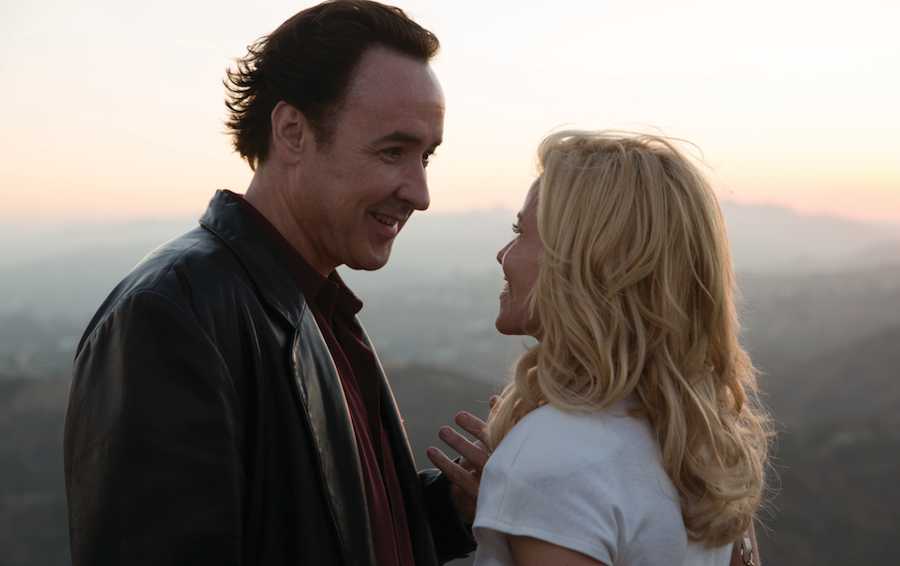
Oscars 2024 Best Picture Reviews: Part Four

The thing about the Oscars is that each year, there are Best Picture nominees for films of subject matter that most people would normally not want to see. In some cases, films of unwatchable subject matter end up Best Picture nominees. A lot of these unwatchable things are based on people or events that actually happened, like these two films. For these next two films, I wouldn’t say they’re unwatchable but they do treat on dark subject matter. They’re far from the topics or themes that would draw crowds. Some scenes many would find too disturbing to watch. All I can say is you be your own judge:
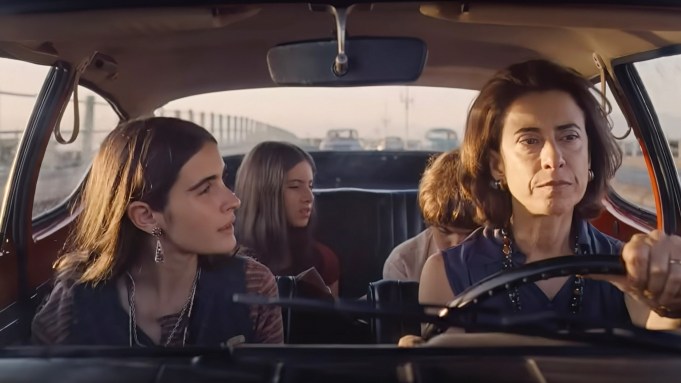
I’m Still Here (Ainda Estou Aqui )

When one thinks of a Brazilian film, one would think of a film that may have scenes of the carnival, the festivities or the beaches. I’m Still Here is a very different film as it presents a dark side of Brazil’s history that they’re still troubled by today. Even the angle from which the film tells its story is unique. We have heard of people kidnapped during political regimes but we rarely hear about how it affects families. It’s through Eunice Paiva that we see how sometimes being married to an enemy to a regime could lead one to being imprisoned. Through Paiva we also see her as she struggles to keep her family together, struggles hiding the truth from her youngest children, struggles with her relationship with her youngest daughter and struggle to get the answers she needs of what happened to her husband. Eunice’s story of being the wife of a kidnapped man really tells a lot. It also shows how it would shape her to be the social justice warrior she became.

The film begins with a beach trip with the Paiva family. Everyone has fun, they all pose together for a photo and Marcelo found a stray dog they can make their own. It’s after that when everything changes. Soon the interrogation of Rubens, Eunice and their daughter, Eunice’s days of imprisonment and the years of aftermath not knowing whether her husband will return alive or if she will be kidnapped again. Then the long wait hoping Reubens will return and the fear of spies outside her door hoping to get her and imprison her again. It’s after the dog Pimpao is run over by the spies’ car that she lashes out at them and she’s had enough. Soon, her desire to leave Rio and start a new life for her and her family in Sao Paulo. The film moves forward to 1996 where Eunice has become a social justice advocate in Brazil, which had returned to democracy in 1989. She shows the death certificate of her husband she achieved. Her family has changed. Especially son Marcelo who became a successful author, despite being confined to a wheelchair. The film ends in 2014, years before Eunice would die of symptoms of Alzheimers. She is connected to a news story about the abductions and the continued pursuit of justice before a family photo.

Looking at it, the film is as much about family unity as it is about injustice in Brazil. Eunice had the nice orderly happy family life before the political abductions happened but that all changed after the imprisonment of the three. Trying to hide the truth of what happened to her father and deal with her older daughters’ knowledge of what happened is not an easy task. Trying to get the answers to what happened to her husband during a political regime that refuses to do so and trying to raise a family is a hard task. That’s one thing we rarely think about. We hear of political abductions in the news but we hardly ever hear of how families cope and try to keep themselves together. It’s through Eunice we see a personal strength we often ignore. You can understand why the family photo at the end of the film was so important. She succeeded in keeping the family ties together as much as she succeeded in achieving justice. The effect on children is also noticed in the film as her daughters fear the worst and are frequently arguing with Eunice. They’re the children with the most truth of what happened. Also the scene in 1996 when Marcelo and Maria, the two youngest, ask each other when they knew their father died, even as Eunice tried to hide the truth.

This is an excellent work from director Walter Salles. He’s one of the most acclaimed Brazilian directors with films like Central Station, The Motorcycle Diaries, Paris je t’aime and the adaptation of On The Road. This film is an excellent accomplishment of telling a dark story and making it a personal story. Even having it end on a positive note is an achievement. With the script written by Murilo Hauser and Heitor Lorega adapted from the novel written by Eunice’s son Marcelo, he takes the story and makes it relatable even though most of us will never experience something this terrible. He makes us connect with Eunice Paiva’s story and tells it so most of us who don’t know Brazil’s history know of the amazing woman Eunice Paiva was.

Making the film work is actress Fernanda Torres. She succeeds in telling Eunice’s story and makes us feel for Eunice and hope for the best. She did a great job, as did her mother Fernanda Montenegro who plays the dying Eunice at the end. Selton Mello was also great as the husband who still tries to live his life daily knowing he could be a political target any minute and eventually becomes one. The cinematography by Adrian Teijido added to the telling of Eunice’s story.

I’m Still Here is both the retelling of a dark era of Brazil’s history and the personal strength that came out of a kidnapped politician’s wife. It’s a sad story, but positive and hopeful.

Nickel Boys

Let’s face it. A film about a reform school that is infamous for its racism, physical and sexual abuse, and even murder of minors will not make one want to watch it. In fact, Nickel Academy is the pseudonym for the now-closed Dozier School For Boys in Florida where graves of those killed were discovered and survivors are now receiving their justice. Those that have learned of the ugly news of Dozier of recent years will want to avoid seeing Nickel Boys, but it does give people reason to see it.

When it comes down to it, what happened at Dozier School should serve as something that should never happen again. What happened there needs to be told, but how? How can you make a place of abuse and murder watchable? RaMell Ross succeeds in doing it with the character of Elwood Curtis. The film flashes frequently in between Elwood’s time at the school to the adult Elwood who just learns of the truths unraveled in 2003 as he’s a successful businessman with a stable relationship. The film tells Elwood’s story as it starts before Martin Luther King’s civil rights movement and Florida still having Jim Crow laws. The film shows how as we fast forward 40 years later, Elwood is overcome with hurt and trauma as the secrets are unraveled with the finding of mass graves. In the flashback, we see Elwood bond with one of the boys named Turner he’s with and the two plan an escape while Elwood documents all that has happened in a diary. The escape fails for Elwood as he’s shot dead while Turner succeeds in escaping around the time of the Civil Rights Movement. In the flash forward, Turner adopted Elwood’s name to thank him for all he taught him.

Elwood and Turner are fictional characters, but they could be representative of any of the boys at Dozier School. It’s through Elwood’s and Turner’s friendship at Nickel that we’re shown of the corruption, abuse of various kinds and the murders that happened there. Through Nickel Academy, Dozier School was as much about racism as it was about abuse. White students got better facilities and a better education while the black students got bad facilities, a bad education, the most hazardous jobs, and even harmful punishments like the sweatbox. African American students got it harder and their death rate at the school was way bigger than that of white students. Even black students who didn’t do what the white superintendent says, like fix a boxing match, could be executed and the superintendent would never get arrested. You can understand why the story has Turner’s escape around the time of the Civil Rights Movement. It would be the beginning of the end for Nickel/Dozier.

This is a great work from RaMell Ross. The story he directs is based upon a 2019 novel of the same title that is the telling of that fictional friendship. The story he co-adapts with Joslyn Barnes is very good and very revealing. He succeeds in making a film about the abuse that is watchable and gets one to think. It’s a reminder of the ghosts of the past and how even if we do well in the present, it will come back to haunt us. Even as the guilty people are slowly brought to justice, we’re reminded it can’t erase the hurt and trauma. He does a good job in making it as much a story about two friends as it is about exposing the truth. Excellent work. Also great is the acting of Ethan Herisse and Brandon Wilson. Their performance as the friends caught in the drama did as much storytelling about the place as it did about them. Daveed Diggs is also very good as the adult Elwood who tries to hide his hurts of the past, but they eventually come out. Also great is the performance of Aunjanue Ellis-Taylor playing the grandmother who is hoping for the best for Elwood and tries with every chance and opportunity, only for every white ‘helper’ to fail her. Her mix of optimism and heartbreak adds to the story.

Nickel Boys succeeds in making what could be a film of unwatchable subject matter be watchable. The mix of a story of a friendship around a school with a notorious past exposes truths of the school while maintaining a sense of hope.

And that does it for now. That’s my review of the latest two Best Picture nominees of review. The last two will be coming very shortly.
VIFF 2024 Review: The Piano Lesson

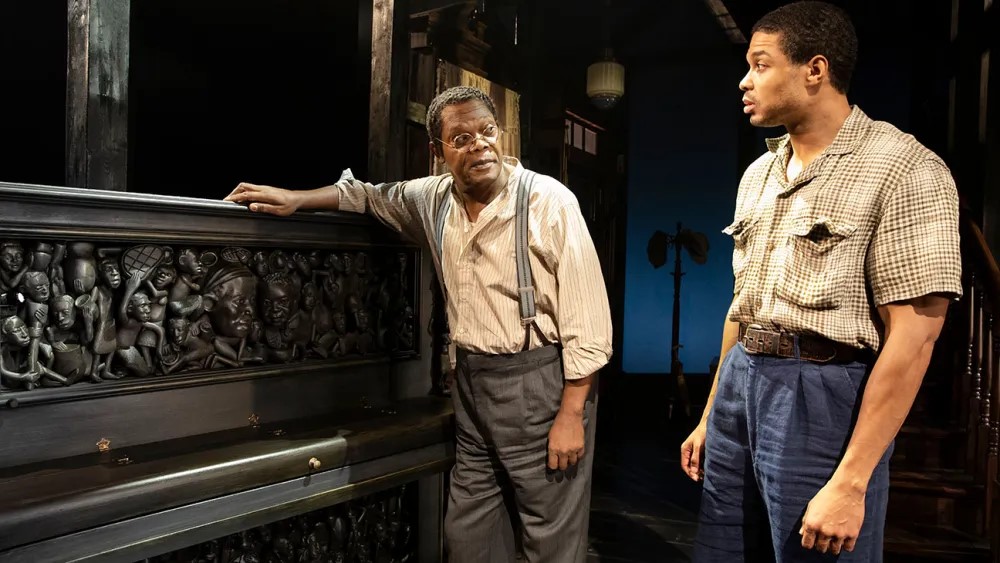
Samuel L. Jackson (left) and Ray Fisher (right) are among those that debate the heirloom status of a piano in The Piano Lesson.

You feel that? That’s your family. That’s your blood.

Every year, the VIFF features films that are bound to spark a lot of Oscar buzz. One that I saw is The Piano Lesson. The story and acting are bound to stimulate a lot of buzz this Oscar season.

The film begins during the Fourth-Of-July 1911 in a Mississippi town. As the white residents are celebrating, an African-American resident and a group of his friends are trying to put a piano in a truck. Why? After the fireworks and celebrations, the white residents burn Sutter’s house down and kill the African-American man inside.

The film moves forward to the summer of 1936 right in the middle of the depression. Boy Willie and Lymon have arrived in Pittsburgh and stop at the Doaker Charles household: household of his uncle. Unfortunately, Boy Willie tells sister Berneice about the death of Sutter back in Mississippi. Berneice, who’s recently widowed, is infuriated and demand her brother leave, accusing him of shoving Sutter down a well. Before Boy Willie leaves, he wakes her daughter Maretha as Berneice claims to see Sutter’s ghost.

In the Doaker Charles household, Lymon notices that piano that was saved. It’s not just any piano but engraved on it are the images of Willie’s and Berneice’s ancestors. Ancestors who were enslaved and carved in so they’re never forgotten. On a piano Willie wants to sell to buy Sutter’s land. Land where his ancestors toiled as those slaves engraved on that piano. Doaker Charles insists Berneice won’t comply and Berneice is infuriated with the plan as well as Willie’s prospective buyers list. Despite the fallout, Willie believes he will convince her but as Maretha comes to Willie at the piano, he teaches her a few things. Including the boogie-woogie.

As Wining Boy visits with Doaker, Boy Willie and Lymon return to announce they found a buyer. Not only is Boy Willie told Sutter will cheat him, but pasts and future desires come to light. It’s revealed the story of Lymon and Boy Willie’s terms in prison are exposed. Although they want to buy Sutter’s land, Lymon wants to be up North because of better treatment, but Willie reminds him that despite the North is not as racist, it still exists. As Wining Boy, who made a career as an entertainer, is asked to play the piano, Wining Boy declines feeling being solely as a piano player is nothing but a burden.

The story of the piano is finally told by Doaker. The piano was an anniversary present from Sutter to his wife. The piano was bought in a slave trade and a mother and child were the currency. Over time, Mrs. Sutter missed the slaves and Mr. Sutter had the sold slaves’ husband/father carve their likeness in the piano as he was a carpenter. On that Fourth of July 1911, it was Boy Willie’s father who stole the piano and he was killed by the whites in retaliation. Willie brushes the stories aside as something from the past but as Willie and Lymon try to move the piano to weigh it, Sutter’s ghost is heard. Berneice tries to stop Willie from ‘selling his soul’ but as the two argue, Mareitha is exposed to the ghosts and screams in terror.

The next day, Doaker tells Wining Boy that he saw the ghost of Sutter playing the piano and feels Berneice should discard the ‘cursed’ piano before it can traumatize more of the family. Wining Boy doesn’t agree. After a successful watermelon sale by Willie and Lymon, Wining Boy tries to distract them of their opportunism by selling them is suit and shoes, claiming it attracts women. That same day, Reverend Avery Brown meets with Berneice. He’s been hoping to win her love and tells her she needs to stop hurting over the past, especially her husband’s death. Berenice changes the subject by trying to get Brown to be a reverend and try to get the ghosts out of the house. Instead, Avery tells her by the piano not to be afraid of her family’s spirits. Berneice then tells Rev. Brown the story of the piano. It’s a story that involves her father’s blood and her mother’s tears and she refuses to expose her hurt to all.

Boy Willie returns to the house with Grace: a woman he just hooked up with. An infuriated Berneice demands them out. Just as they leave, Lymon enters. Lymon is disheartened over his feeling he’s not that good at attracting women and confesses his feeling to women to Berneice. Berneice kissed Lymon and is finally comfortable with letting go of her late husband.

The following morning Boy Willie and Lymon are ready to take the piano for selling but Uncle Doaker stops him. Boy Willie confronts Doaker and tells him how he’s determined to sell it. The day of the selling of the piano is inching closer and closer and Willie is excited without caring what Berneice things. That is, until Berneice enters with her late husband’s gun. As Doaker and Rev. Brown see the confrontation, they urge the two to talk it out. Right there, the ghost of Sutter is revealed to all in the house. Rev. Brown tries to pray the ghost out of the house but doesn’t succeed. As Berenice sees this, she then knows she needs to play the piano again as a plea to her ancestors. As she finally play it, the ghost of Sutton disappears and the calm returns to the house. Willie then decides to move back to Mississippi but tells Berenice to keep playing or else he and Sutter will return. Before leaving, Mareitha is given a lesson.

There’s no question the story is about racism. It’s a unique story as it is about one set of family members who are originally from Mississippi, which was a slave state and still faces harsh hostile racism, and another set of family who live in Pittsburgh, which never was a slave state but had its own racism. The story is also about a piano. Carved on the piano are the ancestors of the family. Ancestors who were slaves. One set of the family wants the piano kept because the images of the ancestors maintain a link to the family blood. Others of the family want it sold because it’s an ugly reminder of the slavery their ancestors have endured. Past memories even come to the point images of ghosts of the family are involved. They don’t know how to deal with this. In the meantime, it’s in the middle of the Great Depression where buying the recently-deceased slave owner’s land depends on the sale of the piano.

August Wilson did an excellent job when he wrote this play. The piano lesson isn’t just about a young girl being taught how to play the piano on a family piano. It’s an excellent story about how an African-American family, and their struggle to deal with racism and their family’s horrific past are all encompassed in a single piano. We have Berneice who values the piano. She knows her grandfather carved the family in it, her father died so it can be theirs, but she’s reluctant to play it. There’s Boy Willie who wants to sell the piano so he can buy Sutter’s land. Already there’s a case of the difficulty of dealing with a past of slavery. Berneice considers the piano sacred and a symbol of her family. Boy Willie sees it as a bad memory of slavery and he feels selling it to buy the land his ancestors were enslaved on will be revenge. A case of a brother and sister who don’t know how to deal with the past. Berneice being widowed and having to deal with the ghost of Sutter adds to its theme. It’s right in the moment of the ghost’s presence that both Berneice and Boy Willie have to make resolve both with their family’s past of slavery and the past as a whole.

Those that have seen the play before will be able to understand the film well. The scenes that were added in the film adds to the story and helps those that have never seen the stage play before get a better sense of all that happened in the past. Those that have never seen the play before and may not attend theatre as of may find the story a bit confusing. They may not understand about the piano or the presence of ghosts and even get confused of what genre the film is.

This is the third of three plays of August Wilson Denzel Washington has helped bring to screen. The thing is of the three, this is the film that’s the least fluid and the least together. This is also the first feature length film done by his son Malcolm. Malcolm has mostly directed short films in the past. His lack of experience shows in directing an unsteady adaptation of the play. The adaptation he co-wrote with Virgil Williams who is more experienced at writing is a good adaptation to the screen but its imperfections are noticeable.

One thing that shines biggest in the film is the acting. The best coming from Danielle Deadwyler. She did an excellent job of playing the troubled Berneice who first can’t seem to let go or make resolve with tragedies of the past, but finds it in herself at the end. Her performance was the strongest quality. Also excellent is the performance of John David Washington. He does a great job of playing the character most confused with the situation and what to do with it, and the need to stop having a hard heart. Also excellent is Samuel L. Jackson as the uncle trying to settle the score and try to get Boy Willie to leave his stubbornness behind.. His role as a man caught in the middle of a difficult problem helped add to the film as well. The production design by David Bomba, the costuming from Francine Jamison-Tanchuk and the music from Alexandre Desplat also add to the story and the times.

The Piano Lesson is another ambitious effort to bring August Wilson’s greatest plays to the screen. The film is adapted well but the errors are noticeable. The best thing is the acting is top calibre. Those who watch it will be impressed.

Oscars 2019 Best Picture Review: Jojo Rabbit

Jojo rabbit
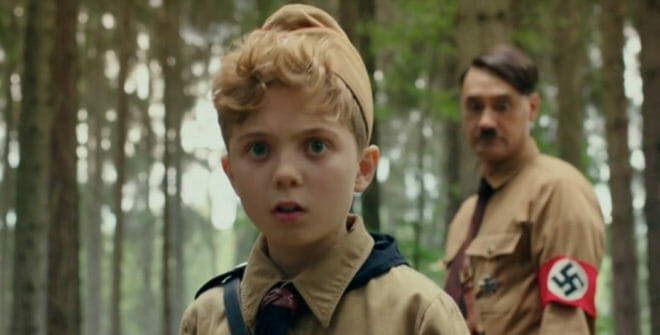
A young Hitler youth (played by Roman Griffin Davis) seeks guidance from an imaginary Adolf Hitler (played by director Taika Waititi) in Jojo Rabbit.

“You’re not a Nazi, Jojo. You’re a ten-year-old kid who likes dressing up in a funny uniform and wants to be part of a club.”

You’ll think that now is not a good time for a film like Jojo Rabbit. A film about a Hitler youth who has Adolf Hitler as an imaginary friend? I mean you have the rise of neo-Nazi groups and alt-right factions creeping up as well as the ‘woke’ people on the internet getting offended and hostile over things. Is this the right film to have out now?

The film begins in Berlin in the latter years of World War II. A ten year-old boy named Johannes ‘Jojo’ Betzler is all dress for the weekend at Hitler Youth, or Hitlerjugend, camp. He’s not confident he can do this; he’s socially awkward and can’t even tie his shoelaces right. However he does receive encouragement from his imaginary friend: Adolf Hitler. Hitler hypes him up with so much excitement, Jojo goes running down the street shouting “Heil Hitler” like a maniac! That is until he meets up with his best friend Yorki just before arriving for what he expects to be the ‘best weekend ever.’

The camp is being taught by former army officer Captain Klenzendorf and assisted with Fraulein Rahm who’s dedicated to the Third Reich and even gave birth to fifteen children! The boys are taught all sorts of attack games and they end the first night with a book burning rally. The next day during a training session, some older boys give a lecture to the younger boys about being brutal and having no mercy when killing. They hand-pick Jojo to kill a rabbit with his bare hands. Despite all the boys except Yorki urging Jojo to kill it, he doesn’t have what it takes. The older boy then snaps the rabbit’s neck and calls Jojo ‘Jojo Rabbit’ which all the other boys except Yorki do. Hitler spots Jojo alone crying. Hitler then reminds Jojo of the cunning feisty traits of the rabbit and encourages him to ‘be the rabbit.’ This pumps Jojo up so much, he’s““` all in to try the next exercise, which is throwing a Stielhandgranate. Jojo yanks it out of Klenzendorf’s hand and throws it without fear. Thing is the grenade bounces off a tree and lands by Jojo’s feet which Hitler runs off from. The grenade explodes with Jojo alone!

After months of hospitalization, Jojo has mostly recovered but his left face has visible facial scars and walks with a limp on his left leg. His mother Rosie is happy to take him home for some time. However Rosie does bring him to the office where she kicks Klenzendorf for allowing Jojo to be exposed to something so dangerous. Klenzendorf has been demoted to the office and is given the task by Rosie to make Jojo feel included. Klenzendorf agrees to let Jojo spread propaganda leaflets and collect scrap metal for the war effort, which Jojo does wearing a cardboard robot outfit and carry a wagon!

Jojo comes home one day expecting his mother. Instead he hears a rattle in the house. He senses it’s coming from the room of his older sister Inge, who died of an illness years ago. Jojo later finds out a teenage girl is hiding between the walls. The girl is a Jewish girl his mother is hiding and is a former classmate of Inge’s. Jojo threatens to expose her to the Gestapo but the girl named Elsa reminds him if he does, his mother will be executed. Hitler is shocked when he hears a Jew is hiding in the house. Hitler asks Jojo to work something out. Jojo works out he will keep Elsa a secret as long as she helps him with a book he’s writing: a book about Jews. Elsa agrees to do the writing and drawing. Elsa makes up things like Jews having horns and mind-reading. That especially shocks Hitler to learn about this girl and her powers. The book impresses Klenzendorf as he meets Jojo at the army pool as Jojo undergoes physical rehab.

This puts a strain on the relationship between Jojo and his mother, which Hitler slyly observes at the dinner table. Jojo accuses Rosie of being unpatriotic and his angry that his father has been away for a long time. Rosie tries to reassure Jojo of having a positive attitude, even as she knows the truth of what happened to her husband. There’s even one day Rosie gets Jojo out of his Nazi uniform and into real clothes for a nice day out and a fun bike ride home, much to Hitler’s chagrin! As time passes, Jojo continues to ask Elsa questions and even tries to deliver fake letters in the name of Elsa’s boyfriend Nathan. Elsa helps Jojo with his book and Jojo realizes he’s in love with Elsa. This gets on Hitler’s nerves as he’s insisting to Jojo that she’s evil.

One day the Gestapo search Jojo’s house along with Klenzendorf. They come across Elsa and she poses as Inge. She even answers the question about Inge’s birthday properly. The Gestapo decide to leave them alone. However it doesn’t stop Elsa from fearing she will die soon. That day out while collecting metal, Jojo is mesmerized when he sees a butterfly, but soon sees his mother hanged. He tries to take his heartbreak out on Elsa with a knife, but fails. Elsa nevertheless hugs Jojo as he’s crying. As the two watch the city get bombed, they both learn that they’re both orphans who lost all their family.

As the city lays in ruins, war action have to be carried out. Jojo is shocked to see Yorki as a soldier and given military actions. All the Hitler Youth have to become soldiers now! He’s even shocked to learn from Yorki that Hitler committed suicide and Germany’s being attacked by almost every front. The boys are given military actions by Fraulein Rahm including Yorki as a sniper and Jojo given a soldier’s coat to disguise himself. Jojo is shocked at everything he sees from dead civilians to children firing guns off to an explosion that kills Rahm. At first Jojo is imprisoned by Soviet soldiers. However he bumps into Klenzendorf. As he knows he will be executed by the Soviets, Klenzendorf tells Jojo he has an admiration for his late mother’s courage. He also tries to get Jojo out of any Soviet mistreatment and has him passed off as a Jew.

As the war ends, Jojo is relieved that Yorki survived the warfare. He just won’t die! However with the war over, it might mean saying goodbye to Elsa, which Jojo doesn’t want to do. Jojo gets that message as Elsa has the book completed with an image of Jojo next to a rabbit in a cage. Before he could, Hitler returns with a bullet-wound in his head. He’s lost it all, but Jojo has had it with him. Hitler tries to get one last piece of appreciation from him, but fails in grand style. The film ends on a positive uplifting note that’s fun to watch.

Now a lot of people have the attitude that Hitler and Nazism and the harms they caused should not be parodized. Especially in a time when even the slightest off-color comment from a well-known person can unleash a wave of wrath on social media like Twitter and could pave their way to their downfall. We should not forget that there have been parodies of Adolf Hitler in the past. There was animation like Looney Tunes’ The Ducktator, Walt Disney’s Stop That Tank and even Der Fuehrer’s Face where Donald Duck poses as Hitler. There has been live action film, especially from some Mel Brooks’ movies like The Producers and To Be Or Not To Be, and even recent examples like in Tarantino’s Inglourious Basterds. The most famous film parody of Hitler is 1940’s The Great Dictator. Charlie Chaplin didn’t exactly play Hitler but its obvious who he’s parodizing in his character of Adenoid Hynkel. Actually it was around World War II where Hollywood unleashed possibly released the most parodies of Hitler. And rightly so because Hitler wanted to take over the world, including the USA.

We should also keep in mind that this parody is not an original creation of Taika Waititi. Jojo is actually based off of a book by New Zealand-Belgian author Christina Leunens titled Caging Spies. The novel caught the attention of Waititi and he took a liking to it, especially since he himself is half-Jewish and half-Maori. Waititi has frequently described New Zealand as a racist country and a lot of negative comments about Jews you hear in this film are comments Waititi himself heard. So if anyone is alarmed with the Anti-Semitism they hear, basically it’s what has been said in the past and what was common belief in the past. Both the film and the novel also touch on a lot of things and experiments the Nazis used to do in the past. They may not have successfully cloned humans, but they did experiment with it. Fraulein Rahm may have shocked us in saying she had fifteen children, but there were women who bred constantly for creating more Aryan children. That scene where Yorki becomes a soldier and the scenes where the children have to fight as Germany was losing is also a disturbing truth. The Hitlerjugend was created to raise the boys to become soldiers as they reach adulthood but when it became clear Germany was losing, the Hitlerjugend became soldiers in vain to keep the Nazi regime alive. Those scenes were possibly the biggest non-comedic scenes of the film.

This film concept of a Hitler Youth having Adolf Hitler as an imaginary friend is a concept that’s supposed to fail, but somehow it works like a charm. One thing we should keep in mind is that the Adolf Hitler we see on the screen is not the Adolf Hitler we know but the Adolf Hitler in Jojo’s mind. This Adolf who’s idiotic, incompetent, immature and even jealous represents the boy’s feelings of nationalism and there are many times he’s pushed to confront his feelings or even question them. In the end it’s clear Adolf is nothing but a bad influence on him. The film does not shy away from the anti-Semitic attitudes most of the Hitler Youth had, albeit making it look comedic.

The story is also a case where that grenade accident is the best thing to happen to Jojo. Being too injured to be involved with the Hitler Youth, it’s his mother Rosie that reminds him of the truth about love and beauty and what being a child should be. It’s also Elsa who is best at teaching Jojo about love and how it helps to overcome prejudices. Not to mention that Jews are people too with similar feelings like Jojo. It’s also where we learn the true heroes are Jews like Elsa who survived and Rosie who was hanged for being part of the resistance. Even that scene where Klenzendorf is captured by the Russians and about to face execution is powerful. There he admits to Jojo that being left out of the Nazi Youth was the best thing for him and his mother is the true brave one, and Jojo should have no part in any of the imprisonment or executions the Nazis like him are about to face.

SPOILER WARNING: This paragraph has details of the end. The ending is a unique situation. Elsa experiences the freedom she never thought she’d get in her lifetime. Even though she learns Jojo lied about who won. That dance scene is important as you have two children. One is Jewish and the other was a Nazi boy who first saw her as someone to bully but fell in love with her. Elsa lucked out from being captive from the Nazis. Jojo lucked out as he isn’t seen as a Nazi and he’s spared by Russian and American soldiers. Elsa lost her family and the boy she loves. Jojo lost his family. They have nothing but each other but they dance together. That’s a powerful scene, especially as Rosie talks of how dancing means freedom. The dance represents those two free orphans who lost a lot but both won in the end.

I have to give top acclaim to director/writer Taika Waititi. He takes an oddball story about a Hitler-obsessed Nazi child and turns it into a story with both humor and heart. He doesn’t shy away from humor that punches. It doesn’t punch as brutal as some of the humor from South Park or The Family Guy, but it does punch and somehow can even make those that claim they’re ‘woke’ laugh. Even the Anti-Semitic comments. I would describe this as ‘evil genius,’ but it’s the ‘evil genius’ of the best kind! Also deserving of acclaim is Roman Griffin Davis playing the little protagonist. This is his first-ever film role but he holds the film together from start to finish and masters it with near-perfect comedic charm. I expect to see more of him in the future. Back to Waititi, he was also excellent in playing the idiotic Hitler. Playing Hitler as an idiot is a big gamble in any film. I’ve seen portrayals of idiot-Hitlers before and most fail. Waititi’s Hitler works like a charm in this film.

Also worthy of acclaim is Scarlett Johannson. She does an excellent job of portraying a mother who’s hurting of loss of her husband and daughter, knows that her days are numbers as being a member of the resistance, and trying to get her son to adopt human values and lose his Nazi ways. Thomasin McKenzie is also excellent as Elsa, the girl who is determined to make Jojo see the light, but knows she’s up for a big challenge. Archie Yates is also a delight as Yorki, Jojo’s best friend, who adds in the right comedic touches. Additional humorous performances include Sam Rockwell as the depressed Captain Klenzendorf and Rebel Wilson as the ruthless, but colorful, Fraulein Lahm.

Jojo Rabbit also has a lot of standout technical efforts too. There’s the editing from Tom Eagles, the costuming from Mayes Rubio, the set designs from Ra Vincent and Nora Sopkova and the music from Michael Giacchino. Actually the mix of Giacchino’s score and classic rock songs, including some with a German-language version from the original artist, fit the film perfectly.

At the end, you will be convinced that Jojo Rabbit is the ideal comedy to be having in a hostile time right now. I will guarantee that even the ‘superwoke’ on Twitter who are set out to vilify any famous person who makes even the slightest off-color comment will be laughing too.

VIFF 2019 Review: In The Tall Grass

In-The-Tall-Grass
In The Tall Grass is a thriller of people lost in a field of tall grass and come across something of the paranormal that’s terrifying to their existence.

With the VIFF comes the return of films in the Altered States category: of thrillers, horror and even the paranormal. My first chance came with the film In The Tall Grass. It was worth it.

The film starts with a pregnant Becky DeMuth and her brother Cal traveling to San Diego to find a way to give up her baby. They pass an old bowling alley and stop by a church. Just as they stop by, they hear the voice of a young boy crying for help. The voice is coming from a field of tall grass they’ve parked beside. They also hear the mother of the boy begging anyone to not come in. Becky and Cal are naturally curious and walk in top help the boy. It’s only a matter of time they find themselves lost and even risk getting stuck by the wet sticky mud. Even as they’re distant, they hear each other’s voices which is not really theirs, but mystically transmitted. They decide to leave, but they can’t and are stuck for the night.

During the night, Cal encounters Tobin, the lost boy, who is scared, bruised and holding a dead crow. Becky meets up with a man named Ross, who is very friendly and offers to lead her. Tobin reveals to cal that the field the grass does not move dead things and Becky will not make it out of the field alive. Tobin leads Cal to the centre of the field which consists of cut grass bordering a big mystical rock with hieroglyphics which Tobin tells Cal to touch. Before he does, Becky arrives, but is taken away by an unseen figure.

Travis, the father of Becky’s child, arrives in the same area of Becky and Cal. He notices the car parked by the church. He also notices the field of tall grass. He hears Tobin’s voice and is led into the field. Tobin leads Travis to Becky’s corpse. Travis breaks down, but loses sight of Tobin. At the same time, we see Tobin with his father Ross and mother Natalie at the church along with their dog Freddie. Possibly a reference of what happened earlier. Freddie runs into the field of tall grass and the three chase after him. It’s there where Travis hears Tobin’s voice and the three of the family are scattered around the field. Ross comes to the centre with the rock and touches it as night falls. Tobin is discovered by Becky and cal all all are confused by the timelines.

As the three are one group, Becky and Cal decide to leave and use Tobin to navigate a path back to the road on top of Cal’s shoulders. Becky receives an unknown phone call saying that Cal should quit hunting Travis.The grass soon appears to be entering Becky’s uterus and she becomes unconscious. Cal and Tobin come across Ross, who reunites with Tobin. Ross brings them to the rock but are startled when they see Natalie and she says she saw Becky’s corpse earlier. As they try to make their escape, Ross is chasing them all down and gives them the impression there’s no escape and they’re all under Ross’ control. Ross tells them all the rock shows them of what’s happening.

Becky, Cal, Travis and Tobin succeed in escaping the field into the abandoned bowling alley. As Cal and Travis make their way to the top, they discover the dog Freddie escaped via a hole. However a spat between Travis and Cal brew as Travis brings up he senses incestuous feelings between Cal and Becky. Cal throws Travis off the roof. That succeeds in alerting Ross to their location. Tobin, knowing how this alerted Ross to their whereabouts, runs back into the field. Becky and Cal try to escape together, but Becky won’t leave Travis alone in the field. After she runs off to find Travis, Cal is strangled by Ross. It’s evident anyone in the grass field is affected by a time loop. If anyone dies, there will be another of them alive. If anyone touches the rock, they get a sense of control and invincibility.

During the return to the grass, Becky admits she was going to give the baby up for adoption. Becky is soon captured by Ross who tries to sexually assault her, but she escapes. Grass creatures however emerge and grab a hold of her and carry her to the rock. There, the rock develops imagery that detail the baby will die and Becky will be tortured. Becky passes out in reaction. As she awakens, she is tricked by Ross who poses his voice as Cal. Travis meanwhile stumbles across Becky’s unconscious body. Ross then kills Travis and captures Tobin to get him to touch the rock. Becky stops him, but dies. Travis decides to touch the rock to get a better understanding of the grass.

The film ends with one last scene involving Becky, Cal, Tobin and Travis. It gives the impression that all know what is happening and the film ends with what should be.

This film is a film that is based off of a short story written by Stephen King and his son Joe Hill. We’ve had Stephen King adaptations before and often adapting a Stephen King story to the big screen is hit-or-miss. This is a very complex story. This involves six people who go into a field of grass with paranormal powers. It threatens their lives and creates another life for them. Then there’s the rock that gives whoever it touches a sense of invincibility and control and threatens others.

Overall this film is a maze and a puzzle. Trying to piece this puzzle together is a tricky thing. Trying to create this maze of confusion is also a tricky thing. Watching it, it’s easy to get thrilled by the paranormal and nervous for what will happen next. However in looking back, I felt there were some areas that didn’t make too much sense. Even when it becomes clear that Ross starts as the controlling one and then it becomes Travis, that seemed odd. Even how Ross was the controlling conniving one, that even seemed cheesy at times.

The film does however keep one intrigued in the paranormal elements. Depite its flaws in the script and storyline, it does succeed in grabbing a hold of your attention and keeping you intrigued in the story. The paranormal elements don’t come across as cheeseball as it adds to the thriller aspect of the film. Overall despite its flaws as a film, I feel this is a good story for fans of paranormal fiction. I just feel it could have been done better as a movie.

This story is a mixed bag for Vincenzo Natali. Yes, it’s confusing, but the paranormal will keep one intrigued from start to finish and it will keep one hoping for the best for the main characters. Laysla de Oliveira was very good as Becky. Isn’t it something how the first two VIFF films I saw starred Laysla? She captured the role well in both it’s comedic elements and it’s dramatic elements.

Avery Whitted was also good as Cal. Will Buie Jr. also did an excellent job as Tobin: the frightened boy in the middle of it all. His role was the best at keeping the horror/thriller aspect of the film and was the most no-nonsense performance of all. Patrick Wilson was hard to make sense of as Ross. He came across as a conniver, but I feel he lacked the sinister element. Harrison Gilbertson was good as Travis, but he appeared he could have done more.

In The Tall Grass is a Netflix thriller that works well to be shown on the big screen, if imperfectly. It may not make the most sense, but it does keep people thrilled and intrigued about what will happen next and how it will end.

VIFF 2019 Review: Guest Of Honour

david-thewlis-guest-of-honour
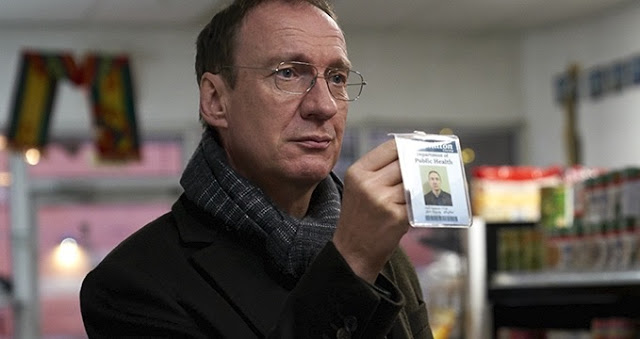
David Thewlis plays a health inspector whose inspections eventually become a lot more than simple inspecting in Guest Of Honour.

The Vancouver International Film Festival usually begins with an Opening Gala of speeches and an airing of a Canadian Feature Film: usually from TeleFilm Canada. This year it is Guest Of Honour: the latest film from Canadian director Atom Egoyan. It was a good film to open with, but not a great one.

The film begins with a priest, Father Greg, consulting with a daughter who lost her father, named Jim. Greg asks her how to best remember him, but she can’t say because she doesn’t remember him that well. She can speak for what he does remember of him.

Jim was a health inspector for restaurants most of his life. He started as a restaurateur, but failed. He had since become a health inspector. He was very strict in his job, especially to ethnic restaurants. As a family man, he married a Portuguese woman and fathered a daughter named Veronica. Veronica possessed a lot of music talent. That all changed one day when Jim introduced Veronica to a new music school. He met the instructor and she met Walter. Walter would become her partner in her glass harmonica instruction and performances, and later her boyfriend. The instructor would eventually become Jim’s mistress. Veronica knew that as she saw Jim sitting between the instructor and her mother, who was dying of cancer, and saw Jim hold the instructor’s hand.

Moving on into the future, the last time Veronica met with her father was while she was in jail for a crime she wants to take responsibility for, even though she may not have committed it. Jim is willing to do whatever it takes to get her out of jail, but she is insistent in serving her time.

Jim has to go to past videotapes and past references in order to get her justice. Sometimes he even confides to her pet rabbit about his problems and issues. As we flash back to the past, we learn more. We learn something bothered both Veronica and Walter inside. It bothered Walter so much, he committed suicide. Veronica would grow up to become a music teacher for a private school. However she has taken aback with the drummer of the school band named Clive. Clive looks so much like Walter. It even appears that she is more intimate with Clive, including to the bus driver Mike who is in love with her.

Mike is upset that Veronica won’t develop a relationship with her so one day, he sends a lewd text to Clive’s phone through Veronica’s phone during one of their performances. Clive and Veronica notice this. They want to do something, but fear they might be caught and accused of something they don’t want to be accused of. However it all falls apart at the hotel as Veronica is reminded of Walter’s suicide. Whatever problem happened at the hotel, it led to Veronica being sentenced to jail time and stripped of all teaching duties.

Jim tries to think of a way to free Veronica. He gets an idea after he sees a video of a rat inside a restaurant he inspected. The owner claimed someone with hard feelings to the restaurant put the rat in there to fix him. Another time, he comes across an Armenian restaurant with dead rabbits. He is about to close the place down, but they insist it’s for a delicacy of rabbit ears to be served at a private party. They plead with him to have mercy on them, and he decided to go to their special party.

Before the party, it’s evident Jim is up to something. He takes rabbit droppings from Veronica’s rabbit and puts them in a tube. He then goes to a German restaurant appearing to order dinner, but then goes to the bathroom to drop the droppings around, and then alert the manager. While talking with the manager, the real reason Jim is here comes out. He wasn’t to speak to his grandson, who appears in conversation to be Jim’s own son. The grandson is Clive. Clive knows why Jim is here, and is not happy. The situation between him and Veronica is just as humiliating.

Then over at the party at the Armenian restaurant, he arrives and is impressed with what he sees. The owners even treat him as a ‘guest of honor,’ despite what almost happened days ago. They ask him to give a speech. Jim tries to give a nice speech despite being intoxicated. However Jim’s feelings of his intended vengeance towards Mike come out during his speech. The speech lands him in trouble with law authorities. After he finds Veronica’s rabbit dead, he decided on one last act, and this involving the Armenian restaurant to assist with it. It is through all Veronica has told that Father Greg is able to give his requiem to Jim at his funeral. The film ends with one last flashback.

Atom Egoyan is a source of pride for Canadian filmmakers. He is one of only ten Canadian directors ever to be nominated for the Oscar for Best Director. Atom has been known for his unique style of filmmaking. At the gala, he flashed back to when he did his first student-film at a school in Victoria. He received a C- and a lot of complaints and ‘advise.’ Some even described it as ‘too artsy.’ Whatever the situation, it would pave the way for his style to have its heyday in the 1990’s and his Oscar nominations for Best Director and Best Adapted Screenplay coming for The Sweet Hereafter.

Times have noticeably changed. His films have been consistently done well and good at telling a story in his own style, but they’re not as well-hailed. Some of the meaner critics could say he is yet another director that had a directing flare and it flared out. This film does feature a lot of mystique in terms of the story. The film mixes the story with a variety of themes like restaurant inspections, music and feeling, family secrets, technology, and rabbits. The film does so in a colorful way, but it’s imperfect. There are some things that don’t make a lot of sense. Sure, Veronica’s music talent would propel her to her career as a musician and teacher, but through glass harmonica? The theme of rabbits also appears to be done in a way that doesn’t make sense. Veronica has a pet rabbit she adores, but also a lucky-rabbit’s-foot keychain. The rabbit becomes a source for Jim to confide in, use his droppings to frame a restaurant for facts, and have the dead rabbit’s feet cut off? Even how his restaurant inspections go from simple inspections to him using them as a way to get justice for his daughter, but pave the way for his downfall? It doesn’t make a whole lot of sense.

It’s not just the confusing elements of those themes, but also the storyline itself. There are a lot of moments in the story that leave many questions unanswered. How did he die? What secret made Walter commit suicide? Did Jim’s affair with his mother have something to do with it? What exactly did Veronica get arrested or convicted for? Is Clive really Jim’s son, or did Jim just say that to the grandfather? What was the significance or Jim’s personal reason of having the rabbit’s feet cut off? Now don’t get me wrong. I know the film is a puzzle and it’s about getting the pieces to fit together. I also know filmmakers leave out certain things to get the audience thinking or even trying to draw their own conclusions or write their own stories. However most of the elements or scenes don’t make a lot of sense. I felt there were a lot of critical things that were missing and it worked against the film rather than for it. Atom does a good job of creating and directing a good story, but I feel he missed in a lot of areas.

Despite the film’s flaws, the acting was one area that did come through well. David Thewlis did a good job of working with his complex role as the inspector/father. He gives his character of Jim dimension and helps it to make the role work for the story. Laysla de Oliveira makes it look like she stole the show. She makes it look like the film is more about Veronica that it is about Jim. She too is able have her role of Veronica make sense and even justify scenes that appear confusing to us. The supporting acting was also good with Rossif Sutherland playing Mike with his hidden inner anger, as well as Luke Wilson as Father Greg and the actors playing the Armenian restaurant owners. The music of Mychael Danna also adds to the feel of the film.

Guest Of Honour is not the best work of Atom Egoyan and has some noticeable flaws, but it does have a lot of qualities too. Especially the acting.

Oscars 2017 Shorts Review: Live-Action and Animation

Cinema

Once again, I had the luck to see the shorts nominated for the Oscars for Best Live-Action Short Film and Best Animated Short Film. All were entertaining in their own way and all showed the qualities of why they were nominated.

Anyways here are my thoughts on this year’s nominated shorts:

LIVE ACTION SHORT FILMS:

Last year, all nominated shorts were in a language other than English. This year, four of the nominated shorts were in English. This year’s crop of stories are impressive to see. All five have a wide variety from the funny to the thought-provoking.

DeKalb Elementary: dir. Reed van Dyk – Today is supposed to be an ordinary day at an elementary school in the US, but a young man with an assault rifle comes in and threatens people. The receptionist tries deal one-on-one with him. She notices some mental instability and even some flaws in his thinking. She feels she can talk him into withdrawing his gun. She is able to talk with him, talk to law authorities, and get him to cooperate. In the end, the man is arrested and no one dies.

This is a remarkable story, especially since this is being shown during a time when a shooting incident in a Florida high school made headlines. It’s remarkable because it takes you there into the moment. You feel the intensity. Plus seeing in the film how brains win over brawn make this an incredible story to watch. That’s why this is my Will Win pick.

The Eleven O’Clock: dirs. Derin Seale & Josh Lawson  – A psychiatrist in 1980’s Australia has an appointment with a delusional mental patient who thinks he’s a psychiatrist. The doctor thinks he can handle it until he meets face to face with the patients. Soon it becomes an all-out verbal battle of madness and idiocies. Looks like he finally met his match.

For once, it’s nice to take a break from some of the more serious stuff and see something comedic. It was very enjoyable and can leave you hating the patient. However it has an appropriately bizarre ending where you’re left to wonder is he the doctor or the patient?

My Nephew Emmett: dir. Kevin Wilson Jr. – This is a depiction of what may have happened the night before the 1955 abduction and lynching of 14 year-old Chicago boy Emmett Till who was just staying with his uncle’s family in Money, Mississippi, but was a victim of racism instead. His murder and his alleged killer’s acquittal would play a part in the Civil Rights Movement.

This might be a fictional depiction of what happened before, but it was very good in sending the message that all Emmett Till was doing was being a typical 14 year-old boy. Having it from the uncle’s point of view is important as the uncle would be interviewed by the media shortly after. It does a very good job of storytelling from the uncle’s point of view as well as recapturing the moments as they happen.

The Silent Child: dirs. Chris Overton & Rachel Shenton – A rich family hires a tutor to help with their 4 year-old deaf daughter. The tutor works very well with the daughter and gets her to sign. The results are pleasing to the father and her siblings, but the mother has higher demands. It gets to the point the mother makes a questionable drastic choice for the daughter.

The story is very good. It also catches your intrigue whether the mother has these high demands because she has high expectations or because she’s trying to cover up a family secret? The story reminds us that the connection between the deaf child and the tutor is a bond we so easily forget about.

Watu Wote/ All Of Us: dirs. Katja Benrath & Tobias Rosen – This is based on a true story. This takes place on a bus trip close to the Kenyan-Somali border. Christians and Muslims travel in the same bus. All have animosity towards each other. One passenger, Jua, has a certain animosity towards Muslims. Her husband and child were killed by a Muslim. She lets the Islamic ‘teacher’ raising money for his student know it. Then the bus is attacked by the group Al-Shabaab. They demand that all Christians be brought forth, but the Muslims defend by quoting scriptures from the Koran to protect them. At the end, police arrive and the teacher is shot. Jua is the one looking after him as they drive to safety.

This is the only film not in the English language. This story may be the darkest of all the stories nominated, but it’s very thought-provoking and it sticks with you. It packs a lot in its 20 minutes of time. You can really feel the hurt in Jua and you’re surprised to see her compassion in the end. That’s why I make this my Should Win pick.

ANIMATED:

This year’s animated shorts made news of what was included and what was not included. Ever since In A Heartbeat, the animated short of boy meets boy, went viral on YouTube back in August, people predicted it would win the Oscar. Even though it made the shortlist of ten back in December, it did not get nominated. A shock to all fans of the short! As for those that did get nominated:

Dear Basketball: dirs. Glen Keane & Kobe Bryant – This is a pencil-and-paper style of animation drawn by Glen Keane, son of Family Circus cartoonist Bil Keane, and narrated by Kobe Bryant. It’s of the letter Kobe wrote to the sport of basketball upon his retirement.

The film is excellent in how it takes a simple style of animation and successfully makes the audience embrace the athlete’s story of passion. Excellently done. You’ll feel the heart and soul of the story within its four minutes. That’s why I choose this as my Will Win prediction.

Garden Party: dirs. Victor Caire & Gabriel Grapperon – This is funny. A bunch of frogs find themselves over at a mansion. They go around exploring and eating whatever comes their way. Then right as they make their way to the pool area, we learn it’s party time for all!

This is a fun humorous story. The events are slow, but they’re still fun to watch. They’re especially funny when the frogs accidentally find themselves in a mess. The ending is a complete surprise. Nevertheless the short is enjoyable from start to finish.

Lou: dirs. Dave Mullins & Diana Murray – This is the short shown before Cars 3. When kids come in from recess at an elementary school, you can guarantee there will be lots of things left behind. A certain ‘thing’ comes from the lost-and-found bin, which have its L, O and U missing, and gathers up all the stuff in the bin. The school bully J.J. steals the kids’ toys and it’s up for this thing to teach J.J. a lesson, and actually be a friend.

Pixar not only knows how to make a great feature, but they also know how to make a great short too. Even though there’s some dialogue in this short, it is definitely entertaining and fun to watch.

Negative Space: dirs. Max Porter & Ru Kuwahata – A son talks of how his father taught him how to pack and how it’s been passed on as a skill. The son reminisces about it at his father’s funeral.

This is an adaptation of a poem by Ron Koertge. This is a charming story with stop-motion animation. It has a humorous look at a story a son reflects around his father’s funeral. The story ends on a note one didn’t expect it to end on. Nevertheless it’s funny and it has its own unique charm.

Revolting Rhymes: dirs. Jakob Schuh & Jan Lachauer – This is done by the same studio that did the Gruffalo series. This time they return with a story of a babysitter meeting up with a wolf. There we learn the shocking truth of what happened to Little Red Riding Hood, Snow White, and The Three Little Pigs!

It’s a funny and charming short. Does get a bit confusing when you learn about these new ‘truths’ and even surprising when you learn some shocking things like the Seven Dwarfs’ gambling problem. Well-written, well-animated and very entertaining. That’s why I give it my Should Win pick.

And there’s my look at this year’s Oscar nominated short films. Lots of creativity and a lot of good storytelling. However the shorts are two of the hardest categories to predict the winner. The winners are often a surprise. Time will tell this Sunday.


Oscars 2016 Best Picture Summary: Part 2

Some of you may be confused about the order of how I do each film of my Best Picture summary. It’s definitely not alphabetical. How I do it is in the order in which I saw the nominees. For example, I saw all the films in my first summary before Christmas. I saw La La Land on my father’s birthday, Fences the day after New Years, and Manchester By The Sea on the day of the Golden Globes. That explains why they’re the three films part of my next Best Picture summary.

LA LA LAND

la-la-land
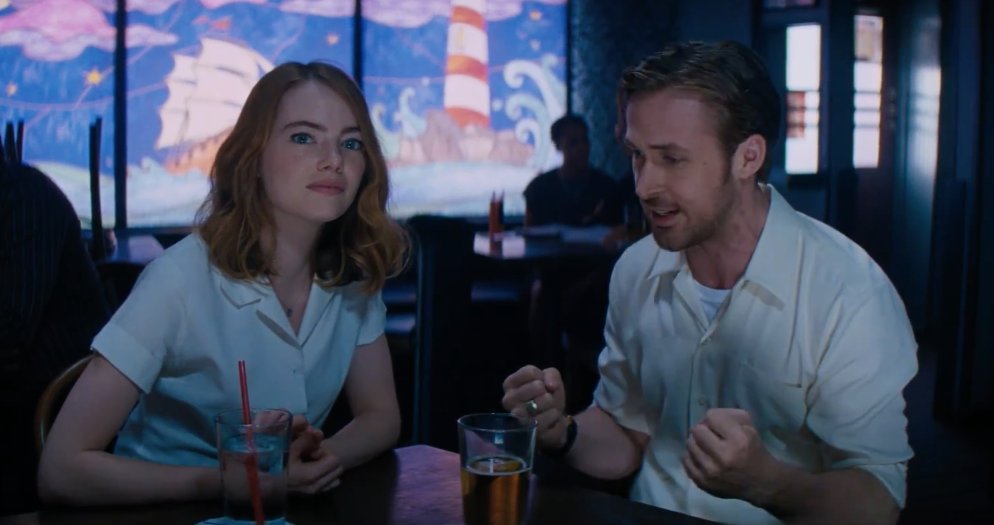
Emma Stone and Ryan Gosling star as an actress and a pianist united in their dreams of stardom in La La Land.

We don’t see musicals on the big screen as often as we did back in the 60’s and 70’s. La La Land may not make the musical phenomenon come back but it is very entertaining.

We’re constantly reminded that bringing a musical to the big screen is a very tricky job. In the past 15 years, I’ve seen a lot of cases of musicals being put on the big screen– most of which are adaptations of Broadway musicals– and it’s always been a case of sink-or-swim. There have been those done successfully like Moulin Rouge, Chicago, Dreamgirls and Les Miserables. There have also been adaptations with bad results like Rent, Nine, The Phantom Of The Opera and Mamma Mia. It’s a very tricky job and it may explain why we don’t have musicals as frequent as in decades past.

Now try putting a fresh original musical on the big screen. That’s what writer/director Damien Chazelle does here in cooperation with composer Justin Hurwitz who was Chazelle’s Harvard classmate. The musical is a story we’re familiar with: boy meets girl, boy learns girl also has showbiz dreams, both boy and girl are supportive of each other’s dreams, boy and girl both have long bumpy roads to get to their successes, boy and girl both achieve their own successes but their love is put to the test. One could argue anyone could create a musical with that kind of premise. Whatever the situation, it would have to take a lot of hard work and a lot of brainstorming to make a very good musical out of this. In addition, it would have to have the right songs, the right singing moments and the right dancing moments to make it succeed.

Chazelle and Hurwitz succeed in pulling it off. The story is familiar but they deliver all the right moves in making the story and the songs of the musical work. It’s not just about making a common story work as a musical on screen but have it set in the modern times too. I’ll admit that opening in the movie where there’s a song-and-dance number on a jammed-up freeway was unexpected. It’s not just set in modern time but it also brings back a lot of the classic scenes of Hollywood; the Hollywood we’ve all come to know and love. I think that’s why La La Land comes off as a gem. Because it’s a reminder of the great musicals of the past and why we love them so much. It’s just that charm.

It’s not just up to Chazelle and Hurwitz to make this musical work but also the actors too. Both Ryan Gosling and Emma Stone had to make things work as well both as individuals and both as the couple Mia and Sebastian. They had to tell their own stories of love and passion for their crafts and the heartbreak they had to endure to achieve their dreams. They both also had to play a couple with the right chemistry to work. They pull it off excellently both as a couple and in their own individual moments too. The supporting actors/singers/dancers also had their parts to play too and add to the zest of the musical. Their own participation also added to the movie. Sure some of the bigger supporting performances from John Legend, J.K. Simmons and Tom Everett Scott lacked range–I mean Mia and Sebastian were the dominant focus of the musical– but they did very well too. The film did a very good job in terms of the use of sets both set up and various Los Angeles locations. The film even scouted out some ‘old L. A.’ locations to add the charm. That was not an easy find, I’m sure.

And now onto the songs. My father who likes musicals believes having a memorable song is what makes a musical a masterpiece. I have to agree. I’ll say I agree with him that there is no single song in La La Land destined to be a memorable classic. True, ‘City Of Stars’ is getting a ton of awards but I don’t think it will be a classic 20 years from now. Actually my favorite songs were the opener ‘Another Day Of Sun’ and ‘Audition (Here’s To The Ones Who Dream).’

It’s funny. Years ago, I jokes the unique thing about my father is that he’s straight and he likes musicals. He was quick to remind me that back when he was dating my mother, musicals were the ideal date movie. My how times have changed. What defines a date movie has changed as much over the decade as ‘real man’ standards.

La La Land may not have what it takes to bring the musical phenomenon back to the big screen but it’s winning in it’s own right. Anytime soon I’m expecting a stage adaptation of this.

FENCES

fences
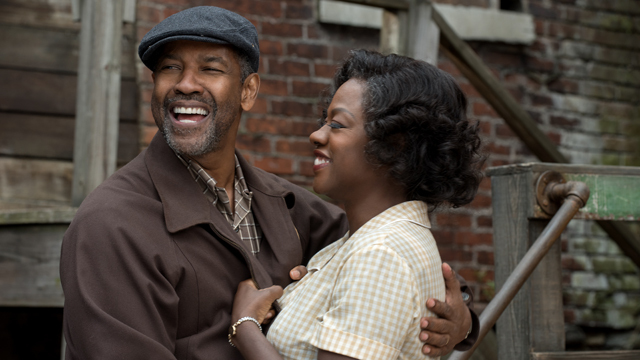
Denzel Washington and Viola Davis bring Troy and Rose Maxson to the big screen in Fences.

Fences is a play by August Wilson that won raves when it first came out in the 1980’s. Denzel Washington brings Fences to the big screen at long last and the end result is something wonderful.

Fences is unique as a stage play. It’s a story about Troy Maxson: an African-American man in 1950’s Pittsburgh who makes like he has it together but he doesn’t. He thinks he could have been the next Jackie Robinson but feels racism kept him from moving out of the Negro League. He wants to mould his son the way he feels right and wants him to be better than him but doesn’t sense how harsh he is. He wants to be seen as a loving husband to his wife Rose but secrets of his infidelity are about to unfold. He gets an opportunity as a driver of a garbage truck–the first ever for a black man in Pittsburgh– but is reminded of his weaknesses when he accidentally signs for his brother to be admitted into a mental hospital. He has his own feelings about what should be right such as how he feels it’s better to raise his son right than like him only to see it backfire. I’ve heard some writers say that every African-American male has some aspect of Troy Maxson in them. Some people say that Troy Maxson is the African-American everyman. Some can even say Troy Maxson is the black Willy Loman. Whatever the situation, it was the toast of the 1987 Tony Awards and definitely made a legend out of scriptwriter August Wilson.

Now Wilson had always dreamed of bringing Fences to the big screen. I know one of the things he insisted on was that it be directed by an African-American. That may or may not have been the biggest obstacle but it was never realized in Wilson’s lifetime; he died in 2005. Hope was revived in 2013 when Denzel Washington expressed interest in bringing it to the big screen and star as Troy Maxson. Washington played Maxson in a Broadway revival in 2010. He’s even had experience as a director with 2002’s Antwone Fisher and 2007’s The Great Debaters. The production was realized early in 2016 when Washington was joined by producer Scott Rudin who also produced the 2010 revival. Viola Davis who was also part of the revival as Rose Maxson soon joined in along with other actors from the revival like Mykelti Williamson, Russell Hornsby and Stephen Henderson. One thing was that Washington wanted to remain true to Wilson’s own adaptation in respect to his work.

Now adapting a play to the big screen is as much a tricky challenge as bringing a musical to the big screen. It’s a matter of choices of what to include and what to keep as is. Theatre and film are two different formats of medium. Film scenes are numerous and can be set in an unlimited number of  places in various amounts of time. Theatre scenes are often few, often quite lengthy, set in a limited number of places, and often consists of ‘moments of monologues.’ There’s even that 20-minute final scene in Fences where the family is getting ready for Troy’s funeral. Rarely in film do you have a scene after the death of the protagonist that’s even five minutes long. It’s a matter of making the adaptation work on the big screen. It’s also about what choices to add to the film adaptation and if they work. It was about choosing to add the scene of Troy and Jim Bono on the back of the garbage truck at the start. It was about including the scene without dialogue of Troy and Gabriel in the mental hospital. It was about keeping Alberta the mistress from being seen in the film in any which way.

Then there’s the acting. Of course it’s beneficial for most of the actors to have previous experience with the roles. However, it’s a known fact that stage acting and film acting have their differences. The biggest difference for film is that the audience expects a 100% believable performance, especially since it will be witnessed on a screen five-stories tall.

Overall I feel that Denzel Washington as a director/producer did a good job in adapting the play to the screen. It may not have the fast brief dialogues you get in your typical big screen fare but it was still done well and with the same truthfulness. The choices of what to add to the big screen adaptation were good choices, if not perfect. Denzel as an actor was definitely phenomenal in embodying the role of Troy in all of his triumphs and struggles. You could feel the pride and demons Troy was struggling with. Just as excellent is Viola Davis as Rose. The role of Rose was also a strong challenging role: a wife who appears happy and loving on the outside only to suddenly let out her hurt and inner wrath towards Troy and somehow come to peace with him upon his death. She does an excellent job of finally exposing Rose’s inner hurt and inner personal strength at the right times and even ending with believable delivery. The acting of the whole ensemble was very much there and as excellent as it can get. Of all the supporting performances, the one that stood out most was Stephen Henderson whose performance as Jim Bono came across as a common man at first but would soon come off as the man with a lot of wisdom and was able to see the good in Troy even while his terrible misdoings were being exposed. The ‘newcomers’ Jovan Adepo and Saniyya Sidney were also very good in their roles. Jovan especially did well as the son struggling to relate to Troy.

Fences is a triumph of a twelve year-old dream coming true. August Wilson dreamed it. Denzel achieved it. The end result is a masterpiece.

MANCHESTER BY THE SEA

manchester
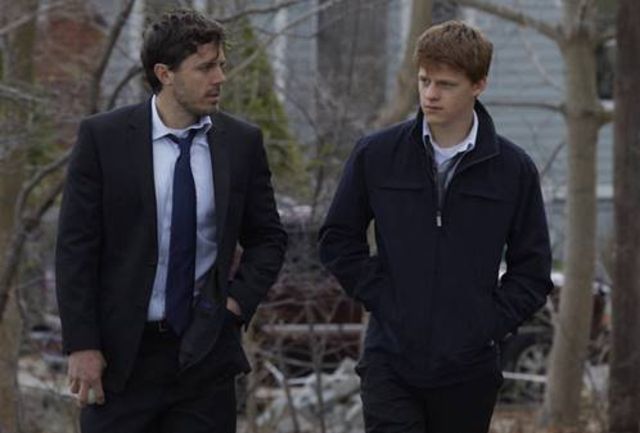
Manchester By The Sea is the story of an uncle (played by Casey Affleck, left) and a nephew (played by Lucas Hedges, right) who suddenly become closer through death.

Manchester By The Sea is a film that has been loaded with Oscar buzz ever since it made its debut at last year’s Sundance Film Festival. It’s easy to see why all the buzz.

The film presents a hurting person and showcases all the things that led to his hurt. It shows why he had to leave the town he always had as his home and why returning can’t be done. It shows why Lee Chandler comes across as a jerk in the present when he wasn’t like that at all years ago. The film is also about the relationship of Lee and Patrick. Rarely do we see a film about an uncle-nephew relationship. You think the relationship is something all of a sudden at first forced by something in his brother’s estate but it was always there even when the two were apart.

The film also presents a situation where healing or leaving the past behind is next-to-impossible. I’ve always believed people need to heal. It’s not right to hurt. I still believe it. However I can easily see how healing is very hard. You can see why it’s extremely hard for Lee to heal, especially upon returning to Manchester By The Sea, Massachusetts. His negligence that one night is why all three of his children were killed in that fire. The divorce from his wife Randi was bitter and she gave him hurtful words in the process. The town has not forgiven him for what he did: his name is still mud. Even moving to a suburb of Boston has not ended his hurt as he’s rude during his job and starts bar fights over the simplest thing.

The film does showcase Lee’s attempt to assimilate into the town and try to become the guardian to Patrick he hopes to be. The story does not water down as it exposes Lee’s failings. It also exposes how complicated the situation is as Patrick’s mother is a recovering alcoholic and still under strict control by her husband. It also shows how hard it is for Lee to forgive himself. Even as Randi says she’s forgiven him, Lee still can’t heal.

The story does not water down the situation or try to aim for the type of happier ending you’d get in a film like Arrival. The story does not end the way you hope it does. Nevertheless it does end with a ray of hope. Patrick is the closest relative to Lee. His parents and brother are gone and his other brother lives with his own family in Minnesota. Patrick is the one person in Manchester By The Sea outside of family friend George who doesn’t see Lee as this terrible person or rubs into Lee the tragedy he caused.

The film was not just about Lee trying to heal for Patrick but about Patrick too. Patrick is a teen with a lot of common ‘teenage make jerk’ traits like starting fights in hockey and cheating on girls but you know he has a naïve, innocent and even sensitive side and it comes out in his relationship with Lee that starts uneasy at first. Patrick still wants to live a normal teenage life by dating around, playing with his band, and talking about Star Trek with his friends, but you know he has feelings of hurt and frustration on the inside and you know they’ll come out eventually.  For all the teenage jerk traits Patrick has, his respect for Lee is his best quality. Patrick could have easily come across as a rebellious teen and gone as far as calling Lee a ‘child killer’ but he doesn’t. Possibly it’s being Joe’s son that may be why Patrick is the person most forgiving to Lee now that Joe is gone. Joe was the one person willing to help Lee live life again after the tragedy and Patrick accompanied Lee and Joe during that time. You can see how Patrick adopted his father’s sensitivity to Lee.

The story of this film is definitely not a crowd-winner. You can understand why a film like this would rely on the Film Festival circuit to get its exposure and its chances of making it to the box office. Nevertheless it is an excellent story about loss, grief, hurt and an attempt at healing. The film fest circuit was the best way for a story like this to get a box office release. It’s good because it is a story worth seeing.

Writer/director Kenneth Lonergan delivers an excellent original story. Lonergan has few works writing and/or directing to his credit but they have a lot of merit: like Analyze This, You Can Count On Me and The Gangs Of New York. This is his best work to date. He delivers a story that’s honest and even brutal at times and doesn’t water down but doesn’t try to rip at your heartstrings too often. He also gives characters that are three-dimensional and will remind you of people or situations you may know about.

Actor Casey Affleck fit the role of Lee excellently. He captured Lee’s inner demons excellently and played them very truthfully. He was able to make you hate Lee at first but come to understand him later, even feel for him, and make you want the best to work out for Lee in the end. Also excellent was Lucas Hedges. Hedges’ role of Patrick grows in its complexity over time and he does an excellent job of it. The two together had to have the right chemistry to make an uncle-nephew relationship like this work and they had it.

The only other significant supporting role in the film is Michelle Williams as Randi. The various scenes as the typical wife before the tragedy to being the remarried ex-wife who healed better than Lee and wants to make peace with him is also a complex role too and she does an excellent job of it too. Actually the whole cast did an excellent job of acting and they delivered one of the best ensemble performances of the year. It’s not just the basics that made this film great. There’s also the cinematography from Jody Lee Lipes where she’s able to get some of the most picturesque shots of the east coast. There’s the editing of the story shifting from the present to the past back to the present on a constant basis at the right times. There’s the inclusion of dialogue at the right moments and even moments of dialogue muted at the right times where you just know what they’re saying. The muted parts work to the story’s advantage. There’s also the arrangement of music–original, classical and choral– that add to the story.

Manchester By The Sea may come across as a film that’s unwatchable if you take its premise at face value. In the end, it turns out to be a great story that’s worth seeing.

And there you go. That’s the second of my review of the nominees. One’s an original musical, one’s an original story and one’s an adaptation of a renowned stage play. All three make it obvious why they were nominated for Best Picture as all three have what it takes to be among the Top 10 films of the year.

Final Best Picture summary is expected to be up by Tuesday.

Movie Review: Love & Mercy

Love & Mercy is about the music and troubles of Beach Boy Brian Wilson (played by Paul Dano set in the 60`s).

Summertime may be the perfect time for Beach Boys music but the film Love & Mercy isn’t one to give you that summery feeling that comes with their music. Actually it’s a lot deeper.

The film alternates between two time periods: between the mid-60`s and 1987. In the 60`s, the Beach Boys, consisting of brothers Brian, Dennis and Carl Wilson, cousin Mike Love and high-school friend Al Jardine have hit the big time. Their California sound of girls, cars, beaches and surf have made them a phenomenon. However it`s not to say they face competition from the British Invasion, especially the Beatles.

However something`s not right despite their success. It becomes evident when Brian has a panic attack on an airplane. After the incident, he resigns from touring with the band and goes into seclusion into an attempt to make `the best album ever made.` During the time, he continues to make music but it becomes more his music rather than music of the Beach Boys. Often Brian hires other musicians and usually features the other Beach Boys only in vocals. This leads to a lot of disharmony among the band sensing this may be a vainglorious Brian Wilson solo project. Brian also does other unorthodox things like build a sandbox around his piano and experiment with LSD which even his own wife is comfortable with.

The end result is the album Pet Sounds which received a lot of critical praise but was a commercial failure despite two Top 10 hits. The lack of commercial success is especially rubbed in by his father Murry who acts as their manager and expects the band to succeed just like it was any other act he owned.`  He even announces to Brian that the Beach Boys are fired and he manages a new band which he feels has better chart-topping potential. Even after The Beach Boys resume their top-selling ways with songs like Good Vibrations, that changes nothing especially since some of Brian`s other creations are rejected. Brian goes into seclusion after a mental breakdown to the point he alienates everyone including his wife and newborn daughter Carnie.

Flash forward to 1987. It was a chance meeting between Wilson (played by John Cusack) and Melinda (played by Elizabeth Banks) that changes for the better happened.
Flash forward to 1987. It was a chance meeting between Wilson (played by John Cusack) and Melinda (played by Elizabeth Banks) that changed his life.

In 1987, Brian is in a Cadillac store in California where he appears to be shopping for a new car. He stumbles across attractive saleswoman Melinda Ledbetter. However his psychiatrist Dr. Eugene Landy stops him. Brian is able to give Melinda his number. He goes on dates with her in which he was surprisingly honest to the point he even revealed his father`s abusiveness to him and his brothers. It`s obvious Brian is still as troubled mentally as he was back in the 60`s. The accidental death of brother Dennis three years earlier only added to his distress.

Over time, Landy demands more supervision of Brian. Melinda is already sending Landy becoming overbearing and even controlling when he tells Brian out loud to wait for food at a barbecue. Landy`s controlling nature becomes even harsher when Landy supervises his music and even demands that no visitors be with Brian. It becomes especially evident that he has a certain contempt towards Melinda. Melinda tries to get Brian to turn away on many occasions but Brian is too mentally weak to drop Landy. It comes down to Melinda threatening a legal suit to put an end to this and she gets what she needs. The ending tells us that Melinda is the best thing to ever happen to Brian.

The film is not just about Brian`s mental condition but also about the Beach Boys music at the time and even the time in music history when it was happening. Hard to believe the whole time the Beach Boys appeared as the epitome of surfing culture in the early 60`s, only Dennis surfed. They were an act packaged by their father Murry and it paid off into hit record after hit record. However Brian had other creative juices of his own and he felt he had to put it to record.

It showed the inspiration he transpired into the record studio but it also showed the conflict he had with other band members and the commercial pressures expected with every big name act. We often think of the mid-60`s as a time when rock bands did away with the typical `bubble gum` sounds that made them chart-toppers and started getting more creative and changed rock `n roll forever in all angles. True, but it didn`t make them immune to the commercial expectations they faced. Sure, there were albums like Sgt. Pepper that paid off commercially and changed music forever. However there were albums like Pet Sounds that were just as creative but flopped. It`s a gamble no matter how you put it. Even that scene where Murry tells Brian he fired the Beach Boys in favor of a new act, you could tell by the look on Brian`s face it appeared like a case of a father disowning his sons. It sure looked like it.

Without a doubt the mental illness ordeal of Brian Wilson is the focal point of the film. His ordeal is something most of us already know but only few knew the full details. The film gives the story of how it all started especially with Brian`s upbringing and what all happened at its start and most noticeable troubles during the 1960`s. The film also showed why it took so long for it to be resolved. You could easily see why a doctor like Eugene Hardy would make the situation worse than better. It makes you wonder why was Eugene so controlling to Brian? His star status? Landy`s own psychiatrist ego? Or Landy`s own problems?

It also made you wonder why was Brian afraid to leave Landy? Was it because he trusted him? Or was it because Landy appeared to him as the father figure he didn`t get from Murry? Even though the story is about Brian`s mental condition, it`s also a love story as it was Melinda whom Brian meets by chance that becomes the best thing for him. For his life and for his mental well-being. You`re left feeling that way at the end that love really does conquer all.

Director Bill Pohlad and scriptwriters Oren Moverman and Michael Alan Lerner succeed in creating a film that`s both autobiographical and also about the music of the Beach Boys and the time when Pet Sounds and Good Vibrations were released and also about how persistent love solved a decades-long psychological issue. The story however could not shine without the phenomenal acting. Paul Dano was excellent as the younger Brian who was full of music but very troubled and couldn`t be helped. John Cusack was excellent as the older Brian who was still troubled and too afraid to break free from Landy. Also excellent was Elizabeth Banks as Melinda. She was excellent for portraying the one who knew nothing about psychology but knew how to solve Brian with love. Paul Giamatti was good as Eugene Landy but his performance was as typical as most of the other characters he`s done in past films.

Love & Mercy is  a biographical film of a musician but it`s a lot more. It`s about the music of the time and a reminder that one who loves you enough to care can see through hard situations.

Movie Review: Midnight In Paris

Midnight In Paris turned out to be one of the most unlikely sleeper hits of the summer. Little was expected of it: Owen Wilson being the biggest name, a romance featuring characters older than the 20’s, a Paris setting and a trip back to the past. Somehow it was able to capture people’s imaginations and make moviegoers want to see it.

The story is about Gil: a Hollywood screenwriter who’s successful but easily distracted. He’s engaged to Inez, a daughter of wealthy conservative parents. While the four are vacationing in Paris, Gil is struggling to finish his first novel about a man working in a nostalgia shop; a novel for which he plans to give up his scriptwriting career and move to Paris for inspiration. This does not sit very well with Inez’s parents as they don’t favor the arts or Paris nor does it sit well with Inez herself as she intends to live in Malibu. Meanwhile Inez’s friend Paul who appears to know a lot of the artistic greats makes things more complicated as Gil finds him insufferable and even phony.

 After a wine tasking one night, Gil is drunk and alone outside the hotel. At midnight, Gil comes across a coach leading a group to a secret place. Gil joins the group and the people appear to be celebrating 1920’s couture. Later we see that the coach leads to a place where the 1920’s come alive with the Cole Porter, Josephine Baker, Ernest Hemingway, F. Scott Fitzgerald and wife Zelda. He even meets Gertrude Stein and offers her to look over his novel. One catch we learn as he returns to the hotel, he’s back in the present.

Gil goes to return the next night novel in hand and offers to bring Inez with him but she’s annoyed with what he says and returns to the hotel. The coach returns at midnight and this time Ernest Hemingway is inside. He gives Gertrude his novel and she introduces him to Picasso. Gil encounters Picasso’s mistress Adrianna whom he has become attracted to. The following day Paul  shows Gil and Inez Picasso’s painting of Adrianna at a museum and tells his story about it. Gil contradicts with the truth he just saw the other night, only to annoy both Paul and Inez.

Gil visits the past more often for inspiration for his novel which annoys Inez. Her father even hires a private investigator on him, only to be lead to the Versailles during the era of Louis XIV and never to be found again. Gil spends more time with Adrianna, who leaves Picasso for Hemingway. This confuses Gil as he feels he’s falling in love with her. Meanwhile he meets with surrealists like Salvador Dali, Man Ray and Luis Bunuel who see nothing strange about him coming from the future. Gil goes furniture shopping with Inez but comes across and an antiques dealer who’s selling Adrianna’s diary. He also learns from a conversation with the antiques dealer herself that she also has the same fondness for the 20’s Gil has. Later a guide from the Rodin Museum translates Adrianna’s diary and he learns she’s in love with him. Gil returns to the past and confesses his love to Adrianna. A coach leading them to the days of the Belle Epoque drives up and Adrianna opts to go in, talking of how she longs of the days of the Belle Epoque and how the 1920’s are so imaginative. It there that Gil learns about the illusionate lure of nostalgia and learns to accept the present for what it is. In the end, the romantic triangles between all involved take a surprising turn and Gil makes some surprising decisions.

I don’t think the movie is stressing too many points but rather telling an amusing love story where artistic inspiration and one’s passion are the top themes. It does pay an admiration for the writers and thinkers in the past but it reminds us to admire their influences rather than dwell back to their time.

Another theme that’s common in Woody Allen’s movies is about artists and their inspirations. It shows how a top Hollywood writer feels that burning desire to create a novel that no Hollywood millions can take the place of. Allen puts in many legendary artists, writers and filmmakers—including some from an American expatriate group in Paris at that time–who received their inspiration in Paris to make his point. It also reflects on Allen’s feelings of conservatism being stuffy, especially with the Tea Partiers. Interesting how Gil is an artist mesmerized by legends of the past while Inez’ father admires a political party known for its past thinking.

In terms of the movie’s acting, this is the best acting I’ve seen from Owen Wilson. He seems in these past few years to be leaving his past Slacker Pack schtick behind and is now doing more sensible roles. This is an excellent move for Wilson. Here he plays a man who’s smart but easily distracted. Very good job. The supporting roles were also excellent, especially the character acting. Most of the characters of people from the past are so well-acted, you easily forget who the actor is. It took me a while to recognize Adrien Brody as Salvador Dali, Marion Cotillard as Adrianna and Tom Hiddleston as F. Scott Fitzgerald. The most recognizable was Kathy Bates as Gertrude Stein. Nevertheless her acting was still top quality.

The best effort has to come from the directing and writing from Woody Allen. I will admit that Woody Allen’s humor and comedies are not as fresh as it was during the 70’s and Midnight isn’t that different. If there’s one thing I like, it’s that Woody Allen is able to keep quality and good effort in comedy. While most comedic writers rely on cheap shots, one-liners and slapstick to make hit comedies, Allen keeps the intelligence in his storylines and presents comedies with amusing situations, full characters and an ending that differs from your typical Hollywood endings. Here we have characters that make you laugh and think at the same time. Here we have a return back to the past that fits the story well. Here we have a romantic comedy that doesn’t end the way your typical Hollywood romantic comedy ends. in terms of box office, Midnight is Woody’s highest-grossing film in North America ever. Impressive.

Midnight In Paris is not a comedy for everyone. I don’t think a trip into the past in Paris at the stroke of midnight will draw everyone. Nevertheless it is a refreshing break from your typical predictable, formulaic Hollywood fare and will impress whoever is willing to view it.