Oscars 2024 Best Picture Reviews: Part Three

At first I intended for my Best Picture blogs to be three in total. When it became clear how much writing I did for the first two films, I decided dividing them into blogs of two reviews each is more worth it.  So in the meantime, here’s the third of my five Best Picture review blogs:

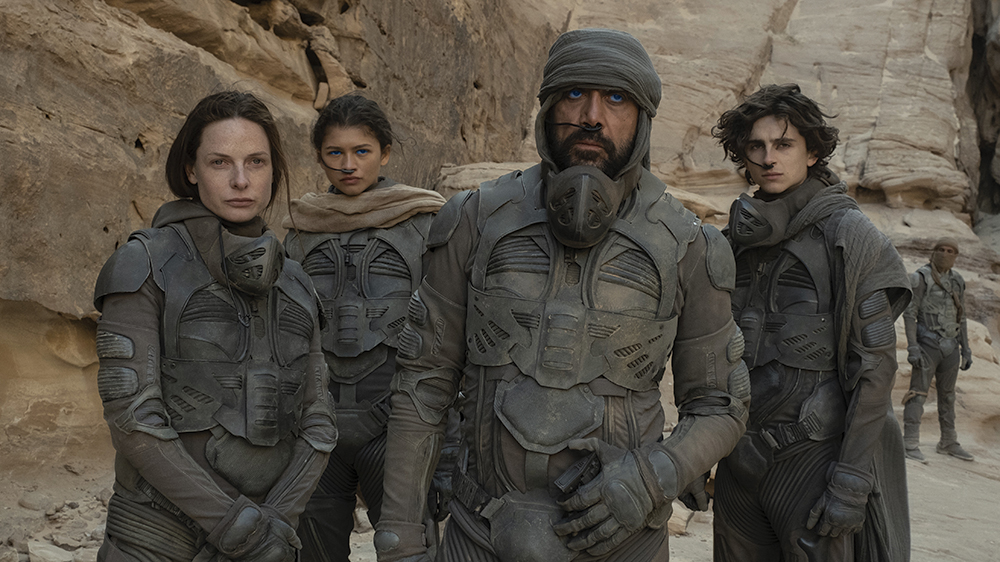
Dune: Part Two

The reboot of the Dune series has been so far the biggest movie action of the 2020’s. The re-adaptation of the Frank Herbert novel was a highly anticipated event in 2021 and hoped to get people back into the movie theatres after the relaxing of the strictest COVID precautions in history. It worked. Dune made over $400 million at the box office, was nominated for ten Academy Awards and won six. It was like what David Lynch got wrong, Denis Villeneuve got right. Originally, Villeneuve planned to divide the story into two films. This is what led to Dune: Part Two to be made.

The second Dune film continues with the drama left behind from the first. The second makes the stories of the dehumanizing Water Of Life, the installation of the young sadistic nephew of Arrakis as the ruler and heir to House Harkonnen, Paul’s romance interest to soldier Chani, the threat of holy war from Fremen fundamentalists, a spice trade at risk of smugglers, Paul’s consumption of the Water Of Life much to the disappointment of Chani, his dealing with his mother, his duel to battle the throne of the Harkonnen kingdom, his ascendancy to the role of king upon winning and the rejection of all as leader, including Chani. The drama continues, the excitement and thrills increase and the ending leaves the audience in suspense and the anticipation of what will follow in the sequel Dune: Messiah, set for release in the spring or summer of 2026.

Every year, there seems to be at least one ‘popcorn movie’ that seems to rack up enough buzz to eventually become a Best Picture nominee. Not only did Dune: Part Two get nominated for Best Picture, but the Dune franchise joins the Godfather, Lord Of The Rings, Going My Way and the Avatar franchise as the only five movie franchises to have two or more of its films nominated for Best Picture. It’s deserving of it because it succeeds in doing what a science fiction film should do. It takes people into another world. It creates an intense complex drama of the threat of the order of humanity and how it rests in the hands of one young man. It delivers in the action people go to expect form a film like Dune. On top of it, it succeeds in being the opposite of your typical movie sequel that ends up being a repeat of the first. Instead, we get a continuation of the chronologic drama and ends with the anticipation of the third and final part. Deserving of its Best Picture nomionation. And to think it was released back in March 2024. Talk about endurance!

Once again, top respect goes to Denis Villeneuve. You can trust Villeneuve to deliver in a sci-fi film. Both in his direction and his co-adaptation of the story with Jon Spaihts, he continues the excitement of the story well by keeping in the right parts, delivering on the action needed and making the smart decision to make his adaptation of Dune a three-film series instead of the two-film series he originally hoped for. He did things right and in winning fashion. Like most sci-fi films, the story is more focused on the special effects and action moments, but the film doesn’t stray away from its focus on the story and the characters. It is still there and still consistent. Even though Timothy Chalamet’s performance as Paul wasn’t too deep of a role, it is still consistent to the story and very believable. Zendaya’s performance as Chani added to the story. In the first Dune movie, Chani was a minor supporting role. Here, she’s the lead female protagonist and Zendaya does an excellent job in making her a key part of this chapter. There were also good performances of minor roles like Josh Brolin as Paul’s trainee and mentor, Rebecca Ferguson as Paul’s mother with whom Paul harbors resentment, Austin Butler as Paul’s fierce deadly rival to the throne and Christopher Walken as the emperor.

As is common with great science fiction films, the standout achievements are in the technical areas. You need it for a sci-fi film to excel and Dune: Part Two had some of the best of the year. Its top achievements are in the cinematography by Greig Fraser, the production design by Patrice Vermette and Shane Viau, the costuming by Jacqueline West, the editing by Joe Walker, the special effects by the film’s effects team, and the music from Hans Zimmer. All of it was successful in taking the audience into Dune’s futuristic world and enhancing the film’s action.

Dune: Part Two succeeds in keeping alive the drama, intensity and excitement of the first film and sets the audience up for anticipation of the third and final chapter. It succeeds in having the best qualities of a sci-fi film without the common watering down or cheapening of the quality.

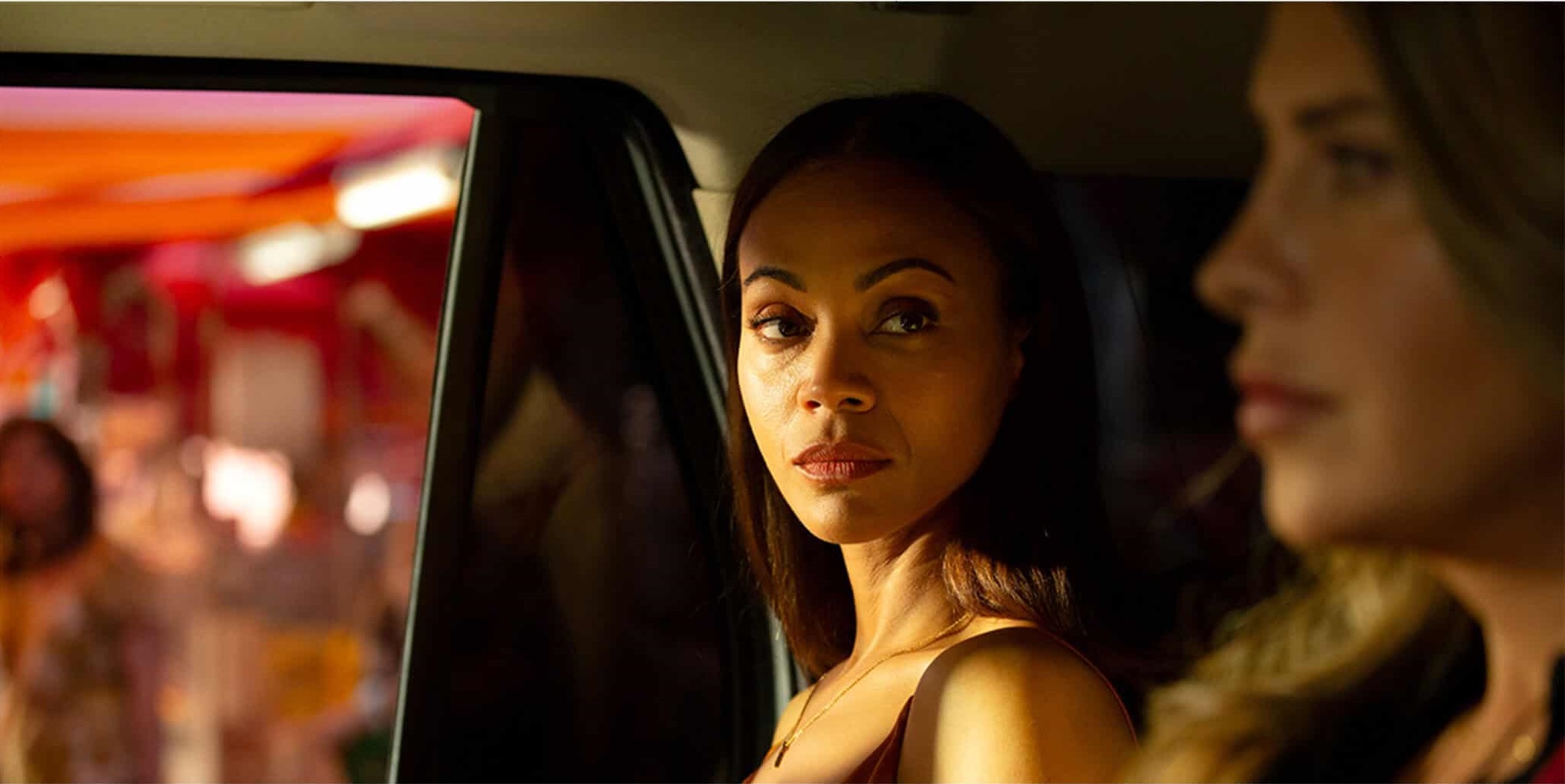
Emilia Perez

Now this film has been the subject of a lot of discussion, for better or for worse. In watching it, one would be shocked how a musical is made out of subject matter that would be the last themes and elements thought of as subject matter for a musical. Nevertheless, the mix of a musical with modern-day dark drama works as a film from start to finish. Despite that, this film is not for everybody. If you’re a person who welcomes experimentation in film like I do, then you will like it or respect it as a film. If you want to be entertained, that’s taking chances as a lot of people will be unhappy with a film like this. Trust me. A transsexual druglord and all the corruption in Mexico and the missing people that come with it does not make for an entertaining film. Making a musical out of it would seem quite the oddity.

From the start, it looked like the type of film that would get a lot of Oscar buzz. It had great acting, an eyebrow-raising story and quite the unconventional way of making a film. The film would achieve thirteen Oscar nominations and then the hate began. First, there are the complaints from the transsexual communities complaining of the transsexual character being a murderous drug lord before the operation. Then came complaints from the people of Mexico of how Mexico was depicted as a place of rabid crime. Additionally, it came to light past social media messages from Karla Sofia Gascon. Exposed in her messages were tweets that were Islamophobic, racist and even critical of her own co-stars. This only came to light just after all the nominations were revealed. I know there’s always at least one Best Picture contender that starts a load of controversy. Best Picture nominees often start some controversy or debate but there’s always one that stands out the most. This will have to be the biggest of the ten.

I’m not normally one to trash a film unless it’s really horrendous or really terrible either in quality or in its subject matter. While the film is definitely one of uncomfortable subject matter, I do give it credit for its experimentation. We should know that this film is originally a stage opera created by Jacques Audiard who adapted it from a chapter in a French book Ecoute. I will give Audiard credit for trying to make a musical out of out-of-the-ordinary subject matter. Watching it will make you question if the musical elements of the film work or not but there are many parts that stand out as great and will even blow you away. Don’t forget this isn’t a story about a transition from man to woman. It’s also a transition of personality going from leader of a drug cartel to a humanitarian. Also I feel the acting in the story works well. It’s the acting from the three main stars of the film that help make the film work on the screen and work as an unexpected musical. The funny thing is after you’ve finished watching, you will ask yourself if you liked it or not. Or if this worked or not. Despite its imperfections, I consider it a brave attempt.

Responsible for this film is French director Jacques Audiard. Audiard has had a decades-long reputation as a filmmaker in France and has directed many films outside the French language. This film, which was a Palme d’Or nominee at Cannes 2024, should be seen as an accomplishment in retrospect. A flawed accomplishment, a provocative accomplishment but an accomplishment nevertheless. It’s not just this being an unlikely musical but also adapting a stage opera to the big screen. As if adapting a musical isn’t hard enough. Despite its flaws, I give Audiard credit for that.

Also excellent is the performance of lead Karla Sofia Gascon. A transsexual woman herself, Gascon does a great job in both the male role of Manitas and the female role of Emilia Perez. It’s two different conflicting personalities of the same character and it needed to be done well, and Gascon succeeds in doing it. Also excellent is Zoe Saldana as the lawyer caught in the middle of it all. When watching the film, you wonder if the lead is Emilia or if the lead is Rita Castro. Zoe does a great job in making the film as much hers as it is Emilia’s. Selena Gomez’ performance was not all there. Nevertheless she did have some great moments and was believable in most scenes. Adriana Paz is also great in playing Emilia’s lover. I give top technical acclaim to Paul Guilhaume in the cinematography, the hair and makeup team for the convincing work on the pre-transition Manitas, and the collaboration of Clement Ducol and Camille on the standout music.

Emilia Perez is not everyone’s cup of tea. It gives a lot of reasons for you to hate it and a lot of reasons for you to like it. I consider it a film for myself to like and admire, despite its obvious flaws.

And there you go. This is my look at two more contenders for the Best Picture Oscar. With ten films, boy do you get a lot of different films.

2023 Oscars Best Picture Review: Oppenheimer

Oppenheimer will get you questioning whether J. Robert Oppenheimer (played by Cillian Murphy) deserves to seen as a hero or villain, or neither.

Would a film about J. Robert Oppenheimer attract crowds to the cinema this summer? Oppenheimer proved to have the right stuff to make it happen.

When the film first arrived, there was the big question. Would a film about the inventor of the atomic bomb fly or would it flop? Would today’s audience care about a story of the inventor of the atomic bomb? Especially with this being a film with a budget of almost $100 million. Would it be a box office hit during the summer? In addition, does the film justify its three-hour running time? Oppenheimer surprised all naysayers by answering “yes” in all cases. It even succeeded in being a hit right while the Barbie phenomenon was in full-swing. No wonder 2023 will be remembered as the summer of “Barbenheimer!”

This film succeeds in justifying it’s importance. It’s easy to develop a fascination for the man who pioneered the “Nuclear Age.” Hiroshima and Nagasaki are still as intriguing and haunting today as they were when the bombs were dropped in August 1945. Even how this would pave the way for the introduction of the nuclear bomb and how it would cause the most intense moments of the Cold War of the past can make people intrigued in the man that started it all. Even though the most intense days are gone, it doesn’t mean the threat is no longer. There’s still Communist China, North Korea and even Putin taunting the world with threats. As long as nuclear bombs exist and are ready to use, J. Robert Oppenheimer will remain a man of intrigue.

The film can’t just be about building the nuclear bomb. The film is about the man himself. Oppenheimer himself started his career off as an aggressively ambition physics professor who had a clever and creative way of describing complicated things. It’s after he learns of nuclear fission in 1938 that he senses that it’s something that can be weaponized. The timing of this comes just as World War II dawns. The Manhattan Project is commissioned in 1942 to create such a weapon. J. Robert, who was Jewish himself, knew of the importance of stopping the Nazis. J. Robert didn’t simply agree to create such a bomb for the sake of having one created. He created one because he sensed the Germans themselves could learn of this and create one of their own. The war ends in Germany without a single use of such a weapon, but as its relevance is questioned, J. Robert suggests it could end the war in the Pacific. The bomb is tested successfully and that prompts President Truman to order them used in the war.

Then Hiroshima and Nagasaki happen. Everything changes for Oppenheimer. He is now ridden with guilt, feeling responsible for all the deaths that happened. The American people, on the other hand, see him as a hero for ending the war. President Truman, full of excitement with winning the war, taunts J. Robert’s empathy and rejects his wish to end further atomic development. It’s at the 1954 hearings that J. Robert, his legacy and his ties to communists are put under question and he has to confront himself on who he is. Eventually his arrogance and competitiveness would take his toll on him in the end. He’d have to face the music of the new world order he helped pioneer.

It’s also about the personal side of the man. J. Robert was a man of ambition in his early days of studies. He was also a man who thrived on knowledge and frequently consulted with Albert Einstein many times, relying on his knowledge. He was a man who liked difficult things and took an interest in the mystical and the cryptic. He was also the husband of Kitty Puening, but the marriage was rocky and riddled with J. Robert’s infidelity. His ties to communists in the intellectual community, and even with wife Kitty being a former writer for a communist newspaper, is something that could easily cause the suspicion in the 1950’s communist crackdown. J. Robert Oppenheimer was as much a complicated person as he was an important part of history.

This film should be seen as the crowning achievement of writer/director Christopher Nolan. His career has spanned over half a century starting in 1998 with Following, making his North American breakthrough with 2001’s Memento. His career would be full of landmark films like The Prestige, The Dark Knight, Inception, Interstellar, and Dunkirk. Until this film, only the latter has earned him an Oscar nomination in directing. He’s frequently delivered remarkable storytelling and has often found big box-office success, but many feel he’s missing the big renown he deserves. This film, which is an adaptation of the 2005 book American Prometheus, not only makes us take interest in the man who pioneered the nuclear age, but take us into the times and in the person Oppenheimer was. He succeeds greatly in creating a film that keeps out intrigue in the man himself as our intrigue into the creation of his bomb. Definitely the best film in an illustrious career he’s created.

We should also give many top accolades to Cillian Murphy. As much as this is Nolan’s masterpiece, we should also admire Cillian for making the film work for his portrayal of J. Robert. He does a great job in portraying the man and his genius, his weaknesses, his arrogance, and his hidden frailties. Definitely one of the film’s biggest highlights. Also excellent is the performance of Emily Blunt as Kitty Oppenheimer. Not only does she show her struggles with J. Robert’s infidelity and the potentially-destructive work he’s carrying out, but she’s able to tell J. Robert bluntly some awful truths about him, the world and all he caused. Also excellent is Robert Downey Jr. playing Lewis Strauss, the former colleague who turns against him and vilifies him in the end. Additional excellent performances come from Matt Damon as Ge. Leslie Groves who’s cynical and fearful of J. Robert’s work, Florence Pugh as J. Robert’s “other woman,” and Tom Conti as Albert Einstein, whom J. Robert often confides in and confesses to.

The technical feats of Oppenheimer are also excellent. There’s the cinematography of Hoyte van Hoytema, a frequent collaborator of Nolan’s, who did a great job of using the black-and-white and color imagery to showcase the two sides of the story. There’s the excellent editing from Jennifer Lame which showcased the story well and justified the film’s three-hour length. There’s also the costuming, hairstylists and makeup personnel that did a great job in recreating the looks of the past. The production design team also did a great job in their recreation of past buildings and the empty town meant to test the bomb’s effects. There’s also the great musical score from composer Ludwig Goransson that adds to the suspense and eeriness of the film and the sound team that delivers the right sound mixing needed for the story.

Oppenheimer is a deserving summer movie hit, an accomplishment for Christopher Nolan, and one of the best films of 2023. It’s a film that can get you feeling sorry for a historical person we should really hate and also show how important the story of his invention is for our times.

2023 Oscars Best Picture Review: Maestro

Maestro is a dead-on portrayal of Leonard Bernstein (played by Bradley Cooper) and his wife Felicia (played by Carey Mulligan)

Would a film about Leonard Bernstein be worth seeing? The film Maestro succeeds in making anyone who likes music worth seeing.

There are a lot of musical geniuses we know of for their music, but few we know of for themselves and the lives they led. Leonard Bernstein is one. Many of us are familiar with the conducting he performed or the music he’s written. What most of us are unaware of is his eccentricities as someone in the arts, his past of marrying a woman despite being gay, and his extramarital affairs. Despite it all, despite Bernstein’s failings as a person outside of his music, he still found Felicia to be his soul mate. That one person in the world who knew him inside out and understood him. There’s no doubt if Bernstein was out now, he’d have no problem pursuing a man openly. It was the times where loving his own was a criminal offense that could lead to his downfall. His liaisons with men had to be as secretive to the world as they had to be secretive to Felicia. The thing is had he lived in a time when it was okay to love your own, he wouldn’t have love Felicia: the one person meant for him. It does leave you thinking what would have happened if Leonard was free?

Even though it does a lot of focus on his marriage to Felicia and his infidelity during the time, it doesn’t forget it’s a musicography. It shows Leonard’s career from its start coming from a lucky break of the guest conductor falling ill to opening doors for him and his music to be heard in symphony halls and on the stages of Broadway musicals and on the silver screen, and even intricate choral pieces. It’s known that geniuses are known for their eccentricities. Leonard’s eccentricity was music singing inside of him and his need to create. If there’s one scene that stands out how much music was a part of Bernstein, it was him conducting his musical Mass. His body movements as he conducts sends that message of how into the music he was. Even as he was no longer the grand composer, he still spent the last years of his life teaching music students. He gave back as much as he created.

Though this is without a doubt a musicography of Leonard Bernstein, this is also about Felicia Montealegre. An actress herself, she was a free spirit of the arts like Leonard. She was understanding of his homosexuality, but was willing to take the risk of loving him and even marrying him. She herself was an actress and she also embraced the free-spirited feelings of the artist. Her love for him as well of her support for his work is as undying as his support for her and her work. She fends of rumors of his liaisons with men by reminding people and insists she holds reign over him as his wife. Even though she does, it’s obvious there will come a testing point in this. Especially as rumors are heard by his daughter Jamie and alcoholism controls his life. Even though the marriage does break down in the late-60’s she still remains with him and it’s as she’s dying of breast cancer that brings them back together. It seems as though despite the hurt, Felicia still believed Leonard was the one for him just like she appeared to be the only one for Leonard. The scenes of her death and as Leonard tries to live his last years without her sends that message.

Excellent work from Bradley Cooper. This is not the first time he acts, co-writes and directs in a film. A Star Is Born was the first. In this, his second effort, he does a great three-dimensional job in recreating Leonard Bernstein with the character he creates and the story he co-wrote with Josh Singer. He takes Bernstein inside out and showcases aspects we hardly knew of a person we’re familiar with. The film is also a great showcase of Cooper over the years. How many of you remember 2009’s The Hangover, Cooper’s breakthrough film, and still carry that image around of him over the years? This film is quite possibly the best film to rid one of that image of Bradley Cooper that’s lived rent free in your head for years and showcase his maturity of an actor over the years. Even seeing how you hardly sense a drop of Cooper in the role and see Bernstein will give you some new-found respect for him.

Also worthy of admiration is Carey Mulligan. Just like you see Leonard instead of Bradley in this film, you will also see Felicia instead of Carey in the film. Her performance of Felicia is something completely different from what you’ve seen Carey perform before. It will even get you thinking at times the film may be more about Felicia than Leonard. She does a great job who loves Leonard and embraces the freeness of the artist, but will have it tested throughout her marriage. Also great is Sarah Silverman as the sister Shirley. Those who only know Silverman through her comedy will be surprised to see she can pull drama off well too. She’s great as the one who knows Leonard inside out and serves one to warn Felicia of him. Also great is the performance of Matt Bomer as David Oppenheim: the man caught in the middle of this love triangle. For technical efforts, Matthew Libatique does a great job in doing the cinematic images and angles. The makeup team does a standout job in creating Cooper’s face to look like Bernstein from the age spots to the nose. The sound department is also great. They know that this film is about Bernstein’s music and they do an excellent job in working the sound right for the film.

Maestro is a three-dimensional biographical film that succeeds in getting one to get even closer and more personal with Leonard Bernstein. It’s also about the love of his life that would never die.

VIFF 2019 Shorts Segment: To Live In Infamy

Cinema

Those who know my film watching during the VIFF know that I try to watch at least one segment of short films. I saw a segment of seven films by Canadian directors entitled To Live In Infamy. In each of the films, there is some element of crime or taboo. Even some things that don’t qualify as a penal code may be seen as a crime of some sort, or even a simple wrongdoing. All of them are interesting in their own way.

Delphine (dir. Chloe Robichaud): A woman named Nicole looks back to a girl she only encountered for two brief times in her childhood. Her name was Delphine and she was a Lebanese immigrant to Quebec. The first flashback is in a private grade school where Delphine could only say one word in French: ‘oui.’ The other classmates make fun of her. Nicole, who is Lebanese-Canadian, doesn’t participate with her peers, silently shares in Delphine’s ostracism. The vice-principal of the school however does scold Nicole and the girls for lewdness. The second meeting between Nicole and Delphine is at sixteen in a public school. Delphine has a bully named Aminata who appears to try to dominate over every female. She attempts to dominate over Nicole too, but Nicole is physically resistant.

The story leaves us with the necessary questions. Some may ask were Nicole and Delphine lesbians? However the story is reflective of childhood. It reflects on fun memories like of some mischief and of family warmth. But also of upsetting memories like of being made to feel different and facing nemeses either violent or non-violent. We all have those moments in our childhood where we’re reminded how the world is a cruel place. It’s a story many can connect with, even if they didn’t live it exactly.

I’ll End Up In Jail (dir. Alexandre Dostie): A woman named Maureen is frustrated with her life. She tries to cover it up from her son and his boyfriend, but she can’t take it no more. One day, she drives off on an icy hilly road hoping for an escape but crashes into a parked car. It appears the car is parked so that a teen boy and his girlfriend can get stoned in the trunk of a car together. The girlfriend is dead. The boy learns she’s the mother of his classmates. They work to hide the body of the girl, but while Maureen is stuck underneath a tree, she learns a truth. She acts out in a way where she really has to be on the run from the law.

This film is a dark comedy that makes a lot of humorous situations in crime and personal problems. Even the uncovering of a dark truth appears humorously surprising, if not disturbing. The ending however feels a bit incomplete or doesn’t appear clear enough. I know it’s about Maureen’s escape and how it doesn’t go as planned, but it still looks like it’s missing something.

Shadow Trap (dirs. Damien Gillis and Michael Bourquin): In 1909, a white bounty hunter is out searching for Gitxsan business man Simon Gunanoot who is wanted for murder. The bounty hunter stocks up with a lot of supplies ready to find Simon, a reputed trapper and fur-trader, for a big reward. However the frontiers of Okanagan B.C. prove too much for him and he is in danger of freezing to death, until he’s rescued and sheltered by an Indigenous man. Is it Simon in hiding? He returns to the town with hides to trade.

This is a fictionalization of a true incident in Canadian history that says a lot. The message I seemed to get from the story may be about the common perception of Indigenous peoples by whites at the time as ‘savages,’ and how wrong they are. Even now as we’re trying to make reconciliation happen, I feel this story has a lot of value.

The Beach Raiders (dir. Tyson Breuer): A teen couple– the boyfriend having photography ambitions– is savoring the last days of summer at an Ontario beach. They have one last summer goal: steal some beer. They try to get it from the kitchen of a restaurant. However their attempt is not only in danger of being stopped by the owner, but their own relationship as both have differing goals. However their pursuit ends with a bang!

This film is a bit of an ode to the ‘young and stupid’ days. What starts with stealing one beer leads to a chance for something bigger. The film does however focus on a reality, though it is resolved in light fashion at the end.

Main Squeeze (dir. Brendan Prost): It’s Christmas. Benjy and Kiersey, a couple in an open relationship, are having fun in their apartment. However the fun is threatened when a young drunk woman smashes their window. It’s not just any woman, but Jacqui: Kiersey’s ‘other woman.’ He is not comfortable about having Jacqui in, but Kiersey insists. Benjy had every reason to be nervous because Jacqui says things making it clear she’s his rival. This not only threatens the relationship but the Christmas spirit too.

It’s a story that makes good use of a single location. It consists of a lot of moments where you don’t know what will happen next. It surprisingly ends with all conflict over.

Ghoulish Galactic Grievances (dir. Josh Owen): Wanna have some weird fun? A ghoul lives in a swamp, but she has a desire to pursue her friends in outer space. Her swamp friends want her to stay.

This is a fun and entertaining story of ghouls and aliens and creatures. It is definitely a fun comedic story to watch, but it succeeds in delivering a smart message within the theme.

Finding Uranus (dir. Ivan Li): This is the one short of this segment that is animated. A man is lost in a sea of internet porn and desires to find real sexual satisfaction. He pursues it through a very unorthodox trip.

This was entertaining, but bizarre at the same time. However I admire how the animator is not afraid to go crazy and let his creativity tread in territories many would not touch!

All seven shorts were entertaining in their own way. Some had a story to tell, while some were more about the show. Many were dramatic while some aimed more for comedy. All were good at telling their story, even if told in a bizarre style.

At the end, I can understand why this shorts segment is called To Live In Infamy. All of them had an infamy of some kind, whether big or small. Nevertheless all of them told their story well.

Oscars 2017 Best Picture Review: The Post

Post
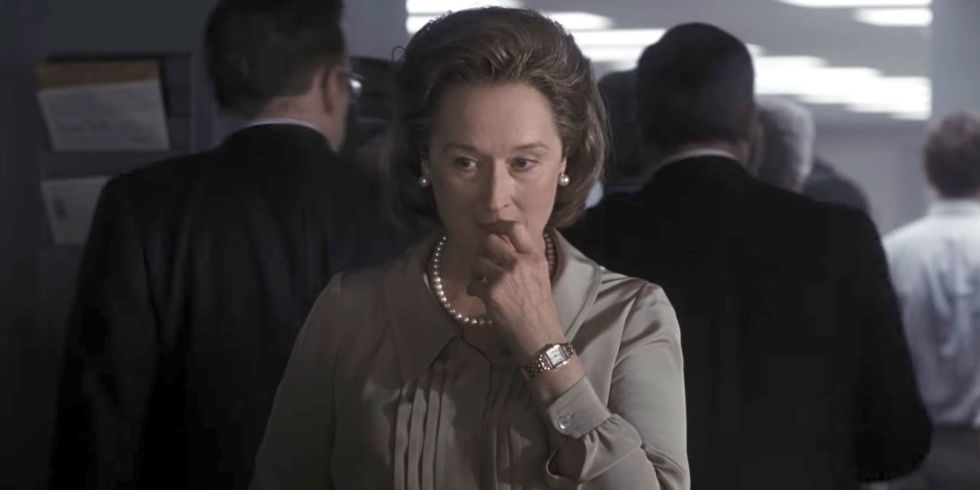
Merly Streep plays newspaper head Katharine Graham in The Post.

The subject matter of The Post doesn’t sound like the type of subject matter that would win a big crowd, but it is a film worth seeing.

The story goes back in 1966 during the Vietnam War. Military analyst Daniel Ellsberg is in Vietnam with General Robert McNamara to document the progress of the war. McNamara admits to Ellsberg and President Johnson that the war is hopeless but has confidence in the effort, leaving Ellsberg disillusioned.

Years later, Ellsberg is now working for a military contractor and comes across classified documents showing the US’s decades-long involvement in the conflict in Vietnam going back to just a few years after World War II ended. Ellsberg discloses the documents to the New York Times.

It’s 1971. Katharine Graham is head of the Washington Post. It’s been a position she mastered with a lot of difficulty as it’s commonly seen as a ‘man’s position.’ Even though her family founded the Post, the position of the head went to her husband Philip instead of her. It was right after Philip’s suicide that Katharine became head. It’s not easy for a female to be head of a newspaper. Especially someone like Graham who has a good work ethic, but lacks experience and is constantly overruled by the aggressiveness of the men of the Post. On top of that, she seeks to gain an IPO for a stock market launch to propel the Post to greater strength. The Washington Post however is second-fiddle to the New York Times which always has the biggest news scoops, even the scoops of what’s happening in Washington.

Editor-in-chief Ben Bradlee is one of the men who work for her. He tries in vain to be one step ahead of the New York Times in coming up with the latest scoops, but falls short each time. Meanwhile McNamara, who is a friend of Graham’s, confesses to her of how he’s the subject of bad news in the New York Times. It’s through their constant expose of the government’s deception of the American public. However a court injunction blockades any further publication of such news by the Times.

Ellsberg is willing to provide the documents and opportunity to the Post to publish the stories. As they look through the stories to publish, lawyers to the Post advise against publishing the story, fearing the Nixon administration will press criminal charges. Graham seeks advice from McNamara, Bradlee and Post chairman Fritz Beebe of whether to publish. It’s made even more frustrating when the lawyer note that since  the sources are the same as the New York Times, Graham herself could be charged with contempt of court. It’s a gamble. Graham risks terminating the newspaper her family established. Alternatively, the Post won such a legal battle, it would establish itself as a major journalism source, much on the same level as the New York Times.

She agrees to have the story published. The White House retaliated by taking both the Times and the Post to the Supreme Court to argue their case of publishing classified document information being a First Amendment Right. Both newspapers receive almost unanimous support from the other newspapers in the US and they win their Supreme Court battle 6-3. An infuriated Nixon bans the Post from the White House. And the rest is infamy… for Nixon.

The film is more than just about a top secret story that needed to be exposed and makes journalism history. The story is also about the newspaper behind the story. We shouldn’t forget that this came at a time when The New York Times was the newspaper that delivered the biggest news about what was happening in the Oval Office and the ones to do it first. Even though the Washington Post was the newspaper of Washington, DC, it was more of a second-fiddle newspaper like the newspapers of the rest of the cities. The New York Times lead and all other newspapers, including the Washington Post followed. This story allowed the Washington Post take pole position towards what was happening in Washington. This would also allow for the Washington Post to be the prime newspaper to go to upon the breaking of the Watergate Scandal. Even despite the Post competing against the Times, they united when they faced the heat of the freedom-of-speech debate and won together.

The film is not simply about a history-making story, a legal breakthrough or even a milestone for a newspaper. It’s also the personal story of Katharine Graham and how she had to achieve greatness for herself. Katharine Graham was born into the paper and assumed control of it right after her husband died. It was always tradition that a man headed the newspaper. After the suicide of her husband, she headed it. The paper her ancestors founded and the paper she wants to propel into marketability. This news story could help be the boost she needed, but the court injunction against the New York Times causes her to put it on hold. Basically she’s gambling everything with this touchy story: the Times, her status as a leader, her role as a woman with power, her role as a mother, even her own personal freedom. In the end, that one decision caused left all of us convinced she did the right thing. She did more than just allow a story. She did more than boost the profile of the Washington Post. She created a breakthrough in freedom of speech and freedom of press. On top of that, she earned the respect from her male colleagues. That was rare back in the early 70’s.

This story is very relevant to the present. We always hear those words ‘fake news.’ We have a feeling that Donald Trump is like a big brother monster who wants to control everything. There are often times in which I wonder if the times of Nixon were worse than the times of Trump. I know all about Nixon and his lust for control. Whatever the times, the story and the court ruling against government censorship of the press serves as a reminder to all citizens that the press has the right to publish the truth to the public. The ruling of the New York Times vs. The United States of America back then was clear: “‘In the First Amendment the Founding Fathers gave the free press the protection it must have to fulfill its essential role in our democracy. The press was to serve the governed, not the governors.” That ruling still applies today.

Leave it to Steven Spielberg to direct a story that will capture our intrigue. Some would describe this type of story as a ‘boring story.’ Steven Spielberg knows how to direct it into something interesting and have us glued to the screens. The screenplay by Josh Singer and Liz Hannah also creates the right interest and intrigue. They’re able to take the chain of events surrounding the publishing of the story and turn it into a story of intrigue. Even a story from a humanist side.

Once again, Meryl Streep delivers in creating depth in a public figure. She gave Katharine Graham the right dimension and the right humanistic tone to make the story work. Tom Hanks also does an excellent job in his role as Ben Bradlee. He delivers in the character very well as he adds some dimension to Bradlee too. The supporting actors may have minor or limited roles, but they add to the film too. Janusz Kaminski does an excellent job of cinematography and John Williams again delivers a fitting score.

The Post is a journalism story that will keep one intrigued. It’s a story that’s very relevant today as it’s also about our own right to know the truth.

Oscars 2015 Best Picture Review: Spotlight

Spotlight stars Rachel McAdams, Michael Keaton and MArk Ruffalo as journalists ready to settle the score.
Spotlight stars Rachel McAdams, Michael Keaton and Mark Ruffalo as journalists ready to settle the score.

I’ll admit I saw Spotlight two months ago and I’ve been procrastinating at writing my review. Now that the Oscar nominations are out–actually only an hour ago– this is a better time than ever.

The film begins in the 1970’s of a priest being fired from his job as a teacher at a Catholic elementary school in Boston. Fast forward to 2001. The Boston Globe has a new editor, Marty Baron. He first learns of the investigative Spotlight team of the paper headed by Walter ‘Robby’ Robinson.

Baron gives the Spotlight team a story to chase: a story of a priest sexual abusing children and Cardinal Bernard Law knowing about it and doing nothing about it. It first starts as a pursuit on a single priest who was continuously moved around from school to school. Over time it they would uncover that there were many priests who also committed acts of sexual abuse on school children and they were all covered up by the Archdiocese.

This is one story they had to get to the bottom of. However they’re limited in terms of resources. Plus they need permission to access sealed documents and have a trial or even an inquiry happen and they doubt they can get it from a Catholic judge. They talk with a head of a victims rights group who himself was abused, they talk to other abuse victims, they talk to a lawyer who’s handling the cases of some of the victims and they even find through an ex-priest who tried to rehabilitate pedophile priests that there could be as 90 sex offenders in the clergy. Further research uncovers additional priests moved about upon their actions being revealed and being listed as ‘relocated’ or ‘resigned.’

In September 2001 it appears the Spotlight team is finally ready to release the story. Then 9/11 happens which makes every other news story in the world take a backseat and cause even a further delay of the story being printed. However the wait works for the better as one of the Spotlight reporters, Michael Rezendes, uncovers proof through publicly available documents that Law knew all about the abuse going on and ignored it. Then a major victory. The judge grants them the right to look into sealed documents. Just as they are about to print the story, Robinson confesses he published a list of pedophile priests in 1993 but he never followed up on it. As the story is published, it creates history.

I’m sure that some people would be nervous about this film and declare it ‘anti-Catholic.’ In fact if I were a conservative conspiracy theorist, I would say Spotlight is a film released by an anti-Catholic director who wonders where all the Catholic hate from liberals went once Pope Francis came to power and wants Spotlight to bring it back. But I’m not a conspiracy theorist nor am I a conservative pundit. In fact the film has received positive feedback from Vatican Radio and even the current Cardinal of Boston praised it in showing how the Archdiocese had to confront its wrong.

I will say that I’ve seen bigger even more savage attacks on the Catholic Church in films in the past, especially from Martin Scorsese. In fact I remember watching 2002’s The Magdalene Sisters where the nuns were depicted as total monsters. I feel films nowadays are less anti-Catholic than that of 20 years ago or even 40 years ago. In fact one thing I give the film credit for is that it looks at all sides. It may portray Cardinal Law as a conniver but it wasn’t hard on depiction of the priests. In fact one scene that stuck out to me was when one of the alleged priests was interviewed. He not only appeared confused in how he didn’t know what sexual abuse was but admitted that he was raped as a boy. That not only shocked me but left me wondering how many of the abusive priests were themselves sexually abused as a boy?

On a personal note, I will admit that when I first saw the film, I left the theatre asking myself “Jon, why did you return to the Catholic Church?” It was a dilemma for days but it did solve itself over time. In fact shortly after, I wrote on my Facebook page: “I gave the Catholic Church a second chance in 2003 and it better not blow it this time.” I will never excuse a priest for sexually abusing any child. I believe they should be brought to justice. In fact, Pope Benedict clarified the issue when he said: “Forgiveness is not a replacement for justice.” I know you can’t take back the past however you can improve the future. The Catholic Church has not become blind to the issue of sexual abuse. In fact I learned from one man who tried to enter into education for the priesthood he had to get a criminal record check, an HIV test and a psychiatric assessment. I’m happy that the Catholic Church is taking the best preventative measures to ensure this doesn’t happen again.

In fact off topic from the film, I will admit that sexual abuse and the various Diocese’s and Archdiocese’s bad handling of it is a problem but I will also say that it’s a problem that goes far beyond the Catholic Church. It’s a problem that exists in other churches as well, it exists within certain families, it exists within school and it even exists within children’s sports programs. In fact this decade’s biggest sexual-abuse-and-cover-up story came not from a Catholic institution but from coach Jerry Sandusky and the cover up from Penn State university. Makes you wonder why the priesthood gets a lot of defamation from the sexual abuse of those while children’s sports coaches don’t get the same defamation. A sex offender is a sex offender no matter what their profession or even if it’s not to do with a profession at all.  Same thing with Universities, especially since it’s only come to light that colleges have a known rape problem but they’re doing next to nothing about it.

Back to the film, I think the biggest thing the film was focusing on was the bad marriage of church and state. Separation of church and state is enforced in the American constitution but it’s not to say it does find its way mixed into politics one way or the other. In fact I don’t think Spotlight attacks the Catholic Church as a whole but actually attack the Archdiocese of Boston. The film presents how the Archdiocese of Boston has such a huge influence over the city. We’re talking about a city with a huge percentage of Catholics and with a history of the Catholic Church giving, providing and influencing the city. No wonder a city like Boston would have such high regard for the Archdiocese. No wonder most Bostonians would look at priests as father figures. No wonder also would that present the biggest difficulty in terms of getting the ugly truth out, especially with people having a high regard for the Church in power and with a Cardinal sweet-talking those determined to get the truth.

The theme of sexual abuse may be very prevalent in the film but I think the biggest focal point of the film was to show a group of reporters uncovering a scandalous story and bringing it to print. One thing is the film doesn’t make like the Spotlight team are the blemish-free good guys of the film. It’s made known near the beginning of the film that this information was given to them five years earlier. They themselves made a big mistake of their own by delaying the story. Sure, they did a whole whack of effort to finally bring it to press in 2002 but they could have done it sooner. I think that was the whole thing of Spotlight is that it was a movie disinterested in making the image of a hero out of anybody. Besides we already hear of the mistakes of having an image of somebody is a bad thing as one abuse victim admitted he looked at priests to be like God. I’m sure millions more have had that deluded image of the priest being like God in their head. However it also shows how easily people can be feel a sense of betrayal by a Church when such atrocities occur. You can’t really blame them for being that disheartened.

I give top credit to director/writer Tom McCarthy and his co-writer Josh Singer for directing a complex film that’s like a bunch of pieces of a puzzle that had to be put together. This is a story that’s set in the Spotlight room of the Boston Globe and set in various other places throughout and they had to both show all the different parts of the story and make them come together from time to time. They did a good job of making this complex story come together without straying off into unimportant territory. Also they did a very good job of writing a story of sexual abuse that was watchable. I’ve seen other films of sexual abuse that were more explicit like 1992’s The Boys Of St. Vincent. Mind you it was a 90’s thing to do explicit entertainment because envelope-pushing was all the rage back then because 1; you could never put enough nails in the coffin of the Hays Code and 2; because back then softening of scenes or leaving such things out was considered a form of ‘denial’ in art. Anyways these are not the 90’s anymore and watchability is values more. I’m sure if they showed scenes of abuse in the film, it would make it somewhat unwatchable for many. I feel they made a good choice of limiting the topic of abuse to conversations of victims with the journalists. Especially since the top point of the film is how they brought the story to press. Besides I don’t consider compromising elements in a film for the sake of making it more watchable to be a filmmaking weakness. It’s not the 90’s anymore and Tom McCarthy’s not among the likes of Lars Von Trier.

As for acting, there were a lot of great individual performances most notably from Michael Keaton, Mark Ruffalo and Rachel McAdams but none of them owned the film. In fact another top quality of the film is that it’s a combined effort from all the actors to play parts that don’t steal the show and add to the story telling by making it look like a unified effort. Even acting of the smaller roles that that of the abuse victims were excellent and added to the story. Overall this not simply a film that’s well-crafted. This is a film that does capture your intrigue. It’s a combined accomplishment from McCarthy, Singer and the actors.

Spotlight isn’t strictly about the incident. It’s about getting the story to the presses and the battles the Boston Globe had to go through to break the silence and finally get the word out. Keeps you interested from start to finish.

Summer Movie Spotlight: Superhero Movies

This was to be a triple-movie review I had planned to release shortly after the end of the summer.  The VIFF, feeling tired, and two illnesses kept it from publishing in due time. Even though most of the films here are on DVD, Blu-Ray or on NetFlix, I still feel this is a focus on summer movies worth publishing even now. Especially since many will be eligible for the technical categories of the Oscars. Hey, don’t rule them out.

And this one is on superhero movies, and rightly so as they’ve become the creme de la creme of the summer movie season. You can easily see why. Their popularity, their ability to bring in a wide range of an audience from children who love superheroes to action movie fans to thriller lovers. No doubt their the hype of the summer. I saw three such movies this summer– The Avengers: Age Of Ultron, Ant-Man, and The Fantastic Four — and all three had something to say about them in either their successes or failures.

THE AVENGERS: AGE OF ULTRON

The Avengers returned opening up the summer movie season with Age Of Ultron.

The Avengers blew us away in their first movie back in 2012. It even set a box-office record for the first ever movie to open with a $200 million weekend. It was right that there be another Avengers movie in due time. Sure enough the sequel came this summer and it was the Age Of Ultron.

It’s one thing to bring a set of superheroes together as one team but also to have one of the superheroes’ main villains to be the bad guy of this Avengers movie is something else. I wasn’t expecting Loki to be the villain. Another thing I liked about this is that in the first Avengers movie, it looked like Tony Stark was stealing the show too often. This time it appeared like there was less of a case of one hero trying to steal the show.

Overall I feel the story worked as it delivered the excitement one would normally expect from a superhero movie. You know that when Joss Whedon tackles a Marvel script, he will deliver. That and dazzling special effects of course. The interesting thing is that the ending leaves one to think that there will be a new generation of Avengers and the original Avengers have retired from their duties as a team. Nevertheless there is talk of the next Avengers sequel — actually the sequel is divided into two parts– and that all the original Avengers will be back. Should be interesting.

The box office results for Avengers: Age Of Ultron are quite interesting. Their opening weekend of $191.3 million made it second only to the first Avengers movie’s $207.4 million as the highest ever. Both would eventually be bumped down a spot six weeks later thanks to Jurassic World’s record-setting $208.8 million. Eventually it would gross a total of $459 million in North America and $1.4 billion worldwide. Its totals make it the eighth-highest ever in North America and sixth-highest ever Worldwide.

The Avengers: Age Of Ultron show some common traits of the first Avengers movie but have some noticeable differences of their own. Nevertheless they still deliver on excitement.

ANT-MAN

Paul Rudd proves in Ant-Man size does matter. The smaller the better.

Last year Marvel was able to unleash a superhero ensemble no one had ever heard of, The Guardians Of The Galaxy, and they became household names. Marvel attempted to unleash another unknown superhero to the public named Ant-Man. Although it didn’t have the same buzz as the Guardians, it was impressive and succeeded in making it well-known to the public.

Ant-Man is no recent superhero of Marvel’s. Ant-Man has actually been around since 1962. Here was Ant-Man’s first crack at the big screen.  It follows a formula familiar to Marvel superhero movies intended to be the first one of the superhero. It creates a clever opening scenario involving an humorous introduction to the person who will become the hero as well as an opening scene of the person to become the villain. That is to be expected in such Marvel movies as they are shelling these movies out to people of various ages from children to adult sci-fi fans. However it risks being a disappointment if not done right. It was not exactly done wrong but I did feel the beginning emphasized on the humor too much and the scenes involving Scott Lang and Luis started the movie on a cornball note. There were even scenes where Scott–ant-sized as he just discovers the Ant-Man suit–gets himself in humorously troubling situations. I know it’s natural for Marvel to add humor to their films for family viewing and enjoyment but I felt they overdid it there.

I do commend director Peyton Reed and the four scriptwriters for creating a good story that knows how to entertain and thrill. I also admire the special effects team for creating dazzling effects that fit the film well. I also commend the good acting from Paul Rudd, Corey Stoll, Evangeline Lilly, Bobby Canavale and the other actors in the film. However I felt there was something missing in this film. I can’t exactly say what. Maybe because I can’t see of a superhero the size of Ant-Man being that believable. Whatever the situation, I felt it lacked a certain shining quality one would find in some of Marvel’s best movies like X-Men or even Guardians Of The Galaxy. Once again I reiterate Ant-Man was no disappointment. It was just lacking a certain flare.

Ant-Man didn’t have the same box-office success as the Guardians Of The Galaxy did last year. It made $179.5 million in North America but also scored an impressive additional $337.9 million internationally. The film’s success has prompted plans for a sequel in either 2017 and 2018. Rudd will be returning.

Ant-Man doesn’t have the same flare as Guardians Of The Galaxy but it is an impressive introduction to a previously unfamiliar Marvel superhero.

THE FANTASTIC FOUR

The revamp of The Fantastic Four fell short of expectations and enjoyment.

If there’s one film that failed to live up to people’s expectations this summer, it has to be this year’s revamped version of The Fantastic Four. If you saw it yourself, you could easily see why it was a disappointment.

The opening scene where Reed Richards and Ben Grimm first meet in elementary school and develop a friendship opens the movie on a promising and intriguing note. However whatever intrigue one has in the story is put to the test throughout the movie. The story when the four eventually adopt their superhero personas appears to take forever. I even remember one time around the halfway point, I had to check my watch asking “Are they the Fantastic Four yet?” Even the moments in the story that attempted to stimulate excitement and intrigue didn’t keep me from asking that.

Even after the four have adopted their superhero personas, it appeared that they weren’t together and not yet the team of the Fantastic Four. The middle of the movie does make obvious that the four have their superhero personas and their elements of action to go with it but it left me confused. Even as the four do eventually meet together and do battle against Doom on another planet, I was still left wondering when the four became The Fantastic Four. I felt leaving it until the very end was not a smart thing to do.

It’s not fair to say it’s a terrible movie. When I saw it had less than 10% at Rotten Tomatoes, I wondered how unwatchable it would be. I was expecting a disappointment or a clumsy disaster. It wasn’t. It was very watchable as a movie. In fact I consider Vacation a way worse movie from this summer. Even the young actors of Miles Teller, Jamie Bell, Michael B. Jordan and Kata Mara did nothing wrong and did well in their acting jobs. The problem is the movie made a lot of noticeable mistakes. The special effects of the film were excellent and one-of-a-kind but they could not hide just how off the story was.

You can bet that just before the movie’s release and even after, the bad news came out and in various forms. Later on I read stories of how the director Josh Trank lost interest in the project and that it caused problems in terms of finishing the story. If that’s the case, it shows. Even despite the lackluster story, I felt ten years was too soon to release a revamp of The Fantastic Four. I remember the first one. It was a fun story that was enjoyable and a thrill to watch. It appeared Marvel did the right moves. Here, it looks like it’s aiming for a darker story with less comedy which makes it less enjoyable than the first. I can understand the aim for more drama than entertainment but this is a movie that really tests our patience despite the top notch special effects.

The box office results showed how disappointing this Fantastic Four was. It cost $120 million to make but didn’t even make half of it back in North America: $56.1 million to be exact which is less what the two previous Fantastic Four movies made in their respective opening weekends. The foreign box office of $111.6 million kept it from being a complete flop. There was talk of plans to be a sequel at first but the box office numbers definitely will put it in question.

Yes, superhero movies were one of the tour-de-forces of the summer box office as has been in recent years. The Avengers: Age Of Ultron prove they’ve still got it, Ant-Man proves that introducing a new superhero is still a challenge and The Fantastic Four proves even Marvel is not infallible to shelling out flops. We’ll see how next summer’s crop of superhero movies fares.

Movie Review – The Hunger Games: Catching Fire

Catching Fire does include some elements that keeps it being too much like the first Hunger Games.

NOTE: I know this is awfully late to post a review of Catching Fire but I’ve had another lack of ambition in terms of writing this year. Those of you who’ve been subscribed to my blog for more than a year will remember the six week gap that began after the Oscars and left me with a March of nothing. Fortunately this gap ends today. However it explains this review coming awfully late.

I’m sure most of you have already seen The Hunger Games: Catching Fire. Heck, there are still people seeing it as it’s still in the Top 10 at the box office this weekend and about to pass the $400 million mark. In this review, I won’t focus too much on the nitty gritty as I normally do. However I will post my thoughts on it as I was watching. Being one who has not read the novels, I will have a lot to say from what I remember seeing.

Those of you who have read my review of the original Hunger Games may have gotten a sense I did not read the novels. Especially since I made guesses about what was to happen in future movies. The funny thing is in the first movie, I thought the new love between Katniss and Peeta was real. I should have known Katniss did it for the sake of both of them winning. If it was a real relationship, why would boyfriend Gale applaud at the end?

One thing about the ending of the first. It provides the catharsis for President Snow to visit Katniss and even threaten her. The funny thing about the beginning is that it tells the whole truth about Katniss’ love triangle. There’s Gale whom she truly loves. And there’s Peeta whom she faked love for the both of them winning but he truly loves her and is crushed with the truth. There’s also the whole Hunger Games charade. Champions have to tour year after year across the districts. That mean the Katniss/Peeta charade has to be kept alive. It’s not an easy thing to do as people see them as this thing and rebels are executed by militia. Even harder is Peeta adding to the charade by proposing marriage to Katniss.

As one who hasn’t read the novel, the Quarter Quell came to me as a total surprise. Each year you have kids killing for the win and now you have winners killing each other off? I’m sure there were others who thought: “Not another Hunger Games. Twenty-four winners competing to be the one still alive? Why?” I was confused by it all, even though I was made aware that this was part of President Snow’s plan. I was also thinking is this was going to be your typical movie sequel where they rehash the elements of the original.

The Quarter Quell does appear to be redundant as it involves a parade around the stadium and even the contestants introducing themselves to the crowd and showing off their costumes. Even the new high-tech training does appear to be a case of rehashing from the first. Having Heymitch back as their coach and Cinna back as their costumer didn’t make things that much fresher either. There was one new element. There’s Katniss interacting and even befriending some of the other contestants before the competition.

Then comes the actual competition. There comes deadly rivalry from some of the contestants. There’s even potential fatality from some of the virtual effects created by the games masters. The way Katniss reaches out and befriends some of the other contestants is only slightly repetitive of the first but it does have its own original moments with her befriending of Mags, Wiress, Beetee and even the obnoxious Johanna. The Katniss/Peeta relationship in this movie had me on the untrusting side. It left me wondering if this was real or fake for the show again. Even the addition of Finnick leaves me wondering about the love triangle as I wondered is he really helping or is he trying to get a piece of Katniss?

It isn’t until the very end of the movie that I learned that the real battle in this Hunger Games movie is not Katniss against the other competitors but actually Katniss against the whole Hunger Games institution. It was obvious she knew what President Snow was up to. It also gave Katniss a sense that the other contestants in the Quarter Quell were as much a victim of this whole Hunger Games system as she was. It was evident that they all wanted out and would be lucky to survive getting out. The ending of the movie left me with a lot of questions about what to expect for the final part of the trilogy. Make that ‘parts’ since the final novel will follow the examples of Harry Potter and Twilight and divide it into two movies. Way to go, Hollywood!

Now onto the technical stuff. Jennifer Lawrence was good but not that spectacular. I’ll admit that I compared it to her Oscar-winning role of Silver Linings Playbook and it just doesn’t compare. It’s hard not to now! Josh Hutcherson turned Peeta from a lonely homely boy to a boy now angry and hurting. Sam Claflin helped make Finnick the one fresh character that added to the movie this time around. Actually the characters of the contestants of the Quarter Quell were all quite good in terms of both their characterizations and in making their characters human and likeable. The characters of those pulling the strings of the Hunger Games like Stanley Tucci’s Caesar and Elizabeth Banks’ Effie may have come across as irritating and stockish at times but they added to the story. Actually they added to the theme of the movie of how there are these cartoonish people pulling the strings of the show while the contestants are mostly the real 3D people in this game. Even though they have a show to put on and a game to kill for the win, they still feel and hurt.

Now onto the technical stuff. Francis Lawrence did a good job of directing, even though there was nothing fresh added. Actually he’s slated to direct both Mockingjay movies. We’ll see how he works it. Once again I admit I’ve never read the novel so I can’t say how good of an adaptation Simon Beaufoy and Michael De Bruyn did. I will say that it did seem too much like the first. James Newton Howard did a very good job in terms of the score. The visual effects team did an excellent job with the effects. Trish Summerville did a very good job with the costumes. It’s unfortunate that the first movie’s costumes didn’t get an Oscar nomination. I shouldn’t be surprised since the Academy normally favors timepiece costuming over fantasy costuming. But is it deserving, even again here.

The Hunger Games: Catching Fire is bound to get a lot of people who haven’t read the novel surprised, then questioning, then surprised and then guessing at the end what to expect next. The good thing about this movie is that even though there is some redundancy, it doesn’t resort to Twilight’s trick of focusing on hot guys. It knows it’s mostly about the drama and sticks to it. That’s the best thing and I hope they keep it up for the two Mockingjay movies.