VIFF 2024 Review: The Piano Lesson

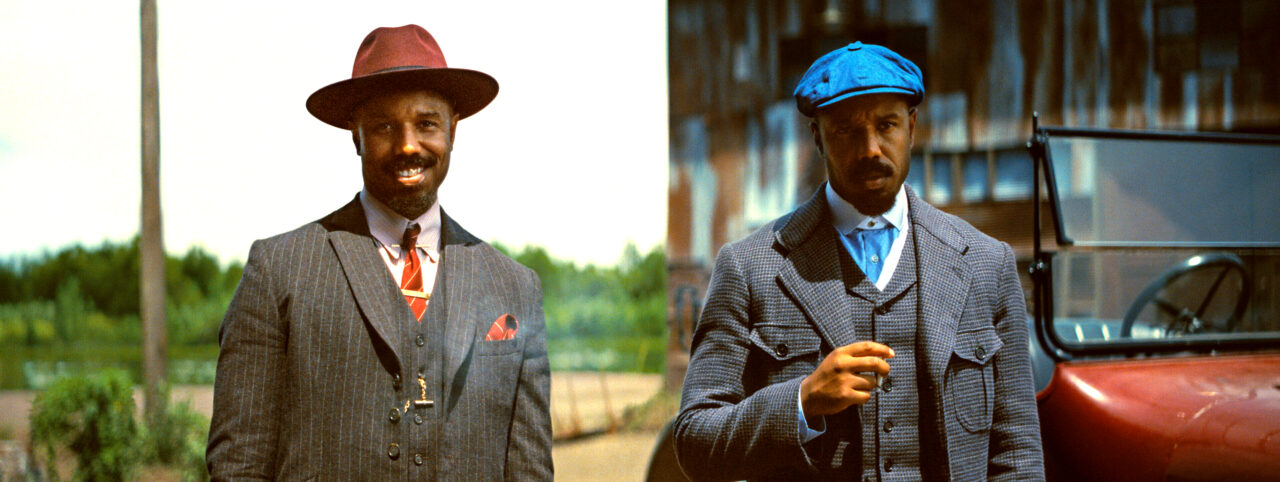
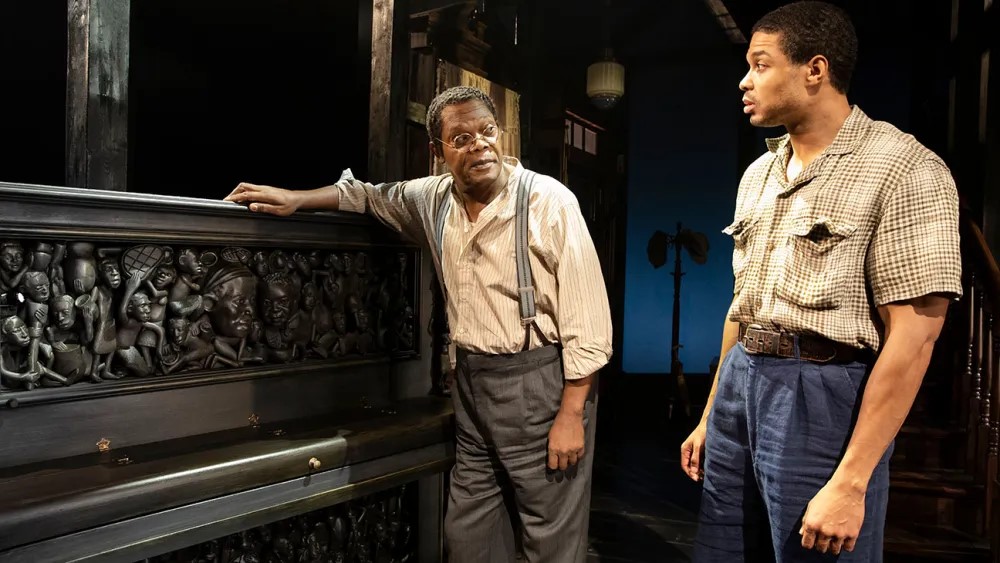
Samuel L. Jackson (left) and Ray Fisher (right) are among those that debate the heirloom status of a piano in The Piano Lesson.

You feel that? That’s your family. That’s your blood.

Every year, the VIFF features films that are bound to spark a lot of Oscar buzz. One that I saw is The Piano Lesson. The story and acting are bound to stimulate a lot of buzz this Oscar season.

The film begins during the Fourth-Of-July 1911 in a Mississippi town. As the white residents are celebrating, an African-American resident and a group of his friends are trying to put a piano in a truck. Why? After the fireworks and celebrations, the white residents burn Sutter’s house down and kill the African-American man inside.

The film moves forward to the summer of 1936 right in the middle of the depression. Boy Willie and Lymon have arrived in Pittsburgh and stop at the Doaker Charles household: household of his uncle. Unfortunately, Boy Willie tells sister Berneice about the death of Sutter back in Mississippi. Berneice, who’s recently widowed, is infuriated and demand her brother leave, accusing him of shoving Sutter down a well. Before Boy Willie leaves, he wakes her daughter Maretha as Berneice claims to see Sutter’s ghost.

In the Doaker Charles household, Lymon notices that piano that was saved. It’s not just any piano but engraved on it are the images of Willie’s and Berneice’s ancestors. Ancestors who were enslaved and carved in so they’re never forgotten. On a piano Willie wants to sell to buy Sutter’s land. Land where his ancestors toiled as those slaves engraved on that piano. Doaker Charles insists Berneice won’t comply and Berneice is infuriated with the plan as well as Willie’s prospective buyers list. Despite the fallout, Willie believes he will convince her but as Maretha comes to Willie at the piano, he teaches her a few things. Including the boogie-woogie.

As Wining Boy visits with Doaker, Boy Willie and Lymon return to announce they found a buyer. Not only is Boy Willie told Sutter will cheat him, but pasts and future desires come to light. It’s revealed the story of Lymon and Boy Willie’s terms in prison are exposed. Although they want to buy Sutter’s land, Lymon wants to be up North because of better treatment, but Willie reminds him that despite the North is not as racist, it still exists. As Wining Boy, who made a career as an entertainer, is asked to play the piano, Wining Boy declines feeling being solely as a piano player is nothing but a burden.

The story of the piano is finally told by Doaker. The piano was an anniversary present from Sutter to his wife. The piano was bought in a slave trade and a mother and child were the currency. Over time, Mrs. Sutter missed the slaves and Mr. Sutter had the sold slaves’ husband/father carve their likeness in the piano as he was a carpenter. On that Fourth of July 1911, it was Boy Willie’s father who stole the piano and he was killed by the whites in retaliation. Willie brushes the stories aside as something from the past but as Willie and Lymon try to move the piano to weigh it, Sutter’s ghost is heard. Berneice tries to stop Willie from ‘selling his soul’ but as the two argue, Mareitha is exposed to the ghosts and screams in terror.

The next day, Doaker tells Wining Boy that he saw the ghost of Sutter playing the piano and feels Berneice should discard the ‘cursed’ piano before it can traumatize more of the family. Wining Boy doesn’t agree. After a successful watermelon sale by Willie and Lymon, Wining Boy tries to distract them of their opportunism by selling them is suit and shoes, claiming it attracts women. That same day, Reverend Avery Brown meets with Berneice. He’s been hoping to win her love and tells her she needs to stop hurting over the past, especially her husband’s death. Berenice changes the subject by trying to get Brown to be a reverend and try to get the ghosts out of the house. Instead, Avery tells her by the piano not to be afraid of her family’s spirits. Berneice then tells Rev. Brown the story of the piano. It’s a story that involves her father’s blood and her mother’s tears and she refuses to expose her hurt to all.

Boy Willie returns to the house with Grace: a woman he just hooked up with. An infuriated Berneice demands them out. Just as they leave, Lymon enters. Lymon is disheartened over his feeling he’s not that good at attracting women and confesses his feeling to women to Berneice. Berneice kissed Lymon and is finally comfortable with letting go of her late husband.

The following morning Boy Willie and Lymon are ready to take the piano for selling but Uncle Doaker stops him. Boy Willie confronts Doaker and tells him how he’s determined to sell it. The day of the selling of the piano is inching closer and closer and Willie is excited without caring what Berneice things. That is, until Berneice enters with her late husband’s gun. As Doaker and Rev. Brown see the confrontation, they urge the two to talk it out. Right there, the ghost of Sutter is revealed to all in the house. Rev. Brown tries to pray the ghost out of the house but doesn’t succeed. As Berenice sees this, she then knows she needs to play the piano again as a plea to her ancestors. As she finally play it, the ghost of Sutton disappears and the calm returns to the house. Willie then decides to move back to Mississippi but tells Berenice to keep playing or else he and Sutter will return. Before leaving, Mareitha is given a lesson.

There’s no question the story is about racism. It’s a unique story as it is about one set of family members who are originally from Mississippi, which was a slave state and still faces harsh hostile racism, and another set of family who live in Pittsburgh, which never was a slave state but had its own racism. The story is also about a piano. Carved on the piano are the ancestors of the family. Ancestors who were slaves. One set of the family wants the piano kept because the images of the ancestors maintain a link to the family blood. Others of the family want it sold because it’s an ugly reminder of the slavery their ancestors have endured. Past memories even come to the point images of ghosts of the family are involved. They don’t know how to deal with this. In the meantime, it’s in the middle of the Great Depression where buying the recently-deceased slave owner’s land depends on the sale of the piano.

August Wilson did an excellent job when he wrote this play. The piano lesson isn’t just about a young girl being taught how to play the piano on a family piano. It’s an excellent story about how an African-American family, and their struggle to deal with racism and their family’s horrific past are all encompassed in a single piano. We have Berneice who values the piano. She knows her grandfather carved the family in it, her father died so it can be theirs, but she’s reluctant to play it. There’s Boy Willie who wants to sell the piano so he can buy Sutter’s land. Already there’s a case of the difficulty of dealing with a past of slavery. Berneice considers the piano sacred and a symbol of her family. Boy Willie sees it as a bad memory of slavery and he feels selling it to buy the land his ancestors were enslaved on will be revenge. A case of a brother and sister who don’t know how to deal with the past. Berneice being widowed and having to deal with the ghost of Sutter adds to its theme. It’s right in the moment of the ghost’s presence that both Berneice and Boy Willie have to make resolve both with their family’s past of slavery and the past as a whole.

Those that have seen the play before will be able to understand the film well. The scenes that were added in the film adds to the story and helps those that have never seen the stage play before get a better sense of all that happened in the past. Those that have never seen the play before and may not attend theatre as of may find the story a bit confusing. They may not understand about the piano or the presence of ghosts and even get confused of what genre the film is.

This is the third of three plays of August Wilson Denzel Washington has helped bring to screen. The thing is of the three, this is the film that’s the least fluid and the least together. This is also the first feature length film done by his son Malcolm. Malcolm has mostly directed short films in the past. His lack of experience shows in directing an unsteady adaptation of the play. The adaptation he co-wrote with Virgil Williams who is more experienced at writing is a good adaptation to the screen but its imperfections are noticeable.

One thing that shines biggest in the film is the acting. The best coming from Danielle Deadwyler. She did an excellent job of playing the troubled Berneice who first can’t seem to let go or make resolve with tragedies of the past, but finds it in herself at the end. Her performance was the strongest quality. Also excellent is the performance of John David Washington. He does a great job of playing the character most confused with the situation and what to do with it, and the need to stop having a hard heart. Also excellent is Samuel L. Jackson as the uncle trying to settle the score and try to get Boy Willie to leave his stubbornness behind.. His role as a man caught in the middle of a difficult problem helped add to the film as well. The production design by David Bomba, the costuming from Francine Jamison-Tanchuk and the music from Alexandre Desplat also add to the story and the times.

The Piano Lesson is another ambitious effort to bring August Wilson’s greatest plays to the screen. The film is adapted well but the errors are noticeable. The best thing is the acting is top calibre. Those who watch it will be impressed.

Oscars 2023 Review: Best Animated Feature Nominees

This year makes it the first year I had the luck to see all five nominees for the Best Animated Feature. A lot of good films. Most are family-oriented but some have some adult appeal. Three are American made with one from Japan and one from Spain. Here are my reviews of the Best Animated Feature nominees:

The Boy And The Heron

Anime may or may not be to your liking. but Hayao Miyazaki makes anime films worth liking. If you’re familiar with Miyazaki, his film Spirited Away won the very second Oscar in this category. This film is his fourth film to be nominated in this category and his first in ten years when he went into retirement.

Here he ends his retirement to return with a story about a boy who lost his mother during World War II and doesn’t know how to deal with a new stepmother, an upcoming baby brother and a new school. He thinks he can fake a rock attack from a school bully to get out of his problem but a mystic heron who speaks to him has clues to how he can encounter his mother.

In many ways, this story is quite similar to Spirited Away. The path the boy Mahito takes is very similar to the labyrinth Chihiro in Spirited Away took. Both children begin the story as they face a difficult change in their life. Both children find a place that takes them to a supernatural world which they would find themselves imprisoned in and facing obstacles. Both would see imagery of beings that represent their parents or parent. In Mahito’s case, he’s led to an underground world led by a Heron and then to an image of who he thinks is his deceased moth, only to learn she’s made of water. It’s as Mahito learns he has to fight his way out of the society of parakeets that he’s able to come across his long lost mother, although she comes across as a different image.

Once again, Miyazaki succeeds in creating a world that is mystical, frightening and colorful. His films are known for capturing people’s imagination with mesmerizing imagery and dazzling colors. He’s one of few who know how to continue to innovate with 2D animation. His use of animal characters to represent the demons the child is trying to fight is present again here. With this film, it’s a human living inside a heron that is the one to guide Mahito with the ability to resolve with his new mother, fight his way out of the kingdom of parakeets and and meet his mother. The film shows Miyazaki’s magic is not lost. In fact it’s very active even after almost ten years of retirement. Miyazaki and Studio Ghjibli do it again!

This film has had a lot of awards buzz. For all the buzz in winning the Best Animated Feature Oscar, it’s seen by many as a rivalry between this film and Spider-Man: Across The Spider-Verse as the two most likely to win. This film has won the Golden Globe and the BAFTA. It also finished second at the Toronto Film Festival’s People’s Choice award, won many critics circle awards and was nominated for seven Annie Awards winning two. Although the Spider-Verse film, which I will review later, has more awards, this film’s big wins show it can upset.

The Boy And The Heron is one of the few animated films this year that can impress older viewers. It has what it takes to help the audience escape into a hugely imaginative world.

Elemental

In the 21st Century, it’s the team of Disney/Pixar who has delivered the most in animated films. Their films have won this category eleven times in seventeen previous nominations. They’ve done a lot to reshape the way animated films are done starting with 1995’s Toy Story. Their impact has been noticed by how other film companies do their films. So much so, Disney/Pixar is no longer alone at the top. Now they have rivalry from Walt Disney Studios whom have experienced a 3D renaissance with their films, DreamWorks Animation who pioneered Shrek, Sony Pictures Animation, Laika Studios and Netflix Animation.

I hate to complain to those that like this film, but it’s one Disney/Pixar film that isn’t all that innovative. We’ve seen their magic with toys in the Toy Story movies, insects in A Bug’s Life, monsters with Monsters Inc., fish in Finding Nemo, feelings in Inside Out and souls in Soul. Their past films have even been nominated for the Best Pictures Oscar. Here, I get the sense I’ve seen this before. It’s a case of the four natural elements of the earth trying to co-exist but those belonging to the fire element are most shunned and she falls in love with a water man. Something tells me I’ve seen better and more innovative from Pixar.

Despite this feeling like something common of expected from Pixar, it does keep Pixar’s reputation for quality and perfection in animation intact. Once again, we see Pixar deliver quality images without a glitch. Not even the appearance of the characters has an image of something out of place. On the topic of animation, Pixar again succeeds in taking the viewer to an incredible universe. Element City is a sight to behold and a world to mesmerize audiences, just like the worlds in their previous films have done. Also the story itself is another case of how Pixar can take a serious issue and turn it into a film enlightening for the whole family. Here, it’s  the theme of systemic racism and xenophobia. It’s an intense topic but this film succeeds in sending a positive message about overcoming prejudices.

It’s interesting with the awards clout this year. In almost every type of awards with the Best Animated Feature category, this film has not won but found itself a nominee or finishing second or third. The big shocker was at the Annie Awards. They earned six nominations at that awards but not Best Feature!

Elemental offers nothing really original or innovative for a Disney/Pixar film. It does, however, still keep alive Pixar’s reputation for delivering top notch animation, dazzling effects, and a good story. Pixar keeps on delivering!

Nimona

This is a unique story of how a defamed knight is rescued by a troubled shapeshifter girl who is just the friend he needs. This is one story that will catch you off guard as two unlikely people become the best of friends and what each other need to overcome their biggest obstacles. For Ballister, it’s to get his reputation, his freedom and his honor back. For Nimona, it’s the false image of her being seen as a monster: an image going back 1,000 years ago and bestowed by Gloreth. Both have social alienation in common. One is looked upon as a monster. The other is regarded with contempt for being a commoner trying to be a knight.

It’s also about a villain who will do whatever she can to control things and make things their way. She doesn’t want a commoner like Ballister as a knight while the queen is willing to break down that barrier. So she secretly gives Ballister the sword that will kill the queen. She also tries to keep the myth of Nimona being the black monster alive to all those in the town. Just as the truth is revealed, the Director won’t quit and will deliver one last seize of power.

Just like Elemental is great at creating Element City, Nimona does a great job in creating the kingdom. It’s a town that mixes in the tradition of knighthood with the technology of the modern world and the common imagery of future worlds. It’s also a place that will capture your imagination as you watch.

This is a story that’s great and entertaining. This is the third film from Big Sky Studios to be nominated in this category. This is also the third straight year an animated film shown on Netflix is a nominee in this category. Seems like Netflix has become a challenger for top animated films. Last year, they delivered the winner: Guillermo Del Toro’s Pinocchio. Looks like Disney and DreamWorks have a future threat on their heels!

Nimona is an excellent enjoyable animated film. It offers a unique story that will have you laughing, dazzled and entertained.

Robot Dreams

Usually in this category, it’s common to have an independent nominee or two. This year, the independent nominee is the French/Spanish film Robot Dreams. It’s worth checking out if you are up for something different.

This is a charming two-dimensional story of a lonely dog in New York who’s lonely. He decides to buy a robot to be that friend. It works that summer as the two have a great time after great time. Then the robot is stuck in the beach and the beach doesn’t open until June 1st. During that whole time, the dog patiently waits while trying to make new friends. The robot still lies on the beach with colorful dreams and hopes of reuniting again. Then things take a turn for the shocking come spring. This leads to the happy ending you didn’t expect with the Earth, Wind and Fire song “September” reminding them both they’ll still be together one way or another.

This is not the first time an animated film without dialogue has been nominated in this category. This is one film that relies on facial expressions, body language, and the various images and sounds to tell its story. It does an entertaining job, especially in the various scenes it has and the switches from dreams to reality. The addition of music also adds a boost to the film.

This is a great creation from Spanish writer/director Pablo Berger. For this film, he hired French animation director Benoit Feroumont whose works include The Triplets Of Bellville and The Secret Of Kells. It’s a fun story that turns New York to look like Zootopia. The film is full of humor, a good mix of original music and past hits, of a few sad moments and even a couple of shockers. You might think you won’t like a story with no dialogue but it works from start to finish. Not a boring moment.

Robot Dreams is the independent threat in this category. It’s a fun story of friendship, the long wait, an unexpected change and a different kind of happy ending.

Spider-Man: Across The Spider-Verse

Five years after the first movie, the Spider-Verse is back! Once again, Miles Morales is the central Spider-Man. This time, there’s a Spider-woman in his life named Gwen Stacey who’s also a teenager like him. While the first Spider-Verse film was more comedic, this film was more dramatic. It’s not just the villains they have to fight, but they also rival each other. Animosity between the Spider-people start and disunity and even Gwen’s expulsion happened. Meanwhile Miles and Miguel become enemies.

This is not a story of a beginning, middle and an end. This is a beginning, middle and a cliffhanger obviously to set up for the third Spider-Verse movie. The film can get confusing as there are so many Spider-men and Spider-women and they don’t all meet. The film does its best to keep it all intact and keep us the viewer understanding the story

For me, the highlight of the film has to be the mix of various styles of animation. When I go see an animated film, a great animated film is not just about the story. It’s also about animation that dazzles the eyes. Writers Phil Lord and Christopher Miller learned some new animation styles after working in The Mitchell’s vs. The Machines. Lord and Miller along with the direction team made a smart move when they decided to have a different artist do each different universe. Six different animation styles were used in this film. They all make for a delight to watch as the story progresses over time.

The awards buzz has been quite something for this film. I mentioned during The Boy And The Heron that this is their biggest rival. For the Animated Feature category, Spider-verse has won the Critics Choice award, the Producers Guild Award and the Annie Award as well as the six other Annie categories it was nominated in. It has won numerous critics circle awards and their sound mixing and visual effects have won awards of their own competing against many live-action films. It has a good chance of winning the Oscar here but I know in this category, they’re not too friendly to sequels. And the first Spider-verse film won in 2018.

Spider-Man: Across The Spider-Verse keeps the excitement from the first Spider-Verse movie alive. It also has its own drama and a new batch of dazzling animation styles, and a cliffhanger that makes us hungry for the next Spider-Verse film!

And there you go. My look at the films nominated in the Best Animated Feature category. I saved my Should Win and Will Win picks for my blog of Oscar predictions tomorrow.

2023 Oscars Short Films Review: Live-Action

It’s interesting when the Academy deliver their nominations for feature-length films, they’re mostly for English-language films. Most of them being American films. Yet the nominees for the short films categories are often multilingual. For the films nominated for the live-action category, we have  films in French and Danish. We also have three English-language films, but two are from the UK. Not as much foreign language as the animated films but still it tells how these categories are among the most international of them all.

What’s interesting about the short films in the live-action is that many are from up-and-coming directors, as is the common case in this category, but we also have one British film directed by Wes Anderson! Also in the film are renowned star actors like Benedict Cumberbatch, Ben Kingsley, Dev Patel, Ralph Fiennes and Richard Ayoade. The other films also show actors of renown like Brittany Snow, Leif Andree and David Oyelowo. So there’s something about short films that make well-known actors want to pursue them.

Without further ado, here are my thoughts on the Live-Action short films nominated for the Oscars:

The After (dir. Misan Harriman) – Dayo is a successful businessman in London. One day, he drives his daughter to the top floor of a parkade to meet up with his wife. Suddenly a man wielding a knife commits a massacre all over the parkade. The man stabs his daughter to death. The wife, heartbroken, jumps to her death as Dayo fights to restrain him for the police. Time passes. Dayo is resigned from his position and makes his pay an Uber driver. He has cut off all contact from his friends and colleagues and won’t even meet with crisis management counselors. Although he keeps to himself, it’s obvious he’s still hurting on the inside. As he waits for his latest customers at the airport, he takes the picture of his family and sings “Happy Birthday.” The daughter of the family he’s to drive looks very much like his own late daughter. He tries to restrain his emotions at first as the parents make their way to the car. During the drive, the couple are consistently arguing in front of the child, but the daughter is sensing something is wrong with Dayo. Dayo still tries to keep his cool. As he gets out lets the family off at their house, the daughter goes to hug Dayo and Dayo just breaks down. The parents are shocked by what they see and leave him, but Dayo picks himself up.

How do you live again after you’ve lost it all? This is the type of question we don’t normally ask ourselves or don’t want to think about but unfortunately, there are some people who have to do exactly that? This is a story that does a great job of showing the before-and-after of a tragic incident that claims the lives of Dayo’s wife and daughter. Throughout the story, Dayo is the storyteller through his actions and his emotions. Even without dialogue, you can sense what Dayo is saying through his body language. He doesn’t know how to live again or deal with his emotions. It’s right after the breakdown he has after the daughter hugs him that Dayo knows he has to continue on, despite how hard it will be. This film which is the directorial debut film for Misan Harriman tells a gripping story with a profound message. David Oyelowo does an excellent job in his performance in both scenarios of the story. If they could give Oscar nominations for performances in short films, I’d say give one to David!

Invincible (dir. Vincent René-Lortie) – The film begins with a young boy in the driver’s seat in a car named Marc who telephones his mother, but doesn’t say a word. His mother tells him to come home, but police lights flash. Rather than surrender to the police, Marc drives the car off the cliff into the water. Going back weeks earlier, Marc is on a family vacation having fun with his family at the lake. He plays with his little sister but is embarrassed of how she chickens out with her finger over his lighter. This is the last set of fun Marc will spend with him before being sent to the youth detention centre. The first day, Marc can’t stand being in a sweltering room with no way to cool off. He ignites the sprinkler system which the officials put him on a stern warning. A councillor tries to deal with Marc and tells him how he has what it takes to be a smart positive influence on others and can’t understand why he’s always getting in trouble. One day, the official sees progress in Marc and how he helps others. The officials decide to take the boys to a nearby community pool. it appears Marc is having fun with all of them but when the councillor isn’t looking, Marc does his latest escape. Marc runs into a car but as the woman enters a store to call the ambulance, Marc steals it, attempting to take his escape further. As Marc stops, he calls his family. The mother, aware the police are pursuing Marc, pleads for him to return as the sister tests her pain with the candle.

This is a story inspired by a troubled 14 year-old boy from Quebec who killed himself as he drove into a lake in 2008. The story haunted the people in the area for many years. The boy, Marc-Antoine Bernier, was a friend to the director. Here, it appears the director is using his film to bring some respect back to Marc. Marc was an intelligent boy capable of a lot of good, but kept on getting into trouble. We all have known a kid like that in our childhood. Although this is a story inspired by a real-life person and based on true events, there may have been events or happening added to the story. Only Marc knows what really happened. Nevertheless Vincent makes a good effort to redeem Marc from the story he tells and even tries to get us to feel some empathy for him. We’ve all had those years when we were younger when we all felt we were trapped mentally, if not physically. If Vincent doesn’t make you feel empathy for Marc, he does make for an intriguing story. That’s why I make this film my Should Win pick.

Knight Of Fortune (dir. Lasse Lyskjær Noer) – Karl is at a multi-chapel funeral home where he comes to mourn his wife. Left alone, he can’t bring himself to open the casket. He tries to adjust a light but it breaks. Frustrated, he goes to a bathroom where he encounters another widower named Torben. Torben claims he can’t open the casket for his wife. Karl goes with Torben to the chapel and helps open the casket. As Torben attempts to say his “last words,” a family comes in. They’re the real family of the deceased woman including the real widower. They allow Torben and Karl to stay. When the widower is at a loss for words, Torben is able to say the right words as if the woman really was his wife. Karl leaves Torben angrily but he later learns from the funeral directors that Torben lost his wife in a boating accident three years ago and never had a real chance to say goodbye. Outside in a nearby bench, Karl notices Torben. Instead of anger, Karl laughs and invites Torben to the chapel where his wife is. Torben is able to open the casket and Karl is able to say his last goodbyes. As Karl gives his wife one last kiss Torben sings “Knights Of Fortune.”

Another story of loss and coping. Although this story deals with the subject of death in a gentler manner, and even includes humor, We all know that loss is never an easy thing to deal with, but it needs to be dealt with. This is a story of a widower struggling to properly say goodbye encountering an imposter who knows the right words to say goodbye to a woman he’s never really met, but makes like she was his wife. Once Karl learns about Torben that he’s not simply an imposter, but a hurting man who uses funerals of wives to say the goodbyes he always wanted to say to his own wife, could Torben be the very person to help Karl deal with his grief? This is a story of grieving, healing and saying goodbye that is greatly different from other stories. Nevertheless it does offer a message of healing and hope. It’s ironic how this imposter is exactly what Karl needs to properly deal with is loss and say goodbye, and a friendship that really shouldn’t be, happens.

Red, White and Blue (dir. Nazrin Choudhury) – Rachel, a waitress in a diner, looks at a pregnancy test and sees a positive result. Rachel is a single mother who has difficulty to support her two children. She also lives in Arkansas where abortion is illegal, thanks to the overturning of Roe v. Wade. She plans a trip for an abortion procedure in Illinois where it is legal, but it’s more than she can afford. One day, a woman customer who somehow knows what Rachel is dealing with leaves her a tip which makes up the remainder for her abortion trip. Soon, she leaves her son Jake with a friend as she takes her daughter Maddy on this trip. This is the first time out of Arkansas for both of them. Before they go to the clinic, they go to a carnival as it’s just before Maddy’s birthday. Maddy wants a merry-go-round ride, but it’s more than Rachel can afford. She agrees to one ride and Maddy chooses the elephant. At the clinic, Rachel learns she’s late for her appointment but through past recollections and as the receptionist learns the dirty facts, she tries to make it urgent.

No doubt this story is about abortion. Especially in post-Roe v. Wade United States. The thing is this story is more than that. You know the story is about the pursuit of an abortion, but it’s not what you originally think at first. You think it’s about an impoverished mother getting an abortion because she’s two-and-through, but things change as you learn more information. You wonder why on earth would a mother take her young daughter on an abortion trip? Soon you learn there’s more to the reality of unexpected pregnancy and abortion that meets the eye. Including a lot of upsetting truths. It’s also surprising how in a story that has a theme that hits close to home and presents a story that many would find upsetting, it is still able to have a heart-warming ending that works. That is something in film that is very tricky to do, but Choudhury accomplishes it!

The Wonderful Story Of Henry Sugar (dir. Wes Anderson) – Based on a short story written by Roald Dahl, Henry Sugar is the pseudonym of a wealthy bachelor who loves to gamble away his inherited riches. Thing is he never seems to have enough and wonders how can he get more money? He learns the legend of a man from India named Imdad Khan who learned the fine art of levitating and seeing with is eyes closed, thanks to the teachings of a Great Yogi. Thing is as the doctors were studying Imdad, Imdad tells his story and dies suddenly. Henry tries through great lengths to master this technique through all he can learn. Once he finally masters the sight trick, he goes out gambling and wins big! Problem is all this money isn’t making him any happier. At first he thinks the right way to give the money away is to throw it off a balcony. After it causes a riot, police recommend Henry develop a better method. Henry then spends the next twenty years traveling the world, gambling, and donating his winnings to hospitals and orphanages.

This is the last of the five shorts shown in the shorts.tv reel. After seeing four stories that were either depressing, too serious or had dark subject matter, it was refreshing to end the reel with a light-hearted comedy. The story succeeds in making the tale amusing. Already we have a major director directing it and four major actors — Cumberbatch, Kingsley, Fiennes and Patel — acting in it. Nevertheless the story telling, set changes, and the acting of all make it a delight to watch. It makes for a “guilt-free guilty pleasure” as I like to call such things. That’s why I make this film my Will Win pick!

And there you have it. Those are my reviews of the five films nominated in the Oscar category Best Live-Action Short Film for this year. That also completes all my reviews for the Oscar-nominated short films. Those short film categories are usually the hardest to pick a winner. You think you know what will win, but end up surprised in the end. We’ll see how it all goes on March 10th.

2022 Oscars Shorts Reviews: Documentaries

Once again, the nominated documentary shorts had a long combined running time. A time too long to be in a single film reel. I saw one set of shorts one day and another set the other day. All five documentary shorts are unique in their own subjects and in the themes they were trying to convey. Here are my reviews of this year’s films nominated in the category Best Documentary Short Subject:

The Elephant Whisperers (dirs. Kartiki Gonsalves and Guneet Monga) – It’s Mudumulai National Park in the Tamil Nadu area of south India. The park consists of mostly tribal people and many wildlife. In recent decades many species have become endangered. One couple of the Kattunayakan tribe named Bomman and Bellie are known to care for baby elephants. One of the elephants they care for is a baby elephant they named Raghu. Raghu was found badly injured and his mother was killed by electrocution. The couple nursed it, took care of it and raised Raghu as a pet until he can be of juvenile age. Soon they come across another baby elephant that was left behind as the elephants did their seasonal migrating. The elephant, who’s a female, is also tended to by Bomman and Bellie and Raghu treats her like a little sister. Over time, the government takes Raghu before the couple is ready to let him free. They still take care of the female.

This Netflix documentary is a story of an environmental theme. It’s as much about the tribal people taking care of the elephants as it is about the actual elephant itself. Both the species and the tribal people are both threatened with modernization and of climate change. The threats are made obvious, but the story does not get too heavy. In fact the story takes on an enjoyable feel to it. We see as the couple form a bond with the elephants and love them as if they were their own human child. They show as they put colors on the elephants as part of a religious ritual. The film is as much colorful and enjoyable in spectacle as it is good on its environmental topic. In addition, this film consists of five years of footage with the elephants and the couple. That’s why I place it as my Will Win pick.

Haulout (dirs. Evgenia Arbugaeva and Maxim Arbugaev) – A man is sent to the Chukotka region of Russia; the area of Asian Russia that’s a close distance to Alaska. He’s a marine biologist in a remote uninhabited area who’s given instructions through radio and enough food to last the season. One day, he notices a huge flood of walruses have come to the coast. They threaten to intrude the place he’s residing in. For hours throughout the day, he has to find refuge on top of the roof. Nevertheless he has to study the populations and the temperatures. Over a hundred-thousand have migrated to the area. Then as the season pass, they swim back in the Chuchki Sea. He then studies the dead walruses left behind. We then learn at the end the biologist, Maxim Chakilev, is studying not only a species but also the effects of climate change as the huge migration is a result of the changes, as well as the record numbers of deaths from the high temperatures.

This story is good as it comes without narration. It’s a series of events that happen and the story tells itself over the elapsed time. The directors, who are brother and sister, don’t just simply have a message to deliver. They have a message to show and let the story deliver that message. It’s as impressive as it is informative.

How Do You Measure A Year? (dir. Jay Rosenblatt) – From age one to age eighteen, film maker Jay Rosenblatt films his daughter Ella on each of her birthdays, or around them. With each film, he asks Ella the same questions, about her dreams, what she thinks power is, what she wants to be when she grows up, and her feelings toward her father. One of her goals is to be a singer and often she sings one of her favorite songs in the films. As she grows up, her answers go from playful to more serious. The questions about their relationship also have noticeable differences as there are times when it’s real serious. The final one at eighteen is tearful for Ella as she knows it will be the last one.

There are a lot of these films on social media where parents film their child as they grow. This film is not as complicated as the other films. This is one film a day for eighteen years. Nevertheless it tells a lot. You can see Ella grow and her mannerisms change. She goes from playful as a toddler to enjoying it as a child to being annoyed or disgusted with it as a teen to sad to see it all end at eighteen. These annual films also tell of a lot of her concerns and her deep hidden emotions. That’s what makes it unique from most chronological child films. It’s the depth of Ella’s answers and the relationship with her father that makes this set of films unique in its own way.

The Martha Mitchell Effect (dirs. Anne Alvergue and Beth Levison) – This documentary tells the story of Martha Mitchell, wife of John Mitchell. When Richard Nixon was elected president of the United States in 1968, he chose John to be his Attorney General. At the time, the White House was practically a male-dominated government. wives were supposed to be out of their husband’s business, just appearing aside them in public. Martha Mitchell was different. She was known to be unafraid to speak her mind. She’d even call in to radio shows and spill the beans of what’s happening. Things really became uncomfortable for the Nixon administration as she was not afraid to be critical of the system. We all know how much of a control freak Richard Nixon was. And for the wife of the Attorney General to blab all that, you could see how they could see her as a threat. She even became a celebrity with the public. Then around the time of the Watergate break-in, coincidentally or not, Martha was kidnapped at a hotel for three days. She was even injected by a member of the government. In the end, Watergate became Nixon’s downfall. John Mitchell was sentenced to prison and would eventually divorce Martha. Many people assume Martha paved the way for Nixon’s downfall.

This Netflix documentary is an important film to have right now. It focuses on a lot of things in politics that we see happening right now. First, it’s of political corruption. People are still encouraged to stay quiet and play the game. Those that spill the truth out are still punished. Second, it’s of a male-controlled environment. The whole political system in the US was male controlled and Martha’s husband was part of the people pulling the strings. So hearing of how a woman not afraid to tell it as she saw it would naturally make them comfortable. Third, it’s of control. Even though the US is to be seen as the “land of the free,” they have some hidden truths. There was a president who was a control freak and wanted everything done his way and feared opposition. In sure there were many times Nixon saw Martha as his top threat. That case where Martha was kidnapped and injected around the time of the Watergate break-in will leave you guessing. Was it an act of control from Nixon? This documentary will leave you with some unanswered questions. This documentary is very much a reminder that the more things change, the more they stay the same. Knowing how our system lies to us should make us glad for loudmouths like Martha.

Stranger At The Gate (dirs. Joshua Seftel and Conall Jones) – The film begins with family talking of former Marine Richard (Mac) McKinney. His daughter mentions of him being a mass murderer. The film then leads to an Afghani couple living in Muncie, Indiana. They talk of how they immigrated. The film then leads to Mac. He tells of when he was growing up and what led him to be a Marine. Footage of the WTC attack on September 11, 2001 changed everything. Mac was then to do service in Afghanistan and Iraq. His service ended in the mid-2000’s, but the war was not over in his head. He returned to Muncie to see Muslims. That, combined with the PTSD from the war, led him to see them as the enemy. He puts together a pipe bomb which he plans to detonate at the mosque in Muncie, without his wife and daughter knowing. One day, he goes to the mosque to see any particular areas where to put the bomb. Instead he sees a welcoming community. Members of the community talk of what it was like to meet Mac. Over time, Mac kept coming back. His desire to kill disappeared over time and he had a new desire to be part of this community. Then it’s exposed. His bomb is discovered. Everyone is in shock and Mac is interrogated to see if he’s a domestic terrorist. He served time, but eventually was welcomed back into Muncie’s Muslim community.

This is a remarkable story that forms itself well. As the story starts, the audience would first guess that Mac was responsible for a huge hate crime. As time passes, you would still think he committed that terrible act. Then as we progress on, you learn that Mac didn’t commit an act of domestic terrorism. He almost did, but it turned out to be a case that love won over. Those interviewed show the story from various angles from family to the Muslim community to the Afghan refugees to the police. They all have a lot to say and it leads to the overall message from the film. The message being hate is very often a state of mind. We see that as Mac was a soldier and was taught to hunt down the enemy during the war. His PTSD from fighting in the war mixed with his war-time mentality towards Muslims were the ingredients for his Islamophobia right there. The film also shows that hate can be defeated by love. It’s a message we need to hear right now, especially since we hear news about so many shootings and so many hate attacks. This is a remarkable story of how one such attack was prevented from happening when the almost-perpetrator allowed himself to heal. That’s why I decide this documentary to be my Should Win pick.

And there you go! That’s my focus on the nominees for the Oscar for Best Documentary Short Subject. Very rarely do I want to see documentaries. These five films made it worth watching.

2021 Oscars Shorts Review: Documentaries

The documentary shorts nominated for this year’s Oscars had a combined running time over three hours. So it’s understandable why I chose to see the Animation and Live-Action shorts one day while seeing the Documentary nominees another day. The documentary nominees for this year are an impressive range of films. All have a unique topic of focus that gets one thinking. Some were positive stories while some were more on negative issues. All have something to say. And here are my thoughts on this year’s nominees:

Audible (dir. Matthew Ogens): The film focuses on the football team on the Maryland School For The Deaf. For sixteen years, they’ve had the best deaf football team in the nation. But the film begins as they show their first loss in sixteen years. Although the film showcases the school’s students and the football team, the prime focus is on student Amaree McKenstry-Hall. We see Amaree as he bonds with the team and conversates with the students. Sometimes it can get heated. We learn that he and the team play in memory of a former student who committed suicide after being send to a regular school. We learn of his family background of how his father left the family shortly after his birth. Soon he reunites with his father, who’s now recovered from his drug addiction and is the head pastor of a church. Then the homecoming game happens. This is to be the last game for many of the players.

This story couldn’t have come at a better time, just as CODA is a heavy favorite to win Best Picture! And just last year, The Sound Of Metal was a Best Picture nominee! The unique thing about this is it’s about deaf athletes. You learn about how deaf football players play, you learn how they communicate. However you also get a glimpse of what it’s like to be a deaf teenage. You see they have the same fun stuff you and I had as a teenager, but you also see they have problems, concerns and insecurities all their own. It’s not only about deaf teenagers and how they live out their teenage years, but it also shows us about Amaree and his own issues, his own battles. It’s a story that goes through so many angles, but is very insightful, and very much an eye-opener.

Lead Me Home (dirs. Pedro Kos and Jon Shenk): The film focuses on the homeless situation in the cities of San Francisco, Los Angeles and Seattle between 2015 to 2019. The film also focuses on some individuals whom they interview. They’re various men and women, and one trans female. They come from various races. The come from various backgrounds. The interviewees are asked three main questions: their names and ages, how they ended up as homeless, and would they live in a home. The people range in ages from 26 to their 50’s. How they became homeless are a mixed bag of scenarios from drug addiction to a criminal past to the trans female disowned by the family to abusive family scenarios to the mental illness of some one messed over by the welfare system. Many would like to live in their own house, but one does not. He says every time he moves into a place, he finds himself back to being homeless soon. He would like his own van.

This is an inciteful film about the homeless situation we rarely see. We see the people interviewed on how they deal with whatever sleeping situation they can fix up, their bathing or showering opportunities they can seize, the food they’re lucky to eat and whatever counseling they get. In some cases, we’re shown the homeless in their surrounding areas, and the homeless camps in that area are large in size. We’re also shown how the homeless are in debate in their civic and state rallies and how some citizens speak their disgust at them. It wouldn’t surprise me if there are some with Trump-fueled rage at the time. The film doesn’t exactly have too much of a beginning, middle and end. Nevertheless this film is a good showcase to a problem that we don’t really know a lot about, but think we do.

The Queen Of Basketball (dir. Ben Proudfoot): Lusia Harris is possibly the greatest basketball player you’ve never heard of. Born in Mississippi in 1955, she grew up poor in a segregated town. At the time, there were very few opportunities for African-American girls. However basketball for her was a way out. She would watch NBA games with her brothers and they would try to imitate the moves. Lusia stood out with her moves and her 6’3″ height. Her basketball prowess helped her pursue post secondary education at Delta State. During her first season (1974-75), the goal was to dethrone the Mighty Macs of Immaculata University who were considered the best female college basketball team ever. It paid off as Lusia and the girls were able to win over Immaculata and a new era had begun. The following year, Lusia and the Deltas did it again. Her prowess allowed her to represent the US at the Montreal Olympics where women’s basketball was being held for the first time. The US team won silver behind the Soviets. The following year, Delta repeated their win, duplicating Immaculata’s feat, and Lusia was crowned MVP. But it ended right there. There was no WNBA for Lusia to go to. She was also diagnosed as being bipolar over time. She was offered to play for an NBA team and was offered big publicity, but she turned it down. Instead she devoted her life to administration at Delta State, coaching and teaching. She married shortly after she graduated and bore four children. Looking back she has no regrets.

This appears to be a great story sold in a simple manner, but when you look at it, it makes for a great story worth telling. It often appears like the story of a pioneer in female basketball. Like she’s one of the many women who brought women’s basketball to where it is now. It showcases her achievements and her big moments and her post-basketball life. In that same manner, it’s told through her. It’s like it’s her story and it’s rightful that she is the narrator of this story. It makes sense as she’s the one who made it happen. In recent time, it also appears like a retrospect. Back on January 18th of this year, Lusia died at the age of 66. The documentary almost appears like a case where Lusia is looking back on her life. I’m glad she had the chance to do this documentary. A great way to remember her. That’s why I give it my Will Win prediction.

Three Songs For Benazir (dirs. Gulistan and Elizabeth Mirzaei): Shaista Khan is a man living in a camp for Afghanis displaced during the war in Kabul. He is recently married to a woman named Benazir, and he sings a song of his love to her. He has plans to start a family but he also has ambitions to join the army along with starting a family. He doesn’t know how hard of a balance this will be. His father does not look upon his goal of joining the army as a good thing. Finally he is given the opportunity to join the army as he will have a meeting with a sergeant. He celebrates with friends and with Benazir, who is pregnant in expecting their first child. He again sings to her. However when he goes to the military base, he learns he needs to be endorsed by a family member if he’s to join. Strict rules in the Afghani military. When he goes to his father and brother, they refuse. Shaista is distraught. The film flashes ahead four years. Shaista is now in an addictions treatment centre. Benazir comes to visit. He is overjoyed at seeing her and his two songs. He sings one last song to her.

This is a poignant documentary. Shaista is simply an Afghani man who wants to make something of himself for himself, his family and for his family to be. We should also remember that Afghanistan is the poorest nation in the continent of Asia. What you see in Shaista appears to be the common struggle of the Afghani people as they try to pick up their lives now that the war is over. Sometimes the losses end up bigger and more hurtful in the end. Nevertheless the film ends with an image of hope. It’s needed now especially since we learned six months ago that the Taliban have returned to power. This is a film that does get you thinking and hoping.

When We Were Bullies (dir. Jay Rosenblatt): While director Rosenblatt was watching a bullying film from the 50’s, a single incident brought back a memory of an incident when he was in the fifth grade. That was when he started a fight with a boy named Richard, who was the odd kid in the class, and other classmates joined in. This Richard was also the inspiration for his first film The Smell Of Burning Ants (1994). Soon he wanted to investigate more into this. What happened to Richard? Do the other students from the class remember that moment? Did they participate? Are they remorseful of it? What does the teacher feel of it? He goes to the school to look into more pictures. He meets with other former classmates at a school’s reunion. Over time, he was able to talk more and find out how they felt about Richard and the incident. He even learned his teacher from his grade is alive and mostly well and he’s able to talk with her. She’s able to give her opinions on bullying and even mentioned her late daughter was bullied too. Later Jay reveals he lost a brother the year before so he was carrying burdens too.

This is a surprising documentary. It’s surprising how one image can suddenly trigger back an unfortunate memory of the past of when you were young and stupid. It’s full of clever imagery mixed with animation as it goes about telling the story. The visuals and the audio make for a good mix. You can call it what you want. Some will say this is a very inciteful story, especially sine bullying is a hot topic. Some will say the film was done in a ridiculous manner. Some will even say this film was a work of Jay’s egotism. Nevertheless it does get one intrigued about human nature. Even its ugliest sides. That’s why I give it my Should Win pick.

Additional Note: Although we don’t know who this Richard is or see what his face was back then, we do learn that he’s still alive and he’s actually a film producer.

And there you have it! That’s my review of the Best Documentary Short nominees. We’ll see on Sunday not only which one wins, but if it’s one of the eight categories whose award won’t be broadcast!

Oscars 2019 Best Picture Review: The Irishman

Irishman
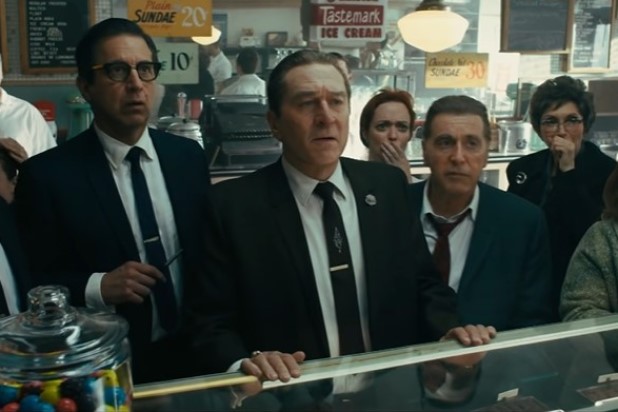
Robert de Niro (second from left)  plays Frank Sheeran and Al Pacino (second from right) plays Jimmy Hoffa in Martin Scorsese’s The Irishman. A story about loyalty and betrayal.

Just when you think Martin Scorsese has done everything he could in film, along comes The Irishman. This film may not be his best, but it adds to his stack of films one can call great works.

Martin Scorsese is undoubtedly the master of gangster films or Mafia films. We have sensed there would be successors in the likes of Quentin Tarantino, but that has not yet come to be. Tarantino has his own gangster style, but Scorsese films are the Mona Lisa’s of gangster movies, if you can truly call a gangster movie a Mona Lisa! Scorsese has shown his versatility in film making since the beginning of this century. His films since the new century began have taken a wide range of genres from epic to fantasy to a family film to business-scam drama to dark comedies to religious biopics. However when watching The Irishman, his first gangster movie since The Departed, it only seems natural that gangster movies were what Scorsese was born to do. Although films in the other genres he tackled are very good, it just seems natural that way. Even the excitement of having Scorsese ‘all-stars’ like Robert De Niro, Joe Pesci, Al Pacino and Harvey Keitel adds to the excitement. Additions like Ray Romano, Bobby Cannavale and Anna Paquin also add to the excitement.

Now the film has a lot of common elements you’ll expect from a Scorsese gangster movie. It tells of a man and his involvement with the mafia and of his daily duties. It also goes back to his past in how he developed the right type of insensitivity to become as consistent hitman. It also tells of some of his more legendary kills. The film also adds something different. It adds in the story of the ‘vacation of a lifetime.’ It’s not something you’d expect to be in a Scorsese film, but it’s done in a fashion you’d expect to see from Scorsese.

However it’s the aftermath that one would not expect to see in a Scorsese film. It’s like it almost shifts to a completely different film for the last half-hour. That’s what hit me about the film. It not only tells the story of a man who committed a lot of murders and also allegedly committed the murder of the man behind the most intriguing missing person case in the past half-century. It tells of the aftermath of how he would come to regret his actions over the years. Even of how he appeared to have it all and win it with fear during his lifetime, but would be doomed to die alone. You can pinpoint exactly where in the scene where Peggy ask Frank about Jo and Frank calls a distraught Jo up trying to comfort her, but knowing he’s the one who killed her husband. That’s a change of pace from Goodfellas about a mobster who lived the mob life, was imprisoned for it and regrets nothing. Even before the scene of the killing of Hoffa, there are freeze-frame montages that mention of the aftermaths of others involved in the Philly mob Frank Sheeran and Russell Bufalino were a part of, including those shot dead or imprisoned for life.  I think the whole theme of the movie wasn’t just mob life, but how everyone involved pays in the end.

Now one thing we should remember is that we should not completely embrace this story as a true story, even though it’s very accurate. The film is based off the book I Heard You Paint Houses by Charles Brandt. Brandt is a former homicide prosecutor, investigator and defense attorney and he’s the man who interviewed Frank Sheeran shortly before his death. During the interview, Sheeran told of his life as a hitman and of his own involvement with Jimmy Hoffa. Sheeran confessed it all to Brandt months earlier and saw a priest the last few months of his lives so he could die with a clear conscience in December of 2003. The case of Jimmy Hoffa is still unsolved and his body has never been found. The FBI have had a lot of stories and sources, but it’s Sheeran’s story that’s the one they’re most going with. However there are still some naysayers that are claiming that Sheeran lied in the interview. Whatever the situation, this missing case is still unclosed. I won’t completely call Sheeran’s story the whole truth, but I believe he makes a strong case and it’s hard for me to sense him lying.

Once again, Martin Scorsese proves himself to the be master of gangster movies. Quentin Tarantino may take ruthless killers to a new level, but Martin is still the master. This film that he directs with a script written by Steve Zaillian is a complex film to pack into 3 hours and 20 minutes. Usually if a film is that long, I would expect the director to justify it. Martin has delivered a lot of three-hour films in the past, but I’m convinced he has justified the time here. If you yourself are one of the people that has been fascinated by Jimmy Hoffa and his missing story, this will be a film that will intrigue you.

It’s not just the story that will intrigue you, but how the Scorsese/Zaillian creates it and arranges it from beginning to end. It starts as the audience visits a nursing home, tours around seeing family after family and comes across a lonely man: Frank Sheeran. Then it jumps into 1975 and the story of how Frank, his wife, his mob boss Russell Bufalino and Russ’ wife Carrie were going on a ‘trip of a lifetime’ from Philadelphia to Detroit. Then it paves on how it led to all this from Frank’s days of truck driving to introduction to the mob to being a hitman for hire to a close friend of Jimmy Hoffa. The story shows of Hoffa’s rise, downfall and attempted comeback. It also shows Frank’s struggle of who should he be loyal to: Hoffa or the mob? It slows the moment of the ‘big day’ down and it delivers the aftermath with feeling that cuts deep. Also it treats the film as if Sheeran is giving us an interview. Almost like we’re Charles Brandt! I have to say the format of the film works and will keep one intrigued whether they’re a fan of Scorsese films, fan of mob films, or just have an interest in Jimmy Hoffa. It’s interesting how the film begins with “In The Still Of The Night” and it’s nice to hear and is replayed at the end, but it sounds haunting at the end. The film and its layout of the story makes it work.

Big credit to Robert de Niro for playing the role of Frank Sheeran. To do Frank, he has to cut deep into the man and how he went from a fearless killer who was able to adopt the coldness of killing to being the man with regrets in the end and wants to die with a clear conscience. Robert does an excellent job of it. Also excellent is Joe Pesci playing the mob boss who wants to call the shots of Sheeran and Hoffa. Pesci really knew how to steal the scenes in the film. Al Pacino was also great as Hoffa. He did an excellent job in delivering a multi-dimensional and complex performance of a man in history who was just as complicated as he was a legend. There were a lot of good supporting performances from Ray Romano, Bobby Cannavale and Harvey Keitel. However one of the biggest standout performances came from one with little dialogue: that of Anna Paquin. Her role of Peggy Sheeran required her to say with her physical actions and facial expressions and she did an excellent job. Even one of the few spoken lines she had in the film “Why haven’t you called Jo?” would pave the way to where the film changed from a story of mob work to the story of regret.

The film should also be admired for its technical merits too. There’s the visual effects team that did the top-notch CGI effects to take the ages of de Niro, Pesci and Pacino back 30 years without them needing heavy make-up. It’s not just the actors acting younger than their ages but the CGI too! There’s also the costuming of Sandy Powell and the set designs by Bob Shaw and Regina Graves to take the film back to the 1950’s, 1960’s and 1970’s. There’s also the inclusion of music into the film that takes the film back to its set times. The score from Robbie Robertson also ads to the film.

The Irishman may be a true story, or it may be one big lie. However you put it, it’s a very telling story that paints a vivid but dark picture of what might have happened in one of the most intriguing missing cases ever. It’s also another film Scorsese directs and puts together in excellent fashion. It’s easy to see why it’s another contender for this year’s Oscars.

VIFF 2019 Review: In The Tall Grass

In-The-Tall-Grass
In The Tall Grass is a thriller of people lost in a field of tall grass and come across something of the paranormal that’s terrifying to their existence.

With the VIFF comes the return of films in the Altered States category: of thrillers, horror and even the paranormal. My first chance came with the film In The Tall Grass. It was worth it.

The film starts with a pregnant Becky DeMuth and her brother Cal traveling to San Diego to find a way to give up her baby. They pass an old bowling alley and stop by a church. Just as they stop by, they hear the voice of a young boy crying for help. The voice is coming from a field of tall grass they’ve parked beside. They also hear the mother of the boy begging anyone to not come in. Becky and Cal are naturally curious and walk in top help the boy. It’s only a matter of time they find themselves lost and even risk getting stuck by the wet sticky mud. Even as they’re distant, they hear each other’s voices which is not really theirs, but mystically transmitted. They decide to leave, but they can’t and are stuck for the night.

During the night, Cal encounters Tobin, the lost boy, who is scared, bruised and holding a dead crow. Becky meets up with a man named Ross, who is very friendly and offers to lead her. Tobin reveals to cal that the field the grass does not move dead things and Becky will not make it out of the field alive. Tobin leads Cal to the centre of the field which consists of cut grass bordering a big mystical rock with hieroglyphics which Tobin tells Cal to touch. Before he does, Becky arrives, but is taken away by an unseen figure.

Travis, the father of Becky’s child, arrives in the same area of Becky and Cal. He notices the car parked by the church. He also notices the field of tall grass. He hears Tobin’s voice and is led into the field. Tobin leads Travis to Becky’s corpse. Travis breaks down, but loses sight of Tobin. At the same time, we see Tobin with his father Ross and mother Natalie at the church along with their dog Freddie. Possibly a reference of what happened earlier. Freddie runs into the field of tall grass and the three chase after him. It’s there where Travis hears Tobin’s voice and the three of the family are scattered around the field. Ross comes to the centre with the rock and touches it as night falls. Tobin is discovered by Becky and cal all all are confused by the timelines.

As the three are one group, Becky and Cal decide to leave and use Tobin to navigate a path back to the road on top of Cal’s shoulders. Becky receives an unknown phone call saying that Cal should quit hunting Travis.The grass soon appears to be entering Becky’s uterus and she becomes unconscious. Cal and Tobin come across Ross, who reunites with Tobin. Ross brings them to the rock but are startled when they see Natalie and she says she saw Becky’s corpse earlier. As they try to make their escape, Ross is chasing them all down and gives them the impression there’s no escape and they’re all under Ross’ control. Ross tells them all the rock shows them of what’s happening.

Becky, Cal, Travis and Tobin succeed in escaping the field into the abandoned bowling alley. As Cal and Travis make their way to the top, they discover the dog Freddie escaped via a hole. However a spat between Travis and Cal brew as Travis brings up he senses incestuous feelings between Cal and Becky. Cal throws Travis off the roof. That succeeds in alerting Ross to their location. Tobin, knowing how this alerted Ross to their whereabouts, runs back into the field. Becky and Cal try to escape together, but Becky won’t leave Travis alone in the field. After she runs off to find Travis, Cal is strangled by Ross. It’s evident anyone in the grass field is affected by a time loop. If anyone dies, there will be another of them alive. If anyone touches the rock, they get a sense of control and invincibility.

During the return to the grass, Becky admits she was going to give the baby up for adoption. Becky is soon captured by Ross who tries to sexually assault her, but she escapes. Grass creatures however emerge and grab a hold of her and carry her to the rock. There, the rock develops imagery that detail the baby will die and Becky will be tortured. Becky passes out in reaction. As she awakens, she is tricked by Ross who poses his voice as Cal. Travis meanwhile stumbles across Becky’s unconscious body. Ross then kills Travis and captures Tobin to get him to touch the rock. Becky stops him, but dies. Travis decides to touch the rock to get a better understanding of the grass.

The film ends with one last scene involving Becky, Cal, Tobin and Travis. It gives the impression that all know what is happening and the film ends with what should be.

This film is a film that is based off of a short story written by Stephen King and his son Joe Hill. We’ve had Stephen King adaptations before and often adapting a Stephen King story to the big screen is hit-or-miss. This is a very complex story. This involves six people who go into a field of grass with paranormal powers. It threatens their lives and creates another life for them. Then there’s the rock that gives whoever it touches a sense of invincibility and control and threatens others.

Overall this film is a maze and a puzzle. Trying to piece this puzzle together is a tricky thing. Trying to create this maze of confusion is also a tricky thing. Watching it, it’s easy to get thrilled by the paranormal and nervous for what will happen next. However in looking back, I felt there were some areas that didn’t make too much sense. Even when it becomes clear that Ross starts as the controlling one and then it becomes Travis, that seemed odd. Even how Ross was the controlling conniving one, that even seemed cheesy at times.

The film does however keep one intrigued in the paranormal elements. Depite its flaws in the script and storyline, it does succeed in grabbing a hold of your attention and keeping you intrigued in the story. The paranormal elements don’t come across as cheeseball as it adds to the thriller aspect of the film. Overall despite its flaws as a film, I feel this is a good story for fans of paranormal fiction. I just feel it could have been done better as a movie.

This story is a mixed bag for Vincenzo Natali. Yes, it’s confusing, but the paranormal will keep one intrigued from start to finish and it will keep one hoping for the best for the main characters. Laysla de Oliveira was very good as Becky. Isn’t it something how the first two VIFF films I saw starred Laysla? She captured the role well in both it’s comedic elements and it’s dramatic elements.

Avery Whitted was also good as Cal. Will Buie Jr. also did an excellent job as Tobin: the frightened boy in the middle of it all. His role was the best at keeping the horror/thriller aspect of the film and was the most no-nonsense performance of all. Patrick Wilson was hard to make sense of as Ross. He came across as a conniver, but I feel he lacked the sinister element. Harrison Gilbertson was good as Travis, but he appeared he could have done more.

In The Tall Grass is a Netflix thriller that works well to be shown on the big screen, if imperfectly. It may not make the most sense, but it does keep people thrilled and intrigued about what will happen next and how it will end.

Oscars 2018 Best Picture Review: Roma

Roma
Cleo (Yalitza Aparicio; left) is the maid to the changing household of Sofia (Marina de Tavira; right) in Roma.

For the record, no foreign-language film has ever won the Oscar for Best Picture. They’ve been nominated before but never won. Roma could just be the first. It has the story and all the other ingredients to do it.

The story begins in late 1970 as the maid Cleo is cleaning the driveway to the garage of the house she tends to. The house she tends to belongs to a couple, Sofia and Antonio, the grandmother, and their four children in the affluent Colonia Roma district of Mexico City. Cleo and Adela, both indigenous, are the two live-in maids. The parents see Cleo as their maid while the children look up to her and talk to her often. The driveway and garage is the place where the dog is left to stay while the family is gone during the day.

The driveway and garage is too small for the big car Antonio drives, frequently bumping into the sides and driving over the dog droppings. That even comes in private conversation as Antonio angrily tells Sofia about all the dog droppings on the driveway. Cleo notices that, as normally Antonio is not that angry. Antonio, a doctor, mentions to all he’s going off to a brief trip to Quebec for a conference. He returns days later, but says he will be going to Quebec for a few weeks. The children believe it, but Cleo and Sofia sense something is wrong. Cleo knows it because she saw his wedding ring in the drawer.

Life for Cleo and Adela does not always revolve around the household. Both have boyfriends: Adela has Ramon and Cleo has Fermin. One night they all decide to go to the movies together, but Cleo and Fermin sneak away to rent a room. Before they make love in the bedroom, Fermin shows Cleo the martial arts skills he learned with a shower pole. Fermin tells Cleo that this is what gave him, an orphaned boy, his will to live.

Some time later, when Cleo and Fermin are watching a movie, Cleo tells Fermin she’s pregnant. Fermin says he has to be gone for a bit, but doesn’t return. Cleo tells Sofia that she thinks she’s pregnant. Sofia takes her to the hospital Antonio works at. While waiting in the maternity ward, an earthquake happens. Cleo learns from the doctor she is pregnant.

Cleo and Sofia try to carry on with their lives despite their difficulties. Sofia takes her children, Cleo and Adela on a New Year’s trip to a hacienda owned by her Norwegian-Mexican friends. Before the party, we hear a conversation about recent tensions over the land. The celebrations begin with festivities and fun for the children. However just before midnight, a fire erupts in the forest. As everyone is trying to put the fire out, a man counts down the seconds to New Years Day 1971 and sings a Norwegian lullaby.

Back in the city, Sofia organizes a movie night with the grandmother, the four children, Cleo and Adela. As they wait in line, Cleo notices Antonio. He hasn’t left for Quebec at all. In fact he’s holding the hand of another woman. Sofia has known this all along, but she wants to conceal it from the children until the time is right. Though one son, Paco, does notice it. Sometime later, Adela tells Cleo Ramon has been able to locate Fermin attending outdoor martial arts classes. Cleo watches the class, and is even willing to participate (and does the blind-balanced exercise better than the male students). As the class ends, she confronts Fermin, but Fermin refuses to acknowledge the baby. She tells her to leave or he’ll beat her and the unborn baby.

Time passes and the baby is almost due. The grandmother takes Cleo crib shopping one day. However a student protest takes place. The protests turn brutal as police respond with clubbings. Then violence erupts as a group of youth — strongly believed to be the paramilitary group The Hawks — start shooting the protesters. The grandmother and Cleo seek refuge in a department store, but the Hawks enter and shoot a protester dead. One of the gunmen aims the gun at Cleo, but when it turns out it’s Fermin, he drops his gun and runs off.

The incident gives Cleo so much stress, she has to go into labor. Teresa rushes Cleo to the hospital in a taxicab, but the chaos of the massacre makes it next-to-impossible to get there. Once there, Antonio reassures Cleo in the delivery room to stay calm but leaves her with Teresa and other doctors. The doctors hear no heartbeat in Cleo’s womb and decide to operate. The baby is born a stillborn girl. None of the attempts to resuscitate the baby succeed.

Cleo tries to carry on her usual work and tries to live life again. One day, Sofia drives a smaller car into the garage, and with ease this time. She says she found a job of her own and she’s able to tend to the children herself. She tells the children that they are going on a brief family vacation to the beaches of Tuxpan as one last trip with the old car. Sofia invites Cleo to come along to help her cope with the loss. As they arrive, the mother tells the truth to her children. Sofia and Antonio are getting a divorce and the purpose of the trip is so Antonio can collect his belongings from the home. Before the trip ends, Cleo looks after the children as they are swimming in the ocean. However Cleo notices the waves are getting dangerously bigger. Cleo, forgetting that she can’t swim, swims out to try to save them. She succeeds in saving them and Sofia and the children are thankful for her selfless act. However Cleo confesses right there that she did not want her child to be born. The mother, the children and Cleo return to the house with less furniture than before but with a new sense of unity between Sofia and Cleo. The film ends as a conversation between Cleo and Adela begins.

The film is unique because it is semi-autobiographical of Alfonso Cuaron’s childhood. This film happens from 1970 to 1971: a time when Alfonso was nine to ten. The film Marooned, which was the film in the family movie night scene, was a film Alfonso saw as a child and may have inspired him to become a film maker. The film does give a lot of reminders of what it was like to be a child in a middle-class family in Mexico City. There are posters of Mexico 70, the World Cup Mexico had just hosted, on the walls. There’s the brother making fantasy (American) football saves, which was a time Mexico was just discovering American football.

However Alfonso’s childhood isn’t the central story behind Roma. The story is about two women and their lives around a pivotal turning point in Mexico’s history. Mexico experienced a lot of changes for the better and for the worse during that period of time, but it’s the changes within the women that were noticed most in the film. We have Cleo, an Indigenous woman who is one of the two maids, who is the main protagonist. We also have Sofia, the matriarch of the family, as the secondary protagonist. Both have their common female roles at the beginning: Cleo as the maid; Sofia as the housewife. However things change as it becomes obvious the men in their lives are doing them wrong. Antonio leaves Sofia for another woman, and Fermin abandons Cleo upon her pregnancy. The cowardliness of both men are shown in later scene as Fermin is part of the rebel group shooting protesting students and Antonio just simply puts Cleo in the hands of doctors as he leaves her behind. However both women find their strength inside as Sofia learns she can manage things, even motherhood, on her own and Cleo is able to save Sofia’s children in a situation when she thought she couldn’t.

The film is not just about the unity of two women but of unity of two women from different classes. We have Cleo, an Indigenous woman possibly from an impoverished background, who is impregnated by her boyfriend and then leaves her. We have Sofia, a Caucasian woman from a more well-to-do background, who is losing her husband slowly but surely. Both appear lost, but they later find an inner strength they never knew they had. It happens as Sofia is able to get a job and own her own car. It happens with Cleo as she saves Sofia’s children and admits her feeling toward her stillborn baby. It’s at the end where Sofia tells Cleo how she will always consider her part of her family that we see the bond of two women coming together. United in their struggles despite their class.

One unique aspect of Roma is its use of metaphors. One is the use of airplanes in the imagery and in the various poignant scenes. Another is the use of the marching band in a couple of key scenes, including the end. Another is how it was right after Cleo saves the children from giant waves that she confesses. Another is how the size of the cars in the garage are symbolic of the marriage and divorce. Another is of various scenes involving movies that tell a lot about relationships. Even the time in which it’s set, from 1970 to 1971, is considered a turning point in Mexico’s history. The marginalized were going either get nastier or protest democratically. The government and their crackdowns would only expose the police or whoever else attacked as cowards. The rich would no longer have their peace and order as the poor would seek to destroy or steal for their own gain. On top of that, women would gain more, They would achieve more freedoms over time and a sense of independence. Mexico would not be the same.

This masterpiece belongs to Alfonso Cuaron. He is the writer, director, cinematographer and co-editor with Adam Gough of this film. The film is a lot like his childhood, as he said it would be, but it’s more. It’s about the two women who find a new sense of freedom in a Mexico that was changing. He creates a masterpiece that’s as telling as Mexico and himself as it is of the characters. The lead acting went to newcomer Yalitza Aparicio and she shines. This may be her first film role ever, but she does an excellent job with her role. Interesting to know in the scene where she swims out to rescue Sofia’s children, she couldn’t swim, just like her character! Also excellent is Marina de Tavira as Sofia. A veteran actress in Mexico, she did an excellent job playing a woman in a troubled marriage who comes out stronger. The child actors who played the chilren were also excellent. I think it was Carlos Peralta as Paco who was intended to be the representation of Cuaron.

The unique thing about Roma is that this is a film most shown on NetFlix. It was screen in theatres beforehand so it does qualify for Oscar eligibility. However with it being on NetFlix, very few theatres have shown it on the big screen and there are no official box office statistics as of yet. The VanCity theatre in Vancouver was the only theatre in Greater Vancouver that screened Roma on the big screen. I had the luxury of seeing it on the big screen just days after Christmas. Those who just see it on NetFlix are missing out on an amazing experience. It is 100 times better seeing it in a movie theatre. However the NetFlix factor is very unique for a film with this many Oscar nominations and a huge chance of winning Best Picture. That NetFlix factor could rewrite the game on how films, especially independent films, are shown.

Roma is nothing short of a masterpiece. It’s also a film with a poignant social message as well. However it’s very picturesque to watch and an excellent experience for those lucky to see it on the big screen.

2014 Box Office In Review: A Down Year But Not Out

Movie (640x306)

It’s fair to say that 2014 was not an exciting year for movies. It’s fair to make that judgment especially after the year-end box office result in terms of both total gross and ticket numbers. It’s also fair to say that 2014 did not show as huge of a loss as expected and this became the sixth straight year of raking in more than $10 billion.

Some may wonder why I would be so optimistic. Actually around the time I wrote my Bumpy Summer blog, it was quite questionable about how well the 2014 box office would fare. The first quarter from January to March looked on par with 2013 but the second quarter from April to June looked doubtful. Further doubt continued with the lackluster summer. However the last four months of the year were consistent enough for 2014 to end on a more optimistic note.

September saw the continuation of Guardians Of The Galaxy on top at the beginning. However the month progressed with strong openings for No Good Deed and Dolphin Tale 2. The Maze Runner also opened strong with The Equalizer. However it was not enough as this September totaled $449.2 million: $21 million less than last September.

October was a real picker-upper for the month as Gone Girl debut on top at the beginning and surprised just about everybody with its longevity.Its second weekend even outdid openings from Dracula Untold and the Alexander movie. It took Fury to dethrone it from the top in its third week. Even with Ouija and John Wick having the highest debuts the final weekend, the month belonged to Gone Girl. At the end of the month, this year gave us the highest-grossing October ever with $848.4 million.

November was expected to be a big month with the opening of Mockingjay in the fourth weekend and a lot of huge buzz expected for it. The three weekends before its opening yo-yoed with Ouija staying on top but with a measly $10.7 million. The second weekend saw big openings with Big Hero 6 and Interstellar. Dumb and Dumber Too opened well but not as well as expected. Then came the opening for Mockingjay and as expected, it was a biggie with $121.9 million: the biggest opening weekend of 2014. However it was not good news as it was the lowest opening weekend for any Hunger Games movie: $30.5 million less than the first movie’s opening weekend and $36.5 million less than Catching Fire’s opener exactly a year ago. Mockingjay remained on top for the last weekend in November. This November’s total gross of $1.03 billion missed last November’s total by $458 million: almost half a billion.

The first weekend continued with the reign of Mockingjay on top and the biggest opener The Pyramid only coming in 9th on the chart. Things looked more promising as Exodus: Gods And Kings opened strongly. December was expected to end strongly with the last Hobbit movie opening in the third weekend. The Hobbit: The Battle Of The Five Armies did open strongly with $54.7 million and the following weekend continued with strong attendance for a total of over $200 million that weekend.

There were a lot of ups and downs this year. The downs made more news than the ups. In the end, the box office of 2014 totaled $10.355 billion: down 5.2% from the record-setting $10.923 billion of 2013. The numbers were not too impressive as far total grosses go either. The highest-grossing movie of this year, Guardians Of The Galaxy, totaled $333 million: the lowest-grossing #1 movie of the year since 2001. Even Mockingjay’s opening weekend was very lacklustre.

Despite it all, I do give it credit. For the sixth straight year, the box office has grossed over $10 billion. There’s always the concerns of new technologies like Netflix and watching movies on your smartphone that always cause concern for how the box office will fare but it’s still consistent despite the drop. It will take Hollywood a big effort to continue getting people to the theatres to enjoy movies. It will be continuously faced with challenges a new technologies will keep on coming our way. However I am confident people will want to go to the theatres for the movies. People enjoy it. However it will take Hollywood and the other studios to deliver them the stuff worth enjoying. I am however optimistic for 2015 . We’ll have to see.

WORKS CITED:

“Yearly Box Office Chart” BoxOfficeMojo.com. 2014. Box Office Mojo. Owned by IMDB.com.http://www.boxofficemojo.com/yearly/

“Monthly Box Office Chart” BoxOfficeMojo.com. 2014. Box Office Mojo. Owned by IMDB.com.http://www.boxofficemojo.com/monthly/

“Weekend Box Office Chart” BoxOfficeMojo.com. 2014. Box Office Mojo. Owned by IMDB.com.http://www.boxofficemojo.com/weekend/