Oscars 2024 Best Picture Reviews: Part Five

All this writing does get tiring after awhile. Despite it, I have no problem blogging my thoughts on the Best Picture nominees. So here’s my fifth and last blog on the nominees:

The Substance

If you were to have a debate on the one genre of film that the Oscars seems to neglect the most, I’ll bet horror will come out on top. Only seven horror films have been good enough to get nominated for Best Picture. The Substance becomes the latest. Actually it was also a nominee for the Palme d’Or at Cannes. It tells the story of movie star Elisabeth Sparkle whose career has ended and feels a certain substance recommended from a doctor can do that very trick. It gives her another person coming out of her: Sue. The other person is half her age and the two are to switch lives every seven days. Problem is the other person is getting all the benefits her life used to have, like her old job back and attracting rich men. Sue also starts violating the directions of the medicines and using Elisabeth more and more. As New Year’s is coming and Sue is expected to be the star of the New Year’s Eve special, mayhem erupts. I can’t describe any more of the bizarreness without delivering a spoiler or two.

What makes this horror film better than most horror films is that it has a common theme. The theme is of the ageism and sexism women face in showbusiness from managers dealing with show’s ratings to stakeholders who expect to win to crowds who expect a picture-perfect princess and will throw her away when they get bored  with her, replacing her with a new next big thing. That is very evident throughout the film as we hear what her boss Harvey says, of what casting directors say and of what the crowd expects. The thing is Elisabeth takes her rejection badly because we soon learn her stardom is the only thing in her life. She has nothing else. She feels if she takes this substance, she can get her life back. Problem is she gets another life. Instead of it being a case like the two are one, as instructed from that substance, one vies for control of the other and it’s reduced to hate between the two. I gotta say carrying on a habit of one is active one week while the other is active the next week, that would be something hard to keep up without error. There’s bound to be a slip-up and boy will it be messy.

Now I know most of you will say you’ve seen all sorts of horror movies and that you’ve been shocked by this stuff before. I guarantee you that you will be either shocked or surprised. You have a feeling that this switching of bodies will have a ness-up sooner or later but I’m sure the mess-up you thought would happen didn’t or went a different way. Even that New Year’s Eve show, you probably expected it to wreak some sort of havoc, but I’ll bet it’s not the havoc you expected to happen. It also seems the New Year’s Eve show incident with all its goriness is a case of Elisabeth getting revenge with those who threw her away. The story has a lot of common elements you have seen in past horror movies but it succeeds in having many an unpredictable or unexpected moment. That’s what makes this horror film special. The shocks and gory scenes you anticipated but didn’t expect it to play out the way you thought it would. Even the ending, which I will not spoil at all, plays itself out in unexpected fashion.

Top accolades have to go to director/writer Coralie Fargeat. Upon Fargeat’s nomination, the 2020’s five female nominations in the Best Director category equal the total of all previous years combined. This is actually the second feature-length film Fargeat has directed. Here, Fargeat succeeds in delivering a thriller of a horror film that says a lot about its theme and has many of the silent scenes do a lot of talking of the story. Fargeat proves that women can do horror films! And a gory bloodbath of one to boot!

Making the film work is Demi Moore. She does an excellent job of playing an insecure movie star whose career is her life and takes a medicine that could end up being the death of her. Her character switch to the tormented monster of herself was also incredible. It would not surprise me if she wins the Oscar. Also great is Margaret Qualley for playing Sue who’s supposed to be one with Elisabeth but her new-found fame prevents her and starts using Elisabeth, only to pay in the end. Also great is Dennis Quaid. His performance as Harvey the manager is cartoonish, but Fargeat wants it that way for the vibe of the movie. He did a great job in being both comical and hateable at the same time. For the technical achievements, there’s Benjamin Kracun and his cinematography which adds to the storytelling, make-up artist Pierre-Olivier Persin delivering the right makeup for the right gory scenes, the visual effects team for the insane special effects and Raffertie for the perfect techno score for the film.

The Substance is just the horror film you need. It’s a way better story than most horror films you’ve seen and it will deliver the unexpected. I guarantee you.
Wicked: Part One

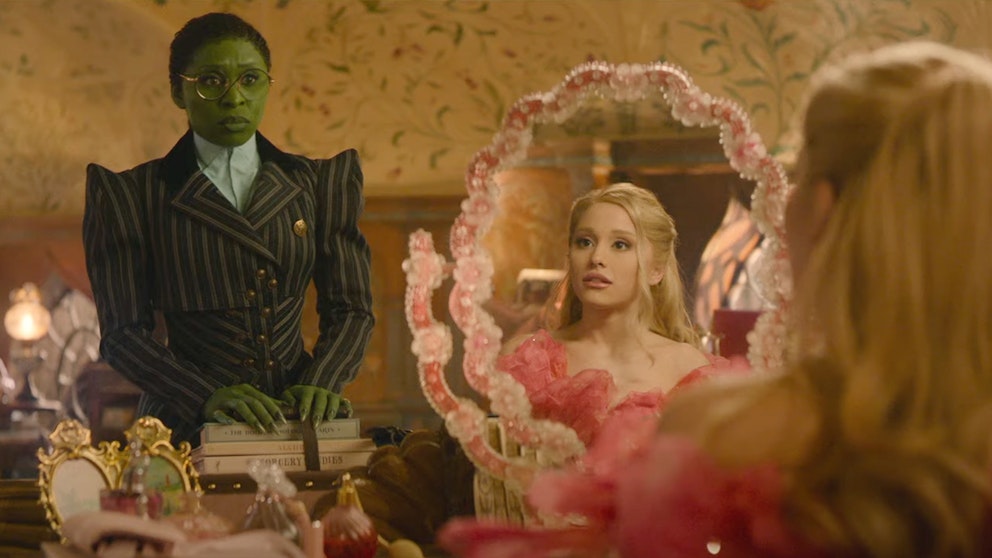
This movie is bound to attract two standout audiences: those that liked the musical in its theatrical run and those Wizard Of Oz fans that are intrigued of a prequel. It’s interesting how The Wizard Of Oz story has enchanted people for over a century. To have a prequel-like story of how the witch and Glinda met in school is bound to catch people’s intrigue. Even ask questions. Like was the witch’s name really Elphaba? Even the character who would become the wicked witch of the east would have a name: Nessarose. Was high school just as bad in Oz as it is in real life? You mean the witch didn’t really start as evil? You mean Glinda’s real name is Galinda? How was Glinda able to befriend the witch? It really has you thinking. It will even have you thinking about the Wizard Of Oz too. Since the musical has been popular for twenty years, I feel the film adaptation came out at the right time. It does make one wonder why the film is billed as Wicked: Part One and if a Part Two is needed instead of the whole musical in one film.

In watching part one, it begins with the people of Oz celebrating the witch’s death and Glinda given a hero’s welcome. Then the revelation of the secret that Glinda knew the witch in high school. That’s where Glinda tells her story. Throughout the story, we learn how the witch was born the black sheep, or in this case green sheep, of the family while her younger sister was seen as a princess. Even the wheelchair didn’t harm Nessarose’s princess image. When high school begins, Elphaba gets singled out and nobody wants to befriend. As Glinda unintentionally becomes Elphaba’s roommate, Glinda becomes a positive influence on Elphaba and helps her find her true self, use her intelligence to be a force for good, and ultimately bring down the corruption happening in Oz. The film ends with Elphaba singing about her turn to fly and it sets up for a ‘To Be Continued’ ending.

Although this film is just a part one of a musical, the film itself is a good story of the popular girl befriending the misfit girl and bringing out the best in her. It’s also a good nerd-to-queen story for Elphaba. Even having the ability popular boy Fiyero. Near the end where we learn of how Oz is imprisoning animals and Elphaba learns of the corruption going on from the Wizard, it’s there where she learns to take a stand for what she believes in and her rebellious side comes out of her shell. It’s right at the end she flies off and celebrates her personal identity and her new-found confidence in herself as Glinda supports her on. As a film itself instead of a Part One, it works as a story about finding one’s confidence, learning to embrace being different and make your best qualities winning qualities. As a musical, it’s entertaining and colorful from start to finish. It may not have the same vibe as the classic Wizard Of Oz but it will entertain you.

And there’s the film as the Wizard Of Oz prequel. Many of us who have seen or read The Wizard Of Oz but never seen Wicked onstage, like myself, will know how it all turned out. The sister is killed by Dorothy’s house, Glinda makes Dorothy a hero, the witch (who doesn’t have the name Elphaba) wants revenge on Dorothy and to get her sister’s ruby slippers, chases Dorothy down her trip to Oz and threatens her and her friends along the way, and is killed by a splash of water. If you have not seen the musical like I have, the film will get you thinking how did Elphaba become evil? Did Nessarose also become evil? If Elphaba and Glinda befriended each other in high school, how did they have their eventual falling out? This film succeeds in getting us to anticipate it all in the ‘prequel sequel’ which is expected in Winter 2025 and will be titled Wicked: For Good.

This is a great accomplishment for director Jon M. Chu. In the last fifteen years, the films he has directed have been a wide range like dance films like the two Step Up sequels, action film G.I. Joe: Retaliation, music film Jem And The Holograms and romantic comedy Crazy Rich Asians. Here he tries his luck with a Broadway musical with the screenplay adapted by Winnie Holzman and Dana Fox. He succeeds greatly in making it entertaining for audiences to watch and for making for a dazzling story. It’s not an easy task to adapt a musical to the screen but he does it very well.

Top credit goes to Cynthia Erivo for playing Elphaba. Cynthia has established herself as a triple-threat in entertainment and one of the biggest rising talents around. Here, she does it again as she not only captures the role well but is also able to play young convincingly and sing excellently. This should add to her achievements. Also great is Ariana Grande. Although I’m not a fan of her or her music, she appeared to be the best choice to play Glinda in this movie adaptation. She is very good at capturing Glinda’s princess side, sings the songs very well, and plays the part excellently as well. Also great is newcomer Jonathan Bailey. Although he doesn’t stand out as much as Elphaba or Glinda, he does a great job of playing popular rebel Fiyero and makes his singing and dancing look effortless. The supporting performances of Michelle Yeoh as Madame Morrible and Jeff Goldblum as the Wizard, added to the film despite the small amount of screen time.

You can’t give accolades to Wicked if you don’t include the top technical qualities. There’s the editing work of Myron Kerstein which makes the film work right. There’s the costuming from Paul Tazewell which goes beyond what one would expect to being costumes and outfits you’d see in Oz. There’s also the makeup and hairstyling team that makes for the dazzling hairstyles, the original score from John Powell and Stephen Schwartz that blends in excellently with the songs and the visual effects team that does a great job in bringing back the magic of Oz, and then some.

Wicked is a great adaptation of a musical that will dazzle many a crowd. Whether you’re a fan of musicals, or a fan of Wicked, a fan of The Wizard Of Oz or even a fan of the stars, you will enjoy it.

And there you have it! This is my last blog of reviews of the Best Picture contenders for the 2024 Academy Awards. My blogs where I review the nominated short films are coming soon.
Oscars 2024 Best Pictures Reviews: Part Two

It does seem awkward for me to do five blogs of Best Picture contenders. It’s all about my writing. Last year my writing was so over the top, I had to post individual reviews instead of all ten within three blogs. This time as I was writing, I felt doing blogs consisting of two reviews each is a nice steady dose of my writing. Hope you like them. Now on with my next two reviews:

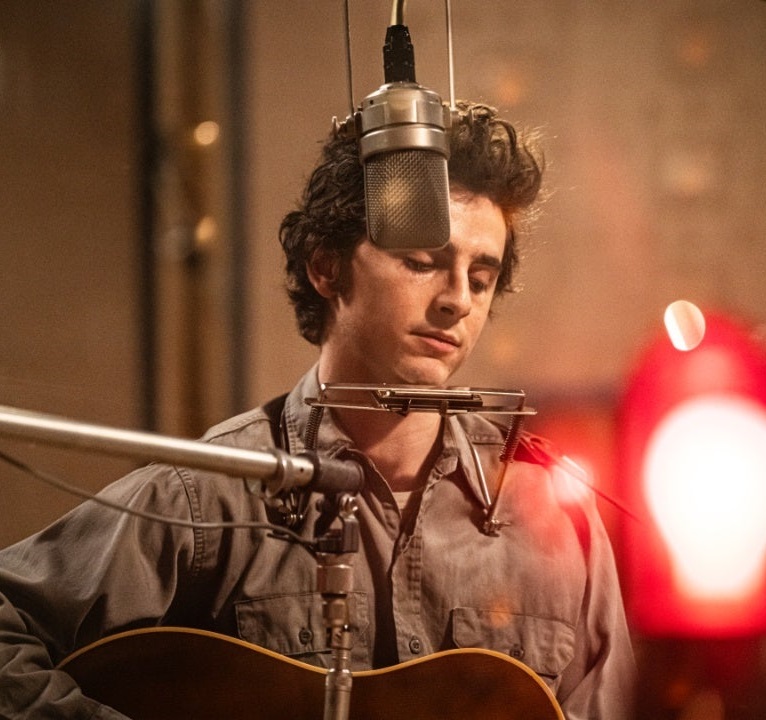
A Complete Unknown

I’ve seen musicographies before. I’ve seen how they told the story of the musician or even show one part of the musician’s life. This film is a case of telling a part of Bob Dylan’s life. It tells of how he goes from an unknown folk singer in Greenwich Village to being part of the main folk scene of the time to branching out on his own. One thing we often forget about is that in the early-1960’s folk music was seen by many young people as the antidote to Rock ‘N Roll. Rock ‘N Roll music was seen by them as filled with scandals, fabricated acts, and music done for money’s sake. Folk was regarded by them as the opposite. It was regarded as self-composed music, honest feeling and even having a word to say to the powers that be. Bob, having a liking to Rock ‘N Roll, did not sit well with fans of folk music. To add, the Folk scene was becoming as much like showbiz as Rock ‘N Roll itself. You could easily see why folk fans would be outraged by his Rock ‘N Roll schtick. Looking back, it leaves me wondering after that moment did Rock ‘N Roll change Folk or did Folk change Rock ‘N Roll? Neither genres have been the same since.

The unique thing about this film is that it’s as much about the person as the musician. Most of us have known Dylan through his music. He always spoke his mind in his music. The film shows things most of us have overlooked. There’s the time Bob is torn between the love of Joan Baez and Suzy Rosso and finds it hard to hold a relationship with either. There’s Bob desire to expand and grow as a musician while the folk scene wanted to her him perform his more legendary hits. There’s how Bob found guidance from Johnny Cash and regarded Woody Guthrie as a musical father figure. There’s how the folk scene became just as much of a clique as even the most commercial music scene. We see that in how the folk scene was all about those connected to Pete Seeger and the shows he helped organize. You can understand why Bob would rebel and do his electric show. Bob always wanted to do his own thing. At the end of it all, he was still Bob.

This is quite possibly the best work from James Mangold. For so long he’s created films in which have received Oscar nominations and wins, but left him empty handed. Films like Girl, Interrupted, Walk The Line, 3:10 To Yuma, Logan and Ford vs. Ferrari. He did get a scriptwriting nomination for Logan but it’s this film he finally gets nominated for Direction. Having directed Walk The Line, Mangold knows how to direct a musicography. With the story he co-adapts with Jay Cocks, Mangold shows Dylan as a musician, artist, flawed lover and rebel. He also captures the essence of what folk music was to do about, the folk music scene of the 60’s and the times very well. It’s easy to see why he has received this acclaim.

The film also excels through the excellence of the performance of Timothee Chalamet. I’ll admit I first thought Chalamet playing Bob Dylan was a bad idea. I could not see him doing it. He accomplished it very well by making it a three-dimensional performance when it could have been wooden or cartoonish. I’m impressed with his work. Also really great is Edward Norton as Pete Seeger. I know Edward knows how to get into character. Here he makes a very convincing performance as Seeger. Newcomer Monica Barbaro is also excellent as Joan Baez. The film is, in a way, also showing us the Joan Baez we never knew. Very different from her on-stage persona we’re so familiar with. Elle Fanning was also great as Sylvie Russo who faces a hard time trying to love Bob as his fame was starting to take off. Boyd Holbrook was also very convincing as Johnny Cash and Scoot McNairy was also great as woody Guthrie. Even though both performances had a short amount of screen time, they were still both good and convincing.

A Complete Unknown is not your typical musicography. It presents a Bob Dylan we never knew, a Joan Baez we never knew and a folk scene different from what we thought it was. It’s as revealing as it is great.

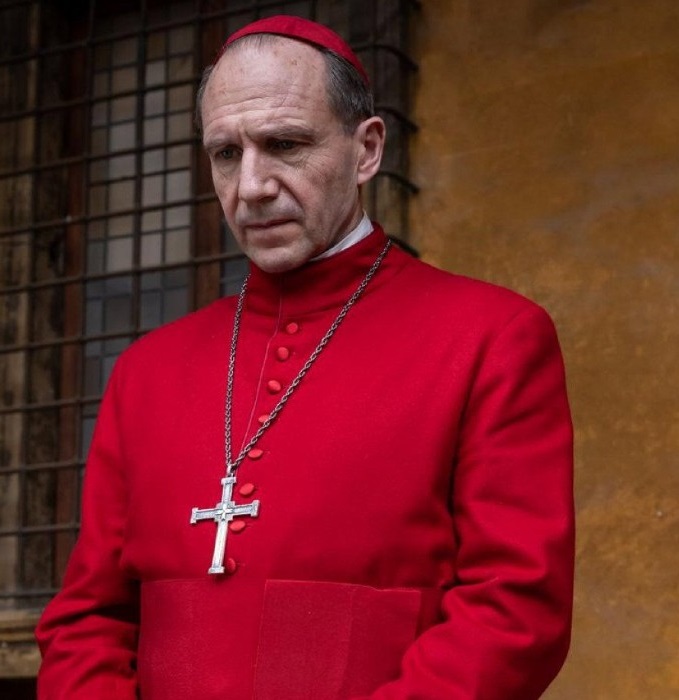
Conclave

There has been a lot of unhappy talk from a lot of Catholic people about the film. One thing we need to talk in mind is that this story is a fictional story based on the adaptation of a book. Watching it, the cardinals did not act very priest-like. It made the whole conclave look like a joyless sect. Throughout the film, there’s hardly any focus on the spirituality of the cardinals. As the election of a new Pope is happening, it appears they are all rivals against each other with animosity. It almost makes the election of the Pope look like a political election where candidates look to expose the dirt of their rivals in order to win votes. Maybe that’s the point of the film. To make a papal election look similar to that of a political election. Although they do a good job of making that connection, I’m still unhappy about how the bishops and cardinals were portrayed.

Although I was unhappy of how the conclave is depicted, I am not angry as I am well aware this is a fictional story. Besides none of us knows what goes on behind the scenes of electing a new Pope. One thing the film does do well is that it shows the complications of being inside the Catholic Church. Although the film doesn’t know much about the faith of the bishops and cardinals and makes them look similar to dirty politicians, each of the bishops and cardinals represent ways of thinking most common among Catholic leaders. I myself have complained that the Catholic Church feels more like an institution than a church, but we forget how big the Church is. The Catholic Church is almost 2,000 years old and has 1.3 billion members and has churches on all the world’s continents. In some nations, Roman Catholicism is the religion of the majority. With a church that big, there is bound to be differing opinions on various issues. Some have Bible-based answers for various issues, some base their opinions on Church-based teachings, and some just give their own rational thought. You can understand why a church this big will have a lot of conflicting opinions among its members and leaders. The various debates among the College of Cardinals are reflective of that. Then there’s the powers that be. As you can see in the film, the electing of a new Pope is not an easy thing. There’s knowing that the Pope they elect with become the epitome of the image and the morality of the Catholic Church. You can understand why choosing the right bishop or cardinal to be Pope will be a difficult.

This film is good at making the election of a new Pope look like an intense drama. It succeeds in doing it by inventing a clever ‘behind the scenes’ story and making it into an intense drama that will keep you focused. It may overdo it in terms of the various conflicts between the bishops and cardinals but the conflicts reflect the common mixed beliefs held by Catholics. Sometimes the squabbles over certain bishops in the running are reflective of squabbles of the various beliefs of many Catholics. A Church of 1.3 billion is too big to have everyone believing the same thing on each issue. Also the film reflects on difficulties, scandals and controversies that the Church has left unfixed over the years. Even how secrets unraveled behind the Church walls are representing how the Church has a lot of hidden secrets. The film also succeeds how getting the problem of the Papal election solved is best assisted by two people least expected. It’s first done by Sister Agnes who, by being a nun, is to exist in the background but she can’t hide her silence anymore on all that has happened. The second is Cardinal Benitez who seems like the candidate least likely to win, but after he made his powerful speech, he appeared to be the best choice to be Pope, only for his secret to be revealed after his election. The film gives an ending that leaves us with questions of what will happen next. That’s what a film should do.

This film is an excellent work from Edward Berger. With the script Peter Straughan adapted from the novel, Berger directs a film that takes a world event and turns it into a behind-the-scenes drama that will keep you intrigued in the drama more than you thought you would be. Although it’s off in its depiction of priests and bishops, it’s still a great work.

Also great is Ralph Fiennes as Cardinal Lawrence. He performs the role of a priest whose spirituality is clashing with his role of leading the College Of Cardinals. He makes the stress look obvious. The performances of the various bishops from John Lithgow, Stanley Tucci and others were very good, despite more focus on the Cardinals’ arrogances. Isabella Rossellini is the surprise of the film. Playing Sister Agnes who can’t hide her silence anymore, she really provides needed impact to the story and her silent moments are as good at storytelling as her talking parts. Carlos Diehz is also great as the Cardinal who’s the best most mortal choice for Pope, but has a hidden secret. The film also has a lot of great technical merits like set designers Suze Davies and Cynthia Sleiter for creating a set that looks very much like the Vatican, costuming Lisy Christl in making the clergy costuming look perfect and composer Volker Bertelmann delivering a score that adds to the intensity of the drama.

Conclave may be off in their depiction of cardinals and the Church itself but it succeed in bringing up hot topics surrounding the Church as it succeeds in making an intense drama of a Papal election.

And there you go. Those two films are my second look at the Best Picture contenders of this years. More reviews of Best Picture nominees to come.

Oscars 2023 Review: Best Animated Feature Nominees

This year makes it the first year I had the luck to see all five nominees for the Best Animated Feature. A lot of good films. Most are family-oriented but some have some adult appeal. Three are American made with one from Japan and one from Spain. Here are my reviews of the Best Animated Feature nominees:

The Boy And The Heron

Anime may or may not be to your liking. but Hayao Miyazaki makes anime films worth liking. If you’re familiar with Miyazaki, his film Spirited Away won the very second Oscar in this category. This film is his fourth film to be nominated in this category and his first in ten years when he went into retirement.

Here he ends his retirement to return with a story about a boy who lost his mother during World War II and doesn’t know how to deal with a new stepmother, an upcoming baby brother and a new school. He thinks he can fake a rock attack from a school bully to get out of his problem but a mystic heron who speaks to him has clues to how he can encounter his mother.

In many ways, this story is quite similar to Spirited Away. The path the boy Mahito takes is very similar to the labyrinth Chihiro in Spirited Away took. Both children begin the story as they face a difficult change in their life. Both children find a place that takes them to a supernatural world which they would find themselves imprisoned in and facing obstacles. Both would see imagery of beings that represent their parents or parent. In Mahito’s case, he’s led to an underground world led by a Heron and then to an image of who he thinks is his deceased moth, only to learn she’s made of water. It’s as Mahito learns he has to fight his way out of the society of parakeets that he’s able to come across his long lost mother, although she comes across as a different image.

Once again, Miyazaki succeeds in creating a world that is mystical, frightening and colorful. His films are known for capturing people’s imagination with mesmerizing imagery and dazzling colors. He’s one of few who know how to continue to innovate with 2D animation. His use of animal characters to represent the demons the child is trying to fight is present again here. With this film, it’s a human living inside a heron that is the one to guide Mahito with the ability to resolve with his new mother, fight his way out of the kingdom of parakeets and and meet his mother. The film shows Miyazaki’s magic is not lost. In fact it’s very active even after almost ten years of retirement. Miyazaki and Studio Ghjibli do it again!

This film has had a lot of awards buzz. For all the buzz in winning the Best Animated Feature Oscar, it’s seen by many as a rivalry between this film and Spider-Man: Across The Spider-Verse as the two most likely to win. This film has won the Golden Globe and the BAFTA. It also finished second at the Toronto Film Festival’s People’s Choice award, won many critics circle awards and was nominated for seven Annie Awards winning two. Although the Spider-Verse film, which I will review later, has more awards, this film’s big wins show it can upset.

The Boy And The Heron is one of the few animated films this year that can impress older viewers. It has what it takes to help the audience escape into a hugely imaginative world.

Elemental

In the 21st Century, it’s the team of Disney/Pixar who has delivered the most in animated films. Their films have won this category eleven times in seventeen previous nominations. They’ve done a lot to reshape the way animated films are done starting with 1995’s Toy Story. Their impact has been noticed by how other film companies do their films. So much so, Disney/Pixar is no longer alone at the top. Now they have rivalry from Walt Disney Studios whom have experienced a 3D renaissance with their films, DreamWorks Animation who pioneered Shrek, Sony Pictures Animation, Laika Studios and Netflix Animation.

I hate to complain to those that like this film, but it’s one Disney/Pixar film that isn’t all that innovative. We’ve seen their magic with toys in the Toy Story movies, insects in A Bug’s Life, monsters with Monsters Inc., fish in Finding Nemo, feelings in Inside Out and souls in Soul. Their past films have even been nominated for the Best Pictures Oscar. Here, I get the sense I’ve seen this before. It’s a case of the four natural elements of the earth trying to co-exist but those belonging to the fire element are most shunned and she falls in love with a water man. Something tells me I’ve seen better and more innovative from Pixar.

Despite this feeling like something common of expected from Pixar, it does keep Pixar’s reputation for quality and perfection in animation intact. Once again, we see Pixar deliver quality images without a glitch. Not even the appearance of the characters has an image of something out of place. On the topic of animation, Pixar again succeeds in taking the viewer to an incredible universe. Element City is a sight to behold and a world to mesmerize audiences, just like the worlds in their previous films have done. Also the story itself is another case of how Pixar can take a serious issue and turn it into a film enlightening for the whole family. Here, it’s  the theme of systemic racism and xenophobia. It’s an intense topic but this film succeeds in sending a positive message about overcoming prejudices.

It’s interesting with the awards clout this year. In almost every type of awards with the Best Animated Feature category, this film has not won but found itself a nominee or finishing second or third. The big shocker was at the Annie Awards. They earned six nominations at that awards but not Best Feature!

Elemental offers nothing really original or innovative for a Disney/Pixar film. It does, however, still keep alive Pixar’s reputation for delivering top notch animation, dazzling effects, and a good story. Pixar keeps on delivering!

Nimona

This is a unique story of how a defamed knight is rescued by a troubled shapeshifter girl who is just the friend he needs. This is one story that will catch you off guard as two unlikely people become the best of friends and what each other need to overcome their biggest obstacles. For Ballister, it’s to get his reputation, his freedom and his honor back. For Nimona, it’s the false image of her being seen as a monster: an image going back 1,000 years ago and bestowed by Gloreth. Both have social alienation in common. One is looked upon as a monster. The other is regarded with contempt for being a commoner trying to be a knight.

It’s also about a villain who will do whatever she can to control things and make things their way. She doesn’t want a commoner like Ballister as a knight while the queen is willing to break down that barrier. So she secretly gives Ballister the sword that will kill the queen. She also tries to keep the myth of Nimona being the black monster alive to all those in the town. Just as the truth is revealed, the Director won’t quit and will deliver one last seize of power.

Just like Elemental is great at creating Element City, Nimona does a great job in creating the kingdom. It’s a town that mixes in the tradition of knighthood with the technology of the modern world and the common imagery of future worlds. It’s also a place that will capture your imagination as you watch.

This is a story that’s great and entertaining. This is the third film from Big Sky Studios to be nominated in this category. This is also the third straight year an animated film shown on Netflix is a nominee in this category. Seems like Netflix has become a challenger for top animated films. Last year, they delivered the winner: Guillermo Del Toro’s Pinocchio. Looks like Disney and DreamWorks have a future threat on their heels!

Nimona is an excellent enjoyable animated film. It offers a unique story that will have you laughing, dazzled and entertained.

Robot Dreams

Usually in this category, it’s common to have an independent nominee or two. This year, the independent nominee is the French/Spanish film Robot Dreams. It’s worth checking out if you are up for something different.

This is a charming two-dimensional story of a lonely dog in New York who’s lonely. He decides to buy a robot to be that friend. It works that summer as the two have a great time after great time. Then the robot is stuck in the beach and the beach doesn’t open until June 1st. During that whole time, the dog patiently waits while trying to make new friends. The robot still lies on the beach with colorful dreams and hopes of reuniting again. Then things take a turn for the shocking come spring. This leads to the happy ending you didn’t expect with the Earth, Wind and Fire song “September” reminding them both they’ll still be together one way or another.

This is not the first time an animated film without dialogue has been nominated in this category. This is one film that relies on facial expressions, body language, and the various images and sounds to tell its story. It does an entertaining job, especially in the various scenes it has and the switches from dreams to reality. The addition of music also adds a boost to the film.

This is a great creation from Spanish writer/director Pablo Berger. For this film, he hired French animation director Benoit Feroumont whose works include The Triplets Of Bellville and The Secret Of Kells. It’s a fun story that turns New York to look like Zootopia. The film is full of humor, a good mix of original music and past hits, of a few sad moments and even a couple of shockers. You might think you won’t like a story with no dialogue but it works from start to finish. Not a boring moment.

Robot Dreams is the independent threat in this category. It’s a fun story of friendship, the long wait, an unexpected change and a different kind of happy ending.

Spider-Man: Across The Spider-Verse

Five years after the first movie, the Spider-Verse is back! Once again, Miles Morales is the central Spider-Man. This time, there’s a Spider-woman in his life named Gwen Stacey who’s also a teenager like him. While the first Spider-Verse film was more comedic, this film was more dramatic. It’s not just the villains they have to fight, but they also rival each other. Animosity between the Spider-people start and disunity and even Gwen’s expulsion happened. Meanwhile Miles and Miguel become enemies.

This is not a story of a beginning, middle and an end. This is a beginning, middle and a cliffhanger obviously to set up for the third Spider-Verse movie. The film can get confusing as there are so many Spider-men and Spider-women and they don’t all meet. The film does its best to keep it all intact and keep us the viewer understanding the story

For me, the highlight of the film has to be the mix of various styles of animation. When I go see an animated film, a great animated film is not just about the story. It’s also about animation that dazzles the eyes. Writers Phil Lord and Christopher Miller learned some new animation styles after working in The Mitchell’s vs. The Machines. Lord and Miller along with the direction team made a smart move when they decided to have a different artist do each different universe. Six different animation styles were used in this film. They all make for a delight to watch as the story progresses over time.

The awards buzz has been quite something for this film. I mentioned during The Boy And The Heron that this is their biggest rival. For the Animated Feature category, Spider-verse has won the Critics Choice award, the Producers Guild Award and the Annie Award as well as the six other Annie categories it was nominated in. It has won numerous critics circle awards and their sound mixing and visual effects have won awards of their own competing against many live-action films. It has a good chance of winning the Oscar here but I know in this category, they’re not too friendly to sequels. And the first Spider-verse film won in 2018.

Spider-Man: Across The Spider-Verse keeps the excitement from the first Spider-Verse movie alive. It also has its own drama and a new batch of dazzling animation styles, and a cliffhanger that makes us hungry for the next Spider-Verse film!

And there you go. My look at the films nominated in the Best Animated Feature category. I saved my Should Win and Will Win picks for my blog of Oscar predictions tomorrow.

VIFF 2021 Shorts Forum: Programme 3

I had already fulfilled one of my VIFF goals of seeing a segment of short films when I saw MODES 2. However I was hoping that for short films, I would see something less experimental and more in the lines of either documentaries or live-action storytelling. I had my opportunity when I saw the shorts segment entitled Programme 3. They were seven films by Canadian directors that were all unique in their films and their messages.

-Flower Boy (Canada – dir. Anya Chirkova): It’s summer. Nav is a musical dreamer. He plays music from piano to guitar to his analog synthesizer at parties. His girlfriend Sarah is a painter who has artistic dreams of her own. She even painted a portrait of Nav with a flower instead of a head. For summer income, Nav works at a laser tag ground where he does the typical duties and the co-workers talk of how much they hate the job and the boss. As the months pass, Nav grows further in love with Sarah, but knows summer will end and he will be heading to college in another province. Also during the job, the 60 year-old boss shows Nav that he had music dreams too, as a rock ‘n roll drummer. The boss shares with him his passion. As summer ends, he makes a decision that a surprise to all.

This is a nice picturesque story. The images do as much of the storytelling as the dialogue. The story is pretty much a celebration to any and all artistic dreamers. Even for those who eventually went on to pursue real jobs. Those who’ve had artistic dreams of their own when they were young can identify with this story of see themselves in some way somehow. This also works well for me because I had dreams of being an actor when I was younger and, well, I turn 50 next September. It’s a reminder of no matter how old you get or even how successful you are at your real job, the dream never dies. Even if it’s in an against-all-odds profession, it’s still worth it to chase the dream and never stop dreaming!

-Things We Feel But Do Not Say (Canada – dir. Lauren Grant): Genevieve is hurting, but does not make it obvious. Later we learn what’s been hurting her. The pregnancy that’s supposed to be, isn’t. It’s a miscarriage. She tries to keep it inside, even to her husband, but you know it’s going to come out. She goes with him to the doctor’s appointment and tries to keep a poker face about it, but you know it will come out. Then it does. She then returns back to her work, greeted warmly by her friend, and carries on with her day.

This isn’t just a story about a miscarriage and the hurt one feels. It’s also about trying to hide emotions and go about daily life, even though one is hurting inside. The body language actually does more telling about the story and Genevieve’s feelings than the dialogue. That’s what the film is for the most part. About unspoken feelings we hold deep inside.

-Tla-o-qui-aht Dugout Canoe (Canada – dir. Steven Davies): Joe martin is a 66 year-old man from the Tofino First Nation. His profession is making dugout canoes: canoes made from trees that are dug out from the trunk. He is skilled from teachings from his late father. The skills he uses to make the canoes, like the hand-carving and painting, are centuries-old traditions passed on from his people. The skills and canoes were scorned upon by the Canadian government decades ago who had a system to assimilate the Indigenous people, robbing them of their culture and language and sending them to Residential Schools where they were abused and neglected mercilessly. Joe is now free to make his canoes. His daughter Tsimka uses the canoes he made to take visitors on tours of Clayoquot Sound.

This is one of two documentaries that’s part of ‘indigiDOCS.’ This allows the canoe maker to tell his story of his craft and how it’s important to him and his people. At a time when Indigenous peoples are going through Truth And Reconciliation and working to take back what was stolen from them in the past, like their languages and cultural rites, this is an important documentary. You learn of the skill of how it’s important for the maker and his people and why it’s worth keeping alive and worth passing on to generations.

-News From Home (Canada – dir. Sara Wylie): It’s March 2020. A daughter makes a phone call to her mother. She has anxiety and she’s scared. She doesn’t know what to do. She wants to fly back to be with her mother, but her mother advises it’s not a smart idea. This breaks the daughter’s heart. She’s scared and frustrated to tears. She just doesn’t know what to do. Another phone call some days later. The daughter again calls the mother. The daughter doesn’t have the same frustration she had during the first phone call. She reassures her mother she’s calmed down, if imperfectly. The mother says things of reassurance. It ends with a friendly goodbye.

This is a film that consists of recorded phone calls, home movies, and the images of the rooms inside the hose where the calls took place. No actors or people present. One thing we should not forget is it’s in March 2020 when the COVID pandemic hit Canada and all these social restrictions and isolations started taking place. There was a lot of fear among people about what would be next. I too anticipated this could be the next Influenza. This film captures the moment. Even reminds us of our own first moments of dread when this all started. However it also shows the moment of relief and reassurance over time. It even shows the close bond of family. It’s that bond with someone who reminds us things will be fine that we all need.

-Indigenous Dads (Canada – dir. Peter Brass): The film is a documentary. It’s an interview of four Indigenous fathers from across Canada and of various Indigenous Nations including Brass himself. Two are fathers of two, one is a father of four, and one is a father of one. All of them share their feelings of what it was like when they became a father for the first time, both positive and negative. All four talk about how fatherhood made them grow and change as men. All talk of their love for their children. They also all talk of how they teach their children of what it is to be Indigenous and how they even remind them of the racism they can face. They also all talk about their hopes and dreams for their futures and what they want their children to grow us to be.

This is an important documentary short. It’s very inciteful. This shows a side of being both a father and being Indigenous that we rarely see. It’s an eye opener to this subject. It reminds you of the immense responsibilities these men have to face and are willing to face head-on, despite how hard it is. They speak their hopes, their joys and their fears. There are times of great emotion as well. I’m really glad I saw this.

-Srikandi (Indonesia/Canada – dir. Andrea Nirmala Widjajanto): Anjani, a young girl in Indonesia, is about to start college. This comes in the aftermath of the death of her father and as her mother is about to sell the house. Something her daughter is out protesting over. Soon, her daughter discovers something. She comes across her father’s puppet studio. Her father’s profession was the traditional Indonesian puppetry of Srikandi. She discovers she has been taught the skills of Srikandi by her father, even though Srikandi is traditionally forbidden o females. Anjani makes a decision about her career path to her mother. Her mother is not happy with it as it won’t guarantee a steady income, but Anjani is firm in her decision as he is days from leaving for Jakarta.

This is a student film from a Vancouver Film School student. Andrea Widjajanto is born and raised in Indonesia and came to Vancouver to study film. This is another film about artistic passions burning inside one’s self. This is also as she faces the heartache of the death of her father and the time in one’s life where she’s reached the college age and now preparing for a path she is to pursue for the rest of her life. This is a good film as it involves an artistic puppetry few people from outside Indonesia know about. It also reminds you that this desire to pursue your dream with the pressure from others to pursue something more bankable and steady is universal. It transcends cultures and borders. The dream to pursue one’s dream is universal. Despite the story taking place half a world away, one can relate to the story.

-Together (South Korea/Canada – dir. Albert Shin): It’s a seaside motel in South Korea. Two strangers who met online with fake names, a young-adult female who goes by the name Happy Virus and a middle-aged male who goes by Rabbit Doll X, are there. They are here for one reason: a suicide pact. Both have a cooking element and chemicals ready to do the job. During the time there, they talk about their lives and what they’ve been through. They take an interest in each other and even laugh and have a mini-party of just the two of them. It gets to the point the woman feels she can’t go through with this.

This is a story by Korean-Canadian director Albert Shin that treads on a serious subject matter. It’s of a common thing in South Korea of the type of suicide pact where two strangers with suicidal feelings meet online to commit their suicide together. Shin taps into human feelings as well as ethics and morals. In the end, he delivers a story that goes from potentially tragic to life-affirming in the end.

Overall these seven shorts have their differences, but they share a lot in common. All are from either Canadian directors or students in Canada. Some are documentaries or docudramas, while some are live-action. Most are in English while two are in different languages. All speak a message about the human spirit and human feeling.

Each of the seven films of the VIFF Shorts Segment Programme 3 either contain an aspect of life that we can all relate to or they will open our eyes. All of them are valuable to watch. I’m glad I had the chance.

Oscars 2019 Best Picture Review: Ford v. Ferrari

Ford Ferrari
Matt Damon (left) is Carroll Shelby and Christian Bale (right) is Ken Miles in the racing drama Ford v Ferrari.

At first you’ll think Ford v Ferrari is about cars. It is, and about car racing. However, you’ll be surprised how much more it’s about.

The Ford Motor Company is going through an image issue in the mid-1960’s. For decades starting at the very beginning of the 20th Century, Ford under the genius of Henry Ford manufactured cars that completely redid the way Americans travel. Ford is still on top and currently led by Henry Ford’s grandson Henry Ford II, but it’s trying to win over younger buyers of their cars. It’s a bit harder because young people have recently developed an interest in racing cars and see Fords as their ‘parents cars.’ In 1963, Vice-President Lee Iacocca recommends to Ford they strike a merger with the cash-strapped Italian company Ferrari. It seems like a good choice as Ferrari has been a big winner in racing. In fact Ferrari cars have won the most recent 24-hours of Le Mans races since 1960.

However over at the meeting at the Ferrari office, the meeting does not go well. Enzo Ferrari tells Ford that he accepted a deal with Fiat that’s more lucrative and allows him to keep the Scuderia Ferrari racing division. In the meeting, Ferrari insults the Ford cars and Henry II as ‘not Henry Ford but the grandson of Henry Ford.’ That infuriates Henry Ford and he plans a revenge on Ferrari. The revenge is actually one to take the Ford Car company into the future. He plans to have a Ford car designed to win auto races. He hires Carroll Shelby who won the Le Mans in 1959 but had to retire because of heart problems: a problem he consistently takes pills straight out of the bottle. Since retiring racing, Shelby devoted his time to developing cars for auto racing through his company Shelby American. Carroll Shelby is close friends with 47 year-old Ken Miles: a British auto racer who is infamous for his bad temper and struggles as a mechanic with owning his garage in Los Angeles. This is a burden not only to him, but his wife Mollie and young son Peter. Especially since the IRS is on his case.

Miles is Shelby’s first pick in his Cobra team to test out his cars. Miles’ racing style and car know-how allows Shelby to make good decisions. He is always very honest with Shelby whenever he notices something that needs an improvement or when something’s a weakness. However, the choice of Ken Miles does not go well with Henry Ford, especially since he feels Miles’ personality and notorious temper doesn’t fit the Ford image. Ford elects to send Phil Hill and Bruce McLaren to the 1964 Le Mans instead. Miles predicts none of the Ford participants will win the race, and he ends up right. Once again, the race is won by a Ferrari driver.

Despite the big loss at Le Mans 1964, Shelby tries to reassure Ford that one of the Ford drivers hit 218 mph on the Ford GT40 and that made Ferrari nervous. Meanwhile it’s back to the drawing board. Shelby continues development on the Ford GT40 Mk II and he has Miles test the cars with Peter watching frequently and Ford unhappy about the arrangement. On one practice run, the brakes fail and cause the car to crash in fiery manner, which Miles is lucky to escape.

In 1966, Ford takes an extra step in the efforts of their racing cards by creating a racing division of their company and has Ford’s Senior Vice-President Leon Beebe run it. Beebe wants the program a case where Miles is not a part of any of it, not even the testing. Shelby meets up with Ford on an opportunity and offers to take him into his car. Ford accepts, and Shelby drives like a racer on the track which scares Ford almost to death. It’s right there he convinces Ford that Miles is the best man to win Le Mans. Ford agrees, but with a compromise; Miles needs to win the 24-hours At Daytona first before he can race at Le Mans. Shelby visits Miles at a street corner near his house after he’s finished grocery shopping to tell him the news. That infuriates Miles so much, he has a fist-fight with Shelby at the corner, which wife Mollie watches entertainingly.

Shelby and Miles continue with the racing and testing as Peter continues to watch and Phil Remington is the mechanic doing the fixing. Beebe is hoping Miles doesn’t win as he has puts in a second Ford entry in Daytona with NASCAR team Holdman-Moody supporting it. The Holdman-Moody team is faster at pit stops, but Shelby allows Miles to push his car to 7000 RPM. The result: Miles wins Daytona. It’s Miles’ first win in five years. Miles also has continued success later by winning the 12 Hours Of Sebring. Le Mans will be Miles’ chance to win the rare Triple Crown of endurance races.

At the 24 Hours of Le Mans in 1966, Miles is there as is Shelby, but so is Ford and Beebe. So is Enzo Ferrari in hopes of this being victory #7 for the Ferrari car. Ferrari has just released his latest racing prototype, 330 P3, and his best hopes in repeating rest with Italian driver Lorenzo Bandini. Mollie and Peter are listening to the race on the radio as Peter will be going through the race on the Le Mans racetrack he drew.

The race starts and Miles has problems on the first lap as the passenger door won’t close; he has to steer with his right hand and hold the door with his left. At the first lap, Miles alerts of the problem, which Remington fixes with a sledgehammer. Miles gets back to driving and has a lot of ground to make up. With each lap, he breaks the track record and passes numerous Ferraris as he gains ground on the leaders. However, as he’s pursuing Bandini, brake problems occur. At the pit stop, the team replaces the brake system, which infuriates Enzo Ferrari. He feels it’s against the rules, but Shelby is able to successfully convince race officials that the brake replacement is within the rules. As the race continues, Bandini is in hot pursuit by Miles, but Bandini is the last Ferrari driver in the race. As they duel again on the Mulsanne Straight, Bandini blows is engine and is out, making this the first Le Mans since 1959 Ferrari won’t win!

There’s still one more act of the drama. Three Ford cars lead the race nearing the finish with Miles leading them all. What should be a normal racing situation actually becomes a publicity opportunity for Henry Ford. He envisions all three Ford crossing the finish line simultaneously and even Beebe gets Shelby to tell Miles to slow down and set up for the opportunity. Miles is furious about this as this could put his Triple Crown in jeopardy and responds by setting more lap records, but eventually agrees with it. Miles does slow down and the three cross the finish simultaneously. However, it’s not a shared win as Ford driver McLaren is declared the winner. Shelby is mad that it ends all chances of Miles’ Triple Crown, but Miles is not down. Miles is just grateful for driving at Le Mans and giving the crowd a show.

That race would be Ken Miles’ last ever race. One day while testing a J-car, and with Shelby and Peter around, Ken crashed near a turn. It was a ball of fire and he didn’t get out. The fatal crash happened in Peter’s view. Some time later, Shelby goes to visit Mollie and Peter. He sees Peter still hurt but gives him words of comfort about his father and gives him a wrench Ken threw at Carroll years ago. As for Mollie, he just waves back from a distance after she waved to him. Then he drives off like a racer.

The film is unique as it is more than just a story about racing. It’s also how one race depended on taking a solid American business and a business legendary in making automobile travel the new norm for the USA into the future. Because of it, or maybe not exactly because of it, people still drive Fords today. Ferraris are still the most expensive sports cars today but Ford is still one of the biggest auto manufacturers in the World. The film also gave us some reminders about sports business. Businesses don’t simply look for sportspeople who win all the time. They also look for those with a marketable image. Michael Jordan may be a case where one of the best sportsmen ever becomes the most marketable ever, but it’s not always a guarantee. Seeing how a great racer like Ken Miles was shunned by everybody except by his family and those involved with Shelby American is one example. Also how Henry Ford looked at him was also unpleasant to see. I remember one person said that Henry Ford simply not liking you was enough for him to fire you. Goes to show he was cruel to whoever as he was to Ken Miles.

The story isn’t only about racing or even about a remarkable race. It’s about an auto racer whom at an age most would retire from the sport at was having the most successful year of his life. It was his love for his family. He wanted to win for them. And he especially wanted to be seen by his son as someone to be proud of. It was also of a friendship between Ken Miles and Carroll Shelby. Miles was the one person Shelby can best trust for an honest opinion about his cars, or should I say Ford’s cars. Shelby saw a lot of qualities in Miles most others overlooked. The friendship was strong, but it wasn’t without its friction as both men were temperamental and fighters. But the friendship was still very strong.

One thing about this film is that it doesn’t compromise in being an auto racing film. Being such, it knows that it has to make the audience feel like they are part of the race or they are in the driver’s seat. The camera angles as well as many of the scene shots helped greatly in creating the experience and intensity and leaving the audience at the edge of their seat. The film also does a great job of putting the audience in the races too. Despite the intimate story, the story does not forget what it’s about and makes the audience feel the moments too.

The film marks another great success for director James Mangold. This is his sixth film to earn Oscar nominations and his first ever to be nominated for Best Picture. Although he missed a Best Director nomination, he creates a great film that delivers just as good a story as it delivers in racing excitement. The story by brothers Jez and John-Henry Butterworth along with Jason Keller becomes more than a racing story with a simple plot. It’s a deep plot with three-dimensional characters and reminds the audience that the story is as much about the man, the friend, the husband and the father as it is about the racer.

The film marks another great performance for Christian Bale. Again he succeeds in getting into character and delivering a deep role. Not a false note about the character nor the father-son relationship. Matt Damon was also great as Carroll Shelby. His role may not have been as deep as Ken Miles’ but he added dimension and character to the role. The other standout of the film was Noah Jupe as Peter Miles. Noah made the father-son relationship work as well as Christian did. Other standout efforts include the cinematography from Phedon Papamichael. He knew the shots he needed for this racing film and he delivered, especially in some of the most intense scenes. The visual effects were also excellent and perfect for the film. Also the score by Marco Beltrami and Buck Sanders added to the excitement of the film.

Ford v Ferrari is the remarkable story how a driver and a race depended on the future of the Ford auto company. It’s also a story about a friendship between two racers few of us knew of. And a reminder of an overlooked great in the sport.

VIFF 2019 Review: Mr. Jones

Gareth-Jones
Mr. Jones is about journalist Gareth Jones, played by James Norton (left) who seeks to expose a tragedy in Ukraine the USSR is determined to hide from the outside world.

I was interested in seeing Mr. Jones at the VIFF as it’s based on a topic of my interest: the Holodomor or Ukrainian famine of 1932-1933. It’s an intriguing story with a relevant message for today’s world.

In 1933, Gareth Jones is a 28 year-old Welsh journalist who is very good at getting stories. He was the first foreign journalist to fly with Hitler and Goebbels at the start of Hitler’s regime while working as an advisor for British statesman Herman Lloyd George. During the time, he discovered of Hitler’s intentions to wage war. His story fell to deaf ears in the press and his job as advisor is dropped due to budget cuts. Despite being dropped, George gave Jones a letter of recommendation. He hopes to use it to go to the USSR to find an investigative journalist. Before he does, he gets a phone call from a friend named Paul Kleb in the USSR. He talks of how the economy is booming in Russia, but he is about to tell of something terrible happening in Ukraine… and then he gets disconnected.

Jones arrives in Moscow. His trip is regulated from start to finish: what he does, how long he stays and where he goes. That’s how things are in the USSR. In fact his job as a foreign journalist is under heavy scrutiny by national officials during his stay and no foreign journalist is allowed outside of Moscow. He arrives at the hotel in Moscow of New York Times bureau chief Walter Duranty. Duranty welcomes him and introduces him to his assistant Ada Brooks. Jones is expected to be in the USSR for seven days but he can only stay at the hotel for two days. Duranty offers Jones to stay and partake in the late-night partying. At the parties is all kinds of debauchery from prostitutes to heroin shooting to even homosexual advances. Jones wants none of this as he knows Paul Kleb was killed in Ukraine and has to find out why.

Jones finds a train headed to Eastern Ukraine. He breezes past security to stow away on it. When he arrives in Ukraine, he steps off to see the farmed grains loaded onto trucks by the Soviet army, but people dead in the snow and farmers starving. He tries to get answers. He goes to soldiers putting the bagged grain in a truck. He asks in English where it’s going, but is suspected as a spy. Soldiers go out chasing and shooting after him. Fortunately, Jones is able to evade the pursuit. He comes across some children who sing a haunting song to him of the death and starvation happening around him. He goes to a house which is in a photograph he holds, but sees the residents dead in their beds. Jones goes into a town where he sees the Soviet army take the dead bodies in the snow and pile them in a sled to be buried in a mass grave. They even take a baby that’s alive and still crying. Jones goes into a house where he is able to find living residents. They give him something to eat, which appears to be meat, and from Kolya. He soon learns they’re staying alive by cannibalism, and Kolya is a famine fatality.

Soon Jones is captured by Soviet forces. The Communist government commands him to be silent by using the lives of six British auto workers as hostages. Jones tries to plead with Walter Duranty to expose the truth of what’s happening, but Duranty is ‘in bed’ with the Soviet regime. Duranty has a habit of writing of the ‘Worker’s Revolution’ in the USSR like he romanticizing it. In fact Duranty has the reputation of being known as ‘Our Man In Moscow.’ Ada however is more supportive towards Jones and believes he has to get the story out. This can’t be hidden and knowing that Jones is to be sent back to the UK, she encourages him to make the truth known.

Back in the UK, Jones can’t get any British paper to buy into his revelations of a man-made famine. The government either doesn’t want to believe it, or fear it will jeopardize diplomatic relations with the USSR. This upsets Jones as he knows this must be stopped. The events upset him so much, he can’t stop himself from breaking down in tears in his hometown. However he has an opportunity to talk to William Randolph Hearst while at a newspaper office. Hearst, however is extremely busy and will only allow Jones thirty seconds to state his case. However when he mentions of the death of Paul Kleb, that grabs Hearst’s ear and makes Hearst want to hear everything Jones saw. Finally the story ‘Famine In Ukraine’ makes the front page of the New York Times. Jones is defamed. He is not allowed in the USSR again. Duranty is also defamed, but never had his Pulitzer Prize rescinded. Nevertheless George Orwell is caught in the intrigue of Jones’ pursuits and it inspires him to write ‘Animal Farm’ published ten years after Jones was shot to death.

I’ll admit any story about the Holodomor catches my interest. I’m of Ukrainian ancestry. My great-grandparents arrived in Canada around the 1890’s-early 1900’s. They came here long before World War I even started, before Ukrainian land was annexed as part of the USSR and before the Holodomor. This film showcases the Holodomor and is possibly one of the best cinematic depictions of it, but the Holodomor is not the biggest theme of the film. The biggest theme of the film is about censorship in the USSR at the time. All the censorship that happened in the film is an example of the censorship that happened in the USSR since it began after World War II until it broke down in the mid-80’s to when it dissolved in 1991. All news was censored. Nothing but good news was to be published in Soviet newspapers and whatever negative news could not hit either Soviet news nor news to the outside world. Phone wires were tapped and letters were opened and investigated by authorities before it reached the mailboxes of the citizens or outsiders. Even speaking negative words of the Communist government would get one a jail sentence. The Soviet media promoted propaganda to glorify itself and its Communist system and vilify the capitalist system in the United States.

As seen through Gareth, the Soviet system was also restrictive to outsiders. The system decided if a person from an outside country could visit, where they could go and stay and for how long. There were already six British autoworkers who were treated like hostages at the time and threatened with death to have the UK comply to their demands. You can understand just what Jones had to face in order to get the truth out.

Gareth had good reason to pursue the story. It’s not just trying to find out why Paul Kleb died, but Ukraine had personal interest to him as his mother taught English in Ukraine in the 1890’s. Gareth even had barriers in journalism to overcome once he had his story. He had top journalist Walter Duranty to deal with. Duranty had a big reputation at stake and kept insisting that the Holodomor isn’t happening. It isn’t until Jones meets with William Randolph Hearst that he finally gets a willing ear. The big feud between Duranty and Jones shows how even in what is supposed to be the ‘free world,’ there is still a lot of truths that are suppressed or even denied. Seeing all that goes on can make one wonder if this is happening today in what is supposed to be free countries. If we are really getting this freedom of speech or if we’re getting a lot of concocted stories.

This film is great in making a point about journalism and getting the truth out. There are a lot of truth even in today’s world that need to be exposed, but are covered up. The film does a good job in making a moment of past history, and the journalistic feuding surrounding it, make for a relevant message for today. Even the fact that Gareth was shot to death in 1935 while investigating a story in Chinese territory bordering Russia (which many consider to be a Soviet plot of revenge) reminds us of how many journalists risk their lives to uncover truths.

The film was very good at making its point. However the story didn’t seem to be heading on a straight path. There were times when moments that only deserved a certain time, like all the debauchery at Duranty’s hotel party, was slowed down and given more screen time than necessary. Even the moments of the journalistic feuding and political feuding appeared to take too long. The moments involving Jones witnessing the Holodomor in Ukraine were given the best screen time and the best on-screen depiction. It showed a lot of brutal honesty of the Holodomor, including that of cannibalism. It may have taken over less than half the screen-time, but it was done in excellent detail and gave the right haunting feel to this moment of tragedy.

Veteran director Agnieszka Holland teams up with emerging writer Andrea Chalupa to bring this story to the big screen. The story is one of great personal interest to Holland as she is well-knowledged of the Holodomor. Holland also has renown for her depictions of the Holocaust in some of her films. She does a very good job in directing the story, even if there are some moments of irrelevance or moments drawn out longer than they should be. James Norton does a good job in his portrayal of journalist Gareth Jones, but his part could have been developed more. Most of the parts didn’t have too much development and could have had more done with it. Nevertheless, Peter Saarsgard was able to make Walter Duranty hateable on the big screen. Vanessa Kirby was able to make her role of Ada gain more dimension over time.

Mr. Jones is about more than just about the Holodomor. It’s also about the topic of censorship that is just as relevant now with the ‘freedom of speech’ we’re led to believe we have in the ‘free world.’

Oscars 2018 Best Picture Review: Green Book

Green Book
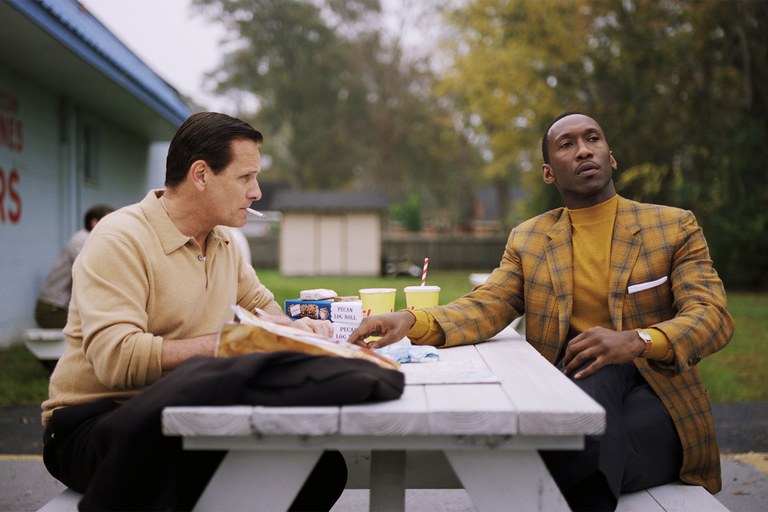
Tony Lip (played by Viggo Mortensen) is the driver for pianist Don Shirley (played by Mahershala Ali) in Green Book.

Racism has been a common theme in a lot of films up for contention for this year’s Oscars. One of those is Green Book. It has caught a lot of attention since it was released this year.

It’s 1962. Frank ‘Tony Lip’ Vallelonga is the best bouncer in all of New York City. However the night club he works at is going through two months or renovations. He needs to find work to pay for his one-room apartment he shares with his wife and two sons. At first the only way he could make money was in an eating contest. He’s offered an interview to be a driver for Dr. Don Shirley on an eight-week tour of the Southern US. He goes to the interview, in Don’s apartment above Carnegie Hall, and is unhappy to see Don Shirley is black. Tony rejects at first, Don is insistent due to the strength of his references. Tony consults with his wife Dolores first. She agrees. Tony promises to white her and the boys. One thing he notices is that his accompanying musicians, Oleg and George, will be going in a different car.

They begin the tour in the Midwest before going to the south. The two start clashing at the beginning; Tony being asked to act with more refinement and Don disgusted with Tony’s habits. Tony is especially surprised how Don is so well-educated, not into rock ‘n roll and blues and fried chicken, which Don takes into offence. However it’s during the tour that he notices just how good of a classical piano player Don is. He also notices the racist treatment Don gets when he’s off-stage, including one time having a shabby piano with junk on it on one stage. Then one night, a group of white men threaten to kill Don in a bar. Tony rescues him and instructs Don not to go out with him during the rest of the tour.

During the journey, Tony stays at his own hotel while Don stays at the hotels in the Green Book, which is a hotel guide for African American travelers. At times, Tony can see Don drinking. Don admits to Tony that he is a divorced man and has isolated himself from his brother and his professional achievements. Don also help Tony to write his letters to the family. One night, Tony finds Don arrested at the YMCA for a gay encounter with a white man. Tony is able to bribe the officer for Don’s freedom, which Don sees it as ‘rewarding’ the officer. Another night at a sundown town, a white officer arrest Don and then arrest Tony after being punched by him. Don goes to call ‘his lawyer,’ but the officers get a phone call from Bobby Kennedy to have them both released.

The tour is winding down, but not with one last dispute between Tony and Don. Tony tells Don he thinks he’s ‘blacker’ than him. That causes Don to lose it and lament that his affluence gives him the feeling he’s an outsider to other African Americans while white people treat him like an outsider. His homosexuality only adds to him feeling alone in this world.

The final performance is in Birmingham, Alabama. Before the performance, Don is refused a seat for dinner and being the guest musician changes nothing. Tony attempts to fight the manager, but Don refuses to play. The two find themselves at a predominantly black blues club. When Don performs, the crowd loves him. The two return back to NYC. Tony invites Don up for dinner, but Don shies away. It isn’t until sometime later that Don musters the heart to visit Tony’s apartment. Here he’s made a welcome guest.

The film has been generating a lot of attention, both good and bad. The film’s script was co-written by Nick Vallelonga, Tony’s son. This was mostly told through the point of view of Nick. However the family of Don Shirley was not happy with what they saw. Many claim that Don did not consider Tony his friend, but his associate. Peter Farrelly admitted his fault in not consulting with Don’s family before the film. Actually Peter didn’t know of how many members of Don’s family Don was still in contact with. In fact even that scene of Don arrested at the YMCA with another man raises a lot of eyebrows too since Nick admitted Don never ‘came out’ to them in his lifetime.

I can’t say much for a film that claims to be ‘based on a true story’ or ‘inspired by true events.’ No such film is 100% true. There are always some plot twists and movie cliches added in. In fact one could simply call The Sound Of Music ‘a musical based on a true story.’ The accuracy may be in question, but the film does have a lot of relevance. We think we have racial tension now or a big racial divide now, it was bigger back then. This was a year before Martin Luther King delivered his ‘I Have A Dream’ speech. This was a year or two before schools in the southern US were desegregated. That ‘Green Book’ for African American travelers was very needed in the South because they could be attacked by hostile whites. Discrimination was that bad back then. There were still public lynchings happening.

One thing the film does is that it gives us something to think about. We’re living in hostile times right now, especially on the subject of race. There are still a lot of misunderstandings between races. The film sent a message that maybe if we stopped, calmed down, and talked things out, we can learn we have more in common that we have differences. Another thing the film succeeds in is testing our expectations of what people of certain races are like. There were many scenes where Tony asked Don about rock ‘n roll musicians and fried chicken. Don was the complete opposite where he played classical piano, was very well-educated, and couldn’t stand the thought of fried chicken. A lot of traits most white people, and not only Tony, would be surprised to see in an African American. Also Tony and his life and lack of education may surprise a lot of African Americans of what whites are like. Like I say, if we took the time to talk, we’d be surprised.

The film may present Don Shirley to be a very wealthy, very successful African American, but the film does show that despite the wealth and high education, Don still feels like an outsider. That’s another theme of the film: personal insecurities. History can easily explain why Don would feel uncomfortable around white people. However his identity, wealth and background has made him feel like an outsider to other blacks also eats at him. That scene where the two stop in the south in a cotton field with a group of African Americans working on and they all stop to look at Don is a symbol of his insecurities. That’s a reminder to us of how there are some that feel they don’t fit into their own race. However that scene where Don plays rock ‘n roll at the jazz bar showed that he had a lot to overcome and that he actually does fit in. Also the scene at the end where Tony welcomes Don into the house at Christmas, though demanding his family not refer to black people by that certain slur, sends a message that a major way to overcome racism is simply befriending people of another race.

You can dispute the truthfulness of the story but you will have to acknowledge that the script and story are put together very well. Nick Vallelonga isn’t just Tony’s son. He’s had years of screenwriting experience. Teaming up with Brian Currie and Peter Farrelly on the script, they deliver a great story that’s worth knowing. Farrelly also does a very good job in directing this film. A complete change of pace from the charmingly crude comedies from the Farrelly Brothers. Viggo Mortensen was solid in character in his role as Tony, but Mahershala Ali was also excellent in his role. It will leave you questioning who was the lead actor in the film? The film also had some good supporting performances such as Linda Cardellini as Dolores and various other members of the Vallelonga family in their roles. The mix of previously recorded music and the original music of Kris Bowers helped make the film as well.

Green Book may leave you questioning the accuracy of the story, but it’s also an enlightening story nonetheless. It will leave you thinking as well, which is what we need at a time like this.

Movie Review – Spider-Man: Into The Spider-Verse

Spider-Verse
Spider-Man: Into The Spider-Verse is about a teen who becomes a Spider-Man and becomes part of a ‘Spider-team.’

We’ve seen many live-action films of Spider-Man in this century. This year, we had an animated twist with the Spider-Man story with Spider-Man: Into The Spider-Verse. The big question is will this story work? Or will it be an insult to Spider-Man fans?

Miles Morales is having the difficulty of going to a special private school, which includes a dorm. He doesn’t want to go to that school, but his police-officer father insists because of his intelligence. After school, Miles visits his uncle Aaron Davis to watch him spray paint graffiti, but is bitten by a radioactive spider. Miles son learns he has superpowers of his own.

Miles goes searching in the same area for the spider, but comes across a particle accelerator built by Wilson Fisk who desires to find the universe where his deceased wife and son are. Soon Peter Parker as Spider-man appears to destroy it, but is confronted by Fisk’s enforcers Green Goblin and Prowler. It’s a losing battle for Spider-Man as he lays dying, but hands Miles the USB drive to disable the accelerator before he dies. While still trying to learn his abilities, Miles damages the USB.

The whole of New York is in mourning over the death of Peter Parker. While at the grave, Miles meets up with Peter B. Parker: a down-and-out Spider-man who’s divorced from his wife. Peter B. had just been dropped out of the accelerator. To get back in, he agrees to train Miles. They soon learn after breaking into Kingpin’s laboratory and confronted by Fisk’s female associate in crime, Peter will die if he doesn’t get back into the accelerator to his universe.

Soon they’re rescued by Gwen Stacy: Miles’ classmate and also part of the universe. Gwen brings them to Peter’s Aunt May, whom Peter thought was dead. May is sheltering other displaced and deteriorating heroes of the Spider-Verse like Spider-Man Noir, Peni Parker and Spider-Ham, the spider bit by a radioactive pig. Miles attempts to help them, but his lack of experience with his new-found powers gives the Spider-Verse members a lack of confidence.

Things get worse for Miles as he learns his uncle Aaron is Prowler. He returns to May’s house, where Peni has the drive prepared, but he is followed by the team of villains of Wilson Fisk. Miles is able to free but is captured by Prowler. When Miles unmasks himself, Aaron is willing to be killed by Fisk rather than kill Miles. Miles’ father makes the conclusion Spider-Man killed Aaron.

The Spider-people retreat to Miles’ dorm and Peter B. webs him up and his mouth, feeling he doesn’t have what it takes to battle Fisk. Miles’ father, thinking that Miles isn’t talking, confesses his feelings for him and tries to make peace. However Miles soon learns he can master his powers.

Miles then goes to Aunt May where he’s able to help the other Spider-people work the accelerator and get back to their universe. However they leave Miles to defeat Fisk, insuring him they believe in him. Miles does face the courage to defeat Fisk, help the Spider-people return to their dimensions, and his team and make peace with his father.

Now one thing few people except die-hard Marvel comics fans knew about was that the Spider-Verse was not a new thing. The Spider-Verse came to be back in 2014. So those who think that this is something new and original, they’re wrong. In fact the Spider-Verse includes a Gwen Stacey. However one will be entertained by the Spider-Verse. This is rare in a movie that we get to see six ‘Spider-beings’ get together and be heroes. However the story does put the focus on one individual: Miles Morales, the new person into the Spider-Verse. It is a shame because we were just starting to get into this Spider-Verse. Nevertheless the movie allows it mostly to be Miles’ story and the other members of the Spider-Verse give Miles his chance to prove himself.

The story is very good as it does have a good beginning, middle and end. It actually had to have more of an extended beginning because it’s not just Miles who is affected by the radioactive spider, but five others too. Also it uses the death of a Peter Parker/Spider-Man set the road up for the story of the Spider-Verse to come. The story is not just about the Spider-Verse or even solely about Miles’ role in it. It’s also about family relations too. Miles has a hard time with his father sending him to a private school he hates. Miles idolizes his uncle Aaron, but would have to soon learn that Miles is The Prowler and keep it a secret from his father. That part of the story adds into the drama. However with this being an animated telling of the Spider-Verse, the story has to have humor in it. There’s no shortage of that here.

As for the animation, the animation is excellent. It’s not just 3D animation, but a mesh of comic-book images that add to the film. The mix of the imagery adds into the story, especially with this being a Marvel comic story.

Kudos to Phil Lord and Rodney Rothman for bringing the Spider-Verse to the big screen and creating a story that’s entertaining but not too confusing with all these Spider-beings. The directing team of Persichetti/Ramsey/Rothman do a great job of making the film work in both the story and its imagery. The vocal talent was very good, but top marks go to Shameik Moore for his performance as Miles Morales. He had the big task of being the voice of the lead and he did an excellent job. Mahershala Ali and Bryan Tyree Henry were both great as the uncle and father, respectively. Hailee Steinfeld was a scene-stealer as Gwen Stacy as was John Mulaney as Peter Porker.

Spider-Man: Into The Spider-Verse was the animated movie we all needed this year in which the only winning animated movies seemed to be sequels. This animated story of a team of ‘Spider-Beings’ all teaming up at once and then doing their own duties did not do any damage to the Spider-Man story at all. Instead it added an entertaining twist. Stan Lee would be proud.

Oscars 2018 Best Picture Review: Bohemian Rhapsody

Rhapsody
In Bohemian Rhapsody, Rami Malek captures the essence of Freddie Mercury to a tee.

The musical biopic Bohemian Rhapsody came out in movie theatres this year. We’ve seen music biographies before. The big question is does this film simply chronicle Freddy Mercury’s life? Or does it do much more?

The film begins just as Queen is about to step to the stage to perform in the 1985 Live Aid Concert. The film then flashes back to 1970 when Smile is an English band consisting of Brian May, Roger Taylor and singer Tim Staffell. Faroukh ‘Freddie’ Bulsara is a Farsi immigrant who studies and also works as a baggage handler at Heathrow airport. Freddie faces a lot of discrimination for the color of his skin and mockery because of his hyperdontia which makes him look like he has a mega-overbite. However Freddie does lose himself in rock and roll.

One night, Staffell quits Smile in disappointment. Freddie was there attending the show. When he sees what happened, he asks to join the band. The band gets a rocky start as they play at small college gigs, but it looks promising and Freddie fully believes in them all. The rock singer gig does not go well with his family who feels he should earn his living more ‘honestly.’ Freddie also wins the attraction of college student Mary Austin during a clothes shopping trip. They start dating and romancing.

Over time, Queen gets bigger and they soon have to record an EP. It will cost a lot of money and Freddie agrees to sell the van for money. The EP is a success and it attracts major music producers including one from EMI Records interested in the band. The band changes their name to Queen and Freddie even legally changes his name to Freddie Mercury. The band is acquired by John Reid, Elton John’s manager, and assistant manager Paul Prenter. They bring the band to a gig on BBC’s Top Of The Pops where the band lip syncs Killer Queen. As success grows, including success in the US, Mary and Freddie get engaged. However soon after Freddie learns of his bisexuality.

The band try to record their album A Night At The Opera and the song Bohemian Rhapsody, but the song is too long and hard to perform. On top of that, producer Ray Foster is antagonistic on the band for both the song and the music for the whole album. After Foster refuses it as a single, Freddie gets a local DJ to play Bohemian Rhapsody. The song opens to a lot of negative reviews, but also scores big on the charts worldwide. However Freddie starts an affair with Prenter and has to call off the engagement with Mary. Mary is devastated, but agrees to remain friends.

In the film, the band has continued success in the early 1980’s with We Will Rock You. However the band experience tension both by Freddie’s lavish partying lifestyle and the increasing controlling ways of Prenter. Freddie even cheats on Paul with a waiter, but the waiter tells Freddie to find him after he finds himself. The friction between Freddie and the band grows to the point Freddie leaves the band to record a solo album upon the direction of Prenter. However it becomes obvious how much Prenter wants a piece of the action and Freddie both breaks up with him and fires him.

Soon Freddie learns he has HIV right when the devastating AIDS epidemic was at its most troubling times. He returns to the band confessing it was wrong for them to leave. They’re offered an appearance at the 1985 Live Aid Concert which will be broadcast worldwide to raise money for food supplies during the famine in Africa. This will be the band’s comeback concert, but it will take a lot of effort to bring the band back to their level of performance.

Just before the concert, Freddie confronts his parents to make peace with them. Freddie is also supported backstage by a pregnant Mary along with her husband David. Bob Geldof is hoping for a lot of call-in donations through this concert. Then Queen get on stage and it’s like they never missed a step. The crowd is blown away, television crowds are dazzled, and the donations accelerate like nobody’s business. Queen was back and alive!

There have been musical biographies in films done many times before. In order to make a winning story about a musician, the film will definitely have to include the music. That’s what made the musician great. The film will also have to include key events of the person’s life: the artistic moments, the triumphant moments and the struggles, even any tragedies. It’s all a matter of deciding the right moments for the right beginning, middle and end of the film.

The film does a smart move in making the Live Aid Concert the pivotal moment for Freddie Mercury both as the scene where the movie starts before flashing back in time and ultimately ending. The film also does a good job in picking out moments such as when Freddie joins the band Smile, changes it to Queen, first hits it big with Killer Queen releases their iconic Bohemian Rhapsody, faces friction as well as declining fame in the early 80’s, Freddie’s HIV diagnosis, and their return to winning the public at Live Aid.

However the film also risks disappointing a lot of Queen fans because of how inaccurate the story is. Despite Jim ‘Miami’ Beach being the film’s co-producer and May and Taylor being music consultants, The five biggest inaccuracies Queen fans are most likely to notice are, firstly, Freddie was actually introduced to Brian May and Roger Taylor of Smile by singer Tim Staffell when Staffell wanted to pursue further studies. Secondly, We Will Rock You was written and recorded in the late-70’s rather than the early-80’s. Thirdly, John Deacon was actually Queen’s fourth bassist rather than the original bassist. Fourthly, Queen never split up nor did they get back together at Live Aid. Freddie may have had solo work — the most famous being Barcelona: the duet with Montserrat Caballet — but Roger Taylor also had a solo album too. Fifthly, Freddie learned he was HIV-positive in 1987: after Live Aid. Those that know the true Queen story will know that a lot of these moments in the film were mostly common music-movie cliches rather than the truth about Queen.

Despite failing a lot of Queen fans with some of the inaccuracies and cliches, the film does succeed in a lot of ways and even presents some truths even Queen fans knew. Freddie did credit his extra teeth for his singing, he adored his cats, he held outlandish parties, the song Bohemian Rhapsody was considered too long and too ridiculous at first, Freddie did keep his ordeal with HIV and AIDS private as he did not want to be an object of pity, and finally his friendship with Mary Austin lasted until his death and she did live next door to him even while married to David. The film does stick to the truth in a lot of areas, including that of how Paul Prenter was a controlling person in Freddie’s life. However another added quality is that the film does an excellent job of capturing the essence and feel of Queen’s music. Those that haven’t heard much of Queen’s music will experience songs they never heard before. Those that are fans of the band will fall in love with the songs again. Also those that want to be rock musicians themselves will be inspired to pursue their dreams after watching the film. You not only hear the music, but you can also get the feel of a rock performer too.

The film has already grossed $844.4 million worldwide at press-time with $210.6 million coming from North America. However the film has also faced a ton of heat during the awards season. The cause for all of this was for director Bryan Singer. As you know, Singer has faced criminal charges of being a sex offender. How it happened that Dexter Fletcher stepped into directing the remainder of the film upon the departure of Bryan Singer is that Singer was fired after having violent clashes with Rami Malek. Singer, and not Fletcher, was credited as the film’s director. The awards season has seen the film win many accolades which many have voiced their displeasure about. Possibly due to hostility during the #MeToo movement, many are speaking their mind as if they’re saying a win for Bohemian Rhapsody is a win for a sex offender.  I personally feel that Fletcher should have been credited as director. However despite the fact that Singer was fired, people are still unhappy. Makes you wonder what will satisfy them all? Denying the film a release and trashing it altogether? This is a reflection on how toxic and bullying the free speech of social media can be.

Anthony McCarten in cooperation with Peter Morgan may have written a story that was more cliched than truth, but it did capture a lot of the essence of Queen and a lot of the essence of Freddie Mercury. As for the ending, I can understand why they went for the heavy drama by ending with the Live Aid Concert. I’d rather they went with the moment Freddie records The Show Must Go On. Those who know the story behind that will recognize it as one of the biggest triumphs of Mercury’s career and a testament of his mental toughness.

The film also captured the essence of Brian, John and Roger well too. Co-director Dexter Fletcher did a very good job of picking up where Singer left off and creates an exciting experience for the audience. However the biggest triumph is the performance of Rami Malek. Until Bohemian Rhapsody, he was facing the common difficulty of actors of Middle Eastern descent with limited opportunities. It almost seemed like the biggest thing he would ever be known for is playing the Pharaoh in the Night At The Museum movies. This also was not an easy task because Malek was not originally a fan of Queen. However that all changed when he was given the role. Malek was excellent in his performance and will blow away anyone who sees this film.

The actors portraying Brian, Roger and John — Gwilym Lee, Ben hardy and Joseph Mazzello, respectively — also added to the film. Lucy Boynton was also excellent as the friend Mary Austin. Even minor performances like Tom Hollander as Jim Beach, Mike Myers as Ray Foster, and Allen Leech as Paul Prenter did very well with the roles they were given. Julian Day did a very good job with the costuming, Aaron Haye did an excellent job with the set design, and the producers did a very good job in choosing the right songs for the film.

Bohemian Rhapsody has some noticeable errors in the film. However the film succeeds in capturing the spirit of Freddie Mercury, capturing the music of Queen and capturing the experience of a rock star. No wonder it dazzles those that see it.

VIFF 2018 Review: Ben Is Back

Ben Is Back
Ben Is Back is about a son (played by Lucas Hedges) returning home from rehab for Christmas, but under the watchful eyes of his mother (played by Julia Roberts).

Another movie from the VIFF anticipated for bigger release later on is Ben Is Back. The film consists of a lot of dark subject matter, but does feature a lot of elements that make it worth seeing.

It’s Christmas Eve in a New England home. The Burns family is rehearsing at church for the Christmas play. Unbeknownst is that their son Ben has returned from rehab to spend Christmas with them. He sees that the house has an alarm system since he was sent there. Smart parents. When the family arrives, they are shocked to see him there. Ben has fun with his two younger half-siblings at first, but mother Holly, stepfather Neale and sister Ivy are nervous. Holly decides 24 hours and Ben must be in her supervision. Ben agrees.

On Christmas Eve, she tries to take his mind off things by going to the mall. The first person they see is the doctor: the one who prescribe painkillers he claimed weren’t addictive, but were. Holly gives the doctor a piece of her mind. To take Ben away from the frustration, she takes him to a store. Ben notices Clayton, the town pusher, going down an elevator. As Ben appears changing in a store,  Holly notices Ben is taking too long and suspects the worst. Holly shouts to get Ben out.

After that, they go to a church hall that’s holding an AA meeting. In the hall are two or three teens Ben deals drugs to, including one that wants to meet up with Ben later and get ‘done.’ Ben agrees, but that infuriates Holly to the point she takes him to a cemetery and tells him to pick his grave.

The family with hope the Christmas play will take their mind off things, until they see the mother of one of Ben’s ‘customers.’ The daughter died and the mother is looking distraught. Ben is moved to tears during the show. Coming home, they find the house broken into and the dog is stolen. The father pins the blame on Ben. Ben feels he has to help the family out and get the dog back. Ben learns the dog is with Clayton who’s holding it hostage for money Ben owes him. Ben and Holly go out together to get it solved. However there are people who want Ben dead.

Ben soon leaves Holly on his own pursuit to get things done. Holly takes the other car and searches like mad to find Ben. Holly finds herself in the home of the mother of the deceased daughter. Holly tries to be friendly with her. The mother gives her something in case Ben overdoses. Ben meets with Clayton to get the dog back, but Clayton expects a favor involving drug trafficking. While Holly feels lost, Ivy calls and says she’s able to track Holly and Ban through her iPad. As Ben does the ‘favor’ for Clayton, Clayton ‘pays’ him with a special pill. Meanwhile Holly senses Ben in a solitary location, thinking he’s dead. The story ends with a hugely climactic moment.

I’m sure when a lot of you first heard the premise of the film, some of you probably thought “I know where this is going.” The film I’ll bet you were thinking about is Rachel Getting Married. It does seem like it’s starting in similar fashion as Rachel Getting Married where a child who’s in rehab returns home for a special occasion. One thing to say is that a child returning from rehab during a holiday or a festivity is a common occurrence in real life and something a lot of families experience on a day-to-day level. It’s a story that can be played out in real life hundreds of different ways. Some may be redeeming and some may even be tragic.

Ben Is Back is a different story from Rachel Getting Married. Kym goes through her struggles at home, but returns back to rehab as a stronger person. Those who saw Rachel know that’s the main theme is about healing and the struggle to achieve it. Ben Is Back is a different story. Ben Burns is home for 24 hours in a town that’s full of memories of his drugged past. On top of it, Ben is a former dealer who is responsible for leading other teens of his town to their own drug addiction, including one fatal. You hope that Ben stays as strong through the fight the way Kym was, but you see that Ben succumbs to a lot of the pressures along the way. The film ended with a different ending from the message of hope Rachel appeared to have. True, Ben’s ending was more dramatic and almost ended up making for a tragedy, but it made for its own story.

One of the key themes of the film is that of family relations. Without a doubt, the biggest relation of focus is a mother for her son. Holly has seen the hardest of the issue. She has to lay down rules for Ben during these 24 hours. She is also very suspicious Ben will back to his old ways during that time. One key scene is when Ben is talking about drugs to a teen he saw during an AA meeting. Infuriated, she takes Ben to a cemetery and tells him to pick his grave. Of course that was very impulsive and very wrong of Holly, but it represents the frustration of dealing with a child of drugs Holly is supposed to have a ‘tough love’ attitude about it, but doesn’t go about it best. The whole film is a case where Holly wants to keep Ben sober during that period of time, but the events become a case where it’s down to where she just wants him to be alive.

Other family relations play a part in the film. There’s the sister Ivy who’s very nervous about Ben coming home feeling he’ll be a wreck again. In the end, she becomes the one who is best in helping Holly find Ben. Then there’s the stepfather Neal Burns. He feels a load of contempt for Ben and his addiction. When the dog is stolen, Neal touts the whole blame on Ben. Even while Holly is searching, Neal doesn’t bother helping, even referring to Ben as ‘that drug addict’ instead of his own stepson. It’s only until the end that he’s willing to help.

One weak thing about the film is the ending. I know that it ends right at the very moment of the drama, but it does seem like it ends the film abruptly and way too soon. I know directors have two or three alternate endings for a film, but it makes you wonder if this was the right choice for ending?

This is a good film for writer/director Peter Hedges. It may not be his best film as he has had bigger accomplishments in the past, but this is a film Peter can be proud of. Peter’s son Lucas has become one of the biz’s rising stars right now. It started happening with Manchester By The Sea and he’s been on a role. This film is one of two films he plays a lead role in. I have not seen Boy Erased, so I can’t compare. He does a very good very intense performance here. His career can only get better. However the film belongs to Julia Roberts. Even though Lucas plays the titular character, Julia stole the show as the mother. Her emotions and feelings shown in the film are like so many mothers in that situation. She played the part excellently and stole the show. There were other minor performances that were very good like Courtney B. Vance as the stepfather with an axe to grind, Kathryn Newton as the nervous sister and Michael Esper as the heartless drug supplier.

Despite the abrupt ending, Ben Is Back is an excellent movie about the struggles of drug addiction. You might first think it’s a rehash of Rachel Getting Married, but it tells its own story.