VIFF 2025 Review: The Track

The Track is about three Bosnian lugers who are not only dreaming of an Olympic chance, but restoring vitality into a damaged Olympic site.

You might wonder why would anyone be interested in a documentary about something from the 1984 Winter Olympic Games? The Track isn’t solely about a track used for the 1984 Winter Olympics, but making a future happen.

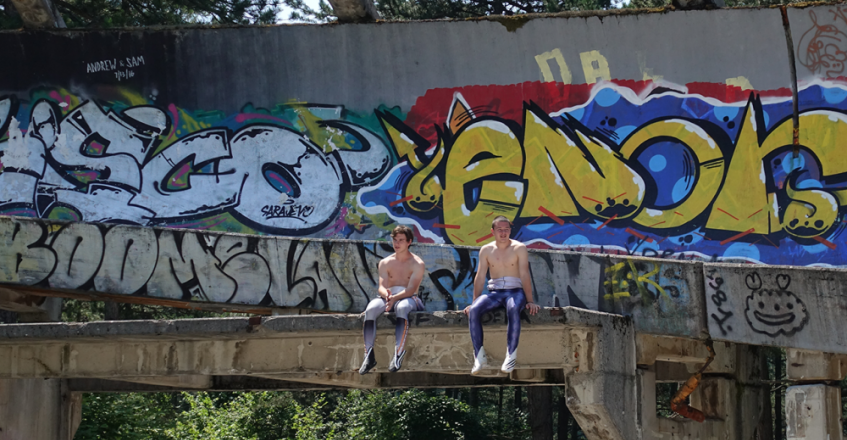
It’s February 2018 in Sarajevo, Bosnia and the Pyeongchang Winter Olympics are happening. Three teenage boys in Sarajevo — Zlatan, Mirza and Hamza — are watching the luge competition with their coach Senad and observing how the best lugers steer their sleds. They have a luge track a distance away because of the Sarajevo Winter Olympics from 1984, but it’s hard to sled on. During the Balkan War from 1992 to 1995, the track was subject to a lot of bullet damage. In the decades that followed, little had been done to repair it back to the world class form it had during the Olympics and before the Balkan War.

Despite the shabby graffiti-ridden cement track, the three boys still have the dream to compete at the next Olympics and Senad is willing to coach them. Fortunately, one of the boys is an engineering student and he is able to help create a roller luge to ride on a concrete track. Also Senad is willing to help use concrete patches to help fix up the track. For all of them, the fixing, building and training comes at a big expense for them as they won’t be receiving much government funding.

One thing about this is it is coming as it is hard to be a young person in Bosnia-Hercegovina. In the decades that followed the end of the war, the nation of Bosnia-Hercegovina has struggled to rebuild itself. The war devastated a lot of populations. In the Balkan nations, many young people feel they have to leave for another nation in order to get wealth. The corruption of the governments that have since led Bosnia has caused additional problems. As for sport, there’s very little money going around for Olympic sports and luge hardly gets much, if any money. Despite all that, all three boys and the coach still stay strong with their dream.

One thing about this Olympic dream is four years is a long way. As the three are young, they’re in that stage of life trying to decide about what their future will be. Some come from difficult family situations where they may have to supply them with an income. One comes from a family where the father left them and he has to look out for his mother and younger sisters. It may have them questioning if doing luge is worth their time. To add to it, the coach Senad makes it clear his health is ailing. It’s hard to coach the three especially since he would be paid very little for coaching.

The year 2018 is about getting the roller sleds ready, the track patched up and the boys watching luge competitions to see how it’s done. The summer is used as a time to use the roller sleds for their luging. It’s not an easy thing to do as the track is also a tourist attraction. 2019, the practices still continue for the boys as they ponder their futures. Training gets better as the track is better patched up and the sledders are able to do more sledding. They even enter international junior competitions such as one in Calgary. 2020 is a setback not just for them, but the whole world as the COVID pandemic. They have to use makeshift training methods for training. The pressure of it all gets to the point Zlatan can’t do it anymore.

As 2021 begins, the COVID pandemic is still active but the training has to get more serious. Senad adds two new cross training methods for the two. He adds in running up the Igman Olympic Jumps, another abandoned Olympic site, as part of their cross-training. He also includes indoor training at the Zetra Olympic Hall — the former Olympic arena rebuilt as a multi-purpose recreation facility — to develop their speed and conditioning more. Mirza, Senad and Hamza make television appearances. Senad goes as far as talking about his failing health in one interview.

Then the 2021-2022 luge season. For either Mirza and Hamza to qualify for the Olympic Games, they need to achieve a qualifying time and a qualifying place during the Luge world Cup circuit. This would be tough for them as they will finally sled on ice. The first attempt was Altenberg, Germany in December 2021. It did not happen as Mirza, the one with the best chances, fell from his sled near the end. He’s unhappy about it, but he has to ready himself as there’s the next meet in Innsbruck the following week. In Innsbruck, he completes both his runs and achieves the qualifying time. His Olympic berth is guaranteed! At the Beijing Olympics, Mirza is one of the two flagbearers for Bosnia during the Opening Ceremony. He competes the next day and finishes last. Nevertheless, he is proud of his achievement of competing. He also talks about his increase in social media popularity. As Mirza and Senad are back at home and on the track, they reflect and talk about their ‘impossible possibility.’

This documentary is not just about athletes dreaming of the Olympic Games. This is also about restoring life to an Olympic site that was devastated. This is about four people and their families trying to make dreams come true despite the difficulties of their livelihoods. This is about giving some vitality to a nation still recovering from a devastating war that lasted 3 1/2 years and they’re still picking up the pieces from. During that war, over 100,000 people were killed, over 2.2 million people were displaced and Sarajevo became the longest-sieged capital city ever. I myself remember watching the Sarajevo Olympics when I was a child. I also remember nonstop news stories of the Bosnian War as I was a college student and I often wondered if it would ever end. Since then, the nation has struggled to rebuild, government corruption has been common and many people have had to find opportunity in other nations.

The documentary shows how the three boys and their coach are training for their athletic dreams, but it also shows how the boys are also growing into young men. The documentary takes place over a four-year time frame. Their athletic dreams face frequent obstacles like their family situations, their maturation into adults, trying to decide their futures, and dealing with living in a nation with limited opportunity. It’s not like they live in Germany, Austria, Italy, the US or Canada where they can juggle it all with less difficulty. They have little to no funding, they have difficult living situations and they’re training on a shabby track. It’s almost like they’re the Olympic amateurs of past decades before professionals were allowed to compete starting in the 1980’s. It’s an against-all-odds story where they won.

If there’s one flaw of the documentary, I think it’s about the limited amount of footage in the film. It does a good job of showing the four training and of their family situation, but I feel the film could have also focused more on the background of the Olympic track and why it became shabby over time. It does often mention of the Sarajevo Olympics of 1984 and of the Bosnian War in the 1990’s, but it’s mostly brief moments. Seeing them train for their dream was great to see, but past references could have been added in more. Even more footage of what the track looked like in its Olympic glory days would be great. Despite what I want, that does not stop in telling a good story of Olympic dreams.

Top respect for director Ryan Sidhoo. He knows the story is about them and he has them tell the story as it happens over the four -year period. We often see these up-close-and-personal stories of Olympians before they compete in their big moment, but this is unique that it’s over this four-year period. Although there were some areas where it could have been better, I feel Ryan did an excellent job of showing their stories. Oh, and for those wondering about for the upcoming Cortina Olympics this coming February, Mirza is still luging. For the 2024-2025 season, he finished 20th in the World Cup standings and looks poised to compete at the upcoming Olympics and do much better than his placing in Beijing. Only this coming luge season will tell by how well he does.

The Track is more than just a documentary of Olympic dreams. It’s a story of hope for sport, for a nation, and for the young. The chronology of telling the story over four years tells you why this story is about a lot more.

Oscars 2024 Short Films Review: Documentary

You’re not done with watching the short films until you’ve seen the documentaries. Many of this year’s mix of nominees are of dark subject matter and are bound to spark discussion. There are two lighter documentaries based on the theme of music. Anyways, here are my thoughts on the nominees for Best Documentary Short Film:

Death By Numbers (dir. Kim A. Snyder) -The film focuses on Samantha Fuentes: poet, writer, school shooting survivor. She was a student at Parkland High School when on February 14, 2018, she was shot by shooter Nikolas Cruz. She was lucky to not be one of the 17 killed but she was among the 17 injured. Through her writings and her conversations with people, we hear her express her fears and her feelings as events involving this happen in 2022. There’s the trial for the sentencing, there’s the day of the verdict and there’s the day of the victim’s testimonies. As each event is approaching and each event passes, we see and hear Sam express her many feelings.

This is something you don’t often hear. This is the story of a person injured in school shooting, survived it, and has to face her attacker in court. The Parkland High School shooting has the highest fatality rate of all school shootings in the United States. The film shows the audience Samantha’s style of writing as she goes through her feelings before the testimony. They’re feelings of hurt, anger, sorrow, frustration, hatred for the shooter and her fears of the future. Her memories are haunting as she goes back to the day when she expected it to be another Valentine’s Day to seeing her attacker in the face before she was shot to remembering seeing two dead classmates. Then the moment where she finally breaks her silence. The film keeps you in the intensity of it all. That’s why I make this my Should Win pick.

I Am Ready, Warden (dir. Smriti Mundhra) – This is a chronological film focusing on the looming execution of John Henry Ramirez for the 2004 murder of Corpus Christi gas station attendant Pablo Castro. The film begins six days before the execution. John knows he’s about to die, but is relaxed about it. Also part of the film is Adam Castro, the son of the man John murdered in 2004, Jan Trujillo, a church leader who dealt with John during the last few years, Seth Kreutzer, the lawyer who’s trying to make a last-minute attempt to stop his execution, and 16 year-old son Israel Ramirez.

The film goes through the various feelings of the people involved. Six days before the execution is expected, Adam wants his death sentence carried out, Jan wants his to be spared and Israel wants him to live. Three days before the execution, Jan has her petition to Governor Abbott ready and Seth has his case ready to submit while Adam is still insistent on the death penalty. Then the day of the execution. John gives Israel one last phone call. Israel is in tears. Jan and her group show up along with Seth at the chamber. Adam listens into the broadcast. He’s waited for this day but when he hears John is dead, he doesn’t know if he should be happy or not. He’s in tears. The funeral for John happens. Then in an epilogue, we see Adam listen to the recorded apology from John made the day he was executed. Adam is left with mixed feelings but in the end, he accepts his apology.

It is a story of an upcoming execution. One of eighteen executions that occurred in the United States in 2022. This film could start a discussion about capital punishment. Beyond that, this film is a unique story because it starts with six days before the scheduled date. We learn of the crime John committed, how he fled to Mexico immediately, his eventual capture, trial and sentence. We see opinions from the sides of many people: the son of the man killed, the minister of the church John was counseled through while in prison, and the lawyer and advocates aiming for one last chance to stop his execution. We then see them again with three days to go and hear their feelings. Then the day of the execution. We learn John had a son. The son Izzy is introduced into the story. And then feelings after the execution. It’s unique not just for the very many angles of opinion we see and hear about John, but we learn of John himself and how he doesn’t fit the common terrible image of a death row inmate. In many ways the film could be seen as the redemption of Ramirez. It’s for you to decide. That’s why I decide this film is my WILL WIN pick.

Incident (dir. Bill Morrison) – The film starts with images of a zoom from Google maps to a street corner of Chicago on July 14, 2018. Soon, we see a police shooting happening. The man shot is Harith ‘Snoop’ Augustus who works at a nearby barbershop. The film then shows various angles of the aftermath from various police body cameras to surveillance footage. The film then goes back fifteen minutes earlier. It was a calm street corner, but there’s a high police presence as a heated trial involving a police brutality incident is awaiting its verdict. The film tells about Illinois’ various laws involving concealed carry and points out the five officers at the corner at the time. Two were probationary. Then we see the altercation that occurred and the actions of the officers. It’s filled with footage from both the ambulances, the angry onlookers and the officers who took the shooters away. The film ends with one more angle to view the shooting and if Snoop did attempt to pull a gun, as the two officers claimed he did.

Without a doubt, the story is about the corruption of the police force. The film does show the hidden racism of the officers as they think an African-American man is about to pull a gun on them. Snoop had a valid card to conceal. The film also shows their impulsiveness and incompetence as the two officers closest to snoop failed to turn their body cameras on. It also shows their irresponsibility as they try and make up excuses and defend what they did. As we learn the officers only got a slap on the wrist as punishment, the film also focuses on the problem of the protectiveness of the police: the ‘Blue Shield’ as it’s commonly called. It appears the point of the while film is to expose the truth and the problem. Watching the footage, you can form your own opinion about the incident with Snoop. Whatever opinion it is, you can agree Snoop did not deserve to die.

Instruments Of A Beating Heart (dir. Ema Ryan Yamazaki) – The film focuses on Ayame. She is a six year-old girl about to move on to the second grade. As part of the welcoming of the new first graders, there’s an opportunity to give them a musical greeting. The students greet them by playing Ode To Joy. Ayame wants to be part of it. She loses out on playing the drum but she wins playing the cymbals. Over the days, they have the rehearsal. Ayame is the one musician who is the most off. The music teacher verbally scolds her for not practicing. Ayame cried and loses confidence that she can have it right in time. Her teacher believes in her and the classmates are willing to help. In the end, all the students including Ayame deliver a great performance.

The film tells the uninterrupted, unnarrated story of a young six year-old girl simply trying to play the cymbal for the upcoming show. As we see the story, we learn a lot more. We also see schooling in Japan. We see it’s not just about teaching the children reading and math and, in this case, music. We also see them teach a set of values. We see them teach competition, but still befriend your rivals. We see them teach the importance of one learning what they need, but of others teaming up to help the other. We see a teacher shame Ayame for not practicing but also reminding her that she is able to do it. Even with the lunch break, we see the school placing importance on nutrition. As you watch the film, you’ll see it’s more than just a little girl playing the cymbal. It’s about moulding the young into being people for others as much as promoting achieving for one’s self.

The Only Girl In The Orchestra (dir. Molly O’Brien) -This film is a look at Orin O’Brien as she is approaching her retirement from the New York Philharmonic Orchestra for 55 years. A double bass player, Orin is a history maker. She is the first female musician with the New York Philharmonic. Most of the men did not like the idea of a female musician but conductor Leonard Bernstein loved her playing. The film goes through her childhood being the daughter of Hollywood actors, her pursuit of the double bass in her younger years, her joining the orchestra and years of performing, her teaching career, and her retirement from the orchestra. The film goes shows a lot like her teaching other students, her appearance at various events, the living conditions that cause her to move and the difficulties of having to give away her older basses.

After you see many a short documentary with a heavy topic, you will find this film a welcome relief. Finally something that’s not heavy and is a nice introspective. This film is actually directed by her niece Molly. The film takes into the out-of-the-ordinary life of Orin from the daughter of Hollywood actors to holding her own as a musician and conquering the sexism of the time. The film shows her career and her teaching with younger students as she passes on her knowledge to the next generation. The film shows as she retires from the New York Philharmonic and has difficulty deciding what to do after that. In some ways, the film is not just an intimate autobiography, but it’s also a portrait of a musician and their love for music. It’s possible this film could be the Most Likely Upsetter receiving votes from voters that prefer lighter fare.

And there you have it. That’s my review of the films in the category of Best Documentary Short Subject. That completes my reviewing of the short films nominated for the Oscars. If you want to check them out yourself, just go to shorts.tv .

2023 Oscars Best Picture Review: Barbie

Margot Robbie (right) stars as Barbie and Ryan Gosling (left) star as Ken as Barbie bring the legendary dolls to life.

DISCLAIMER: This is from a blog of four reviews I originally posted on March 2, 2024. The original blog has been removed.

Unless you’ve been under a rock, you would know that Barbie was the big hit movie of 2023. You may also ask did it deserve its box office success or its Oscar acclaim?

I actually learned about the Barbie movie over a year before its release. I saw photos of it on social media. During the time, I thought it was odd. A movie about the Barbie doll coming to life? Could it work? Would it be a dud? I know Greta Gerwig was directing it. I already knew Greta had established herself as a force to be reckoned with in films like Lady Bird and her adaptation of Little Women. Nevertheless I was skeptical that even a director with her accomplishments could make a good film about the Barbie doll. It was up for the release and the reception to tell the full story.

I have to say before I saw it in theatres, I first thought this would be a fail waiting to happen. A big-budget movie about Barbie dolls coming to life didn’t sound like a winner to me at all. Then once the film hit the theatres, it was obvious Greta created a winner. Instead of the film about Barbie dolls, the film’s focus was about feminism and how the patriarchy had made it hard and continues to make it hard. One would ask “Why would one make a movie with a feminist focus by including Barbie dolls?” Simple. Ever since the Barbie doll came, it has been widely blamed for the image problems of young women and commonly seen as “setting the woman’s movement back.” We’ve all heard the arguments and the controversies for decades.

Here, Gerwig settles the score. She creates a world of different Barbie’s based on the owner’s own making of the Barbie. In the middle is “Stereotypical Barbie:” a carefree girl who lives a life of blissful joy which comes to a screeching halt as her owner goes through her frustrations of life. She attempts to go to the real world and the Mattel headquarters to sort things out, only for Ken to piggyback his way in and adopt a patriarchal attitude as a way to fix his own identity crisis.  That leads to the group of Ken’s overtaking Barbieland and claiming it as their own. Meanwhile Barbie’s frustrations grow and grow even after she meets her owner, who happens to be a Mattel employee. Her owner’s frustrations become her own. It’s through meeting women in the real world that don’t look like her and are happy that she gets a sense of what happiness is. Over time, Ken learns he doesn’t have to start the patriarchy in Barbieland to get his sense of self-worth back, but Barbie’s still in a struggle.

It isn’t until he finally meets Ruth Handler, the creator of the Barbie doll, that she finally gets her sense of self back. I feel that scene at the end where Barbie meets up with Ruth is the best scene as it settles the score on the Barbie doll debate, too. After decades of debate and dispute about the doll, we get a moment in the film that finally settles the score about the doll and the image it’s to project. It’s through that ending we learn Barbie was not meant to be the stereotypical ditzy blond we commonly see it as. The Barbie doll was meant to be the epitome of her daughter Barbara. Something beautiful. Mattel may have toyed with the Barbie doll over the decades, but that scene finally settles the score on the matter. The Barbie doll is the result of mother-daughter love. And Stereotypical Barbie finally gets a sense of the never ending story of herself, as well as the human touch which is better than anything she could get in Barbieland.

Top respect should go to Greta Gerwig. Even without the whole Barbie phenomenon of 2023, Gerwig, who directed and co-wrote the film with husband Noah Baumbach, deserves credit for making a hit and a critical success for something that many felt was a bomb waiting to happen. She takes a common theme about the Barbie doll, of how many feel it is a bad influence to young girls and feminism as a whole, and makes it thought-provoking. Despite it being a thought-provoking film, she also keeps it comical and even entertaining to watch. I mean we are talking about a movie about Barbie dolls. Nevertheless, the film shows it can be funny and entertaining and still be able to get its message across strongly. As well as settle the score on the Barbie doll itself. Not to mention, achieve the first ever billion-dollar blockbuster directed by a woman! Congratulations, Greta, for doing all what we thought was impossible!

The film also finds its strength firstly in the acting of Margot Robbie. To take a character like “stereotypical Barbie” and make her three-dimensional without compromising the comedy is an excellent effort. They always say comedy is the hardest thing to do. Try doing comedy while trying to send an important message at the same time. Robbie succeeds in doing that. Also succeeding in achieving that is Ryan Gosling as Ken. Ryan gives personality to the Ken doll that the actual Ken doll has seemed to lack over the years. He succeeds in making Ken an insecure one and one to see patriarchy as the answer to his self-esteem. The performance is as bizarre as it is comical and entertaining. He even manages to make comedy of the patriarchy. Also worthy of acclaim is the performance of America Ferrera. While Barbie and Ken bring on the entertainment, it’s the character of Gloria who brings the movie’s darkness. America succeeds in creating an insecure Mattel employee whose personal insecurities influence Barbie’s insecurities and finding herself happening along Barbie finding herself. Also adding to the film is the narration from Helen Mirren. Her narration adds more charm.

For technical credits, Barbie has to get the biggest respect. Creating something like Barbieland and the Barbie dolls that live there is as much of an accomplishment as the film itself. First, there’s set designers Sarah Greenwood and Katie Spencer. They succeeded in making Barbieland into a land of Barbies that we can’t see anyone else doing a better job. It’s as big and colorful as it should be. Also top respect for costume designer Jacqueline Durran for designing the right type of costumes that look like perfect looks for Barbie dolls but very wearable for the actors and actresses. And then there’s the music. Those who saw it will know there are musical moments without the film being a full musical. Songs like “What Was I Made For?” “Dance The Night,” and “I’m Just Ken” add to the entertainment factor of the film. You can thank the many established songwriters who added their talents to this film.

For technical credits, Barbie has to get the biggest respect. Creating something like Barbieland and the Barbie dolls that live there is as much of an accomplishment as the film itself. First, there’s set designers Sarah Greenwood and Katie Spencer. They succeeded in making Barbieland into a land of Barbies that we can’t see anyone else doing a better job. It’s as big and colorful as it should be. Also top respect for costume designer Jacqueline Durran for designing the right type of costumes that look like perfect looks for Barbie dolls but very wearable for the actors and actresses. And then there’s the music. Those who saw it will know there are musical moments without the film being a full musical. Songs like “What Was I Made For?” “Dance The Night,” and “I’m Just Ken” add to the entertainment factor of the film. You can thank the many established songwriters, and main musical writers Mark Ronson and Andrew Wyatt, who added their talents to this film.

Barbie is more than just a humorous story. It’s a story that takes on the patriarchy, highlights feminism and has something to say about a doll that has delighted billions of girls. And thousands of boys, too. It also lives up to all the “Barbenheimer” hype of the summer of 2023 and entertains the theatregoer easily.

VIFF 2023 Shorts Segment Review: Forum 2

With me having to spend the entirety of VIFF in Vancouver this year, I have better chances of completing my three annual VIFF goals. I was able to complete the second of my goals: see a segment of short films. I did so at a “Film Forum” titled Forum 2. Not the most original of titles, but the stories made up for it. On top of it, they’re all from Canadian film makers. Definitely worth checking out:

-Sisters (Ontario – dir. Marisa Hoicka): The film begins with a 1960’s look and it appears to be an instruction film on how to be a “proper woman.” Instead the film is the narrator talking about how her “sister” taught her how to be a powerful woman with what she said and how she lived.

This is a unique short film. It comes in the guise of your stereotypical instructional film on how to be prim and proper, but instead is a story about empowerment. Throughout it all, it never loses that 60’s feel it intends to have. Very good film that does a lot in its brief time.

-Four Mile Creek (Quebec – Dir. Ryan McKenna):****The story begins with the retelling of the Cormier family as they go through Ontario until their eventual settlement to La Salle, Manitoba. Their journey is in the mid-1880’s and during a time of rampant smallpox. While in Ontario, the Cormier children were hit and their eight year-old daughter Aurore died. She was buried in the plains near their house and outside Kenora, Ontario by her father because a priest would not perform the blessing. A century later, a group of University of Winnipeg archivists, including family and one claiming to be haunted by Moise Cormier’s ghost, go on a mission to research and uncover Aurore Cormier’s grave.

This is a docudrama that combines recalling of letters from the Cormier’s to re-enacting of the moments of the family and their smallpox ordeal to those involved in the uncovering telling their story. It’s two films in one and tells a revealing historical story known to few. Impressive and creative.

-Cloud Striker (B.C. – dir. A.W. Hopkins): At an Indian Residential School in 1931, four male students are being punished by the nun. Their crime: speaking in their Indigenous language. One student, Elijah Cloud Striker, is defiant and even uses his Indigenous name in front of the nun. She slaps him and gives him the hardest of the punishment. A man comes to visit. He’s Chief Cloud Striker and he’s looking for his son. Both the nun and the priest try to persuade him to stop but the Chief punches the priest in the face after he hurls the chief a racist slur. The Chief and Elijah make a run for it. Later while resting in a remote area, they talk and wonder why their people aren’t angrier about this

The treatment of Indigenous peoples through the residential school system has scarred our nation like nothing else. Especially since Canada has been dealing with the ugly aftermath this past half-century. It’s unclear if this is based on a true story or if this is a story of an incident the filmmaker wishes had happened. The film is good at retelling ugly things that happened at residential schools and how it hurt peoples. The ending talk between the Chief and Elijah gives an impression of how a lot of Indigenous people feel about this system. That mention from Elijah of two boys being buried is another ugly reminder. Even though the residential school system completely ended in 1996, I’m sure there’s a lot of harbored anger with the system, the Roman Catholic Church, and the Canadian government. This story tells a lot.

-Conviction (Alberta – dir. Bruce Thomas Miller): A former convict named Joseph, an Indigenous man, is released from prison after years of incarceration. He is given a job as a custodian at a thrift store. He is given residence with a man maned Quincy who himself was a former convict and is to look out for him. At his job, he has to deal with co-workers who find him suspicious, a second-in-command who wants to be at odds with him, a customer who hurls an insult at him and traumatic memories of his crimes and his incidents in prison. At the end, Quincy reminds Joseph of what he himself had been through and he’s someone for Joseph to turn to.

We go from a film about the ugliness of Residential Schools to a film about the aftermath. Over time, it became evident the residential schooling system was a terrible idea as it led to substance abuse, homelessness, substance addictions, suicides and crime among the Indigenous people’s. Joseph is like a lot of Indigenous men who want to leave their ugly past behind and want to start a new life, but doesn’t know if he can. The director/writer wrote this script as he himself was going through his own healing of PTSD. It speaks volumes of the struggle they have to go through. Sometimes, Joseph doesn’t know if his freedom is a bigger hell than prison and may feel it’s better to return. At the same time, it’s a reminder there is support along the way from those who also went through what they went through. Excellent story that’s well-acted and gets one thinking.

-Black Box Investigations (B.C. – dir. Paige Smith): A woman buys a disposable camera. She takes all sorts of pictures of her, of her surroundings and of various angles. She buys another with a flash. Again all sorts of weird photos, including inside her mouth. The photos are for all to see.

This is the kind of short film I’d expect to see in a shorts show of MODES. Although I didn’t exactly like this short film, I give the director credit for wanting to play around and want to do something creative and fun.

-Autre Chose (Quebec – dir, Etienne Lacelle): A biker is repairing his motorbike. He had a bad crash the day before. He has a hard time repairing his bike but succeeds. He wants to go for one last ride in the wild. On thing. Just before he leaves, he comes across a strand of long blonde hair on him. It’s a strand of his late girlfriend who died in the crash. He puts it in a small bag and heads off on his bike with a rifle. He drives through the terrain but gets his bike stuck. He tries to camp out and throws his girlfriend’s hair in a bonfire. While out walking the wilderness, he contemplates shooting himself. He doesn’t and moves on. As he comes across a lake, he cleanses himself in it. But as he drives off, he comes across her hair again.

This is a unique short film with no dialogue and lets the images and the sounds tell the story. You can get a sense of what is happening with the story. The images of the story even gets one asking questions. Like did he kill her during the accident? The thought of suicide and the bathing in the lake just after could mean it’s showcasing a chance at redemption. The ending can also send a message that even if redemption is possible, he still has to deal with the unresolved aftermath. The film really gets you thinking and will leave you with questions of your own..

-The Great Kind Mystery (Newfoundland =dir. Ella Morton): Images of Daniel’s Harbour, Newfoundland and its surrounding area are shown as young artist Amy Hull, who is of Mi’kmaq and Inuk descent, tells her story. The stories she tells are of the area of Daniel’s Harbour and its history, her denial of her Indian Status while she was attending university, and of the pride she feels of her ancestry.

This is the third Indigenous-themed short that was part of the segment. The first dealt with oppression of the past, the second dealt with the aftermath and this short deals with the current systemic racism in Canada’s Indian Act. This film is a reminder that Canada still has a long way to go to do things right and drop its racist systematic treatment of Indigenous peoples, especially in these post-Residential School times. This documentary is also a film that inspires hope. Amy is young and resilient and refuses to let racist politics destroy her pride or her identity and pursue her artistic dreams. She embraces her identity despite what has happened to her and won’t bow down. This film, and Amy’s story, is a ray of hope for the future.

-Element (Quebec/Ivory Coast – dir. Will Niava): It’s a hot summer day in Abidjan, the capital city of the Ivory Coast. A group of four young thugs have a hard time trying to make money. Their current business is not doing so well so they decide to get involved in illegal things. As the money gets better, things make a turn for the worse such as in their unity, the leader’s relationship with his girlfriend and even his soul. He even comes across a vision of himself of him dead and all of his loved ones at his funeral. It’s there he emerges from the ocean water and starts a new life, but not without something tragic at the end.

This is a unique story as it tells the story of pursuing life in the fast lane with the mix of spirituality. What the leader experiences is consequences both in the earthly world and the spiritual world. The inclusion of the spiritual world adds to the film and shows a form of spirituality rarely seen by others. It’s rare to see something like that in a film about young thugs trying to live fast. Overall, a great unique drama.

That’s what it was. Eight shorts from eight Canadian directors. Two were from BC, three were from Quebec. Three were from female directors and three were Indigenous themed. Most were dramas, some were experimental and some were even documentaries or docudramas. All of them are unique in the stories they showed and what messages they want to send. Also all of them showcase directors with a promising future.

Those are my thoughts on the eight short films of Forum 2. Some I liked, some I found intriguing, a few I didn’t. All of them did showcase the director’s works and abilities very well.

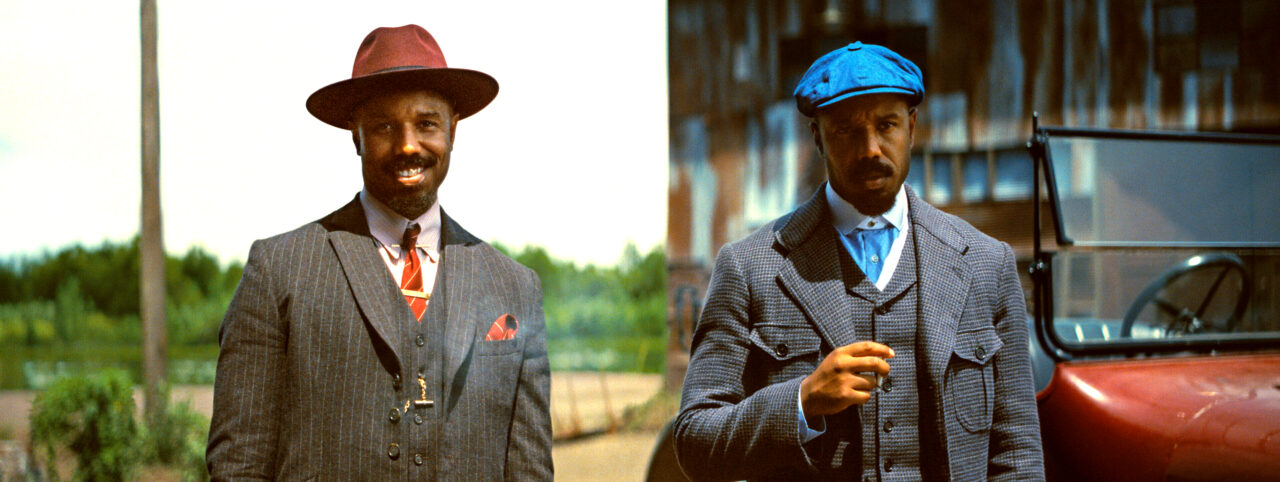
Oscars 2018 Best Picture Review: Black Panther

Black Panther
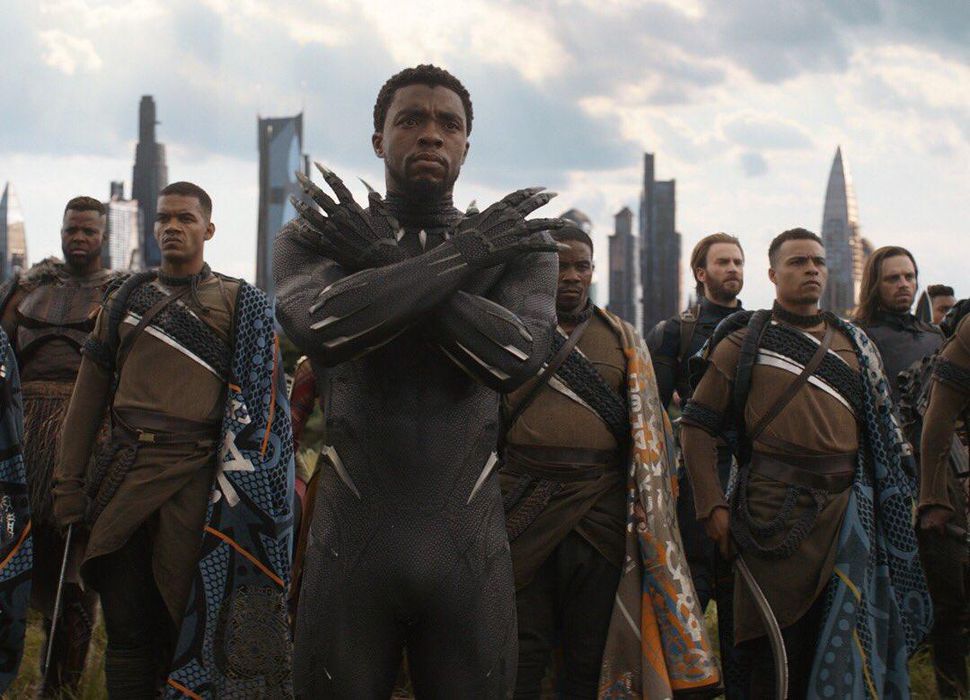
Chadwick Boseman plays The Black Panther who has to save the kingdom of Wakanda and his people.

People have been waiting for the longest time for a superhero movie to get nominated for Best Picture. If there’s a movie genre the 2010’s will most be remembered for, it will be for the heydays of the superhero movie. Deadpool and Wonder Woman were heavy favorites that ‘missed by that much.’ However it’s Black Panther that finally did it. And rightly so!

Now I’m not going to give a brief synopsis of the plot because most of you already know the story and saw the action. I will talk about superhero movies and how it lead to Black Panther’s most recent Oscar success. Now we’ve had superhero movies in previous decades and back in the 20th Century. I’m sure many of you can remember the old Superman and Batman movies from the 80’s and 90’s. The problem is around that time, the emphasis on popcorn movies back then was to be heavy on the action, and even heavy on the market hype, but comparatively minor attention to the characters and story-line. You couldn’t blame them; action movies blew people away and won big at the box office. However the flaws of a shotty script with minimal character development would soon become noticeable, especially by the critics. Around the 90’s as independent films were winning people over with storylines and well-developed characters, the stories and characters in action movies were starting to look either cardboard or idiotic. 1998’s Godzilla was possibly the best example of a film loaded with hype and action, but a ridiculous cookie-cutter story with foolish acting.

The 21st Century would mark a turning point for popcorn movies and especially for superhero movies for them to deliver better stories and better acting. Some say 9/11 became a turning point for movie watchers as they became less interested in cheering for villains and sleazes, but there’s more to that. The first sign was 2002’s SpiderMan. The producers were aware that despite the love for action in movies, the films story and acting could not be compromised. The film was loaded with action, as expected, but it did an excellent job in delivering a good story along with good acting as a result. That would not only open the doors for more superhero movies to come, but would also change the way superhero movies were done too. Marvel and their cooperating studios would become less focused on marketing hype — have you noticed there are less fast food chains plugging action movies lately? — and more focused on developing a well-written and well-acted story. It’s not to say that there were duds. There were a few SpiderMan sequels that were lousy and the 2015 rehash of the Fantastic Four was lame, but most superhero movies were very winning and easily demonstrated why they were winning crowds over.

Also on the subject of superheroes, I remember there were groups from religious organizations highly critical of the movies Hollywood was shelling out. They were complaining about all the ‘hazardous’ things in movies and how it threatened their values. Although no censorship occurred from their pleas, it did have an effect on the way superheroes are portrayed in the big-screen movies. One thing the studios were reminded of was that superheroes didn’t just simply do amazing things with their hands. They were characters that took a stand for values and were not afraid to do what’s right and be unafraid to deliver in their call of duty. In fact there have been many cases of some studios’ writing teams hiring Christian writers for the task. In most cases (obviously not for Deadpool), the superhero movies of the 21st Century were often praised by Christian critics of promoting values and dignity in a winning way. To think back in the 1990’s while gangsta rap and anti-hero entertainment were the call of the day, most people thought a story promoting values would come across being like a Mister Rogers. The 21st Century superhero movies proved that promoting values can be done in a winning way.

However it’s only been in recent years that superhero movies have the potential to do very well in the Oscar race. Most of the time, the best chances superhero movies had at scoring Oscars or Oscar nominations were in the technical categories like Best Visual Effects, Best Sound Mixing, Best Sound Editing. Sometimes they would win nominations in Best Costume Design, Best Production Design or Best Original Score despite nominations going mostly to ‘timepiece’ movies. The big turning point came in 2008 when The Dark Knight was a heavy favorite to get a Best Picture nomination. It didn’t happen, but Heath Ledger won an Oscar for his portrayal as The Joker. It was the biggest sign of how much better superhero movies, and even popcorn movies in general, became. In the past two years, there were two superhero movies, 2016’s Deadpool and 2017’s Wonder Woman, that were nominated for Best Motion Picture for the Producers Guild Awards. The Oscar nomination however did not happen: for Best Picture or any category!

It’s 2018; enter Black Panther. The Black Panther is a hero that actually made its debut in the Marvel universe in a Fantastic Four strip in 1966. The Black Panther has made many appearances in various Marvel comic stories. In film, the first appearance of the Black Panther was in 2016’s Captain America: Civil War where he was played by Chadwick Boseman. That of course was an Easter Egg of what was yet to come. The movie of The Black Panther was released in 2018. As expected, it was to tell the story of how the Black Panther came to be and how the Black Panther had to achieve their first defining moment of greatness. However it did a very good job in presenting a story of a moment in the distant past, to the ‘near-past’ of 1992 to the present. The story doesn’t just simply focus on T’Challa becoming the Black Panther, but also on his family and restoring the dignity of the Jabari Tribe and the wealth of the kingdom of Wakanda.

The film also does a good job in developing a story that’s entertaining for adults but also not too confusing for children. Another hard job of superhero movies is developing a story that works for both children and adults. It shows the conflicts abounding between T’Challa and Killmonger, as well as Killmonger’s pursuit of the throne of Wakanda with the intent to rule corruptly. It delivers the story in an excellent and entertaining manner with well-developed characters. Of course a superhero film needs to have its action moments, but the film does not compromise at all on the story or the characters.

The best efforts of the film come from director/co-writer Ryan Coogler and co-writer Joe Robert Cole. Coogler has had a steady progression in the film world. His first film was the 2013 independent arthouse film Fruitvale Station, then progressed to popcorn movies with 2015’s Creed, and now Black Panther. All have had winning results. Black Panther could have gone to another white director that was part of the Marvel team, but marvel made the right choice to have Coogler direct despite never directing a sci-fi movie. The result is winning. Cole has also been able to make his mark in this film. The most writing experience he had before the film was 2011’s Amber Lake and the TV series The People vs. O.J. Simpson. Here, he’s able to make a name for himself in a big way and should open bigger doors in the future.

With the great directing and the great story, the acting is also excellent. Chadwick Boseman delivers very well as the Black Panther and succeeds in delivering a three-dimensional role for the character. Michael B. Jordan (who also acted in Fruitvale Station and Creed) also does a great job portraying the villain. Lupita Nyong’o was possibly the biggest scene-stealer of the movie. She was enjoyable. The costuming by Ruth E. Cater worked excellently for the film as well as the sets for the film. It made Wakanda look very believable as a place. The music by Ludwig Goransson also fit the film excellently and the special effects were dazzling and entertaining.

It’s easy to see why Black Panther is a winning film. It’s a superhero story that delivers in all facets and manages to dazzle crowds too. It also succeeds in again taking a seldom-known Marvel superhero and turning him into a household name.

Oscars 2016 Best Picture Summary: Part 2

Some of you may be confused about the order of how I do each film of my Best Picture summary. It’s definitely not alphabetical. How I do it is in the order in which I saw the nominees. For example, I saw all the films in my first summary before Christmas. I saw La La Land on my father’s birthday, Fences the day after New Years, and Manchester By The Sea on the day of the Golden Globes. That explains why they’re the three films part of my next Best Picture summary.

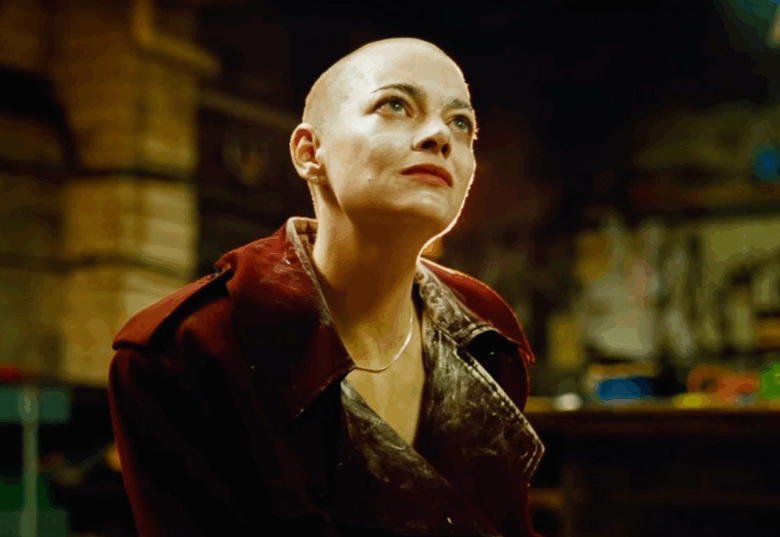
LA LA LAND

la-la-land
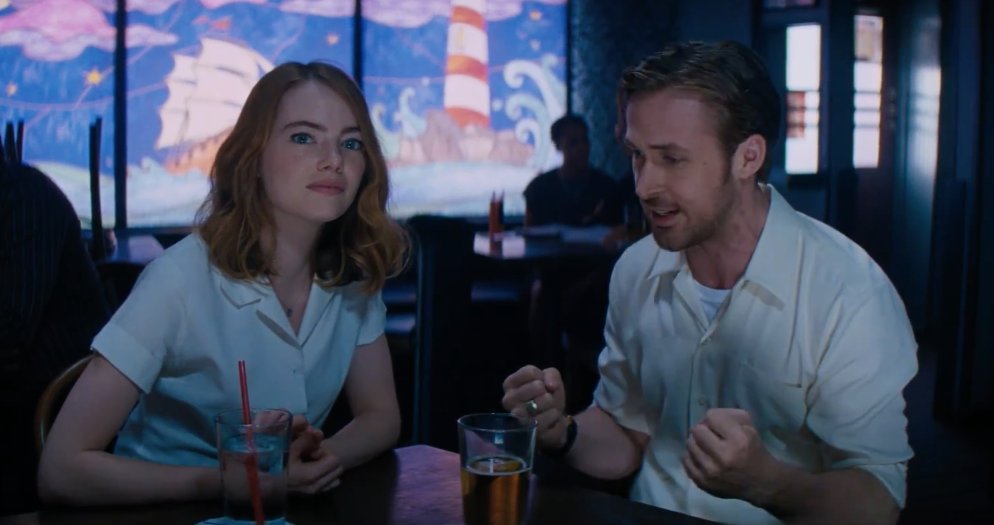
Emma Stone and Ryan Gosling star as an actress and a pianist united in their dreams of stardom in La La Land.

We don’t see musicals on the big screen as often as we did back in the 60’s and 70’s. La La Land may not make the musical phenomenon come back but it is very entertaining.

We’re constantly reminded that bringing a musical to the big screen is a very tricky job. In the past 15 years, I’ve seen a lot of cases of musicals being put on the big screen– most of which are adaptations of Broadway musicals– and it’s always been a case of sink-or-swim. There have been those done successfully like Moulin Rouge, Chicago, Dreamgirls and Les Miserables. There have also been adaptations with bad results like Rent, Nine, The Phantom Of The Opera and Mamma Mia. It’s a very tricky job and it may explain why we don’t have musicals as frequent as in decades past.

Now try putting a fresh original musical on the big screen. That’s what writer/director Damien Chazelle does here in cooperation with composer Justin Hurwitz who was Chazelle’s Harvard classmate. The musical is a story we’re familiar with: boy meets girl, boy learns girl also has showbiz dreams, both boy and girl are supportive of each other’s dreams, boy and girl both have long bumpy roads to get to their successes, boy and girl both achieve their own successes but their love is put to the test. One could argue anyone could create a musical with that kind of premise. Whatever the situation, it would have to take a lot of hard work and a lot of brainstorming to make a very good musical out of this. In addition, it would have to have the right songs, the right singing moments and the right dancing moments to make it succeed.

Chazelle and Hurwitz succeed in pulling it off. The story is familiar but they deliver all the right moves in making the story and the songs of the musical work. It’s not just about making a common story work as a musical on screen but have it set in the modern times too. I’ll admit that opening in the movie where there’s a song-and-dance number on a jammed-up freeway was unexpected. It’s not just set in modern time but it also brings back a lot of the classic scenes of Hollywood; the Hollywood we’ve all come to know and love. I think that’s why La La Land comes off as a gem. Because it’s a reminder of the great musicals of the past and why we love them so much. It’s just that charm.

It’s not just up to Chazelle and Hurwitz to make this musical work but also the actors too. Both Ryan Gosling and Emma Stone had to make things work as well both as individuals and both as the couple Mia and Sebastian. They had to tell their own stories of love and passion for their crafts and the heartbreak they had to endure to achieve their dreams. They both also had to play a couple with the right chemistry to work. They pull it off excellently both as a couple and in their own individual moments too. The supporting actors/singers/dancers also had their parts to play too and add to the zest of the musical. Their own participation also added to the movie. Sure some of the bigger supporting performances from John Legend, J.K. Simmons and Tom Everett Scott lacked range–I mean Mia and Sebastian were the dominant focus of the musical– but they did very well too. The film did a very good job in terms of the use of sets both set up and various Los Angeles locations. The film even scouted out some ‘old L. A.’ locations to add the charm. That was not an easy find, I’m sure.

And now onto the songs. My father who likes musicals believes having a memorable song is what makes a musical a masterpiece. I have to agree. I’ll say I agree with him that there is no single song in La La Land destined to be a memorable classic. True, ‘City Of Stars’ is getting a ton of awards but I don’t think it will be a classic 20 years from now. Actually my favorite songs were the opener ‘Another Day Of Sun’ and ‘Audition (Here’s To The Ones Who Dream).’

It’s funny. Years ago, I jokes the unique thing about my father is that he’s straight and he likes musicals. He was quick to remind me that back when he was dating my mother, musicals were the ideal date movie. My how times have changed. What defines a date movie has changed as much over the decade as ‘real man’ standards.

La La Land may not have what it takes to bring the musical phenomenon back to the big screen but it’s winning in it’s own right. Anytime soon I’m expecting a stage adaptation of this.

FENCES

fences
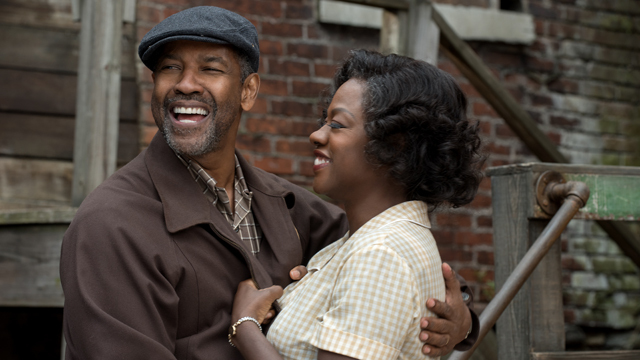
Denzel Washington and Viola Davis bring Troy and Rose Maxson to the big screen in Fences.

Fences is a play by August Wilson that won raves when it first came out in the 1980’s. Denzel Washington brings Fences to the big screen at long last and the end result is something wonderful.

Fences is unique as a stage play. It’s a story about Troy Maxson: an African-American man in 1950’s Pittsburgh who makes like he has it together but he doesn’t. He thinks he could have been the next Jackie Robinson but feels racism kept him from moving out of the Negro League. He wants to mould his son the way he feels right and wants him to be better than him but doesn’t sense how harsh he is. He wants to be seen as a loving husband to his wife Rose but secrets of his infidelity are about to unfold. He gets an opportunity as a driver of a garbage truck–the first ever for a black man in Pittsburgh– but is reminded of his weaknesses when he accidentally signs for his brother to be admitted into a mental hospital. He has his own feelings about what should be right such as how he feels it’s better to raise his son right than like him only to see it backfire. I’ve heard some writers say that every African-American male has some aspect of Troy Maxson in them. Some people say that Troy Maxson is the African-American everyman. Some can even say Troy Maxson is the black Willy Loman. Whatever the situation, it was the toast of the 1987 Tony Awards and definitely made a legend out of scriptwriter August Wilson.

Now Wilson had always dreamed of bringing Fences to the big screen. I know one of the things he insisted on was that it be directed by an African-American. That may or may not have been the biggest obstacle but it was never realized in Wilson’s lifetime; he died in 2005. Hope was revived in 2013 when Denzel Washington expressed interest in bringing it to the big screen and star as Troy Maxson. Washington played Maxson in a Broadway revival in 2010. He’s even had experience as a director with 2002’s Antwone Fisher and 2007’s The Great Debaters. The production was realized early in 2016 when Washington was joined by producer Scott Rudin who also produced the 2010 revival. Viola Davis who was also part of the revival as Rose Maxson soon joined in along with other actors from the revival like Mykelti Williamson, Russell Hornsby and Stephen Henderson. One thing was that Washington wanted to remain true to Wilson’s own adaptation in respect to his work.

Now adapting a play to the big screen is as much a tricky challenge as bringing a musical to the big screen. It’s a matter of choices of what to include and what to keep as is. Theatre and film are two different formats of medium. Film scenes are numerous and can be set in an unlimited number of  places in various amounts of time. Theatre scenes are often few, often quite lengthy, set in a limited number of places, and often consists of ‘moments of monologues.’ There’s even that 20-minute final scene in Fences where the family is getting ready for Troy’s funeral. Rarely in film do you have a scene after the death of the protagonist that’s even five minutes long. It’s a matter of making the adaptation work on the big screen. It’s also about what choices to add to the film adaptation and if they work. It was about choosing to add the scene of Troy and Jim Bono on the back of the garbage truck at the start. It was about including the scene without dialogue of Troy and Gabriel in the mental hospital. It was about keeping Alberta the mistress from being seen in the film in any which way.

Then there’s the acting. Of course it’s beneficial for most of the actors to have previous experience with the roles. However, it’s a known fact that stage acting and film acting have their differences. The biggest difference for film is that the audience expects a 100% believable performance, especially since it will be witnessed on a screen five-stories tall.

Overall I feel that Denzel Washington as a director/producer did a good job in adapting the play to the screen. It may not have the fast brief dialogues you get in your typical big screen fare but it was still done well and with the same truthfulness. The choices of what to add to the big screen adaptation were good choices, if not perfect. Denzel as an actor was definitely phenomenal in embodying the role of Troy in all of his triumphs and struggles. You could feel the pride and demons Troy was struggling with. Just as excellent is Viola Davis as Rose. The role of Rose was also a strong challenging role: a wife who appears happy and loving on the outside only to suddenly let out her hurt and inner wrath towards Troy and somehow come to peace with him upon his death. She does an excellent job of finally exposing Rose’s inner hurt and inner personal strength at the right times and even ending with believable delivery. The acting of the whole ensemble was very much there and as excellent as it can get. Of all the supporting performances, the one that stood out most was Stephen Henderson whose performance as Jim Bono came across as a common man at first but would soon come off as the man with a lot of wisdom and was able to see the good in Troy even while his terrible misdoings were being exposed. The ‘newcomers’ Jovan Adepo and Saniyya Sidney were also very good in their roles. Jovan especially did well as the son struggling to relate to Troy.

Fences is a triumph of a twelve year-old dream coming true. August Wilson dreamed it. Denzel achieved it. The end result is a masterpiece.

MANCHESTER BY THE SEA

manchester
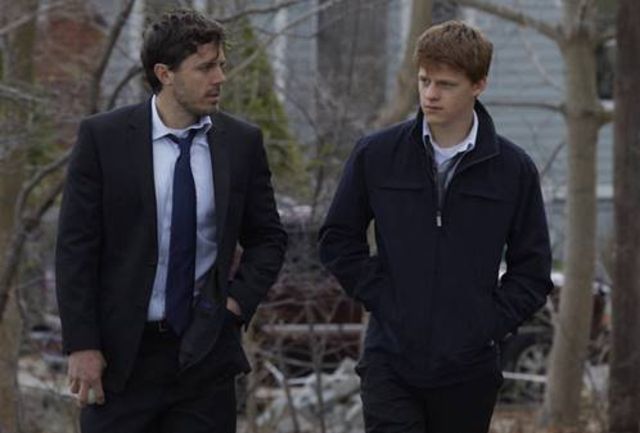
Manchester By The Sea is the story of an uncle (played by Casey Affleck, left) and a nephew (played by Lucas Hedges, right) who suddenly become closer through death.

Manchester By The Sea is a film that has been loaded with Oscar buzz ever since it made its debut at last year’s Sundance Film Festival. It’s easy to see why all the buzz.

The film presents a hurting person and showcases all the things that led to his hurt. It shows why he had to leave the town he always had as his home and why returning can’t be done. It shows why Lee Chandler comes across as a jerk in the present when he wasn’t like that at all years ago. The film is also about the relationship of Lee and Patrick. Rarely do we see a film about an uncle-nephew relationship. You think the relationship is something all of a sudden at first forced by something in his brother’s estate but it was always there even when the two were apart.

The film also presents a situation where healing or leaving the past behind is next-to-impossible. I’ve always believed people need to heal. It’s not right to hurt. I still believe it. However I can easily see how healing is very hard. You can see why it’s extremely hard for Lee to heal, especially upon returning to Manchester By The Sea, Massachusetts. His negligence that one night is why all three of his children were killed in that fire. The divorce from his wife Randi was bitter and she gave him hurtful words in the process. The town has not forgiven him for what he did: his name is still mud. Even moving to a suburb of Boston has not ended his hurt as he’s rude during his job and starts bar fights over the simplest thing.

The film does showcase Lee’s attempt to assimilate into the town and try to become the guardian to Patrick he hopes to be. The story does not water down as it exposes Lee’s failings. It also exposes how complicated the situation is as Patrick’s mother is a recovering alcoholic and still under strict control by her husband. It also shows how hard it is for Lee to forgive himself. Even as Randi says she’s forgiven him, Lee still can’t heal.

The story does not water down the situation or try to aim for the type of happier ending you’d get in a film like Arrival. The story does not end the way you hope it does. Nevertheless it does end with a ray of hope. Patrick is the closest relative to Lee. His parents and brother are gone and his other brother lives with his own family in Minnesota. Patrick is the one person in Manchester By The Sea outside of family friend George who doesn’t see Lee as this terrible person or rubs into Lee the tragedy he caused.

The film was not just about Lee trying to heal for Patrick but about Patrick too. Patrick is a teen with a lot of common ‘teenage make jerk’ traits like starting fights in hockey and cheating on girls but you know he has a naïve, innocent and even sensitive side and it comes out in his relationship with Lee that starts uneasy at first. Patrick still wants to live a normal teenage life by dating around, playing with his band, and talking about Star Trek with his friends, but you know he has feelings of hurt and frustration on the inside and you know they’ll come out eventually.  For all the teenage jerk traits Patrick has, his respect for Lee is his best quality. Patrick could have easily come across as a rebellious teen and gone as far as calling Lee a ‘child killer’ but he doesn’t. Possibly it’s being Joe’s son that may be why Patrick is the person most forgiving to Lee now that Joe is gone. Joe was the one person willing to help Lee live life again after the tragedy and Patrick accompanied Lee and Joe during that time. You can see how Patrick adopted his father’s sensitivity to Lee.

The story of this film is definitely not a crowd-winner. You can understand why a film like this would rely on the Film Festival circuit to get its exposure and its chances of making it to the box office. Nevertheless it is an excellent story about loss, grief, hurt and an attempt at healing. The film fest circuit was the best way for a story like this to get a box office release. It’s good because it is a story worth seeing.

Writer/director Kenneth Lonergan delivers an excellent original story. Lonergan has few works writing and/or directing to his credit but they have a lot of merit: like Analyze This, You Can Count On Me and The Gangs Of New York. This is his best work to date. He delivers a story that’s honest and even brutal at times and doesn’t water down but doesn’t try to rip at your heartstrings too often. He also gives characters that are three-dimensional and will remind you of people or situations you may know about.

Actor Casey Affleck fit the role of Lee excellently. He captured Lee’s inner demons excellently and played them very truthfully. He was able to make you hate Lee at first but come to understand him later, even feel for him, and make you want the best to work out for Lee in the end. Also excellent was Lucas Hedges. Hedges’ role of Patrick grows in its complexity over time and he does an excellent job of it. The two together had to have the right chemistry to make an uncle-nephew relationship like this work and they had it.

The only other significant supporting role in the film is Michelle Williams as Randi. The various scenes as the typical wife before the tragedy to being the remarried ex-wife who healed better than Lee and wants to make peace with him is also a complex role too and she does an excellent job of it too. Actually the whole cast did an excellent job of acting and they delivered one of the best ensemble performances of the year. It’s not just the basics that made this film great. There’s also the cinematography from Jody Lee Lipes where she’s able to get some of the most picturesque shots of the east coast. There’s the editing of the story shifting from the present to the past back to the present on a constant basis at the right times. There’s the inclusion of dialogue at the right moments and even moments of dialogue muted at the right times where you just know what they’re saying. The muted parts work to the story’s advantage. There’s also the arrangement of music–original, classical and choral– that add to the story.

Manchester By The Sea may come across as a film that’s unwatchable if you take its premise at face value. In the end, it turns out to be a great story that’s worth seeing.

And there you go. That’s the second of my review of the nominees. One’s an original musical, one’s an original story and one’s an adaptation of a renowned stage play. All three make it obvious why they were nominated for Best Picture as all three have what it takes to be among the Top 10 films of the year.

Final Best Picture summary is expected to be up by Tuesday.

Summer Movie Summary: Comedies

I don’t know about you but live-action comedies didn’t fare so well at the box office this summer. The highest-grossing comedy of the summer was Central Intelligence with just over $127 million. The only other two comedies of the summer to gross over $100 million were Ghostbusters and Bad Moms. Have people lost their sense of humor? For this summary, I will review two movies: Ghostbusters and The Nice Guys.

The Nice Guysthe-nice-guys

I’ll start the focus on one movie I saw all the way back in May. A comedy I was hoping to do well at the box office but didn’t. I saw The Nice Guys because I felt we were long overdue for a crime comedy or a police comedy. I have to say that this was a funny movie and has to be this year’s overlooked gem.

It takes us back to the 1970’s not just to do with the clothes, hair and music but also of a 70’s thing few 70’s-set movies focus on: the abundance of porn. We often forget that the 1970’s was the sexual revolution’s biggest heyday. A decade of free love at its freest and pornography was prevalent even in the movie theatres. It was even okay back then to take a date to a porno.

Here, they make a crime story set in the deliriousness of the porn business. It doesn’t aim for one-liners like so many other comedies resort to. What it does is it makes comedy of the situation. A case of a private eye and an enforcer who become unlikely partners in trying to solve a murder and who is connected to it. Another humorous situation is at the Los Angeles Auto Show where a clip of the porno starring the murder victim is spliced in to the auto show film to the shock of all. The story even has ironies added into it like how the Holly March, daughter of private eye Holland March, is able to help solve some part of the crime with her know-how. Another irony is how a politician who wants to have the crime solve is actually a part of the instrumentation. It all adds up to a humorous story that will have you laughing at the situation.

The film also gives you this summer’s biggest WTH moment. That comes when the police interrogate a neighborhood boy who showed his penis to a neighboring porn director who was killed. That’s sexual abuse, right? When I saw the interrogation happening, I was expecting a scene of a sexual abuse victim. Instead, the boy comes across as excited as if his exposing could open up opportunity in porn in the future. That was so bizarre. Just reminds you that the sexual revolution of the 1970’s was that free.

Director Shane Black takes a break from directing superhero movies like Iron Man 3 by directing this crime comedy he co-wrote with Anthony Bagarozzi. It comes off as very humorous in a dark way. I’d like to think he succeeded. Russell Crowe was the right fit for enforcer Jackson Healy. He possessed the right ruggedness for the role. Doing crime comedy is something new for Ryan Gosling but he did a very good job as Holland March. The scene-stealer was young actress Angourie Rice who played daughter Holly March. She did a good job of going just a simple daughter of Holland to all of a sudden one who can best help trace the case and even help solve it, with providing some action of her own. Also a big surprise is seeing Kim Basinger as the politician. I admit it. Like your typical 80’s kid, I always picture Kim as the bombshell she’s most famous for. It was surprising to see her play a role of an older character. I’m not complaining. I think she did quite well.

It is too bad to see that it didn’t make too much at the box office: $57.3 million. There was a time a while back where crime comedies or dark crime dramas were a big hit. I remember the 1990’s were capable of churning out one such movie per year that would be a classic like 1994’s Pulp Fiction, 1995’s The Usual Suspects, 1996’s Fargo and 1997’s L.A. Confidential. Since then, it cooled down. I was hoping this movie would revive some interest in it and rediscover the humor of the crime comedy. Also I feel there’s another message being sent with the lack of success of the film. The 70’s retro in movies has now faded. I know it was very active from the 90’s carried into the 2000’s and showed some muscle at the beginning of this decade but it’s obvious 70’s retro has faded with time.

The Nice Guys is an overlooked comedy from the summer. It’s worth seeing if you have the chance.

Ghostbusters: Answer The Call

ghostbusters-1

From retro 70’s to retro 80’s: the retro phenomenon that still has the most muscle despite retro 90’s encroaching. Now news last year of a Ghostbusters remake featuring an all-female ensemble of Ghostbusters seemed unorthodox at the time. One conservative filmmaker went as far as saying ‘My childhood is ruined.’ However I was willing to give it a chance. I mean this is 2016.

In order to differentiate itself from the original 1984 Ghostbusters, it gave itself the subtitle Answer The Call. Now the big challenge was to decide whether the film was a case of the ghostbusters starting up together or whether these four women were filling the shoes of the men before them. It was decided to be a story where the ghostbusters start fresh. It’s very tempting to compare it to the first Ghostbusters. Actually there’s no escaping it. If you compare the two side-by-side, you will notice a lot of differences. And not just simply the change of genders of the cast. The first is the humor. The new film has humor and lines that are more irreverent that the humor and jokes in the first. The second is the Ghostbuster-wannabe characters. One thing about the first is that the addition of nerd Louis Tully added to the humor of the film. Of course Rick Moranis always specialized in nerdy characters. Having a bimboy character who’s their receptionist play the Ghostbuster wannabe here didn’t fit as well. Plus he wasn’t even that funny. Another is the possessed character scene. I’m sure those of you would agree that the possession of Dana Barrett worked better than the possession of Abby Yates. Even the line “No Dana, only Zuul.” is way more memorable.

Despite the first Ghostbusters being better than the new one in many ways, the second one does have elements that are better than in the first one. The first and most obvious is the better special effects. The film was able to create better and more eye-catching ghosts than they were in the first one. Computer technology has made that big of advances over the years. Another was the rock concert scene. If there was one plus to the movie, it was that where the foursome have to battle a ghost while a rock band was performing. That added to the humor and made it enjoyable.

It’s clear from the start this is a group effort between Paul Feig, Katie Dippold and Melissa McCarthy. This is the third collaboration with the threesome where Feig directs and co-writes, Dippold co-writes and McCarthy acts in. Its often questionable who was the main lead role of the film: whether it was Kristen Wiig’s Erin Gilbert or if it was Melissa McCarthy’s Abby Yates. I know McCarthy’s star has grown bigger over the years. The addition of two other Saturday Night Live talents Kate McKinnon and Leslie Jones make for a good mix of humor.

One thing to note is that personnel of the original Ghostbusters gladly came back for the revamp. There’s Ivan Reitman who’s the co-producer this time around. There’s Bill Murray who makes a cameo as a skeptic to the busters. Dan Aykroyd makes a cameo as a taxi driver, Annie Potts makes a cameo as a crabby hotel clerk, Ernie Hudson appears as Patty’s uncle Bill, even Sigourney Weaver makes a cameo appearance.

Ghostbusters: Answer The Call may not compare to the original. It’s either the freshness or the magic of the first that’s not there. Nevertheless it is enjoyable and does make for some good laughs.

And there’s my summary of the summer’s comedic movies with focus on the two. Hopefully the studios should be able to find the right funny stuff to get the live-action comedy back to being a summer hit next summer.

Movie Review: Deadpool

deadpool
Ryan Reynolds plays Wade Wilson who becomes Deadpool: your atypical superhero. Actually he’s not a superhero at all but very entertaining.

Surprise, this is a different kind of superhero story.

DISCLAIMER: I know this review is late. I’ll admit that this is a common thing of mine that right after the Oscars, I become too tired to do blogging for a while. So please excuse the lateness of my review.

Just before the Oscars were about to be awarded, I admit that I went to see Deadpool. All this buzz about an R-rated superhero movie and setting box office records for R-rated movies. I was tempted to see it. I’m glad I did.

Now I will admit that this was a big risk for Marvel to release an anti-hero movie especially since they’ve had many a comic book hero made legendary because of their movies. They have a reputation  of delivering entertaining movies that win big at the box office and even give children, as well as kids at heart, heroes with positive messages.

Deadpool is something else. Actually Deadpool is not a made-for-the-movies anti-hero. Deadpool was created by a Marvel comics cartoonist back in 1991 for another comic series as a supervillain.However Deadpool’s popularity evolved over the years since. Yeah, like I said in my review of Straight Outta Compton, anti-heroes and jerk characters were all the rage in the 90’s more than any other decade.

The surprisingly mammoth success of Deadpool came as a surprise. I think it was a big success because Deadpool reminded us of our like of anti-authority jerks back in the 90’s. Gangsta rap may have had a lot to do with it but but it was like our thirst for jerk character after jerk character was unquenchable back then. Mind you Deadpool had to come at the right time in order for us to be won over by him. I felt that releasing a movie like Deadpool in February was a smart idea. The summer time is the time for superhero characters that are family-friendly. The ones that are meant to win the biggest movie crowds of the season. A February release was better because there’s not as much competition at the box office. And it paid off big-time with the first-ever February opening weekend of $100 million or more.

It should be no surprise that Ryan Reynolds was back as Deadpool for his first-ever feature-length film. It should be a fact that Reynolds was cast as Deadpool since he was described in a 2004 Marvel cartoon as ‘Ryan Reynolds morphed with a shar-pei.’ Reynolds himself even played Deadpool in a 2009 X-Men movie. Here Reynolds was funny as one of those hateable characters whom you actually end up liking for some dumb reason. Morena Baccarin was also good as Vanessa, the one person that can actually keep Wade’s head on his shoulders. Actually Vanessa’s love for Deadpool and her ability to bring him to his senses is what keeps him from being completely hateable.

Ed Skrein was good as the villain but came across as basic as your typical villain in popcorn movies with nothing that really stood out. Tim Miller did very good as a first-time director. Giving such a film like Deadpool to a first-time director could have been seen as a gamble for Marvel but Tim did things right. Writers Rhett Reese and Paul Wernick were not first-timers. In fact Deadpool is their third feature-length script. They do a very good job in giving the film the needed humor and sass for such a character like Deadpool.

Possibly the most surprising thing about Deadpool has to be its surprisingly huge box-office success. The $132.4 million it made in its opening weekend shattered opening weekend records for the month of February, the winter season and for R-rated movies. It also became the first ever R-rated movie to have an opening weekend of $100 million. As of now its $346.9 million makes it the third-highest grossing R-rated movie ever. The record is held by The Passion Of The Christ with $370.8 million. It’s possible it could break the record as it held onto #5 this past weekend in its sixth week of release.

Now there’s already talk about a Deadpool sequel. I’m not surprised about that given the success of the movie. There’s also been talk of more R-rated superhero films in the future. I will say that the box office success of Deadpool may fuel the desire to shell more of them out but Deadpool’s success is not a guarantee toward a new phenomenon of R-rated superhero movies. Sure, I was entertained by a smart-aleck wise-cracking anti-hero but I’ll bet if another one was shelled out, I’d be tired of them. I will admit this film does kind of remind us how we still have a liking for anti-heroes although not unlimited like it was in the 90’s. It’s not the case like back then when the jerk phenoms won us over but made everyone else who weren’t like them either look like a joke or look forgettable. Sure we may like an anti-hero like Deadpool but I’m sure by now, we prefer our jerk-characters and anti-heroes in doses. We can only appreciate so much nowadays. Besides Deadpool only made it look good to be an anti-hero for those two hours.

Deadpool is the surprise hit of the winter and the surprise of movies this year. It made having an anti-hero character look refreshing and even charming. However I don’t think it will start another anti-hero revolution again. Deadpool charmed us for those two hours but time will tell how much further he can charm us.

Oscars 2015 Best Picture Review: The Big Short

Big Short
The Big Short will make you lose all the respect you have in the banking system, if you’re even dumb enough to have any respect for it period.

We live in an era of fraud in America. Not just in banking, but in government, education, religion, food, even baseball… What bothers me isn’t that fraud is not nice. Or that fraud is mean. For fifteen thousand years, fraud and short sighted thinking have never, ever worked. Not once. Eventually you get caught, things go south. When the hell did we forget all that? I thought we were better than this, I really did.

The Big Short has been the surprise of this year’s awards season. It’s one of the Oscar entries with the least hype but is somehow coming out on top or pretty close. I decided to find out why.

The film begins in 2005 with Michael Burry, an eccentric hedge fund manager who’s socially flawed but very successful at what he does. He’s actually an M.D. but decided to go into the financial industry. One day he hears how housing prices have increased in Silicon Valley despite the decrease of jobs. He gets his answer. He finds out that the banks and financial industries are giving out subprime mortgages with big risk to underqualified people. The banks either don’t know about this or their too lazy to solve things.

Burry suspects this will lead to the collapse of the American economy within due time. However Burry is also creative. He knows how to ‘short’ the system by creating by creating a credit default swap market allowing him to bet against the housing market. He goes to the various banks offering megamillions to wager. The banks are willing to accept, feeling Burry will lose and the housing market is secure.

Burry’s deal catches the attention of Deutsche Bank trader Jared Vennett, whom the film is mostly scene through his point of view. Vennett hears about it from a banker he dealt with and investigates Burry’s claims for himself. Once he learns of the truth that the mortgages are high-risk, poorly-organized, sold-for-big-numbers and practically unsupervised by the banks and lending companies, he gets his own piece of the default swap action of his own.

An accidental phone call from Vennett to hedge fund manager Mark Baum catches Baum’s interest. Baum is a good businessman but is tough, cynical and isn’t afraid to let people know when something is going wrong. Heck, he was a Doubting Thomas since he was a child. Baum meets up with Vennett and is given a demonstration by Vennett and his assistant through a Jenga blocks set. Vennett demonstrates how the encroaching collapse is being further perpetuated by the sale of CDOs: Collateralized Debt Obligations. These poor loans are given incorrectly high loan ratings from A to AAA and B to BBB due to the dishonesty of the ratings agency. Baum is reluctant and this takes over his mind.

At the same time, Charlie Geller and Jamie Shipley are making their way into Wall Street. The two young Colorado men formed their own investment and trading business in Jamie’s garage where the two helped turn $100,000 into $40 million in four year. Now they want to take it to the next level by achieving on Wall Street but despite their promise, they lack the stuff to play with the big guns. At a bank where they failed to get assistance, Geller encountered a paper where he learns of Vennett’s attempt to short and they want a piece of the action. However they will need an IDSA and they lack the minimum capital to profit from this. They are able to get what they need from their friend and mentor Ben Rickert: a retired banker who now gardens for a living.

The time after is not business as usual. Burry’s story may have gotten a lot of notice but it’s also gotten to the ire of his clients. They feel the housing market is very secure and he’s wasting their money. Many demand he stop what he’s doing but he refuses. He even keeps the percentage increase in his ‘shorting’ in big red numbers on his whiteboard. Geller and Shipley consult with Rickert on making a future deal. Geller proposes a large amount of money despite Shipley’s reluctance.

Baum is frustrated by all this and he enlists two of his workers to check up on the housing situation by driving into neighborhoods. What they see is not pleasant: people with low incomes owning two-storied homes and one home rented out to a low income family by a landlord owing five months on his mortgage which he took out under his dog’s name! The landlord himself abandoned his own home to the point an alligator was able to crawl into the swimming pool. In addition, Baum learns of successful mortgage salesman who are going as far as selling mortgages to underqualified immigrants and even giving out NINJA mortgages (NINJA: NO Income No Job no Assests) as well as a banker for a major bank who’s willing to let it happen for fear clients will take their business to the competition and get their mortgage there.

Then comes the American Securitization Forum in Las Vegas. Burry isn’t there but Vennett and Baum are there together along with Geller, Shipley and Rickert to get their IDSA and their own piece of the default swap. Baum comes across a CDO manager who reveals much to Baum’s horror that he’s created synthetic CDOs: a chain of large bets on the faulty loans which actually total more money than the actual CDOs. It’s there where Baum’s business partners convince him to take this on. Geller and Shipley get their IDSA and they find their piece of the action in AA CDOs which have been overlooked by most of the bigwigs. They get their opportunity but they’re reminded by Rickert of the immense hurt that will happen to the American public once they win in their gamble. The celebration of the two ends right there.

Returning back to their business expecting the doomsday to happen any day soon, Baum wants to be the one settling the score as he himself tries to get the word out at public meetings. Geller and Shipley try to get the word out to the news but no one from a former college classmate who now works for the Wall Street Journal to Jamie’s brother’s ex-girlfriend who is a broker to even Charlie’s parents believe their doomsday claims. Burry’s investors still continue to refute his claims and want to pull out until Burry puts a moratorium on their withdrawals, much to their anger.

The stock market crash of 2008 eventually happens. Burry, Vennett and Baum were right all along. Businesses collapsed, the unemployment rate went up, the homelessness rate skyrocketed, trillions of dollars invested by the American people were lost. Not to mention many countries, especially in Europe, went through their economic crises that still exist today. In addition Burry’s investments increased fivefold from his original investment, Vennett made a nifty $77 million and Charlie and Jamie got the big financial break they sought. But no one’s smiling. Oh yeah, did I mention that there was no bank reform done and there was only one arrest from this whole mess?

This is a film that gets inside the world financial crisis of today. We should all be angry and outraged with the system for what it did with the people’s hard-earned money. We had a banking system that was too laxed and had next to no restrictions in giving out mortgages to people even if they weren’t qualified. We had people who saw the eventual doom but opted to get a piece of the action. We had bankers and mortgage dealers who were irresponsible enough to make salesmen of themselves and only care about getting big numbers for bonus checks. We had the bankers, investors and other financial professionals either negligent or ignorant to what’s happening. People’s hard-earned investments, funds and savings were treated like gambling money by these professionals. In the end, it led to the biggest collapse in the world’s economy since the stock market crash of 1928.

The film gives us what we should have to be angry with the system. However the film also does a good job in making a comedy out of it. I myself have come across a lot of situations that have been very nasty or very stressful but also very funny because of the stupidity behind it all. This is the magic of the film. It finds the humor of the stupidity that occurred in the system. While The Wolf Of Wall Street made Wall Street look like a jungle, this film made the banking and loan system look like they treated the system like it was a playground of people’s money. The film gives us many characters we find entertaining and funny but also types we just want to give the middle finger to. The film also makes us laugh at the stupidity that’s going on while having us leave the theatre infuriated in our afterthoughts.

In the end, the laughter ends and even those that profited big are disheartened. Burry’s not celebrating the big returns his investments got. Baum is left with a huge stomach ache and looks like his soul is crushed in the end. Geller and Shipley have possibly the biggest impact as you can see as they’re in the abandoned NYSE building and they’ve lost complete faith in the system.

Another quality of the film is that it helps the average person make sense of a complicated system. The story of how it all happened is a long and complicated story that consists of terms the average person hasn’t heard of and exists in a system only those inside can make sense of and understand why it happened. In making this film, they had to make a film that would help the average person make better sense of the banking system and the products and outside products that come with it. Who outside of banking or investing knows what a CDO is or how to ‘short’ the market when it’s doing business or even what an IDSA is? This film helps make sense of these complicated terms and showed how they worked in a business that is supposed to make things work. The vignettes from celebrities giving an explanation or a demonstration of how things worked added to the humor of the film as well as the quality. Even that flashback to the late 1970’s of how Lewis Ranieri changed the bank system, and our lives ‘more than Michael Jordan, the iPod and YouTube put together’ also added to the story and make more sense of the irresponsibility.

I have to say this is an accomplishment for director Adam McKay. Adam is not known for directing serious movies. For the most part, he’s most famous for writing and directing Will Ferrell comedies like Anchorman, Talladega Nights and Stepbrothers. This film is a completely different change of pace for him. However he succeeds in directing and co-writing with Charles Randolph an excellent film that’s as much a comedy as it is a tragedy.

It’s often a wonder why someone would take what is a terrible moment in American history and turn it into a comedy. I guess that’s what McKay and Randolph are doing is that they’re showing the bizarre stupidity that happened the whole time in a comedic way. They deliver a film that will have you laughing at the ridiculousness of it all and at the same time infuriate you for days or even weeks after leaving the theatre.

McKay and Randolph also succeed in delivering a film that defies convention which is all the better for it. The use of cameos from other people in an attempt to get the audience to understand banking methods and money-making methods adds to the movie. Most people would think something like this would subtract from the quality. Instead it adds. Additional tricks in the film that add to the quality are scenes and moments where the characters stop the drama in their scenes and face us explaining the real story.

Standout performance has to go to Christian Bale as an eccentric businessman whose socially flawed but smart enough to sense a danger and get rich off of it despite his anger. His social reclusiveness as well as his fixation on music adds to the character’s dimension. The other big standout from the film was Steve Carell. His character of a man who just can’t get the impending doom off his mind and is unapologetically frank but also troubled is another show-stealer. Actually there were a lot of eye catching characters including that from Ryan Gosling as Jared Vennett despite the role not being as complex as Bale’s Burry or Carell’s Baum. Additional scene stealers include John Magaro and Finn Wittrock as the two young and hungry businessmen who want a piece of the action but have a lot of learning to do. They first come off as the Tweedledee and Tweedledum of the film but it’s right at the end you see how much the realities have bit them.

The film doesn’t prove much in terms of outside things like a score or cinematography or effects. However the film put together unconventionally worked on so many levels. Besides other unconventional qualities I talked about previously, there’s also the added element of showing pictures and film clips of average Americans as they would be the ones paying the hardest price of it all. Even the addition of various news clips and music videos add to the film. The addition of a wide variety of music from hip-hop to rock is another added quality. I feel the film ending with Led Zeppelin’s When The Levee Breaks was the right choice because the levee broke here.

The Big Short is one film that will get a lot of people thinking. I may be Canadian but I was shocked at what I was seeing. I too was outraged at how irresponsible the American banking system was and how it appears to have learned nothing from this. I consider myself lucky to be Canadian after seeing this. For all its headaches, the Canadian banking system is a lot more responsible in terms of who it lends its products to and even declines if it feels it has to. However it does have some careless elements of its own. For my own experience, I signed up for a credit card the very first week I was in university while under NINJA status and I still got it. There was another time I was at my bank during company time but a credit card saleswoman wanted me to sign up for a Gold Visa card. Since she wouldn’t take no for an answer, I signed up for it hoping she would get off my case. I thought I wouldn’t get it since I didn’t have the minimum annual income for a Gold card. I got it to my surprise. I’m still unhappy about this. Makes you wonder how and why banks seem to have forgotten their standards. No wonder that British man in a pub said to Rickert: “$100 million? Are you a banker or a drug dealer? Because if you’re a banker, you can fuck right off!”

The Big Short will make you angry with the banking system but will also make you laugh at the stupidity as well. It’s part drama, part comedy, part history lesson and that is probably what makes it a winner.

Oh yes. Another year of watching all the Best Picture nominees. This makes it the fifteenth year in a row I’ve done so! Here’s to another Oscar year.

Oscars 2015 Best Picture Review: Bridge Of Spies

ST. JAMES PLACE
Tom Hanks plays James Donovan, a lawyer in the middle of the height of the Cold War, in Bridge Of Spies. Mark Rylance (centre) steals the show as his subject.

Bridge Of Spies is a Spielberg drama I missed out on seeing during its original theatrical release. I only saw it once it was a choice on a flight I took heading home. It was a good choice.

The film begins in 1957 with Rudolf Abel arrested by CIA agents as he’s trying to read a secret message. He is taken away but is able to keep the message. As Abel awaits trial, American lawyer James Donovan is assigned to defend him. The US government believes him to be a KGB spy but Donovan wants to have a fair trial because an unfair trial may be used as propaganda in the USSR. Donovan meets Abel whom is very welcoming to Donovan but will not cooperate with the US Government for any revelations in the intelligence world.

Donovan knows he has a heavy task in defending Abel. He’s serious about it but no one, not even his closest family, expects him to make a strong defense for Abel. Nevertheless Donovan is persistent and continues to seek acquittal for Abel despite an angry American public, persistent hate mail and threats on the lives of him and his family. Abel is found guilty on all charges. Before sentencing, Donovan asks the judge that Abel receive a prison sentence of 30 years instead of the death penalty because he feels Abel may become a bargaining chip with the Soviet Union. Further difficulties continue as Donovan is unable to win a Supreme Court case where evidence against Abel was tainted by an invalid search warrant.

Meanwhile two innocent Americans find themselves in the hands of Communists. One is US air force pilot Francis Powers whose plane is just shot down between the USSR-Turkish border. He’s able to escape his doomed plane and tries to steer his parachute into Turkey but fails and becomes captive. The other is Frederic Pryor, an American economics student studying in Germany just as the Berlin Wall is being built. He studies in West Berlin but has a girlfriend in East Berlin. He tried to bring her with him to the West but is arrested as a spy.

News gets to Donovan of the two men arrests. He’s even offered a deal from the USSR of the exchange of Abel for Powers. Donovan is insisting in a 2-for-1 deal of exchanging Abel for both Powers and Pryor. However he has the challenge of dealing with Soviet agents and a CIA that’s interested in only getting Powers back. The whole deal puts the governments of three nations– East Germany, the USA and the USSR– in a heated debate with Donovan make the outcome work out right. The end result is historic.

This is yet another film about war Steven Spielberg does focus on. There have been many films of the theme of war he’s done in his career. The wars he have depicted on screen have spanned time from World War II in Empire Of The Sun and Saving Private Ryan to World War I in The War Horse to the Civil War in Lincoln to even revenge missions in Munich.

Here he tackles a war that’s less about brutality but more about ideology and had victims of their own: the Cold War. Although there wasn’t as much blood shed, the Cold War did put a sense of paralyzing fear in the world, especially in the United States, with a possibility of nuclear war and armageddon. Thus the ‘duck and cover’ scene. Ask anyone over the age of 60 about doing all those ‘duck and cover’ practices at school. People were constantly being suspected as spies on both sides and there were reactions of hysteria to those accused of spying or treason. The construction of the Berlin Wall at a time when Germany was divided between the capitalist West and the Communist East is an example of the war.

The story takes us back to the 1950’s at a time when Cold War hysteria was at its highest. Neither side could be trusted if one from the other country came in to visit. That explains why even innocent visitors could be seen with suspicion. People arrested as spies for the other side were huge headline news. Most of the public wanted them dead with Julius and Ethel Rosenberg still fresh in their minds. It’s easy to see why someone like James Donovan would be so easily vilified by the American public and even face a possible shooting. The film shows why James’ efforts in the prisoner trade were necessary in the Cold War. It was something that was able to ease some tension on both sides.

Spielberg does a very good job of showing what the Cold War was like. Instead of showing fighting that’s common in the wars, he focuses on the more tense moments of the Cold War and captures its tense feel most people of that time felt. The screenwriting by Matt Charman and the Coen brothers was very good in providing insight to the moments in history and keeping the key elements of the situation. It didn’t focus too much on Jim’s personal life but it did focus on his efforts and even on the prisoners themselves. It may lack some historical accuracy but it does provide knowledge and keep the audience intrigued. Its one glitch is that it had too sweet of an ending. I don’t think it ended on the right note.

Tom Hanks was very good as Jim Donovan but it’s not at the same level as his most stellar roles. The biggest scene-stealer of the film was Mark Rylance as Rudolf Abel. He not only matched Abel physically but also gave him character with his love for art and his ability to say persuasive things. Other good supporting performances came from Amy Ryan as Jim’s wife and Alan Alda as Thomas Watters. Janusz Kaminski did a very good job of cinematography, the production designers did a very good job of recreating the 1950’s and 1960’s with their sets and Thomas Newman delivered a very good score to the film.

Bridge Of Spies is very much a story about a lawyer and his pursuits but also the times he had to deal with. Reminds you of some of the political tensions and paranoia that’s currently happening now. Spielberg does a good job of capturing the feel of the intensity as well as the political climate of the story.