VIFF 2019 Shorts Segment: To Live In Infamy

Cinema

Those who know my film watching during the VIFF know that I try to watch at least one segment of short films. I saw a segment of seven films by Canadian directors entitled To Live In Infamy. In each of the films, there is some element of crime or taboo. Even some things that don’t qualify as a penal code may be seen as a crime of some sort, or even a simple wrongdoing. All of them are interesting in their own way.

Delphine (dir. Chloe Robichaud): A woman named Nicole looks back to a girl she only encountered for two brief times in her childhood. Her name was Delphine and she was a Lebanese immigrant to Quebec. The first flashback is in a private grade school where Delphine could only say one word in French: ‘oui.’ The other classmates make fun of her. Nicole, who is Lebanese-Canadian, doesn’t participate with her peers, silently shares in Delphine’s ostracism. The vice-principal of the school however does scold Nicole and the girls for lewdness. The second meeting between Nicole and Delphine is at sixteen in a public school. Delphine has a bully named Aminata who appears to try to dominate over every female. She attempts to dominate over Nicole too, but Nicole is physically resistant.

The story leaves us with the necessary questions. Some may ask were Nicole and Delphine lesbians? However the story is reflective of childhood. It reflects on fun memories like of some mischief and of family warmth. But also of upsetting memories like of being made to feel different and facing nemeses either violent or non-violent. We all have those moments in our childhood where we’re reminded how the world is a cruel place. It’s a story many can connect with, even if they didn’t live it exactly.

I’ll End Up In Jail (dir. Alexandre Dostie): A woman named Maureen is frustrated with her life. She tries to cover it up from her son and his boyfriend, but she can’t take it no more. One day, she drives off on an icy hilly road hoping for an escape but crashes into a parked car. It appears the car is parked so that a teen boy and his girlfriend can get stoned in the trunk of a car together. The girlfriend is dead. The boy learns she’s the mother of his classmates. They work to hide the body of the girl, but while Maureen is stuck underneath a tree, she learns a truth. She acts out in a way where she really has to be on the run from the law.

This film is a dark comedy that makes a lot of humorous situations in crime and personal problems. Even the uncovering of a dark truth appears humorously surprising, if not disturbing. The ending however feels a bit incomplete or doesn’t appear clear enough. I know it’s about Maureen’s escape and how it doesn’t go as planned, but it still looks like it’s missing something.

Shadow Trap (dirs. Damien Gillis and Michael Bourquin): In 1909, a white bounty hunter is out searching for Gitxsan business man Simon Gunanoot who is wanted for murder. The bounty hunter stocks up with a lot of supplies ready to find Simon, a reputed trapper and fur-trader, for a big reward. However the frontiers of Okanagan B.C. prove too much for him and he is in danger of freezing to death, until he’s rescued and sheltered by an Indigenous man. Is it Simon in hiding? He returns to the town with hides to trade.

This is a fictionalization of a true incident in Canadian history that says a lot. The message I seemed to get from the story may be about the common perception of Indigenous peoples by whites at the time as ‘savages,’ and how wrong they are. Even now as we’re trying to make reconciliation happen, I feel this story has a lot of value.

The Beach Raiders (dir. Tyson Breuer): A teen couple– the boyfriend having photography ambitions– is savoring the last days of summer at an Ontario beach. They have one last summer goal: steal some beer. They try to get it from the kitchen of a restaurant. However their attempt is not only in danger of being stopped by the owner, but their own relationship as both have differing goals. However their pursuit ends with a bang!

This film is a bit of an ode to the ‘young and stupid’ days. What starts with stealing one beer leads to a chance for something bigger. The film does however focus on a reality, though it is resolved in light fashion at the end.

Main Squeeze (dir. Brendan Prost): It’s Christmas. Benjy and Kiersey, a couple in an open relationship, are having fun in their apartment. However the fun is threatened when a young drunk woman smashes their window. It’s not just any woman, but Jacqui: Kiersey’s ‘other woman.’ He is not comfortable about having Jacqui in, but Kiersey insists. Benjy had every reason to be nervous because Jacqui says things making it clear she’s his rival. This not only threatens the relationship but the Christmas spirit too.

It’s a story that makes good use of a single location. It consists of a lot of moments where you don’t know what will happen next. It surprisingly ends with all conflict over.

Ghoulish Galactic Grievances (dir. Josh Owen): Wanna have some weird fun? A ghoul lives in a swamp, but she has a desire to pursue her friends in outer space. Her swamp friends want her to stay.

This is a fun and entertaining story of ghouls and aliens and creatures. It is definitely a fun comedic story to watch, but it succeeds in delivering a smart message within the theme.

Finding Uranus (dir. Ivan Li): This is the one short of this segment that is animated. A man is lost in a sea of internet porn and desires to find real sexual satisfaction. He pursues it through a very unorthodox trip.

This was entertaining, but bizarre at the same time. However I admire how the animator is not afraid to go crazy and let his creativity tread in territories many would not touch!

All seven shorts were entertaining in their own way. Some had a story to tell, while some were more about the show. Many were dramatic while some aimed more for comedy. All were good at telling their story, even if told in a bizarre style.

At the end, I can understand why this shorts segment is called To Live In Infamy. All of them had an infamy of some kind, whether big or small. Nevertheless all of them told their story well.

VIFF 2019 Review: Guest Of Honour

david-thewlis-guest-of-honour
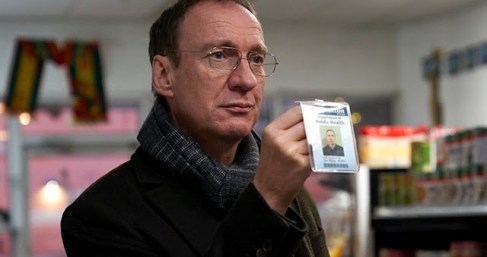
David Thewlis plays a health inspector whose inspections eventually become a lot more than simple inspecting in Guest Of Honour.

The Vancouver International Film Festival usually begins with an Opening Gala of speeches and an airing of a Canadian Feature Film: usually from TeleFilm Canada. This year it is Guest Of Honour: the latest film from Canadian director Atom Egoyan. It was a good film to open with, but not a great one.

The film begins with a priest, Father Greg, consulting with a daughter who lost her father, named Jim. Greg asks her how to best remember him, but she can’t say because she doesn’t remember him that well. She can speak for what he does remember of him.

Jim was a health inspector for restaurants most of his life. He started as a restaurateur, but failed. He had since become a health inspector. He was very strict in his job, especially to ethnic restaurants. As a family man, he married a Portuguese woman and fathered a daughter named Veronica. Veronica possessed a lot of music talent. That all changed one day when Jim introduced Veronica to a new music school. He met the instructor and she met Walter. Walter would become her partner in her glass harmonica instruction and performances, and later her boyfriend. The instructor would eventually become Jim’s mistress. Veronica knew that as she saw Jim sitting between the instructor and her mother, who was dying of cancer, and saw Jim hold the instructor’s hand.

Moving on into the future, the last time Veronica met with her father was while she was in jail for a crime she wants to take responsibility for, even though she may not have committed it. Jim is willing to do whatever it takes to get her out of jail, but she is insistent in serving her time.

Jim has to go to past videotapes and past references in order to get her justice. Sometimes he even confides to her pet rabbit about his problems and issues. As we flash back to the past, we learn more. We learn something bothered both Veronica and Walter inside. It bothered Walter so much, he committed suicide. Veronica would grow up to become a music teacher for a private school. However she has taken aback with the drummer of the school band named Clive. Clive looks so much like Walter. It even appears that she is more intimate with Clive, including to the bus driver Mike who is in love with her.

Mike is upset that Veronica won’t develop a relationship with her so one day, he sends a lewd text to Clive’s phone through Veronica’s phone during one of their performances. Clive and Veronica notice this. They want to do something, but fear they might be caught and accused of something they don’t want to be accused of. However it all falls apart at the hotel as Veronica is reminded of Walter’s suicide. Whatever problem happened at the hotel, it led to Veronica being sentenced to jail time and stripped of all teaching duties.

Jim tries to think of a way to free Veronica. He gets an idea after he sees a video of a rat inside a restaurant he inspected. The owner claimed someone with hard feelings to the restaurant put the rat in there to fix him. Another time, he comes across an Armenian restaurant with dead rabbits. He is about to close the place down, but they insist it’s for a delicacy of rabbit ears to be served at a private party. They plead with him to have mercy on them, and he decided to go to their special party.

Before the party, it’s evident Jim is up to something. He takes rabbit droppings from Veronica’s rabbit and puts them in a tube. He then goes to a German restaurant appearing to order dinner, but then goes to the bathroom to drop the droppings around, and then alert the manager. While talking with the manager, the real reason Jim is here comes out. He wasn’t to speak to his grandson, who appears in conversation to be Jim’s own son. The grandson is Clive. Clive knows why Jim is here, and is not happy. The situation between him and Veronica is just as humiliating.

Then over at the party at the Armenian restaurant, he arrives and is impressed with what he sees. The owners even treat him as a ‘guest of honor,’ despite what almost happened days ago. They ask him to give a speech. Jim tries to give a nice speech despite being intoxicated. However Jim’s feelings of his intended vengeance towards Mike come out during his speech. The speech lands him in trouble with law authorities. After he finds Veronica’s rabbit dead, he decided on one last act, and this involving the Armenian restaurant to assist with it. It is through all Veronica has told that Father Greg is able to give his requiem to Jim at his funeral. The film ends with one last flashback.

Atom Egoyan is a source of pride for Canadian filmmakers. He is one of only ten Canadian directors ever to be nominated for the Oscar for Best Director. Atom has been known for his unique style of filmmaking. At the gala, he flashed back to when he did his first student-film at a school in Victoria. He received a C- and a lot of complaints and ‘advise.’ Some even described it as ‘too artsy.’ Whatever the situation, it would pave the way for his style to have its heyday in the 1990’s and his Oscar nominations for Best Director and Best Adapted Screenplay coming for The Sweet Hereafter.

Times have noticeably changed. His films have been consistently done well and good at telling a story in his own style, but they’re not as well-hailed. Some of the meaner critics could say he is yet another director that had a directing flare and it flared out. This film does feature a lot of mystique in terms of the story. The film mixes the story with a variety of themes like restaurant inspections, music and feeling, family secrets, technology, and rabbits. The film does so in a colorful way, but it’s imperfect. There are some things that don’t make a lot of sense. Sure, Veronica’s music talent would propel her to her career as a musician and teacher, but through glass harmonica? The theme of rabbits also appears to be done in a way that doesn’t make sense. Veronica has a pet rabbit she adores, but also a lucky-rabbit’s-foot keychain. The rabbit becomes a source for Jim to confide in, use his droppings to frame a restaurant for facts, and have the dead rabbit’s feet cut off? Even how his restaurant inspections go from simple inspections to him using them as a way to get justice for his daughter, but pave the way for his downfall? It doesn’t make a whole lot of sense.

It’s not just the confusing elements of those themes, but also the storyline itself. There are a lot of moments in the story that leave many questions unanswered. How did he die? What secret made Walter commit suicide? Did Jim’s affair with his mother have something to do with it? What exactly did Veronica get arrested or convicted for? Is Clive really Jim’s son, or did Jim just say that to the grandfather? What was the significance or Jim’s personal reason of having the rabbit’s feet cut off? Now don’t get me wrong. I know the film is a puzzle and it’s about getting the pieces to fit together. I also know filmmakers leave out certain things to get the audience thinking or even trying to draw their own conclusions or write their own stories. However most of the elements or scenes don’t make a lot of sense. I felt there were a lot of critical things that were missing and it worked against the film rather than for it. Atom does a good job of creating and directing a good story, but I feel he missed in a lot of areas.

Despite the film’s flaws, the acting was one area that did come through well. David Thewlis did a good job of working with his complex role as the inspector/father. He gives his character of Jim dimension and helps it to make the role work for the story. Laysla de Oliveira makes it look like she stole the show. She makes it look like the film is more about Veronica that it is about Jim. She too is able have her role of Veronica make sense and even justify scenes that appear confusing to us. The supporting acting was also good with Rossif Sutherland playing Mike with his hidden inner anger, as well as Luke Wilson as Father Greg and the actors playing the Armenian restaurant owners. The music of Mychael Danna also adds to the feel of the film.

Guest Of Honour is not the best work of Atom Egoyan and has some noticeable flaws, but it does have a lot of qualities too. Especially the acting.

The Return Of VIFF

Cinema

Yes, the three most predominant topics on my blog are either the World Cup, the Oscars, or the Vancouver International Film Festival. And VIFF is back! Yesterday began the 38th installment of the Film Festival. Exciting films and exciting events are expected.

Creator Talks and Master Classes are back again. Slated lecturers for this year include Oscar-nominated director Atom Egoyan, director Michael Apted, It’s Always Sunny In Philadelphia actor/creator/executive producer Rob McElhenny, costume designer Arianne Phillips and Oscar winning sound editor Walter Murch. For the Showrunners events, it will be focusing on women in production featuring five female producers or creators. The Decision Makers event will consist of a lecture from broadcasters, networkers and streamers. There’s even a lecture from Public Enemy rapper Chuck D on Fight The Power and its importance in film as well as fun events like a live score to This Is Spinal Tap and a live feminist read of Some Like It Hot. VR films will again have their exhibit at the VIFF Immersed showcase. It will take place at the Annex this year.

As for volunteering, this year there were 1200 volunteers signing up, just like last year. Also like last year, volunteers are required to do a minimum of four shifts. As for my volunteering, I am assigned to work at the Center For Performing Arts, which is the venue showing the galas and feature events. In fact I signed myself up to do the Opening Gala! Now that will be a night to look forward to! Also if there are any other volunteer shifts in other venues, I could accept as along as it works with my time.

This year’s roster of films promises a lot of attractions This year’s VIFF claims to show about 300 shorts and feature films from 72 countries or regions. As of press time, twelve films are official submissions for the Academy Award category of Best International Feature Film for this year; a re-titling of the Best Foreign Language Film. One thing is that while most films are shown twice or three times during the fest, there will be more films that will get only one showing during the fest. Canadian films will remain the focus as has been in past Festivals. As well, this festival will feature more Asian films than any other film festival.

This year’s top sponsors include Telus, Telefilm Canada, Christie screens, CinePlex, Delta Airlines, Subara and Creative BC. SuperChannel will take over the People’s Choice awards again.

As for highlights, here are some of the films headlining the VIFF this year:

  • OPENING GALA: Guest of Honour – Canadian Oscar-nominated director Atom Egoyan returns with his latest film about a daughter trying to remember her complicated father. Review coming soon.
  • CLOSING GALA: La Belle Epoque – A French comedy by director Nicolas Bedos of a man who goes time-travelling thanks to his son’s invention. Looks to be something very personal.
  • SPECIAL PRESENTATION: Parasite – Winner of the Palme D’Or at this year’s Cannes Film Festival. South Korean director Boon Jong Ho delivers a dramatic comedy of a poor family scheming their way to prosperity and things going all wrong.
  • A Hidden Life – This film won the Ecumenical Jury prize at Cannes. Terrence Malick tells the true story of a Nazi evader who refuses to bow down to pressure.
  • Jojo Rabbit – Winner of the People’s Choice Award at the Toronto Film Fest. Similar to A Hidden Life but contrary, this film by the Thor: Ragnarok director is an anti-hate comedy set in Nazi Germany.
  • Just Mercy – A film starring Jamie Foxx and Michael B. Jordan about legendary lawyer Bryan Stevenson who successfully battled incidents of injustice and racism in Alabama.
  • The Lighthouse – Willem Dafoe and Robert Pattinson play two lighthouse keepers in 19th Century Maine who struggle to keep their sanity.
  • Motherless Brooklyn – Set in the 30’s or 40’s, Edward Norton directs and stars as a detective trying to solve the murder of his mentor and one friend.
  • Mr. Jones – Agnieszka Holland’s latest is of a Welsh journalist who visits Ukraine in 1933 and discovers a famine forced by the Communist government and attempts to hide it from the Western World.
  • No. 7 Cherry Lane – Hong Kong director Yonfan delivers his animation debut in a story of a student in 1967 Hong Kong living between love and revolutionary times.
  • Pain And Glory – Pedro Almodovar’s latest, and he reunites with Antonio Banderas! But this is of a distraught director trying to regain his passion for film, and life as a whole.
  • The Painted Bird – This Czech film starring Stellan Skarsgard and Harvey Keitel is of a Jewish boy escaping the Nazi Concentration Camps of World War II.
  • Portrait Of A Lady On Fire – This film set in 18th Century France is a story of a female painter commissioned to paint the daughter of a noblewoman. Only to fall in love in the process.
  • The Song Of Names – From Quebec director Francois Girard comes a film of a Holocaust orphan who becomes a big musician but is searching for the son of the British family who adopted him.
  • Sorry We Missed You – This is a drama/comedy by director Ken Loach of a construction worker during the 2008 financial crisis who takes a freelance commercial driver, and regrets it!
  • The Two Popes – City Of God director Fernando Meirelles directs a story of Pope Benedict and Pope Francis meeting and sometimes clashing as Benedict is to leave the Papacy. Anthony Hopkins and Jonathan Pryce star.
  • Young Ahmed – This Belgian film is of a Belgian-Moroccan student who goes from your normal 13 year-old to suddenly showing off an evil side.

So this is what VIFF has to offer fans this year. Not just films to enjoy but events focusing on various aspects of the craft as well. It starts September 26th and ends October 11th. Definitely sixteen days of excitement!

My Predictions For The 2018 Academy Awards

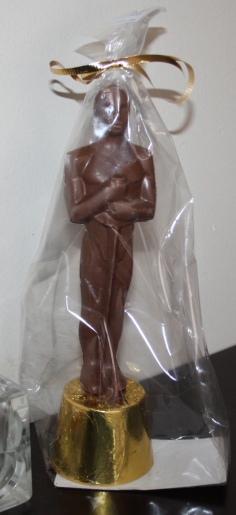
Chocolate Oscar

Holding this year’s Academy Awards has been a load of chaos going even as far back as August. The struggle had as its focus the record-low ratings of last year’s Oscars. Hey, when they keep on giving Best Picture to films with low grosses, they have that struggle coming. First there was an attempt to include a new category: Best Popular Film. Derision from critics, filmmakers and the public quickly rose and the category was dropped within a week. Then there was having Kevin Hart as the host. That seemed like a good idea, until he said something homophobic in his comedy. He apologized and even some celebrities came to his aid, but the hostility did not die. That meant no host this year: only the second Oscars to be hostless. Then came the procedure two weeks ago of four categories to be awarded during commercials with the presentation broadcast on livestream. Filmmakers and fans shouted their derision online and that led to the categories assigned back on broadcast.

All I can say about the ceremonies is what a headache for the organizers. The big question may not be ‘who will win what’ but ‘can they do a winning Oscars without a host?’ There has been one hostless Oscars in the past — the 61st in 1989 — and they went off very well despite the highlight being an unforgettably cheesy song-and-dance number with an awkward Snow White singing and dancing with Rob Lowe. This year’s hostless Oscars have yet to bee seen, but there have been other awards shows where there wasn’t a host.

The surprises weren’t just about the ceremony itself. The surprises were in the awards race too. One big shocker was a NetFlix film being a heavy favorite. Another was most of the Best Picture nominees snubbed in at least one category that effects their Best Picture standing: like in acting, directing, writing or film editing. Only BlacKkKlansman had nominations in all. Another was the double-snub of Emily Blunt in both acting categories to actresses of Roma that didn’t have as big of awards clout. Another was films with outside chances like Cold War and The Ballad Of Buster Scruggs garnering nominations. Guild awards provided other lopsided results too like SAGs giving snubbed-out Emily Blunt the Best Supporting Actress award, and the Writers Guild of America giving Bo Burnham the Best Original Screenplay award. With only days to go there’s still no clear favorite for Best Picture. Not even The Favourite!

However the awards results and the pictures themselves do give a good sense on who just could win. So without further ado, here are my predictions for who Will Win the Oscars as well as a Should-Win pick where I feel necessary. Also hyperlinks to my reviews are included.

BEST PICTURE

This year’s eight-pack of Best Picture nominees are quite unique and exhibit a lot in diversity. One is a film predominantly in Spanish. One is a superhero movie. Two are music-based. Three begin with the letter B. Three have African-Americans as their dominant or central characters. Five have some reference to LGBT people. All have a lot of awards clout and have paved their way successfully to their nominations. So here is my rundown of the Best Picture nominees:

Black Panther – The 21st Century is best remembered so far as the heyday of the superhero movie. For so long, people have waited for a superhero movie to get nominated for Best Picture. In fact the number of Best Picture entries was expanded past its traditional five when The Dark Knight didn’t get nominated. Finally a superhero movie is nominated. I can’t think of a better choice than Black Panther. It has all the qualities of a Best Picture contender — acting, directing, writing, and a lot more — but its buzz fell fast when its only other nominations were technical ones. I don’t think it will win.

BlacKkKlansman – Isn’t it something how Spike Lee went from boycotting the Oscars three years ago to becoming a nominee this year. Spike Lee has had a career with a lot of ups and downs. Ever since Do The Right Thing, he has struggled to get his greatness back. His success however has paved the way for other African American directors. BlacKkKlansman brought him back into major action. I consider this a top contender for the Best Picture award, but not necessarily the winner.

Bohemian Rhapsody – This film has all the ingredients of a Best Picture contender, especially a performance by the lead that will blow you away. The film also has a very critical weakness. That being the original director is an alleged sex offender. That may not hurt Rami’s chances for Best Actor, but it robs any and all chances of a Best Picture win for this film.

The Favourite – What’s the Oscar race without a timepiece set way back being a top contender for the Best Picture award? The Favourite is just that movie, and one of only two movies with ten nominations. The film has the ingredients to win Best Picture. However some may find the story too tempestuous and the film too eccentric to win the biggest award of the night.

Green Book – Overcoming racism has been a central theme in many a film in this year’s Oscar race. This is a film that may not be historically accurate, but it does make for a good film from start-to-finish with a good message. Much of it is true as Tony Lip’s son was the scriptwriter. It’s tight but I give this my Will Win pick.

Roma – This film is a thing of beauty. I can sum it up like that. For the record, no film predominantly in a foreign-language has ever won the Best Picture Oscar. I have a feeling that could rob Roma of the biggest award that night. However this is a close race and anything can happen. That’s why I give it my Should Win pick.

A Star Is Born – When the Oscar season began, this film had the biggest buzz. Especially with it being Lady Gaga’s big screen breakthrough. The film has all the ingredient for a Best Picture winner. However, this is a film that’s been done three times before. I don’t think the Academy is willing to give the Best Picture Oscar to a reboot.

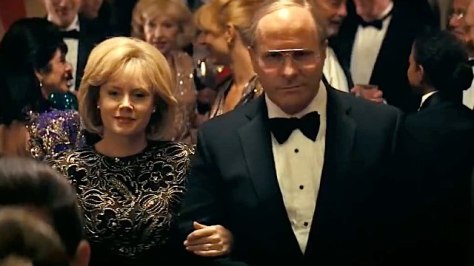
Vice – If you remember The Big Short, you’ll see how Adam McKay lampooned the banking system and the games they were playing just as they were about to lead the US to its biggest recession since the Great Depression. Here McKay lampoons the American political system and how Dick Cheney played a major role in the political climate we have today both as Vice President and while holding other office. It’s as entertaining as The Big Short, but not as good. That’s where I feel Vice falls short in the Best Picture race.

BEST DIRECTOR

Should Win and Will Win: Alfonso Cuaron – Roma

If you see Roma, you will see it’s more than just two women transformed in a changing time in Mexico. You will notice it’s a piece of Alfonso Cuaron’s childhood. He creates a masterpiece so beautiful and intimate, not even the images of the dog droppings can ruin its beauty. It’s a masterpiece of a film and I feel Cuaron deserves to win again.

BEST ACTOR

Should Win and Will Win: Rami Malek – Bohemian Rhapsody

Thirteen of this year’s twenty acting nominations are for performances of people that exist or have existed. In no other category is that best represented than in the Best Actor category. Bradley Cooper’s is the only nomination of a fictional person here. It’s a tough call between Christian Bale as Dick Cheney or Rami Malek as Freddie Mercury. I have to go with Malek because his performance was more dead-on while Bale’s was intended to be cartoonish in the way Adam McKay wanted it. Besides those that saw Bohemian Rhapsody will say Malek got the spirit of Freddie to a tee.

BEST ACTRESS

Should Win and Will Win: Glenn Close – The Wife

How far back was Glenn Close’s first Oscar nomination? Back in 1982 for her performance in The World According To Garp. Her performance in The Wife is her seventh nomination. Many people will claim that she will win the Oscar on career culmination. I’m sure Lady Gaga fans will have their own trash-talk on social media for her when she wins (Monsters indeed!). However those who have seen The Wife will admire her acting for how her character hides her true intentions and true feelings and you can see it. As expected, Glenn delivers.

BEST SUPPORTING ACTOR

Should Win and Will Win: Mahershala Ali – Green Book

Ever since he stunned audience in Moonlight as the crack dealer with a soft spot for the young boy, Mahershala Ali has been on a roll. I still remember in his acceptance speech, he said the advise his teacher taught him: “It’s not about you. It’s about the character.” He delivers again as Don Shirley. Another winner.

BEST SUPPORTING ACTRESS

Should Win and Will Win: Regina King – If Beale Street Could Talk

This is a category with jam-packed with top contending performances. It’s tough to pick a favorite. However I have to go with Regina King for playing the mother in Beale Street who goes all out for her son-in-law’s innocence.

BEST ORIGINAL SCREENPLAY

Should Win: Alfonso Cuaron – Roma

Will Win: Deborah Davis and Tony McNamara – The Favourite

The originals have the edge over the adapted this year, but the results are all over the map. Green Book has the Golden Globe, First Reformed has the Critics Choice, The Favourite has the BAFTA, while the Writers Guild award went to Eighth Grade which was snubbed out. This must be the major category that’s hardest to predict. I was tempted to go with Roma, but I have to pick The Favourite.

BEST ADAPTED SCREENPLAY

Should Win: Barry Jenkins – If Beale Street Could Talk

Will Win: Charlie Wachtel, David Rabinowitz, Kevin Willmott & Spike Lee – BlacKkKlansman

In all frankness, I think If Beale Street Could Talk was the best film by an African American director this year. James Baldwin would have been proud of Barry Jenkins’ adaptation. However I think the major buzz is for the four writers of BlacKkKlansman for creating a clever story that’s very thought-provoking.

BEST ANIMATED FEATURE

Should Win and Will Win: Spider-Man: Into The Spider-Verse

This year, animated movies continued to draw crowds and families. However it was once again another year that couldn’t compare to 2016. Near the end of the year, the two biggest movies were sequels: Incredibles 2 and Ralph Breaks The Internet. Just when it seemed lackluster, Spider-Verse came and was more entertaining than the others. Deserves to win here.

BEST CINEMATOGRAPHY

Will Win: Alfonso Cuaron – Roma

BEST COSTUME DESIGN

Will Win: Ruth E. Carter – Black Panther

BEST DOCUMENTARY FEATURE

Will Win: RBG

BEST FILM EDITING

Will Win: Hank Corwin – Vice

BEST FOREIGN-LANGUAGE FILM

Will Win: Roma (Mexico)

BEST HAIR AND MAKE-UP

Will Win: Greg Cannom, Kate Biscoe and Patricia Dehaney – Vice

BEST ORIGINAL SCORE

Will Win: Nicholas Britell – If Beale Street Could Talk

BEST ORIGINAL SONG

Should Win and Will Win: ‘Shallow” from A Star Is Born

BEST PRODUCTION DESIGN

Will Win: Fiona Crombie and Alice Felton – The Favourite

BEST SOUND EDITING

Will Win: A Quiet Place

BEST SOUND MIXING

Will Win: Bohemian Rhapsody

BEST VISUAL EFFECTS

Will Win: Avengers: Infinity War

BEST ANIMATED SHORT FILM

Click here for reviews and predictions.

BEST LIVE-ACTION SHORT FILM

Click here for reviews and predictions.

BEST DOCUMENTARY SHORT

Will Win: Black Sheep

JUST ONE MORE – TOP OSCAR UPSETS

Here are the six upsets I feel are most likely to occur. In category order:

  • Roma wins Best Picture
  • Spike Lee wins Best Director for BlacKkKlansman.
  • Christian Bale wins Best Actor for Vice.
  • Amy Adams wins Best Supporting Actress for Vice.
  • Łukasz Żal wins Best Cinematography for Cold War.
  • Cold War wins Best Foreign-Language Film.

And there you have it. My predictions for the winners, and possible upsetters of the 91st Academy Awards. The end result of a hostless Oscars has yet to be seen, as well as the ratings results. But the winners have yet to be seen too, and that should be the most important thing. It will all be decided Sunday night.

Oscars 2018 Best Picture Review: BlacKkKlansman

blackkklansman
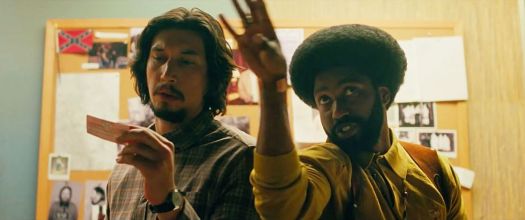
John David Washington (right) and Adam Driver (left) play a pair set out to stop a racist bomb attack in BlacKkKlansman.

I admit I missed BlacKkKlansman when it first came out. Actually I saw very few movies in the summer of 2018. I finally had the chance to see it this week, and I was very happy with what I saw.

The film begins in 1957 with Dr. Kennebrew Beauregard speaking for a propaganda film for the KKK about the ‘terrible dangers’ of desegregation. The film then proceeds to the early 1970’s in Colorado Springs. Ron Stallworth is being interviewed for the police force by a white cop and a black consultant. Through the interview process, Stallworth becomes the first black police officer for the city, but is given marginalized duties like file and document retrieval. Stallworth then decides he wants to do undercover work.

His first operation is for a rally of an African American activist Kwame Ture, whom the police view as a threat. Stallworth poses undercover with a hidden microphone to record the rally. There he meets Patrice Dumas who heads the black students union at the local university. The words of Kwame sound threatening to the ears of the white policemen. Patrice then goes with Kwame to a hotel where they’re stopped by racist white patrolman Andy Landers. At the arrest, Landers threatens Kwame and gropes Patrice. After the arrest, Ron meets Patrice at a club and they dance their cares away.

Stallworth is soon transferred to the intelligence division. One day he learns of a local chapter of the Ku Klux Klan. Stallworth decided to investigate by posing as white on the phone to chapter president Walker Breachway and having his Jewish colleague Philip ‘Flip’ Zimmerman pose as him whenever meeting the Klan in person. Zimmerman reluctantly agrees at first. He goes to the first meeting where he meets Breachway, the more hostile Felix Kendrickson and Ivanhoe, who subtly talks about an upcoming attack.

Zimmerman signs up for Klan membership under Stallworth’s name and Stallworth calls Klan headquarters to expedite his membership and speaks to Grand Wizard David Duke. The next meeting is at Kendrickson’s house. We learn that Felix’s wife Connie is just as racist. However Felix, being the loose cannon that he is, senses Zimmerman to be Jewish and tries to get him to pass a lie detector test. Before Zimmerman submits, Stallworth, who’s listening into everything with Zimmerman wired, smashes a window. Later on, the romance between Stallworth and Patrice heats up, but he doesn’t tell her he’s part of the police because of her anti-police attitude.

Stallworth is getting more active in his searching results. He learns two men of the KKK are in a branch of the US Air Force. In the meantime, Stallworth’s name is growing with the KKK. Zimmerman, while attending a shooting practice, learns of an attack planned at a student rally; the rally Patrice plans to attend. Zimmerman knows an explosion is planned as he knows Breachway makes bombs. Meanwhile David Duke travels to Colorado Springs to be at his induction and Breachway is willing to transfer his leadership to Zimmerman posing as Stallworth. Zimmerman declines, but his swearing in ceremony, along with other new members, goes as planned. However not without a KKK member noticing Zimmerman from an arrest years ago. He even remembers his nickname ‘Flip.’

As the swearing in is taking place, the attack at the student rally however does not because Connie noticed the huge police attendance. After the rally, Patrice learns the truth about Stallworth. Stallworth admits the truth and leaves Patrice in a question of principles. Her association with her anti-police group or Stallworth. With the attack at the rally botched, Connie wants to take the bombing to Patrice’s house. Connie can’t put the bomb in Patrice’s mailbox while Stallworth tracked Connie and tries to save Patrice by stopping Connie. However two policemen, who don’t know about the planned sting, think Stallworth is an attacker. It’s not until Zimmerman and another police ally arrive that they learn of the truth. Breachway sets the bomb off, but Breachway, Felix and Ivanhoe are the only fatalities.

It’s not over yet. Stallworth and Patrice are in a bar with other cops. Along comes Officer Landers. Patrice tries to get Landers to confess, which he brags about with no remorse. He tries to attack Ron and Patrice, but the police arrest Landers. With the sting over, and Connie a widow behind bars, the police order to burn all records. Stallworth makes one last call to David Duke to deliver him the shocking truth! The story ends with Ron and Patrice contemplating their future, but are interrupted by an image of a burning cross. The film, however, ends with images of the Unite The Right rally in August 2017 and Donald Trump’s lack of action to it.

There’s no doubt the object of the story is racism. Spike Lee has used racism as a theme of focus, if not the prime theme, in his films. The best example is Do The Right Thing. Spike has always maintained his films are about ‘being black in White America.’ However the film tackles the subject of hate groups. He focuses on how they don’t just have a message of racial superiority to promote. They also promote a false sense of fear and a hostility to prove their point. The groups may claim to be non-violent or not one to attack, but that’s further from the truth. That’s made most obvious when Stallworth examines the shooting targets and they’re the images of running African-Americans. The fact that they practice shooting and making bombs shows the evil behind their agenda that they try to make to look friendly. Lee makes that point in that film rehearsal at the beginning of the film. Lee shows of all the falsified news of the surrounding events the Klan deliver to their members before the bombing. Lee also shows that in the Unite The Right footage, that it’s a battle that still continues today. They may have overcome a lot, but there’s still much more to overcome. In the story, Lee sends the message that the Colorado Springs Police may have won this battle, but they didn’t win the whole war. Not while the KKK is a nationwide brotherhood.

The film obviously has a message to send, but it doesn’t forget that it’s a film that has a story to tell. It’s a good intriguing cat-and-mouse story about a local group of the KKK planning a bombing of a group of black students and the black detective who brings them down along with his Jewish guise. It has a good beginning, middle and end that will keep the viewer intrigued. It also incorporates a lot with the entertainment of African-Americans, like the music and the ‘blaxploitation’ films of the 70’s, into the story. It also includes a lot of references to entertainment that send a racist message like Tarzan and The Birth Of A Nation as to why the problem of racism still exists today. However his use of entertainment for thematic purposes doesn’t cause the film to lose its focus. Lee also mixes in another message he appears to question. At a time like where the Black Lives Matter movement has arrived, it appears Lee is critical of a lot of anti-police attitudes of these groups. The police do have history of racism, but what are they to think when the police come to their rescue? That poses as the moral question for Patrice at the end, especially since it could affect her love for Ron. I think Lee was trying to place his own viewpoint here.

No doubt about it, the top accomplishment is that of Spike Lee. Lee has had a mixed career. He’s had accomplishments like Do The Right Thing and Malcolm X, but he’s had many duds too. I still consider Do The Right Thing to be his best work, but this is an excellent story that he made work. The story he co-wrote with Wachtel, Rabinowitz and Willmott is a good complex story with a lot to say. The messages Lee tries to put in the story does not take away from the story itself. It actually adds. However it also succeeds in being a comedy with a lot of humorous moments. I think Lee also wanted to show off the stupidity of these racist groups too.

The top acting comes from John David Washington. The son of Denzel, John David delivers an excellent performance that he can rightfully call his breakthrough. He delivers the right acting for the right film. Also excellent is Adam Driver. In playing Stallworth’s Jewish partner, Driver delivers his role well while revealing the personal insecurity inside his Jewish character. I think Lee’s message was also to send how white superiority doesn’t only affect blacks. There were also a lot of excellent supporting performances coming from the likes of Laura Harrier as Patrice, Jasper Paakkonen as the walking time-bomb Felix, Topher Grace as David Duke and Ashlie Atkinson as the hyper-hostile Connie. The films inclusion of music from the past and original score from Terence Blanchard also adds to the film.

BlacKkKlansman obviously has a message to say. However it still succeeds in being a film with a thrilling plot, which makes it a winner of a film.

And there you go! This makes it the eighteenth straight years I’ve seen all the Best Picture nominees of the year before Oscar night. My predictions for the Oscar wins coming soon.


Oscars 2018 Best Picture Review: The Favourite

Favourite
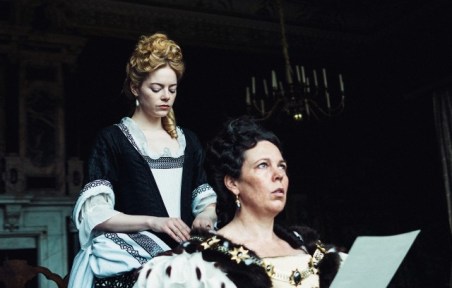
Abigail Hill (played by Emma Stone) competes for the title of lady-in-waiting from Queen Anne (played by Olivia Colman) in The Favourite.

With this year’s crop of Oscar contenders, there are many biopics. The Favourite is not so much a biopic as it is a fictional telling of a rivalry in history.

Usually around this time, there are films that often serve a message or have a specific point relevant to the times. Even in a case of a timepiece, one is shown to show how what happened in the past is very similar to what’s happening today. The Favourite didn’t appear to show what’s happening in our world now, at first. I was left so confused after seeing it the first time, I had to see it again to make better sense. It does make better sense, especially after seeing Vice. In Vice, we see how very often the president doesn’t always make decisions on his own. He is often persuaded by others including former presidents before he makes his final decision.

Here, the Queen can’t make her decisions on her own. It’s a tough time for England as they’re at war with France. Both Thomas Harley and Lady Marlborough are trying to compete for the queen to side with their ideas and carry it out as the decision. Lady Marlborough has the advantage as she’s able to tend to the Queen’s every need, despite her annoyance, and she has the added advantage of being very knowledgeable about what’s happening. Harley however has the advantage through his coaxing of the Queen through becoming the Prime Minister. Another thing I just recently researched is that this was a unique time in England as the influence of the Crown was decreasing and the influence of ministers was increasing.. Some say it was because of Queen Anne’s insanity that led to the decrease of the power of the Crown.

The film also presents another unique outlook. In an interview, Deborah Davis said it took 20 years for the script to finally become a reality. Davis composed the script from reading over some of the memoirs of Sarah Churchill (Lady Marlborough). Much of it was organized and compiled by Winston Churchill in his lifetime. It was especially noteworthy of the female power triangle. That’s the unique thing the film presented: the female power triangle. There’s the mentally-ill Queen who’s more interested in racing ducks and spending time with her rabbits (representing all 17 of her deceased children), but still has some desire to lead. There’s Lady Marlborough who’s always been her adviser and always tended to her, but has a lust for control of her own.

Then there’s Abigail: the poor cousin of Lady Marlborough who is clever enough to win the Queen and even overtake Lady Marlborough as the Queen’s favorite. Abigail was very naive at first, but once she learned she could win the Queen with her smarts, she worked to overtake Lady Marlborough as the lady-in-waiting. She was a good reader, she took to the Queen’s rabbits better, she willingly participated in giving sexual favor to the queen, she even married the courtier to the Queen’s delight (whom she did have affection to). Abigail however did not know at the time her win over Lady Marlborough would have consequences. As the Lady was dismissed from the court, the Queen would start hating Abigail. As Abigail tried to send a message of power through hurting one of her rabbits, it would be the Queen who would give Abigail a lesson on who holds the power.

The film also gives an interesting depiction of the Royals at the time. The mental illness and victim mentality of Queen Anne is possibly the most noticed aspect. However it does give a lot of notice of what happens behind the closed doors of the palace. Queen Anne was an interesting character as she was often confused of her power. Ministers were gaining more power, but the Queen wanted to reassure herself even more than the others that she had the highest power. She would get mad at the simplest thing, even music being played in the court. She would continue eating cake even after vomiting. However the palace and those inside also provided a lot of intrigue. We have a place where a lot of debauchery takes place. We have an arena for competition of political power. We also have a place where a lot of secrets are to be kept from the public. It is questionable whether Queen Anne was a lesbian or had same-sex attractions. I’m sure documentation may support it or oppose it. However it’s interesting that the Queen being seduced by Lady Marlborough and then by Abigail was happening around a time homosexuals were put in prison. Interesting.

Another thing that got me with this film was the frequent violent ways of treating others and the way insults were hurled at each other. Frequently you heard people of the court, both male and female, call the women ‘cunt’ in their face. In addition, the foul languages used by those in the court and from the Queen really left you wondering if that was how the royals were like? We are all taught to think the Royals were the definition of etiquette. However the biggest thing that got me was the use of violence on others. We first saw it when Abigail was pushed out of her carriage. We saw it in how Harley would simply push Abigail any which way. We saw how Lady Marlborough would use violence on queen Anne when she asks for Abigail instead. We even see it used by Abigail as her lust for power grows and she has an unconscious Lady Marlborough dragged by a horse. Really makes you think of the times back then. I know it was a fictional depiction of the power triangle back then, but it still makes you wonder.

The film is another achievement for Greek director Yorgos Lanthimos. It seems like with each film he directs, he creates a new milestone. This film he directs is an excellent work of how he takes a fictionalized depiction of a real situation in history and turns it into the story of madness and competition that it is. The screenplay by Deborah Davis and Tony McNamara makes a lot of creative choices like giving some details that were taboo at the time and even making this film an eight-chapter story. It makes for a very intriguing story with a lot of eyebrow-raising scenes. It also makes you want to look up the history behind it.

As for the acting, it’s a wonder why the ensemble was not nominated for the SAG Award for Best Motion-Picture Ensemble. This year’s awards season has had a lot of notable snubs and lopsided victories. The combined acting of the major actors in this film are among the best of the year. However the performances of the three major roles have received individual praise. The best of which has to be Olivia Colman as Queen Anne. Olivia has been able to embody the madness and lust for control of Queen Anne with excellence. Definitely one to steal the show this year. Emma Stone also does an excellent job of scene-stealing as Abigail Masham: the one who starts out naively as a minor servant but soon learns to fight dirty for the role of the favorite. She is possibly the biggest comic relief of the film. Rachel Weisz is less comedic, but her stoicism in her role as Sarah Churchill and her own lust for control did steal the show and garner a lot of intrigue. Outside of the ‘main three,’ Nicholas Hoult also stole many a scene as Earl Harley who has a liking for Abigail, but has a knack for treating her like dirt.

The film also has a lot of excellent technical merits too. The Cinematography from Robbie Ryan was very fitting for the film. Yorgos Mavropsaridis delivered the right editing choices. The production design was also excellent in recreating the castle, but it did make me wonder how the castle didn’t look at all like Buckingham Palace. I admit I didn’t know British history well and learned only recently that Buckingham Palace housed the British Royal Family in 1761. The recreation of Kensington palace in its 18th-Century form was excellent. The costuming was also excellent as it fit the right times. Sandy Powell is today’s Edith Head. The music with its mix of classical symphonies fit the film excellently.

The Favourite is a story that many might not take an interest in seeing at first, but it’s worth seeing. It’s a story that will catch your intrigue and tells a story with a lot of validity for today.

Oscars 2018 Shorts Review: Animation and Live-Action

Cinema

I’m good at keeping count of all the years I’m able to see all the Best Picture nominees, but I don’t know how many consecutive years I’ve seen the shorts. However I did it again this year. I lucked out and saw all the shorts for this year’s Best Live-Action Short Film and Best Animated Short Film categories. There were a lot of differences of the films, but a lot of similarities too. Here’s my review of the films:

LIVE-ACTION SHORT FILMS:

The col thing about this year is that two films — Fauve and Marguerite — come from Canada. More specifically, Quebec. The five films nominated are very different in genre and story, but all are deserving of their nominations:

Detainment: dir. Vincent Lambe – This is the most controversial of the five films. February 12, 1993 started off as a day in which two 10 year-old boys named Jon Venables and Robert Thompson simply played truant from school and stole items from nearby stores. That all changed when they saw 2 year-old James Bulger standing outside the butcher shop unattended. The film focuses intensely on the police interrogations. Both Thompson and Venables are interrogated separately. Both boys’ parents are in the room listening in, and in complete paralyzing shock.

The film is based off of some of the recorded interrogations of the two boys. The film appears to be a character study of the two individual boys. Thompson appears defiant and remorseless while Venables is constantly lying and frequently cries, even hysterically. The film also relives the moments such as when adults butt in and how they walked Bulger the long distance to the track where he died. It becomes gripping without getting too disturbing.

NOTE: The film has attracted a lot of controversy because of its subject matter. The James Bulger murder is a murder that still upsets the UK, especially Liverpool, to this day. The mother has gone on BBC speaking her anger and demanded the film be removed from the list of nominees. That’s why even though I think it’s the best film of all five, I feel it should not win the Oscar. I don’t see it trying to bring any sympathy to the two boys, but it still upsets many from the UK to this day.

Fauve: dir. Jeremy Comte – Two boys, Tyler and Benjamin, are playing an innocent power game. They first do it around an abandoned train. However they decide to take their game to a surface mine for a concrete factory. Then the game becomes deadly as Benjamin finds himself sinking in the wet cement. Tyler tries to help, but to no avail as it stops him too. Any help from Tyler helps to no avail. Then the aftermath as a woman offers a ride home tells a lot.

The film is a good short story. The story starts off as simple fun and games, but then turns to a dark tragic drama when you least expect it. Even the ending leaves you asking questions at the end. Very good short.

Marguerite: dir. Marianne Farley – Marguerite is an elderly lady nearing the last years of her life at home. She is nursed on a daily basis by a young nurse named Rachel. One day, she overhears a phone conversation between Rachel and another woman. It sounds romantic. Later, Marguerite notices Rachel’s phone in the bathroom and sees romantic photos of Rachel and the other woman. One day, Marguerite unearths a photo album. The photos are back in the 1960’s and are of her and another woman named Cecile. It brings back memories of the two. Cecile would later marry a man. After being put to bed early because of a fall, Marguerite confesses in her bed to Rachel of Cecile and why she never ‘loved’ her.

This is a story that is slow, but it tells a lot. It’s about two women, both lesbians, who are a product of their times. One couldn’t love a woman because it was considered a ‘mortal sin’ and was criminalized. The other is free to love another woman without guilt. It’s there where they share their special bond at the end. That’s why I declare this my Should Win pick.

Mother: dir. Rodrigo Sorogoyen – Marta is relaxing at her place with her mother around. Her son Ivan is on the coast of the French Riviera with his father on vacation. Soon Marta receives a phone call from Ivan. Ivan is alone on a remote area of the coast. The father abandoned him. Nobody except a strange man is around. The battery in Ivan’s phone is dying. Soon Marta calls the police, but the police have no way to locate Ivan as Ivan doesn’t know where he is. Then a second phone call from Ivan happens. That leaves Marta even more frightened and causes Marta to rush out.

The film’s best attribute is that it captures the moment. It’s between cellphones and Marta’s domain. The qualities are what we know and what we don’t know and it builds on the suspense. The weakness is that it appears to be part of a film rather than a full film. It feels like it has a beginning and a middle, but no end. I’m sure the purpose of the director was to give us a film that leaves us in suspense, but it leaves you wondering what was the point of this partial-film? Social message? Suspense story? What?

Skin: dir. Guy Nattiv – Troy is a ten year-old boy growing up in a remote area of the southern USA. The father, Johnny Aldd, is bringing him up to be rough and tough. The father even teaches Troy how to shoot a real gun with the help of his neo-Nazi friends. One day at a supermarket, Troy smiles at an African American man just simply buying groceries. Johnny gets angry and shouts racist slurs, but the black man walks off calm, collect, but angry and lets him know it. Johnny response by getting his friends to rush over and beat the black man up near his van while his family watches in horror, and Troy watches on.

Days later, Troy and Johnny go out somewhere, but the father is captured by a van of African American men. They put a sleeping injection in Johnny and a tattoo artist goes over his racist tattoos, leaving you wondering what will come. After eleven days, Johnny is dropped back at his home. The tattoo artist completely covered him in black, to Johnny’s horror. As Johnny tries to come home, his wife and son react in fear. It ends with a surprise ending.

No question the main theme of the film is about racism. However the film is also about cliques and breeding fear into people. The film can say that the culture of fear can also be why the United States has a gun problem. Seeing how neo-Naziism exposed its face in the Unite-The-Right rally in August 2017, this is a film very relevant to our times. Even with its bizarre story and surprise ending. That’s why I pick it at my Will Win pick.

ANIMATED SHORTS:

This makes for a very eclectic five films chosen for this year. One of the films is from a Canadian animation company. However there are two American films that hint they may have some Canadian ingredients:

Animal Behaviour: dirs. Alison Snowden and David Fine – Various animals walk into a psychology group meeting with a dog doctor leading the meeting. All have a problem to confess. However problems arrive when a gigantic ape with an anger problem comes in. He doesn’t want to be helped. The pig, the leech and the moth are all cooperative, but the ape is disruptive. Then the ape confesses his problem, but also throws a fit in the process and all havoc is wreaked. Right at the end, and with all the damage done, the ape appears helped and will be back next week.

This is some clever 2D animation that may appear simple and crude by most, but fits the story well. Also the whole story of all the animals involved and their problems makes for funny hilarity.

Bao: dirs. Domee Shi and Becky Neiman-Cobb – A Chinese-Canadian woman makes dumplings for her busy husband, but one comes alive. She raises it to be like her own baby. She mothers it with her caring nature, but the son grows up out to be rebellious and even leaves to marry a white woman he loves. She can’t handle it and eats him. Heartbroken after ‘eating’ him, she wakes up to find out it’s just a dream. She’s a mother going through empty-nest syndrome and the child dumpling in her dream was mirroring her own son’s life. It ends on a happy note.

This is the short shown before Incredibles 2. Once again, Pixar adds another excellent writer to its dream team. Director Domee Shi started as a storyboard artist for The Good Dinosaur and Inside Out. Here she has a chance to let her creativity flow with a charming story which transcends race and delights people of all ages and backgrounds.

Late Afternoon: dirs. Louise Bagnall and Nuria Gonzales Blanco – Emily is an elderly woman who is constantly tended to by Kate. Frequently Emily’s memory goes back to her past from moments in her childhood and her carefree nature and then to moments in her young adulthood. Her memory keeps going in and out. Then at the end, she’s reminded Kate is her daughter.

This does seem like a heavy short as the story appears to be either about Dementia or Alzheimers. The use of animation helps with the drifting of Emily’s mind from the present to the past back to the present again. A very good short, but it may be too deep for some.

One Small Step: dirs. Andrew Chesworth and Bobby Pontillas – Luna is a Chinese-American girl with dreams of becoming an astronaut. She lives with her father, a shoe cobbler. He has always let Luna know how much he loves her with the shoes he crafts for her and with his business. He uses his money to promote Luna’s dream. As a young child, Luna cherishes every minute of her father. As she grows up, she becomes more distant from her father and even too busy with her college work. Things take a turn for the worse as she starts failing courses and is denied acceptance into astronaut training. Then one day she comes home and learns that her father has passed. Heartbroken, she then turns her life around and starts a new ambition. This leads to the happy ending we all want.

The story is a very good story as it deals with a common theme of father-daughter relationships. The story may appear heartbreaking, but ends with the positive energy it began with. The animation was excellent and the story, with no dialogue at all, told us a lot. I call this my Should Win and Will Win pick.

Weekends: dir. Trevor Jimenez – A young boy living in downtown Toronto in the mid-1980’s is divided between the time between the homes of his father and his mother. The father is more playful with an imagination into samurai swords. The mother is more serious while she’s dating a man who doesn’t take well to the boy. As the stories shift between the two world, they become intertwined with the boy’s dreams and the dreams tell a lot about the realities of the home lives he’s going through.

Trevor Jimenez has been a storyboard artist for Pixar films and has his chance at doing his own short film. It’s all hand-drawn which adds to the effect of the story. The point of this story was to mix the eerie dreams with the boy’s unfriendly reality. It does a great job in creating the right environment for the film and the drama.

And that’s my look at this year’s Oscar nominated short films. Last year I was better at predicting the shorts winners, but this year looks to be very open. There are some that look like clear winners, but anything can happen in these categories. It will all be decided on Sunday the 24th.

Oscars 2018 Best Picture Review: Roma

Roma
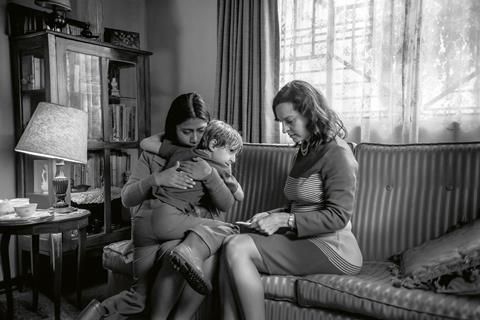
Cleo (Yalitza Aparicio; left) is the maid to the changing household of Sofia (Marina de Tavira; right) in Roma.

For the record, no foreign-language film has ever won the Oscar for Best Picture. They’ve been nominated before but never won. Roma could just be the first. It has the story and all the other ingredients to do it.

The story begins in late 1970 as the maid Cleo is cleaning the driveway to the garage of the house she tends to. The house she tends to belongs to a couple, Sofia and Antonio, the grandmother, and their four children in the affluent Colonia Roma district of Mexico City. Cleo and Adela, both indigenous, are the two live-in maids. The parents see Cleo as their maid while the children look up to her and talk to her often. The driveway and garage is the place where the dog is left to stay while the family is gone during the day.

The driveway and garage is too small for the big car Antonio drives, frequently bumping into the sides and driving over the dog droppings. That even comes in private conversation as Antonio angrily tells Sofia about all the dog droppings on the driveway. Cleo notices that, as normally Antonio is not that angry. Antonio, a doctor, mentions to all he’s going off to a brief trip to Quebec for a conference. He returns days later, but says he will be going to Quebec for a few weeks. The children believe it, but Cleo and Sofia sense something is wrong. Cleo knows it because she saw his wedding ring in the drawer.

Life for Cleo and Adela does not always revolve around the household. Both have boyfriends: Adela has Ramon and Cleo has Fermin. One night they all decide to go to the movies together, but Cleo and Fermin sneak away to rent a room. Before they make love in the bedroom, Fermin shows Cleo the martial arts skills he learned with a shower pole. Fermin tells Cleo that this is what gave him, an orphaned boy, his will to live.

Some time later, when Cleo and Fermin are watching a movie, Cleo tells Fermin she’s pregnant. Fermin says he has to be gone for a bit, but doesn’t return. Cleo tells Sofia that she thinks she’s pregnant. Sofia takes her to the hospital Antonio works at. While waiting in the maternity ward, an earthquake happens. Cleo learns from the doctor she is pregnant.

Cleo and Sofia try to carry on with their lives despite their difficulties. Sofia takes her children, Cleo and Adela on a New Year’s trip to a hacienda owned by her Norwegian-Mexican friends. Before the party, we hear a conversation about recent tensions over the land. The celebrations begin with festivities and fun for the children. However just before midnight, a fire erupts in the forest. As everyone is trying to put the fire out, a man counts down the seconds to New Years Day 1971 and sings a Norwegian lullaby.

Back in the city, Sofia organizes a movie night with the grandmother, the four children, Cleo and Adela. As they wait in line, Cleo notices Antonio. He hasn’t left for Quebec at all. In fact he’s holding the hand of another woman. Sofia has known this all along, but she wants to conceal it from the children until the time is right. Though one son, Paco, does notice it. Sometime later, Adela tells Cleo Ramon has been able to locate Fermin attending outdoor martial arts classes. Cleo watches the class, and is even willing to participate (and does the blind-balanced exercise better than the male students). As the class ends, she confronts Fermin, but Fermin refuses to acknowledge the baby. She tells her to leave or he’ll beat her and the unborn baby.

Time passes and the baby is almost due. The grandmother takes Cleo crib shopping one day. However a student protest takes place. The protests turn brutal as police respond with clubbings. Then violence erupts as a group of youth — strongly believed to be the paramilitary group The Hawks — start shooting the protesters. The grandmother and Cleo seek refuge in a department store, but the Hawks enter and shoot a protester dead. One of the gunmen aims the gun at Cleo, but when it turns out it’s Fermin, he drops his gun and runs off.

The incident gives Cleo so much stress, she has to go into labor. Teresa rushes Cleo to the hospital in a taxicab, but the chaos of the massacre makes it next-to-impossible to get there. Once there, Antonio reassures Cleo in the delivery room to stay calm but leaves her with Teresa and other doctors. The doctors hear no heartbeat in Cleo’s womb and decide to operate. The baby is born a stillborn girl. None of the attempts to resuscitate the baby succeed.

Cleo tries to carry on her usual work and tries to live life again. One day, Sofia drives a smaller car into the garage, and with ease this time. She says she found a job of her own and she’s able to tend to the children herself. She tells the children that they are going on a brief family vacation to the beaches of Tuxpan as one last trip with the old car. Sofia invites Cleo to come along to help her cope with the loss. As they arrive, the mother tells the truth to her children. Sofia and Antonio are getting a divorce and the purpose of the trip is so Antonio can collect his belongings from the home. Before the trip ends, Cleo looks after the children as they are swimming in the ocean. However Cleo notices the waves are getting dangerously bigger. Cleo, forgetting that she can’t swim, swims out to try to save them. She succeeds in saving them and Sofia and the children are thankful for her selfless act. However Cleo confesses right there that she did not want her child to be born. The mother, the children and Cleo return to the house with less furniture than before but with a new sense of unity between Sofia and Cleo. The film ends as a conversation between Cleo and Adela begins.

The film is unique because it is semi-autobiographical of Alfonso Cuaron’s childhood. This film happens from 1970 to 1971: a time when Alfonso was nine to ten. The film Marooned, which was the film in the family movie night scene, was a film Alfonso saw as a child and may have inspired him to become a film maker. The film does give a lot of reminders of what it was like to be a child in a middle-class family in Mexico City. There are posters of Mexico 70, the World Cup Mexico had just hosted, on the walls. There’s the brother making fantasy (American) football saves, which was a time Mexico was just discovering American football.

However Alfonso’s childhood isn’t the central story behind Roma. The story is about two women and their lives around a pivotal turning point in Mexico’s history. Mexico experienced a lot of changes for the better and for the worse during that period of time, but it’s the changes within the women that were noticed most in the film. We have Cleo, an Indigenous woman who is one of the two maids, who is the main protagonist. We also have Sofia, the matriarch of the family, as the secondary protagonist. Both have their common female roles at the beginning: Cleo as the maid; Sofia as the housewife. However things change as it becomes obvious the men in their lives are doing them wrong. Antonio leaves Sofia for another woman, and Fermin abandons Cleo upon her pregnancy. The cowardliness of both men are shown in later scene as Fermin is part of the rebel group shooting protesting students and Antonio just simply puts Cleo in the hands of doctors as he leaves her behind. However both women find their strength inside as Sofia learns she can manage things, even motherhood, on her own and Cleo is able to save Sofia’s children in a situation when she thought she couldn’t.

The film is not just about the unity of two women but of unity of two women from different classes. We have Cleo, an Indigenous woman possibly from an impoverished background, who is impregnated by her boyfriend and then leaves her. We have Sofia, a Caucasian woman from a more well-to-do background, who is losing her husband slowly but surely. Both appear lost, but they later find an inner strength they never knew they had. It happens as Sofia is able to get a job and own her own car. It happens with Cleo as she saves Sofia’s children and admits her feeling toward her stillborn baby. It’s at the end where Sofia tells Cleo how she will always consider her part of her family that we see the bond of two women coming together. United in their struggles despite their class.

One unique aspect of Roma is its use of metaphors. One is the use of airplanes in the imagery and in the various poignant scenes. Another is the use of the marching band in a couple of key scenes, including the end. Another is how it was right after Cleo saves the children from giant waves that she confesses. Another is how the size of the cars in the garage are symbolic of the marriage and divorce. Another is of various scenes involving movies that tell a lot about relationships. Even the time in which it’s set, from 1970 to 1971, is considered a turning point in Mexico’s history. The marginalized were going either get nastier or protest democratically. The government and their crackdowns would only expose the police or whoever else attacked as cowards. The rich would no longer have their peace and order as the poor would seek to destroy or steal for their own gain. On top of that, women would gain more, They would achieve more freedoms over time and a sense of independence. Mexico would not be the same.

This masterpiece belongs to Alfonso Cuaron. He is the writer, director, cinematographer and co-editor with Adam Gough of this film. The film is a lot like his childhood, as he said it would be, but it’s more. It’s about the two women who find a new sense of freedom in a Mexico that was changing. He creates a masterpiece that’s as telling as Mexico and himself as it is of the characters. The lead acting went to newcomer Yalitza Aparicio and she shines. This may be her first film role ever, but she does an excellent job with her role. Interesting to know in the scene where she swims out to rescue Sofia’s children, she couldn’t swim, just like her character! Also excellent is Marina de Tavira as Sofia. A veteran actress in Mexico, she did an excellent job playing a woman in a troubled marriage who comes out stronger. The child actors who played the chilren were also excellent. I think it was Carlos Peralta as Paco who was intended to be the representation of Cuaron.

The unique thing about Roma is that this is a film most shown on NetFlix. It was screen in theatres beforehand so it does qualify for Oscar eligibility. However with it being on NetFlix, very few theatres have shown it on the big screen and there are no official box office statistics as of yet. The VanCity theatre in Vancouver was the only theatre in Greater Vancouver that screened Roma on the big screen. I had the luxury of seeing it on the big screen just days after Christmas. Those who just see it on NetFlix are missing out on an amazing experience. It is 100 times better seeing it in a movie theatre. However the NetFlix factor is very unique for a film with this many Oscar nominations and a huge chance of winning Best Picture. That NetFlix factor could rewrite the game on how films, especially independent films, are shown.

Roma is nothing short of a masterpiece. It’s also a film with a poignant social message as well. However it’s very picturesque to watch and an excellent experience for those lucky to see it on the big screen.

Oscars 2018 Best Picture Review: Green Book

Green Book
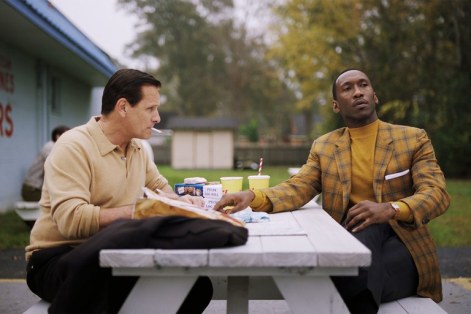
Tony Lip (played by Viggo Mortensen) is the driver for pianist Don Shirley (played by Mahershala Ali) in Green Book.

Racism has been a common theme in a lot of films up for contention for this year’s Oscars. One of those is Green Book. It has caught a lot of attention since it was released this year.

It’s 1962. Frank ‘Tony Lip’ Vallelonga is the best bouncer in all of New York City. However the night club he works at is going through two months or renovations. He needs to find work to pay for his one-room apartment he shares with his wife and two sons. At first the only way he could make money was in an eating contest. He’s offered an interview to be a driver for Dr. Don Shirley on an eight-week tour of the Southern US. He goes to the interview, in Don’s apartment above Carnegie Hall, and is unhappy to see Don Shirley is black. Tony rejects at first, Don is insistent due to the strength of his references. Tony consults with his wife Dolores first. She agrees. Tony promises to white her and the boys. One thing he notices is that his accompanying musicians, Oleg and George, will be going in a different car.

They begin the tour in the Midwest before going to the south. The two start clashing at the beginning; Tony being asked to act with more refinement and Don disgusted with Tony’s habits. Tony is especially surprised how Don is so well-educated, not into rock ‘n roll and blues and fried chicken, which Don takes into offence. However it’s during the tour that he notices just how good of a classical piano player Don is. He also notices the racist treatment Don gets when he’s off-stage, including one time having a shabby piano with junk on it on one stage. Then one night, a group of white men threaten to kill Don in a bar. Tony rescues him and instructs Don not to go out with him during the rest of the tour.

During the journey, Tony stays at his own hotel while Don stays at the hotels in the Green Book, which is a hotel guide for African American travelers. At times, Tony can see Don drinking. Don admits to Tony that he is a divorced man and has isolated himself from his brother and his professional achievements. Don also help Tony to write his letters to the family. One night, Tony finds Don arrested at the YMCA for a gay encounter with a white man. Tony is able to bribe the officer for Don’s freedom, which Don sees it as ‘rewarding’ the officer. Another night at a sundown town, a white officer arrest Don and then arrest Tony after being punched by him. Don goes to call ‘his lawyer,’ but the officers get a phone call from Bobby Kennedy to have them both released.

The tour is winding down, but not with one last dispute between Tony and Don. Tony tells Don he thinks he’s ‘blacker’ than him. That causes Don to lose it and lament that his affluence gives him the feeling he’s an outsider to other African Americans while white people treat him like an outsider. His homosexuality only adds to him feeling alone in this world.

The final performance is in Birmingham, Alabama. Before the performance, Don is refused a seat for dinner and being the guest musician changes nothing. Tony attempts to fight the manager, but Don refuses to play. The two find themselves at a predominantly black blues club. When Don performs, the crowd loves him. The two return back to NYC. Tony invites Don up for dinner, but Don shies away. It isn’t until sometime later that Don musters the heart to visit Tony’s apartment. Here he’s made a welcome guest.

The film has been generating a lot of attention, both good and bad. The film’s script was co-written by Nick Vallelonga, Tony’s son. This was mostly told through the point of view of Nick. However the family of Don Shirley was not happy with what they saw. Many claim that Don did not consider Tony his friend, but his associate. Peter Farrelly admitted his fault in not consulting with Don’s family before the film. Actually Peter didn’t know of how many members of Don’s family Don was still in contact with. In fact even that scene of Don arrested at the YMCA with another man raises a lot of eyebrows too since Nick admitted Don never ‘came out’ to them in his lifetime.

I can’t say much for a film that claims to be ‘based on a true story’ or ‘inspired by true events.’ No such film is 100% true. There are always some plot twists and movie cliches added in. In fact one could simply call The Sound Of Music ‘a musical based on a true story.’ The accuracy may be in question, but the film does have a lot of relevance. We think we have racial tension now or a big racial divide now, it was bigger back then. This was a year before Martin Luther King delivered his ‘I Have A Dream’ speech. This was a year or two before schools in the southern US were desegregated. That ‘Green Book’ for African American travelers was very needed in the South because they could be attacked by hostile whites. Discrimination was that bad back then. There were still public lynchings happening.

One thing the film does is that it gives us something to think about. We’re living in hostile times right now, especially on the subject of race. There are still a lot of misunderstandings between races. The film sent a message that maybe if we stopped, calmed down, and talked things out, we can learn we have more in common that we have differences. Another thing the film succeeds in is testing our expectations of what people of certain races are like. There were many scenes where Tony asked Don about rock ‘n roll musicians and fried chicken. Don was the complete opposite where he played classical piano, was very well-educated, and couldn’t stand the thought of fried chicken. A lot of traits most white people, and not only Tony, would be surprised to see in an African American. Also Tony and his life and lack of education may surprise a lot of African Americans of what whites are like. Like I say, if we took the time to talk, we’d be surprised.

The film may present Don Shirley to be a very wealthy, very successful African American, but the film does show that despite the wealth and high education, Don still feels like an outsider. That’s another theme of the film: personal insecurities. History can easily explain why Don would feel uncomfortable around white people. However his identity, wealth and background has made him feel like an outsider to other blacks also eats at him. That scene where the two stop in the south in a cotton field with a group of African Americans working on and they all stop to look at Don is a symbol of his insecurities. That’s a reminder to us of how there are some that feel they don’t fit into their own race. However that scene where Don plays rock ‘n roll at the jazz bar showed that he had a lot to overcome and that he actually does fit in. Also the scene at the end where Tony welcomes Don into the house at Christmas, though demanding his family not refer to black people by that certain slur, sends a message that a major way to overcome racism is simply befriending people of another race.

You can dispute the truthfulness of the story but you will have to acknowledge that the script and story are put together very well. Nick Vallelonga isn’t just Tony’s son. He’s had years of screenwriting experience. Teaming up with Brian Currie and Peter Farrelly on the script, they deliver a great story that’s worth knowing. Farrelly also does a very good job in directing this film. A complete change of pace from the charmingly crude comedies from the Farrelly Brothers. Viggo Mortensen was solid in character in his role as Tony, but Mahershala Ali was also excellent in his role. It will leave you questioning who was the lead actor in the film? The film also had some good supporting performances such as Linda Cardellini as Dolores and various other members of the Vallelonga family in their roles. The mix of previously recorded music and the original music of Kris Bowers helped make the film as well.

Green Book may leave you questioning the accuracy of the story, but it’s also an enlightening story nonetheless. It will leave you thinking as well, which is what we need at a time like this.

Oscars 2018 Best Picture Review: Vice

Vice
Amy Adams and Christian Bale play political power-couple Lynne and Dick Cheney in Vice.

As the world becomes more and more confusing, we tend to focus on the things that are right there in front of us. While ignoring the massive forces that actually change and shape our lives. With people working longer and longer hours, for less and less. When we do have free time, the last thing we want is complicated analysis of our government, lobbying, international trade agreements, and tax bills.

You would wonder would a film like Vice work at this time? A film about former US Vice-President Dick Cheney and his wife Lynne? A film about politics of the past? Turns out there’s more than meets the eye.

The film opens in the White House as the September 11th attacks happen. Instead of talking things out, Dick Cheney gives an immediate order. The film then flashes back to Wyoming in 1963. Dick Cheney and Lynne are married and living in Lynne’s parents’ house. Dick was originally a student at Yale University but his persistent alcoholism caused him to drop out. He takes work as an electrical lineman, but that doesn’t satisfy his in-laws at all. It’s after he gets busted by a cop for driving drunk, his second DUI, that Lynne tells Dick to clean up his life. All of this is narrated through a man named Kurt: a typical ‘middle-class’ American.

Fast forward to 1969; Republican president Richard Nixon is in the White House and Cheney has been hired as an intern. He meets a slimy scheister named Donald Rumsfeld who is Nixon’s policy advisor. Cheney works under Rumsfeld’s wing and tries to juggle family and political commitments. Cheney also overhears a conversation between Henry Kissinger and Richard Nixon about the bombing operation in Cambodia. There, Cheney learns about the true power of the executive branch. Rumsfeld’s abrasive attitude has an effect on Cheney as both distance themselves from Nixon. After Nixon resigns in the heat of the Watergate Scandal, both men are promoted: Cheney to Chief Of Staff to the new President Ford and Rumsfeld to Secretary Of Defense. Their jobs only last two years as a Democrat, Jimmy Carter, is elected president.

After leaving the Oval Office in 1977, Dick decides to pursue politics on a state level by running for the seat of House Representative for Wyoming; Wyoming is a state that has only one seat in Congress. Dick’s campaign starts on a lackluster note as he delivers an uncharismatic speech. However he soon suffers his first heart attack. While recovering in the hospital, Lynne decides to deliver speeches for him. Her speeches are more winning to the public and it succeeds in helping him to win his House seat.

Then Reagan becomes president in 1980. Cheney is able to provide influence to the agenda promoting conservative pro-business polices like promoting fossil fuels (which puts an end to Carter’s goal of more solar power) and also ending news media showing both sides of the issue, which paves the way for one-sided media like Fox News on the right and CNN on the left. In the meantime, Dick and Lynne are shocked to learn that their teenage daughter Mary is a lesbian. Nevertheless Dick agrees to be supportive to her, despite being a right-wing politician.

Dick is promoted to Secretary Of Defense during the tenure of George H. W. Bush and has a pivotal role in the Gulf War of 1991. Also during the time of the senior Bush, Dick meets his son George W. Bush, who’s a clumsy nimrod. Dick has desires to be President but after Bill Clinton is elected, he decides to retire from public life to spare the scrutiny for the sake of Mary. Cheney then becomes CEO of Haliburton while Lynne raises golden retrievers and writes books. Then starts an epilogue claiming Cheney lived the rest of his life happy and healthy with his family out of the public eye, then the credits roll.

But wait. That’s not really the end of the film. Dick is still CEO of Haliburton, but he meets with George W. Bush who’s the Governor of Texas. He wants to run for President for the 2000 Election not because he desires the power to himself, but to please his father. Cheney agrees to be his running mate provided Bush delegates ‘mundane’ executive responsibilities to him like foreign policy and energy. Things like family values issues, he doesn’t want to get involved with for the sake of Mary. Bush is elected president despite a hugely controversial election. On his first day as Vice-President, he learns Rumsfeld is back as Secretary Of Defense, and is still as slimy as he was when they first met. Added to the team of making foreign policy and defense decisions is legal counsel David Addington and Chief Of Staff Scooter Libby.

The film then returns to the 9/11 attacks and when Dick gave the immediate orders. After that, Cheney and Rumsfeld team up over initiating and presiding over the US attacks in Iraq and Afghanistan (which Kurt finds himself a soldier in both those wars). Cheney struggles with his heart attacks as the War Of Terror mounts. Nevertheless he continues through his vice-presidency which includes instituting the Unitary Executive Theory, his role in the Plame Affair, the accidental shooting of Harry Whittington (which he never apologized to him for). His actions are shown to cause thousands of deaths overseas, the rise of the Islamic State of Iraq and Syria, and record-low approval ratings upon leaving office. Rumsfeld is even forced to resign. Nobody likes him in Washington.

However it doesn’t end there. Cheney is about to die of heart failure while waiting for a new heart. Just as he says his teary goodbye to Lynne, Liz and Mary, Kurt is killed in an auto accident while jogging. Sure enough, Kurt’s heart is the perfect match for Dick’s transplant in March 2012. Then Liz runs for the House seat of Wyoming where she announces during a debate her opposition to same-sex marriage. This causes Mary to cease communication with Liz. Liz is now the Rep of Wyoming. At the end, Cheney says to us all he regrets nothing.

When you see one renowned film by a certain director, you are impressed, or interested, with what you see. When you see a second film by that director, you get a better sense of what their film making style is all about. I’ve seen The Big Short and I was very impressed with what I saw. However, when I saw Vice, I liked what I saw but throughout the film, I was thinking “Okay, I get Adam McKay’s filmmaking style.” I’ll admit throughout the film, I was seeing a lot of elements similar with what I saw in The Big Short. However I saw some new elements in Vice as well. Basically Vice told me more about Adam McKay than it did about the Cheneys. I noticed in both films, Adam likes to toy around with the story. He also likes to include references to the time of the story both in terms of the political landscape and of pop culture moments. Adam even admits that Vice is a ‘true story’ or as true as it gets since Dick is a private person.

The events in the film are events that are widely known, but are seen through the eyes and imagination of Adam McKay. The characters of the various politicians are also through McKay’s eyes, which may explain why they come off as cartoonish. It almost seems like the Cheneys are the only political figures that don’t come across as cartoon characters, despite also being portrayed as crazy and conniving. Like is Rumsfeld right? Is the top job of the Vice President to ‘wait for the president to die?’ The influence of Cheney’s decisions and politicking are shown to have a huge presence in American life and politics for many decades and have a huge influence now. Even the reason why Donald Trump became president.

However the biggest standout is having the story of Dick Cheney narrated by Kurt: a fictitious veteran of both the wars in Afghanistan and Iraq. Kurt even narrated while he’s dead and his heart is inside Cheney! I think the point of having Kurt, the average American, narrate the story is to show how much Dick’s decisions and political influence us Americans. It shows why we get such empty promises in terms of our economy, it shows why the middle-class is shrinking. It also even shows why we’re all so frustrated, we turn to dumbed-down entertainment to escape this frustration of American politics in our lives. No matter what serious issues we have to deal with in our lives, we’d rather tune out and watch another Fast And The Furious sequel. Adam demonstrates it all, through Kurt.

Kudos to Adam McKay for delivering another bizarrely-constructed but thought-provoking sad comedy. His direction and writing didn’t work as well as it did for The Big Short, but it worked well too and was very entertaining. Christian Bale was excellent as Dick Cheney. He did an excellent job in depicting both the young Dick and the older Dick Cheney too. Amy Adams also did an excellent job in depicting Lynne Cheney throughout the film and as she aged too. The film also showed how Lynne had an impact on some of Dick’s choices and how she acquired political influence of her own. Dick knew how to deliver policies and decisions, but didn’t know how to make speeches. Lynne knew how to deliver a speech. Amy did a very good job in demonstrating Lynne’s political savvy. The most surprising performance came from Sam Rockwell as George W. Bush. He was completely unrecognizable and dead-on! Steve Carell may not have delivered an accurate performance of Donald Rumsfeld but he was dead-on as the slimeball Rumsfeld as seen through McKay’s eyes. Also Jesse Plemons was an entertaining scene-stealer as Kurt. Instead of making Kurt look like something ridiculous, he made Kurt work.

Vice is a sad comedy about Dick Cheney and American politics. We both laugh and mourn how all this came to be.