Oscars 2025 Shorts Review: Animation and Live-Action

Once again, the Oscar short films are back to watch in a reel of the nominees. Over the last few months, I learned there are film festivals either dedicated to short films or show a lot of them and the winners they decide have some impact on deciding the Oscar-nominated films. Here’s my look at this year’s nominated short films in animation and live-action:

BEST ANIMATED SHORT FILM:

Papillon/Butterfly (dirs. Florence Miailhe and Ron Dyens) – The film begins with an older man named Alfred swimming off the coast. As he swims, his life flashes by. We learn as a child in Algeria, he was too afraid to swim at first but became bolder as he grew up. As a young male in France, Alfred became world class but experienced a lot of anti-Semitism because he was Jewish. He won the affection of a Jewish diver and they had a daughter. He qualified for the Olympics, but it was the 1936 Nazi Olympics in Berlin. The French teammates treated him like a brother. As the years passed, France became more anti-Semitic as they faced pressure of possible invasion, but his teammates were there. During World War II, Alfred and his family were imprisoned during the Holocaust and shipped to Auschwitz. Alfred participated in a resistance movement and miraculously survived. His family was killed. Nevertheless he still was able to live his life and became seen as a swimming mentor on the coast.

This is a story of real-life French Olympic swimmer Alfred Nakache whom the father of director Florence Miailhe used to know. The story is told through a style of animation that looks like painting animate and about with colors. The images are dazzling to see and the colors mix delightfully. It’s an excellent blend of imagery and storytelling. That’s why I make it both my Should Win pick and my Will Win pick.

Forevergreen (dirs. Nathan Engelhardt and Jeremy Spears) – A young cub is lost in the woods. His path is broken apart by a valley. He’s lost his mother. A tree decides to lay the role of parent. He shelters him and feeds him. He treats the cub as if he’s his own. The tree, who I will call Father Tree, also plants a pine cone in front of the cub and promises him it will grow up to be a big tree like him. As the cub grows, he turns into an impatient teenage jerk and is unhappy with the slow growth of the pinecone. He even shows sass to Father Tree. One day, he decides he’s a grown bear and leaves Father Tree to go across to the other side of the valley. There, he meets other young bears like him and has fun eating up other people’s garbage. Unfortunately, he accidentally starts a forest fire. All the bears run away and his life is in danger. Fortunately father tree creates a bridge of himself allowing the bear to cross. Unfortunately, Father Tree dies in the blaze. He sees baby tree has grown up into a full tree. There he’s able to create a home for his wife and children.

It’s a charming story based off a bible verse done to stop-motion animation. The stop motion isn’t as smooth but it adds to the charm to the film as is a delight to watch. The story is charming and entertaining from start to finish. It does seem more like it’s aimed for young children but some adults can take a delight in this tory and the imagery.

The Girl Who Cried Pearls/La jeune fille qui pleurait des perles (dirs. Chris Lavis and Maciek Szczerbowski) – An elderly man tells a young girl his story as a child in old Montreal. He was an orphan child who found shelter in the room of a store. The room was right across from another room a family lived in. The family situation was terrible as the father was mentally ill and the mother was verbally abusive. It was especially terrible for the young daughter. One day, the boy noticed loose pearls coming from the room. How did they come? He learned the girl cries pearls. He takes two of the pearls to the pawn shop. The pawner suspects him to be a thief. The rabbi he consults uses the Genesis story of Eve crying pearls. The pawner reluctantly accepts and gives the boy two dollars. The most he’s seen. The pawner wants him to get more pearls, but that will mean seeing the girl cry more. He doesn’t want to but the greedy pawner is angry with his sentiments. He’s able to win her love by buying her chocolate and promise her a trip to Paris. Then one day, her father is killed by a streetcar. She cries endlessly and its able to give him enough pearls to give him hundreds of dollars. As he leaves for Paris, he notices a ship crate from Japan breaking and fake pearls spilling out. As it goes back to the old man, he tells her it’s about the story rather than the object. That causes her to question the truthfulness of it all.

This is another stop motion animation film. This film from the National Film Board Of Canada is more about telling a story artistically. Narrated by Colm Feore, the story is told through the magic of its images. Though the figures appear coarsely done, it’s part of the art. The endearing story is mixed with the charming images and makes the story a delight to see from start to finish.

Retirement Plan (dirs. John Kelly and Andrew Freedman) – A young man talks about his plan for retirement. He visualizes and talks of all the things he will catch up on. Lots of things undone. He visualizes also the things he will leave behind in the process. He visualizes all the life goals he plans to achieve before he dies. He also visualizes some of the plans he has for his afterlife! Including a haunting or two!

Narrated by Domnhall Gleeson, this film plays out in what appears to be coarsely-drawn two dimensional images but the coarse drawing is part of the film’s charm. As the man talks of his plans, all the images play out of his desires, shortcomings and fantasies. It’s both charming and humorous to watch. Despite it being a brief film, it makes for a nice film to enjoy.

The Three Sisters (dir. Konstantin Bronzit) – Three sisters live on a remote island with their own separate rooms to their house. They get a delivery of food and money on a Sunday but most of it is either eaten by the seagulls and the money is accidentally lost in the deep water. One sister, the shortest, decides to rent her room out to make the money back. On the Monday, an uncooked sailor arrives to make himself at home. The small sister then goes into the middle-height sister’s room. The middle-height sister will have to live with the tall sister. Tuesday, the sisters try to compete for the sailor’s love. One gives him coffee, the other washes his clothes and the other gives him his pipe. That leads to squabbling among the sisters.  Wednesday, the fighting gets more intense but he finds the money they lost off the coast. Thursday, more fun and dancing but the women are shocked that he sees them naked. Friday, he leaves the island. What are the sisters to do? February, three men arrive, all differing heights, as they came across the rental ad!

This 2D film has its charm in the drawings but the bigger highlight is the story it tells. It tells its story without dialogue. Just minor sound effects are spoken of the people. The story will tell what they’re saying so you will get the message. It’s fun to watch from start to finish with humor anyone can understand.

BEST LIVE-ACTION SHORT FILM:

Butcher’s Stain (dirs. Meyer Levinson-Blount and Oron Caspi) – Samir is an Arab-Israeli who works as a butcher in a Tel Aviv supermarket. He serves his customers professionally and with courtesy. One day, the manager brings him into the office. She mentions of the poster of kidnapped Israelis in the break room on the floor. She claims someone said it was him. She mentions surveillance cameras are broken. This comes as he has to work extra time which interferes with a family occasion. One with his sister, her Israeli husband, and their mixed son. Over time, Samir becomes more suspicious and questions who of his co-workers would do it. He goes undercover to see what goes on.  He notices one stealing items and one making the accusation and the boss admitting firing him will be hard because he’s minimum wage. In the butcher area, he confronts his co-worker who told the lies. That’s where the manager fires him. As he arrives home early he lets out his anger at his family situation. The film ends as he makes the effort to find peace.

The Israel-Palestine conflict has become a hot topic. This story tells a lot about the prejudice and increased suspicion from Israelis Palestinians face as they try to live their daily lives. It tells a story of the prejudice faced by the butcher as what he went through was something set up in the end. It also shows how it threatens peace with his family, but he chooses to go about his life peacefully. Something hard to do. The story makes you see his side of the story and what is happening now.

A Friend of Dorothy (dirs. Lee Knight and James Dean) -The film begins with the reading of an estate of an older woman. The grandson Scott is there and he’s shocked that this young man of African immigrants named JJ is here. He never knew him. The film flashes back. One day, JJ lost his football in a yard. He thinks it’s this elderly woman’s yard. He knocks to try to retrieve it. She is surprised by him. Also that he doesn’t know for sure if the football is actually in her yard. She asks him instead to help her open a can of prunes. That day, she’s impressed by his service. She also notices he has an interest in her books of plays. She makes aa deal with him. He opens her prunes on a daily basis and he can read her books. Over time he reads more. Also he notices his affection for his kind. One day she talks of how her son moved away a long time ago to another country and rarely talks to her. One day, Scott and JJ meet at her place and he’s surprised. During her daily meeting, she mentions her grandson Scott is just there to fill the void, but all Scott does is talk on his phone, does what he can and goes back to business. She also reveals her name is Dorothy. Like in The Wizard Of Oz. As the estate is read, the father inherits the house, grandson Scott inherits £50,000 to his dismay, and JJ inherits the drama collection, and something more.

This is a story about elderly neglect. Something that seems to be very common in today’s world. Nowadays it seems a lot more children are more concerned about their career pursuits in this unforgiving world and they often forget about their own parents. Despite the theme, it is a heartwarming story. The young man JJ may have come to her house to get his football, but he gets a lot more. He gets a woman who’s not afraid to let him be who he wants to. Drama instead of football and willing to admit he’s gay. Over that brief time, he becomes more of a son to Dorothy than her son and grandson are. While they’re self-absorbed, JJ gives himself to her. It makes for a nice warm story that still makes you think. That is why I declare this film my Should Win pick.

Jane Austen’s Period Drama (dirs. Julia Aks and Steve Pinder) – The film begins in a Jane Austen-style romance. Miss Talbot is finally proposed to her longtime lover Mr. Dickley. Unfortunately she menstruated and the blood spills on her white dress. Mr. Dickley thinks she was injured, but her sisters try to hide the truth from him as he appears unfamiliar with what menstruation is. Annoyed with it all, Miss Talbot takes it upon herself to tell the naive Mr. Dickley about menstruation herself, even if it means she might lose him. Miss Talbot talks to Mr. Dickley alone in a room as her family and servants eavesdrops through the door. Miss Talbot does her best to explain, but it’s hit and miss with Mr. Dickley. Then the final decision, Mr. Dickley is fine with Miss Talbot’s menstruation and will marry her. The family immediately celebrates, where we learn her name is Estrogenia!

Now menstruation humor is a very touchy subject. As a male, I refuse to tell menstruation jokes. Nevertheless, I’m fine if women joke about it. The story isn’t simply ‘period jokes.’ It is also about the naivety of the times and how people were protected from what were taboos back then. It does it in a humorous way. Some oof it may be shock humor, but most of the humor plays out well and doesn’t really. cross the line of vulgar. It’s a guilt-free guilty pleasure.

The Singers (dirs. Sam A. Davis and Jack Piatt) – A bar is full. Full of all sorts. Most of the men look like they’re weary of life. One man pesters others for either money or a drink. The bartender has had it and he says he’ll give the man a free drink if he outings an elder. The competition then spreads throughout the bar: $100 and free drinks for the best singer. Most of the patrons participate with the exception of a shy young man who actually has a good voice. The older patrons perform well without hesitation. A surprise abounds as the construction worker shows himself to be a good singer and pianist. Then the bartender delivers a moving version of ‘Unchained Melody’ that leads to a group hug from the bar. Then a surprise from one of the patrons still seated.

This is based off a 1852 short story from Russian writer Ivan Turgenev. Director Sam Davis does a great job of adapting it in the modern world and makes for an entertaining film. It makes for a great single-location short film that keeps audiences both intrigued and entertained. It can even make some feel like they’re part of the bar! Remarkable how it takes a singing contest to turn a bar full of down-on-life patrons into a celebration and a closeness with each other.

Two People Exchanging Saliva (dirs. Natalie Musteata and Alexandre Singh) – The film begins in a dystopian world with a carboard box with a living woman is tossed over a cliff by two men. The film goes back a few days. Malaise is a young woman working at a high-class department store just days before her 25th birthday. It’s a job that doesn’t look tough, but it is. All women must pass a human breathalyzer test before working. Malaise first starts serving patrons champagne. One day, she’s promoted in the women’s dress department. A wealthy housewife Angine goes looking for a dress. Malaise finds the right dress, but Angine is impressed with a lot more. Angine pays her, but not in cash. In this world, slaps taken to the face are currency. Her manager Petulante will let Malaise do her work. Over time, Petulante notices Angine coming back and coming back to Malaise. Petulant grows jealous. Angine also keeps photographs and artwork of kisses as public kissing is outlawed in this world. Soon, a woman gets arrested for public kissing. She is placed in a box sent out. A shocked Angine accidentally drops the pictures of kisses she collected. Then one day, Petulante finds out the connection between the two and has Malaise is ordered in the box. It’s as Angine goes to the clifffside where all the thrown boxes are. She finds Malaise’s body and is heartbroken. The film flashes back to a past moment of what could have been.

The story is told through black and white imagery and its dystopian world resembles the taboos and prudence of the past mixed with bizarre humor. It’s a story of two lesbians living in a prudent society where slaps are currency and public kissing is forbidden. It’s also a story of a bizarre love triangle where a boss wants to win the affection of her young worker but she’s being swayed more by her customer. Angry with her, she frames her for kissing. It’s a story told in bizarre humor of love kept private and jealous caught in the way. That’s why I pick this as my Will Win pick.

And there you have it! That’s my look at this year’s short films for the Oscars. I didn’t have the time this year to see the nominees for the documentary short but I’m sure I’ll have better luck next year.

2023 Oscars Best Picture Review: Barbie

Margot Robbie (right) stars as Barbie and Ryan Gosling (left) star as Ken as Barbie bring the legendary dolls to life.

DISCLAIMER: This is from a blog of four reviews I originally posted on March 2, 2024. The original blog has been removed.

Unless you’ve been under a rock, you would know that Barbie was the big hit movie of 2023. You may also ask did it deserve its box office success or its Oscar acclaim?

I actually learned about the Barbie movie over a year before its release. I saw photos of it on social media. During the time, I thought it was odd. A movie about the Barbie doll coming to life? Could it work? Would it be a dud? I know Greta Gerwig was directing it. I already knew Greta had established herself as a force to be reckoned with in films like Lady Bird and her adaptation of Little Women. Nevertheless I was skeptical that even a director with her accomplishments could make a good film about the Barbie doll. It was up for the release and the reception to tell the full story.

I have to say before I saw it in theatres, I first thought this would be a fail waiting to happen. A big-budget movie about Barbie dolls coming to life didn’t sound like a winner to me at all. Then once the film hit the theatres, it was obvious Greta created a winner. Instead of the film about Barbie dolls, the film’s focus was about feminism and how the patriarchy had made it hard and continues to make it hard. One would ask “Why would one make a movie with a feminist focus by including Barbie dolls?” Simple. Ever since the Barbie doll came, it has been widely blamed for the image problems of young women and commonly seen as “setting the woman’s movement back.” We’ve all heard the arguments and the controversies for decades.

Here, Gerwig settles the score. She creates a world of different Barbie’s based on the owner’s own making of the Barbie. In the middle is “Stereotypical Barbie:” a carefree girl who lives a life of blissful joy which comes to a screeching halt as her owner goes through her frustrations of life. She attempts to go to the real world and the Mattel headquarters to sort things out, only for Ken to piggyback his way in and adopt a patriarchal attitude as a way to fix his own identity crisis.  That leads to the group of Ken’s overtaking Barbieland and claiming it as their own. Meanwhile Barbie’s frustrations grow and grow even after she meets her owner, who happens to be a Mattel employee. Her owner’s frustrations become her own. It’s through meeting women in the real world that don’t look like her and are happy that she gets a sense of what happiness is. Over time, Ken learns he doesn’t have to start the patriarchy in Barbieland to get his sense of self-worth back, but Barbie’s still in a struggle.

It isn’t until he finally meets Ruth Handler, the creator of the Barbie doll, that she finally gets her sense of self back. I feel that scene at the end where Barbie meets up with Ruth is the best scene as it settles the score on the Barbie doll debate, too. After decades of debate and dispute about the doll, we get a moment in the film that finally settles the score about the doll and the image it’s to project. It’s through that ending we learn Barbie was not meant to be the stereotypical ditzy blond we commonly see it as. The Barbie doll was meant to be the epitome of her daughter Barbara. Something beautiful. Mattel may have toyed with the Barbie doll over the decades, but that scene finally settles the score on the matter. The Barbie doll is the result of mother-daughter love. And Stereotypical Barbie finally gets a sense of the never ending story of herself, as well as the human touch which is better than anything she could get in Barbieland.

Top respect should go to Greta Gerwig. Even without the whole Barbie phenomenon of 2023, Gerwig, who directed and co-wrote the film with husband Noah Baumbach, deserves credit for making a hit and a critical success for something that many felt was a bomb waiting to happen. She takes a common theme about the Barbie doll, of how many feel it is a bad influence to young girls and feminism as a whole, and makes it thought-provoking. Despite it being a thought-provoking film, she also keeps it comical and even entertaining to watch. I mean we are talking about a movie about Barbie dolls. Nevertheless, the film shows it can be funny and entertaining and still be able to get its message across strongly. As well as settle the score on the Barbie doll itself. Not to mention, achieve the first ever billion-dollar blockbuster directed by a woman! Congratulations, Greta, for doing all what we thought was impossible!

The film also finds its strength firstly in the acting of Margot Robbie. To take a character like “stereotypical Barbie” and make her three-dimensional without compromising the comedy is an excellent effort. They always say comedy is the hardest thing to do. Try doing comedy while trying to send an important message at the same time. Robbie succeeds in doing that. Also succeeding in achieving that is Ryan Gosling as Ken. Ryan gives personality to the Ken doll that the actual Ken doll has seemed to lack over the years. He succeeds in making Ken an insecure one and one to see patriarchy as the answer to his self-esteem. The performance is as bizarre as it is comical and entertaining. He even manages to make comedy of the patriarchy. Also worthy of acclaim is the performance of America Ferrera. While Barbie and Ken bring on the entertainment, it’s the character of Gloria who brings the movie’s darkness. America succeeds in creating an insecure Mattel employee whose personal insecurities influence Barbie’s insecurities and finding herself happening along Barbie finding herself. Also adding to the film is the narration from Helen Mirren. Her narration adds more charm.

For technical credits, Barbie has to get the biggest respect. Creating something like Barbieland and the Barbie dolls that live there is as much of an accomplishment as the film itself. First, there’s set designers Sarah Greenwood and Katie Spencer. They succeeded in making Barbieland into a land of Barbies that we can’t see anyone else doing a better job. It’s as big and colorful as it should be. Also top respect for costume designer Jacqueline Durran for designing the right type of costumes that look like perfect looks for Barbie dolls but very wearable for the actors and actresses. And then there’s the music. Those who saw it will know there are musical moments without the film being a full musical. Songs like “What Was I Made For?” “Dance The Night,” and “I’m Just Ken” add to the entertainment factor of the film. You can thank the many established songwriters who added their talents to this film.

For technical credits, Barbie has to get the biggest respect. Creating something like Barbieland and the Barbie dolls that live there is as much of an accomplishment as the film itself. First, there’s set designers Sarah Greenwood and Katie Spencer. They succeeded in making Barbieland into a land of Barbies that we can’t see anyone else doing a better job. It’s as big and colorful as it should be. Also top respect for costume designer Jacqueline Durran for designing the right type of costumes that look like perfect looks for Barbie dolls but very wearable for the actors and actresses. And then there’s the music. Those who saw it will know there are musical moments without the film being a full musical. Songs like “What Was I Made For?” “Dance The Night,” and “I’m Just Ken” add to the entertainment factor of the film. You can thank the many established songwriters, and main musical writers Mark Ronson and Andrew Wyatt, who added their talents to this film.

Barbie is more than just a humorous story. It’s a story that takes on the patriarchy, highlights feminism and has something to say about a doll that has delighted billions of girls. And thousands of boys, too. It also lives up to all the “Barbenheimer” hype of the summer of 2023 and entertains the theatregoer easily.

VIFF 2021 Review: The Scary Of Sixty-First

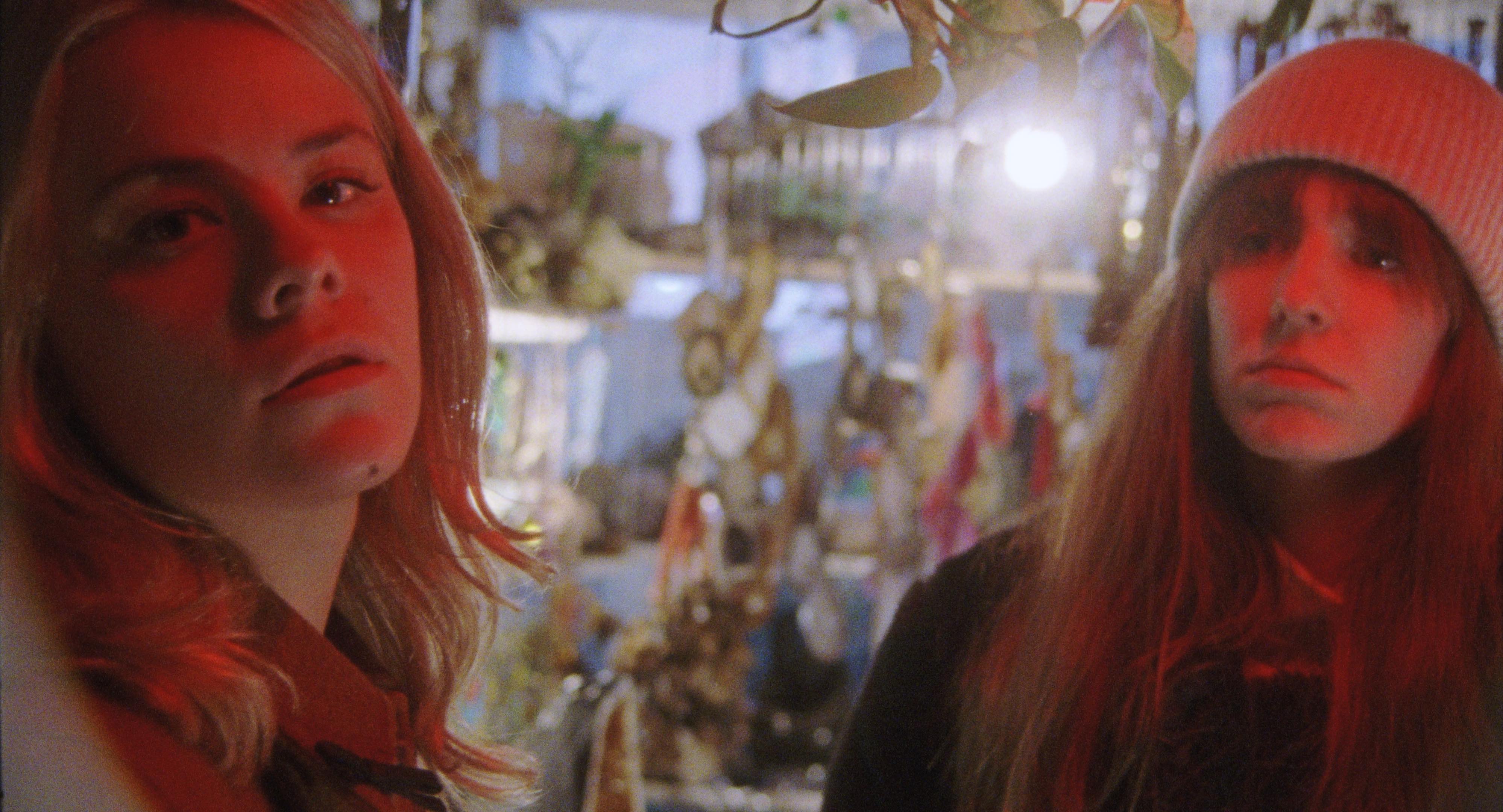
Supernatural hauntings of a New York apartment and a ring of famous sex offenders spark intrigue in a pair (played by director Dasha Nekrasova and Madeline Quinn) in The Scary Of Sixty-First.

The Scary Of Sixty-First is an American film that’s part of the VIFF’s series of Altered States films which set one up to expect the unknown, unusual and even bizarre. Here, bizarre is an understatement.

The story begins close to Christmas with two female friends, Noelle and Addie, searching for an affordable apartment in New York City. The come across one place in the East Side which is grand in size and has just been made available after the recent death of its tenants. The realtor however makes clear that at an affordable price any place they accept is taken as is. The girls find a place in New York’s downtown area. They are willing to clean everything up even though it was left behind with a big mess, including a moldy turkey with a dead mouse found in it. After their cleaning, they decide it’s worth staying in temporarily.

They have no problem living together, even though Addie has a boyfriend named Greg. Addie is at a crossroads in her life. She doesn’t know whether to move on and establish herself, or live with Greg. One day, a young woman visits the place while only Noelle is home. She introduces herself and informs Noelle that this suite was owned by Jeffrey Epstein before he was arrested. Just when both Addie and Noelle were already starting to sense the bad vibes of the place, it gets even worse when they notice blood underneath the mattress. They find a tarot card with a provocative image that they feel holds a clue to the place.

The other woman and Nicole start having a tempestuous relationship. It almost appears the place is becoming more like Noelle’s and the other woman’s instead of Noelle’s and Addie’s. As they both are trying to get a better understanding of the place, Addie is feels drawn to the place, despite also sensing the danger of it. Addie starts having an interest in Prince Andrew as the woman tells Noelle of the stories involving Prince Andrew to the place. Things turn for the bizarre as while she has sex with Greg, she shouts in a demonic voice for him to imagine her underage. That creeps Greg out and starts the friction in the relationship. The woman and Nicole are especially freaked out by Addie’s frequent masturbation, child-like behavior, and fixation with Prince Andrew memorabilia.

As the woman and Noelle get further and further into the Epstein connection with this place, they have had enough. They go to a crystals shop where they think the man who runs the store will know what the tarot card means and will have a good sense of what’s wrong inside. The man turns out to be creepy as he appears to deride them both of what he senses in their aura. However once they show him the card, he’s convinced of the problem and warns them to leave.

Then one day, Addie arrives to the place appearing like she’s possessed by a demon. Both of the women notice Addie worshiping whatever appears to be in the place. The two have to go in, fearing the worst. The end culminates in something you would not at all expect no matter what you had anticipated. It’s even a surprise for Addie, Noelle, the woman and Greg.

This is truly a bizarre story. The story already begins on a creepy note about a house left over by deceased people which the two have to clean up themselves, only to discover a moldy turkey in the fridge with a dead mouse in it! The bizarreness just starts there and continues into weirder territory. The weirdness grows with the mention that this was owned by an associate of Jeffrey Epstein, then comes mention of Prince Andrew, and the bizarreness grows and grows after that. Sometimes, you’re left wondering what the main theme of the film is about? Sex-offenders? The supernatural? Bizarre possessions? What is the main subject? There were even other people leaving the theatre wondering what was the point?

Despite the bizarre story, I give credit to Belarussian-born Dasha Nekrasova. This is a very ambitious film she directs, co-writes with co-star Madeline Quinn and acts in. It’s a very daring story as it reaches into the supernatural, the provocative, and even the taboo. However it’s a story that gets you wondering what is the overall point? Yes, the ending is different from what one would expect, as one should be, but it doesn’t make sense in the end. Sometimes you wonder what was the film aiming to be? A scary drama? A scary comedy? A load of shock value? What exactly?

Despite my confusion with this, I will say the acting from Dasha was very good as she did an excellent job with her part. even the scenes where it didn’t appear to make much sense. Actually if anyone should understand this story, it’s Dasha. Madeline Quinn was also very good as Noelle. Being the co-writer of the story, she would most likely be the only other person who understands the story best. Betsey Brown was also very good as Addie. Being under a bizarre possession opens the door for bad acting. But Betsey pulled it off well. Mark Rapaport is also good as Greg. He has the luxury of portraying possibly the sanest character in the story!

Despite the weirdness of the film, this film has attracted awards mention. At the Berlin Film Festival, it won the Best First Feature Award and was nominated for an Encounters Award and a Teddy Award (given to LGBT films) for Best Feature Film. At the Sitges – Catalonian Film Festival, it was nominated for a New Visions Award for Best Motion Picture. Over on Rotten Tomatoes, many critics see this film as a tribute to the bad horror movies of the 80’s. Maybe these film festivals and critics are seeing something in it most of us didn’t.

The Scary Of Sixty-First is definitely far from your conventional story. However it’s a film that is often too weird or too bizarre in either subject matter or story line to make sense. Sometimes you’re left wondering what was the point? The story or shock value?

VIFF 2021 Review – Handle With Care : The Legend Of The Notic Streetball Crew

The Vancouver streetball team ‘The Notic’ are the centre of Handle With Care: The Legend Of The Notic Streetball Crew.

If you’re a fan of streetball, you should know who the Notic are. The documentary Handle With Care: The Legend Of The Notic Streetball Crew tells the story of their formation, rise, fall, afternath and reunification. There more than meets the eye in this film.

The story begins with two Canadian-born brothers from Uganda: Jonathan and David Mubanda. Growing up in a country like Canada, they feel like outsiders. Feelings also shared by Joel ‘Joey’ Haywood, son of Jamaican immigrants. They discover they have a love for basketball and they’re dazzled by watching NBA games and the tricks of the players. They succeed in making their high school’s basketball team and they recreate some of the moves. However even if they play well, it gets on the nerves of their white coaches. One of them tells one of the boys to stop playing ‘jungleball.’

Streetball and 3-on-3 tournaments was something new at the time. That caught the attention of Jeremy Schaulin-Rioux and Kirk Thomas. They were a couple of teenagers graduated from high school and undecided what to do with their lives. Their first dream was to start a punk rock band. However when they saw streetball and the play from these boys, it changed their attention and they saw a new use for their video cameras. Within time, their group of boys who gave themselves the name ‘The Notic’ would grow and include Mohammed Wenn, Jamal Parker, Dauphin Ngongo: also immigrants of first generation Canadians. In 2000, their first video of their play, entitled ‘The Notic Mix Tape’ was released.

The video was intended to just be a video strictly for them and their friends. Over time, they would sell copies of the video on the street. Little did any of them know at the time the sales would skyrocket. But while the popularity of the Notic was growing, so was the size of the group. One was discovered at a 3-by-3 tournament. His name was Andrew Liew: a Bruneian immigrant who went by the name ‘6 Fingaz’ because he had a sixth finger on his left hand! They were also joined by Rory Grace: a white boy with delayed puberty who came from a troubled family background, but delivered some mad skills on court. Rory was nicknamed ‘Disaster.’ Actually all the boys had unique nicknames: Johnny Blaze, Where U At?, David Dazzle, Delight, Kinghandles and Goosebumps.

Next tournament was a streetball tournament in Vancouver in May 2001. That’s where the Notic really got their breakthrough and wowed the crowd. All of them were strutting the stuff and sure enough, Schaulin-Rioux and Thomas had their cameras in hand. They were catching their every move. They also caught their moves as they were ‘chillin’ out by the Surrey Skytrain Station or in the gymnasiums or in their houses. Then they caught a big break as they were invited to a tournament in Seattle. There they stole the show and it was Disaster that blew everyone away with his trickery.

Soon the Notic phenomenon was born. As Schaulin-Rioux and Thomas were busy making their next video, the Notic caught the attention of ESPN and Slam magazine. They were given interviews and Slam! magazine dedicated a seven-page article that included the players and the filmmakers. A website in the UK that promoted streetball had the Notic video on and it got over 100,000 hits a month during its heydays in 2001-2002, kids were coming up to members of the Notic and getting their autographs, even EA Sports recuited them to be the models for their streetball video game where they were paid $5000 each.

Then the Notic 2 was released in 2002, but that’s when the friction was starting. Jermaine was unhappy he was not included as part of the Slam! article. Many of the players were unhappy that their videos were getting a ton of views but they weren’t seeing a single cent for themselves. On top of it, all eight boys were teenagers growing into adults. Soon they were learning that streetball was no way to make a living as an adult. They all had to find their own direction.

Only Joey Haywood took basketball into the colleges. When he didn’t make it into the NBA, he was signed to a Danish basketball league. Joey now holds coaching sessions. The other boys, they found careers or paths of their own. One found work at a mosque in Edmonton, one is a contractor for interiors, another found work in promoting a charity. Rory is the one who had the most trouble since as he felt lost after the split-up of the Notic. He first dabbled in drug dealing and became in addict himself. He spent time in jails and in rehab, but lost custody of his sons. We see as he’s being reunited with his second son. One thing that hasn’t changed with the Notic is they still dazzle and inspire young players from around the world. The spirit of the Notic lives as Schaulin-Rioux and Thomas screen for all members Notic 3 made from kept videotape of Joey.

This is quite a story. It’s the story of a group of boys who were able to dazzle the world with their play of ball. It’s commonly called ‘streetball’ but I’ve often called it ‘freestyle basketball.’ You can look at this story many ways. You could even see the Notic as a group of ‘Next Generation Globetrotters’ straight out of Vancouver. This is a story of young boys who were either immigrants or first generation Canadians trying to find themselves where they felt like a misfit elsewhere. They either felt like they were substandard in school or they were dealt with racism around them. Basketball was their escape. Basketball made them feel like they belonged. Streetball was where they stood out. Their experience as part of the Notic proved to most that yes, they do have what it takes to make it. Eventually they would have to learn they were able to succeed without streetball as adults. However it was being part of the Notic that gave self-confidence to most when they needed it.

The story reminds you that not everything is grand. Schaulin-Rioux and Thomas did acknowledge they were young filmmakers who did not know how far their grainy videos would go. They didn’t know bootleg copies would find themselves around town. They didn’t know uploaded versions of their video would make itself worldwide on the internet. They were young filmmakers who didn’t know about the obstacles and pitfalls of the business. And the eight boys that made up the Notic, you can understand why they would become angered and feel like they were done wrong. Jeremy and Kirk do acknowledge the wrongs they did and that they weren’t as transparent. I guess that exlains why the main title of the documentary is Handle With Care. Also it shows that as Rory saw the Notic as a way out of his troubling family life, it was his everything. When the Notic split up, he was lost and that’s what led to his downward spiral. It’s a story you hear over again of young starts who hit the big time, see it as their everything, and then are lost when the big time disowns them. That was Rory’s case.

This is an excellent documentary from directors Jeremy Schaulin-Rioux and Kirk Thomas. In a lot of ways, it’s a case of a documentary as they are preparing to make the Notic 3. It stars as a case where the two meet with Haywood and come across old videotapes not shown in any previous Notic videos. We shouldn’t forget Notic 3 was never made; the Notic split up before it could be made. At the same time, making Notic 3 was not easy. They had to confront former members who felt they were ripped off in their fame. Jermaine is especially angry. However he makes peace with the two as they acknowledge their past mistakes. In the end, all eight of the former Notic players meet on a basketball court in 2019 to see the screening of Notic 3 and they celebrate reminisce of the old times. When you watch the documentary, you can see it as one of three things. You can see it as the Notic members telling their stories, you can see it as the documenting of the making of Notic 3, or you can see it as Jeremy and Kirk trying to make amends for past business mistakes and trying to make it up to the boys. Either which way, it’s inciteful to watch.

Handle With Care: The Legend Of The Notic Streetball Crew is a documentary worth watching. It will remind you of the heydays of basketball in the 1990’s and early-noughts. However it’s much more. It’s about a group of lost boys who opened doors for themselves by doing something they loved to do. Also it’s two filmmakers set up to make right past wrongs.

VIFF 2020 Review: Monkey Beach

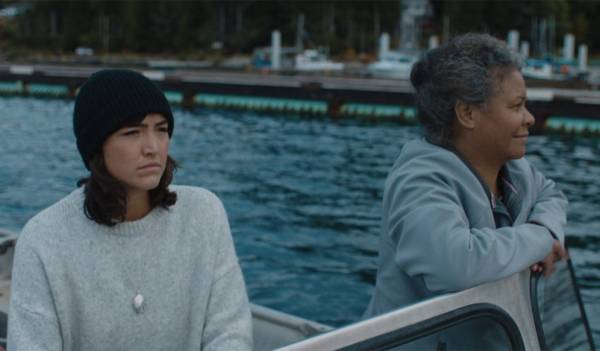
Monkey Beach is about a young Indigenous woman, played by Grace Dove (left), who possesses a supernatural gift that’s as much of a curse as it is a blessing.

DISCLAIMER: I know you’re all getting my first VIFF review just after it ended on October 7th. Thing is I’ve been bogged down with work and taking online courses which left me with little energy to do reviews. Now imagine me adding film-watching to the mix. Yes, that would take all my energy away! Now that VIFF is over, I can finally post reviews over time. Most of the films I believe would still be accessible via streaming services.

Lots of people who are into VIFF have a lot of reasons to want to see Monkey Beach. I wanted to see it because it’s a novel I studied in an online University course fifteen years ago. Those that see it will be happy with what they saw.

The film begins in East Vancouver. Lisamarie Hill thought she could get somewhere after leaving her town in the reserve, but she’s ended up rock bottom. Her friend tells her she needs to return to get her life back together…and then disappears.

Lisa returns back home. It’s like a prodigal daughter welcome. The parents are happy to see her back, her brother Jimmy is happy to see her back, relatives are happy to see her back, old friends are mostly happy to see her back. Her grandmother ‘MaMa-oo’ is happy to see her back. However she’s uncomfortable with returning. She knows of problems going around the reserve plus it doesn’t offer too much of a promising future. Even her younger brother Jimmy, who showed huge potential to be an Olympic swimmer, missed the Olympic trials because a work accident broke his collarbone.

One night while she is sleeping, she notices the trickster come to send her a message. She is haunted by the trickster. She knows because she inherited a gift where she can sense future events to others, including dreadful events. It’s a gift she first learned of as a child. She learned of it during a family vacation during her childhood at Monkey Beach. She remembers the vacation well. It was her family, Ma-ma-oo, and Uncle Mick. It was a vacation full of many warm memories of family togetherness, but also of a memory that haunts her. She remembers that of a mythical creature in the woods. Something mysterious and she can’t remember what he looks like, but she knows he’s haunting.

Returning to the reserve reminds her of a lot of uncomfortable things. First, Uncle Mick is long gone. He had a big influence on her life where she was taught to be proud of her Indigenous heritage. It’s a pride Mick taught out of anger as he was taught in a residential school and suffered the abuse at the hands of the priests and the system. Mick taught Lisa and Jimmy how to be defiantly proud to be Indigenous, but Lisa shouting “**** the oppressors,” at school didn’t go well with her parents. Also missing is Ma-ma-oo. Ma-ma-oo was key in teaching Lisamarie many Haisla skills and traditions.

It’s not just of those deceased. It’s also in the reserve. She’s noticed how many of her friends had lives that fell apart. She noticed the hostility of Josh, one of the older young adults, towards others. On top of it, Jimmy is dating Karaoke: Josh’s ex-girlfriend, and Karaoke is pregnant. Jimmy has been playing it cool, but she senses something’s not right.

Over time, the visions become a lot more frightening. Lisa has every reason to be concerned. She had frightening images of the deaths of Mick and Ma-Ma-oo before they died. She has visions of something terrible about to happen to Jimmy. Her parents however don’t want to hear about her visions. Soon she learns of bad things waiting to happen. It becomes evident as Josh disrupts a rap performance at a party with his angry rant. Plus Karaoke reveals the shocking secret that the baby is not Jimmy’s but Josh’s, out of a rape. On top of that, the images of the trickster become more and more frequent.

Lis then decides to take the boat out to the ocean. Her parents are nervous, but she is insistent as she senses something bad will happen to Jimmy out on a fishing boat. She has every reason too because Josh is on the boat too. She’s able to sense that Josh is about to fight Jimmy and is out of control. She makes her rush trying to find Jimmy, but has to return to Monkey Beach to face the demon who’s been haunting her. She comes prepared with a mask made by Uncle Mick and a drum. She is ready to meet the being head-on and face whatever comes to her. Part of her battle includes making a trip to the underworld. The film ends in surprising, but positive, fashion.

This is a unique story. It’s a story of a young woman dealing with the harsh realities of the world she’s living in as well as dealing with a supernatural gift that risks being a curse. It’s a story of a young Indigenous woman struggling to exist when the two most influential people in her life have passed. Ultimately it becomes a story of triumph when she learns that she ultimately learns she is a person of strength and she has the support of her deceased ancestors behind her.

Indigenous culture is very present in the story. Culture is most present during scenes of Lisamarie being taught the ways of her peoples from Ma-Ma-oo. It’s like a rite of passage to pass on the traditional ways to the granddaughter. Culture is also present in the appearance of the mythical ‘trickster.’ However the harsh realities of Indigenous communities and Indigenous peoples are also very present. We see it in Uncle Mick when he talks of his time at residential schools. One can often assume it’s this racist abuse that fuels his defiance and Indigenous pride. We see it in the reserve as there appears to be so little future available for the young and they’re left confused which direction to pursue. We see that in the angry attitudes, especially in Josh. It’s a story that does not stray away from realities. In fact the realities shown at the reserve in the film are common realities sees in many reserves.

The film will have people interested in the storyline coming to see it. The film will also have some people in the audience who have already read the novel. For those that don’t know, the novel Monkey Beach by Eden Robinson was released in 2000. It won the Ethel Wilson Fiction Prize of 2001 and was shortlisted for a Governor General’s award in fiction. Way back, I took an online University course in Canadian literature and Monkey Beach was one of the novels we studied. I liked the story because it was set as Lisa was a teenager in the 1980’s. I’m not Indigenous but some memories of that period of my time reminded me of some moments of my own teenagehood. There were even times while reading I had the feeling Ma-ma-oo was my own grandmother.

For someone that’s read the novel, I came in with my own expectations of what I was most expecting to see included in the story. I know it’s a challenge to adapt a 300-page novel to film. I know it’\s a matter of including some things, but also leaving other things out. I was figuring since most of the novel is about Lisa in her teen years, I was anticipating most of the film story would also be about Lisa’s teen years. Instead they went for a bigger focus on her time as a young adult returning to the reserve. The film did focus on her years as a young girl and as a teenager, but less than I hoped. Also the novel did more focus on Jimmy and his swimming pursuits, but was only seen briefly in the film. The film was also too brief on the focusing of Ma-ma-oo’s death.

I think in retrospect I’ve still been doing a lot of questioning whether they put in the right parts for the story or if they left out a lot of parts I feel were crucial. I think a lot of people who have read the novel would also be left questioning if the film adapted the novel well, if not properly.

I admire the work done by director Loretta Todd. She did a very good job in directing and co-writing with Johnny Darrell and Andrew Duncan the story for the film. The film’s imperfections are noticeable, but it doesn’t take away from the better parts of the film. There are more positive qualities of the film than flaws. Grace Dove did an excellent job as Lisamarie. Grace has had professional experience before as the host of a television show and acting in The Revenant. She does very well as the young protagonist struggling to make sense and to find herself. Adam Beach was also excellent as Uncle Mick. He delivers a role excellent of a man divided between pride and hurt. Tina Lameman was also good as Ma-ma-oo, but I feel her role could have been more developed and had more presence in the film. On the negative, I felt the role of child Lisa was underplayed by the young actress. That could have been directed better.

In short, Monkey Beach is an imperfect depiction of the novel. It leaves wondering if certain scenes can be done better. Nevertheless it does have a lot of positive qualities and makes for a film, and a story, worth seeing.

Oscars 2019 Best Picture Review: 1917

1917 Chapman mackay
A journey to deliver a message to stop a battle during World War I leads to an intriguing drama in 1917.

There has been a lot of anticipation of what will win Best Picture for the past two months. Lately the recently-released 1917 has become the front-runner. Does it have what it takes to win it?

One thing we should keep in mind is that this is not a completely true story that takes place during World War I on April 6, 1917. This is a story about a messenger delivering a message during the war. According to Sam Mendes, this is a story that has been lodged with him as a child. It’s quite likely the stories came while listening to the tales his grandfather, Lance Corporal Alfred H. Mendes, would tell. In fact he dedicates the film to him ‘for telling us the stories.’

Another thing we should remember about World War I is not just how it would be the most brutal war in history before World War II, but also of how it changed how wars are fought. In the past, soldiers would fight on horses with swords. Here in World War I, it was mostly ammunition related which made horse fighting useless from this point on. Also with the airplane being invented back in 1903, this was the first war ever that would involve airfighting. That would present a new danger for soldiers fighting on the ground as they would also have to avoid shooting from the air.

We should also take into account that despite the advances in warfare, communication between infantries were limited. It seems odd to see the need for a message to stop a battle to be sent through two men. I remember seeing messages submitted in such fashion in Lincoln which was set during the Civil War. One in today’s modern world would find ‘walking’ this message from the trenches to former enemy territory to the infantry to be an odd thing, considering the technologies we now have. We shouldn’t forget that during World War I, the most communication they had was either Morse Code or landline telephone. As you would see when the scene approaches, the infantry of which the leader would need to receive the message would have no access to any of those forms of communication. Telephone lines were cut out in the field and ‘walking’ the message to the infantry would be the only way they can be reached.

We’ve seen war movies in the past. Most war movies consist of frequent battles and action scenes. Mostly to stir up excitement for the purpose of being an action movie. This is a different story. This is a message of two men who are given the responsibility to deliver a message to a battalion to cease fighting and prevent huge loss. This is not just a message a soldier has to relay to prevent a devastating battle, but one in which threatens his brother. Blake not only must deliver the message but have someone else as the second should one die. He chooses his best friend Schofield who’s reluctant at first. The two put themselves out in the mission but encounter danger after danger. Blake is stabbed to death and then it becomes Schofield’s mission to deliver the message. This is a story that focuses less on battles and more on getting a task done. If you get into the story, you will see this is a task which will put one in the middle of the horrors of war. This being a war movie, there are scenes of action and intensity. Those are scenes that can’t be compromised in a war movie and there’s no compromise here. This film also shows a lot of the horrors and devastations caused during World War I like a devastated town, a brutal plane crash, rat-infested areas, bodies left around decaying, and even how every soldier had to see people from another army as the enemy. No exceptions. This story is a telling account of what those fighting in the war had to deal with.

I know I’ve seen many films by Steven Spielberg where he not only tells a war story but also shows how the war was done back then. Often when he does his story that occurs during times of war, it’s like we receive a lesson of how war was done and are even reminded of the politics and hostilities of the time. Sam Mendes takes a different approach in telling his story in 1917. It’s not as telling as how World War I was done as a Spielberg movie would be, but it does remind you of many horrors a soldier would endure. Keep in mind, this is a single story of a message to be delivered and the treacherous journey to deliver it. One can go through enough horrors in that one journey to know how much war is hell. Even the stories from one person is enough to be a telling account.

Mendes does do something in which Spielberg never did in any of his war movies. Mendes makes this a ‘follow-around’ story. I’ve seen films which have been cases where the story is told by following the lead protagonist around. It’s added to the story in most cases. Here in this film, it not only tells the story but makes one part of the journey. It makes the audience experience the horrors and dangers as they happen. Another addition to the story is how it makes like this film is all one take. It’s not really a single take for almost two hours. In fact I saw in Birdman how they’re able to make a film set in real-time appear to be only one take through some cinematography and editing angles. This is the same here where it does an excellent job of making it look like one take from start to finish. There are many times in which the story is done in real-time and there are time elapses where the audience won’t notice. Nevertheless it works for the film and for the storytelling.

Top acclaim has to go to Sam Mendes. I have something to tell you all. Back when I first arrived in Vancouver, I celebrated my first weekend there watching American Beauty in the movie theatres. It left me captivated from start to finish and I never checked my watch once! Which was rarely the case for me back then. That film, as well as other films that made 1999 a landmark year for film, and the Oscar race that followed would kick-start my enthusiasm for film and the Oscar Race.

Mendes does an excellent job in directing the story and using multiple angles that add to the story instead of distract. The story in which he co-wrote with Krysty Wilson-Cairns is actually the very first feature-length film script both have written! Wilson-Cairns however has had more experience as she’s written for television and various short films. This is a unique story and a unique way in filmmaking of telling the story. The story succeeds in delivering excitement and intensity as the viewer watches it. The journey ends in a manner different from how the viewer would expect it to end, but it ends on the right note. It even ends on a personal note as Schofield confronts Blake with the bad news. The ending is possibly the most human note of the film and it reminds you of the dignity of the soldiers who sacrificed their lives to fight or prevent tyranny. I admire Mendes and Wilson-Cairns for incorporating that in the story.

As for acting, this is a film that doesn’t allow too much in terms of a developed ensemble cast. Many action films and war films usually don’t have room for well-developed acting; it’s mostly action-oriented. Even the role of the protagonist Schofield, played by George MacKay, is not exactly a role with too much dimension. I do give it credit as the film is more about the story than it is about the characters. Nevertheless I do admire for MacKay delivering a solid performance with a role that lacked dimension. Actually he succeeds in giving the role its most feeling at the very end. The acting of the main supporting role of Dean-Charles Chapman was also very good. His role was given more feeling as this was the character’s brother he was most concerned about. Chapman also does a good job with his role. Most of the other supporting roles had minimal screen time in the film. Nevertheless the performances of Colin Firth, Benedict Cumberbatch, Robert Maaser and Richard Madden were well-acted despite how limited their roles were.

The film also has a lot of stand-out technical efforts too. First is the cinematography of Roger Deakins which is unique for a war-film and it adds to the thrills and excitement. Next is the film editing by Lee Smith who successfully makes it look like a single take. Next is set designers Lee Sandales and Dennis Gassner for recreating the trenches, battlefields and sunken bridges of the war. Another of top acclaim is the score from Thomas Newman. Newman has composed scores for six of Mendes’ seven films and this is his fourth Oscar nomination for a score for a Mendes film. The score fits the intensity of the story and moments of action. Finally the visual effects team did an excellent job of recreating the war and the battle scenes.

1917 isn’t your typical war movie. It’s a movie that takes you on the journey and involves you in the drama. It even reminds you of the horror while restoring your belief in humanity.

And there you have it! That’s the last of my reviews of the Best Picture nominees! This makes it nineteen straight years of seeing all the Best Picture nominees before Oscar Night! Just a review of the Oscar Shorts and my Oscar-winner predictions yet to come.

Oscars 2018 Best Picture Review: A Star Is Born

A Star Is Born
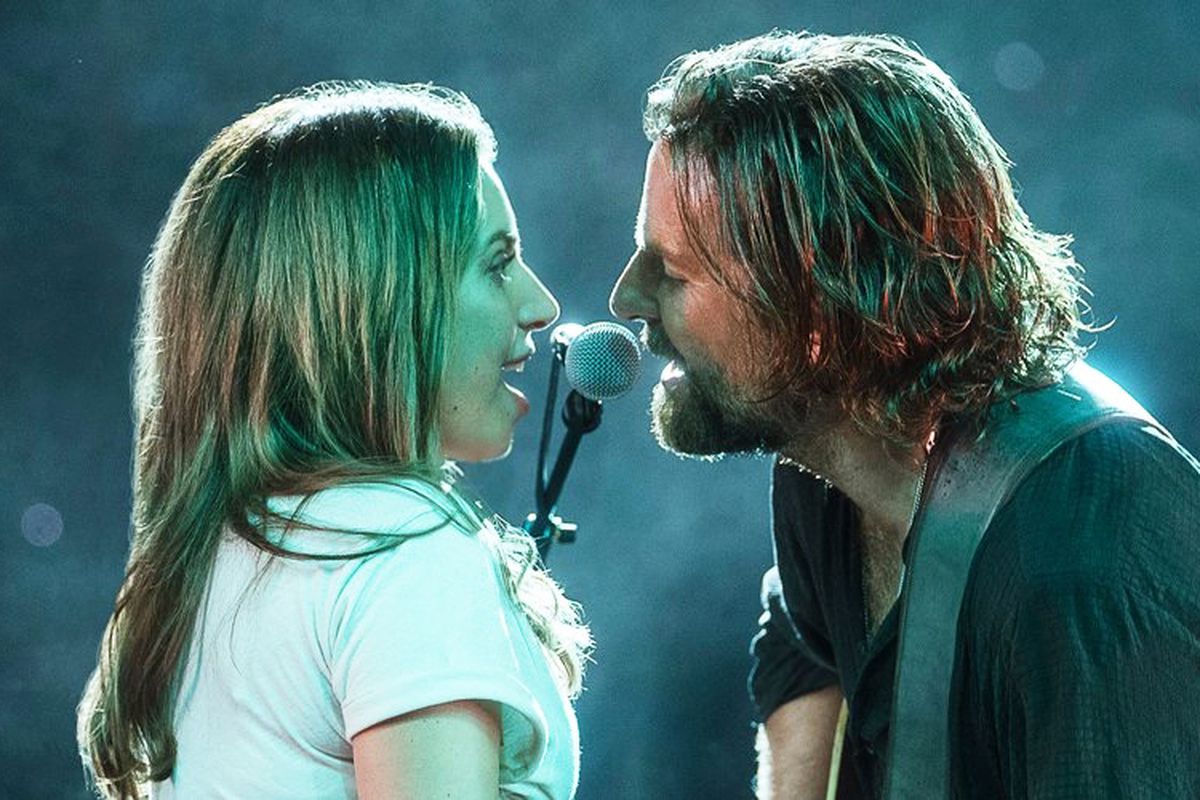
Lady Gaga and Bradley Cooper play two singers in love in A Star Is Born.

Right now we seem to have a lot of reboots in terms of entertainment. Reboots of TV series, reboots in music and reboots in movies too. A Star Is Born is a reboot of a film done three times before, but does it translate for the present?

I know I mentioned about a lot of reboots happening in my introduction. There are a lot of successful reboots right now, but there have also been some reboots that flopped too. What makes a successful reboot isn’t just rehashing something people loved in the past. It also involves making it relevant to the present and also have the ability to both please fans of the past materials and win over new fans. One of the best cinematic examples of a reboot is last year’s It. The cinematic version of It worked last year because of two smart choices. The first being it would divide 28 years earlier to the time of the plot in two separate films. The second being the childhood part of the story would be set in 1989 and the adulthood part of the story to be set in the present, unlike setting the childhood part in 1958 and the adulthood part in 1986 as in the novel and the miniseries.

Moving onto A Star Is Born, we’re dealing with a film that has been done three times before. The first being in 1937 starring Janet Gaynor and Fredric March, the second being in 1954 starring Judy Garland and James Mason, and the third being in 1976 starring Barbra Streisand and Kris Kristofferson. For Bradley Cooper to take on the project and turn it into something winning for the present, he had to make a lot of choices.

Some elements would be very similar to what was done in films past, while some elements would have to be new and relevant and believable for the present. There were a lot of elements of all three past editions that worked very well such as a singer struggling to make it, the wash-up who discovers her and promotes her to greatness and even loves her, and the man encountering a substance problem which hurts his marriage and ultimately takes his life.

There were some elements from the separate films that he had to include. For example 1937 and 1954 were about an actress trying to make it and a washed-up actor promoting her and loving here. 1976 was about singers for the first time. The choice to have singers and in the field of country music as in 1976 worked well for the film. I will focus more on that later. Also the tribute Ally gave to Judy Garland was a subtle reminder in the film of the most famous version of the story.

Then there were the more complicated choices. First off, Bradley Cooper may have proven himself as an actor, but not as a singer or a director in the past. Bradley had to give himself the practice and even have the duet scene done in front of a live crowd. Sometimes only the real thing can work. Secondly, there were two factors involving Lady gaga. One factor was she had limited acting experience with her biggest previous role being her minor role in Sin City: A Dame To Kill For. The other factor was to present Gaga as a country singer. We all know her as the modern flamboyant pop icon and most of us could not see her as a country star. Even seeing Gaga portray Ally as a common pop star later on was challenging because of her ‘grand diva’ image. However Gaga made it work and came off as a very believable country singer. Her songs from the film have also won her fans over too. Thirdly is the chemistry between the two. The two had to come across not just as two singers but as a couple in love. The chemistry between Jackson and Ally worked excellently and made for a believable story. Star power can only go so far. They have to make it work on screen and they did it. Fourthly is the music. In order to make this version of A Star Is Born about two contemporary singers, the reboot had to have original songs that fit the film and fit the genres of country of pop, whatever genre was needed in what scene. The songs fit the film to a tee and proved to be winners off the screen too as Shallow and I’ll Never Love Again have charted.

Top accolades go to Bradley Cooper. The reboot was originally intended in 2011 to be directed by Clint Eastwood and have Beyonce as the lead. Beyonce’s pregnancy interfered with the story and it lead to four years of chaos with both Beyonce and Eastwood eventually leaving the project. Cooper picked it up, joined co-writer Will Fetters, and saw it as his chance for his directorial debut. He was first trying to get Beyonce to agree to the project, but it was decided in 2016 that Lady Gaga would be the lead. This proves to be a success in acting, directing, co-writing with Fetters and Eric Roth, and co-producing. The story comes across as relevant and believable to the current times and winning with the public once again.

It’s not just Cooper. Lady Gaga comes off excellent in what is her first lead role. We all know how Lady Gaga can really go into a character as seen in her on-stage performances and her music videos. However this was her first major acting role and singers are a bit of a gamble in terms of casting them as actors in movies; they’re either sink or swim. Sure, she knows how to sing, but the challenge was for her to handle a lead role. She handled the role of Ally with believability from start to finish. Even with the singing, Gaga showed she can sing country very well and also make for a believable common pop star. The film is as much Gaga’s triumph as it is Cooper’s.

There’s also more winning performances than just Cooper and Gaga. There’s also veteran actor Sam Elliott not just coming across as a believable cowboy half-brother in Bobby, but also stealing each scene he was in. That’s what makes a winning supporting actor. Andrew Dice Clay is not only good as Ally’s father Lorenzo, but is unrecognizable! Rafi Gavron also comes across well as Ally’s manager who has an axe to grind with Jackson. He did a good job in making Rez hateable. Dave Chappelle and Anthony Ramos were also very good in their supporting roles, despite having roles that weren’t that challenging or lacked screen time.

A Star Is Born goes beyond being a simple reboot. The story is made relevant to the times, the actors deliver a believable story and a love with chemistry, and the music is winning. This is not just another reboot. This is a reboot that works big-time!

DVD Review: Silence

silence
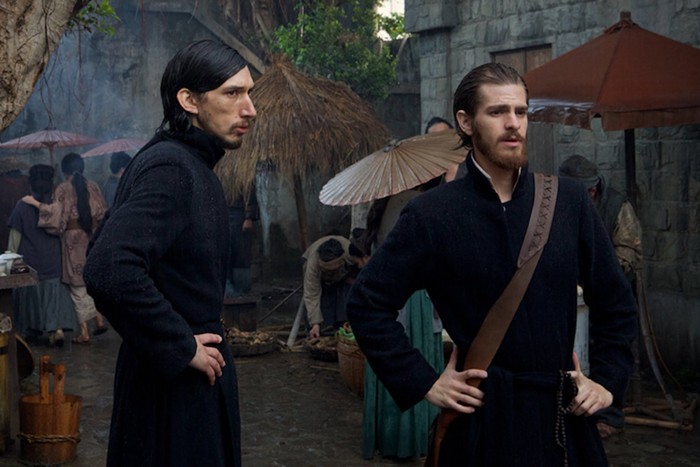
Adan Driver (left) and Andrew Garfield are Portuguese missionaries in Japan whose mission is a huge test of faith in Silence.

Learning of Martin Scorsese doing Silence caught my intrigue: Scorsese doing a film about Catholic missionaries. The big question would be how would it turn out? Would it be pro-Catholic or anti-Catholic? Or something else entirely?

It it the 17th Century. Portuguese Jesuit priests Rodrigues and Garupe  are sent to Japan to spread the faith and to find Father Ferreira. Ferreira was sent as a missionary from Portugal, but has been forced to watch the brutal executions of people he helped convert to the faith and has since apostatized. In their first stop in Macau, they came across one of the converts who himself watch executions happen. He’s now a paranoid alcoholic.

Once they arrive in Japan, they arrive in the village of Tomogi. They learn that Catholics have resorted to an underground church. The people are relieved to see they have a full priest available but the priests learn of the samurai searching out Christians to execute: commonly called ‘The Inquisitor.’

Both priests go to different islands. Garupe goes to Hirado Island to avoid having the village threatened and Rodrigues goes to Goto Island in search of Ferreira. He comes across the man from Macau who betrays him in front of an old samurai. The samurai has Rodrigues and the Catholic converts arrested and taken to a prison in Nagasaki. The samurai warns Rodrigues to renounce his faith or else the other captured Christians will be tortured. The samurai give the Christians a chance to step on a rudely-carved crucifix to renounce their faith. One man refuses and he’s beheaded on the spot. Rodrigues has to witness this from his prison cell. Later, Rodrigues is taken to a shoreline where three Christians from Hirado and even father Garupe are to be executed by drowning. Even though Garupe refuses to apostatize, Rodrigues is horrified by what he witnesses.

Finally Rodrigues gets to meet up with the apostate Ferreira. Ferreira tells him after 15 years in Japan, Christianity is futile in Japan. It’s best that he apostatize. They day before Rodrigues goes on trial, he hears the torture of five Christians who had apostatized. Then the day comes. Rodrigues is brought to trial by the shogun and is presented the chance to step on the crude carved crucifix to apostatize. Rodrigues appears to hear permission from Christ and steps on it. He is distraught. Rodrigues spent his remaining years in Japan married and searching out goods from ships incoming from Europe. His job was to identify Christian items from non-Christian items. The ending will definitely lead to a lot of conversation.

We should keep in mind this is not exactly a true story. Instead this is a film adaptation of a book of the same name written in 1966 by Japanese author Shusaku Endo. Whatever the situation, this is a film that presents a huge challenge to one’s faith. Even one with the strongest of faith and convictions can find themselves questioning what they would do in a situation like this. We should remember this is not a case of Christian martyrdom where the priest is the first to be executed. The followers are executed first as a pressure to get the priest to apostatize. The methods of execution are also horrific such as slowly dousing prisoners in hot spring water slowly and painfully to burning them alive wrapped in grass. I’m sure some would ask what would they do in this situation? Is it a selfish thing to hang on to one’s faith while the others are tortured and killed?

I’m sure a lot of people would be suspicious of a film like this coming from Martin Scorsese. Scorsese has had a reputation of a lot of negative and even blasphemous depictions of Catholicism and the Catholic faith. The biggest controversy was in 1988 when The Last Temptation Of Christ hit the theatres and there were protests galore. This film does not give a negative depiction of the priests. Instead it presents the challenges of faith such as the pressure to apostatize or the treatment of sacred images. One thing about the film is that the ending of the film is sure to give a lot of discussion of the final fate of Rodrigues. They say endings should have you asking questions rather than give you answers. It sure worked here as a lot of debate of the ending has sure come about. Even the end scenes after Rodrigues apostatized prompted a discussion between me and another person. This film will have you talking.

One thing it goes to show about this film is that it shows just how difficult it is for a director to make a labor-of-love film. No matter how many hit movies a director may produce, they still have stories deep in their heart they can only dream of putting on film. Even a renowned director like Scorsese would face such challenges. It’s not just in the amount of time it would take to develop such an idea on film– this film is 25 years in the making– but also the willingness of executives to allow it. We forget that film making is a business first and foremost, and business is ruthless. Even after all is completed, it’s then up to how the general public will receive it. In the end, Silence became Scorsese’s lowest-grossing film since 1997’s Kundun. It is a shame because the film is wonderful to watch and showcases a lot of excellent aspects. The film did make the AFI’s annual Top 10 list of the best films as well as the Top 10 list of the National Board of Review.

Martin Scorsese does another good job of directing, even if it’s not his best. He works the film very well and presents it well without his usual trademark of over-the-top blood-and-guts. Sure, there were torturous scenes, but they were a far cry from what you’d normally see in Scorsese film. I feel the adaptation he wrote along with scriptwriter Jay Cocks included the right parts and right moments from the novel as none of the scenes seemed pointless. Also he did a good job of maintaining the dignity of the priests and of the Catholic faith. Maybe this is a change in Scorsese.

Andrew Garfield did a very good job in his portrayal of Rodrigues. This was one year where Garfield played roles of people with strong faith. First was Hacksaw Ridge and now this. He did a very good job in presenting a man with a huge spiritual struggle. Adam Driver was given less screen time and it didn’t allow well for his part to develop. He did do well with what he had. Lia Neeson was also good in his part despite how brief and how limited it was. If there was one supporting actor who could steal the film from Garfield, it’s Issey Ogata as Inquisitor Inoue. He came off as cartoonish at the odd time but he succeeded in making you hate him. Other great works in the film include the cinematography from Rodrigo Prieto. He did a lot of good shots in creating the drama and even capturing the beauty of the scenery. Also worth noting is the excellent production design from Dante Ferreti in both the natural and man-made settings and the costuming also by Ferreti which were top notch.

Silence will most likely go down as Scorsese’s most overlooked masterpiece. It was a labor of love of his that didn’t pan out at the box office. Nevertheless, it’s a good think he made this film as it features a lot of cinematic qualities and gives a lot to marvel at.

Oscars 2016 Shorts Reviews: Animation and Live-Action

Cinema

I’m lucky to be living in Vancouver. It’s one of the few cities one can be able to see the nominated shorts in a big-screen theatre. Gives me a chance to review them myself and even make a should-win pick for myself. This year is quite an array of nominees in both animation and live-action. So without further ado, here are my thoughts on the nominated shorts:

ANIMATED:

-Blind Vaysha (Canada/France): dir. Theodore Ushev- This is a unique 2D animation story of a Bulgarian folk-tale. A story of a girl with one eye that can see the past and one eye that can see the future and cannot live in the present. The story also shows the attempts of others to fix Vaysha’s blindness. The linocut-style animation, however, was unique and had a lot of style and flare to it.

The story doesn’t really end. Instead the film ends asking the audience their perspective. It has a unique narrative point and I get why it’s done that way, but I often wonder if the film ended on the right note.

-Borrowed Time (USA): dirs. Andrew Coats and Lou Hamou-Lhadj – At first you’ll think this is a family-friendly story at the beginning but soon learn it’s not such as you move on. It’s a dark Western story of a man returning to the spot of a family tragedy from his childhood. The hurt comes back from it and he decides to do something drastic but something happens.

I have to admire Pixar animators Coats and Hamou-Lhadj for making a brief departure from their traditional family fare and doing something more mature under Quorum Films. No, it’s not R-rated like Pear Cider And Cigarettes but it’s dark enough to be adult. I think this short is most likely to upset my pick for the winner.

-Pear Cider and Cigarettes (Canada): dirs. Robert Valley and Cara Speller- Now this is a refreshing R-rated alternative. It sometimes reminds you of a Grand Theft Auto video game or the film Waltz With Bashir. However it is a personal story from director Valley. It’s a story that makes you wonder how far would you go for a friend? Especially if that friend is selfish, conniving, irresponsible and manipulative?

It’s a story that entertains and charms and even gets you to hate Techno too. Sometimes I wonder why was he friends with that jerk? I don’t know if it’s because it was set in Vancouver or because it was an R-rated alternative but it won me over and I make it my Should Win pick.

-Pearl (USA): dir. Patrick Osborne- This is the first VR short to be nominated for an Academy Award. A musician and his daughter travel in a hatchback with a song as a bond between the two. We see the two age, the daughter mature into a musician of her own and have her own version of the song. The viewer gets a 360 degree view of the whole 5-minute story.

Looks like something Richard Linklater would do. Actually it might remind you of Waking Life. An excellent short that’s entertaining and will touch you too. Might even make you go to iTunes and download No Wrong Way Home.

-Piper (USA): dirs. Alan Barillaro and Marc Sondheimer- This is the short shown before Finding Dory. A baby bird looking for food on the beach with her mother looking on and guiding her. Pixar does it again by delivering a clever, charming, and entertaining short with the dialogue absent and the animation as detailed to a tee as it gets. It’s excellent, but it’s something we’ve come to expect from Pixar even with their shorts. Nevertheless this is my Will Win prediction.

And those are my thoughts for the Animated Shorts up for the Oscar. A lot of styles of animation between Canadian and American companies. All five were very entertaining. We’ll see who wins.

LIVE-ACTION SHORT FILMS

This year there are no films with English as the language of the majority. All five are from European countries. Here’s the rundown:

-Ennemis interieurs (France): dir. Selim Azzazi – A man from Algeria seeks to be a French citizen but the interrogator at immigration has big questions for him about meeting with a group of Algerian men back some years ago which led to him being arrested and imprisoned for two years. The interrogator keeps insisting he answers but he’s very reluctant to do so. Even to the point of neglecting his chances of French Citizenship. Why? What will make the man give his answers?

It’s a story that appears boring at first but grows with intrigue with each minute and with each new detail. The interest builds over time. It even makes you wonder why is he withholding the names of the other men? Feelings of brotherhood? Fear of retaliation from them? Also this may be about an incident in the past but it’s very relevant, especially with the Paris bombings happening in November 2015. This is my Will Win pick.

-La Femme et le TGV (Switzerland): dirs. Timo von Gunten and Giacun Caduff – Elise is a woman who wave her Swiss flag at the passing TGV train to Zurich every time it passes her house at 6 in the morning and 6 in the evening . After that she bicycles to her job at the town patisserie. It’s her daily routine for 30 years; a routine she doesn’t want to change. One day, she comes across a letter that was thrown to her by a man who goes on that daily TGV. He’s a man from France looking for work. The two develop a friendship only by mail and packages. Over time she hopes to meet this man. Then one day the train stops coming. It’s changed route? How will she deal with the change? Will she ever see the man?

It’s a charming comedy that has you engaged with the character (based on a person who has existed and did wave her Swiss flag at passing TGV trains). Gets you thinking about the woman. Is she an eccentric? Is she naive? Lonely? Unpredictable ending but a happy one.

-Silent Nights (Denmark): dirs. Aske Bang and Kim Magnusson – Inger is a young Danish woman who helps at the Salvation Army during the day and looks after her ailing mother at night. Kwame is a Ghanian immigrant who came to Denmark for a better future and to support his wife and children at home. However he’s been left homeless and makes money from recycling.

They both meet as Kwame agrees to help. The two develop a mutual friendship and even progress into something more. However it’s put to the test when Kwame steals money from the charity to pay for his daughter’s malaria treatments. Even though Kwame is banned for life, Inger forgives him and still loves him. Then Inger’s mother dies and she learns about Kwame’s family in Ghana just as she learns she is pregnant. It’s over between the two. However Inger sees Kwame one last time where she gives him advice, and something else.

It’s obvious that this story is about the immigrant situation in Denmark and the difficultly of the times for all. It presents both Inger’s side and Kwame’s side. However it’s more. It’s about a love that’s true. Inger loves Kwame so much, she’s willing to forgive him for all the terrible things he did. It makes the choice she makes for her and her baby look like the right thing. This is my Should Win pick.

-Sing (Hungary) dirs. Kristof Deak and Anna Udvardy – Zsofi is the new girl at a school. She most looks forward to singing in the choir. However on her first rehearsal, the instructor talks of a choir competition where the prize is a performance in Sweden. She also tells Zsofi her voice is not ready for the choir and tells her to lip sync. Along the way, Zsofi finds a friend in star singer Liza. The two become good friends. However Liza notices Zsofi not singing but others. When she brings this up with the instructor, she not only admits it but tries to convince the children it’s the right thing for the competition. All of which leads to a surprise ending and the ending you think is right.

Often I question what the point of this film is. Is it about competitiveness to the point the ‘lesser’ singers are not allowed to sing for the sake of the big prize? Or is it a reminder of Hungary’s past communist regime; of how those that fit in are allowed to and those that don’t aren’t, but make like everything’s okay?  Even the choir director could remind you of a communist dictator on retrospect. Whatever the point, the story was entertaining and sweet. Reminds you of the joys of childhood and the right thing paying off in the end.

-Timecode (Spain) dir. Juanjo Gimenez – It starts as a check for a woman on a security job during the day. One day she learns of a broken car light. Upon viewing the video of what happened, she sees the worker before her dancing before hitting the car. She decides to give him a dancing video of her own. Video after video follows. Then on their last day, magic happens.

At first you think the man is something eccentric but this story builds into something that ends on a bizarre note. A very good film.

And there are my thoughts on this year’s nominated shorts. Now remember both categories are the hardest to predict the winner. For example, last year the consensus of critics ranked Stutterer the least likely to win Best Live Action Short and it won. Even Annie wins for Piper and Pear Cider and Cigarettes are not a guarantee that either will win.

With my shorts predictions out of the way, I just have my main predictions for all the categories to deliver. But not before my last Best Picture summary. Coming up tomorrow morning.


Oscars 2016 Best Picture Summary: Part 1

I know I’ve done individual reviews of Best Picture nominees in the past. This year I thought I’d try something new. I thought I’d do summaries of the nominees. Three blogs analyzing three of the nominees. It’s something new this year and I hope you like it. For my first summary, I’ll be reviewing the first three Best Picture nominees I saw: Arrival, Hacksaw Ridge and Moonlight.

ARRIVAL

arrival
Amy Adams knows how to communicate with aliens in Arrival.

When you learn Arrival is about aliens, I’m sure you have an idea of what you’d anticipate what a movie about aliens would be about. However, you’re in for a big surprise.

This is probably the first movie about aliens to earn a Best Picture nomination. The film appears to set up for a story that would most likely lead to big-time action sequences. Instead we get a film that’s very intellectual in dealing with aliens. Don’t forget Louise is a linguistics professor who was hired for this duty because of her language expertise. In this film, the focus is on communication. Louise has a way to communicate with the aliens and earn their trust even while those around her grow more hostile to the beings. Louise’s gift for communication goes beyond the aliens and she’s able to say to General Shang the words his late wife said to her. It’s like she has a sense for this.

Even with all this, the film is not just about aliens and preventing a human-alien war. The film is about Louise trying to heal after her daughter’s death. Her marriage is no more as well and she’s looking for her purpose. It’s even about Louise and her ability to foresee the future and the possibilities they can unfold. Louise is the central protagonist whom the whole story revolves around. She finds her true gifts at a time she least expects it and she’s able to find her life again. It’s almost like this alien invasion is like a godsend to her life. Right after her daughter dies, she learns of her purpose to the world and to others.

Denis Villeneuve did a top job of directing this film. He already has a reputation for films like Maelstrom, Incendies and Sicario. He’s also been hired to do the Blade Runner sequel. This film he directs is very tricky but he does all the right work for it. The script by Eric Heisserer is very smart and very deep. It does a very good job of getting the right moments of action and the right moments of drama pieced out.

The story also rested on the performance of Amy Adams. She knew the story was primarily about Louise and she had to make it work. Although the role didn’t have too much in terms of character development, her performance was solid and it held the story together. The supporting performers may not have had as big of roles but they still did well with their performances. Jeremy Renner definitely could have had more depth in his role. The music from Johann Johannson and Max Richter fit the movie perfectly. The visual effects were also excellent and just what the movie needed.

Arrival is a very intelligent movie. It’s an alien movie not like one you’d anticipate at first but you will leave the theatre pleased.

HACKSAW RIDGE

hacksaw-ridge
Hacksaw Ridge is about Desmond Doss (portrayed by Andrew Garfield) in both his convictions and his sacrifice.

Mel Gibson is back. This time he has Hacksaw Ridge. It’s a war drama that’s about more than just the war.

This film makes for an interesting topic: conscientious objection. I know all about it. For years I went to a Protestant church where the people were known for their anti-war beliefs. Conscientious objection is something that’s bound to make one question their morals and even act out of hostility. I know that we have conservative pundits who insist that fighting in a war is the definition of patriotism and will even use scriptures to justify why was is the right thing. Upon release of this film, I was anticipating a conservative backlash against it. So far no ‘Diss The Doss’ movement has happened. No movement to have his Medal Of Honor posthumously revoked. Nothing. It’s a good thing because the film does make one reconsider what defines a ‘patriot.’ I’m glad this story was told.

One of the biggest complaints from conservatives in the last 40 years has been either the negative depictions of religion or lack of positive depictions of religion in movies. True, this is not the Hollywood where the Hays Code calls the shots. For those that read my review of Of Gods And Men, I have a quote from Barbara Nicolosi about why that’s the problem. That explains why it’s hard to get a pro-religion movie to compete for Best Picture nowadays. There’s a fine line of showing a film with a positive depiction of Christianity without it being schmaltzy, hokey or overly sentimental. Plus with all the ‘game changers’ in the last few decades, writing a winning script or creating a winning film is just that much of a challenge.

I feel they did a very good job in Hacksaw Ridge. It was a very good story of the persecution Desmond Doss had to face for his beliefs. It was a very gritty story of the war and all the damage it caused. Some say the graphicness was comparable to Saving Private Ryan. It was an honest portrayal about someone’s faith. However there was one point when I felt it was borderlining on hokey during the scenes of: “Please, Lord. Help me find one more.” I know that was something Doss said in real life but I’m just wondering if it could have been done better.

This film is the first film directed by Mel Gibson in a decade. I know he had to take a break as he had a very public meltdown with the things he said about others and problems with alcohol. You could rightfully call this film the redemption of Mel Gibson. He directs an excellent film that took a lot of effort to make. 14 years to be exact even while Doss himself was still alive going from one writer to the next until finally they had the right script and right story thanks to Andrew Knight and Robert Schenkkan. Gibson and the writers did an excellent job with the film with the story and the depiction of war.

In addition, the story was made thanks to the performance of Andrew Garfield. This was more than just a war story. This was a story of a person’s heart and soul. Garfield knew he had to personify Doss in his convictions in order to make this story work. He did it excellently. It’s hard to pick out any supporting players who stood out. None of the roles of the supporting actors were as developed. However Teresa Palmer did a very good job as Dorothy Doss and portraying the concerned fiancee, as is Hugo Weaving as the father Tom Doss and Vince Vaughn as the hard Sargent Howell. The visual effects and the sound mixing were top notch, as it should be in a film like this. The score from Rupert Gregson-Williams fit the film excellently.

Hacksaw Ridge is a surprising film. Who would’ve thought that the best war movie in years would be about a man that didn’t fire a single bullet? Definitely a story worth telling.

MOONLIGHT


moonlight
Mahershala Ali (right) portrays a mentor to a boy named Chiron (played by Alex Hibbert at left) in Moonight.

At some point, you gotta decide for yourself who you’re going to be. Can’t let nobody make that decision for you.

This year’s surprise critical success is Moonlight. It’s a very unique film like no other seen this year.

The film is unique as it sets itself around three key periods in the life of Chiron. There’s his childhood where he’s known as Little, there’s his teenagehood where he’s simply known as Chiron and there’s his adulthood where he’s known as Black. The film does tell a story of a man who you think would die young. He has all the ingredients: gay, living in inner city Miami, a verbally-abusive mother addicted to crack, arrested at a young age and a future of being a pusher himself. Somehow he finds the will to survive. He’s able to withstand the bullying he faces for being gay, he’s able to decide his life to the best of his abilities without his mother. Often it’s not the best choices he makes in his life but he finds the ability to survive. You wonder how does he do that? Was it from that brief time with Juan and his mentoring? Was it the love from Kevin he always knew was there? I remember that scene of Little in the school dancing classes dancing like he was in 7th heaven: his escape from the bullying. Was it a spark within Chiron himself? Whatever the situation, it results in beauty at the end.

The film is not just about Chiron. As one can see, it showcases the lives of many different African-American people living in the inner city. It may show some of the more negative depictions like drug dealers, poverty and drug addicts but it also shows positive images too like in the case of Juan and his girlfriend or even in music being played. It showcases some surprising things as well as how Juan the pusher can be a very smart man. It even dispels some myths we have of inner city people. Like how Juan was good at handling Chiron’s homosexuality and gave him words of comfort while Paula acted out in hostility. Usually you’d expect ‘gangstas’ to have a homophobic attitude. It showcases what it’s like to be black and gay in the inner city. It also showcases people’s insecurities. It is overall one man’s attempt to find himself in the harsh world that he lives in. Yet despite all its harshness, it becomes something beautiful in the end.

The film is a triumph for Barry Jenkins. This is actually his second feature as a director. His first film, 2008’s Medicine For Melancholy, won a lot of attention and even earned him many directorial debut awards. Moonlight is only his second feature. This film which he adapts a script from a drama school project from Tarell McCraney is a masterpiece in both the story and its direction. The script is also excellent that there is not too much dialogue but is able to say lots even in the silent parts. Another quality of the film; it says a lot while saying very little. Overall the film is a real delight to watch and leaves one wondering what Jenkins will have next.

The three actors who portrayed Chiron– Alex Hibbert, Ashton Sanders, and Trevante Rhodes- all did a very good job with the role and portraying him at the right ages. Mahershala Ali was excellent as Juan: the pusher who becomes a mentor to little Chiron for that brief period of time. Ali had to bring the right charisma and character for a role like Juan to work not just in his scenes but to have an influence throughout the whole film. He did a stellar job. Also excellent was Naomie Harris. Possibly the one actor or actress to be a part of all three scenes, Harris was excellent as the drug-addicted mother Paula. She had to go through three stages with her role from a simple crack user to a crack addict to recovering in rehab. Each time she had to give her role dimension and inner depth to keep it from being cardboard. She did excellent too. There were additional supporting roles that were also good like Janelle Monae as Teresa and Andre Holland as the adult Kevin.

The technical bits were also excellent. The film was edited very well, the cinematography from James Laxton was possibly the best of the year. The score from Nicholas Britell was excellent but the inclusion of track music from classical to Latin to funk to hip-hop to Aretha Franklin to Motown really added to the feel of the movie. Almost feels like an anthology. In fact that scene when Kevin sees Chiron (as Black) after so many years and plays the classic Hello Stranger is one of the best scenes of the film.

Moonlight is a story of a young black man coming of age in the big city but it’s a lot more too. Those who’ve seen it will know why this film is a masterpiece.

And there’s the first of my Best Picture summaries for this year. Next one coming up in a few days.