Oscars 2024 Best Pictures Reviews: Part Two

It does seem awkward for me to do five blogs of Best Picture contenders. It’s all about my writing. Last year my writing was so over the top, I had to post individual reviews instead of all ten within three blogs. This time as I was writing, I felt doing blogs consisting of two reviews each is a nice steady dose of my writing. Hope you like them. Now on with my next two reviews:

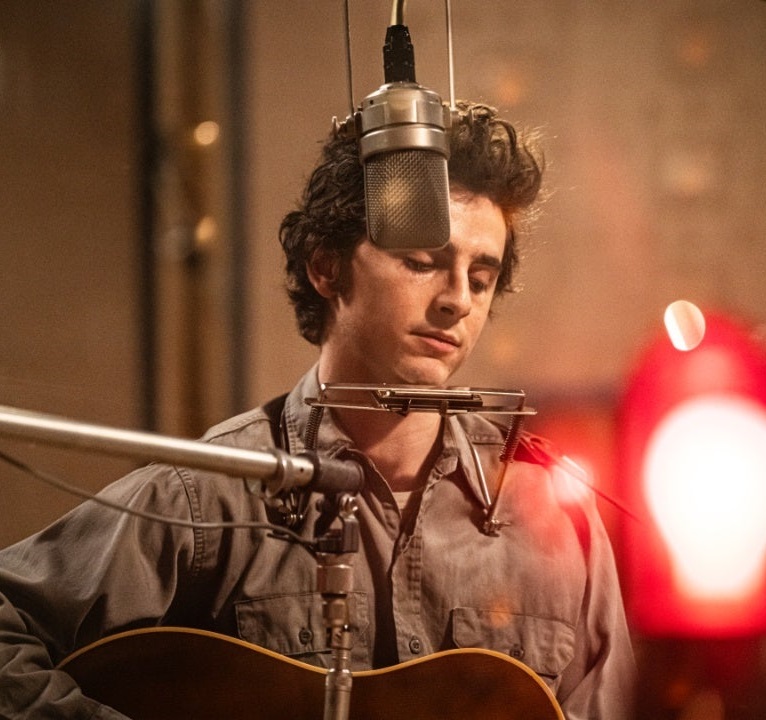
A Complete Unknown

I’ve seen musicographies before. I’ve seen how they told the story of the musician or even show one part of the musician’s life. This film is a case of telling a part of Bob Dylan’s life. It tells of how he goes from an unknown folk singer in Greenwich Village to being part of the main folk scene of the time to branching out on his own. One thing we often forget about is that in the early-1960’s folk music was seen by many young people as the antidote to Rock ‘N Roll. Rock ‘N Roll music was seen by them as filled with scandals, fabricated acts, and music done for money’s sake. Folk was regarded by them as the opposite. It was regarded as self-composed music, honest feeling and even having a word to say to the powers that be. Bob, having a liking to Rock ‘N Roll, did not sit well with fans of folk music. To add, the Folk scene was becoming as much like showbiz as Rock ‘N Roll itself. You could easily see why folk fans would be outraged by his Rock ‘N Roll schtick. Looking back, it leaves me wondering after that moment did Rock ‘N Roll change Folk or did Folk change Rock ‘N Roll? Neither genres have been the same since.

The unique thing about this film is that it’s as much about the person as the musician. Most of us have known Dylan through his music. He always spoke his mind in his music. The film shows things most of us have overlooked. There’s the time Bob is torn between the love of Joan Baez and Suzy Rosso and finds it hard to hold a relationship with either. There’s Bob desire to expand and grow as a musician while the folk scene wanted to her him perform his more legendary hits. There’s how Bob found guidance from Johnny Cash and regarded Woody Guthrie as a musical father figure. There’s how the folk scene became just as much of a clique as even the most commercial music scene. We see that in how the folk scene was all about those connected to Pete Seeger and the shows he helped organize. You can understand why Bob would rebel and do his electric show. Bob always wanted to do his own thing. At the end of it all, he was still Bob.

This is quite possibly the best work from James Mangold. For so long he’s created films in which have received Oscar nominations and wins, but left him empty handed. Films like Girl, Interrupted, Walk The Line, 3:10 To Yuma, Logan and Ford vs. Ferrari. He did get a scriptwriting nomination for Logan but it’s this film he finally gets nominated for Direction. Having directed Walk The Line, Mangold knows how to direct a musicography. With the story he co-adapts with Jay Cocks, Mangold shows Dylan as a musician, artist, flawed lover and rebel. He also captures the essence of what folk music was to do about, the folk music scene of the 60’s and the times very well. It’s easy to see why he has received this acclaim.

The film also excels through the excellence of the performance of Timothee Chalamet. I’ll admit I first thought Chalamet playing Bob Dylan was a bad idea. I could not see him doing it. He accomplished it very well by making it a three-dimensional performance when it could have been wooden or cartoonish. I’m impressed with his work. Also really great is Edward Norton as Pete Seeger. I know Edward knows how to get into character. Here he makes a very convincing performance as Seeger. Newcomer Monica Barbaro is also excellent as Joan Baez. The film is, in a way, also showing us the Joan Baez we never knew. Very different from her on-stage persona we’re so familiar with. Elle Fanning was also great as Sylvie Russo who faces a hard time trying to love Bob as his fame was starting to take off. Boyd Holbrook was also very convincing as Johnny Cash and Scoot McNairy was also great as woody Guthrie. Even though both performances had a short amount of screen time, they were still both good and convincing.

A Complete Unknown is not your typical musicography. It presents a Bob Dylan we never knew, a Joan Baez we never knew and a folk scene different from what we thought it was. It’s as revealing as it is great.

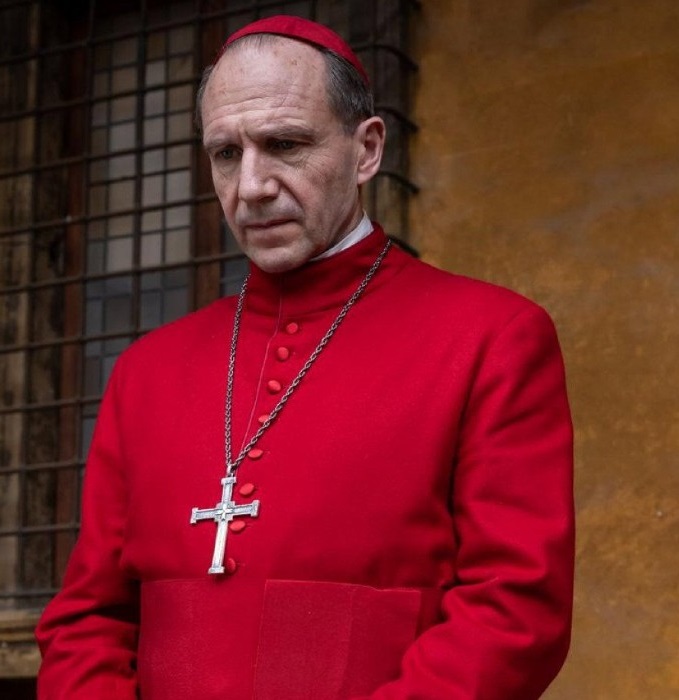
Conclave

There has been a lot of unhappy talk from a lot of Catholic people about the film. One thing we need to talk in mind is that this story is a fictional story based on the adaptation of a book. Watching it, the cardinals did not act very priest-like. It made the whole conclave look like a joyless sect. Throughout the film, there’s hardly any focus on the spirituality of the cardinals. As the election of a new Pope is happening, it appears they are all rivals against each other with animosity. It almost makes the election of the Pope look like a political election where candidates look to expose the dirt of their rivals in order to win votes. Maybe that’s the point of the film. To make a papal election look similar to that of a political election. Although they do a good job of making that connection, I’m still unhappy about how the bishops and cardinals were portrayed.

Although I was unhappy of how the conclave is depicted, I am not angry as I am well aware this is a fictional story. Besides none of us knows what goes on behind the scenes of electing a new Pope. One thing the film does do well is that it shows the complications of being inside the Catholic Church. Although the film doesn’t know much about the faith of the bishops and cardinals and makes them look similar to dirty politicians, each of the bishops and cardinals represent ways of thinking most common among Catholic leaders. I myself have complained that the Catholic Church feels more like an institution than a church, but we forget how big the Church is. The Catholic Church is almost 2,000 years old and has 1.3 billion members and has churches on all the world’s continents. In some nations, Roman Catholicism is the religion of the majority. With a church that big, there is bound to be differing opinions on various issues. Some have Bible-based answers for various issues, some base their opinions on Church-based teachings, and some just give their own rational thought. You can understand why a church this big will have a lot of conflicting opinions among its members and leaders. The various debates among the College of Cardinals are reflective of that. Then there’s the powers that be. As you can see in the film, the electing of a new Pope is not an easy thing. There’s knowing that the Pope they elect with become the epitome of the image and the morality of the Catholic Church. You can understand why choosing the right bishop or cardinal to be Pope will be a difficult.

This film is good at making the election of a new Pope look like an intense drama. It succeeds in doing it by inventing a clever ‘behind the scenes’ story and making it into an intense drama that will keep you focused. It may overdo it in terms of the various conflicts between the bishops and cardinals but the conflicts reflect the common mixed beliefs held by Catholics. Sometimes the squabbles over certain bishops in the running are reflective of squabbles of the various beliefs of many Catholics. A Church of 1.3 billion is too big to have everyone believing the same thing on each issue. Also the film reflects on difficulties, scandals and controversies that the Church has left unfixed over the years. Even how secrets unraveled behind the Church walls are representing how the Church has a lot of hidden secrets. The film also succeeds how getting the problem of the Papal election solved is best assisted by two people least expected. It’s first done by Sister Agnes who, by being a nun, is to exist in the background but she can’t hide her silence anymore on all that has happened. The second is Cardinal Benitez who seems like the candidate least likely to win, but after he made his powerful speech, he appeared to be the best choice to be Pope, only for his secret to be revealed after his election. The film gives an ending that leaves us with questions of what will happen next. That’s what a film should do.

This film is an excellent work from Edward Berger. With the script Peter Straughan adapted from the novel, Berger directs a film that takes a world event and turns it into a behind-the-scenes drama that will keep you intrigued in the drama more than you thought you would be. Although it’s off in its depiction of priests and bishops, it’s still a great work.

Also great is Ralph Fiennes as Cardinal Lawrence. He performs the role of a priest whose spirituality is clashing with his role of leading the College Of Cardinals. He makes the stress look obvious. The performances of the various bishops from John Lithgow, Stanley Tucci and others were very good, despite more focus on the Cardinals’ arrogances. Isabella Rossellini is the surprise of the film. Playing Sister Agnes who can’t hide her silence anymore, she really provides needed impact to the story and her silent moments are as good at storytelling as her talking parts. Carlos Diehz is also great as the Cardinal who’s the best most mortal choice for Pope, but has a hidden secret. The film also has a lot of great technical merits like set designers Suze Davies and Cynthia Sleiter for creating a set that looks very much like the Vatican, costuming Lisy Christl in making the clergy costuming look perfect and composer Volker Bertelmann delivering a score that adds to the intensity of the drama.

Conclave may be off in their depiction of cardinals and the Church itself but it succeed in bringing up hot topics surrounding the Church as it succeeds in making an intense drama of a Papal election.

And there you go. Those two films are my second look at the Best Picture contenders of this years. More reviews of Best Picture nominees to come.

Oscars 2024 Best Picture Reviews: Part One

Ten is not a set number for the number of Best Pictures nominees. Nevertheless it’s still nice to have ten as the total of nominees.

This year, there are a wide variety of films nominated from science fiction to two musicals to a musicography to a dark comedy to a horror movie to many types of dramas. Here  are my first two reviews of the Best Pictures nominees:

Anora

This is quite the unexpected comedy that delivers an unexpected sad ending. A sad ending was anticipated but the sad ending we got was not the one anticipated. It seems odd to have a story about a stripper/hooker marrying a rich kid to be one of the best films of the year but Sean Baker has developed a reputation for directing films about people in the sex trade. This is quite the story itself. We have a stripper who plays a ‘love kitten’ day after day for lusting men, but craves real love. We have a billionaire’s son who’s too spoiled, immature and careless to get it about life and love. He thinks marrying Anora is easy like that and he can live the same irresponsible life again, but he has a lot to learn. We have Igor, the henchman hired by the Zacharovs to have the marriage annulled, but Igor becomes the first person to see Anora as a human being throughout this whole ordeal. We also have the Zacharovs who are so obsessed with their money and power, they think they can do whatever they want. This is the kind of story that brings a lot to the table to talk about.

It’s hard to pinpoint the exact theme of the story because there’s so many topics and themes this story presents a point about. One could be the theme of sex workers. As I mentioned, Baker’s films often deal with sex workers. Here we see the case of a sex worker who is treated like a piece of meat and there are times her true feelings are shown. There are moments we stop seeing Anora as ‘this thing’ and start seeing her as a person. There’s also the case of wealth and privilege. Not only do we see wealthy people having the best luxuries but we see them having a privileged son living a careless irresponsible life, we see how the rich devalue marriage both with Vanja’s eloping of Anora and the Zacharov’s own marriage, we see how being a henchman to the Zacharovs means having to leave a christening of your godchild because your boss demands so, and we also see how the rich Zacharovs know that their money gives them power and uses it against Anora. Especially when the mother insists the family doesn’t apologize to anyone just as Igor points out Vanya owes Anora an apology for the eloping. It’s quite the irony when a stripper or prostitute has a better sense of what marriage is all about than a billionaire’s son. Or even his parents.

Often overlooked, I feel one of the top themes in the film is love. We have Anora, a stripper who pretends to love the men she sleeps with, but she craves real love. We have Vanya, whom Anora thinks she found love with as she spends weeks with him and easily falls for his marriage proposal. Anora is oblivious Vanya wants to marry an American so he doesn’t have to return to Russia and work his father’s business. Even the scenes as Vanya’s playing video games after the two marry hinds at Vanya’s irresponsibility. We also have Anora’s delusion with the marriage. Even though Vanya continues to play video games after they marry, she still thinks she met her love. We have the Zacharovs who view their son marrying a sex worker to be a disgrace to the family. We also see scenes which make you question the Zacharov’s own marriage. Finally we have Igor who becomes the first person to see Anora as a human being instead of ‘that thing.’ It was made obvious in the scene where Igor says Vanya owes Anora an apology. That ending where he allows her to stay at the Zacharovs one last night to sleep, bathe and pack and the ending scene as he’s about to drop her off is also an irony. He’s first hired as a henchman to stop the marriage, even if it means brute force, and now he actually has feelings for Anora. A shock to us all, and to a disheartened Anora as well.

This is the big breakthrough film Sean Baker has been waiting for. The film world has known Baker for a long time as one knocking on the door. He’s delivered small breakthrough films before with 2015’s Tangerine and 2017’s The Florida Project. Here, he directs a story that’s intriguing and unpredictable. It first seems like a film that would give us a cartoonish story but as the film progresses, the story is a lot deeper and it’s not the story we thought it was. Also worthy of top acclaim is lead actress Mikey Madison. If you thought you’d never shed tears for the character of a stripper, you will be wrong. It’s remarkable we have a film where the character of a stripper is shown to have real three-dimensional feelings, but Mikey’s performance of Anora was deep and revealing and we actually start feelings for her. He go from seeing her as ‘that thing’ to seeing her as a frail hurt person. Also excellent is Yura Borisov. Nobody expects any of the henchmen to have feelings for Anora, but Yura catches us by surprise. It’s also he who makes the movie into something we didn’t expect. Also good is Mark Eydelshteyn in playing Vanya. His portrayal as an immature irresponsible spoiled rich son makes you want to hate him in the end. Both Aleksey Serebryakov and Darya Ekamasova are great at Vanya’s parents. They also succeed in making you hate them as much as you’ll hate Vanya. We can see why Vanya is a spoiled brat.

Anora is not your typical story of a prostitute or a stripper. It’s a story of a love gone wrong and ends with a love you don’t know if it should be. Those who see it won’t forget it.

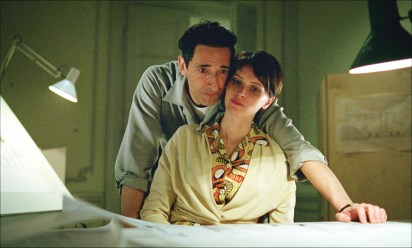
The Brutalist

We’ve seen stories about the difficulties of achieving the American Dream before. Some are harder than others. This film takes a cynical look at an architect who achieved his American Dream. We have a Jewish architect who left post-Holocaust Hungary to find refuge in the United States and achieve his success there. We see how he has to fight his demons like his infidelity, family members that are petty, harrowing memories that cause him to take heroin, a difficult market for his Bauhaus style, rival architects, people that want to use him and above all, his own egotism. It’s not at all a pretty sight to see but it does tell a good story of a man hoping to pursue his greatness in the United States.

The thing that makes this film is not just the telling of Laszlo Toth’s story, but how it’s presented. The film begins as Laszlo’s ship sails past Ellis Island and he sees the Statue Of Liberty, but from his angle, he has to look at it upside down. He has to struggle to achieve his dream by eating at soup kitchens, living at the YMCA, embraced and then neglected by a family member who’s a successful business man, and having to prostitute himself at times. His breakthrough comes by fluke as it was the renovation unapproved by Harrison Van Buren where they first meet, and the meeting is bad. It’s after Harrison discovers who Laszlo is and of Laszlo’s pre-war success in Hungary that he’s willing to take him on. It’s not an easy task as it involves years of work and labor, supplies cancellations, dirty work form Harrison, his friendship with Gordon put to the test and Laszlo’s own ego coming to light. Then there’s how Laszlo’s attempt on success threatens his marriage to Erszebet as she has now arrived in the United States. She knows his secrets and she says she’s fine with it, but it will become obvious she’s not. His success threatens family unity with the niece as the daughter adopted after the Holocaust.

The crazy thing about the film having a half-hour intermission may have some question its purpose. We should remember many decades ago, it was common for long movies to have intermissions. This film’s intermission is very successful not only in dividing the movie properly, but give you the feeling you’re watching two different films. The first half focuses on Laszlo’s arrival, his attempt to make it in the United States, the dirty obstacles he has to face and his big break. And right while he’s writing to Erzsebet with the hopes of her coming to the United States. At the end of the intermission comes a new scenario. As Erzsebet finally arrives in the United States with niece Zsofia, there’s the added pressure of keeping a family together. Especially since Laszlo can’t keep his secrets to Erzsebet any more and she has a disability to deal with. Over time, she senses things like Laszlo’s ego and how Harrison wants to make a pet out of him. Despite being confined to a wheelchair, Erzsebet is able to muster the strength to use her walker to confront Harrison about his mistreatment of Laszlo. The ending epilogue is also something as Laszlo is saluted for his work, in Italy. It’s like he achieved his American Dream but had to achieve it at a harrowing cost and he had to get his honor from outside the US.

This is an accomplishment from Brady Corbet. Younger adults may remember his teen actor days in films like Thirteen and Thunderbirds. Like a lot of young actors, Corbet felt the need to make films of his own. This is Corbet’s fourth feature film. This film that he directs and co-wrote the story with wife Mona Fastvold is definitely something. It mixes some classic film styles while telling the story of a Holocaust survivor’s pursuit of the American Dream. There have been films where the American Dream has been achieved at a big cost before, but this film meshes Laszlo’s pursuit with the shaping of the United States and most notably Pennsylvania after World War II. As the US shapes itself after the war, Laszlo attempts to shape his success in the US, but at a huge price that comes at the cost of him, his dignity and his marriage. Right at the end as they have the tribute gala in the epilogue, you wonder if this should be a happy occasion or not with what Laszlo has gone through.

Excellent performance from Adrien Brody. Remember him from 2003’s The Pianist? He appears to have kept it low-key since. This year, he comes back with another performance of a lifetime where he shows Laszlo to be a creative man and a troubled man. He will make you hate him as much as he will break your heart. Also great is Felicity Jones as Erzsebet. It’s the appearance of Erzsebet that most turns this film into two films in one. With her arrival comes the change of environment. She appears to be one who will most interfere with Laszlo’s success and even a victim of his own selfishness but in the end, she’s the best person Laszlo needs during his most troubling time. Guy Pearce is also great as the deceptive Harrison. He’s excellent in portraying an all-American businessman who welcomes Laszlo and his talents, but as long as something’s in it for him and is willing to make a toy of Laszlo. Additional excellent acting comes from Raffey Cassidy, as the niece Zsofia who’s mute at first but soon develops her ability to talk, and from Isaach de Bankole as Gordon, Laszlo’s first friend and business associate who Laszlo later turns on in his success. Excellent technical merits are the cinematography of Lol Crawley, the production design of Judy Becker and the musical score from Daniel Blumberg.

It’s easy to see why The Brutalist is a heavy favorite to win Best Picture. It combines a graphic disturbing story of one man’s pursuit of the the American Dream and shows it in a stylish artistic fashion. Hard to outdo it.

And there’s my look at the first two Best Picture nominees for this year. If you’ve seen them, you can understand why they’ve won most of the Best Picture awards.

2022 Academy Awards: Best Picture Reviews – Part One

The 95th Academy Awards are coming soon. Once again, I saw all ten Best Picture nominees. For the first time in three years, I didn’t need a streaming service to see any one of them. Elvis was the only one I saw outside of a theatre; on an airplane divided by two flights. The other nine I was lucky to see in theatres. There is your mix of enjoyable and unenjoyable. A mix of common popcorn fare and serious topics.

This year’s batch have some notable details. For the second straight year, a film directed by Steven Spielberg is nominated. For the second straight year, a remake of a Best Picture winner is nominated. Two of the nominated films are sequels to legendary sci-fi or action films. Two of the nominated films have four acting nominations each. On the contrary, half the films have no acting nominations. Also interesting that comedies, which normally get the sort end of the stick at Oscar time, are this year’s toast as two of the heavy favorites are comedic films.

The purpose of my reviews are to give a summary of the Best Picture nominees. I will be saving my predictions for a separate prediction blog. In the meantime, here is the first of my reviews of the Best Picture nominees of the 2022 Academy Awards:

All Quiet On The Western Front – Just like the 1930 film, this is an angry film. This film makes it look like World War I was a vanity effort. Like all the war was where it was all about the egos of those in power. While the young men fought and many died, these leaders with the power only cared about themselves and the power they wanted to hold onto. Even those who worked in the military seemed to take the losses of life very lightly. Seemingly not caring that a generation of young men were being lost. The last 20 minutes of the film would especially enrage many. Armistice had been declared for November 11, 1918. Germany was the losing side, but the German leader wanted one last battle. Another bunch of young men dead, just shortly before the war finally ended. Will definitely have you leaving the theatre asking what was it all for?

I’m planning on doing a comparison of this film to the 1930 original for after the Oscars. So in looking at this film, I won’t compare it to the original. I won’t even call it a remake because even the original was adapted from a novel. It’s possible this film is a re-adaptation. I will say the film is an excellent work. The film does a good job in telling the story from the point of view from the young soldiers and the meetings with the leaders. It shows the two different worlds between the two very well. The battle scenes are also intense to look at. Of course, war is ugly. There’s no compromise in the story here. Most surprising is how they slowed down the last 24 hours of World War I over a period of just over twenty minutes. That paves the way for the final dramatic scenes that would make the viewer angry at the end.

Top credits go to director/writer Edward Berger. He brings back the horrors of World War I in grand style and delivers a film that has a big message to send even now as Ukraine is going through a war of its own. The acting from newcomer Felix Kammerer was also excellent, even if his part didn’t have that much depth. Albrecht Schuch was also very good at Kalczinsky. The film also had excellent technical elements like the music of Volker Bertelmann, the cinematography of James Friend and some of the best production design and visual effects of the year. The visual effects really did a good job for the battle scenes.

Avatar: The Way Of Water – Usually when a sequel comes out, the freshness of the original seems lost and the rehash seems to be too similar to the original. Nevertheless the story does aim to have some notable differences from the first. One of which is Jake’s new family on Pandora, including his relationship with his oldest son. The other is facing rivalries both from Earth and his world. The best thing about this film is that the first Avatar took the audience to a new world. This film is also successful in taking people to a new world. Although it feels there may be something missing in this film, it’s still very spectacular and gives the audience the escape they’re looking for. The new twists in the story will also give people the drama they’re looking for and the action scenes they all enjoy.

James Cameron does it again. Not only does he bring back the world of Pandora successfully, but he does it so in breaking box-office records! To think James Cameron films have knocked each other out in setting the record for the highest-grossing ever! First Titanic, then the first Avatar, and now this! However it’s not simply box-office numbers. Cameron succeeds in creating a world where people can escape and be enchanted by. Pandora dazzled people back in 2009 and 2010 and it does it again here. Cameron also wrote an excellent story with four other writers and compiled the official script with two of the writers. They had to make it a believable story, especially since this film is thirteen years since the first. It does a story that works for the film. There was very good acting from returning actors Sam Worthington and Zoe Saldana. Also excellent was newcomer Jamie Flatters in playing Jake’s oldest son. The film’s best qualities, nevertheless, are its visual effects. It’s these effects that give people the escape to Pandora they’re looking for and keep their attention on the drama as it unfolds. Simon Franglen also does a good job in composing a good score for the film.

The Banshees Of Inisherin – This is a film not everyone can understand at first. Even after one sees the film, they can only guess what the film is about. Some say it’s about human weaknesses, or about men and their inability to relate, or even about Irish pride as seen through the eyes of McDonagh. I’ve often felt the story is as much about the island town of Inisherin as it is about the central story. Inisherin is a town away from the mainland and lucky to be out of the range of fighting during the Irish civil war. However Inisherin comes across as a town where nothing really happens or nothing really improves. Anybody who wants to get anywhere have to be like Siobhan and leave the island. Sometimes it seems like the dead friendship of Padraic and Colm is symbolic of how dead the town of Inisherin is. In addition Inisherin being a small town, it’s often a case where word easily gets around about what’s happening. The feud between the two soon becomes the talk of the town.

This film is unique as it attempts to make a comedy out of something intense and dramatic. It’s a story of a drama that is slow, but the slowness is its quality. A story about a man deciding to end a friendship because his friend is ‘dull’ and spend the rest of his years composing music seems odd and pointless. Nevertheless the film allows for the intensity to build over time. It also has its ugly surprises, but the surprises become important to the drama. The different characters also add to the story. They help provide for the environment of the story almost as if the film is based on a classic Irish fable. In addition, the scenery adds to the story. The film is as much about the scenery and the landscapes as it is about the town and its drama. Its addition to the film help builds the story.

Top credit should go to director Martin McDonagh. McDonagh infrequently shells out works. It seems like almost once every four to five years. In fact his last film before Banshees, Three Billboards Outside Ebbing, Missouri, was five years ago! This is quite possibly his best work. It’s a story that gives you the unexpected and Martin did an excellent job with it. Also when you see the ending, you easily forget that this film is a comedy. Once again, a case of a film that mixes comedy with tragedy, and it does a memorable job here.

Additionally, the story came alive from the excellent acting. Colin Farrell did a great job making Padraic to be kind and loyal and always trying, but pushed to his limits near the end. Brendan Gleeson was also great as the stubborn Colm. He captured his hardness very well. Kerry Condon was also great as Siobhan, the sister who tries to find a way out. Also great was Barry Keoghan, the troubled son of the policeman Padraic and Siobhan try to help out. The supporting characters like the Garda, the banshee and the priest also added to the story. There were also additional technical feats with this film like the cinematography of Ben Davis and the score from Carter Burwell.

Elvis – It’s not easy doing a musical biography and making it into something different. On top of it, you can be sure there have been countless made-for-TV movies made about Elvis. So how can you make an Elvis movie for the big screen of 2023? One ingredient that makes it different is the story being told from the point of view of Colonel Tom Parker. Those of us who know a lot about Elvis may have overlooked his relationship with the Colonel, especially the rocky moments. Another is to add some creative flares. Those that remember Moulin Rouge will remember how that film has creative flares. Luhrmann applies similar creative flairs from Moulin Rouge here. Another ingredient is to have the best songs of a musician’s career as well as their career’s most significant moments. You can’t pack everything about Elvis into 159 minutes of story. This film does showcase the most famous moments of his career.

Another excellent work from Baz Luhrmann. Just when you thought you couldn’t bring Elvis back to the big screen, Luhrmann does it, and in a stylish winning way. He pulls the right moves to deliver an Elvis film people of today will want to see at the theatres. Of course it’s the performance of Austin Butler that has to be the biggest quality. A thirtysomething of today able to epitomize Elvis? The answer is Yes! Butler does an excellent job in playing The King in with a performance with dimension and doesn’t go cartoonish, as one can risk doing performing Elvis. Tom Hanks is also quite good as the colonel. It’s hard to picture him with a Dutch accent, and there were a few times when I questioned if it was off or not, but he did a good job with his role. The technical details also make the film excel. The cinematography, production design, makeup and costuming are all some of the best of this past year.

Everything Everywhere All At Once – Now there have been some absurdist films that have been nominated for Best Picture or other major categories. What makes this film-of-the-absurd is that this takes place in a multitude of worlds. Thanks to technology, Evelyn is able to make many trips of the mind to many different universes and assume many different personas: past, present and future. Even the persona of a rock somewhere in the desert is possible! Usually most people look at stories like these and ask “What the hell?” This is one absurd story that many people found enjoyable. The kung fu fighting scenes also helped a lot too. And to think this all started as Evelyn’s taxes were to be done and she was to get some bad news!

To think it’s the magic of the directing/writing team of the Daniels (Kwan and Scheinert) that delivered this gem. The two have not had a lot of directing experience. Until this film, they’ve only directed some short films together and their only feature was Swiss Army Man from back in 2016! Here they have the perfect breakthrough film for them, and boy is it unforgettable. It’s a fun, thrilling story that comes off as weird and bizarre at first, but starts making more sense as time goes on.

Also excellent is the combined acting. Michelle Yeoh shines as Evelyn. When I first saw her in Crouching Tiger, Hidden Dragon, I had a feeling she would go far. She had a lot of grace with her. Although this role is way more multidimensional, she still does excellently here and delivers one of the best performances of the year. Ke Huy Quan is also excellent as the meek Waymond. Quan is also this year’s former child actor comeback story. He is best remembered as Short Round from Indiana Jones and the Temple Of Doom and Data from The Goonies. Here he gets the adult actor breakthrough he was waiting for, and what a scene-stealing performance! Additional scene stealers are an unrecognizable Jamie Lee Curtis as the IRS agent and Stephanie Hsu as the daughter whose nihilism threatens the multiverse. All the aforementioned actors had a lot to do with their main role and their various roles in the many worlds of the multiverse. That’s a lot of work! Additional technical credits go to Shirley Kurata for the costuming and the band Son Lux for the score that fits the film well.

And there’s the first of it. This is the first half of my review of this year’s Best Picture nominees. Second half coming in a day or two.

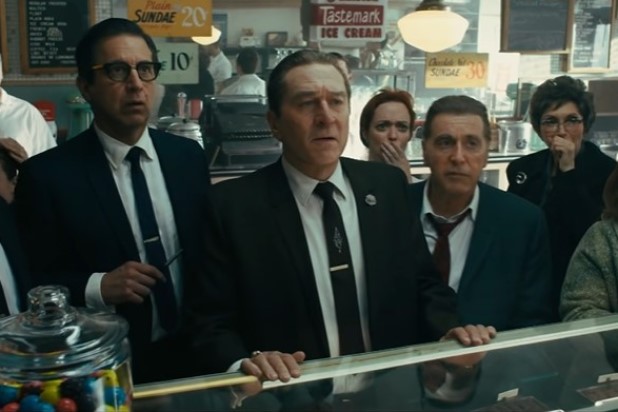
Oscars 2019 Best Picture Review: The Irishman

Irishman
Robert de Niro (second from left)  plays Frank Sheeran and Al Pacino (second from right) plays Jimmy Hoffa in Martin Scorsese’s The Irishman. A story about loyalty and betrayal.

Just when you think Martin Scorsese has done everything he could in film, along comes The Irishman. This film may not be his best, but it adds to his stack of films one can call great works.

Martin Scorsese is undoubtedly the master of gangster films or Mafia films. We have sensed there would be successors in the likes of Quentin Tarantino, but that has not yet come to be. Tarantino has his own gangster style, but Scorsese films are the Mona Lisa’s of gangster movies, if you can truly call a gangster movie a Mona Lisa! Scorsese has shown his versatility in film making since the beginning of this century. His films since the new century began have taken a wide range of genres from epic to fantasy to a family film to business-scam drama to dark comedies to religious biopics. However when watching The Irishman, his first gangster movie since The Departed, it only seems natural that gangster movies were what Scorsese was born to do. Although films in the other genres he tackled are very good, it just seems natural that way. Even the excitement of having Scorsese ‘all-stars’ like Robert De Niro, Joe Pesci, Al Pacino and Harvey Keitel adds to the excitement. Additions like Ray Romano, Bobby Cannavale and Anna Paquin also add to the excitement.

Now the film has a lot of common elements you’ll expect from a Scorsese gangster movie. It tells of a man and his involvement with the mafia and of his daily duties. It also goes back to his past in how he developed the right type of insensitivity to become as consistent hitman. It also tells of some of his more legendary kills. The film also adds something different. It adds in the story of the ‘vacation of a lifetime.’ It’s not something you’d expect to be in a Scorsese film, but it’s done in a fashion you’d expect to see from Scorsese.

However it’s the aftermath that one would not expect to see in a Scorsese film. It’s like it almost shifts to a completely different film for the last half-hour. That’s what hit me about the film. It not only tells the story of a man who committed a lot of murders and also allegedly committed the murder of the man behind the most intriguing missing person case in the past half-century. It tells of the aftermath of how he would come to regret his actions over the years. Even of how he appeared to have it all and win it with fear during his lifetime, but would be doomed to die alone. You can pinpoint exactly where in the scene where Peggy ask Frank about Jo and Frank calls a distraught Jo up trying to comfort her, but knowing he’s the one who killed her husband. That’s a change of pace from Goodfellas about a mobster who lived the mob life, was imprisoned for it and regrets nothing. Even before the scene of the killing of Hoffa, there are freeze-frame montages that mention of the aftermaths of others involved in the Philly mob Frank Sheeran and Russell Bufalino were a part of, including those shot dead or imprisoned for life.  I think the whole theme of the movie wasn’t just mob life, but how everyone involved pays in the end.

Now one thing we should remember is that we should not completely embrace this story as a true story, even though it’s very accurate. The film is based off the book I Heard You Paint Houses by Charles Brandt. Brandt is a former homicide prosecutor, investigator and defense attorney and he’s the man who interviewed Frank Sheeran shortly before his death. During the interview, Sheeran told of his life as a hitman and of his own involvement with Jimmy Hoffa. Sheeran confessed it all to Brandt months earlier and saw a priest the last few months of his lives so he could die with a clear conscience in December of 2003. The case of Jimmy Hoffa is still unsolved and his body has never been found. The FBI have had a lot of stories and sources, but it’s Sheeran’s story that’s the one they’re most going with. However there are still some naysayers that are claiming that Sheeran lied in the interview. Whatever the situation, this missing case is still unclosed. I won’t completely call Sheeran’s story the whole truth, but I believe he makes a strong case and it’s hard for me to sense him lying.

Once again, Martin Scorsese proves himself to the be master of gangster movies. Quentin Tarantino may take ruthless killers to a new level, but Martin is still the master. This film that he directs with a script written by Steve Zaillian is a complex film to pack into 3 hours and 20 minutes. Usually if a film is that long, I would expect the director to justify it. Martin has delivered a lot of three-hour films in the past, but I’m convinced he has justified the time here. If you yourself are one of the people that has been fascinated by Jimmy Hoffa and his missing story, this will be a film that will intrigue you.

It’s not just the story that will intrigue you, but how the Scorsese/Zaillian creates it and arranges it from beginning to end. It starts as the audience visits a nursing home, tours around seeing family after family and comes across a lonely man: Frank Sheeran. Then it jumps into 1975 and the story of how Frank, his wife, his mob boss Russell Bufalino and Russ’ wife Carrie were going on a ‘trip of a lifetime’ from Philadelphia to Detroit. Then it paves on how it led to all this from Frank’s days of truck driving to introduction to the mob to being a hitman for hire to a close friend of Jimmy Hoffa. The story shows of Hoffa’s rise, downfall and attempted comeback. It also shows Frank’s struggle of who should he be loyal to: Hoffa or the mob? It slows the moment of the ‘big day’ down and it delivers the aftermath with feeling that cuts deep. Also it treats the film as if Sheeran is giving us an interview. Almost like we’re Charles Brandt! I have to say the format of the film works and will keep one intrigued whether they’re a fan of Scorsese films, fan of mob films, or just have an interest in Jimmy Hoffa. It’s interesting how the film begins with “In The Still Of The Night” and it’s nice to hear and is replayed at the end, but it sounds haunting at the end. The film and its layout of the story makes it work.

Big credit to Robert de Niro for playing the role of Frank Sheeran. To do Frank, he has to cut deep into the man and how he went from a fearless killer who was able to adopt the coldness of killing to being the man with regrets in the end and wants to die with a clear conscience. Robert does an excellent job of it. Also excellent is Joe Pesci playing the mob boss who wants to call the shots of Sheeran and Hoffa. Pesci really knew how to steal the scenes in the film. Al Pacino was also great as Hoffa. He did an excellent job in delivering a multi-dimensional and complex performance of a man in history who was just as complicated as he was a legend. There were a lot of good supporting performances from Ray Romano, Bobby Cannavale and Harvey Keitel. However one of the biggest standout performances came from one with little dialogue: that of Anna Paquin. Her role of Peggy Sheeran required her to say with her physical actions and facial expressions and she did an excellent job. Even one of the few spoken lines she had in the film “Why haven’t you called Jo?” would pave the way to where the film changed from a story of mob work to the story of regret.

The film should also be admired for its technical merits too. There’s the visual effects team that did the top-notch CGI effects to take the ages of de Niro, Pesci and Pacino back 30 years without them needing heavy make-up. It’s not just the actors acting younger than their ages but the CGI too! There’s also the costuming of Sandy Powell and the set designs by Bob Shaw and Regina Graves to take the film back to the 1950’s, 1960’s and 1970’s. There’s also the inclusion of music into the film that takes the film back to its set times. The score from Robbie Robertson also ads to the film.

The Irishman may be a true story, or it may be one big lie. However you put it, it’s a very telling story that paints a vivid but dark picture of what might have happened in one of the most intriguing missing cases ever. It’s also another film Scorsese directs and puts together in excellent fashion. It’s easy to see why it’s another contender for this year’s Oscars.

Oscars 2019 Best Picture Review: Ford v. Ferrari

Ford Ferrari
Matt Damon (left) is Carroll Shelby and Christian Bale (right) is Ken Miles in the racing drama Ford v Ferrari.

At first you’ll think Ford v Ferrari is about cars. It is, and about car racing. However, you’ll be surprised how much more it’s about.

The Ford Motor Company is going through an image issue in the mid-1960’s. For decades starting at the very beginning of the 20th Century, Ford under the genius of Henry Ford manufactured cars that completely redid the way Americans travel. Ford is still on top and currently led by Henry Ford’s grandson Henry Ford II, but it’s trying to win over younger buyers of their cars. It’s a bit harder because young people have recently developed an interest in racing cars and see Fords as their ‘parents cars.’ In 1963, Vice-President Lee Iacocca recommends to Ford they strike a merger with the cash-strapped Italian company Ferrari. It seems like a good choice as Ferrari has been a big winner in racing. In fact Ferrari cars have won the most recent 24-hours of Le Mans races since 1960.

However over at the meeting at the Ferrari office, the meeting does not go well. Enzo Ferrari tells Ford that he accepted a deal with Fiat that’s more lucrative and allows him to keep the Scuderia Ferrari racing division. In the meeting, Ferrari insults the Ford cars and Henry II as ‘not Henry Ford but the grandson of Henry Ford.’ That infuriates Henry Ford and he plans a revenge on Ferrari. The revenge is actually one to take the Ford Car company into the future. He plans to have a Ford car designed to win auto races. He hires Carroll Shelby who won the Le Mans in 1959 but had to retire because of heart problems: a problem he consistently takes pills straight out of the bottle. Since retiring racing, Shelby devoted his time to developing cars for auto racing through his company Shelby American. Carroll Shelby is close friends with 47 year-old Ken Miles: a British auto racer who is infamous for his bad temper and struggles as a mechanic with owning his garage in Los Angeles. This is a burden not only to him, but his wife Mollie and young son Peter. Especially since the IRS is on his case.

Miles is Shelby’s first pick in his Cobra team to test out his cars. Miles’ racing style and car know-how allows Shelby to make good decisions. He is always very honest with Shelby whenever he notices something that needs an improvement or when something’s a weakness. However, the choice of Ken Miles does not go well with Henry Ford, especially since he feels Miles’ personality and notorious temper doesn’t fit the Ford image. Ford elects to send Phil Hill and Bruce McLaren to the 1964 Le Mans instead. Miles predicts none of the Ford participants will win the race, and he ends up right. Once again, the race is won by a Ferrari driver.

Despite the big loss at Le Mans 1964, Shelby tries to reassure Ford that one of the Ford drivers hit 218 mph on the Ford GT40 and that made Ferrari nervous. Meanwhile it’s back to the drawing board. Shelby continues development on the Ford GT40 Mk II and he has Miles test the cars with Peter watching frequently and Ford unhappy about the arrangement. On one practice run, the brakes fail and cause the car to crash in fiery manner, which Miles is lucky to escape.

In 1966, Ford takes an extra step in the efforts of their racing cards by creating a racing division of their company and has Ford’s Senior Vice-President Leon Beebe run it. Beebe wants the program a case where Miles is not a part of any of it, not even the testing. Shelby meets up with Ford on an opportunity and offers to take him into his car. Ford accepts, and Shelby drives like a racer on the track which scares Ford almost to death. It’s right there he convinces Ford that Miles is the best man to win Le Mans. Ford agrees, but with a compromise; Miles needs to win the 24-hours At Daytona first before he can race at Le Mans. Shelby visits Miles at a street corner near his house after he’s finished grocery shopping to tell him the news. That infuriates Miles so much, he has a fist-fight with Shelby at the corner, which wife Mollie watches entertainingly.

Shelby and Miles continue with the racing and testing as Peter continues to watch and Phil Remington is the mechanic doing the fixing. Beebe is hoping Miles doesn’t win as he has puts in a second Ford entry in Daytona with NASCAR team Holdman-Moody supporting it. The Holdman-Moody team is faster at pit stops, but Shelby allows Miles to push his car to 7000 RPM. The result: Miles wins Daytona. It’s Miles’ first win in five years. Miles also has continued success later by winning the 12 Hours Of Sebring. Le Mans will be Miles’ chance to win the rare Triple Crown of endurance races.

At the 24 Hours of Le Mans in 1966, Miles is there as is Shelby, but so is Ford and Beebe. So is Enzo Ferrari in hopes of this being victory #7 for the Ferrari car. Ferrari has just released his latest racing prototype, 330 P3, and his best hopes in repeating rest with Italian driver Lorenzo Bandini. Mollie and Peter are listening to the race on the radio as Peter will be going through the race on the Le Mans racetrack he drew.

The race starts and Miles has problems on the first lap as the passenger door won’t close; he has to steer with his right hand and hold the door with his left. At the first lap, Miles alerts of the problem, which Remington fixes with a sledgehammer. Miles gets back to driving and has a lot of ground to make up. With each lap, he breaks the track record and passes numerous Ferraris as he gains ground on the leaders. However, as he’s pursuing Bandini, brake problems occur. At the pit stop, the team replaces the brake system, which infuriates Enzo Ferrari. He feels it’s against the rules, but Shelby is able to successfully convince race officials that the brake replacement is within the rules. As the race continues, Bandini is in hot pursuit by Miles, but Bandini is the last Ferrari driver in the race. As they duel again on the Mulsanne Straight, Bandini blows is engine and is out, making this the first Le Mans since 1959 Ferrari won’t win!

There’s still one more act of the drama. Three Ford cars lead the race nearing the finish with Miles leading them all. What should be a normal racing situation actually becomes a publicity opportunity for Henry Ford. He envisions all three Ford crossing the finish line simultaneously and even Beebe gets Shelby to tell Miles to slow down and set up for the opportunity. Miles is furious about this as this could put his Triple Crown in jeopardy and responds by setting more lap records, but eventually agrees with it. Miles does slow down and the three cross the finish simultaneously. However, it’s not a shared win as Ford driver McLaren is declared the winner. Shelby is mad that it ends all chances of Miles’ Triple Crown, but Miles is not down. Miles is just grateful for driving at Le Mans and giving the crowd a show.

That race would be Ken Miles’ last ever race. One day while testing a J-car, and with Shelby and Peter around, Ken crashed near a turn. It was a ball of fire and he didn’t get out. The fatal crash happened in Peter’s view. Some time later, Shelby goes to visit Mollie and Peter. He sees Peter still hurt but gives him words of comfort about his father and gives him a wrench Ken threw at Carroll years ago. As for Mollie, he just waves back from a distance after she waved to him. Then he drives off like a racer.

The film is unique as it is more than just a story about racing. It’s also how one race depended on taking a solid American business and a business legendary in making automobile travel the new norm for the USA into the future. Because of it, or maybe not exactly because of it, people still drive Fords today. Ferraris are still the most expensive sports cars today but Ford is still one of the biggest auto manufacturers in the World. The film also gave us some reminders about sports business. Businesses don’t simply look for sportspeople who win all the time. They also look for those with a marketable image. Michael Jordan may be a case where one of the best sportsmen ever becomes the most marketable ever, but it’s not always a guarantee. Seeing how a great racer like Ken Miles was shunned by everybody except by his family and those involved with Shelby American is one example. Also how Henry Ford looked at him was also unpleasant to see. I remember one person said that Henry Ford simply not liking you was enough for him to fire you. Goes to show he was cruel to whoever as he was to Ken Miles.

The story isn’t only about racing or even about a remarkable race. It’s about an auto racer whom at an age most would retire from the sport at was having the most successful year of his life. It was his love for his family. He wanted to win for them. And he especially wanted to be seen by his son as someone to be proud of. It was also of a friendship between Ken Miles and Carroll Shelby. Miles was the one person Shelby can best trust for an honest opinion about his cars, or should I say Ford’s cars. Shelby saw a lot of qualities in Miles most others overlooked. The friendship was strong, but it wasn’t without its friction as both men were temperamental and fighters. But the friendship was still very strong.

One thing about this film is that it doesn’t compromise in being an auto racing film. Being such, it knows that it has to make the audience feel like they are part of the race or they are in the driver’s seat. The camera angles as well as many of the scene shots helped greatly in creating the experience and intensity and leaving the audience at the edge of their seat. The film also does a great job of putting the audience in the races too. Despite the intimate story, the story does not forget what it’s about and makes the audience feel the moments too.

The film marks another great success for director James Mangold. This is his sixth film to earn Oscar nominations and his first ever to be nominated for Best Picture. Although he missed a Best Director nomination, he creates a great film that delivers just as good a story as it delivers in racing excitement. The story by brothers Jez and John-Henry Butterworth along with Jason Keller becomes more than a racing story with a simple plot. It’s a deep plot with three-dimensional characters and reminds the audience that the story is as much about the man, the friend, the husband and the father as it is about the racer.

The film marks another great performance for Christian Bale. Again he succeeds in getting into character and delivering a deep role. Not a false note about the character nor the father-son relationship. Matt Damon was also great as Carroll Shelby. His role may not have been as deep as Ken Miles’ but he added dimension and character to the role. The other standout of the film was Noah Jupe as Peter Miles. Noah made the father-son relationship work as well as Christian did. Other standout efforts include the cinematography from Phedon Papamichael. He knew the shots he needed for this racing film and he delivered, especially in some of the most intense scenes. The visual effects were also excellent and perfect for the film. Also the score by Marco Beltrami and Buck Sanders added to the excitement of the film.

Ford v Ferrari is the remarkable story how a driver and a race depended on the future of the Ford auto company. It’s also a story about a friendship between two racers few of us knew of. And a reminder of an overlooked great in the sport.

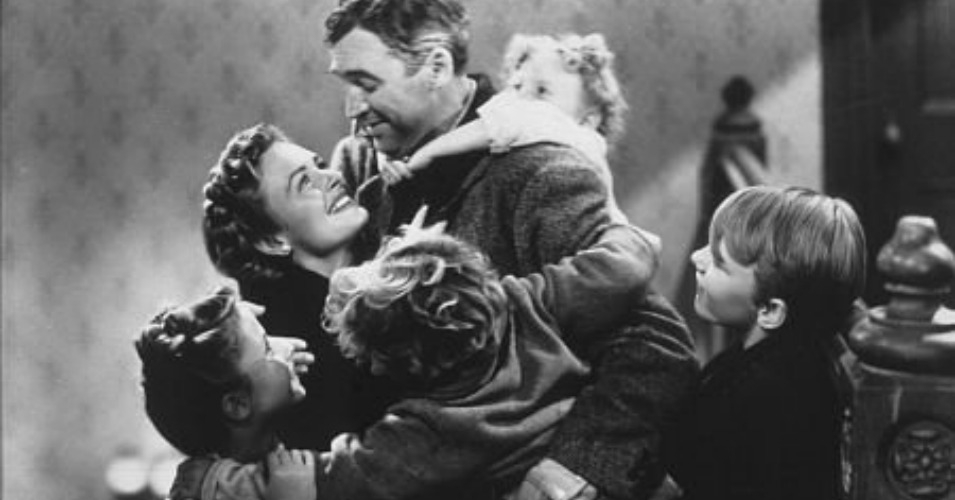
Christmas Movie Review: It’s A Wonderful Life (1946)

wonderfullife
George Bailey (played by James Steward) learns that life is worth living in It’s A Wonderful Life.

This is something new I thought I would try. I thought I would try reviewing a few Christmas movies around this time. The first movie I thought I would do is It’s A Wonderful Life. It’s a Christmas staple, but I finally saw it in its entirety last year! Here are my thoughts.

It begins as Heaven is alerted of prayers for a George Bailey from Bedford Falls, New York. As it reaches Heaven, the angel assigned to save George is Clarence Odbody. Clarence is a second-class angel who needs to earn his wings. George is about to commit suicide and it’s up for Clarence to save him to earn his wings. Clarence needs to learn about George, so he learns more about his life. He learns that George saved his younger brother Harry from drowning in a sledding accident, but lost hearing in his left ear. Also in George’s younger years, he prevented a druggist Mr. Gower from giving away a prescription after it was accidentally poisoned.

As George enters adulthood, he plans to travel the world and visit college. He is re-introduced to Mary Hatch, his childhood crush, by Harry at his graduation party and the two hit it off. However his plans have to be put on hold after his father Peter suffers a stroke and dies. Peter was head of Bailey Brothers’ Building And Loan. George agrees to continue it, mainly to keep it from being overrun by the ruthlessly hypercompetitive banker Henry Potter.

George wants to keep the Building And Loan business a family business as he promises brother Harry a job after college, and even resorts to hiring his incompetent uncle Billy. The times pass and George is successful in keeping the Building And Loan active, but not without his challenges. He had competition from Potter to face, including a tempting deal from Potter himself, although he knew Potter’s true attempt was to shut him down. He is understand when Harry receives a bigger job offer from another place. He build Bailey Park: a neighborhood of housing for low-income people while Potter made apartments of overpriced slums. He fell in love with Mary and married, eventually fathering four children.

World War II happens. George can’t fight because of his deaf ear, but Harry joins the Navy and earns a medal of honor by shooting down a kamikaze plane. Uncle Billy causes a big blunder on the day Harry is to receive his heroes’ welcome. Billy taunts Potter with the newspaper honoring Harry. Billy places $8000 to be deposited in a newspaper only to pick up the wrong paper to give to the teller. Potter knows what happened but says nothing and sees it as a chance to get the Building And Loan once and for all.

George most feels the heat. He learns that this will face scandal and that the Building And Loan will crumble. George even faces an arrest from Potter. All George does is take out his frustration on the family and on others. Then George gets drunk at the bar and receives a punch from the husband of the woman he told off over the phone. George feels he’s worthless and he needs to kill himself. As George is about to jump, he notices a man who has landed in the river. He goes to help. He learns the man is Clarence and Clarence introduces him as his guardian angel. At first George doesn’t believe him. Clarence tries to find ways to convince George not to commit suicide but they appear to be going nowhere.

Finally George says “I wish I was hadn’t been born.” That’s the perfect opportunity for Clarence; show George life if he had never been born. He shows him that Bedford Falls would be Potterville: a dark and corrupt town with amoral people. Mr. Gower was just released from prison for manslaughter, because George wasn’t there to stop him from poisoning. The Building And Loan closed down because George was not there to take over after his father’s death. George’s mother doesn’t recognize him and says Uncle Billy was institutionalized after the Building And Loan failed. The area that was Bailey Park is a cemetery and Harry Bailey is buried there; drowned from the sledding accident because no George to save him. I addition, the soldiers from the transport ship died because Harry wasn’t there to save them. Finally he learns Mary is an unmarried librarian and screams for the police as she sees George a stranger.

It’s after seeing life had he not existed that George decides not to commit suicide. He’s finally convinced Clarence is his guardian angel and begs for his life back. Back in the full present, George goes back to his house, grateful to see Mary and his children and unafraid to face arrest. He’s happy to see his family and Uncle Billy was able to get the towns people to pay the missing $8000. Right as the sheriff is about to arrest George, he sees the amount of money raised and rips up the arrest warrant. Harry returns and toasts George as the ‘richest man in town.’ In the pile of money, George sees a novel Clarence carried. Inside the novel is an inscription from Clarence: “Remember no man is a failure who has friends.” The daughter notices the sign that an angel has earned his wings. George knows it’s Clarence.

This is a film that gets replayed Christmas after Christmas. Hard to believe when it first came out, it did not do so hot at the box office. Over time, it would become beloved for many reasons such as its Christmas setting or even how it related to how people sometimes see themselves as failures. That feeling can often trigger around Christmas time. The film shows one example of a person who sees themselves around Christmas as a failure. George Bailey did a lot of great things throughout his life and meant a lot to a lot of people, especially people who feared the mere idea of the town being overrun by Henry Potter. Then a mistake happens and Henry sees it as the perfect opportunity to get George. George actually had it good for most of his life. Some people could even argue he’s the angel of Bedford Falls. But now that George fears arrest, all of that doesn’t matter anymore and George wants to take his own life. It’s Clarence who shows him the world had he not existed that changes George.

Sometimes it leaves you thinking there would be less suicides if people saw all the accomplishments they did in their lifetime and knew how many people loved them. It’s so easy to get caught and brought down in the ‘now’ of things.

The film’s ‘beloved’ status was not immediate. It didn’t do so hot at the box office. It would be relay on television around Christmas that would lead it to become one of the most beloved Christmas movies ever. The film was nominated for five competitive Oscars including Best Picture, Best Director for Frank Capra and Best Actor for James Stewart. It was given an honorary Oscar for technical achievement for the  effect of simulating falling snow. There have been numerous depictions and versions of the story redone in media from a Married With Children episode to a cartoon of The Smurfs to the Billy Joel video of “You’re Only Human.” There have been dozens and dozens of adaptations. There have even been spoofs such as one sitcom, one ‘guardian angel’ shows an oafish male how life would be if he didn’t exist… and it’s better for everyone! That’s comedy for you!

Looking back, it’s better that the film was made in 1946 than today. 1946 would be more welcoming of a story like this. Stories of people starting as down and out only to end on a happy note were quite common and quite welcome at the time. If It’s A Wonderful Life was released today, some people would think of it having a corny premise. A lot of people don’t buy into guardian angels today. Some would find the ending of the film too hokey. Even that ending where people actually give money to keep George Bailey from being arrested would seem too farfetched for today’s people to buy. Even I don’t think you’d see the same monetary support for a fallen person if what happened to George would happen to someone else today. It’s a film that came out at the right time and had what it took to go the distance all these years. Plus it’s a good reminder of past great talents and stars like James Steward, Donna Reed, Lionel Barrymore and Henry Travers. Interesting enough, Travers would retire from acting three years after the movie was released!

It’s easy to see why It’s A Wonderful Life is one Christmas movie that stands the test of time. Even if the ending seems too farfetched to happen in today’s world, it’s good it came out when it did and grew in its legendary status over the years.


VIFF 2019 Review: Mr. Jones

Gareth-Jones
Mr. Jones is about journalist Gareth Jones, played by James Norton (left) who seeks to expose a tragedy in Ukraine the USSR is determined to hide from the outside world.

I was interested in seeing Mr. Jones at the VIFF as it’s based on a topic of my interest: the Holodomor or Ukrainian famine of 1932-1933. It’s an intriguing story with a relevant message for today’s world.

In 1933, Gareth Jones is a 28 year-old Welsh journalist who is very good at getting stories. He was the first foreign journalist to fly with Hitler and Goebbels at the start of Hitler’s regime while working as an advisor for British statesman Herman Lloyd George. During the time, he discovered of Hitler’s intentions to wage war. His story fell to deaf ears in the press and his job as advisor is dropped due to budget cuts. Despite being dropped, George gave Jones a letter of recommendation. He hopes to use it to go to the USSR to find an investigative journalist. Before he does, he gets a phone call from a friend named Paul Kleb in the USSR. He talks of how the economy is booming in Russia, but he is about to tell of something terrible happening in Ukraine… and then he gets disconnected.

Jones arrives in Moscow. His trip is regulated from start to finish: what he does, how long he stays and where he goes. That’s how things are in the USSR. In fact his job as a foreign journalist is under heavy scrutiny by national officials during his stay and no foreign journalist is allowed outside of Moscow. He arrives at the hotel in Moscow of New York Times bureau chief Walter Duranty. Duranty welcomes him and introduces him to his assistant Ada Brooks. Jones is expected to be in the USSR for seven days but he can only stay at the hotel for two days. Duranty offers Jones to stay and partake in the late-night partying. At the parties is all kinds of debauchery from prostitutes to heroin shooting to even homosexual advances. Jones wants none of this as he knows Paul Kleb was killed in Ukraine and has to find out why.

Jones finds a train headed to Eastern Ukraine. He breezes past security to stow away on it. When he arrives in Ukraine, he steps off to see the farmed grains loaded onto trucks by the Soviet army, but people dead in the snow and farmers starving. He tries to get answers. He goes to soldiers putting the bagged grain in a truck. He asks in English where it’s going, but is suspected as a spy. Soldiers go out chasing and shooting after him. Fortunately, Jones is able to evade the pursuit. He comes across some children who sing a haunting song to him of the death and starvation happening around him. He goes to a house which is in a photograph he holds, but sees the residents dead in their beds. Jones goes into a town where he sees the Soviet army take the dead bodies in the snow and pile them in a sled to be buried in a mass grave. They even take a baby that’s alive and still crying. Jones goes into a house where he is able to find living residents. They give him something to eat, which appears to be meat, and from Kolya. He soon learns they’re staying alive by cannibalism, and Kolya is a famine fatality.

Soon Jones is captured by Soviet forces. The Communist government commands him to be silent by using the lives of six British auto workers as hostages. Jones tries to plead with Walter Duranty to expose the truth of what’s happening, but Duranty is ‘in bed’ with the Soviet regime. Duranty has a habit of writing of the ‘Worker’s Revolution’ in the USSR like he romanticizing it. In fact Duranty has the reputation of being known as ‘Our Man In Moscow.’ Ada however is more supportive towards Jones and believes he has to get the story out. This can’t be hidden and knowing that Jones is to be sent back to the UK, she encourages him to make the truth known.

Back in the UK, Jones can’t get any British paper to buy into his revelations of a man-made famine. The government either doesn’t want to believe it, or fear it will jeopardize diplomatic relations with the USSR. This upsets Jones as he knows this must be stopped. The events upset him so much, he can’t stop himself from breaking down in tears in his hometown. However he has an opportunity to talk to William Randolph Hearst while at a newspaper office. Hearst, however is extremely busy and will only allow Jones thirty seconds to state his case. However when he mentions of the death of Paul Kleb, that grabs Hearst’s ear and makes Hearst want to hear everything Jones saw. Finally the story ‘Famine In Ukraine’ makes the front page of the New York Times. Jones is defamed. He is not allowed in the USSR again. Duranty is also defamed, but never had his Pulitzer Prize rescinded. Nevertheless George Orwell is caught in the intrigue of Jones’ pursuits and it inspires him to write ‘Animal Farm’ published ten years after Jones was shot to death.

I’ll admit any story about the Holodomor catches my interest. I’m of Ukrainian ancestry. My great-grandparents arrived in Canada around the 1890’s-early 1900’s. They came here long before World War I even started, before Ukrainian land was annexed as part of the USSR and before the Holodomor. This film showcases the Holodomor and is possibly one of the best cinematic depictions of it, but the Holodomor is not the biggest theme of the film. The biggest theme of the film is about censorship in the USSR at the time. All the censorship that happened in the film is an example of the censorship that happened in the USSR since it began after World War II until it broke down in the mid-80’s to when it dissolved in 1991. All news was censored. Nothing but good news was to be published in Soviet newspapers and whatever negative news could not hit either Soviet news nor news to the outside world. Phone wires were tapped and letters were opened and investigated by authorities before it reached the mailboxes of the citizens or outsiders. Even speaking negative words of the Communist government would get one a jail sentence. The Soviet media promoted propaganda to glorify itself and its Communist system and vilify the capitalist system in the United States.

As seen through Gareth, the Soviet system was also restrictive to outsiders. The system decided if a person from an outside country could visit, where they could go and stay and for how long. There were already six British autoworkers who were treated like hostages at the time and threatened with death to have the UK comply to their demands. You can understand just what Jones had to face in order to get the truth out.

Gareth had good reason to pursue the story. It’s not just trying to find out why Paul Kleb died, but Ukraine had personal interest to him as his mother taught English in Ukraine in the 1890’s. Gareth even had barriers in journalism to overcome once he had his story. He had top journalist Walter Duranty to deal with. Duranty had a big reputation at stake and kept insisting that the Holodomor isn’t happening. It isn’t until Jones meets with William Randolph Hearst that he finally gets a willing ear. The big feud between Duranty and Jones shows how even in what is supposed to be the ‘free world,’ there is still a lot of truths that are suppressed or even denied. Seeing all that goes on can make one wonder if this is happening today in what is supposed to be free countries. If we are really getting this freedom of speech or if we’re getting a lot of concocted stories.

This film is great in making a point about journalism and getting the truth out. There are a lot of truth even in today’s world that need to be exposed, but are covered up. The film does a good job in making a moment of past history, and the journalistic feuding surrounding it, make for a relevant message for today. Even the fact that Gareth was shot to death in 1935 while investigating a story in Chinese territory bordering Russia (which many consider to be a Soviet plot of revenge) reminds us of how many journalists risk their lives to uncover truths.

The film was very good at making its point. However the story didn’t seem to be heading on a straight path. There were times when moments that only deserved a certain time, like all the debauchery at Duranty’s hotel party, was slowed down and given more screen time than necessary. Even the moments of the journalistic feuding and political feuding appeared to take too long. The moments involving Jones witnessing the Holodomor in Ukraine were given the best screen time and the best on-screen depiction. It showed a lot of brutal honesty of the Holodomor, including that of cannibalism. It may have taken over less than half the screen-time, but it was done in excellent detail and gave the right haunting feel to this moment of tragedy.

Veteran director Agnieszka Holland teams up with emerging writer Andrea Chalupa to bring this story to the big screen. The story is one of great personal interest to Holland as she is well-knowledged of the Holodomor. Holland also has renown for her depictions of the Holocaust in some of her films. She does a very good job in directing the story, even if there are some moments of irrelevance or moments drawn out longer than they should be. James Norton does a good job in his portrayal of journalist Gareth Jones, but his part could have been developed more. Most of the parts didn’t have too much development and could have had more done with it. Nevertheless, Peter Saarsgard was able to make Walter Duranty hateable on the big screen. Vanessa Kirby was able to make her role of Ada gain more dimension over time.

Mr. Jones is about more than just about the Holodomor. It’s also about the topic of censorship that is just as relevant now with the ‘freedom of speech’ we’re led to believe we have in the ‘free world.’

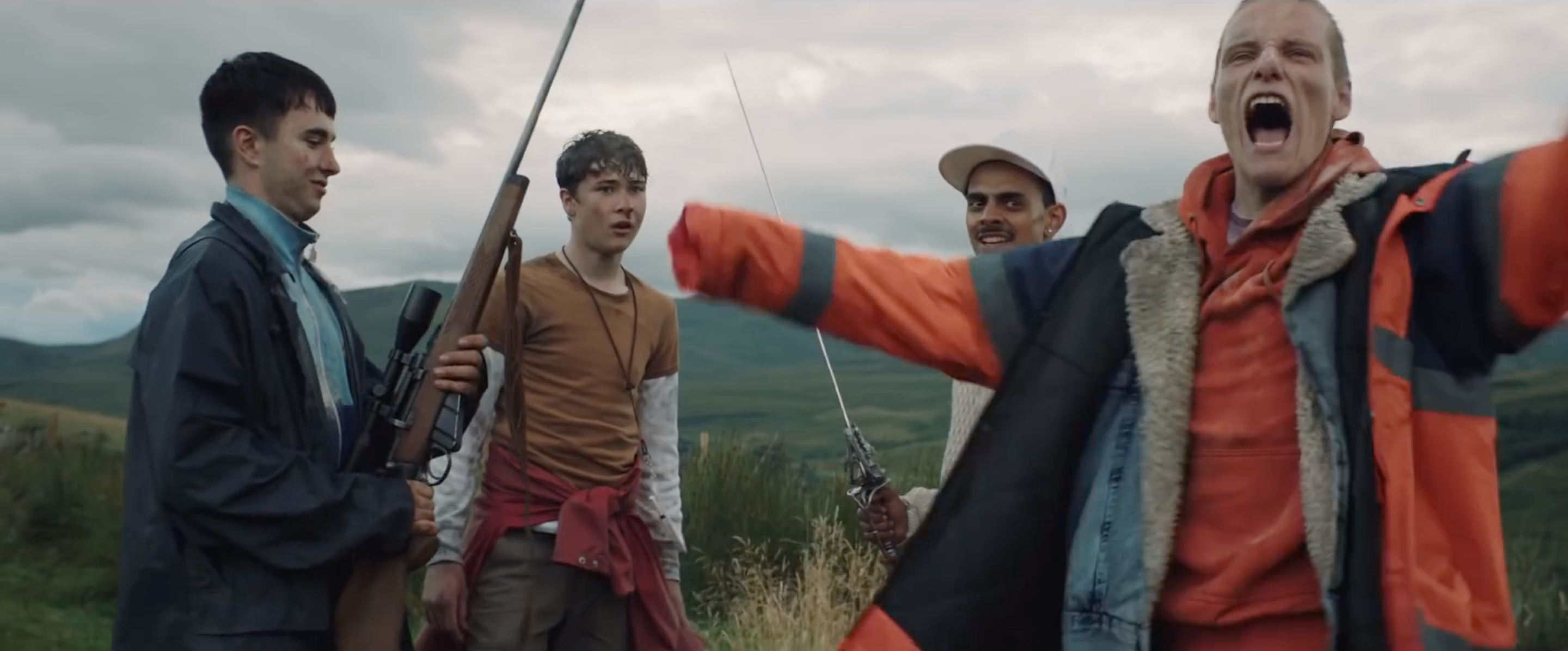
VIFF 2019 Review: Boyz In The Wood

Boyz Wood
Boyz In The Wood are of four English boys who you think would fail an orienteering assignment in the Highlands, but you’ll be surprised.

Sure, teenagers are a source of comedy. Boyz In The Wood looks to be the right stuff give you the laughs at a teenager’s expense you’re looking for.

The film starts with four English teenage boys who are commissioned by the school to do an orienteering session in the lowlands of the English/Scottish border as part of an orienteering assignment. There’s Duncan who has a knack for destroying public property, Dean who likes to do unique drugs, one boy who thinks of himself as a rising rap star under the name DJ Beatroot, and Ian who’s the nerd just trying to fit in and wants to win the Duke Of Edinburgh award. Under their supervision is Mr. Carlyle who is hoping this exercise will help the three delinquent boys learn some responsibility. Meanwhile the police are trying to solve a crime in the area, but don’t know what crime they’re trying to solve.

Ian appears to be the only one taking the assignment seriously as Duncan brags about what he did at school, DJ Beatroot fancies his future rap career and Dean attempts to smoke a joint of certain concoction and it explodes. The others want to try the drug too. However Dean is too weirded out by the experience. Unknown to the boys at the time are a fancy-dressed rifleman from the Highlands. He’s soon joined by a woman in similar dress. They’re pursuing ‘the Dukes,’ but their pursuits change when they see the four teenage boys. Now the boys’ lives will soon be at stake.

The boys soon learn they are targeted by the two Highlanders. They try fend them off by using a container of Dean’s drugs as a bomb. That only causes the Highlanders to get even more furious. The boys try to get help from the police, but it doesn’t help as they’re more concerned about stolen bread in the region. They try and use a van but end up hitting Mr. Carlyle. Thinking he’s dead, they try and make something like he was in an accident by leaving the van with Mr. Carlyle in reverse. Then Ian is shot by one of the Highlanders. He tries to walk but is stuck. Instead of the boys helping, they leave him for dead.

As time passes, the police are still confused on the issue and the Highlanders are still on pursuit. However the boys appear lost. DJ Beatroot goes into a meeting lodge where he bumps into some local farmers. They recognize him and talk about how much they love his raps. DJ Beatroot gives them a show they just go for. The boys are attracted to the noise and they meet up again. Soon DJ Beatroot leads to where Ian is lying and they rescue him.

The boys have one last blast of fun as they learn that rabbit droppings make for a good hallucinogen. All four engage for one last blast. However as the orientation is nearing its time limit, Ian talks about his issues about being a misfit and left out. That’s when all three admit that they too are the losers of the school too. However they still have to get focused. On top of it, the Highland couple meet up with their fellow Highlanders in pursuit of the four boys.

Soon the police finally get it. They’re searching for a bread thief. The missing bread is the biggest problem in the area. Nothing else happens. So they set out to the Highlands to find the thief. In the Highlands, all the Highlanders have the boys hostage and ready to shoot them at the sound of three. Before the sound of three, the van lands on them all! The police get there and they not only found the boys safe and sound, but they found the stolen bread. The boys are heroes of the region! In the van, Mr. Carlyle isn’t dead! He’s alive and slowly gets his consciousness back and wonders what the heck went on while he was out.

The whole theme of this comedy is idiocy. We have three groups of people and they all show their own unique idiocy in the film. We have the group of teens that are obnoxious or misfits, or both. We have the police force that can’t seem to sort out their priorities on crime in the region. We also have the half-masked Highlanders who feel they have to use brutal violence to solve their issues. This adds to the humor of the film and adds to the story line where the ones most likely to fail end up being the ones that win in the end. The boys unwittingly accomplish their goal and become town heroes at the same time.

This is an against-all-odds comedy that plays out in crazy fashion. Four teens are given an orienteering session as part of an assignment and the hopes of a teacher straightening them out. You have one teen who’s into crazy drugs, one who’s naturally obnoxious, one who only cares about his rapper ambitions, and one nerd who’s trying to belong. Yeah, it sounds pretty similar to The Breakfast Club, or Stand By Me. Take your pick. Their personalities make it look like they’re all bound to fail and everything imaginable goes wrong. Or if it does work out, it will be done in hilarious fashion. It does work out and Ethan finds himself with three new friends: the three you last thought would befriend him. Even that scene where he gets left behind leaves you wondering, but it all works out.

The interesting thing about the film is that is occasionally goes from a story with a beginning, middle, and end to a music video. It’s understandable. The story does feature a rapper with big dreams, even if all he raps about is his penis. The story also focuses on some of the boys trying to get high and it’s trying to recreate a lot of hallucinations and have it done in musical fashion. However there are times when this mesh is a bit distracting and does make the story seem uneven. Yes, it’s fun and entertaining to watch, but it does make you wonder if it was overdone or not.

This is the first feature-length film done by Ninian Doff. He’s done a lot of film shorts and video shorts in the past. Here he’s trying to make a film that is part comedy/drama and part music video. It’s entertaining, but its imperfections are noticeable. Nevertheless it is worth enjoying. The film even caught the attention of Tobey Maguire. Yes, the Tobey Maguire from the Spider-Man movies from fifteen years ago! Tobey is executive producer of this film. The acting was also good and humorous. All of the actors played their parts well. However I feel the show-stealer is Viraj Juneja. DJ Beatroot was quite the charming idiot and he did it very well.

Boyz In The Wood is an imperfect but humorous and entertaining comedy about a group of teen males and orienteering. It may not exactly reach the level of stupidity of Beavis And Butt-head, but it is funny and it ends in sensible fashion.

Movie Review: If Beale Street Could Talk

IBSCT_09450_R_CROP
Stephan James (left) and KiKi Layne are Fonny and Tish: a young couple in love in If Beale Street Could Talk.

There have been some adaptations of James Baldwin’s literature in the past, but I don’t think there’s ever been one ever to hit the big screen. Director Barry Jenkins brings If Beale Street Could Talk to the big screen and it’s quite the experience.

The film opens with a quote from James Baldwin of how most of America’s African-Americans were ‘born’ on the Beale Street of Memphis. The story opens in a prison just outside New York City in the late-1960’s with 19 year-old Tish visiting 22 year-old Fonny behind glass and communicating via telephone. She announces to Fonny she’s pregnant. Fonny is overjoyed and looks forward to being a loving husband and a good father once he’s proven innocent. The crime Fonny is charged for is rape of a Puerto Rican woman: Victoria Rogers. She knows Fonny didn’t do it because he was three blocks away with his friend Daniel when the rape happens. She knew he was arrested because of the racist Officer Bell.

Tish always knew Fonny was the right man for her. They were friends since childhood. Then months earlier Fonny wanted to take the friendship to the next level and date. She agreed. Both Fonny and Tish are people willing to work for a living. Fonny went to community college and had plans of going into woodworking. Tish found a job as a perfume saleswoman at a department store, which considered hiring a black woman in that role to be progressive.

Tish announces the news to her parents and sister. She’s very nervous about it, even though the family see Fonny in high regard. She first announces to her father, and he’s happy. Soon the mother Sharon and sister Ernestine are happy, though nervous as the trial is coming. Fonny’s family, who call him by his real name Alonzo, come to visit. The mother and Fonny’s sisters always had contempt for Tish. When the news is announced, Fonny’s father is happy, but the mother is the complete opposite. The sisters look down upon her and the highly-religious mother even goes as far as saying the child will be a child of sin because he’s conceived out of wedlock. The mother and sisters leave in disgust.

The film goes frequently from the present of the story to the past quite often. Tish reflects back to when they were walking the street and the feelings of love they had for each other. She reflects on the Mexican restaurant and the waiter Pedrocito that made them feel welcome there. She even remembers the time when she and Fonny were searching for an apartment. Fonny came across a loft being sold by a Jewish developer. She didn’t like the idea of a loft, but Fonny saw potential. They were both surprised that the owner had no problem with them being black, but he just loves seeing couples in love.

Soon Tish flashes back to the present. There is a trial they have to work on. The lawyer claims that this is a difficult case to manage, but they feel this white lawyer just doesn’t care about justice for a black man like Fonny. Tish’s and Fonny’s father team up to do illegal trading in order to raise the right money for Fonny’s case. Victoria Rogers returned to Puerto Rico because she couldn’t handle the reminders of her rape in NYC. Sharon has a mission to go to Puerto Rico to get Victoria to come back to New York and testify for Fonny’s innocence, but it will be very costly. In the meantime, the months add up and the child inside Tish is developing. Tish goes to see Fonny again at the prison, but Fonny has gone through months of torture there. He wants to get out so he can live the life he was meant to live and love Tish.

Memories go back to the harder memories. The first is when Fonny is reunited with his friend Daniel. Daniel had just come out of prison for grant theft auto; the result of a plea bargain after being arrested for marijuana possession. Daniel tells him how it’s hell in prison and how he knows how racist the justice system is. She also flashes back to when she and Fonny were just shopping at a grocery store. Tish is harassed by a man and Fonny throws him out. The throwout is witnessed by Officer Bell, who things that Fonny has committed aggravated assault. However the white storeowner comes out and vouches for Fonny that Officer Bell lets him go, but not without that look of the desire to arrest in his eye.

Sharon did it. She was able to get enough money to confront Victoria Rogers and convince her to come back to New York for the sake of Fonny’s freedom. Victoria’s long stay in Puerto Rico is what’s delaying the trial. Victoria is not happy to see Sharon. The rape is the whole reason she left NYC and has no plans to go back. It’s too upsetting for her. Sharon tries pleading to Victoria to come back and give the true story for the sake of Fonny’s innocence, but that just causes Victoria to break down mentally and emotionally. Sharon returns back to NYC and the trial is still delayed. Tish gives birth to the baby in a bathtub with Sharon’s help while Fonny is still in prison. It’s a boy. As the wait drags on, Fonny accepts a plea deal. Years later, Tish and Alonzo Jr. visit Fonny in jail as they all hope for Fonny’s eventual release.

James Baldwin has been known to be an outspoken civil rights leader as well as a renowned author and poet. Racism is one of his biggest themes in his works. The film which is based on his novel of the same title definitely focuses on racism. It’s set in the mid- to late-1960’s just after more civil rights for blacks had been championed. However it was still a struggle as a lot of rights were limited, a lot of racial riots were happening, and many wrongful arrests were taking place. The novel and the film give a depiction of what it was like at the time. Especially with a black man in jail for a crime he didn’t commit as seen through his pregnant fiancee. The film also shows the hopes and dreams of a young black couple in love. They will have a future previous generations before them couldn’t have, but it would still take a fight. Very often, you hear Tish and others having negative things to say about white people. Even having a mistrusting attitude towards them. Those who saw the documentary I Am Not Your Negro will know about the mistrust towards white people had back then. I’m sure it was a mistrust shared by many African Americans at the time and we hear it echoed in the characters, mostly from Tish

However the novel and film are about more than that. It’s about undying love through hard times. Tish knows Fonny is innocent and she and her family team up to get Fonny free in time for the birth of their son. We see that Fonny is a good honest man. She’s known Fonny since she was a child. She knows Fonny would never hurt anyone like that. When they started dating months before the arrest, she knew right there and then she was the right man for her. We feel that love in the film. Interesting how a gay author like James Baldwin can deliver a better sense of love between a man and a woman than most straight authors. The novel and film however isn’t all ‘whites are bad’ and ‘all blacks are good.’ That meeting between Tish’s family and Fonny’s family showed a certain friction. While the fathers got along well, the mother’s, especially Fonny’s, looked down upon Tish’s family and the sisters had the same snooty attitude. It’s possible that scene was meant to send a message about how certain African Americans aren’t all unified or there’s a superficiality between certain types.

The film does a very good job in adapting the novel, but it does more than that. Barry Jenkins adds his own unique flair to the film. One flair he has in the film just like his previous success Moonlight is the inclusion of a lot of music. The film is a good mix of original score and songs from years past. It fits the movie well. However one thing he does that’s different from Moonlight is he includes a lot of imagery to set the theme of the time. He also includes a lot of scenes where many of the characters involved in the story have their own shots where they face the camera standing still. That adds to the film. Also what Jenkins does is during many scenes, he slows the moment down and softens it so that one can get a feel of the moment. That happens many times during scenes with Fonny and Tish, the scene with Tish working the perfume counter, and the scene with Fonny and Daniel. Sometimes it’s half-muted and we hear Tish’s narration, but we get a very good sense of the situation. I think Jenkins made some good choices in making the film.

Barry Jenkins does it again. It’s hard to say if it’s as good as Moonlight, but the film is nothing short of excellent. He not only plays out the novel on film, he allows us to feel the story. I feel James Baldwin would be very proud. KiKi Layne was very good as Tish as was Stephan James as Fonny. The whole cast was excellent, but the standout was Regina King as the mother. She really did an excellent job as the mother-in-law going out of her way for Fonny’s innocence. For the technical, James Laxton did a great job with the cinematography, Joi McMillon and Nat Sanders made the right editing moves and Nicholas Britell delivered a great score that fit with the film and blended in with the tracks of past songs.

If Beale Street Could Talk is more than about racism and social injustice. It’s also about the undying love of two. It’s a love no prison system or injustice can destroy.

Animated Movies Review

2016 was a stellar year for animated movies from Zootopia to Moana to Kubo And The Two Strings to Finding Dory. 2016’s line-up gave people lots of reason to come to the movie theatres. 2017 was very lackluster in comparison. We’re talking about a year when The Boss Baby was nominated for Best Animated Feature and even the mere existence of The Emoji Movie. 2017 almost made it look like if Sausage Party were released that year instead, it would be a Best Animated Feature nominee! However the best animated movies of 2017 slowly made its way on the screen in the latter months of 2017. I was lucky to see Ferdinand, Coco and Loving Vincent: three of the best of the year.

Ferdinand

Ferdinand

When I was about to see Ferdinand, I wondered how they would able to take the small story and turn it into a feature-length picture. I myself remember an animated short made by the Walt Disney studios made decades ago that was very humorous. However I wondered how would a feature-length adaptation play out?

The story starts out well with an entertaining look, but a bit of sadness at the beginning. As it progresses to adult Ferdinand, Ferdinand is funny and charming as a husky but flower-loving bull. John Cena adds to the characterization of full-grown Ferdinand. The characters of Lupe, Una and the other bulls add to the story.

There were times I wondered how will they get to where Ferdinand is scouted out by his accidental outburst? How will it be written out? Although it’s not true to the fable, the writers were able to create a way for Ferdinand to be discovered and sent to the bull rings to fight.

Another case that had me wondering was right in the middle of the story. It had me wondering how on earth the story would have a happy ending? Of course the film needed to have a kid-friendly happy ending, but in a situation where the bull either becomes a fighting bull who dies in the ring or to the slaughterhouse as meat? Nevertheless the writers were able to make the story work with good events to the plot and not just simply drag it out over the time. Even creating an ending where Ferdinand wins over the crowd and getting them to want him to live works for the film.

For the most part, Ferdinand is not all about the type of intricate story you’d expect to find in a Disney/Pixar film. Instead Ferdinand is about creating a charming modern adaptation of the short fable with charming and entertaining characters. It succeeds in charming the audience as well as entertaining the children. Despite the story being elongated into a feature-length picture, the film does not waste time. It succeeds in being entertaining. It also adds in some other elements that gets one nervous of what will happen to Ferdinand, even if they know the story. The story works in its feature-length and will not disappoint fans of the fable. It’s also good at winning crowds too as it made a good $282 million at the worldwide box office.

coco

Coco

Very often you know the Disney/Pixar collaboration will deliver something fresh and original in its arsenal that’s able to win us over. This year, they deliver Coco. Coco is unique because it’s of a Mexican family situated in Mexico. The question is will they make something original and unique entertaining to the public?

The team of writers and animators at Disney/Pixar are known for their innovations and their frequently-successful way of trying new concepts. First there was 1995’s Toy Story: the first-ever 3D animated feature. Then came A Bug’s Life which created an engaging story revolving around insects. Then Finding Nemo not only told a story about fish, but successfully took us to another world. The Incredibles was good at teaching morals in an entertaining way. Ratatouille made an entertaining story involving a rat. Wall-E magically gave us an engaging story about two robots in love with very little dialogue. It was Brave where they not only gave us their first female protagonist, but welcomed a female writer on their ‘dream team.’ And there was Inside Out which made character out of emotions.

Coco is not just a new movie from the Disney/Pixar collaboration, but a new chapter for them. They hired Mexican/American writer Adrian Molina as the scriptwriter along with Matthew Aldrich. Molina had already been part of Pixar as a 2D animator for Ratatouille, a storyboard artists for Toy Story 3 and Monsters University, and even wrote the script for Walt Disney Studios’ The Good Dinosaur. The voice cast is predominantly of Mexicans or Mexican Americans. Disney/Pixar even hired a ‘cultural consultant’ group of three Mexican-Americans including one former CEO of the Mexican Heritage Corp to make sure they were doing a film respectful of Mexican people.

The result is a film that has garnered praise even from both critics and even Mexican-American communities. The film even received excellent reviews from Latin American film critics. The film was also a top box office winner having grossed $730 million so far. Even in Mexico, it spent three weeks at #1 in the Mexican box office and grossed a total of $57.8 million in Mexico.

Now the film itself does what Disney/Pixar films have a reputation for: taking the audience to a new world. Here they give an excellent depiction of the Land Of The Dead that looks very intricate and maybe too big, but succeeds in making sense to the viewer. Once again the animation team does an excellent job in creating this new world and even the smallest detail is done with perfection. Once again Disney/Pixar is tops in animation quality.

However there was one time I was confused by the story. I’ll admit like most, I thought Ernesto was the great-great-grandfather. I was shocked when I learned that Ernesto killed Hector with poison. It left me wondering if Miguel’s great-great-grandfather was in fact a dirty killer. Even seeing Ernesto send Miguel to die in the cenote pit left me shocked. ‘Why would Ernesto do this to his own great-great-grandson?’ It’s in the pit with Hector that we learn that Hector is really the great-great-grandfather. That was a relief. It was there where it became better sense why Miguel needed to redeem the name of the family through the spirit of Hector. The story was very well-written and very entertaining. Also the song ‘Remember Me’ is an excellent song for the movie that makes for the perfect tearjerker moment you don’t feel manipulated by.

One again Disney/Pixar delivers a masterpiece in Coco. It is as top-quality as it is magical to watch.

kinopoisk.ru

Loving Vincent

Now the previous two films in which I just talked about are both the more family-friendly films. Loving Vincent is the polar opposite of both. It’s not cute, it’s less family-friendly, and it’s not even 3D computerized animation. It also didn’t even make $10 million at the box office. Nevertheless it is charming in its own ways.

The film is a plot where Armand Roulin is asked by his father Joseph to deliver a letter from Vincent Van Gogh who died a year earlier to his brother Theo. After learning Theo died, Armand looks to find the right person to give the letter to. Throughout the journey, Armand tries to get the answer to whether Vincent’s death was a suicide or not? He was released from a hospital after found to be in good mental capacity six weeks before.

Armand comes across many people in Vincent’s life. Some have positive things to say. Some negative things. All have something to say about the person of Vincent, the various people he met with or fought against, and his personal feelings before his death. This still leaves Armand confused and his question of Vincent’s death unanswered. It’s right after Dr. Gachet promises to give the letter to Theo’s widow that he learns van Gogh’s suicide wasn’t of mental agony, but to free himself and his brother. Later Armand receives a letter from Theo’s widow thanking him.

This animated film about Vincent Van Gogh couldn’t be a simple animated film. Instead this is a film in which the images were done by 100 painters trained to paint like Van Gogh. The object of the film was to create a story involving characters of people Van Gogh painted and was close to in his life across a backdrop that’s just like the paintings he painted. Basically an animated story about Van Gogh that captures the essence of Van Gogh’s art. The story may be fictional, but it succeeds in playing out like a Van Gogh painting. It even gets one that knows very little about Van Gogh’s works or his life intrigued. It even gets fans of Van Gogh’s art admiring the film for capturing the essence of the artist and his works. I also like how the film ended as “Vincent (Starry Starry Night)” was playing. It would make those who never understood what the song was all about understand it better.

So there’s my look at three of the best animated films of 2017. All three are nominated for an Oscar for Best Animated Feature. All three are enjoyable in their own way.