Oscars 2024 Best Picture Reviews: Part Five

All this writing does get tiring after awhile. Despite it, I have no problem blogging my thoughts on the Best Picture nominees. So here’s my fifth and last blog on the nominees:

The Substance

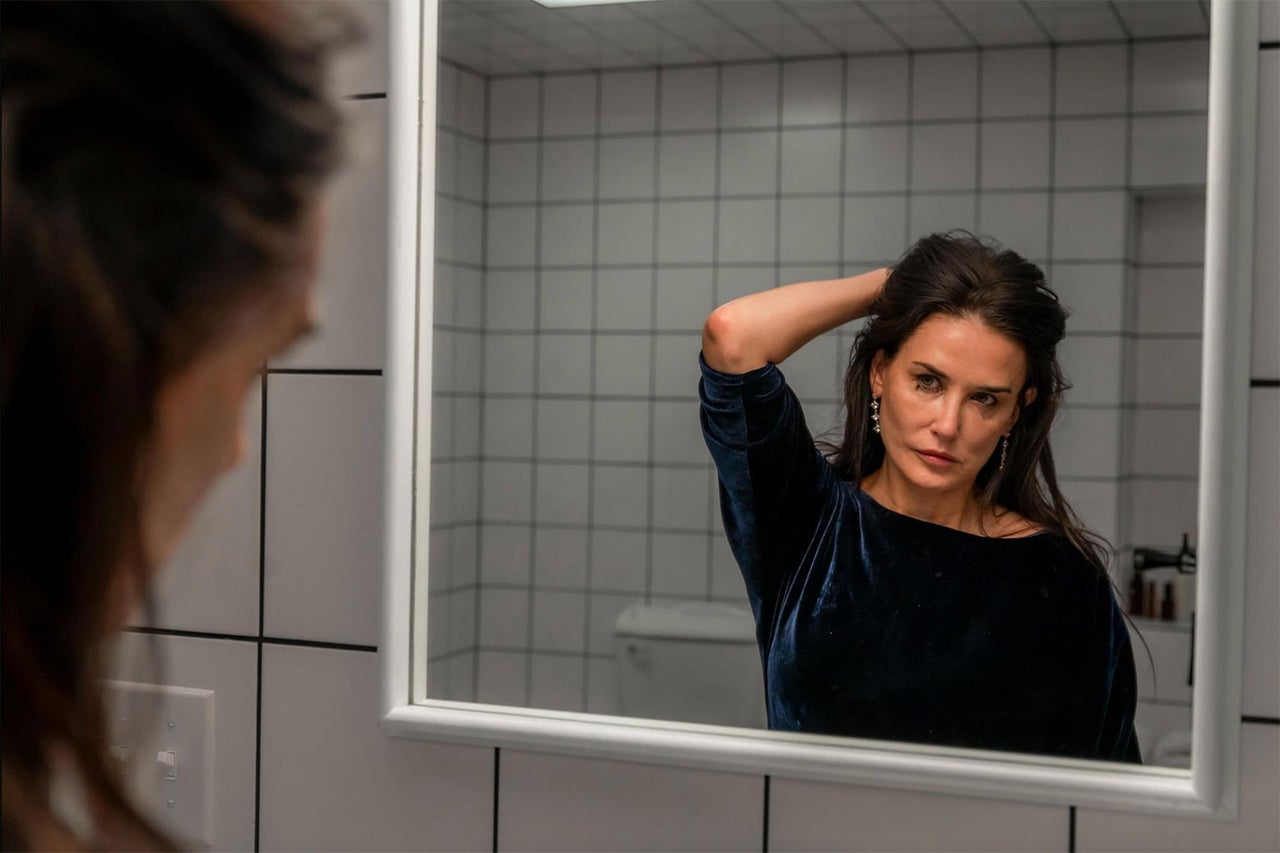
If you were to have a debate on the one genre of film that the Oscars seems to neglect the most, I’ll bet horror will come out on top. Only seven horror films have been good enough to get nominated for Best Picture. The Substance becomes the latest. Actually it was also a nominee for the Palme d’Or at Cannes. It tells the story of movie star Elisabeth Sparkle whose career has ended and feels a certain substance recommended from a doctor can do that very trick. It gives her another person coming out of her: Sue. The other person is half her age and the two are to switch lives every seven days. Problem is the other person is getting all the benefits her life used to have, like her old job back and attracting rich men. Sue also starts violating the directions of the medicines and using Elisabeth more and more. As New Year’s is coming and Sue is expected to be the star of the New Year’s Eve special, mayhem erupts. I can’t describe any more of the bizarreness without delivering a spoiler or two.

What makes this horror film better than most horror films is that it has a common theme. The theme is of the ageism and sexism women face in showbusiness from managers dealing with show’s ratings to stakeholders who expect to win to crowds who expect a picture-perfect princess and will throw her away when they get bored  with her, replacing her with a new next big thing. That is very evident throughout the film as we hear what her boss Harvey says, of what casting directors say and of what the crowd expects. The thing is Elisabeth takes her rejection badly because we soon learn her stardom is the only thing in her life. She has nothing else. She feels if she takes this substance, she can get her life back. Problem is she gets another life. Instead of it being a case like the two are one, as instructed from that substance, one vies for control of the other and it’s reduced to hate between the two. I gotta say carrying on a habit of one is active one week while the other is active the next week, that would be something hard to keep up without error. There’s bound to be a slip-up and boy will it be messy.

Now I know most of you will say you’ve seen all sorts of horror movies and that you’ve been shocked by this stuff before. I guarantee you that you will be either shocked or surprised. You have a feeling that this switching of bodies will have a ness-up sooner or later but I’m sure the mess-up you thought would happen didn’t or went a different way. Even that New Year’s Eve show, you probably expected it to wreak some sort of havoc, but I’ll bet it’s not the havoc you expected to happen. It also seems the New Year’s Eve show incident with all its goriness is a case of Elisabeth getting revenge with those who threw her away. The story has a lot of common elements you have seen in past horror movies but it succeeds in having many an unpredictable or unexpected moment. That’s what makes this horror film special. The shocks and gory scenes you anticipated but didn’t expect it to play out the way you thought it would. Even the ending, which I will not spoil at all, plays itself out in unexpected fashion.

Top accolades have to go to director/writer Coralie Fargeat. Upon Fargeat’s nomination, the 2020’s five female nominations in the Best Director category equal the total of all previous years combined. This is actually the second feature-length film Fargeat has directed. Here, Fargeat succeeds in delivering a thriller of a horror film that says a lot about its theme and has many of the silent scenes do a lot of talking of the story. Fargeat proves that women can do horror films! And a gory bloodbath of one to boot!

Making the film work is Demi Moore. She does an excellent job of playing an insecure movie star whose career is her life and takes a medicine that could end up being the death of her. Her character switch to the tormented monster of herself was also incredible. It would not surprise me if she wins the Oscar. Also great is Margaret Qualley for playing Sue who’s supposed to be one with Elisabeth but her new-found fame prevents her and starts using Elisabeth, only to pay in the end. Also great is Dennis Quaid. His performance as Harvey the manager is cartoonish, but Fargeat wants it that way for the vibe of the movie. He did a great job in being both comical and hateable at the same time. For the technical achievements, there’s Benjamin Kracun and his cinematography which adds to the storytelling, make-up artist Pierre-Olivier Persin delivering the right makeup for the right gory scenes, the visual effects team for the insane special effects and Raffertie for the perfect techno score for the film.

The Substance is just the horror film you need. It’s a way better story than most horror films you’ve seen and it will deliver the unexpected. I guarantee you.

Wicked: Part One

This movie is bound to attract two standout audiences: those that liked the musical in its theatrical run and those Wizard Of Oz fans that are intrigued of a prequel. It’s interesting how The Wizard Of Oz story has enchanted people for over a century. To have a prequel-like story of how the witch and Glinda met in school is bound to catch people’s intrigue. Even ask questions. Like was the witch’s name really Elphaba? Even the character who would become the wicked witch of the east would have a name: Nessarose. Was high school just as bad in Oz as it is in real life? You mean the witch didn’t really start as evil? You mean Glinda’s real name is Galinda? How was Glinda able to befriend the witch? It really has you thinking. It will even have you thinking about the Wizard Of Oz too. Since the musical has been popular for twenty years, I feel the film adaptation came out at the right time. It does make one wonder why the film is billed as Wicked: Part One and if a Part Two is needed instead of the whole musical in one film.

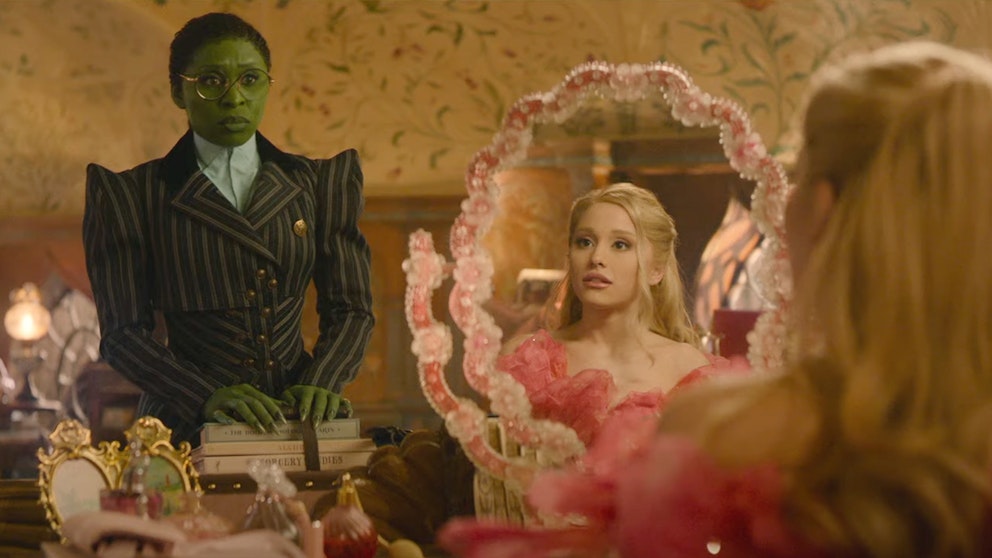
In watching part one, it begins with the people of Oz celebrating the witch’s death and Glinda given a hero’s welcome. Then the revelation of the secret that Glinda knew the witch in high school. That’s where Glinda tells her story. Throughout the story, we learn how the witch was born the black sheep, or in this case green sheep, of the family while her younger sister was seen as a princess. Even the wheelchair didn’t harm Nessarose’s princess image. When high school begins, Elphaba gets singled out and nobody wants to befriend. As Glinda unintentionally becomes Elphaba’s roommate, Glinda becomes a positive influence on Elphaba and helps her find her true self, use her intelligence to be a force for good, and ultimately bring down the corruption happening in Oz. The film ends with Elphaba singing about her turn to fly and it sets up for a ‘To Be Continued’ ending.

Although this film is just a part one of a musical, the film itself is a good story of the popular girl befriending the misfit girl and bringing out the best in her. It’s also a good nerd-to-queen story for Elphaba. Even having the ability popular boy Fiyero. Near the end where we learn of how Oz is imprisoning animals and Elphaba learns of the corruption going on from the Wizard, it’s there where she learns to take a stand for what she believes in and her rebellious side comes out of her shell. It’s right at the end she flies off and celebrates her personal identity and her new-found confidence in herself as Glinda supports her on. As a film itself instead of a Part One, it works as a story about finding one’s confidence, learning to embrace being different and make your best qualities winning qualities. As a musical, it’s entertaining and colorful from start to finish. It may not have the same vibe as the classic Wizard Of Oz but it will entertain you.

And there’s the film as the Wizard Of Oz prequel. Many of us who have seen or read The Wizard Of Oz but never seen Wicked onstage, like myself, will know how it all turned out. The sister is killed by Dorothy’s house, Glinda makes Dorothy a hero, the witch (who doesn’t have the name Elphaba) wants revenge on Dorothy and to get her sister’s ruby slippers, chases Dorothy down her trip to Oz and threatens her and her friends along the way, and is killed by a splash of water. If you have not seen the musical like I have, the film will get you thinking how did Elphaba become evil? Did Nessarose also become evil? If Elphaba and Glinda befriended each other in high school, how did they have their eventual falling out? This film succeeds in getting us to anticipate it all in the ‘prequel sequel’ which is expected in Winter 2025 and will be titled Wicked: For Good.

This is a great accomplishment for director Jon M. Chu. In the last fifteen years, the films he has directed have been a wide range like dance films like the two Step Up sequels, action film G.I. Joe: Retaliation, music film Jem And The Holograms and romantic comedy Crazy Rich Asians. Here he tries his luck with a Broadway musical with the screenplay adapted by Winnie Holzman and Dana Fox. He succeeds greatly in making it entertaining for audiences to watch and for making for a dazzling story. It’s not an easy task to adapt a musical to the screen but he does it very well.

Top credit goes to Cynthia Erivo for playing Elphaba. Cynthia has established herself as a triple-threat in entertainment and one of the biggest rising talents around. Here, she does it again as she not only captures the role well but is also able to play young convincingly and sing excellently. This should add to her achievements. Also great is Ariana Grande. Although I’m not a fan of her or her music, she appeared to be the best choice to play Glinda in this movie adaptation. She is very good at capturing Glinda’s princess side, sings the songs very well, and plays the part excellently as well. Also great is newcomer Jonathan Bailey. Although he doesn’t stand out as much as Elphaba or Glinda, he does a great job of playing popular rebel Fiyero and makes his singing and dancing look effortless. The supporting performances of Michelle Yeoh as Madame Morrible and Jeff Goldblum as the Wizard, added to the film despite the small amount of screen time.

You can’t give accolades to Wicked if you don’t include the top technical qualities. There’s the editing work of Myron Kerstein which makes the film work right. There’s the costuming from Paul Tazewell which goes beyond what one would expect to being costumes and outfits you’d see in Oz. There’s also the makeup and hairstyling team that makes for the dazzling hairstyles, the original score from John Powell and Stephen Schwartz that blends in excellently with the songs and the visual effects team that does a great job in bringing back the magic of Oz, and then some.

Wicked is a great adaptation of a musical that will dazzle many a crowd. Whether you’re a fan of musicals, or a fan of Wicked, a fan of The Wizard Of Oz or even a fan of the stars, you will enjoy it.

And there you have it! This is my last blog of reviews of the Best Picture contenders for the 2024 Academy Awards. My blogs where I review the nominated short films are coming soon.

Oscars 2024 Best Pictures Reviews: Part Two

It does seem awkward for me to do five blogs of Best Picture contenders. It’s all about my writing. Last year my writing was so over the top, I had to post individual reviews instead of all ten within three blogs. This time as I was writing, I felt doing blogs consisting of two reviews each is a nice steady dose of my writing. Hope you like them. Now on with my next two reviews:

A Complete Unknown

I’ve seen musicographies before. I’ve seen how they told the story of the musician or even show one part of the musician’s life. This film is a case of telling a part of Bob Dylan’s life. It tells of how he goes from an unknown folk singer in Greenwich Village to being part of the main folk scene of the time to branching out on his own. One thing we often forget about is that in the early-1960’s folk music was seen by many young people as the antidote to Rock ‘N Roll. Rock ‘N Roll music was seen by them as filled with scandals, fabricated acts, and music done for money’s sake. Folk was regarded by them as the opposite. It was regarded as self-composed music, honest feeling and even having a word to say to the powers that be. Bob, having a liking to Rock ‘N Roll, did not sit well with fans of folk music. To add, the Folk scene was becoming as much like showbiz as Rock ‘N Roll itself. You could easily see why folk fans would be outraged by his Rock ‘N Roll schtick. Looking back, it leaves me wondering after that moment did Rock ‘N Roll change Folk or did Folk change Rock ‘N Roll? Neither genres have been the same since.

The unique thing about this film is that it’s as much about the person as the musician. Most of us have known Dylan through his music. He always spoke his mind in his music. The film shows things most of us have overlooked. There’s the time Bob is torn between the love of Joan Baez and Suzy Rosso and finds it hard to hold a relationship with either. There’s Bob desire to expand and grow as a musician while the folk scene wanted to her him perform his more legendary hits. There’s how Bob found guidance from Johnny Cash and regarded Woody Guthrie as a musical father figure. There’s how the folk scene became just as much of a clique as even the most commercial music scene. We see that in how the folk scene was all about those connected to Pete Seeger and the shows he helped organize. You can understand why Bob would rebel and do his electric show. Bob always wanted to do his own thing. At the end of it all, he was still Bob.

This is quite possibly the best work from James Mangold. For so long he’s created films in which have received Oscar nominations and wins, but left him empty handed. Films like Girl, Interrupted, Walk The Line, 3:10 To Yuma, Logan and Ford vs. Ferrari. He did get a scriptwriting nomination for Logan but it’s this film he finally gets nominated for Direction. Having directed Walk The Line, Mangold knows how to direct a musicography. With the story he co-adapts with Jay Cocks, Mangold shows Dylan as a musician, artist, flawed lover and rebel. He also captures the essence of what folk music was to do about, the folk music scene of the 60’s and the times very well. It’s easy to see why he has received this acclaim.

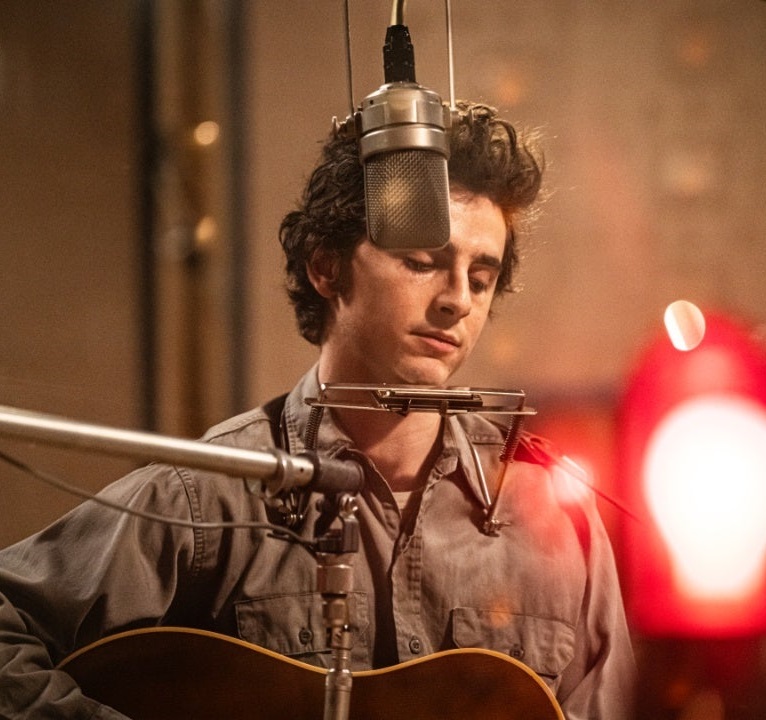
The film also excels through the excellence of the performance of Timothee Chalamet. I’ll admit I first thought Chalamet playing Bob Dylan was a bad idea. I could not see him doing it. He accomplished it very well by making it a three-dimensional performance when it could have been wooden or cartoonish. I’m impressed with his work. Also really great is Edward Norton as Pete Seeger. I know Edward knows how to get into character. Here he makes a very convincing performance as Seeger. Newcomer Monica Barbaro is also excellent as Joan Baez. The film is, in a way, also showing us the Joan Baez we never knew. Very different from her on-stage persona we’re so familiar with. Elle Fanning was also great as Sylvie Russo who faces a hard time trying to love Bob as his fame was starting to take off. Boyd Holbrook was also very convincing as Johnny Cash and Scoot McNairy was also great as woody Guthrie. Even though both performances had a short amount of screen time, they were still both good and convincing.

A Complete Unknown is not your typical musicography. It presents a Bob Dylan we never knew, a Joan Baez we never knew and a folk scene different from what we thought it was. It’s as revealing as it is great.

Conclave

There has been a lot of unhappy talk from a lot of Catholic people about the film. One thing we need to talk in mind is that this story is a fictional story based on the adaptation of a book. Watching it, the cardinals did not act very priest-like. It made the whole conclave look like a joyless sect. Throughout the film, there’s hardly any focus on the spirituality of the cardinals. As the election of a new Pope is happening, it appears they are all rivals against each other with animosity. It almost makes the election of the Pope look like a political election where candidates look to expose the dirt of their rivals in order to win votes. Maybe that’s the point of the film. To make a papal election look similar to that of a political election. Although they do a good job of making that connection, I’m still unhappy about how the bishops and cardinals were portrayed.

Although I was unhappy of how the conclave is depicted, I am not angry as I am well aware this is a fictional story. Besides none of us knows what goes on behind the scenes of electing a new Pope. One thing the film does do well is that it shows the complications of being inside the Catholic Church. Although the film doesn’t know much about the faith of the bishops and cardinals and makes them look similar to dirty politicians, each of the bishops and cardinals represent ways of thinking most common among Catholic leaders. I myself have complained that the Catholic Church feels more like an institution than a church, but we forget how big the Church is. The Catholic Church is almost 2,000 years old and has 1.3 billion members and has churches on all the world’s continents. In some nations, Roman Catholicism is the religion of the majority. With a church that big, there is bound to be differing opinions on various issues. Some have Bible-based answers for various issues, some base their opinions on Church-based teachings, and some just give their own rational thought. You can understand why a church this big will have a lot of conflicting opinions among its members and leaders. The various debates among the College of Cardinals are reflective of that. Then there’s the powers that be. As you can see in the film, the electing of a new Pope is not an easy thing. There’s knowing that the Pope they elect with become the epitome of the image and the morality of the Catholic Church. You can understand why choosing the right bishop or cardinal to be Pope will be a difficult.

This film is good at making the election of a new Pope look like an intense drama. It succeeds in doing it by inventing a clever ‘behind the scenes’ story and making it into an intense drama that will keep you focused. It may overdo it in terms of the various conflicts between the bishops and cardinals but the conflicts reflect the common mixed beliefs held by Catholics. Sometimes the squabbles over certain bishops in the running are reflective of squabbles of the various beliefs of many Catholics. A Church of 1.3 billion is too big to have everyone believing the same thing on each issue. Also the film reflects on difficulties, scandals and controversies that the Church has left unfixed over the years. Even how secrets unraveled behind the Church walls are representing how the Church has a lot of hidden secrets. The film also succeeds how getting the problem of the Papal election solved is best assisted by two people least expected. It’s first done by Sister Agnes who, by being a nun, is to exist in the background but she can’t hide her silence anymore on all that has happened. The second is Cardinal Benitez who seems like the candidate least likely to win, but after he made his powerful speech, he appeared to be the best choice to be Pope, only for his secret to be revealed after his election. The film gives an ending that leaves us with questions of what will happen next. That’s what a film should do.

This film is an excellent work from Edward Berger. With the script Peter Straughan adapted from the novel, Berger directs a film that takes a world event and turns it into a behind-the-scenes drama that will keep you intrigued in the drama more than you thought you would be. Although it’s off in its depiction of priests and bishops, it’s still a great work.

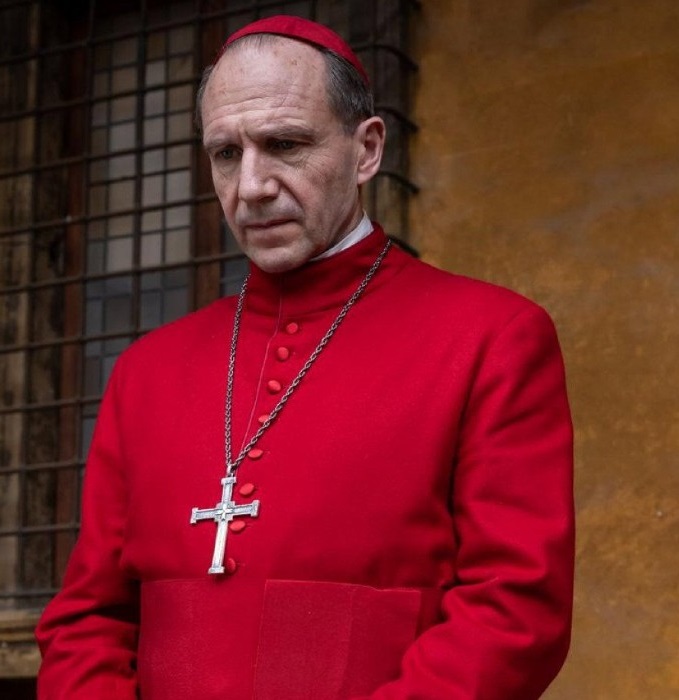
Also great is Ralph Fiennes as Cardinal Lawrence. He performs the role of a priest whose spirituality is clashing with his role of leading the College Of Cardinals. He makes the stress look obvious. The performances of the various bishops from John Lithgow, Stanley Tucci and others were very good, despite more focus on the Cardinals’ arrogances. Isabella Rossellini is the surprise of the film. Playing Sister Agnes who can’t hide her silence anymore, she really provides needed impact to the story and her silent moments are as good at storytelling as her talking parts. Carlos Diehz is also great as the Cardinal who’s the best most mortal choice for Pope, but has a hidden secret. The film also has a lot of great technical merits like set designers Suze Davies and Cynthia Sleiter for creating a set that looks very much like the Vatican, costuming Lisy Christl in making the clergy costuming look perfect and composer Volker Bertelmann delivering a score that adds to the intensity of the drama.

Conclave may be off in their depiction of cardinals and the Church itself but it succeed in bringing up hot topics surrounding the Church as it succeeds in making an intense drama of a Papal election.

And there you go. Those two films are my second look at the Best Picture contenders of this years. More reviews of Best Picture nominees to come.

Oscars 2024 Best Picture Reviews: Part One

Ten is not a set number for the number of Best Pictures nominees. Nevertheless it’s still nice to have ten as the total of nominees.

This year, there are a wide variety of films nominated from science fiction to two musicals to a musicography to a dark comedy to a horror movie to many types of dramas. Here  are my first two reviews of the Best Pictures nominees:

Anora

This is quite the unexpected comedy that delivers an unexpected sad ending. A sad ending was anticipated but the sad ending we got was not the one anticipated. It seems odd to have a story about a stripper/hooker marrying a rich kid to be one of the best films of the year but Sean Baker has developed a reputation for directing films about people in the sex trade. This is quite the story itself. We have a stripper who plays a ‘love kitten’ day after day for lusting men, but craves real love. We have a billionaire’s son who’s too spoiled, immature and careless to get it about life and love. He thinks marrying Anora is easy like that and he can live the same irresponsible life again, but he has a lot to learn. We have Igor, the henchman hired by the Zacharovs to have the marriage annulled, but Igor becomes the first person to see Anora as a human being throughout this whole ordeal. We also have the Zacharovs who are so obsessed with their money and power, they think they can do whatever they want. This is the kind of story that brings a lot to the table to talk about.

It’s hard to pinpoint the exact theme of the story because there’s so many topics and themes this story presents a point about. One could be the theme of sex workers. As I mentioned, Baker’s films often deal with sex workers. Here we see the case of a sex worker who is treated like a piece of meat and there are times her true feelings are shown. There are moments we stop seeing Anora as ‘this thing’ and start seeing her as a person. There’s also the case of wealth and privilege. Not only do we see wealthy people having the best luxuries but we see them having a privileged son living a careless irresponsible life, we see how the rich devalue marriage both with Vanja’s eloping of Anora and the Zacharov’s own marriage, we see how being a henchman to the Zacharovs means having to leave a christening of your godchild because your boss demands so, and we also see how the rich Zacharovs know that their money gives them power and uses it against Anora. Especially when the mother insists the family doesn’t apologize to anyone just as Igor points out Vanya owes Anora an apology for the eloping. It’s quite the irony when a stripper or prostitute has a better sense of what marriage is all about than a billionaire’s son. Or even his parents.

Often overlooked, I feel one of the top themes in the film is love. We have Anora, a stripper who pretends to love the men she sleeps with, but she craves real love. We have Vanya, whom Anora thinks she found love with as she spends weeks with him and easily falls for his marriage proposal. Anora is oblivious Vanya wants to marry an American so he doesn’t have to return to Russia and work his father’s business. Even the scenes as Vanya’s playing video games after the two marry hinds at Vanya’s irresponsibility. We also have Anora’s delusion with the marriage. Even though Vanya continues to play video games after they marry, she still thinks she met her love. We have the Zacharovs who view their son marrying a sex worker to be a disgrace to the family. We also see scenes which make you question the Zacharov’s own marriage. Finally we have Igor who becomes the first person to see Anora as a human being instead of ‘that thing.’ It was made obvious in the scene where Igor says Vanya owes Anora an apology. That ending where he allows her to stay at the Zacharovs one last night to sleep, bathe and pack and the ending scene as he’s about to drop her off is also an irony. He’s first hired as a henchman to stop the marriage, even if it means brute force, and now he actually has feelings for Anora. A shock to us all, and to a disheartened Anora as well.

This is the big breakthrough film Sean Baker has been waiting for. The film world has known Baker for a long time as one knocking on the door. He’s delivered small breakthrough films before with 2015’s Tangerine and 2017’s The Florida Project. Here, he directs a story that’s intriguing and unpredictable. It first seems like a film that would give us a cartoonish story but as the film progresses, the story is a lot deeper and it’s not the story we thought it was. Also worthy of top acclaim is lead actress Mikey Madison. If you thought you’d never shed tears for the character of a stripper, you will be wrong. It’s remarkable we have a film where the character of a stripper is shown to have real three-dimensional feelings, but Mikey’s performance of Anora was deep and revealing and we actually start feelings for her. He go from seeing her as ‘that thing’ to seeing her as a frail hurt person. Also excellent is Yura Borisov. Nobody expects any of the henchmen to have feelings for Anora, but Yura catches us by surprise. It’s also he who makes the movie into something we didn’t expect. Also good is Mark Eydelshteyn in playing Vanya. His portrayal as an immature irresponsible spoiled rich son makes you want to hate him in the end. Both Aleksey Serebryakov and Darya Ekamasova are great at Vanya’s parents. They also succeed in making you hate them as much as you’ll hate Vanya. We can see why Vanya is a spoiled brat.

Anora is not your typical story of a prostitute or a stripper. It’s a story of a love gone wrong and ends with a love you don’t know if it should be. Those who see it won’t forget it.

The Brutalist

We’ve seen stories about the difficulties of achieving the American Dream before. Some are harder than others. This film takes a cynical look at an architect who achieved his American Dream. We have a Jewish architect who left post-Holocaust Hungary to find refuge in the United States and achieve his success there. We see how he has to fight his demons like his infidelity, family members that are petty, harrowing memories that cause him to take heroin, a difficult market for his Bauhaus style, rival architects, people that want to use him and above all, his own egotism. It’s not at all a pretty sight to see but it does tell a good story of a man hoping to pursue his greatness in the United States.

The thing that makes this film is not just the telling of Laszlo Toth’s story, but how it’s presented. The film begins as Laszlo’s ship sails past Ellis Island and he sees the Statue Of Liberty, but from his angle, he has to look at it upside down. He has to struggle to achieve his dream by eating at soup kitchens, living at the YMCA, embraced and then neglected by a family member who’s a successful business man, and having to prostitute himself at times. His breakthrough comes by fluke as it was the renovation unapproved by Harrison Van Buren where they first meet, and the meeting is bad. It’s after Harrison discovers who Laszlo is and of Laszlo’s pre-war success in Hungary that he’s willing to take him on. It’s not an easy task as it involves years of work and labor, supplies cancellations, dirty work form Harrison, his friendship with Gordon put to the test and Laszlo’s own ego coming to light. Then there’s how Laszlo’s attempt on success threatens his marriage to Erszebet as she has now arrived in the United States. She knows his secrets and she says she’s fine with it, but it will become obvious she’s not. His success threatens family unity with the niece as the daughter adopted after the Holocaust.

The crazy thing about the film having a half-hour intermission may have some question its purpose. We should remember many decades ago, it was common for long movies to have intermissions. This film’s intermission is very successful not only in dividing the movie properly, but give you the feeling you’re watching two different films. The first half focuses on Laszlo’s arrival, his attempt to make it in the United States, the dirty obstacles he has to face and his big break. And right while he’s writing to Erzsebet with the hopes of her coming to the United States. At the end of the intermission comes a new scenario. As Erzsebet finally arrives in the United States with niece Zsofia, there’s the added pressure of keeping a family together. Especially since Laszlo can’t keep his secrets to Erzsebet any more and she has a disability to deal with. Over time, she senses things like Laszlo’s ego and how Harrison wants to make a pet out of him. Despite being confined to a wheelchair, Erzsebet is able to muster the strength to use her walker to confront Harrison about his mistreatment of Laszlo. The ending epilogue is also something as Laszlo is saluted for his work, in Italy. It’s like he achieved his American Dream but had to achieve it at a harrowing cost and he had to get his honor from outside the US.

This is an accomplishment from Brady Corbet. Younger adults may remember his teen actor days in films like Thirteen and Thunderbirds. Like a lot of young actors, Corbet felt the need to make films of his own. This is Corbet’s fourth feature film. This film that he directs and co-wrote the story with wife Mona Fastvold is definitely something. It mixes some classic film styles while telling the story of a Holocaust survivor’s pursuit of the American Dream. There have been films where the American Dream has been achieved at a big cost before, but this film meshes Laszlo’s pursuit with the shaping of the United States and most notably Pennsylvania after World War II. As the US shapes itself after the war, Laszlo attempts to shape his success in the US, but at a huge price that comes at the cost of him, his dignity and his marriage. Right at the end as they have the tribute gala in the epilogue, you wonder if this should be a happy occasion or not with what Laszlo has gone through.

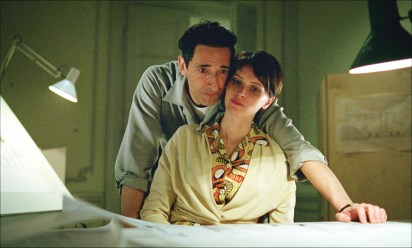
Excellent performance from Adrien Brody. Remember him from 2003’s The Pianist? He appears to have kept it low-key since. This year, he comes back with another performance of a lifetime where he shows Laszlo to be a creative man and a troubled man. He will make you hate him as much as he will break your heart. Also great is Felicity Jones as Erzsebet. It’s the appearance of Erzsebet that most turns this film into two films in one. With her arrival comes the change of environment. She appears to be one who will most interfere with Laszlo’s success and even a victim of his own selfishness but in the end, she’s the best person Laszlo needs during his most troubling time. Guy Pearce is also great as the deceptive Harrison. He’s excellent in portraying an all-American businessman who welcomes Laszlo and his talents, but as long as something’s in it for him and is willing to make a toy of Laszlo. Additional excellent acting comes from Raffey Cassidy, as the niece Zsofia who’s mute at first but soon develops her ability to talk, and from Isaach de Bankole as Gordon, Laszlo’s first friend and business associate who Laszlo later turns on in his success. Excellent technical merits are the cinematography of Lol Crawley, the production design of Judy Becker and the musical score from Daniel Blumberg.

It’s easy to see why The Brutalist is a heavy favorite to win Best Picture. It combines a graphic disturbing story of one man’s pursuit of the the American Dream and shows it in a stylish artistic fashion. Hard to outdo it.

And there’s my look at the first two Best Picture nominees for this year. If you’ve seen them, you can understand why they’ve won most of the Best Picture awards.

VIFF 2024 Review: The Thinking Game

The Thinking Game is a documentary that makes understanding A.I. pioneer Demis Hassabis to be as much about trying to understand how A. I. came to be and how it evolved to what we have now.

The topic of A.I. is something to provoke a lot of discussion. Some will regard it as a revolutionary breakthrough in technology. Others see it as a threat that devalues human abilities. The documentary The Thinking Game gives an insight into A.I. as navigated by one of its biggest pioneers.

The film begins with a look at Demis Hassabis: the British CEO of the technology company AlphaGo. It shows of his current working with A.I. and also his intrigue of developing AGI: Artificial General Intelligence. As we learn more about attempts to develop AGI, which is like A.I. but appears closer in developing the feelings similar to that of humans, we are introduced to Hassabis and his intrigue with the human mind. Hassabis was born to a Greek-Cypriot father and a Singaporean-Chinese mother in 1976. He grew up in East London and his above-average intelligence was noticed as he developed a love for chess. Soon he became the second-ranked chess player in the world for his age range and a chess master at 13.

Everything changed one day during a chess tournament he played in. It was a game when he was thirteen that he lost and he was out of the tournament. He was sad about it, but did not leave the playing area. While sitting, it got him thinking of all these people around him still playing and all the brain power going on. It got him thinking of a human’s brain power. Are there any limits to what human thinking can solve? Soon Hassabis bought a computer with his chess winnings and learned programming from books. One day, he won a contest to win a job at a video game company: Bullfrog Productions. Soon he helped with Bullfrog’s work and invented a game of his own: Theme park.

Theme Park became a hit and helped him make enough money to attend Queen’s College at Cambridge. College was difficult because he wanted to study artificial intelligence and he was chastised by the professors about it. He did graduate from Queens College with a Computer Science Tripos. He also went to the University College London where he achieved a PhD in Neuroscience. In between and after his stints at college, he continued his work in video games and programming going from Lionhead Studios to founding his own game studios Elixir. His fascination with the human mind never left him. He felt that through computers, he can create something with artificial intelligence that can even tap into human emotions. Something commonly referred to as Artificial General Intelligence, or AGI.

In 2010, Hassabis and his colleagues Shane Legg and Mustafa Suleyman created the artificial intelligence laboratory DeepMind. The activity on artificial intelligence at DeepMind started when Hassabis worked ways to get a computer to play old video games from the 1970’s and 1980’s. The AI system was taught nothing of the game and would have to learn by constant play. Over time, the A.I.’s learning system worked and they would master the games. Interest in DeepMind grew and it attracted investors like Elon Musk and would be owned by Google from 2013 to 2014. Then in late-2015, they created AlphaGo: a computerized version of the game Go with A.I. as the opponent. They would soon challenge the world’s highest-ranked Go players to matches and win.

For DeepMind, it was enough to declare victory. For someone like Demis Hassabis, it wasn’t enough. Hassabis has a lot of ambitions on his mind. One of which was protein folding. Solving the problem can help with solving Alzheimer’s, dementia and developing new drugs. Hassabis and his colleagues would create the program AlphaFold to perform the predictions of protein structures. For years, it was all trial and error. As one of the colleagues put it, they were the best in the world at it but they were awful. Then during the pandemic while everyone had to isolate and work at home, the code was cracked. It doesn’t end there for Hassabis as it appears he wants to crack every uncracked code that’s out there.

A.I. and A.G.I. are two things that are admired for what they do and despised for what they do. Through computer technology, they’re able to solve a lot of problems human’s either can’t solve or can’t solve fast enough. Because of that, many people see this as a threat to humanity, especially in terms of employment and the constant automating of jobs. Even Hassabis himself has been both praised for his discoveries and achievements and vilified by some in aiding something that many feel devalues human abilities. There are many people from his co-workers to journalists to his former professors that ask the big question when will it stop? Yet Hassabis comes across as the type who doesn’t want to stop until everything’s all solved.

This film actually spends more time focusing on Hassabis and his accomplishments than on the subjects of A.I. and A.G.I. The film showcases Hassabis as someone who many feel deserves the praise equal to that of other computer technology pioneers like Bill Gates and Mark Zuckerberg. Sometimes the film shows Hassabis as having acclaim ‘unsung’ compared to the two. The film also shows Hassabis as one of those child geniuses who was able to find a way to make better use of his brain than winning chess tournaments. It does show Hassabis to display a lot of genius traits both in action and personality but it doesn’t show him to be as much of an eccentric like many other famous geniuses.

The film is able to mesh Hassabis’ life story of how he went from a chess prodigy to being on the forefront of A.I. development with the current developments of A.G.I. his current lab. It chronicles his achievements while it also shows how workers in his lab are working to perfect his A.G.I. technologies to match human feelings and emotions. It doesn’t spend a lot of time on the news stories involving his lab and of A.I. research. It also spends a small amount of time on people who feel threatened by the latest wave of A.I. technologies. Especially the actors who went on strike last year. The film does leave out the times Hassabis has focused on the topic of existential risk from A.I. which Hassabis has spoken out and warned against. Hassabis has even stated the risk from extinction from A.I. is as much worthy of concern as nuclear war or another pandemic, but there’s no mention of it in the film here.

It’s interesting that this documentary comes out in the very year Hassabis and his AlphaFold partner John Jumper were awarded the Nobel Prize in Chemistry for the very protein structure prediction they were experimenting on in this documentary. The documentary does make it interesting how meshing games with work appears to be Demis’ life. He calls chess a good thinking game as a child, does game development as a teenager and young adult, uses A.I. to challenge people at chess, then using A. I. to challenge the world’s best Go players, to using A.I. to work protein structures. It seems like everything Demis has worked on in his lifetime appears to be another ‘thinking game.’ Leaving the film, maybe the film shows that science itself in all of its trials, errors and experimentations has always been a ‘thinking game.’

Director Greg Kohs delivers a documentary some could find intriguing or some could find to be missing information. It does a good job in getting us to see Demis’ achievements in a topic that has many people intrigued in. It can also lead people to scratch their head about what this film is about. Is it about Demis? Is it about A.I. or A.G.I.? Is it about his inventions and contributions? Is it about a person we’re to blame for what threatens us now? Is it even the world through Demis’ eyes? Or even is it about science as a whole with all the many failures before the successes?

The Thinking Game is an ambiguous documentary that is as much about A. I. evolving over the decades as it’s a biographical film of Demis Hassabis. It doesn’t focus too much on the controversies of A.I. Instead it focuses on Demis’ intrigue into A.I. and how it would greatly pave the way to what we have now. Whether it rightly or wrongly glorifies Hassabis, that’s up for the viewer to decide.

Oscars 2023 Review: Best Animated Feature Nominees

This year makes it the first year I had the luck to see all five nominees for the Best Animated Feature. A lot of good films. Most are family-oriented but some have some adult appeal. Three are American made with one from Japan and one from Spain. Here are my reviews of the Best Animated Feature nominees:

The Boy And The Heron

Anime may or may not be to your liking. but Hayao Miyazaki makes anime films worth liking. If you’re familiar with Miyazaki, his film Spirited Away won the very second Oscar in this category. This film is his fourth film to be nominated in this category and his first in ten years when he went into retirement.

Here he ends his retirement to return with a story about a boy who lost his mother during World War II and doesn’t know how to deal with a new stepmother, an upcoming baby brother and a new school. He thinks he can fake a rock attack from a school bully to get out of his problem but a mystic heron who speaks to him has clues to how he can encounter his mother.

In many ways, this story is quite similar to Spirited Away. The path the boy Mahito takes is very similar to the labyrinth Chihiro in Spirited Away took. Both children begin the story as they face a difficult change in their life. Both children find a place that takes them to a supernatural world which they would find themselves imprisoned in and facing obstacles. Both would see imagery of beings that represent their parents or parent. In Mahito’s case, he’s led to an underground world led by a Heron and then to an image of who he thinks is his deceased moth, only to learn she’s made of water. It’s as Mahito learns he has to fight his way out of the society of parakeets that he’s able to come across his long lost mother, although she comes across as a different image.

Once again, Miyazaki succeeds in creating a world that is mystical, frightening and colorful. His films are known for capturing people’s imagination with mesmerizing imagery and dazzling colors. He’s one of few who know how to continue to innovate with 2D animation. His use of animal characters to represent the demons the child is trying to fight is present again here. With this film, it’s a human living inside a heron that is the one to guide Mahito with the ability to resolve with his new mother, fight his way out of the kingdom of parakeets and and meet his mother. The film shows Miyazaki’s magic is not lost. In fact it’s very active even after almost ten years of retirement. Miyazaki and Studio Ghjibli do it again!

This film has had a lot of awards buzz. For all the buzz in winning the Best Animated Feature Oscar, it’s seen by many as a rivalry between this film and Spider-Man: Across The Spider-Verse as the two most likely to win. This film has won the Golden Globe and the BAFTA. It also finished second at the Toronto Film Festival’s People’s Choice award, won many critics circle awards and was nominated for seven Annie Awards winning two. Although the Spider-Verse film, which I will review later, has more awards, this film’s big wins show it can upset.

The Boy And The Heron is one of the few animated films this year that can impress older viewers. It has what it takes to help the audience escape into a hugely imaginative world.

Elemental

In the 21st Century, it’s the team of Disney/Pixar who has delivered the most in animated films. Their films have won this category eleven times in seventeen previous nominations. They’ve done a lot to reshape the way animated films are done starting with 1995’s Toy Story. Their impact has been noticed by how other film companies do their films. So much so, Disney/Pixar is no longer alone at the top. Now they have rivalry from Walt Disney Studios whom have experienced a 3D renaissance with their films, DreamWorks Animation who pioneered Shrek, Sony Pictures Animation, Laika Studios and Netflix Animation.

I hate to complain to those that like this film, but it’s one Disney/Pixar film that isn’t all that innovative. We’ve seen their magic with toys in the Toy Story movies, insects in A Bug’s Life, monsters with Monsters Inc., fish in Finding Nemo, feelings in Inside Out and souls in Soul. Their past films have even been nominated for the Best Pictures Oscar. Here, I get the sense I’ve seen this before. It’s a case of the four natural elements of the earth trying to co-exist but those belonging to the fire element are most shunned and she falls in love with a water man. Something tells me I’ve seen better and more innovative from Pixar.

Despite this feeling like something common of expected from Pixar, it does keep Pixar’s reputation for quality and perfection in animation intact. Once again, we see Pixar deliver quality images without a glitch. Not even the appearance of the characters has an image of something out of place. On the topic of animation, Pixar again succeeds in taking the viewer to an incredible universe. Element City is a sight to behold and a world to mesmerize audiences, just like the worlds in their previous films have done. Also the story itself is another case of how Pixar can take a serious issue and turn it into a film enlightening for the whole family. Here, it’s  the theme of systemic racism and xenophobia. It’s an intense topic but this film succeeds in sending a positive message about overcoming prejudices.

It’s interesting with the awards clout this year. In almost every type of awards with the Best Animated Feature category, this film has not won but found itself a nominee or finishing second or third. The big shocker was at the Annie Awards. They earned six nominations at that awards but not Best Feature!

Elemental offers nothing really original or innovative for a Disney/Pixar film. It does, however, still keep alive Pixar’s reputation for delivering top notch animation, dazzling effects, and a good story. Pixar keeps on delivering!

Nimona

This is a unique story of how a defamed knight is rescued by a troubled shapeshifter girl who is just the friend he needs. This is one story that will catch you off guard as two unlikely people become the best of friends and what each other need to overcome their biggest obstacles. For Ballister, it’s to get his reputation, his freedom and his honor back. For Nimona, it’s the false image of her being seen as a monster: an image going back 1,000 years ago and bestowed by Gloreth. Both have social alienation in common. One is looked upon as a monster. The other is regarded with contempt for being a commoner trying to be a knight.

It’s also about a villain who will do whatever she can to control things and make things their way. She doesn’t want a commoner like Ballister as a knight while the queen is willing to break down that barrier. So she secretly gives Ballister the sword that will kill the queen. She also tries to keep the myth of Nimona being the black monster alive to all those in the town. Just as the truth is revealed, the Director won’t quit and will deliver one last seize of power.

Just like Elemental is great at creating Element City, Nimona does a great job in creating the kingdom. It’s a town that mixes in the tradition of knighthood with the technology of the modern world and the common imagery of future worlds. It’s also a place that will capture your imagination as you watch.

This is a story that’s great and entertaining. This is the third film from Big Sky Studios to be nominated in this category. This is also the third straight year an animated film shown on Netflix is a nominee in this category. Seems like Netflix has become a challenger for top animated films. Last year, they delivered the winner: Guillermo Del Toro’s Pinocchio. Looks like Disney and DreamWorks have a future threat on their heels!

Nimona is an excellent enjoyable animated film. It offers a unique story that will have you laughing, dazzled and entertained.

Robot Dreams

Usually in this category, it’s common to have an independent nominee or two. This year, the independent nominee is the French/Spanish film Robot Dreams. It’s worth checking out if you are up for something different.

This is a charming two-dimensional story of a lonely dog in New York who’s lonely. He decides to buy a robot to be that friend. It works that summer as the two have a great time after great time. Then the robot is stuck in the beach and the beach doesn’t open until June 1st. During that whole time, the dog patiently waits while trying to make new friends. The robot still lies on the beach with colorful dreams and hopes of reuniting again. Then things take a turn for the shocking come spring. This leads to the happy ending you didn’t expect with the Earth, Wind and Fire song “September” reminding them both they’ll still be together one way or another.

This is not the first time an animated film without dialogue has been nominated in this category. This is one film that relies on facial expressions, body language, and the various images and sounds to tell its story. It does an entertaining job, especially in the various scenes it has and the switches from dreams to reality. The addition of music also adds a boost to the film.

This is a great creation from Spanish writer/director Pablo Berger. For this film, he hired French animation director Benoit Feroumont whose works include The Triplets Of Bellville and The Secret Of Kells. It’s a fun story that turns New York to look like Zootopia. The film is full of humor, a good mix of original music and past hits, of a few sad moments and even a couple of shockers. You might think you won’t like a story with no dialogue but it works from start to finish. Not a boring moment.

Robot Dreams is the independent threat in this category. It’s a fun story of friendship, the long wait, an unexpected change and a different kind of happy ending.

Spider-Man: Across The Spider-Verse

Five years after the first movie, the Spider-Verse is back! Once again, Miles Morales is the central Spider-Man. This time, there’s a Spider-woman in his life named Gwen Stacey who’s also a teenager like him. While the first Spider-Verse film was more comedic, this film was more dramatic. It’s not just the villains they have to fight, but they also rival each other. Animosity between the Spider-people start and disunity and even Gwen’s expulsion happened. Meanwhile Miles and Miguel become enemies.

This is not a story of a beginning, middle and an end. This is a beginning, middle and a cliffhanger obviously to set up for the third Spider-Verse movie. The film can get confusing as there are so many Spider-men and Spider-women and they don’t all meet. The film does its best to keep it all intact and keep us the viewer understanding the story

For me, the highlight of the film has to be the mix of various styles of animation. When I go see an animated film, a great animated film is not just about the story. It’s also about animation that dazzles the eyes. Writers Phil Lord and Christopher Miller learned some new animation styles after working in The Mitchell’s vs. The Machines. Lord and Miller along with the direction team made a smart move when they decided to have a different artist do each different universe. Six different animation styles were used in this film. They all make for a delight to watch as the story progresses over time.

The awards buzz has been quite something for this film. I mentioned during The Boy And The Heron that this is their biggest rival. For the Animated Feature category, Spider-verse has won the Critics Choice award, the Producers Guild Award and the Annie Award as well as the six other Annie categories it was nominated in. It has won numerous critics circle awards and their sound mixing and visual effects have won awards of their own competing against many live-action films. It has a good chance of winning the Oscar here but I know in this category, they’re not too friendly to sequels. And the first Spider-verse film won in 2018.

Spider-Man: Across The Spider-Verse keeps the excitement from the first Spider-Verse movie alive. It also has its own drama and a new batch of dazzling animation styles, and a cliffhanger that makes us hungry for the next Spider-Verse film!

And there you go. My look at the films nominated in the Best Animated Feature category. I saved my Should Win and Will Win picks for my blog of Oscar predictions tomorrow.

2023 Oscars Best Picture Review: Past Lives

Teo Yoo and Great Lee star as two childhood sweethearts who could be destined to be for each other after all these years in Past Lives.

Do you believe in destiny? Do you believe in reincarnation? Past Lives is a story that examines it and how it pertains to love.

Reincarnation and a person’s belief they had a past life or many past lives is a topic popular with many. It’s also a topic of great skepticism. This story is unique as it shows the cultural significance of the topic of reincarnation. Specifically reincarnation commonly regarded through Korean people. This concept is called In-Yun. It’s hard to understand, but protagonist Nora Moon does a good example of simplifying it by saying a simple action could mean they’ve met before in a past life. Even a simple brush of each other’s clothing can send that message of In-Yun between two strangers that simply pass by and never see each other again. The concept of reincarnation itself is completely something someone will choose to accept or not, but something like In-Yun experienced through simple encounters like those are even harder for someone outside of Korea to understand and accept.

Nora is one who believes in In-Yun, despite her non-Korean husband being skeptical. What makes this story unique is how it relates in terms of romance. Could it be that destiny would make Hae Sung and Nora lovers in past lives?  Is it also destiny that they should be lovers in the present? And will it come at the cost of the end of Nora and Arthur? This is a romance story of a different kind! Also how does this belief of In-Yun sit well with Arthur who was never taught In-Yun? It’s not clear of Arthur’s beliefs himself but not being Korean, how will Arthur take to Nora’s belief of In-Yun? Will something he himself doesn’t understand mean this is something that is supernatural and beyond his control and something sending him the message he and Nora were not meant to be?

One thing I learned in my college courses of literature that for a work themed on the culture or popular attitudes of a region the protagonist lives in or a culture the protagonist comes from, it has to find ways to transcend the physical and cultural borders to make it understandable and relatable to “outsiders.” This concept of In-Yun is definitely something most people outside Korea can’t understand, but it gives the viewer a better understanding. Various scenes in the story like their reuniting online twelve years later or even Nora and Hae Sung visiting New York landmarks together, one’s Nora and Arthur didn’t go to together, will also stimulate your interest and question if these former schoolmates are soul mates. Making it not just a story about the two, but also about the man caught in the middle adds to the intrigue. If they’re soul mates, will it come at the cost of the man who loves her? It’s a story with a pace that’s slow and even quiet, but it succeeds in keeping your intrigue of the three involved and of the In-Yun most non-Koreans are just learning about.

This is an excellent film from director/writer Celine Song. A mostly fresh writer on the scene, Song has had experience writing for the stage and for television for The Wheel Of Time. This film is her first-ever work for film. The life of character Nora mirrors her own life as she herself  was born in South Korea in 1988, emigrated to Canada in 2000, achieved her MFA from New York University and worked her way to the New York theatre industry. Like Nora, she married a Jewish-American writer. Even the scenario mirrors her life as five years ago, a childhood sweetheart came to New York to visit. That must have been the making for this and it’s an excellent work.

The film starts with a lounge scene of Nora and Hae Sung talking happily while Arthur is looking down. You don’t hear them talking but you see them and hear the talk from two white observers. Then the story begins. Throughout the film, she takes this personal story and makes it into a story engaging for the audiences of all backgrounds. That’s another thing too. You might dismiss this as a “boring story” at first, but it will spark your intrigue over time. She helps the audience get a better standing and makes them a believer of In-Yun, if only during the film. Even the ending when Arthur gives Hae Sung a warm friendly goodbye seems right and fitting, even if it wouldn’t be your nature to do so. A very excellent film debut from Song.

Also excellent is the performance of Greta Lee. She has been active on the acting scene for the last ten years. She does a great performance as one who strongly believes in this In-Yun, even if it might threaten her marriage. Nevertheless she also exhibits confusion and heartbreak well. For a performance that’s not too demanding, Greta does a graceful job with it. Teo Yoo is also great as Hae Sung. It’s quite the effort playing someone whole heartedly believing in a soul mate only to learn right there it was not meant to be. Also great is John Magaro as Arthur. He played the frustration of being the man who might lose Nora to something she believes in and he doesn’t understand. He also makes the befriending of Hae Sung at the end believable.

Past Lives takes a love story about destiny some could dismiss as a joke and turns it into something great and something believable. It becomes a more engaging story as you continue watching.

2023 Oscars Best Picture Review: Killers Of The Flower Moon

Lily Gladstone (L to R), Robert de Niro and Leonardo di Caprio star in Killers Of The Flower Moon, a true crime drama that’s also an ugly part of history.

Killers Of The Flower Moon is a film of a crime story we often forget. It’s one we need to be reminded of, especially because of the times we live in.

Let’s face it. American Fiction may show how bad the entertainment industry is at dealing with entertainment featuring African Americans. How easily we forget Hollywood has also had a terrible history in it’s depictions of Native Americans. I’m sure those “Cowboys And Indians” movies come to mind, and boy did they age badly! The depictions of Native Americans have been better over the years, but imperfect. Sure, we have Dances With Wolves, but stereotypes are still present in a lot of entertainment or Indigenous actors lack presence and proper depiction in films.

As bad as the depiction of Native Americans are in Hollywood films, it’s nothing compared to the treatment of Native Americans in its centuries of history. We’ve all learned the history. The influx of settlers and the ruling colonialists throwing them off their land, the various “Indian Wars,” the reservations created, their own Residential School system, it’s a sorry history. Sure makes those games of “cowboys and indians” you used to play an embarrassing memory, doesn’t it? Here, we have an incident that has gone forgotten over the years: The Osage Murders that happened almost a full century ago.

We see the story. The indigenous are forced off their land into anywhere. The Osage were one such people lucky to find their own wealth through natural resources. Soon, the Indigenous of Osage were wealthier than the white people. However court orders white guardians to guard their wealth. One man enters the community and plays an elder to get the wealth. His nephew even falls in love with an Osage woman he’s the driver of and eventually marries her. Then the crime happens,. Many Osage in the town are killed, including three of the women’s sisters. Even the nephew is prompted to give his wife insulin poisoned with heroin and she nearly dies. As she recovers truths are unraveled and soon the elder and his sheepish nephew face the music for what they’ve done.

This story’s presentation of the murders and the crime can be seen through many angles. The thing about the film is that it not only focuses on the murders but it also focuses on the greedy white men, most notably William Hale, who sought to take that very wealth. Over time, crime comes to the town of Fairfax, Oklahoma with murders coming with the greed. Sounds like your common mob story, but that’s what it became. A story of a white mob killing the Indigenous people for their riches. As much as this is about rich Indigenous people being killed in the name of greed, it also comes across as an unnoticed “Indian War.” You’ve heard the history. Hundreds of Indian wars between white settlers and the Indigenous peoples. The war ends with many of the Indigenous killed and they’re forced off their land. In this story’s case, it appears as a war over the riches and who should have control. Once again, white people feeling they should be calling the shots. And in the state of Oklahoma in the 1920’s. The Osage had many signs sensing something would be wrong. From white people showing up in their towns to the alert they received from the 1921 Tulsa race riots to marching in a parade along with the Ku Klux Klan just behind them. A lot of signals. And with these murders happening around the time the FBI was being formed, the film succeeds in making this incident look like the incident that pioneered the FBI to be instituted.

Even with this being a crime story, it’s also a love story of a love that blossomed and died because of this. Ernest Burkhart drives Molly and falls in love with her. The love appears genuine between the two. They marry with Hale’s blessing and form a family. Then tragedy comes with many of Mollie’ sisters and her family dying ugly brutal deaths. Meanwhile Ernest is constantly under Hale’s thumb. He’s constantly torn between the love of Mollie and his loyalty to following Hale’s orders, including his order to give Molly insulin laced with heroin. Mollie would have been the last of her sisters to die, but she survived. Over time, secrets unravel. That last scene between Ernest and Mollie narrowed the story down. What should have been love between the two became betrayal and near-murder.

This is another good achievement from Martin Scorsese. In all of his sixty-five years in film making, Scorsese isn’t afraid to dive into new territory or try new things. This film he directed and co-wrote with Eric Roth is a telling story of the incidents that happened and how it affected a peoples. It shows how a story of a crime committed in the name of greed from almost a full century ago is a case of the systemic racism many Americans believe to be the right thing and insist on having.

There are some Indigenous film critics that feel this story could have been done better if written by an Indigenous writer. I do agree an Indigenous scriptwriter would have done a better job of telling this story from the side of the Indigenous people. Nevertheless, this is a crime story. If you’ve seen Scorsese’s past works, it seems as though Scorsese is the master of crime dramas. He does an excellent job of showing the crime that happened and the greed that fueled it. He also succeeds in showing the Indigenous people in a dignified manner and stays away from the common cliches white writers normally give Indigenous stories. Even the ending as the present-day Osage people are shown celebrating themselves is a big change of pace and worthy of admiration.

The acting of Leonardo Di Caprio as Ernest is good, but this is not his best effort. I’ve seen better acting from him before. Nevertheless he does succeed in making you question the history. Did Ernest truly lover Mollie? Or did he marry her to get her riches at the cost of her life? Ernest did have involvement with murdering her sisters and their families, but did he want to intentionally kill Mollie with her laced insulin? Di Caprio’s acting will make you question. Of all the acting, the standout is the performance of Lily Gladstone. She succeeds in making it look more like Mollie’s the film’s protagonist as Mollie’s the one caught in the middle. Lily does an excellent job of acting without overacting. Her performance really tells a lot of the story of a women going from being in love to going through unimaginable tragedy to almost being a victim herself to herself achieving her own independence. She’s also good at conveying despite braking free, there’s still the hurt of betrayal left behind. Also excellent is Robert de Niro as William Hale. Having worked with Scorsese many times, de Niro does a good job of showcasing Hale as the community “elder” who’s a crime boss when people aren’t looking. That’s something common in mob stories, but de Niro succeeds in making Hale look like exactly that.

Additional good acting performances come from Cara Jade Myers for her performance of the rebellious Anna Kyle, Jesse Plemons as investigator Thomas Bruce White, and Tantoo Cardinal as the grieving and sick mother Lizzie Q. Rodrigo Prieto does a great job with the cinematography. Thelma Schoonmaker does a great job with the editing, but it does leave you questioning whether the film should be 3.5 hours long. The production design is excellent in recreating 1920’s Fairfax. Jacqueline West does a great job in costume design in accurately recreating the Indigenous costumes flawlessly. Finally the score and music composed by the late Robbie Robertson add to the drama of the story and the triumph at the end.

Killers Of The Flower Moon is a great story showing how a crime spree is very reflective of systemic racism. It also does a great job not only recreating the story, but showcasing the people that were in the middle of it, both perpetrators and victims.

2023 Oscars Short Films Review: Live-Action

It’s interesting when the Academy deliver their nominations for feature-length films, they’re mostly for English-language films. Most of them being American films. Yet the nominees for the short films categories are often multilingual. For the films nominated for the live-action category, we have  films in French and Danish. We also have three English-language films, but two are from the UK. Not as much foreign language as the animated films but still it tells how these categories are among the most international of them all.

What’s interesting about the short films in the live-action is that many are from up-and-coming directors, as is the common case in this category, but we also have one British film directed by Wes Anderson! Also in the film are renowned star actors like Benedict Cumberbatch, Ben Kingsley, Dev Patel, Ralph Fiennes and Richard Ayoade. The other films also show actors of renown like Brittany Snow, Leif Andree and David Oyelowo. So there’s something about short films that make well-known actors want to pursue them.

Without further ado, here are my thoughts on the Live-Action short films nominated for the Oscars:

The After (dir. Misan Harriman) – Dayo is a successful businessman in London. One day, he drives his daughter to the top floor of a parkade to meet up with his wife. Suddenly a man wielding a knife commits a massacre all over the parkade. The man stabs his daughter to death. The wife, heartbroken, jumps to her death as Dayo fights to restrain him for the police. Time passes. Dayo is resigned from his position and makes his pay an Uber driver. He has cut off all contact from his friends and colleagues and won’t even meet with crisis management counselors. Although he keeps to himself, it’s obvious he’s still hurting on the inside. As he waits for his latest customers at the airport, he takes the picture of his family and sings “Happy Birthday.” The daughter of the family he’s to drive looks very much like his own late daughter. He tries to restrain his emotions at first as the parents make their way to the car. During the drive, the couple are consistently arguing in front of the child, but the daughter is sensing something is wrong with Dayo. Dayo still tries to keep his cool. As he gets out lets the family off at their house, the daughter goes to hug Dayo and Dayo just breaks down. The parents are shocked by what they see and leave him, but Dayo picks himself up.

How do you live again after you’ve lost it all? This is the type of question we don’t normally ask ourselves or don’t want to think about but unfortunately, there are some people who have to do exactly that? This is a story that does a great job of showing the before-and-after of a tragic incident that claims the lives of Dayo’s wife and daughter. Throughout the story, Dayo is the storyteller through his actions and his emotions. Even without dialogue, you can sense what Dayo is saying through his body language. He doesn’t know how to live again or deal with his emotions. It’s right after the breakdown he has after the daughter hugs him that Dayo knows he has to continue on, despite how hard it will be. This film which is the directorial debut film for Misan Harriman tells a gripping story with a profound message. David Oyelowo does an excellent job in his performance in both scenarios of the story. If they could give Oscar nominations for performances in short films, I’d say give one to David!

Invincible (dir. Vincent René-Lortie) – The film begins with a young boy in the driver’s seat in a car named Marc who telephones his mother, but doesn’t say a word. His mother tells him to come home, but police lights flash. Rather than surrender to the police, Marc drives the car off the cliff into the water. Going back weeks earlier, Marc is on a family vacation having fun with his family at the lake. He plays with his little sister but is embarrassed of how she chickens out with her finger over his lighter. This is the last set of fun Marc will spend with him before being sent to the youth detention centre. The first day, Marc can’t stand being in a sweltering room with no way to cool off. He ignites the sprinkler system which the officials put him on a stern warning. A councillor tries to deal with Marc and tells him how he has what it takes to be a smart positive influence on others and can’t understand why he’s always getting in trouble. One day, the official sees progress in Marc and how he helps others. The officials decide to take the boys to a nearby community pool. it appears Marc is having fun with all of them but when the councillor isn’t looking, Marc does his latest escape. Marc runs into a car but as the woman enters a store to call the ambulance, Marc steals it, attempting to take his escape further. As Marc stops, he calls his family. The mother, aware the police are pursuing Marc, pleads for him to return as the sister tests her pain with the candle.

This is a story inspired by a troubled 14 year-old boy from Quebec who killed himself as he drove into a lake in 2008. The story haunted the people in the area for many years. The boy, Marc-Antoine Bernier, was a friend to the director. Here, it appears the director is using his film to bring some respect back to Marc. Marc was an intelligent boy capable of a lot of good, but kept on getting into trouble. We all have known a kid like that in our childhood. Although this is a story inspired by a real-life person and based on true events, there may have been events or happening added to the story. Only Marc knows what really happened. Nevertheless Vincent makes a good effort to redeem Marc from the story he tells and even tries to get us to feel some empathy for him. We’ve all had those years when we were younger when we all felt we were trapped mentally, if not physically. If Vincent doesn’t make you feel empathy for Marc, he does make for an intriguing story. That’s why I make this film my Should Win pick.

Knight Of Fortune (dir. Lasse Lyskjær Noer) – Karl is at a multi-chapel funeral home where he comes to mourn his wife. Left alone, he can’t bring himself to open the casket. He tries to adjust a light but it breaks. Frustrated, he goes to a bathroom where he encounters another widower named Torben. Torben claims he can’t open the casket for his wife. Karl goes with Torben to the chapel and helps open the casket. As Torben attempts to say his “last words,” a family comes in. They’re the real family of the deceased woman including the real widower. They allow Torben and Karl to stay. When the widower is at a loss for words, Torben is able to say the right words as if the woman really was his wife. Karl leaves Torben angrily but he later learns from the funeral directors that Torben lost his wife in a boating accident three years ago and never had a real chance to say goodbye. Outside in a nearby bench, Karl notices Torben. Instead of anger, Karl laughs and invites Torben to the chapel where his wife is. Torben is able to open the casket and Karl is able to say his last goodbyes. As Karl gives his wife one last kiss Torben sings “Knights Of Fortune.”

Another story of loss and coping. Although this story deals with the subject of death in a gentler manner, and even includes humor, We all know that loss is never an easy thing to deal with, but it needs to be dealt with. This is a story of a widower struggling to properly say goodbye encountering an imposter who knows the right words to say goodbye to a woman he’s never really met, but makes like she was his wife. Once Karl learns about Torben that he’s not simply an imposter, but a hurting man who uses funerals of wives to say the goodbyes he always wanted to say to his own wife, could Torben be the very person to help Karl deal with his grief? This is a story of grieving, healing and saying goodbye that is greatly different from other stories. Nevertheless it does offer a message of healing and hope. It’s ironic how this imposter is exactly what Karl needs to properly deal with is loss and say goodbye, and a friendship that really shouldn’t be, happens.

Red, White and Blue (dir. Nazrin Choudhury) – Rachel, a waitress in a diner, looks at a pregnancy test and sees a positive result. Rachel is a single mother who has difficulty to support her two children. She also lives in Arkansas where abortion is illegal, thanks to the overturning of Roe v. Wade. She plans a trip for an abortion procedure in Illinois where it is legal, but it’s more than she can afford. One day, a woman customer who somehow knows what Rachel is dealing with leaves her a tip which makes up the remainder for her abortion trip. Soon, she leaves her son Jake with a friend as she takes her daughter Maddy on this trip. This is the first time out of Arkansas for both of them. Before they go to the clinic, they go to a carnival as it’s just before Maddy’s birthday. Maddy wants a merry-go-round ride, but it’s more than Rachel can afford. She agrees to one ride and Maddy chooses the elephant. At the clinic, Rachel learns she’s late for her appointment but through past recollections and as the receptionist learns the dirty facts, she tries to make it urgent.

No doubt this story is about abortion. Especially in post-Roe v. Wade United States. The thing is this story is more than that. You know the story is about the pursuit of an abortion, but it’s not what you originally think at first. You think it’s about an impoverished mother getting an abortion because she’s two-and-through, but things change as you learn more information. You wonder why on earth would a mother take her young daughter on an abortion trip? Soon you learn there’s more to the reality of unexpected pregnancy and abortion that meets the eye. Including a lot of upsetting truths. It’s also surprising how in a story that has a theme that hits close to home and presents a story that many would find upsetting, it is still able to have a heart-warming ending that works. That is something in film that is very tricky to do, but Choudhury accomplishes it!

The Wonderful Story Of Henry Sugar (dir. Wes Anderson) – Based on a short story written by Roald Dahl, Henry Sugar is the pseudonym of a wealthy bachelor who loves to gamble away his inherited riches. Thing is he never seems to have enough and wonders how can he get more money? He learns the legend of a man from India named Imdad Khan who learned the fine art of levitating and seeing with is eyes closed, thanks to the teachings of a Great Yogi. Thing is as the doctors were studying Imdad, Imdad tells his story and dies suddenly. Henry tries through great lengths to master this technique through all he can learn. Once he finally masters the sight trick, he goes out gambling and wins big! Problem is all this money isn’t making him any happier. At first he thinks the right way to give the money away is to throw it off a balcony. After it causes a riot, police recommend Henry develop a better method. Henry then spends the next twenty years traveling the world, gambling, and donating his winnings to hospitals and orphanages.

This is the last of the five shorts shown in the shorts.tv reel. After seeing four stories that were either depressing, too serious or had dark subject matter, it was refreshing to end the reel with a light-hearted comedy. The story succeeds in making the tale amusing. Already we have a major director directing it and four major actors — Cumberbatch, Kingsley, Fiennes and Patel — acting in it. Nevertheless the story telling, set changes, and the acting of all make it a delight to watch. It makes for a “guilt-free guilty pleasure” as I like to call such things. That’s why I make this film my Will Win pick!

And there you have it. Those are my reviews of the five films nominated in the Oscar category Best Live-Action Short Film for this year. That also completes all my reviews for the Oscar-nominated short films. Those short film categories are usually the hardest to pick a winner. You think you know what will win, but end up surprised in the end. We’ll see how it all goes on March 10th.

2023 Oscars Short Films Review: Animation

It’s interesting with seeing the reels of the shorts films, the Animation nominees are often the ones with the least total running time. They go by so fast, the shorts.tv reel add in a couple of other shortlisted films that got their honorable mention.

Anyways without further chit-chat, here are my reviews of the nominated animated shorts:

Letter To A Pig (dir. Tai Kantor) – The story begins telling of a boy hiding in a pig sty from Nazis who seek to put him in a concentration camp. The Nazis can’t find him. Fast-forward many decades later. The man tells his story to school students on Holocaust Memorial Day. He tells of how he credits the pigs in the pig sty for saving his life. He even wrote a letter to the pig. As he reads it aloud, one boy gives a taunting “oink,” while a female student listens intensely. As she engages herself in the story, she imagines herself and her classmates coming across a giant almost monstrous pig and them holding him prisoner in a trap. As they hold the pig prisoner, she can feel her nose metamorphose into a pig snout. Soon she feels sympathy for the pig and lets the pig go. As the pig is set free, he shrinks into a piglet and she hugs him.

This is an impressive story. It’s a story of a man who tells how a sty of pigs — animals he had been taught his whole life to regard as filthy and disgusting — helped spare him from dying in the Holocaust. As the young girl hears the story, she reflects on her own feelings of human hatred directed towards a pig in her mind and how she develops sympathy soon after and learns to love the pig. The story has its themes of collective trauma, fear and identity. It’s done in an impressive style that consists of a mix of 2D pencil drawings with minor colorization and mixing it with live-action images. The film is as much about the imagery as it is about the story. That’s why I give it my Will Win pick.

Ninety-Five Senses (dirs. Jared and Jerusha Hess) – The story begins with a man telling his views of human senses and colorful images about from the words he tells. At first you get the impression, this man is friendly. Then you hear his story. This man is on death row having his last meal. The capital offence he committed was arson of a repair shop he was fired from. He loved the jobs, but couldn’t handle being fired. He responded by setting it ablaze, forgetting the shop was also a house where the family lived above. As he anticipates his last meal, he looks over his past with regret, but also a sign of hope in the afterlife. He even has an outlook of how all once a person died, each of the five senses fade in their own way one by one. After a life of only five senses, he looks forward to the 95 senses in the afterlife.

It’s very rare you hear a story of a man awaiting execution to be told with a light-hearted spirit or even with some optimism. Never mind including humor. The man, voiced by Tim Blake Nelson, does a great job in telling his story without it becoming a common “Sob Story” you’d expect from a Death Row inmate. The story comes with some surprises for those who watch, like you wonder how a man that sounds so friendly would end up on Death Row. The film even ends on a humorous note. The story not only tells of the incident and of his observations and hope, but it does so in including in all five of the human senses. The story is told through six different animation styles and a multitude of colors that’s a delight to watch, despite the dark subject matter.

Our Uniform (dir. Yegane Moghaddam) – This film is where Yegane tells her story of growing up as a girl in Iran right after the Islamic Revolution. She talks of how the female teachers taught the girls to shout anti-American, anti-Israel and anti-UK messages on a daily basis. She talks of the uniform she was required to wear at school and of how the women there were firm in how all girls should wear their clothes in a proper manner and have all their hair hidden in a hijab. She talks of the difficulty she had in the hijab covering her hair that was longer than the hijab cloth, which got on the women’s nerves. She reflects on how growing up, she was taught under the new revolution to feel like she was inferior to men or below men.

No question this is a film of how a girl was indoctrinated with sexism not simply at a school, but from a system implemented by the ruling regime. The theme of the story is to do about clothing and the strict religious regulations of how girls should wear their clothing according to the new regime. The story is told with stop-motion imagery using clothes or fabrics of the clothes she wore as a child. The images drawn or painted on the clothes as well as the stop-motion movements of the clothes do a great job of telling her story. The use of clothing in the animation of telling the story is vital since clothing has a lot to do with what life was like under the regime. It makes the images as vital to the story as Yegane’s retelling. Hiding all your hair in a hijab and wearing a dress that covered everything was the new law in Iran and the film shows it in a unique way.

Pachyderme (dir. Stephanie Clement) – A woman retells her story of how as a young girl, she would often stay at the cabin of her grandparents. Her grandfather’s stern manner leaves her with a feel of fear and discomfort. The cabin was located by a lake. The cabin bedroom she sleeps in has a displayed elephant tusk the grandfather names “Pachyderme,” pointing in its direction in the hall. The room would give the girl and eerie sense about it through the wood imagery and the creaking of the boards. Even though the grandparents would say there’s nothing to fear, she felt there were monsters to take her. She goes to a lake where a woman had drowned some time earlier and feels spirits drawing her to its depths. Some time later, the grandfather dies and Pachyderme is split in two. As she returns to the cabin following her grandmother’s death, she takes both pieces of Pachyderme to the lake to bury it in the water. One of the two pieces is not completely immersed.

This film has to be the darkest of the five. In reading articles about it, it deals with the subject of incest. Incest itself is disturbing enough for audiences so it makes sense that it’s told through subtle imagery and storytelling that hides the actual facts. The theme of how she regards her grandfather as a monster and how it’s represented in Pachyderme adds to the storytelling, including the burial at sea. The ending where she attempts to bury the two pieces of Pachyderme in the water remind us she can bury a horrific memory like her grandfather’s terrible ways, but the small piece sticking out reminds us the bad memory can’t completely be buried. The imagery of the story is told through 2D images that appear as common images one would remember from storybooks they read. Possibly the monster that is her grandfather is epitomized through the common images of monsters we read in our children’s books of the past. It’s charming in its imagery as it is disturbing to see and listen to the harrowing story.

War Is Over! Inspired By The Music Of John And Yoko (dir. Dave Mullins) – The film starts in a battlefield of war. One soldier has a chess set where he appears to play by himself. After he makes his move, he writes his move on a piece of paper and attaches it to the leg of a messenger bird. The bird flies to “enemy territory” and gives the message to an “enemy” soldier who also has a chessboard and looks like he’s playing by himself. After he makes his move, he writes his move to a message for the messenger bird to deliver. Over time, the intrigue grows with the soldiers on both camps. As the bird delivers message after message, the anticipation on what the next move will be or who will win appears to quell the enmity between both sides. Then checkmate! But the sergeant is disgusted by what he sees. He reminds the camp they’re enemies and the battle must begin now. The soldiers on both sides line up with bayonets and all ready to do battle against the “enemy.” The battle begins and bloodshed ensues. On the field one soldier notices the messenger bird is shot dead. Just as the two soldiers from the chess game confront each other, it’s there from a message that slips out that one realizes the other is his chess rival. They drop their guns. All drop their guns when they see the written message “War Is Over.”

This is a creative story Dave Mullins directs and co-wrote with Sean Ono Lennon and Brad Booker produces through the inspiration of John Lennon’s legendary Christmas song and the message “War is over if you want it.” The one 3D-computer animated film nominated in this category this year, this is a film with a montage appearing to have a World War I setting and sends a message that still matters today. There may be a winner in a chess game but there are no winners in war. The scene where all the soldiers are intrigued and excited by a chess game against a player from the “enemy” side sends the message that enmity is something war creates and provokes, and is often unnecessary. The ending where the bloody battle is instantly ended with the written message “War Is Over” also sends a message of how many battles are in vain. The story first seems to be a story that’s either cute or “fluffy,” but the ending of the bloody battle with “Merry Christmas (War Is Over)” sends a significant message that is as important today as it was when John and Yoko recorded it back then. That’s why I give it my Should Win pick.

And there you have it. That’s my review of the five films nominated for Best Animated Short Film. Interesting that in a time where animated features appear to be dominated by 3D computer animation, only one of the five nominated films is such. That’s what I like best about this category. It opens itself up to various styles of animation, rather than going with one that’s all the rage.

2023 Oscars Short Films Review: Documentaries

Once again with the Academy Award nominations being awarded for the biggest feature-length films of the year, the AMPAS Academy also rewards the short films in three categories. I’m lucky to live in Vancouver where I can see the short films on the big screen.

The first set of films I will be focusing on is Documentaries. In each of my blogs about the short films, you will also get my predictions for which films Should Win and Will Win:

The ABC’s Of Book Banning (dirs. Sheila Nevins, Nazenet Habtezghi and Trish Adlesic) – This documentary focuses on recent regulations implemented in American school systems in the past ten years to ban certain children’s books. Most notably in Florida. There are three classifications: Restricted – disallowed to children unless permission from parent; Challenged – at risk of being banned from school libraries; and Banned – completely banned from school libraries. The books banned are mostly to do about the themes of racism and racial empowerment, sexism and female empowerment, and LGBT pride. The authors are unhappy and the children can’t fathom why they’re banned and are disappointed with the reading material they are allowed to read.

This is a smart documentary that highlights the problem from all angles. It doesn’t just show the classification system but also the books that have fallen prey to this system. We hear verses from the book and we sense why they’re banned, but still wonder what’s the problem? We hear from some of the authors of these banned books and what they have to say. We hear what the children have to say and how they can’t understand why they’re banned and what they’re left with are books with weak material. You’re left feeling for those children and the lack of knowledge they’ll be receiving. You’re also left wondering about how the USA — a nation that advertises itself as “the land of the free” — can allow for book banning to happen. I thought book banning and book burning were considered “Un-American!” Not anymore? That’s why I pick this as my Should Win and Will Win picks.

The Barber Of Little Rock (dirs. John Hoffman and Christine Turner) – In this documentary, we are introduced to Arlo Washington. He started as a barber in Little Rock, Arkansas to help raise and provide for his younger siblings after his mother died shortly after his graduation. Over time, he progressed to opening his own barber shop, then his own haircutting school, and then opening a loan company that gives loans to African Americans and other impoverished people the banks normally reject. The film not only showcases what Washington has accomplished but also interviews some of his loan customers from his bank and gets them to describe systemic racism.

The best thing about this documentary is its insightfulness. It touches on a topic we commonly hear about, but know very little of the stories of people who live it. We learn of the man who beat the odds, but he’s not hoarding all his wealth to himself. He’s a man who knows the problem and is willing to create things to empower people like never before and even fight a centuries-long problem like never before in the community. The film also reminds us that what he’s fighting is a nation-wide problem. The opinions from his interviewed clients about the topic of economic discrimination and systemic racism will open your eyes to the very people who have been hurt by this. Although Washington is doing a great job fighting it in Little Rock, he can’t fight it alone and there’s lots to be done nationwide. This documentary is very much an eye-opener.

Island In Between (dirs. S. Leo Chiang and Jean Tsien) – The film is about S. Leo Chiang, a Taiwanese-born American filmmaker, who returns to his nation of birth, but to an area he only knows from his family’s past military duties. The part of Taiwan he returns to is the Island of Kinmen. Kinmen is a set of Taiwanese islands that are closer to Mainland China than the main island of Taiwan. Actually the area of Kinmen he lives in has just a three-mile separation from the island city of Xiamen through the Tuyu Islet. As he sees this seemingly-short gap of water between the two islands and the rusty military guns that sit by the coast, he reflects how he was taught Taiwanese pride in his childhood and of anti-China propaganda he was taught. He talks of his confusion of his citizenship as he mentions of using his Taiwan passport to return to the US, but use his American passport to visit China. He talks of radio messages sending messages of freedom to the citizens of Xiamen and continue to be sent. He talks of the fear of war with Mainland China that could erupt and how tensions appeared to be easing in the last twenty years. One of the breakthroughs was a ferry system that could allow Taiwanese people to visit Mainland China that went well until the COVID pandemic hit.

This film serves as a reminder of the Cold War we forgot still exists. The Iron Curtain that was broken down in Eastern Europe in the early 1990’s overshadowed that hard-line Communism still exists in a few nations like the People’s Republic of China. Those unfamiliar with history will need to know China underwent a Cultural Revolution shortly after World War II which separated the Communist mainland from the capitalist Taiwan. The two nations have been bitter political enemies since the start. There was warfare between the two in the 1950’s. Despite the war ending many decades ago, the fear of another war still continues despite the guns rusting away on the coasts of the island. Chiang shows how all this has had a hard time for him establishing his identity. The national politics, the use of passports and the recent slow breakdown of political barriers leaving him wondering how should he identify himself? Chinese? Taiwanese? American? This is another documentary that’s insightful about a topic we so easily overlook.

The Last Repair Shop (dirs. Ben Proudfoot and Kris Bowers) – This film focuses on a shop in Los Angeles that repairs musical instruments. It’s not just any repair shop. This repair shop repairs musical instruments for the 80,000 school students in the Los Angeles Unified School District area free of charge. It’s the last shop of its kind left in LA. Featured are the repair people: Dana, who repairs stringed instruments; Paty, who repairs and cleans brass instruments; Duane, who takes care of woodwinds; and Steve, who repairs and tunes pianos. In the film we learn Dana is a gay man who had to be closeted in his early years, even as he did music in his prime. Paty, a single mother, first appeared to have a limited future as a music teacher until a chance to show her skills opened doors for her and a better income for her family. Duane used to be a banjo player who performed for the President of the United States. Steve learned music in his home nation of Armenia until a war in 1990 where his father was killed caused his family to flee to the US. The film also shows some of the students whom benefit from the repairs performed. Most are from underprivileged areas. The film ends with a final symphony with all.

This is one of the least heavy documentaries of the five nominated. This is a film that will remind you not to take things for granted. We learn of the students whom are benefiting from this. Students that value the music lessons and see ambition in their instruments and their lessons. Students that wouldn’t have much of a chance elsewhere, or would come at a cost. We learn of the people in charge of the shop. We learn of their backgrounds and how music either was always part of their life or changed their lives for the better. We learn of how some like Paty have this as an opportunity to beat the odds and have something better for herself and her family. As we watch the final symphony, we see how for all involved that music is not just music. It’s a crucial part of their lives and represents a future of promise for the young. This is not simply a documentary that’s light-hearted. It’s as much insightful as it is a delight to watch and enjoy.

Nǎi Nai & Wài Pó (dir. Sean Wang) – Two grandmothers. Both in-laws. One grandmother goes by the name Nǎi Nai. The other goes by the name Wài Pó. One is in her 80’s, but still feels young. The other is 94, but feels like she’s 100. They both live in the same house and sleep in the same bed. The two talk of their history and of how they first met. The two talk of how both of them, each different in their own way, manage aging and still do their best efforts to maintain a vital life. The two also talk about the fears of aging. Especially as one looks through an old personal phone list and notes how it has the numbers of those that are deceased.

This is a documentary that’s sweet, funny and sad at times. We see two grandmothers of the filmmaker who go by different names and live together. Their friendship is surprising since in-laws are known to be at odds with each other. They show how they continue to pursue vitality in their ages and will do it in their own way, whether by one doing cultural sword arts or one drinking shamelessly. They also show that they won’t shy away from some of the dark realities of aging. They know that despite the vitality they pursue and odds they aim to beat, there are some sad reminders of some realities around the corner. It’s a mix of bitter and sweet that is impressive to watch. Including the ending where one calls Sean a brat!

And there you have it. That’s my review of the five documentaries nominated in the category Best Documentary Short Film for this year’s Oscars. I know I described many of them as “insightful,” but all of them are eye-openers that will get you to see more about topics you may already be familiar with, topics you never know about or even topics you may have overlooked before.