2023 Oscars Short Films Review: Animation

It’s interesting with seeing the reels of the shorts films, the Animation nominees are often the ones with the least total running time. They go by so fast, the shorts.tv reel add in a couple of other shortlisted films that got their honorable mention.

Anyways without further chit-chat, here are my reviews of the nominated animated shorts:

Letter To A Pig (dir. Tai Kantor) – The story begins telling of a boy hiding in a pig sty from Nazis who seek to put him in a concentration camp. The Nazis can’t find him. Fast-forward many decades later. The man tells his story to school students on Holocaust Memorial Day. He tells of how he credits the pigs in the pig sty for saving his life. He even wrote a letter to the pig. As he reads it aloud, one boy gives a taunting “oink,” while a female student listens intensely. As she engages herself in the story, she imagines herself and her classmates coming across a giant almost monstrous pig and them holding him prisoner in a trap. As they hold the pig prisoner, she can feel her nose metamorphose into a pig snout. Soon she feels sympathy for the pig and lets the pig go. As the pig is set free, he shrinks into a piglet and she hugs him.

This is an impressive story. It’s a story of a man who tells how a sty of pigs — animals he had been taught his whole life to regard as filthy and disgusting — helped spare him from dying in the Holocaust. As the young girl hears the story, she reflects on her own feelings of human hatred directed towards a pig in her mind and how she develops sympathy soon after and learns to love the pig. The story has its themes of collective trauma, fear and identity. It’s done in an impressive style that consists of a mix of 2D pencil drawings with minor colorization and mixing it with live-action images. The film is as much about the imagery as it is about the story. That’s why I give it my Will Win pick.

Ninety-Five Senses (dirs. Jared and Jerusha Hess) – The story begins with a man telling his views of human senses and colorful images about from the words he tells. At first you get the impression, this man is friendly. Then you hear his story. This man is on death row having his last meal. The capital offence he committed was arson of a repair shop he was fired from. He loved the jobs, but couldn’t handle being fired. He responded by setting it ablaze, forgetting the shop was also a house where the family lived above. As he anticipates his last meal, he looks over his past with regret, but also a sign of hope in the afterlife. He even has an outlook of how all once a person died, each of the five senses fade in their own way one by one. After a life of only five senses, he looks forward to the 95 senses in the afterlife.

It’s very rare you hear a story of a man awaiting execution to be told with a light-hearted spirit or even with some optimism. Never mind including humor. The man, voiced by Tim Blake Nelson, does a great job in telling his story without it becoming a common “Sob Story” you’d expect from a Death Row inmate. The story comes with some surprises for those who watch, like you wonder how a man that sounds so friendly would end up on Death Row. The film even ends on a humorous note. The story not only tells of the incident and of his observations and hope, but it does so in including in all five of the human senses. The story is told through six different animation styles and a multitude of colors that’s a delight to watch, despite the dark subject matter.

Our Uniform (dir. Yegane Moghaddam) – This film is where Yegane tells her story of growing up as a girl in Iran right after the Islamic Revolution. She talks of how the female teachers taught the girls to shout anti-American, anti-Israel and anti-UK messages on a daily basis. She talks of the uniform she was required to wear at school and of how the women there were firm in how all girls should wear their clothes in a proper manner and have all their hair hidden in a hijab. She talks of the difficulty she had in the hijab covering her hair that was longer than the hijab cloth, which got on the women’s nerves. She reflects on how growing up, she was taught under the new revolution to feel like she was inferior to men or below men.

No question this is a film of how a girl was indoctrinated with sexism not simply at a school, but from a system implemented by the ruling regime. The theme of the story is to do about clothing and the strict religious regulations of how girls should wear their clothing according to the new regime. The story is told with stop-motion imagery using clothes or fabrics of the clothes she wore as a child. The images drawn or painted on the clothes as well as the stop-motion movements of the clothes do a great job of telling her story. The use of clothing in the animation of telling the story is vital since clothing has a lot to do with what life was like under the regime. It makes the images as vital to the story as Yegane’s retelling. Hiding all your hair in a hijab and wearing a dress that covered everything was the new law in Iran and the film shows it in a unique way.

Pachyderme (dir. Stephanie Clement) – A woman retells her story of how as a young girl, she would often stay at the cabin of her grandparents. Her grandfather’s stern manner leaves her with a feel of fear and discomfort. The cabin was located by a lake. The cabin bedroom she sleeps in has a displayed elephant tusk the grandfather names “Pachyderme,” pointing in its direction in the hall. The room would give the girl and eerie sense about it through the wood imagery and the creaking of the boards. Even though the grandparents would say there’s nothing to fear, she felt there were monsters to take her. She goes to a lake where a woman had drowned some time earlier and feels spirits drawing her to its depths. Some time later, the grandfather dies and Pachyderme is split in two. As she returns to the cabin following her grandmother’s death, she takes both pieces of Pachyderme to the lake to bury it in the water. One of the two pieces is not completely immersed.

This film has to be the darkest of the five. In reading articles about it, it deals with the subject of incest. Incest itself is disturbing enough for audiences so it makes sense that it’s told through subtle imagery and storytelling that hides the actual facts. The theme of how she regards her grandfather as a monster and how it’s represented in Pachyderme adds to the storytelling, including the burial at sea. The ending where she attempts to bury the two pieces of Pachyderme in the water remind us she can bury a horrific memory like her grandfather’s terrible ways, but the small piece sticking out reminds us the bad memory can’t completely be buried. The imagery of the story is told through 2D images that appear as common images one would remember from storybooks they read. Possibly the monster that is her grandfather is epitomized through the common images of monsters we read in our children’s books of the past. It’s charming in its imagery as it is disturbing to see and listen to the harrowing story.

War Is Over! Inspired By The Music Of John And Yoko (dir. Dave Mullins) – The film starts in a battlefield of war. One soldier has a chess set where he appears to play by himself. After he makes his move, he writes his move on a piece of paper and attaches it to the leg of a messenger bird. The bird flies to “enemy territory” and gives the message to an “enemy” soldier who also has a chessboard and looks like he’s playing by himself. After he makes his move, he writes his move to a message for the messenger bird to deliver. Over time, the intrigue grows with the soldiers on both camps. As the bird delivers message after message, the anticipation on what the next move will be or who will win appears to quell the enmity between both sides. Then checkmate! But the sergeant is disgusted by what he sees. He reminds the camp they’re enemies and the battle must begin now. The soldiers on both sides line up with bayonets and all ready to do battle against the “enemy.” The battle begins and bloodshed ensues. On the field one soldier notices the messenger bird is shot dead. Just as the two soldiers from the chess game confront each other, it’s there from a message that slips out that one realizes the other is his chess rival. They drop their guns. All drop their guns when they see the written message “War Is Over.”

This is a creative story Dave Mullins directs and co-wrote with Sean Ono Lennon and Brad Booker produces through the inspiration of John Lennon’s legendary Christmas song and the message “War is over if you want it.” The one 3D-computer animated film nominated in this category this year, this is a film with a montage appearing to have a World War I setting and sends a message that still matters today. There may be a winner in a chess game but there are no winners in war. The scene where all the soldiers are intrigued and excited by a chess game against a player from the “enemy” side sends the message that enmity is something war creates and provokes, and is often unnecessary. The ending where the bloody battle is instantly ended with the written message “War Is Over” also sends a message of how many battles are in vain. The story first seems to be a story that’s either cute or “fluffy,” but the ending of the bloody battle with “Merry Christmas (War Is Over)” sends a significant message that is as important today as it was when John and Yoko recorded it back then. That’s why I give it my Should Win pick.

And there you have it. That’s my review of the five films nominated for Best Animated Short Film. Interesting that in a time where animated features appear to be dominated by 3D computer animation, only one of the five nominated films is such. That’s what I like best about this category. It opens itself up to various styles of animation, rather than going with one that’s all the rage.

2023 Oscars Short Films Review: Documentaries

Once again with the Academy Award nominations being awarded for the biggest feature-length films of the year, the AMPAS Academy also rewards the short films in three categories. I’m lucky to live in Vancouver where I can see the short films on the big screen.

The first set of films I will be focusing on is Documentaries. In each of my blogs about the short films, you will also get my predictions for which films Should Win and Will Win:

The ABC’s Of Book Banning (dirs. Sheila Nevins, Nazenet Habtezghi and Trish Adlesic) – This documentary focuses on recent regulations implemented in American school systems in the past ten years to ban certain children’s books. Most notably in Florida. There are three classifications: Restricted – disallowed to children unless permission from parent; Challenged – at risk of being banned from school libraries; and Banned – completely banned from school libraries. The books banned are mostly to do about the themes of racism and racial empowerment, sexism and female empowerment, and LGBT pride. The authors are unhappy and the children can’t fathom why they’re banned and are disappointed with the reading material they are allowed to read.

This is a smart documentary that highlights the problem from all angles. It doesn’t just show the classification system but also the books that have fallen prey to this system. We hear verses from the book and we sense why they’re banned, but still wonder what’s the problem? We hear from some of the authors of these banned books and what they have to say. We hear what the children have to say and how they can’t understand why they’re banned and what they’re left with are books with weak material. You’re left feeling for those children and the lack of knowledge they’ll be receiving. You’re also left wondering about how the USA — a nation that advertises itself as “the land of the free” — can allow for book banning to happen. I thought book banning and book burning were considered “Un-American!” Not anymore? That’s why I pick this as my Should Win and Will Win picks.

The Barber Of Little Rock (dirs. John Hoffman and Christine Turner) – In this documentary, we are introduced to Arlo Washington. He started as a barber in Little Rock, Arkansas to help raise and provide for his younger siblings after his mother died shortly after his graduation. Over time, he progressed to opening his own barber shop, then his own haircutting school, and then opening a loan company that gives loans to African Americans and other impoverished people the banks normally reject. The film not only showcases what Washington has accomplished but also interviews some of his loan customers from his bank and gets them to describe systemic racism.

The best thing about this documentary is its insightfulness. It touches on a topic we commonly hear about, but know very little of the stories of people who live it. We learn of the man who beat the odds, but he’s not hoarding all his wealth to himself. He’s a man who knows the problem and is willing to create things to empower people like never before and even fight a centuries-long problem like never before in the community. The film also reminds us that what he’s fighting is a nation-wide problem. The opinions from his interviewed clients about the topic of economic discrimination and systemic racism will open your eyes to the very people who have been hurt by this. Although Washington is doing a great job fighting it in Little Rock, he can’t fight it alone and there’s lots to be done nationwide. This documentary is very much an eye-opener.

Island In Between (dirs. S. Leo Chiang and Jean Tsien) – The film is about S. Leo Chiang, a Taiwanese-born American filmmaker, who returns to his nation of birth, but to an area he only knows from his family’s past military duties. The part of Taiwan he returns to is the Island of Kinmen. Kinmen is a set of Taiwanese islands that are closer to Mainland China than the main island of Taiwan. Actually the area of Kinmen he lives in has just a three-mile separation from the island city of Xiamen through the Tuyu Islet. As he sees this seemingly-short gap of water between the two islands and the rusty military guns that sit by the coast, he reflects how he was taught Taiwanese pride in his childhood and of anti-China propaganda he was taught. He talks of his confusion of his citizenship as he mentions of using his Taiwan passport to return to the US, but use his American passport to visit China. He talks of radio messages sending messages of freedom to the citizens of Xiamen and continue to be sent. He talks of the fear of war with Mainland China that could erupt and how tensions appeared to be easing in the last twenty years. One of the breakthroughs was a ferry system that could allow Taiwanese people to visit Mainland China that went well until the COVID pandemic hit.

This film serves as a reminder of the Cold War we forgot still exists. The Iron Curtain that was broken down in Eastern Europe in the early 1990’s overshadowed that hard-line Communism still exists in a few nations like the People’s Republic of China. Those unfamiliar with history will need to know China underwent a Cultural Revolution shortly after World War II which separated the Communist mainland from the capitalist Taiwan. The two nations have been bitter political enemies since the start. There was warfare between the two in the 1950’s. Despite the war ending many decades ago, the fear of another war still continues despite the guns rusting away on the coasts of the island. Chiang shows how all this has had a hard time for him establishing his identity. The national politics, the use of passports and the recent slow breakdown of political barriers leaving him wondering how should he identify himself? Chinese? Taiwanese? American? This is another documentary that’s insightful about a topic we so easily overlook.

The Last Repair Shop (dirs. Ben Proudfoot and Kris Bowers) – This film focuses on a shop in Los Angeles that repairs musical instruments. It’s not just any repair shop. This repair shop repairs musical instruments for the 80,000 school students in the Los Angeles Unified School District area free of charge. It’s the last shop of its kind left in LA. Featured are the repair people: Dana, who repairs stringed instruments; Paty, who repairs and cleans brass instruments; Duane, who takes care of woodwinds; and Steve, who repairs and tunes pianos. In the film we learn Dana is a gay man who had to be closeted in his early years, even as he did music in his prime. Paty, a single mother, first appeared to have a limited future as a music teacher until a chance to show her skills opened doors for her and a better income for her family. Duane used to be a banjo player who performed for the President of the United States. Steve learned music in his home nation of Armenia until a war in 1990 where his father was killed caused his family to flee to the US. The film also shows some of the students whom benefit from the repairs performed. Most are from underprivileged areas. The film ends with a final symphony with all.

This is one of the least heavy documentaries of the five nominated. This is a film that will remind you not to take things for granted. We learn of the students whom are benefiting from this. Students that value the music lessons and see ambition in their instruments and their lessons. Students that wouldn’t have much of a chance elsewhere, or would come at a cost. We learn of the people in charge of the shop. We learn of their backgrounds and how music either was always part of their life or changed their lives for the better. We learn of how some like Paty have this as an opportunity to beat the odds and have something better for herself and her family. As we watch the final symphony, we see how for all involved that music is not just music. It’s a crucial part of their lives and represents a future of promise for the young. This is not simply a documentary that’s light-hearted. It’s as much insightful as it is a delight to watch and enjoy.

Nǎi Nai & Wài Pó (dir. Sean Wang) – Two grandmothers. Both in-laws. One grandmother goes by the name Nǎi Nai. The other goes by the name Wài Pó. One is in her 80’s, but still feels young. The other is 94, but feels like she’s 100. They both live in the same house and sleep in the same bed. The two talk of their history and of how they first met. The two talk of how both of them, each different in their own way, manage aging and still do their best efforts to maintain a vital life. The two also talk about the fears of aging. Especially as one looks through an old personal phone list and notes how it has the numbers of those that are deceased.

This is a documentary that’s sweet, funny and sad at times. We see two grandmothers of the filmmaker who go by different names and live together. Their friendship is surprising since in-laws are known to be at odds with each other. They show how they continue to pursue vitality in their ages and will do it in their own way, whether by one doing cultural sword arts or one drinking shamelessly. They also show that they won’t shy away from some of the dark realities of aging. They know that despite the vitality they pursue and odds they aim to beat, there are some sad reminders of some realities around the corner. It’s a mix of bitter and sweet that is impressive to watch. Including the ending where one calls Sean a brat!

And there you have it. That’s my review of the five documentaries nominated in the category Best Documentary Short Film for this year’s Oscars. I know I described many of them as “insightful,” but all of them are eye-openers that will get you to see more about topics you may already be familiar with, topics you never know about or even topics you may have overlooked before.

Movie Review – Spider-Man: Into The Spider-Verse

Spider-Verse
Spider-Man: Into The Spider-Verse is about a teen who becomes a Spider-Man and becomes part of a ‘Spider-team.’

We’ve seen many live-action films of Spider-Man in this century. This year, we had an animated twist with the Spider-Man story with Spider-Man: Into The Spider-Verse. The big question is will this story work? Or will it be an insult to Spider-Man fans?

Miles Morales is having the difficulty of going to a special private school, which includes a dorm. He doesn’t want to go to that school, but his police-officer father insists because of his intelligence. After school, Miles visits his uncle Aaron Davis to watch him spray paint graffiti, but is bitten by a radioactive spider. Miles son learns he has superpowers of his own.

Miles goes searching in the same area for the spider, but comes across a particle accelerator built by Wilson Fisk who desires to find the universe where his deceased wife and son are. Soon Peter Parker as Spider-man appears to destroy it, but is confronted by Fisk’s enforcers Green Goblin and Prowler. It’s a losing battle for Spider-Man as he lays dying, but hands Miles the USB drive to disable the accelerator before he dies. While still trying to learn his abilities, Miles damages the USB.

The whole of New York is in mourning over the death of Peter Parker. While at the grave, Miles meets up with Peter B. Parker: a down-and-out Spider-man who’s divorced from his wife. Peter B. had just been dropped out of the accelerator. To get back in, he agrees to train Miles. They soon learn after breaking into Kingpin’s laboratory and confronted by Fisk’s female associate in crime, Peter will die if he doesn’t get back into the accelerator to his universe.

Soon they’re rescued by Gwen Stacy: Miles’ classmate and also part of the universe. Gwen brings them to Peter’s Aunt May, whom Peter thought was dead. May is sheltering other displaced and deteriorating heroes of the Spider-Verse like Spider-Man Noir, Peni Parker and Spider-Ham, the spider bit by a radioactive pig. Miles attempts to help them, but his lack of experience with his new-found powers gives the Spider-Verse members a lack of confidence.

Things get worse for Miles as he learns his uncle Aaron is Prowler. He returns to May’s house, where Peni has the drive prepared, but he is followed by the team of villains of Wilson Fisk. Miles is able to free but is captured by Prowler. When Miles unmasks himself, Aaron is willing to be killed by Fisk rather than kill Miles. Miles’ father makes the conclusion Spider-Man killed Aaron.

The Spider-people retreat to Miles’ dorm and Peter B. webs him up and his mouth, feeling he doesn’t have what it takes to battle Fisk. Miles’ father, thinking that Miles isn’t talking, confesses his feelings for him and tries to make peace. However Miles soon learns he can master his powers.

Miles then goes to Aunt May where he’s able to help the other Spider-people work the accelerator and get back to their universe. However they leave Miles to defeat Fisk, insuring him they believe in him. Miles does face the courage to defeat Fisk, help the Spider-people return to their dimensions, and his team and make peace with his father.

Now one thing few people except die-hard Marvel comics fans knew about was that the Spider-Verse was not a new thing. The Spider-Verse came to be back in 2014. So those who think that this is something new and original, they’re wrong. In fact the Spider-Verse includes a Gwen Stacey. However one will be entertained by the Spider-Verse. This is rare in a movie that we get to see six ‘Spider-beings’ get together and be heroes. However the story does put the focus on one individual: Miles Morales, the new person into the Spider-Verse. It is a shame because we were just starting to get into this Spider-Verse. Nevertheless the movie allows it mostly to be Miles’ story and the other members of the Spider-Verse give Miles his chance to prove himself.

The story is very good as it does have a good beginning, middle and end. It actually had to have more of an extended beginning because it’s not just Miles who is affected by the radioactive spider, but five others too. Also it uses the death of a Peter Parker/Spider-Man set the road up for the story of the Spider-Verse to come. The story is not just about the Spider-Verse or even solely about Miles’ role in it. It’s also about family relations too. Miles has a hard time with his father sending him to a private school he hates. Miles idolizes his uncle Aaron, but would have to soon learn that Miles is The Prowler and keep it a secret from his father. That part of the story adds into the drama. However with this being an animated telling of the Spider-Verse, the story has to have humor in it. There’s no shortage of that here.

As for the animation, the animation is excellent. It’s not just 3D animation, but a mesh of comic-book images that add to the film. The mix of the imagery adds into the story, especially with this being a Marvel comic story.

Kudos to Phil Lord and Rodney Rothman for bringing the Spider-Verse to the big screen and creating a story that’s entertaining but not too confusing with all these Spider-beings. The directing team of Persichetti/Ramsey/Rothman do a great job of making the film work in both the story and its imagery. The vocal talent was very good, but top marks go to Shameik Moore for his performance as Miles Morales. He had the big task of being the voice of the lead and he did an excellent job. Mahershala Ali and Bryan Tyree Henry were both great as the uncle and father, respectively. Hailee Steinfeld was a scene-stealer as Gwen Stacy as was John Mulaney as Peter Porker.

Spider-Man: Into The Spider-Verse was the animated movie we all needed this year in which the only winning animated movies seemed to be sequels. This animated story of a team of ‘Spider-Beings’ all teaming up at once and then doing their own duties did not do any damage to the Spider-Man story at all. Instead it added an entertaining twist. Stan Lee would be proud.

Oscars 2018 Best Picture Review: Bohemian Rhapsody

Rhapsody
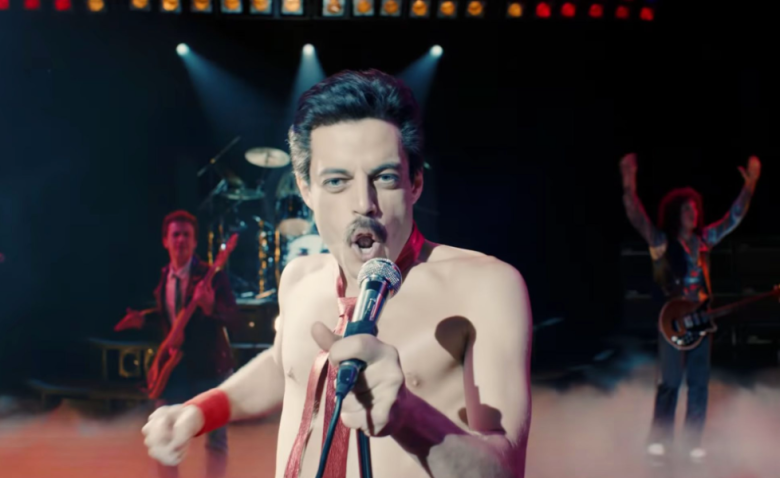
In Bohemian Rhapsody, Rami Malek captures the essence of Freddie Mercury to a tee.

The musical biopic Bohemian Rhapsody came out in movie theatres this year. We’ve seen music biographies before. The big question is does this film simply chronicle Freddy Mercury’s life? Or does it do much more?

The film begins just as Queen is about to step to the stage to perform in the 1985 Live Aid Concert. The film then flashes back to 1970 when Smile is an English band consisting of Brian May, Roger Taylor and singer Tim Staffell. Faroukh ‘Freddie’ Bulsara is a Farsi immigrant who studies and also works as a baggage handler at Heathrow airport. Freddie faces a lot of discrimination for the color of his skin and mockery because of his hyperdontia which makes him look like he has a mega-overbite. However Freddie does lose himself in rock and roll.

One night, Staffell quits Smile in disappointment. Freddie was there attending the show. When he sees what happened, he asks to join the band. The band gets a rocky start as they play at small college gigs, but it looks promising and Freddie fully believes in them all. The rock singer gig does not go well with his family who feels he should earn his living more ‘honestly.’ Freddie also wins the attraction of college student Mary Austin during a clothes shopping trip. They start dating and romancing.

Over time, Queen gets bigger and they soon have to record an EP. It will cost a lot of money and Freddie agrees to sell the van for money. The EP is a success and it attracts major music producers including one from EMI Records interested in the band. The band changes their name to Queen and Freddie even legally changes his name to Freddie Mercury. The band is acquired by John Reid, Elton John’s manager, and assistant manager Paul Prenter. They bring the band to a gig on BBC’s Top Of The Pops where the band lip syncs Killer Queen. As success grows, including success in the US, Mary and Freddie get engaged. However soon after Freddie learns of his bisexuality.

The band try to record their album A Night At The Opera and the song Bohemian Rhapsody, but the song is too long and hard to perform. On top of that, producer Ray Foster is antagonistic on the band for both the song and the music for the whole album. After Foster refuses it as a single, Freddie gets a local DJ to play Bohemian Rhapsody. The song opens to a lot of negative reviews, but also scores big on the charts worldwide. However Freddie starts an affair with Prenter and has to call off the engagement with Mary. Mary is devastated, but agrees to remain friends.

In the film, the band has continued success in the early 1980’s with We Will Rock You. However the band experience tension both by Freddie’s lavish partying lifestyle and the increasing controlling ways of Prenter. Freddie even cheats on Paul with a waiter, but the waiter tells Freddie to find him after he finds himself. The friction between Freddie and the band grows to the point Freddie leaves the band to record a solo album upon the direction of Prenter. However it becomes obvious how much Prenter wants a piece of the action and Freddie both breaks up with him and fires him.

Soon Freddie learns he has HIV right when the devastating AIDS epidemic was at its most troubling times. He returns to the band confessing it was wrong for them to leave. They’re offered an appearance at the 1985 Live Aid Concert which will be broadcast worldwide to raise money for food supplies during the famine in Africa. This will be the band’s comeback concert, but it will take a lot of effort to bring the band back to their level of performance.

Just before the concert, Freddie confronts his parents to make peace with them. Freddie is also supported backstage by a pregnant Mary along with her husband David. Bob Geldof is hoping for a lot of call-in donations through this concert. Then Queen get on stage and it’s like they never missed a step. The crowd is blown away, television crowds are dazzled, and the donations accelerate like nobody’s business. Queen was back and alive!

There have been musical biographies in films done many times before. In order to make a winning story about a musician, the film will definitely have to include the music. That’s what made the musician great. The film will also have to include key events of the person’s life: the artistic moments, the triumphant moments and the struggles, even any tragedies. It’s all a matter of deciding the right moments for the right beginning, middle and end of the film.

The film does a smart move in making the Live Aid Concert the pivotal moment for Freddie Mercury both as the scene where the movie starts before flashing back in time and ultimately ending. The film also does a good job in picking out moments such as when Freddie joins the band Smile, changes it to Queen, first hits it big with Killer Queen releases their iconic Bohemian Rhapsody, faces friction as well as declining fame in the early 80’s, Freddie’s HIV diagnosis, and their return to winning the public at Live Aid.

However the film also risks disappointing a lot of Queen fans because of how inaccurate the story is. Despite Jim ‘Miami’ Beach being the film’s co-producer and May and Taylor being music consultants, The five biggest inaccuracies Queen fans are most likely to notice are, firstly, Freddie was actually introduced to Brian May and Roger Taylor of Smile by singer Tim Staffell when Staffell wanted to pursue further studies. Secondly, We Will Rock You was written and recorded in the late-70’s rather than the early-80’s. Thirdly, John Deacon was actually Queen’s fourth bassist rather than the original bassist. Fourthly, Queen never split up nor did they get back together at Live Aid. Freddie may have had solo work — the most famous being Barcelona: the duet with Montserrat Caballet — but Roger Taylor also had a solo album too. Fifthly, Freddie learned he was HIV-positive in 1987: after Live Aid. Those that know the true Queen story will know that a lot of these moments in the film were mostly common music-movie cliches rather than the truth about Queen.

Despite failing a lot of Queen fans with some of the inaccuracies and cliches, the film does succeed in a lot of ways and even presents some truths even Queen fans knew. Freddie did credit his extra teeth for his singing, he adored his cats, he held outlandish parties, the song Bohemian Rhapsody was considered too long and too ridiculous at first, Freddie did keep his ordeal with HIV and AIDS private as he did not want to be an object of pity, and finally his friendship with Mary Austin lasted until his death and she did live next door to him even while married to David. The film does stick to the truth in a lot of areas, including that of how Paul Prenter was a controlling person in Freddie’s life. However another added quality is that the film does an excellent job of capturing the essence and feel of Queen’s music. Those that haven’t heard much of Queen’s music will experience songs they never heard before. Those that are fans of the band will fall in love with the songs again. Also those that want to be rock musicians themselves will be inspired to pursue their dreams after watching the film. You not only hear the music, but you can also get the feel of a rock performer too.

The film has already grossed $844.4 million worldwide at press-time with $210.6 million coming from North America. However the film has also faced a ton of heat during the awards season. The cause for all of this was for director Bryan Singer. As you know, Singer has faced criminal charges of being a sex offender. How it happened that Dexter Fletcher stepped into directing the remainder of the film upon the departure of Bryan Singer is that Singer was fired after having violent clashes with Rami Malek. Singer, and not Fletcher, was credited as the film’s director. The awards season has seen the film win many accolades which many have voiced their displeasure about. Possibly due to hostility during the #MeToo movement, many are speaking their mind as if they’re saying a win for Bohemian Rhapsody is a win for a sex offender.  I personally feel that Fletcher should have been credited as director. However despite the fact that Singer was fired, people are still unhappy. Makes you wonder what will satisfy them all? Denying the film a release and trashing it altogether? This is a reflection on how toxic and bullying the free speech of social media can be.

Anthony McCarten in cooperation with Peter Morgan may have written a story that was more cliched than truth, but it did capture a lot of the essence of Queen and a lot of the essence of Freddie Mercury. As for the ending, I can understand why they went for the heavy drama by ending with the Live Aid Concert. I’d rather they went with the moment Freddie records The Show Must Go On. Those who know the story behind that will recognize it as one of the biggest triumphs of Mercury’s career and a testament of his mental toughness.

The film also captured the essence of Brian, John and Roger well too. Co-director Dexter Fletcher did a very good job of picking up where Singer left off and creates an exciting experience for the audience. However the biggest triumph is the performance of Rami Malek. Until Bohemian Rhapsody, he was facing the common difficulty of actors of Middle Eastern descent with limited opportunities. It almost seemed like the biggest thing he would ever be known for is playing the Pharaoh in the Night At The Museum movies. This also was not an easy task because Malek was not originally a fan of Queen. However that all changed when he was given the role. Malek was excellent in his performance and will blow away anyone who sees this film.

The actors portraying Brian, Roger and John — Gwilym Lee, Ben hardy and Joseph Mazzello, respectively — also added to the film. Lucy Boynton was also excellent as the friend Mary Austin. Even minor performances like Tom Hollander as Jim Beach, Mike Myers as Ray Foster, and Allen Leech as Paul Prenter did very well with the roles they were given. Julian Day did a very good job with the costuming, Aaron Haye did an excellent job with the set design, and the producers did a very good job in choosing the right songs for the film.

Bohemian Rhapsody has some noticeable errors in the film. However the film succeeds in capturing the spirit of Freddie Mercury, capturing the music of Queen and capturing the experience of a rock star. No wonder it dazzles those that see it.

VIFF 2018 Review: United Skates

United Skates
United Skates is a unique documentary that shows how vital roller skating is for those that do it, and why roller rink closures hurt.

It’s usually good to take a break and watch a documentary that doesn’t have a political agenda heavily shown. I was able to see that in United Skates.

The film begins by showing various African-Americans going out and having a good time on skates. Very soon we see some of the more sensational moves that are frequently seen at the rinks. They’re stylish or they’re acrobatic. Whatever it is, they’re all out to have a good time. Young or old, single or with family, they’re all out to have fun. This is a phenomenon that has been going on for decades nationwide. A place where various African-American skaters have their own moves and their own fanfare.

Soon into the movie we learn how roller rinks are considered a top getaway for African Americans. Roller rinks may have had their biggest heyday in the late-70’s and early-80’s for most Americans, but African-Americans kept it lasting long after that. It was a getaway from the harsh realities of daily life. It was one place they could take their kids away from the harsh realities of urban living. It was also a place where the first hip-hop and rap artists found a stage to perform on. Yes, roller rinks were an integral part of the early years of hip-hop culture. When night clubs and radio stations, even the soul and urban stations, wouldn’t give those artists their time, roller rinks gave them their stage. Coolio and Salt ‘N Pepa can vouch for that. There are even scenes in Straight Outta Compton that show NWA perform at roller rinks during their early days. In fact there was even a case in the 90’s where two roller rinks in Los Angeles would be the different domains of two rival gangs: the Bloods and the Crips. When one rink closed, the other rink became neutral territory for the two.

The documentary shows how roller rinks have gone from commonplace nationwide starting in 1982 to disappearing gradually starting in the 90’s to today being probably one tenth of what it was. Modern times have proved to be a very trying time for roller rinks. Gentrification has been a pressure with turning a lot of top recreational areas into land for condos. Roller rinks, commonly seen as something of the past, have fallen prey and have seen closures. If an African-American family wanted to take their family to a roller rink, they would have to travel a longer distance.

We even meet a family from Los Angeles before the closure of the World On Wheels rink. The mother has a huge love for roller skating as she has been doing it since her child hood. She was able to share that same love with her children. When they go to World On Wheels, it is family time. It is time for the kids to show their decorated skates, time for all to show off their moves, and a time for the son who has behavioral disorders a place to avoid getting in trouble. Then World On Wheels closes in 2013. They show closing day. The rink tries to make a party of it. Young and old come to have fun one last time. We see people in their late-50’s early-60’s — people that were a part of the ‘roller boogie’ heyday– skate around with the same love. The closing day is as much a day of heartbreak as it is of fun.

Then the rink closes. We see how the owner tries to take everything out of the rink from the lockers to the concessions. We also see how the family tries to cope. They drive hours to a different rink, but face heat because the wheels their skating with are too small.World On Wheels welcomed their skating wheels with open arms. Also the rink has an urban night or soul night. African-Americans undergo security checks. There’s no security checks for white families. It’s obvious the family doesn’t feel welcome here. It gives a sense that these rinks are out to exclude African-Americans. The pressure hits the family hard too as the son committed a crime and has to spend time in prison. The film shows other rink closures too and how much it hurts those that love it.

However like one former rink owner says, patience is the true test for anyone. Over time, there would be skate clubs abounding over social media where people can go out an skate, whether it be in parks or outdoor rinks. Also World On Wheels reopens after popular demand. The re-opening is welcomed with open arms. And the family that was the centrepoint of the story can now skate as a family wearing whatever wheels they want to. We also see the son, just out of prison, having fun again.

It’s obvious the film has a point. The film obviously is showing how roller rinks are important for the vitality of African-American families. It was roller skating where there were a lot of segregation protests. Even roller rinks in the 60’s were a focal point as African-Americans simply wanted to skate on the same rinks as whites. They didn’t want to be confined to blacks-only church halls. It also shows how important roller rinks were towards hip-hop musicians. However the documentarians Tina Brown and Dyana Winkler allow the people to tell their stories. There’s no narration here. Some graphics that tell a lot but it’s the people from the owners to the families to the hip-hop musicians who tell their story about roller rinks and why they don’t just simply love it, but consider it a key part of themselves. You can bet the audience will feel the energy. There were many times people were cheering on the moves and they gave the film a big applause at the end.

United Skates has a point to say, but it doesn’t just simply say it. It shows it. It also makes you open your eyes and notice that roller rinks aren’t simply a relic from the ‘roller boogie’ phenom. They’re now and they vital.

NOTE: The website of United Skates has a page where you can donate to keep roller rinks open. Their goal isn’t just to show how important they are, but also to get the viewers to help keep them open. If you want to donate, go to: https://www.unitedskatesfilm.com/donate

Animated Movies Review

2016 was a stellar year for animated movies from Zootopia to Moana to Kubo And The Two Strings to Finding Dory. 2016’s line-up gave people lots of reason to come to the movie theatres. 2017 was very lackluster in comparison. We’re talking about a year when The Boss Baby was nominated for Best Animated Feature and even the mere existence of The Emoji Movie. 2017 almost made it look like if Sausage Party were released that year instead, it would be a Best Animated Feature nominee! However the best animated movies of 2017 slowly made its way on the screen in the latter months of 2017. I was lucky to see Ferdinand, Coco and Loving Vincent: three of the best of the year.

Ferdinand

Ferdinand

When I was about to see Ferdinand, I wondered how they would able to take the small story and turn it into a feature-length picture. I myself remember an animated short made by the Walt Disney studios made decades ago that was very humorous. However I wondered how would a feature-length adaptation play out?

The story starts out well with an entertaining look, but a bit of sadness at the beginning. As it progresses to adult Ferdinand, Ferdinand is funny and charming as a husky but flower-loving bull. John Cena adds to the characterization of full-grown Ferdinand. The characters of Lupe, Una and the other bulls add to the story.

There were times I wondered how will they get to where Ferdinand is scouted out by his accidental outburst? How will it be written out? Although it’s not true to the fable, the writers were able to create a way for Ferdinand to be discovered and sent to the bull rings to fight.

Another case that had me wondering was right in the middle of the story. It had me wondering how on earth the story would have a happy ending? Of course the film needed to have a kid-friendly happy ending, but in a situation where the bull either becomes a fighting bull who dies in the ring or to the slaughterhouse as meat? Nevertheless the writers were able to make the story work with good events to the plot and not just simply drag it out over the time. Even creating an ending where Ferdinand wins over the crowd and getting them to want him to live works for the film.

For the most part, Ferdinand is not all about the type of intricate story you’d expect to find in a Disney/Pixar film. Instead Ferdinand is about creating a charming modern adaptation of the short fable with charming and entertaining characters. It succeeds in charming the audience as well as entertaining the children. Despite the story being elongated into a feature-length picture, the film does not waste time. It succeeds in being entertaining. It also adds in some other elements that gets one nervous of what will happen to Ferdinand, even if they know the story. The story works in its feature-length and will not disappoint fans of the fable. It’s also good at winning crowds too as it made a good $282 million at the worldwide box office.

coco

Coco

Very often you know the Disney/Pixar collaboration will deliver something fresh and original in its arsenal that’s able to win us over. This year, they deliver Coco. Coco is unique because it’s of a Mexican family situated in Mexico. The question is will they make something original and unique entertaining to the public?

The team of writers and animators at Disney/Pixar are known for their innovations and their frequently-successful way of trying new concepts. First there was 1995’s Toy Story: the first-ever 3D animated feature. Then came A Bug’s Life which created an engaging story revolving around insects. Then Finding Nemo not only told a story about fish, but successfully took us to another world. The Incredibles was good at teaching morals in an entertaining way. Ratatouille made an entertaining story involving a rat. Wall-E magically gave us an engaging story about two robots in love with very little dialogue. It was Brave where they not only gave us their first female protagonist, but welcomed a female writer on their ‘dream team.’ And there was Inside Out which made character out of emotions.

Coco is not just a new movie from the Disney/Pixar collaboration, but a new chapter for them. They hired Mexican/American writer Adrian Molina as the scriptwriter along with Matthew Aldrich. Molina had already been part of Pixar as a 2D animator for Ratatouille, a storyboard artists for Toy Story 3 and Monsters University, and even wrote the script for Walt Disney Studios’ The Good Dinosaur. The voice cast is predominantly of Mexicans or Mexican Americans. Disney/Pixar even hired a ‘cultural consultant’ group of three Mexican-Americans including one former CEO of the Mexican Heritage Corp to make sure they were doing a film respectful of Mexican people.

The result is a film that has garnered praise even from both critics and even Mexican-American communities. The film even received excellent reviews from Latin American film critics. The film was also a top box office winner having grossed $730 million so far. Even in Mexico, it spent three weeks at #1 in the Mexican box office and grossed a total of $57.8 million in Mexico.

Now the film itself does what Disney/Pixar films have a reputation for: taking the audience to a new world. Here they give an excellent depiction of the Land Of The Dead that looks very intricate and maybe too big, but succeeds in making sense to the viewer. Once again the animation team does an excellent job in creating this new world and even the smallest detail is done with perfection. Once again Disney/Pixar is tops in animation quality.

However there was one time I was confused by the story. I’ll admit like most, I thought Ernesto was the great-great-grandfather. I was shocked when I learned that Ernesto killed Hector with poison. It left me wondering if Miguel’s great-great-grandfather was in fact a dirty killer. Even seeing Ernesto send Miguel to die in the cenote pit left me shocked. ‘Why would Ernesto do this to his own great-great-grandson?’ It’s in the pit with Hector that we learn that Hector is really the great-great-grandfather. That was a relief. It was there where it became better sense why Miguel needed to redeem the name of the family through the spirit of Hector. The story was very well-written and very entertaining. Also the song ‘Remember Me’ is an excellent song for the movie that makes for the perfect tearjerker moment you don’t feel manipulated by.

One again Disney/Pixar delivers a masterpiece in Coco. It is as top-quality as it is magical to watch.

kinopoisk.ru

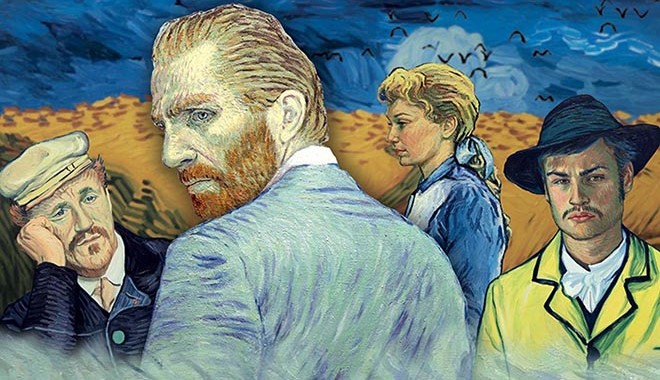
Loving Vincent

Now the previous two films in which I just talked about are both the more family-friendly films. Loving Vincent is the polar opposite of both. It’s not cute, it’s less family-friendly, and it’s not even 3D computerized animation. It also didn’t even make $10 million at the box office. Nevertheless it is charming in its own ways.

The film is a plot where Armand Roulin is asked by his father Joseph to deliver a letter from Vincent Van Gogh who died a year earlier to his brother Theo. After learning Theo died, Armand looks to find the right person to give the letter to. Throughout the journey, Armand tries to get the answer to whether Vincent’s death was a suicide or not? He was released from a hospital after found to be in good mental capacity six weeks before.

Armand comes across many people in Vincent’s life. Some have positive things to say. Some negative things. All have something to say about the person of Vincent, the various people he met with or fought against, and his personal feelings before his death. This still leaves Armand confused and his question of Vincent’s death unanswered. It’s right after Dr. Gachet promises to give the letter to Theo’s widow that he learns van Gogh’s suicide wasn’t of mental agony, but to free himself and his brother. Later Armand receives a letter from Theo’s widow thanking him.

This animated film about Vincent Van Gogh couldn’t be a simple animated film. Instead this is a film in which the images were done by 100 painters trained to paint like Van Gogh. The object of the film was to create a story involving characters of people Van Gogh painted and was close to in his life across a backdrop that’s just like the paintings he painted. Basically an animated story about Van Gogh that captures the essence of Van Gogh’s art. The story may be fictional, but it succeeds in playing out like a Van Gogh painting. It even gets one that knows very little about Van Gogh’s works or his life intrigued. It even gets fans of Van Gogh’s art admiring the film for capturing the essence of the artist and his works. I also like how the film ended as “Vincent (Starry Starry Night)” was playing. It would make those who never understood what the song was all about understand it better.

So there’s my look at three of the best animated films of 2017. All three are nominated for an Oscar for Best Animated Feature. All three are enjoyable in their own way.

Oscars 2017 Best Picture Review: Three Billboards Outside Ebbing, Missouri

Three Billboards
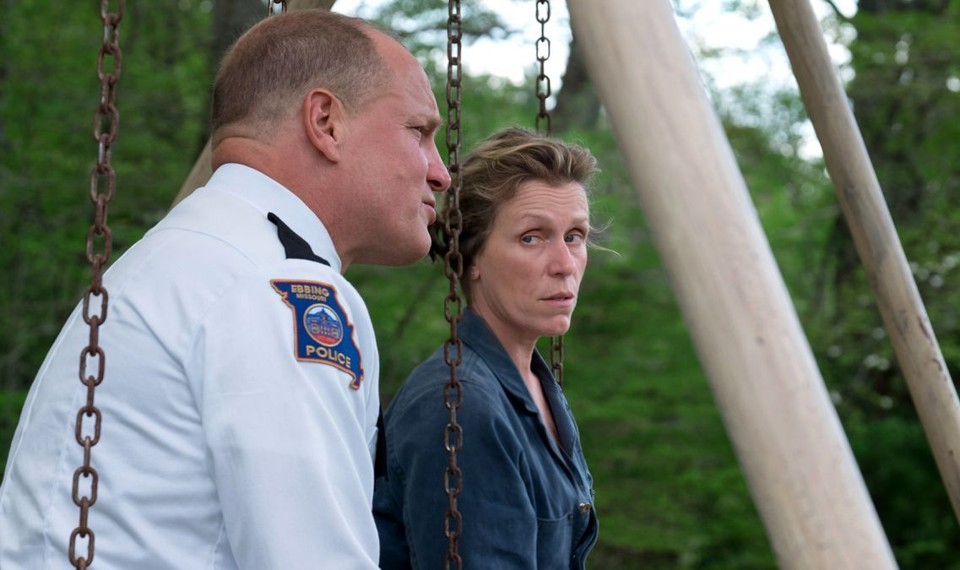
Frances McDormand faces off against Woody Harrelson in Three Billboards Outside Ebbing, Missouri

Three Billboards Outside Ebbing, Missouri is a film that has got a lot of people talking since its release. Talk is of its unique story line, but also of its themes.

The film begins seven months after a teenager from Ebbing, Missouri named Angela Hayes was brutally raped and murdered. The case remains unsolved. Mother Mildred Hayes goes to the office of businessman Red Welby to rent three billboards outside her home and unused for 30 years to post a message directed to the police of Ebbing, especially officer Willoughby, advertising what she sees of a lack of action. She isn’t even afraid to be interviewed by the media where she doesn’t hesitate to mention the negative treatment of African Americans by the police.

This hits the police hard. Chief Willoughby is angry about this, but sympathetic to her situation as DNA tests failed to result in a lead. Officer Jason Dixon is a lot more hostile as he goes about angrily arguing with Mildred, threatening Red, and even arresting Mildred’s African American co-worker from her shop on suspicious marijuana charges. Dixon is the cop in ebbing who has been acting the most hostile to African Americans.

Outside the police, the hype surrounding the billboards creates a lot of heated discussion throughout the town. Many throughout the town find it insensitive as Willoughby is battling terminal pancreas cancer. Robbie is upset about it, especially since it made him a victim of harassment at school. Her ex-husband Charlie, who’s currently dating a 19 year-old named Penelope, even visits and violently blames her for Angela’s death.

Nevertheless Mildred stays firm, even despite knowing she can expect violence any minute. Mildred even receives a surprise when she learned an anonymous person gave her money to keep the signs active for another month. Her dentist makes mention that he heard the story, but she impulsively reacts by using his dental drill on his fingernail. Chief Willoughby brings her into questioning after the incident, but accidentally coughs up blood on her. It’s obvious his cancer is getting worse and he will die very soon. Willoughby is to be in the hospital for a set period of time, but leaves early despite doctor’s demands. Willoughby sets out to the lake to have an idyllic day with his wife Anne and two daughters. The next day, he commits suicide, leaving behind suicide notes for Anne, Mildred and Jason.

The police react with hurt over Willoughby’s death. A male customer in Mildred’s store reacts angrily over his death and even threatens her. Jason reacts to his death by assaulting Red in his office and even throwing him out of the window. This is all witnessed by Ebbing’s new chief of police, who happens to be black. On his first day, the new Chief fires Dixon. Dixon however does not return his badge, claiming it’s missing. Right after Anne reads her suicide note, she angrily hands Mildred her note. Willoughby tells her she’s not responsible for his death and he’s the one who paid for the extra month, admiring her stunt and wishing her justice in the future. Shortly after, the billboards are set ablaze.

Jason learns he has a note from Willoughby waiting at the police office. He goes during a night during the closed hours. Willoughby writes he thinks Dixon would make a great detective as long as he learns to slow down, think and not react so hostile. Mildred reacts to the sign burning by burning the police office, believing it to be closed and no one there. Right in the blaze, Dixon comes falling out of the building in from of Mildred with the suicide note and the Angela Hayes case in his hands. Dixon is hospitalized for his burns in the same room as Red, recovering from Dixon’s assault. Dixon apologizes.

After Dixon is released, he goes into a bar. He comes across the male customer who threatened Mildred. What catches his ear is that he brags about an incident similar to the Angela Hayes murder. Dixon gets into a brawl with him, but only to use the brawl as opportunity to gather DNA evidence for the Angela Hayes case, as well as his Idaho license place number. He even phones Mildred to inform her. However the DNA results prove unsuccessful and that the man was an armed forces officer overseas at the time. To which, Dixon returns his badge.

After an unsuccessful date with James, who witnessed Mildred torch the police officer and cover her up, Mildred sees Charlie on a date with Penelope and even learned he was the one who burned the signs. Mildred gives him a bottle of champagne and tells him to treat her well. The film ends in a way one doesn’t expect and even leaves one questioning.

The thing about this film is that the audience will expect the film to be about something and for it to end in a certain way, but it doesn’t. Most of you probably expect this film to be like a crime story where those billboards succeed in bringing Angela Hayes’ killer to justice, but it ends in a completely different way. The film may be about the themes you think it’s about, but its main theme appears to be something else. Yes, there’s the theme of racism in there. We see that even in the name of racist officer Jason Dixon; possibly a reference to the Mason/Dixon line under which Missouri was a ‘slave state.’ Sure, there’s the theme of police brutality and how they sometimes act before they think, especially in Ebbing as we witness. However the film is a lot more. The film has themes about stories and truths. There are the stories we hear, the ‘truths’ we assume, and what is the real story. We see that in the town of Ebbing, Missouri, we see it in the individual residents, we see it in people’s family members, we see it in their police force, and we see that in the media team filming story after story.

I feel the biggest theme of the film had to be about two people who were polar opposites that somehow found themselves coming together at the end as they’re both fighting their personal demons: demons they both had in common and their own personal demons.

The first demon is their impulsiveness. Mildred Hayes is a mother angry because of what she sees as justice denied. She wants her daughter’s murder solved and hopes those three billboards will be the trick to do it. She appears ignorant towards how her son Robbie feels about the issue and is ignorant over his hurt and depression. Mildred is a woman fast on the draw with what she says and fast on the draw for the way she reacts. We learn how impulsive a person she is when she impulsively attacks her dentist just by simply mentioning he learned of the story. He didn’t voice support for it or show anger for it. He just mentioned it and that’s all it took for her to drill that hole in his fingernail. We also see her impulsiveness as the billboards are set ablaze right after Chief Willoughby’s death and she rushes out to put out the flames. The sign company would later fix the signs as it was part of her policy. Jason Dixon’s impulsiveness and acting before he thinks is also a problem. He feels that using brute force or use arrests to look menacing would get justice done. His violence even becomes a case of revenge on Red Welby. He doesn’t hesitate to use his racism when carrying out his police ‘efforts.’ This all makes the police unit of Ebbing look bad.

Both also had their own separate demons. Jason had his racism problem. It’s evident as he lives with his mother who also has a racist attitude. It’s obvious where he learned to be bigoted. Mildred also had her problem with her family life. She had just gone through a divorce with her abusive husband and is trying to live life again despite everything. Her ex-husband has not lost his abusive ways despite the divorce and even while he’s dating a woman half his age. There’s even the memory of the last words she said to her daughter. Words of anger: “I hope you get raped!” And it happened as she was murdered. Maybe it’s her own personal blame.

The most bizarre thing is that Chief Willoughby eventually ends up being the mediator between the two and hit was his suicide that would lead the two onto their meeting and their eventual road to healing. However it was not without its friction immediately after. First came the hate from the male customer to Mildred , then Jason assaulting Red Welby  witnessed by the new Chief of Police, then Jason’s firing and finally the billboards being torched. It was through the suicide notes to Mildred and Jason that we all learn what really happened despite what everyone else thought. It’s that scene when Jason comes out of the burning police building in from of Mildred holding the Angela Hayes file for protection that it was a turning point for the behavior of both.  The film does a very good job of placement of both the main characters and the events. That scene where Jason is in the hospital recovering from his burns in the same room as Red especially serves as a scene of the main characters knowing they need to change.

One of the top qualities of a film is delivering an ending of a film that the audience doesn’t expect or anticipate, but turns out to be right. We all thought that Mildred’s hopeless date with James would end up in a brawl with Charlie just after Mildred buys the bottle of champagne. Admit it! We all thought she’d smash it across his head! Instead she gives it to him and tells him to treat Penelope well. A sign of her personal changes. Most of us all thought that Jason’s evidence he collected from the brawl with that customer would lead to Angela Hayes’ killer being identified, but it doesn’t. It shows how Jason has become a person who now thinks before he acts, but not the result we hoped for. Even that common plotline in police movies where a cop saves the day after losing his job gets defeated there too.

SPOILER ALERT – Do Not Read This Paragraph If You Don’t Want To Know The Ending: That end-scene where we see Mildred and Jason in the same car on their vigilante mission against that man will surprise a lot of people and even ask “That’s it?” I even thought that too. However it does seem appropriate as it’s a case of two impulsive people who were two polar opposites and even at each other’s throats find themselves together as allies. It even makes one wonder if the ‘abrupt’ ending was the right decision. However I constantly remind myself of what Sean Penn said many years ago: “Movies should leave people asking questions rather than give the answers.” Maybe that’s the quality of the ending; get the audience to decide for themselves what happens next.

This film is the best work of writer/director Martin McDonagh. Dark comedies appear to be McDonagh’s expertise as he has delivered before with In Bruges and Seven Psychopaths. Here, McDonagh delivers something I thought would be impossible. I was surprised to learn this is a drama-comedy of a mother trying to get justice for the rape-murder of her daughter. I find nothing funny at all about rape and murder, or even the hurt family members go through. However McDonagh achieved it through clever plotting of the story and the events as well as placing of the humorous dialogue without compromising the drama behind it. He delivers a story that’s very thematic and gets people thinking.

The acting performances definitely boosted the film’s excellence. Frances McDormand’s performance as the protagonist was an excellent mix of both drama and humor. For those who saw her in Fargo, you’ll know she knows how to make that work. That’s where she won her Best Actress Oscar. Her ability in handling a character that’s both dramatic and humorous again shines here and could win her another Oscar. Also Oscar-worthy is Sam Rockwell who plays what first appears to be a stock character of a redneck cop, but later shows his dimension after the later chain of events. Also a standout is Woody Harrelson. He delivers an excellent performance as the cop under fire who handles the billboard situation cooler than Dixon and even uses his suicide as the event to start the resolve. His character even makes the words in his suicide notes sound like poetry. There were also minor supporting performances that stood out and owned the film like Lucas Hedges as the son hurting inside, Caleb Landry Jones as the well-meaning businessman, Peter Dinklage as the man trying to win Mildred despite his hopeless chances, Abbie Cornish as the wife of the chief, and John Hawkes as the abusive ex-husband trying to change.

The film also features a lot of standout technical aspects too. There’s the cinematography from Ben Davis that add to the power of the story. There’s the editing from Jon Gregory that places the chain of events and plotlines together in a creative way. There’s also the addition of music from the mix of classic songs from the 60’s and 70’s to the blending of Carter Burwell’s score in between scenes

Three Billboards Outside Ebbing, Missouri is a film whose best qualities are delivering a story different from what you thought it would end up being. You will appreciate it for being just that.

PyeongChang 2018: Seven Canadians To Watch

Canada Olympic

Two days ago, I did a blog focusing on the foreign athletes to watch for at the PyeongChang Winter Olympics. Now it’s time for me to focus on the Canadians to watch out for. We may not have the superteam we had back at the Vancouver 2010 Games, but we’re still a winter sports superpower and feature some top contenders throughout the sports. Sports Illustrated predicts Canadian athletes to win a total of 30 medals including nine gold. That’s third only to Norway and Germany. Without further ado, here are some Canadians to look out for:

Mark McMorris – Snowboarding: Now Saskatchewan doesn’t come to mind to most in terms of producing top-notch skiers. However the hills and mountains are high enough to breed some good snowboarders. Mark McMorris is one of the best ever. He already has 16 X-Games medals, including seven gold, won in both the Slopestyle and Big Air events. He’s also famous for being the first ever to perform a ‘cork 1440’ in slopestyle. His feats and charming personality have made him a huge celebrity for fans of snowboarding and extreme sports.

Major titles have eluded him in the past. His best result at a World Championships is a silver in 2013. As for the Sochi Olympics, McMorris had broken a rib two weeks before. His bronze in Slopestyle is actually seen by him as a miracle. Here in PyeongChang, he wants to win gold. He has two chances: in Big Air and Slopestyle. In both events, he will face rivalry from Norway’s Marcus Kleveland, who is the first ever to do a ‘cork 1800.’ In Slopestyle, he will be challenged most by the US’ Red Gerard and Japan’s Hiroaki Kunitake. In Big Air, he will face rivalry from American Chris Corning and his Canadian teammate Maxence Parrot. The hills in Korea will determine his fate.

Kaillie Humphries – Bobsledding: Women’s bobsledding has only been contested four times in the past, but Canadians Kaillie Humphries and Heather Moyse are already the only female double-gold medalists. However Kaillie appears poised to achieve a feat none of the male bobsledders have ever achieved: winning the same event three times.

It’s not to say it hasn’t been without its difficulties. After Sochi, she traded partners with Melissa Lothholz. She has won two World Championship silvers since. Here in PyeongChang, she will have former hurdler Phylicia George as her partner. As her former partners of Heather Moyse and Melissa Lothholz, they will both compete in PyeongChang with different drivers. Humphries’ attempt to return to the top will be challenged by the German sled driven by Stephanie Schneider and the American sled driven by Elana Meyers, which actually won at last year’s Worlds. PyeongChang could be the final chapter for Kaillie’s legacy in the sport.

Pyeongchang medalsAlex Harvey – Cross Country Skiing: Cross country skiing is in Alex Harvey’s blood. His father Pierre competed in cross country skiing in 1984 and 1988 and gave Canada its best ever results at the time, and they weren’t even Top 10 finishes! That just shows how much progress Canadians have made in nordic skiing. In fact Alex himself delivered two Top 10 finishes at the Vancouver Games, including a fourth in the Sprint.
Harvey has won a medal at every World Nordic Championships ever since the Vancouver Olympics including two golds: the most recent being in the 50km last year. He’s hoping to win the Olympic medals that have eluded him throughout his career. However he has only made the podium in three World Cup events this season. His biggest challenges come from Switzerland’s Dario Cologna and two Norwegians: Martin Johnsrud Sundby and rising 21 year-old Johannes Høsflot Klæbo. PyeongChang could finally give him the break he’s always been pursuing.

Mikaël Kingsbury – Freestyle Skiing: Canada has won three of the seven golds in men’s moguls skiing. There’s Jean-Luc Brassard in 1994 and Alexandre Bilodeau in 2010 and 2014. Mikaël Kingsbury is seeing to make it four for eight. Kingsbury has developed a top reputation in the event. He first finished third in the 2010-2011 World Cup season but has come out on top every World Cup season since including this year.

Major events have been his weakness. He’s been on the podium for moguls at every World Championship since 2011 but has only won gold once: in 2013. Also it was in Sochi in which he, not Bilodeau, was the Canadian most expected to win gold, but won silver instead. He will be challenged here in PyeongChang by Japan’s Ikuma Horishima, who handed him is only World Cup defeat this year, and Kazakhstan’s Dmitriy Reikherd. This could be Kingsbury’s year.

Tessa Virtue and Scott Moir – Figure Skating: Ah yes. Figure skating. Ever since 1984, Canada has bagged at least one figure skating medal in every Olympic Games since. Many expect 2018 to be Canada’s strongest team ever. Leading the pack is star ice dancing pair Tessa Virtue and Scott Moir. The pair have been inseparable on the ice since 1997 when Tessa was eight and Scott was ten. Their skating magic has resulted in Olympic gold and silver as well as seven World Championship medals, including three gold.

After they won silver at the Sochi Games of 2014 behind their American training partners Meryl Davis and Charlie White, it appeared they won everything they needed to and retired after Sochi. However they returned to amateur competition starting in 2016 and acquired former Canadian ice dance pair Marie-France Dubreuil and Patrice Lauzon as their coaches. The plan worked to success as they returned to the top of their sport. Of course they want to end their careers with a final gold medal, but they will face challenges from all three American pairs, most notably Maia and Alex Shibutani, and the French pair of Gabrielle Papadakis and Guillaume Cizeron. This is their chance to end their Olympic careers as they started.

The Canadian Hockey Teams: The news broke months ago. The NHL won’t allow any of their players to play at the Olympics. This is not permanent for the Olympic Games, but it is a drag for many who enjoyed. Heck, opening the Olympics to NHL pros allowed Canada to win gold in three of the five occasions. It does not however mean Canada doesn’t have a chance for the gold. Canada’s men’s team consists of pros, but mostly from the American Hockey League, the predominantly Russian Kontinental Hockey League, the Swedish Hockey League and Switzerland’s National League. Canada’s team is predicted by Sports Illustrated to win bronze with Sweden to win and Russia to take silver. Chances are the Canadians could surprise.

As for the women, Team Canada has always made it to the gold-medal final of every Olympic tournament since women’s hockey made its Olympic debut back at the Nagano Games of 1998. The inaugural competition is their only loss of the gold. The team in PyeongChang is coached by Lauren Schuler from that team in Nagano consists of thirteen from Sochi 2014 and ten newcomers. All but one play for Canadian teams. However Team Canada has finished second to the US at ever Worlds since the Sochi Games and the Americans promise to be the Canadians’ toughest rival. They’re coached by Cammi Granato who was part of the US’ gold-medal winning team in 1998: the US’ only victory in women’s hockey. Can Team Canada make it five in a row? Only time will tell.

Canada’s Curling Teams: If hockey is our national past-time, curling would rank second. Many people wonder how? It’s a gift from Scottish immigrants to us. Canada has a habit of blending things from the ‘old country’ into our national fabric. Our love for curling has paid off on the Olympic level. Ever since curling was officially added to the Olympic program at the Nagano Games in 1998, all ten Canadian teams have won medals and have even won gold five of the ten times. Sochi was especially a treat as it was the first Olympics where both the men’s and women’s team won gold.

As for the lineup in PyeongChang, the men’s team is headed by Kevin Koe who headed the Canadian team that won at the 2016 Worlds and the women’s team is headed by Rachel Homan whose team won the World Championships last year. New for Pyeongchang is mixed doubles curling. Canada’s team is headed by Winnipeggers Kaitlyn Lawes and John Morris. Both have gold medals from past teams: Kaitlyn in 2014 and John in 2010. However they’re not the favorites as Swiss pair of Jenny Perret and Martin Rios beat the Canadian pair 6-5 to win. As of yet, Canada has never won gold at the Mixed Doubles Worlds. Could this be their year to finally shine?

And there you have it. Seven Canadians to watch out for in PyeongChang. There’s many more to talk about but I’ll let the action at the Olympics do more telling. It all starts Friday the 9th at 3am PST. Can I wake up that early to see the opening ceremonies live? We’ll see.

DVD Review: Sing Street

sing-street-banner-3
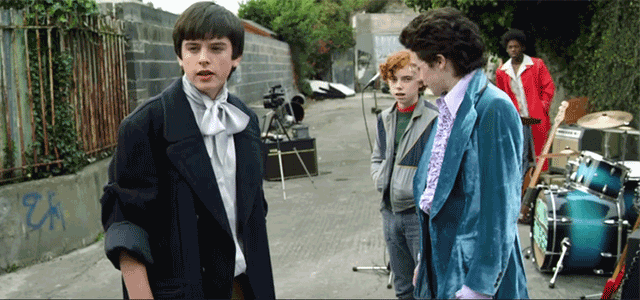
Sing Street is about a band in Dublin led by Conor (Ferdia Walsh-Peelo, left) , a boy with musical dreams.

2016 was seen as a weak year for comedies, unless they were animated. Possibly the most overlooked gem of 2016 was the Irish musical comedy Sing Street. I passed it up when it first came out, but I finally saw it recently. I’m glad I did.

We see Conor Lawlor strumming his guitar in his bedroom. Conor is a 15 year-old boy living in a shabby suburb of Dublin in 1985. Right now, Ireland is going through difficult times. It’s economy has been hit hard and many young people are fleeing to the UK, most notably London, for a future. His family is also going through difficulties as his father is struggling in his architecture practice and is struggling in his marriage and drinks excessively. Because of that, Conor is taken out of his high-class Catholic school and put into an all-boys free state school in Synge Street. A move older brother Brendan objects to, knowing how terrible the priests are there.

Things don’t go well for Conor on the first day. Being the new kid, he gets bullied. On top of it, he has the principal Br. Baxter giving him a hard time because he’s wearing brown shoes instead of black shoes in the dress code. Conor does end up with a bully name Barry but he makes a new friend in Darren who has big-time entrepreneur dreams. Conor also meets a 16 year-old girl named Raphina living at the orphanage nearby the school. He learns that Raphina is a budding model who’s headed to London. Conor impresses Raphina saying he’s in a band.

Now it’s up for Conor to create the band with the help of Darren. Darren is quick to act as Conor is introduced to Eamon: an awkward looking teen with a passion for music and can play many an instrument. Conor is able to meet a local black teen who is mostly shunned away from the others and two other awkward but musically-inclined students from his school. They start out pretty flat together and create a demo tape of popular 80’s songs. Conor gives it to Brandon but he’s unimpressed. He instructs Brandon not to be a cover band but do their own original stuff. That helps Conor to meet with Eamon to compose a song about his infatuation with Raphina: The Riddle Of The Model. The boys try on various costumes for filming a video and Raphina even volunteers to be their makeup artist and ingenue.

The song and video impress Brendan, feeling they’re off to a good start. However Conor’s rocker image of dyed hair and makeup gets on the nerves of Br. Baxter who insists in turning all boys into men at the school. Baxter even grabs Conor and washes the makeup off his face in a bathroom sink with hot water. But Conor and the band are undaunted. They continue making music and Raphina even advises that Conor be known as Cosmo. Conor develops the self-confidence to stand up to school bully Barry. The romance between Raphina and Conor heat up too, despite Raphina claiming an older man is her boyfriend. Conor even talks of sailing to London with Raphina.

However things soon take a turn for the worse. Conor’s parents are on the verge of separating with the mother moving in to her new lover’s place. Plus Raphina doesn’t show up when Sing Street are shooting a Back To The Future style video for their song Drive It Like You Stole It. Raphina later revealed she was set to leave for London, but her boyfriend abandoned her. A disheartened Conor breaks up with her. The breakup affects Conor in writing new songs for the band.

However it’s Brendan who encourages him to get back with Raphina and get back into playing. It’s through Brendan’s own personal feelings of past failures that drive him to give Conor the advise. Sing Street have a chance to perform a gig at school. Conor even offers Barry a chance to become a roadie for the band to escape his abusive household. The band performs their gig to the delight of the school and a condescending Br. Baxter looking on in disappointment, but they saved the best for last. The film ends not as one would expect but one that would leave the audience happy and hopeful.

I won’t deny this is a common story you’d expect to see in a film. I’m sure the story of a person growing up in a trash-bin of a city starting a band has been done before. The thing with this story is that for a common story like this to work again, the characters have to connect with the audience. They have to make the audience want them to succeed. The film succeeds in making the audience want Conor, or should I say ‘Cosmo,’ and Sing Street to succeed. The film succeeds in making the audience want Conor win Raphina’s love. The film succeeds in making the audience want the bullying of Barry to Conor to end and for Conor to get even with Br. Baxter. The connection of Conor with the audience is one of the biggest elements of magic in this story.

It’s not just the connection of Conor with the audience. It’s the connection with Raphina too. You get a sense Raphina is the right one for Conor, despite being confused about her love to her older boyfriend. However you get a sense that Conor will win her love. Raphina believes in the band and believes in Conor. You can see it in her eyes. Also Raphina shares Conor’s dreams of leaving for London. Seeing how unpromising Ireland looked with its economic drabness back then and the people seeing the priests as ‘rapists’ leaves you sensing life would be better for the both over in London.

It’s also the connection with Brendan with the audience too. Brendan is the first character in the film outside of Conor that’s easy to like because Brendan believes in Conor’s talents. Brendan’s also the type of brother that would be honest about how Conor is doing. Even after he disses what Sing Street does at first, he will give Conor words of encouragement. He will give Conor music albums to give him a sense about what makes rock and roll. It’s Brendan’s embrace of music in both its past influences and future directions that become a huge boost for Conor. However it’s also Brendan’s past failures that we get a better understanding. We see why Brendan pushes Conor in that scene after the parents’ separation and he throws a violent fit over his past failures. Because Brendan views himself as a failure who doesn’t have a chance, so he wants Conor to chase his dreams and be the one that has what it takes to go to London. It’s easy to feel for Brendan. It’s also easy for a viewer to see their own feelings of failure and regret in Brendan too.

With this being a film about a rock and roll band, the music has to be as important as the story itself. Brendan’s embrace for music is a big quality of the film, but it has to rub off on Conor as he’s the one with the gift of music. The film gets focused on the themes of music like themes of love, themes of heartache, themes of frustration, themes of emptiness and themes of hope. We learn about the ‘happy-sad’ feeling that we all get, but may  not know it. The ‘happy-sad’ element is definitely influential in music. Now once all the themes and elements of music are put together, the film has to have catchy songs. The film succeeds in doing so with songs like Riddle Of The Model, Drive It Like You Stole It and Brown Shoes. Brown Shoes made the perfect end-number for the school show. Even music from other musicians like Duran Duran, The Cure, The Jam, and many others add to the theme of music in the film. The film is as much about music as it is about love and dreams.

Writer/director John Carney succeeds in delivering an enjoyable film to the big screen. Music has been a common theme in past films of his like Once and Begin Again. He succeeds here again in delivering a film that’s enjoyable and keeping you engaged in the story. The film featured a very good debut performance for Ferdia Walsh-Peelo who was 16 years old when this film debuted at Sundance 2016. Ferdia is actually a singer who has performed professionally as a child in Ireland for years. This is his first acting role and he does an excellent job. Lucy Boynton also did a very good job in playing Raphina. The best thing is she made Raphina appear older than she really was. Jack Reynor was also very good as Brendan. He made Brendan into a likeable character, but also made you feel for him too.

Sing Street is a musical comedy that delivers excellently. It delivers a story and characters that connect with the audience very well. It also delivers entertaining music, which is what a film about a rock and roll band should do.

DVD Review: Jackie

Jackie
Natalie Portman showcases a deep personal angle of Jackie Kennedy in Jackie most of us never saw.

At first I wasn’t too interested in seeing Jackie. I mean there have already been enough made-for-TV movies of JFK and Jackie Kennedy. The film would not only have to justify being made but also its big-screen release.

The film begins with a journalist interviewing Jackie Kennedy in her home just days after JFK’s assassination. It’s like one minute she’s the First Lady living in the White House and the next, she’s a young widowed mother living in a private home miles away. The journalist begins with small talk but the questions move to the assassination and the aftermath.

It is from that point the film flashes back to various moments. Moments when Jackie and John attended Camelot: a musical JFK was captivated by. Moments like Jackie right after the shooting cleaning the blood off her clothes. Moments like being comforted by Bobby Kennedy, Lyndon and Lady Bird Johnson, and White House social secretary Nancy Tuckerman whom Jackie would later confide in. Moments like making funeral plans. Moments like her dealing with the priest and her questioning her faith more than ever.

It’s moments like those where Jackie feels more lost than ever as a person. It’s moments like these where Jackie wonders what to leave as a legacy for her husband. It’s during that time she uncovers truths many tried to hide from her, but she knew. It’s also moments when Jackie learns to be strong on the inside. In the end, she regains her faith while talking to the priest. In the end, she makes the final decisions on her husband’s funeral. In the end, she chooses to have her husband’s legacy remembered as ‘Camelot.’

Now keep in mind when this film came out, I was not too interested in seeing it. I mean the role of Jackie Kennedy has been included in too many made-for-TV film. When I saw this film about to be released, I was thinking “This film had better justify its big screen format.” This is not just simply a film that’s a biography. This film focuses on Jackie not even during ten days of her life. This is one of the most critical times of her life as she went from being Jackie Kennedy to a widow in an instant. Many of us know a lot of Jackie Kennedy, but this film presents an angle of Jackie Kennedy few of us knew. The smile and happy charm of Jackie Kennedy we are all familiar with is now replaced with a Jackie Kennedy that is hurting inside. She feels like she’s nothing without JFK. Her faith both in God and in the magic of Camelot has been challenged to more than what she can handle. She even feels like she’s worthless as a mother to her children. That was Jackie right after JFK died. That was Jackie those many days later dealing with the journalist.

We also see another angle to Jackie. This film goes through scenes happening in various moments of time in Jackie’s life. We see some scenes when JFK was still alive but most scenes are various times after his assassination. With those scenes, we see the different aspect of Jackie few knew. We have always known Jackie Kennedy the First Lady to be charming, charismatic, sweet and outgoing. Here in the film, we notice that Jackie is not the prissy, naive Jackie as most of us thought she was. She knew of her husband’s infidelity. She knew of Wanted For Treason posters published by dissenters days before his assassination. She did have concern about tax dollar use for her husband’s funeral. She even considered her publicity an interference: “I never wanted fame. I just became a Kennedy.” She even questioned her faith with the priest. These are all aspects most never knew of Jackie Kennedy. However the film also shows Jackie as a person who doesn’t lose faith in the things she believes in. Despite going through the hardest moment of her life, she still finds the inner strength to keep her faith in God and to believe in the power of books and theatre. “I believe the characters we read on the page become more real than the men who stand beside us.” That would take a lot for someone to still believe in especially after what happened.

This is an excellent breakthrough film for Pablo Llarain. This is his first English-language feature and he does a very good job in directing the story and scenes. Also done well is the script from writer Noah Oppenhein. He’s most famous as the scriptwriter for The Maze Runner. Jackie is a big change of pace for him. It’s very common nowadays to do films of a certain famous person and have it focus on a certain brief period of their life instead of the common biography-style film you’d expect. It’s done many times in films like The Queen, Capote and Sophie Scholl: The Final Days. It’s also a difficult challenge because in doing so, they have to construct a story that looks like it sums up the protagonists lifetime in that brief period of time. Oppenheim succeeded in constructing a very 3D Jackie Kennedy in that brief period of her life.

It’s not just Oppenheim’s story of Jackie that worked well but also the performance of Natalie Portman. At first, I was skeptical of the idea of having Portman play Jackie Kennedy. She did not come as the type of personality to play her at first. However Portman did an excellent job in her portrayal of Natalie and portraying the personal traits and feeling of Jackie in the scenes of the story. The film also shows an excellent maturity in the acting of Natalie Portman. Sometimes we forget she was 35 when she was filming this film and Jackie Kennedy was 34 when this incident happened. This film shows Natalie’s acting maturity very well. For all intents and purposes, Jackie Kennedy was the role with the most depth and range in the film. Nevertheless there were supporting performances that delivered well despite their limited range, like Peter Saarsgard and Bobby Kennedy and Greta Gerwig as Nancy Tuckerman. The costuming from Madeline Fontaine and the music from Mica Levi also added to the quality of the film.

Jackie did justify its big screen format in the end. It’s an excellent film about carrying grace under such devastating heartbreak and reminded us why we admire Jackie Kennedy so much.