Oscars 2024 Best Picture Reviews: Part One

Ten is not a set number for the number of Best Pictures nominees. Nevertheless it’s still nice to have ten as the total of nominees.

This year, there are a wide variety of films nominated from science fiction to two musicals to a musicography to a dark comedy to a horror movie to many types of dramas. Here  are my first two reviews of the Best Pictures nominees:

Anora

This is quite the unexpected comedy that delivers an unexpected sad ending. A sad ending was anticipated but the sad ending we got was not the one anticipated. It seems odd to have a story about a stripper/hooker marrying a rich kid to be one of the best films of the year but Sean Baker has developed a reputation for directing films about people in the sex trade. This is quite the story itself. We have a stripper who plays a ‘love kitten’ day after day for lusting men, but craves real love. We have a billionaire’s son who’s too spoiled, immature and careless to get it about life and love. He thinks marrying Anora is easy like that and he can live the same irresponsible life again, but he has a lot to learn. We have Igor, the henchman hired by the Zacharovs to have the marriage annulled, but Igor becomes the first person to see Anora as a human being throughout this whole ordeal. We also have the Zacharovs who are so obsessed with their money and power, they think they can do whatever they want. This is the kind of story that brings a lot to the table to talk about.

It’s hard to pinpoint the exact theme of the story because there’s so many topics and themes this story presents a point about. One could be the theme of sex workers. As I mentioned, Baker’s films often deal with sex workers. Here we see the case of a sex worker who is treated like a piece of meat and there are times her true feelings are shown. There are moments we stop seeing Anora as ‘this thing’ and start seeing her as a person. There’s also the case of wealth and privilege. Not only do we see wealthy people having the best luxuries but we see them having a privileged son living a careless irresponsible life, we see how the rich devalue marriage both with Vanja’s eloping of Anora and the Zacharov’s own marriage, we see how being a henchman to the Zacharovs means having to leave a christening of your godchild because your boss demands so, and we also see how the rich Zacharovs know that their money gives them power and uses it against Anora. Especially when the mother insists the family doesn’t apologize to anyone just as Igor points out Vanya owes Anora an apology for the eloping. It’s quite the irony when a stripper or prostitute has a better sense of what marriage is all about than a billionaire’s son. Or even his parents.

Often overlooked, I feel one of the top themes in the film is love. We have Anora, a stripper who pretends to love the men she sleeps with, but she craves real love. We have Vanya, whom Anora thinks she found love with as she spends weeks with him and easily falls for his marriage proposal. Anora is oblivious Vanya wants to marry an American so he doesn’t have to return to Russia and work his father’s business. Even the scenes as Vanya’s playing video games after the two marry hinds at Vanya’s irresponsibility. We also have Anora’s delusion with the marriage. Even though Vanya continues to play video games after they marry, she still thinks she met her love. We have the Zacharovs who view their son marrying a sex worker to be a disgrace to the family. We also see scenes which make you question the Zacharov’s own marriage. Finally we have Igor who becomes the first person to see Anora as a human being instead of ‘that thing.’ It was made obvious in the scene where Igor says Vanya owes Anora an apology. That ending where he allows her to stay at the Zacharovs one last night to sleep, bathe and pack and the ending scene as he’s about to drop her off is also an irony. He’s first hired as a henchman to stop the marriage, even if it means brute force, and now he actually has feelings for Anora. A shock to us all, and to a disheartened Anora as well.

This is the big breakthrough film Sean Baker has been waiting for. The film world has known Baker for a long time as one knocking on the door. He’s delivered small breakthrough films before with 2015’s Tangerine and 2017’s The Florida Project. Here, he directs a story that’s intriguing and unpredictable. It first seems like a film that would give us a cartoonish story but as the film progresses, the story is a lot deeper and it’s not the story we thought it was. Also worthy of top acclaim is lead actress Mikey Madison. If you thought you’d never shed tears for the character of a stripper, you will be wrong. It’s remarkable we have a film where the character of a stripper is shown to have real three-dimensional feelings, but Mikey’s performance of Anora was deep and revealing and we actually start feelings for her. He go from seeing her as ‘that thing’ to seeing her as a frail hurt person. Also excellent is Yura Borisov. Nobody expects any of the henchmen to have feelings for Anora, but Yura catches us by surprise. It’s also he who makes the movie into something we didn’t expect. Also good is Mark Eydelshteyn in playing Vanya. His portrayal as an immature irresponsible spoiled rich son makes you want to hate him in the end. Both Aleksey Serebryakov and Darya Ekamasova are great at Vanya’s parents. They also succeed in making you hate them as much as you’ll hate Vanya. We can see why Vanya is a spoiled brat.

Anora is not your typical story of a prostitute or a stripper. It’s a story of a love gone wrong and ends with a love you don’t know if it should be. Those who see it won’t forget it.

The Brutalist

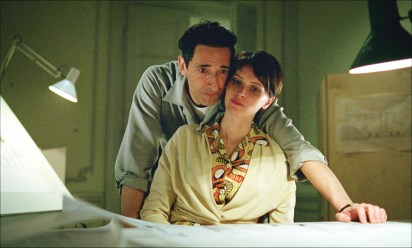
We’ve seen stories about the difficulties of achieving the American Dream before. Some are harder than others. This film takes a cynical look at an architect who achieved his American Dream. We have a Jewish architect who left post-Holocaust Hungary to find refuge in the United States and achieve his success there. We see how he has to fight his demons like his infidelity, family members that are petty, harrowing memories that cause him to take heroin, a difficult market for his Bauhaus style, rival architects, people that want to use him and above all, his own egotism. It’s not at all a pretty sight to see but it does tell a good story of a man hoping to pursue his greatness in the United States.

The thing that makes this film is not just the telling of Laszlo Toth’s story, but how it’s presented. The film begins as Laszlo’s ship sails past Ellis Island and he sees the Statue Of Liberty, but from his angle, he has to look at it upside down. He has to struggle to achieve his dream by eating at soup kitchens, living at the YMCA, embraced and then neglected by a family member who’s a successful business man, and having to prostitute himself at times. His breakthrough comes by fluke as it was the renovation unapproved by Harrison Van Buren where they first meet, and the meeting is bad. It’s after Harrison discovers who Laszlo is and of Laszlo’s pre-war success in Hungary that he’s willing to take him on. It’s not an easy task as it involves years of work and labor, supplies cancellations, dirty work form Harrison, his friendship with Gordon put to the test and Laszlo’s own ego coming to light. Then there’s how Laszlo’s attempt on success threatens his marriage to Erszebet as she has now arrived in the United States. She knows his secrets and she says she’s fine with it, but it will become obvious she’s not. His success threatens family unity with the niece as the daughter adopted after the Holocaust.

The crazy thing about the film having a half-hour intermission may have some question its purpose. We should remember many decades ago, it was common for long movies to have intermissions. This film’s intermission is very successful not only in dividing the movie properly, but give you the feeling you’re watching two different films. The first half focuses on Laszlo’s arrival, his attempt to make it in the United States, the dirty obstacles he has to face and his big break. And right while he’s writing to Erzsebet with the hopes of her coming to the United States. At the end of the intermission comes a new scenario. As Erzsebet finally arrives in the United States with niece Zsofia, there’s the added pressure of keeping a family together. Especially since Laszlo can’t keep his secrets to Erzsebet any more and she has a disability to deal with. Over time, she senses things like Laszlo’s ego and how Harrison wants to make a pet out of him. Despite being confined to a wheelchair, Erzsebet is able to muster the strength to use her walker to confront Harrison about his mistreatment of Laszlo. The ending epilogue is also something as Laszlo is saluted for his work, in Italy. It’s like he achieved his American Dream but had to achieve it at a harrowing cost and he had to get his honor from outside the US.

This is an accomplishment from Brady Corbet. Younger adults may remember his teen actor days in films like Thirteen and Thunderbirds. Like a lot of young actors, Corbet felt the need to make films of his own. This is Corbet’s fourth feature film. This film that he directs and co-wrote the story with wife Mona Fastvold is definitely something. It mixes some classic film styles while telling the story of a Holocaust survivor’s pursuit of the American Dream. There have been films where the American Dream has been achieved at a big cost before, but this film meshes Laszlo’s pursuit with the shaping of the United States and most notably Pennsylvania after World War II. As the US shapes itself after the war, Laszlo attempts to shape his success in the US, but at a huge price that comes at the cost of him, his dignity and his marriage. Right at the end as they have the tribute gala in the epilogue, you wonder if this should be a happy occasion or not with what Laszlo has gone through.

Excellent performance from Adrien Brody. Remember him from 2003’s The Pianist? He appears to have kept it low-key since. This year, he comes back with another performance of a lifetime where he shows Laszlo to be a creative man and a troubled man. He will make you hate him as much as he will break your heart. Also great is Felicity Jones as Erzsebet. It’s the appearance of Erzsebet that most turns this film into two films in one. With her arrival comes the change of environment. She appears to be one who will most interfere with Laszlo’s success and even a victim of his own selfishness but in the end, she’s the best person Laszlo needs during his most troubling time. Guy Pearce is also great as the deceptive Harrison. He’s excellent in portraying an all-American businessman who welcomes Laszlo and his talents, but as long as something’s in it for him and is willing to make a toy of Laszlo. Additional excellent acting comes from Raffey Cassidy, as the niece Zsofia who’s mute at first but soon develops her ability to talk, and from Isaach de Bankole as Gordon, Laszlo’s first friend and business associate who Laszlo later turns on in his success. Excellent technical merits are the cinematography of Lol Crawley, the production design of Judy Becker and the musical score from Daniel Blumberg.

It’s easy to see why The Brutalist is a heavy favorite to win Best Picture. It combines a graphic disturbing story of one man’s pursuit of the the American Dream and shows it in a stylish artistic fashion. Hard to outdo it.

And there’s my look at the first two Best Picture nominees for this year. If you’ve seen them, you can understand why they’ve won most of the Best Picture awards.

VIFF 2021 Review: The Electrical Life Of Louis Wain

Benedict Cumberbatch plays a troubled eccentric artist with a passion for cats in The Electrical Life Of Louis Wain.

Have you ever heard of artist Louis Wain? I should hope every cat lover has heard of him. You may have seen his art in the past, but may now know it. The film The Electrical Life Of Louis Wain is a colorful portrait of a colorful artist.

The film begins set in 1925. Louis Wain is in a mental institution. On the radio is a voice giving support for the troubled Louis Wain. He talks of how Wain fascinated us all with cats. He also talks of the need to raise funds to bring Wain to a better mental institute that allows him to paint and be with cats. The film then goes back to 1880. Wain is 20 years old and his father has passed. He is the first-born of six and the only son. His father’s passing now puts on him the responsibility of being the family breadwinner.

This is not a responsibility Wain can do easily. He has a history of losing jobs and his drawings and paintings are not exactly the type that can win the general public over, nor newspapers looking for illustrators. This is troubling for all the family members, but it’s oldest sister Claire who really lets Louis know through her frustrations how much of a pressure this is. On a train trip, he meets businessman Asim Chaudhry who sees his drawings and gives him advise. Wain’s drawings do attract the attention of Sir William Ingram: the Managing Director of the Illustrated London Daily News. Ingram gives him the opportunity to draw for the paper, but on a part-time basis. This, along with other odd jobs, is enough to provide for the family and allow them to hire a governess to teach the three youngest daughters: Emily Richardson. Emily is ten years Louis’ senior, but Louis can’t help but take a liking to her. During this time, Louis also keeps his drawings of his inspirations and fears inside a personal journal of his own.

Over time, the money Wain is able to provide goes so far, adding to the frustration. Wain’s fast swimming at the Turkish Baths gets on people’s nerves, even though Ingram is willing to tolerate it. Louis keeps on having recurring nightmares of drowning in a capsized ship: nightmares he’s had since childhood and may explain the scar underneath is lip. Louis’ feelings to Emily are feelings he feels he has to keep hidden, but there’s Shakepeare’s The Tempest the whole family plans to see in the theatre. Louis invites Emily by slipping the ad under the door, and she accepts. Before the Show, Emily reads his journal and is surprised by the paintings and drawings. During the play, it goes into a scene of a story boat trip, which causes Louis to leave for the bathroom. After he’s finished, he sees Emily. Emily reveals she read his journal and understands him and they kiss for the first time!

The romance of Louis and Emily does not go well with the family. They don’t want to be the source of scandal because of the class-gap and age-gap of the two. At the same time, Louis learns of photography from a boxing match he watches with Asim. Asim tells him that photography can replace illustrations for newspapers in the future. That does not settle well with Louis not just because of his job, but he feels photography lacks the imagination and electricity of drawings. Then one day, the closeness of Emily and Louis gets to the point Claire has to fire Emily. It’s then he asks Emily to marry her. He reveals to her he doesn’t care what others think of them both. Emily accepts, revealing she doesn’t care either. The two find a home in the countryside to avoid controversy and they have a happy first six months.

Then the news come Emily has fatal cancer. Louis agrees to live with her the final years of her life. Then one rainy day, they hear a meowing out in their yard. It’s a kitten and he’s freezing. The two take him in and they make a pet out of him. Making a pet out of a cat was seen as odd in British society as cats are seen as either nuisances or only good for catching mice on the farm. However the two decide to make a pet out of the cat and name him Peter. For the next three years, it’s just Louis, Emily and Peter together. However Emily’s condition deteriorates. Louis doesn’t know how to deal with life without Emily, but Emily encourages him to continue to live on and not be afraid to make his imagination come alive.

After Emily dies, Louis secludes himself and is broke. Claire gets on his case for that. However it’s after this time, he learns the more he hurts, the better he paints. He starts creating cat drawing and cat paintings. The images depict cats as charming, cute and mischievous. The works attract many a reader of the Illustrated London News. His cat paintings start selling like nobody’s business. He even gets honorary memberships to cat societies in London who always saw cats as pets long before the mass public did. This brought him considerable fame, but not fortune. It’s after receiving a lot of debts he confesses to sister Claire he didn’t copyright his works and people are copying and getting their own piece of the action. The only way he can make money is through his original paintings. Ingram came to the rescue and gave him additional work in illustrations.

Then in 1900, Peter dies. Wain is heartbroken. Soon he learns the harder he grieves, the bigger his imagination grows. He then paints multi-colored pictures of cats that take his art in a new direction. It grants him bigger fortune, which comes in time as Marie is diagnosed as schizophrenic and needs to be sent to a better hospital. Unfortunately the luck runs out after a few years and fortune went just as fast as it came. He attempts to market his work in the United States, which attracts the attention of William Randolph Hearst and Max Case. The trips to New York give him a bigger fascination with electricity, but the boat trips also bring back his recurring nightmares of drowning on a ship.

Bad business decisions continue to get Wain sudden riches and back into debt. Over the years, Wain loses people close to him like his mother, sisters Marie and Claire and his mentor William Ingram. Then in 1925, he has a violent mental outburst that puts him in a metal hospital. Asim sees him in the hospital. He notices his drawings lack the magic he once had. Also Louis appears dead inside as there are no cats. This allows Asim to team up with H. G. Wells and his three surviving sisters to start a fundraiser to help bring Wain to a better hospital where he’s allowed a better quality of life where he can draw, paint, be around nature, and cats. The hospital where he spends his last years is much better and it allows Louis to again experience his image of paradise. The paradise he and Emily possessed together.

I’m sure anyone who’s seen Louis Wain’s art may have mixed feeling about it. Some will think it’s not for them, especially people who don’t care for cats or can’t stand them. Others will wonder how one can call cat pictures art? Some can even look at some of his more colorful pictures of cats in his latter years and even see them as ‘psychedelic!’ Hard to believe they’d have this ‘psychedelic’ look many decades before the psychedelic look of the 60’s that is iconic of the term ‘psychedelia’ would come to be.

The film also shows how Louis Wain possessed a lot of traits that are common among even the most famous artists. Firstly it shows Louis Wain’s imagination: one common artistic trait. It takes you into his love of cats and his fascination of electricity and how he turned it into his art. It shows how he used his imagination to create his paintings. The best artists always did. His imagination gave Brits a new look towards cats. No longer were they seen as good just for mousing or nuisances. They could be seen as pets. The film also shows you the eccentricities he had during his lifetime. Artsy people are known for possessing eccentricities. The film showed how Wain was both a non-conformist and what we call today a ‘slacker.’ He didn’t care what society thought of him when he married Emily, and neither did she. Artists are also still seen as non-conformists in the way they lived. He was unable to maintain a real job and a steady income sweating it out; another common trait we see in a lot of artists.

The film includes the family pressures he faced, being the oldest of the Wain children and only male. Wain had to act as a provider to his family and his artistic talents were more of a hindrance in that aspect. Especially financially as there would be times he’d starve, times he’d prosper and times when his riches were all squandered. Many of the best artists would not receive their renown in their lifetime and some like Van Gogh starved. Wain received his renown, but still had periods of poverty. The film also takes one into the heartaches he experienced in his life like the death of his only wife Emily and the death of his first cat Peter. Even though he would have many cats since, Peter would still remain his beloved and he would never get over his death. It showed the deaths of his two sisters, his mother and his biggest mentor. He noticed the more he grieved the better and the more imaginative he painted.

The film also takes you into Wain’s mental torture. It’s a common belief among people that an artist should be the type to suffer for their art. Artists have been known to be people that suffer inside and Wain was no exception. One will notice early on in the film as they learn Louis had recurring nightmares of drowning upon a sinking ship. That was a nightmare that would never leave him. Many people into art want to see artists draw out or paint out their pain. Wain reminds us that even artists that do supposedly ‘happy’ pictures like his cat paintings also can possess inner demons and they make one their own worst enemy as much as they make them an artistic genius. Being type-two bipolar himself, director Will Sharpe let it be known about Wain and what it’s like to have those troubles.

Biographical films have changed a lot in the last twenty years. Most of the time, you see the story unravel itself over time without narration. Very rarely do you see a modern biographical film go from start to finish about their lives. This film does a lot of ‘traditional’ ways of going about the biographical film, but instead of it being a setback for the film, it enhances it. Hearing the narration from Olivia Colman is a delight to hear. Also the narration of the film actually adds humor to the film and the story. Seeing Louis Wain’s life unravel from the turning point of his life in 1880 up to his death in 1939 actually helps make the film instead of hinders it. The film even includes moments in his life that become picture perfect moments for his drawings and paintings. The film even shows times in Wain’s life when it becomes moments for his best work. However it’s shown imperfectly and sometimes becomes uneven with the story. I’ve seen biographic films of artists before. Often they try to mix the life experiences and mentalities of the artist in with some of their biggest art works. This film does it very well for the most part, but there are times when it comes off as lacking consistency or out of place.

This is a very good work from director Will Sharpe. He’s co-directed two films before with Tom Kingsley, but this is the first film he holds his own in. The film he directs and the story he co-wrote with Simon Stephenson is an impressive artistic biography. It’s as much of a comedy as it is a drama. It follows the ‘traditional’ way of making a biographical film, but it’s more of a benefit than a drawback. These aspects make the film. The layout of the film also works for the most part, despite the flaws being noticeable. Nevertheless it does tell us a lot about Wain. It reminds us that he was a troubled man who did not make a lot of smart decisions, had a tough family life and was mentally troubled. However it was his imaginative way of looking at things, his view of the beauty of the world, his love for cats, and the reassurance of Emily’s love for him that gave him his drive to create.

Benedict Cumberbatch did an excellent job in his portrayal of Louis Wain. He did a great job in showing both the comical side and the tragic side of the man which made the film impressive to watch. There weren’t too many standout supporting performances, but Claire Foy was very good as Emily Wain. She was very good in playing the woman that understood his mental troubles and still loved him. She was also good in showcasing how she was the one who inspired Louis to paint his imagination and to still continue to inspire even after her passing. Of the sisters, Aimee Lou Wood was the standout as Claire: the sister who was frustrated by Louis’ misdoings, but ended up admiring him as she was about to pass. Toby Jones was also an occasional scene-stealer as William Ingram, as was Taika Waititi as Max Case and Adeel Akhtar as Asim Choudhry. Standout technical elements are the cinematography by Erik Wilson and the score by Arthur Sharpe: Will’s brother.

The Electrical Life Of Louis Wain is more than just a biographical film of an artist. It takes one into the mind of the artist in his inspiration and of his troubles. Sometimes it doesn’t make complete sense or appear all together, but it is an excellent film that will get you interested in the artist and his work.

Oscars 2017 Best Picture Review: The Shape Of Water

Shape Of Water
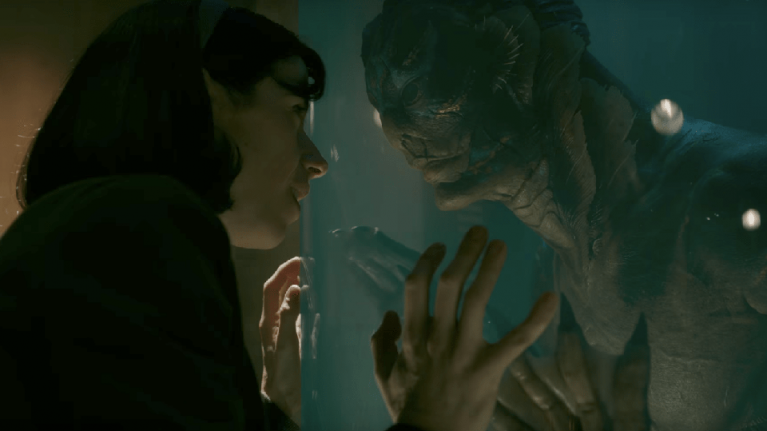
Sally Hawkins (left) plays a mute who develops a bond with a sea creature (played by Doug Jones) in The Shape Of Water.

At first one would think that The Shape Of Water is another science fiction movie with a bizarre story, but it turns out to be a story that’s a lot more than that.

Eliza Esposito is a mute woman in Baltimore in 1962. Orphaned at a young age, she lives in an apartment just above a movie theatre and works as a janitor in a secret government laboratory. She only has two friends. The first is Giles: a gay advertising artist who lives next door to her. They often eat pie and watch entertainment together. The second is Zelda: an African American woman she communicates with in sign language. It’s through Zelda she can tell her biggest secrets.

One day, a creature is brought to the laboratory. It’s a sea creature from South America captured by Colonel Richard Strickland. Right when she sees the creature, she notices something about him. That the creature has some human-like traits. Both Zelda and Eliza sense something wrong with Colonel Strickland as he comes across in a gruff manner. They also notice he brought a cattle prod that has blood on it. Eliza notices the blood travels in a unique pattern.

Later Strickland is attacked by the creature, bleeding badly and lost two of his fingers which get reattached shortly after. As Strickland is being tended to, Eliza wonders who is this creature and what do they want from him? Eliza soon develops a bond with the creature and discovers it’s a humanoid amphibian. She gives him eggs to eat, music to listen to, and communicates with him through sign language.

There are different plans people have for this creature. General Hoyt wants Strickland to dissect it for the possibility of an advantage in the Space Race. Scientist Robert Hoffstetler, who is secretly a Soviet spy, tries to convince his masters to keep the creature alive for scientific study. The Soviet spymasters disagree and want him euthanized.

When Eliza learns of Hoyt and Strickland’s plans for the creature, she tried to persuade Giles to assist, but he rejects at first. It’s after a failed attempt at hitting on the pie man that he agrees to comply. Zelda is also opposed to it at first, fearing for but her job and Eliza’s, but she agrees to help. Hoffstetler tells Eliza he’s aware of her plan and is willing to help.

The plan is to help the creature escape where no one can see. Zelda keeps a close eye on the coast. Hoffstetler helps in the distracting of the surveillance cameras just as Zelda makes the adjustment, and even has a bomb on the power base set to explode at the right minute. Giles rents a truck and paints it to look like the laundry pick-up truck. Eliza is able to get the creature into the laundry bin. Just as it appears that Giles is about to get stopped by security, Hoffstetler injects sleeping medicine into the guard’s neck. The pick-up and escape is successful, but not without smashing Strickland’s new blue Cadillac!

Eliza keeps the creature in her apartment. She keeps it in her bathtub which she mixes with salt and plants. She plans to release it into a canal in a few days one it opens to the ocean. She’s well aware that Strickland still wants the creature. Strickland even meets with Eliza and Zelda to interrogate, but both are able to keep the truth hidden from him.

Back at the apartment, the creature leaves Eliza’s suite and visits Giles’ suite. He takes an interest in his drawings and the television, and thinks one of his cats is food! The creature runs off again just after he slashes Giles’ arm. Eliza goes searching for the creature and finds him in the movie theatre staring at the screen. The relationship between Eliza and the creature grows. She becomes more than just his protector, but his lover. She herself can even acquire the ability to make shapes with water. She even tells all to Zelda, to her surprise. The creature even helps Giles heal from his wounds. Giles eventually opens up to him just after. Eliza gets sexually involved with the creature even to the point she tries to flood her whole bathroom to have underwater sex! Much to the disappointment of the cinema owner down below!

However time is running out for all. General Hoyt gives Strickland an ultimatum of 36 hours to return the creature back. For not helping with keeping the creature, Hoffsteler is told by his superiors he will be extracted in two days. However the creature’s health is failing and he will have to be returned to the water. The day Eliza planned to take the creature to the canal comes. Giles agrees to help drive the creature to the canal when the day comes.

Meanwhile Hoffsteler meets with his handlers and is shot, but not until Strickland intervenes and shoots the handlers dead. He forces Hoffsteler to reveal who took the creature. Strickland then goes to Zelda’s house. To the shock of her and her husband, Strickland arrives and threatens Zelda to reveal Eliza has been keeping the creature. Zelda then telephones Eliza and Giles warning them of Strickland. The time to take the creature to the canal is now. The creature wants Eliza to come with him, but Eliza insists it’s better for him to go alone. The scene ends on a dramatic note and an ending that’s unexpected, but is the right ending for the film.

This does make for a bizarre story of a recently-discovered sea creature and a woman’s romantic connection to the creature. We’ve seen Beauty-And-The-Beast type of movies before like King Kong or Creature Of The Black Lagoon. The funny thing about this is that it actually succeeds as a romance. The first thing that makes it work is that there’s a real connection between the woman and the creature. Rightly so because Eliza is the first to connect with the creature and connects with him in the biggest way. All Eliza had before was her job and the friendships with Giles and Zelda. Here she finds a being that she not only connects with, but becomes her soul mate. The one that completes her. They were two lonely people who were united by fate of the most impossible kind. You could understand why the ending made sense. It was through the magic of the creature’s healing that she is able to live in his world and his world only.

The most interesting thing of the film is its connection of the various arts. It’s more than just nostalgia. It reminds you of the charm and the feel of such entertainment back then that most people overlook. However it’s through those various arts that the sea creature gets a sense of human vitality and even embraces it into his own life. The art he comes across helps him communicate in the human world and gives him his human-like qualities. From the music Eliza plays to the images on the movie screen to even watching a hokey episode of Mr. Ed on Giles’ television, the entertainment is his connection to his human traits. It even helps him experience his feelings of love which he has for Eliza. You could understand why that one scene where Eliza was not a mute –that musical number where she dances with the creature– makes sense. It’s through art that she’s able to express her love for the creature: the one being that doesn’t make her feel like an outsider at all.

The creature doesn’t just affect the lives of Eliza, but of the two closest to her too. Soon after Giles has a change of heart and helps the creature’s escape, Giles opens up to the creature and soon makes him a part of his own art. As Zelda helps the creature escape, she too develops an inner strength in her and is able to stand up for herself to her husband. It’s something to think about. The three main characters are all misfits in 1962 Baltimore. Eliza is a mute, Giles is gay, and Zelda is black. However it’s through this creature that Eliza finds a soul mate, Giles finds a purpose and Zelda finds an inner strength.

I give top credit to Gullermo del Toro. The story he directed and co-wrote with Vanessa Taylor is comical and had a lot of good drama, but it’s the human element that shines in the story line. Del Toro would admit in an interview that this is inspired by The Creature From The Black Lagoon and always dreamt of seeing Gill-Man succeed in the romance to Kay Lawrence. I can sometimes see hints of Pan’s Labyrinth in the story. It’s interesting how he creates this story that romanticizes the entertainment of the time as well as reminds us of the hysteria of Communism at the time too, as well as the racism. All of this makes the charm of the film.

The acting is the biggest strength of the film. The best comes from Sally Hawkins in playing a mute who best communicates to the sea creature with her feelings and with the power of art. Richard Jenkins is also excellent as Eliza’s loner friend who finds a new purpose in life through the creature. Another excellent performance is from Octavia Spencer playing the friend closest to her side. Also very good acting from Michael Shannon. You often wonder if Strickland is heartless or just plain under the thumb of the Colonel. You know he’s troubled when you see the amount of pills he takes. Excellent work for Doug Jones. One again, he does excellent work as the creature in Guillermo del Toro’s movies. Most of you remember him as the Faun in Pan’s Labyrinth. You could say Doug Jones is to del Toro’s movies what Andy Serkis is to Lord Of The Rings’ Gollum.

The film has a lot of excellent technical aspects too. There’s the costuming and make-up team that made up the costume of the creature, as well as the visual effects team that made the ‘blue effect’ of the creature’s skin. There’s the production design team that made an excellent set that dates back to the early 1960’s to a tee, even with the movie theatre. There’s Luis Sequeira that designed the right costumes and outfits for the actors as well. Finally, there’s the mix of the music of the time mixed with the imaginative score of Alexandre Desplat. Desplat knows how to compose for a movie.

The Shape Of Water is more than just a creature-and-woman romance we’re familiar with. It succeeds in having the feel of an actual romance and successfully convey the feelings of love. In the end, the romance looks so right! That’s its magic.

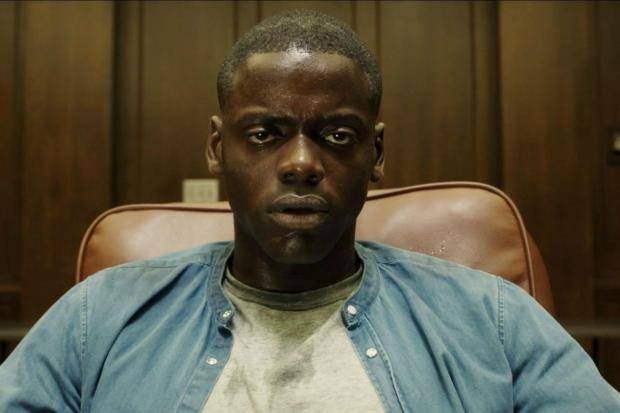
Oscars 2017 Best Picture Review: Get Out

Get Out
Get Out is a horror-thriller that’s definitely out of the ordinary.

I admit I was very late on the draw for watching Get Out. Could’ve been the schoolwork I had to deal with or I just didn’t rush out like I should’ve. I finally had the chance to see it a month ago and I can easily see why it’s one of the best films of 2017.

The story begins with a young black man abducted on the street. Soon after, black photographer Chris Washington is packing with white girlfriend Rose Armitage for a meet-the-parents visit. Rose insists to Chris that his race won’t matter, even though he is her first black boyfriend. Chris says goodbye to his friend Rod, a black TSA agent, and insists to him things will be fine. On the ride there with Rose driving, they hit a deer. The police visit the two and the white officer wants to look at Chris’ identification, even though he wasn’t driving. It took Rose’s intervention to stop this.

The two arrive at the home where they meet Rose’s brain-surgeon father Dean, hypnotist mother Missy and student brother Jeremy. All three make discomfiting comments about black people. Additional uneasiness to Chris comes when he notices housekeeper Georgina and groundskeeper Walter, both black, show strange behavior. Things get even weirder when Chris steps outside to smoke and notices Walter sprinting through the grounds and Georgina prowling through the house.

To try and take his mind off things, Missy gives Chris a hypnotherapy session to cure his smoking. During the session, he’s taken back to his childhood and the memory of his mother’s hit-and-run death: a death he feels guilty of. After that comes the void Missy calls ‘the sunken place.’

Chris wakes up the next morning wanting to think it was all a nightmare. Instead he’s surprised to learn that cigarettes turn him off and Walter even confirms Chris was in Missy’s office. Chris also notices Georgina unplugged his phone leaving the battery to die, but she claims it was an accident.

The next day, Chris is at a get-together hosted by the Armitage with dozens of wealthy couples; most of them white. However the topic is almost always the same from person to person. They all ask about his race and even bring up talk of prominent black figures. The only person who doesn’t bring up race is Jim Hudson, a blind art dealer, who takes an interest in Chris’s photography.

Chris meets one other black person at the party. His name’s Logan; he’s married to a white woman and he acts rather strangely. Chris telephones his friend Rod and lets him know of all the suspicious activity at the Armitage house. Chris snapped a flash photo of Logan from his phone, but Logan’s personality changes to a hostile manner, shouting for him to ‘get out.’

Despite Dean claiming it’s an epileptic seizure, Chris isn’t fooled. He knows there’s something wrong happening and persuades Rose to leave with him. Meanwhile Rod notices the Logan in the photo is Andre Hayworth: the man who went missing earlier. Rod tried to get his police department to go to the Armitage household, get Chris, and arrest whoever’s involved. His colleagues all think it’s a joke. Rod is on his own.

As Chris is about to leave, Chris comes across photos of Rose with other black boyfriends. As he tries to leave, Chris is blocked by the family from leaving and even Rose is part of the heist to abduct him. Jeremy acts violent but as Chris tries to fight back, Missy imposes hypnosis to make him weaker. While wrapped in bondage in a chair, Chris watches a video from Rose’s grandfather Roman where they take the brains of white people and puts them into black people. The host remains in the ‘sunken place’: watching but powerless. Hudson tells Chris through the screen he wants his body for his sight and his artistic talents. Meanwhile Rod telephones Rose to find out what’s happening, but Rose declines, making like Rod is a past boyfriend.

The night before surgery, Chris puts the cotton stuffing from the chair in his ears to block the hypnosis. The day of a surgery is when Chris has to make his getaway. The movie ends with a lot of surprises– including some surprising facts about the surgery — but it ends with the pleasing ending many would have hoped for.

This is a rarity. A horror film where racism is one of the main themes of the film. The story starts out as something simple: boyfriend meets girlfriends’ parents. The fact that he’s black shouldn’t make that much of a deal. I mean Guess Who’s Coming To Dinner was 50 years ago and lots has changed, right? You get the first impression race will be a topic when they hit a deer and Chris is asked for his identification. It becomes further evident when Chris is with Rose’s family and the father brings up Jesse Owens. I was actually surprised to see how often race was brought up in conversations between Chris. It was always a topic in Chris’ conversations with people, if not the first. And then a case of mental enslavement: white brains in black bodies. I notice the familiarity here.

I’m sure race has a lot to do with the police scenarios, but even then, there was one area that didn’t seem about race. That’s when Rod describes the situation to the police and all three laugh. The three Rod talked to were of various races, even one black woman. I felt that was trying to send me a message that even African Americans in the police force look at their own in a negative light. The end definitely had something to say. A cop car arrives with Rose shot and dying on the ground and Chris thinks he’s about to get arrested, only for Rod to be the cop. Glad to see it gave a happy ending. I think it was also trying to say something; about the importance of having friends who know the truth.

Even without the subject of race, this stands out as a psychological thriller in its own right. One of the difficulties of horror or thriller movies is including supernatural or paranormal things without looking ridiculous. The theme of hypnosis and mind control really makes itself present in a smart way. The inclusion of such themes even the addition of the brain surgery right in the family’s house didn’t look cheesy at all, fitting well within the story. Showing how Chris broke the mind-control aspect when he took a photo of Andre/Logan is shown intelligently and added to the story without looking ridiculous. The scene near the end where Walter shoots himself after shooting Rose didn’t appear dumb as it showed this mind-control was something only death can free them of.  Even the goriness of the deaths didn’t look dumb. In summary, all the thriller or horror aspects had to make sense in order for them to work, and they did.

This film had to be 2017’s ‘sleeper success.’ The film made its debut at the 2017 Sundance Film Festival. Lately Sundance movies haven’t been as big of a draw to the box office as they were ten or even twenty years ago. This film really caught people’s attention and grossed $176 million at the box office. It was no wonder it would be one of the stand-out films of 2017. It reminds you that 2017 wasn’t such a bad year in movies after all, and Get Out was one of the highlights. Get Out also contributed highly to the resurgence of the horror/thriller genre. Sure, the biggest news came from It, but Get Out is admired for its ability to create an original story and even add African-American elements to the horror genre, which is extremely rare.

The person who deserves the most acclaim here is writer/director Jordan Peele. He is one driven person. Past work of his includes acting and writing for MadTV as well as stand-up comedy. This is his first feature-length film as a writer and director and it really stands out because of its excellent story line. Also excellent is the lead acting from Daniel Kaluuya. He succeeded in making a performance in a horror movie three-dimension: something very rare. There were also good standout supporting performances from Lil Red Howery as Rod. Makes sense as Rod was the comic relief. Also a good scene-stealer was Betty Gabriel. Her portrayal as Marianne/Georgina best personified what it was like to be under this mind-control lobotomy. Smiling on the outside, but mentally-enslaved on the inside. Alison Williams also made a good villain, switching from the loving girlfriend to helping the family get their next ‘slave.’

Get Out did two things that most people would believe is impossible to do nowadays. The first is create a horror film that is as intense as it is smart. The second is for an African-American to create such a horror film. The film achieves all that, and more.

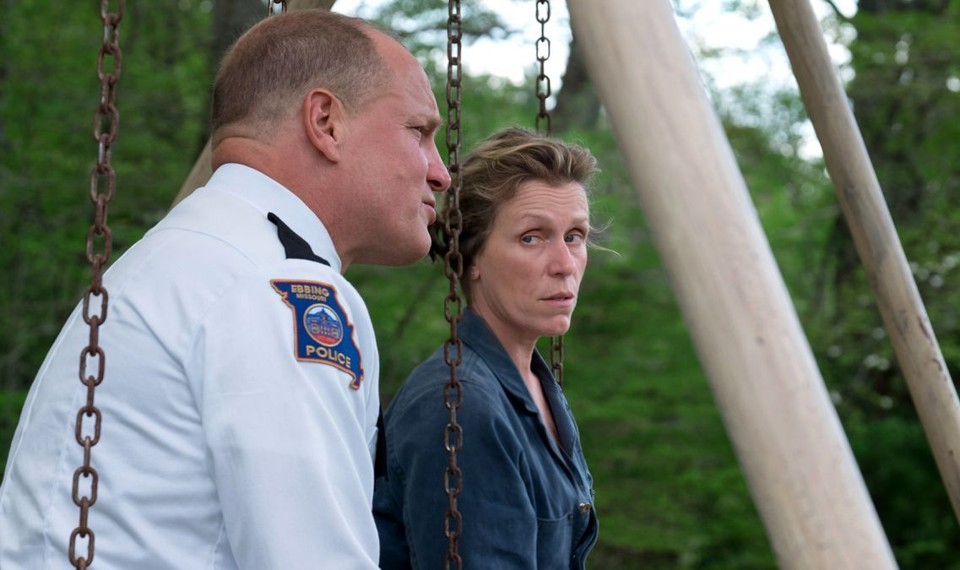
Oscars 2017 Best Picture Review: Three Billboards Outside Ebbing, Missouri

Three Billboards
Frances McDormand faces off against Woody Harrelson in Three Billboards Outside Ebbing, Missouri

Three Billboards Outside Ebbing, Missouri is a film that has got a lot of people talking since its release. Talk is of its unique story line, but also of its themes.

The film begins seven months after a teenager from Ebbing, Missouri named Angela Hayes was brutally raped and murdered. The case remains unsolved. Mother Mildred Hayes goes to the office of businessman Red Welby to rent three billboards outside her home and unused for 30 years to post a message directed to the police of Ebbing, especially officer Willoughby, advertising what she sees of a lack of action. She isn’t even afraid to be interviewed by the media where she doesn’t hesitate to mention the negative treatment of African Americans by the police.

This hits the police hard. Chief Willoughby is angry about this, but sympathetic to her situation as DNA tests failed to result in a lead. Officer Jason Dixon is a lot more hostile as he goes about angrily arguing with Mildred, threatening Red, and even arresting Mildred’s African American co-worker from her shop on suspicious marijuana charges. Dixon is the cop in ebbing who has been acting the most hostile to African Americans.

Outside the police, the hype surrounding the billboards creates a lot of heated discussion throughout the town. Many throughout the town find it insensitive as Willoughby is battling terminal pancreas cancer. Robbie is upset about it, especially since it made him a victim of harassment at school. Her ex-husband Charlie, who’s currently dating a 19 year-old named Penelope, even visits and violently blames her for Angela’s death.

Nevertheless Mildred stays firm, even despite knowing she can expect violence any minute. Mildred even receives a surprise when she learned an anonymous person gave her money to keep the signs active for another month. Her dentist makes mention that he heard the story, but she impulsively reacts by using his dental drill on his fingernail. Chief Willoughby brings her into questioning after the incident, but accidentally coughs up blood on her. It’s obvious his cancer is getting worse and he will die very soon. Willoughby is to be in the hospital for a set period of time, but leaves early despite doctor’s demands. Willoughby sets out to the lake to have an idyllic day with his wife Anne and two daughters. The next day, he commits suicide, leaving behind suicide notes for Anne, Mildred and Jason.

The police react with hurt over Willoughby’s death. A male customer in Mildred’s store reacts angrily over his death and even threatens her. Jason reacts to his death by assaulting Red in his office and even throwing him out of the window. This is all witnessed by Ebbing’s new chief of police, who happens to be black. On his first day, the new Chief fires Dixon. Dixon however does not return his badge, claiming it’s missing. Right after Anne reads her suicide note, she angrily hands Mildred her note. Willoughby tells her she’s not responsible for his death and he’s the one who paid for the extra month, admiring her stunt and wishing her justice in the future. Shortly after, the billboards are set ablaze.

Jason learns he has a note from Willoughby waiting at the police office. He goes during a night during the closed hours. Willoughby writes he thinks Dixon would make a great detective as long as he learns to slow down, think and not react so hostile. Mildred reacts to the sign burning by burning the police office, believing it to be closed and no one there. Right in the blaze, Dixon comes falling out of the building in from of Mildred with the suicide note and the Angela Hayes case in his hands. Dixon is hospitalized for his burns in the same room as Red, recovering from Dixon’s assault. Dixon apologizes.

After Dixon is released, he goes into a bar. He comes across the male customer who threatened Mildred. What catches his ear is that he brags about an incident similar to the Angela Hayes murder. Dixon gets into a brawl with him, but only to use the brawl as opportunity to gather DNA evidence for the Angela Hayes case, as well as his Idaho license place number. He even phones Mildred to inform her. However the DNA results prove unsuccessful and that the man was an armed forces officer overseas at the time. To which, Dixon returns his badge.

After an unsuccessful date with James, who witnessed Mildred torch the police officer and cover her up, Mildred sees Charlie on a date with Penelope and even learned he was the one who burned the signs. Mildred gives him a bottle of champagne and tells him to treat her well. The film ends in a way one doesn’t expect and even leaves one questioning.

The thing about this film is that the audience will expect the film to be about something and for it to end in a certain way, but it doesn’t. Most of you probably expect this film to be like a crime story where those billboards succeed in bringing Angela Hayes’ killer to justice, but it ends in a completely different way. The film may be about the themes you think it’s about, but its main theme appears to be something else. Yes, there’s the theme of racism in there. We see that even in the name of racist officer Jason Dixon; possibly a reference to the Mason/Dixon line under which Missouri was a ‘slave state.’ Sure, there’s the theme of police brutality and how they sometimes act before they think, especially in Ebbing as we witness. However the film is a lot more. The film has themes about stories and truths. There are the stories we hear, the ‘truths’ we assume, and what is the real story. We see that in the town of Ebbing, Missouri, we see it in the individual residents, we see it in people’s family members, we see it in their police force, and we see that in the media team filming story after story.

I feel the biggest theme of the film had to be about two people who were polar opposites that somehow found themselves coming together at the end as they’re both fighting their personal demons: demons they both had in common and their own personal demons.

The first demon is their impulsiveness. Mildred Hayes is a mother angry because of what she sees as justice denied. She wants her daughter’s murder solved and hopes those three billboards will be the trick to do it. She appears ignorant towards how her son Robbie feels about the issue and is ignorant over his hurt and depression. Mildred is a woman fast on the draw with what she says and fast on the draw for the way she reacts. We learn how impulsive a person she is when she impulsively attacks her dentist just by simply mentioning he learned of the story. He didn’t voice support for it or show anger for it. He just mentioned it and that’s all it took for her to drill that hole in his fingernail. We also see her impulsiveness as the billboards are set ablaze right after Chief Willoughby’s death and she rushes out to put out the flames. The sign company would later fix the signs as it was part of her policy. Jason Dixon’s impulsiveness and acting before he thinks is also a problem. He feels that using brute force or use arrests to look menacing would get justice done. His violence even becomes a case of revenge on Red Welby. He doesn’t hesitate to use his racism when carrying out his police ‘efforts.’ This all makes the police unit of Ebbing look bad.

Both also had their own separate demons. Jason had his racism problem. It’s evident as he lives with his mother who also has a racist attitude. It’s obvious where he learned to be bigoted. Mildred also had her problem with her family life. She had just gone through a divorce with her abusive husband and is trying to live life again despite everything. Her ex-husband has not lost his abusive ways despite the divorce and even while he’s dating a woman half his age. There’s even the memory of the last words she said to her daughter. Words of anger: “I hope you get raped!” And it happened as she was murdered. Maybe it’s her own personal blame.

The most bizarre thing is that Chief Willoughby eventually ends up being the mediator between the two and hit was his suicide that would lead the two onto their meeting and their eventual road to healing. However it was not without its friction immediately after. First came the hate from the male customer to Mildred , then Jason assaulting Red Welby  witnessed by the new Chief of Police, then Jason’s firing and finally the billboards being torched. It was through the suicide notes to Mildred and Jason that we all learn what really happened despite what everyone else thought. It’s that scene when Jason comes out of the burning police building in from of Mildred holding the Angela Hayes file for protection that it was a turning point for the behavior of both.  The film does a very good job of placement of both the main characters and the events. That scene where Jason is in the hospital recovering from his burns in the same room as Red especially serves as a scene of the main characters knowing they need to change.

One of the top qualities of a film is delivering an ending of a film that the audience doesn’t expect or anticipate, but turns out to be right. We all thought that Mildred’s hopeless date with James would end up in a brawl with Charlie just after Mildred buys the bottle of champagne. Admit it! We all thought she’d smash it across his head! Instead she gives it to him and tells him to treat Penelope well. A sign of her personal changes. Most of us all thought that Jason’s evidence he collected from the brawl with that customer would lead to Angela Hayes’ killer being identified, but it doesn’t. It shows how Jason has become a person who now thinks before he acts, but not the result we hoped for. Even that common plotline in police movies where a cop saves the day after losing his job gets defeated there too.

SPOILER ALERT – Do Not Read This Paragraph If You Don’t Want To Know The Ending: That end-scene where we see Mildred and Jason in the same car on their vigilante mission against that man will surprise a lot of people and even ask “That’s it?” I even thought that too. However it does seem appropriate as it’s a case of two impulsive people who were two polar opposites and even at each other’s throats find themselves together as allies. It even makes one wonder if the ‘abrupt’ ending was the right decision. However I constantly remind myself of what Sean Penn said many years ago: “Movies should leave people asking questions rather than give the answers.” Maybe that’s the quality of the ending; get the audience to decide for themselves what happens next.

This film is the best work of writer/director Martin McDonagh. Dark comedies appear to be McDonagh’s expertise as he has delivered before with In Bruges and Seven Psychopaths. Here, McDonagh delivers something I thought would be impossible. I was surprised to learn this is a drama-comedy of a mother trying to get justice for the rape-murder of her daughter. I find nothing funny at all about rape and murder, or even the hurt family members go through. However McDonagh achieved it through clever plotting of the story and the events as well as placing of the humorous dialogue without compromising the drama behind it. He delivers a story that’s very thematic and gets people thinking.

The acting performances definitely boosted the film’s excellence. Frances McDormand’s performance as the protagonist was an excellent mix of both drama and humor. For those who saw her in Fargo, you’ll know she knows how to make that work. That’s where she won her Best Actress Oscar. Her ability in handling a character that’s both dramatic and humorous again shines here and could win her another Oscar. Also Oscar-worthy is Sam Rockwell who plays what first appears to be a stock character of a redneck cop, but later shows his dimension after the later chain of events. Also a standout is Woody Harrelson. He delivers an excellent performance as the cop under fire who handles the billboard situation cooler than Dixon and even uses his suicide as the event to start the resolve. His character even makes the words in his suicide notes sound like poetry. There were also minor supporting performances that stood out and owned the film like Lucas Hedges as the son hurting inside, Caleb Landry Jones as the well-meaning businessman, Peter Dinklage as the man trying to win Mildred despite his hopeless chances, Abbie Cornish as the wife of the chief, and John Hawkes as the abusive ex-husband trying to change.

The film also features a lot of standout technical aspects too. There’s the cinematography from Ben Davis that add to the power of the story. There’s the editing from Jon Gregory that places the chain of events and plotlines together in a creative way. There’s also the addition of music from the mix of classic songs from the 60’s and 70’s to the blending of Carter Burwell’s score in between scenes

Three Billboards Outside Ebbing, Missouri is a film whose best qualities are delivering a story different from what you thought it would end up being. You will appreciate it for being just that.

VIFF 2017 Review: The Party

The Party
Patricia Clarkson (left) and Kristin Scott Thomas face the chaos at what is supposed to be a celebration in The Party.

Can you imagine a party where everything that could go wrong does? The British comedy The Party is a film that shows exactly that!

The film begins with Janet waiting for her party to begin. She just won a seat in parliament. The party is expected to be a private one with her husband Bill, best friend April and her husband Gottfried, close couple Martha and Jinny and her son Tom. Bill is frail and not in the most pleasant of moods. April has a very blunt mouth and isn’t afraid to say what she believes to be true, no matter how spiteful. Gottfried appears not to be with his wits. Tom is trying to keep his cocaine habit a secret. The couple of Martha and Jinny appear to be the only guests who have it together. Of course, they’re happy as they’re expecting triplets.

The party is supposed to go smooth, but April appears to be saying something to start a spat anytime soon. Gottfried is always embarrassing April. Tom’s frustrations about his marriage are becoming obvious. Nevertheless Janet is toasted by all.

Then the chaos begins. Janet first receives a text from a man wanting her back in her life, to which she declines. Bill announces he’s dying to all. Janet is broken, but he’s vague on what his condition is.  Only Gottfried appears to believe him and is willing to help him. Then unfaithfulness has been revealed about both Martha and Jinny and it threatens not just their relationship, but the birth of their children. Then Bill admits to Janet, he’s been seeing another woman. Janet is infuriated. Only Gottfried stands by his side. Tom does more coke and contemplates hosting himself, but later throws the gun in the garbage. Janet is upset by the whole thing with no one but April to give her words of comfort. However Janet soon finds Tom’s gun in the garbage. Then Bill reveals to Tom the ‘other woman’ is his wife. Tom responds by punching Bill. Bill appears dead on the floor and is being resuscitated. Martha and Jinny try to look like the happy couple they were. Then Janet goes to the door after hearing the doorbell. It’s the other man. To which, she points the gun at him: “You said you loved me. You liar!”

At first, I thought The Party would be a political film. I was tempted to think that at first glance. Instead it became the perfect location for a single-location film. It does a very good job in packing in just about anything and everything that can destroy all seven involved in the story. One thing does lead to another and the results are crazy. However a story like this about a party where everything goes wrong for everybody has to have situations that don’t come across as ridiculous. You have enough slapstick movies doing that.

To make a party where everything goes wrong, but still look intelligent takes a lot of effort in writing. It succeeds in doing that. The characters in which the actors adapt had to make the comedic situations work. The situations looked quite believable, despite the banality of all of them happening at once. Even the most bizarre situations didn’t come across as looking stupid. This is one of the best over-the-top comedies I’ve seen in a long time. The over-the-top elements aren’t even physical or slapstick; it’s all about the story and characters. Even filming this comedy in black and white added to the film.

The biggest accolades in making this bizarre story work goes to writer/director Sally Potter. This story packs in a lot of comedic punch that appears to work every time and does not cross over the line into stupidity and ridiculous. It takes a lot of effort to create something like that and make it work, and Potter made it work. Everyone who saw it the same time I saw it was laughing a lot. It’s hard to pick who the biggest performer was. Kristin Scott Thomas was definitely the protagonist, but Patricia Clarkson was able to steal the show with whatever she said each time. Bruno Ganz and Timothy Spall owned their moments by playing their characters well. Cherry Jones and Emily Mortimer also grabbed their moments, and Cillian Murphy knew how to come out of nowhere to get his moments too. Basically it’s not on the strength of a single actor, but of all seven in the ensemble. They all made this comedy work with whatever they did or said.

The Party is 71 minutes of tragicomedy energy of the best kind. It’s a reminder of how writing rather than cheap one-liners is what works best in comedy. I guarantee you will be laughing.

Movie Review – Rogue One: A Star Wars Story

rogue-one1
Felicity Jones plays Jyn Erso: the heroine of Rogue One: A Star Wars Story.

One of my Christmas treats was seeing Rogue One: A Star Wars Story. I’m glad I had my chance because it was an excellent movie.

Now just a reminder to you all, this is not part of the nine-episode Star Wars saga we all know. This is part of the Anthology Films of the Star Wars franchise. Actually this is the very first Anthology film to be released. The film is a triumph for writers of ‘fan fiction’ or ‘fanfic’ as it’s commonly called on the internet. However bringing fanfic like this to wide release on the big screen was no easy task. We all know how Star Wars has become a cinematic phenomenon like no other. George Lucas knows about it. Lucas himself is comfortable with ‘standalone’ films based on the Star Wars stories but wanted to make very clear that any standalone stories could not carry characters between the Saga films.

Here we have a story that is to take place between Episode III: Revenge Of The Sith and the very verse Star Wars film that’s now referred to as Episode IV: A New Hope. It’s a pretty lengthy amount of time between when Anakin Skywalker becomes Darth Vader and Luke Skywalker seeks to become a Jedi. Nevertheless it does make for ample time for any Star Wars fan to create a story of what happens in between. Storywriters John Knoll and Gary Whitta aren’t just any Star Wars fans. Knoll has done camera operations and visual effects supervision for many science-fiction films including four Star Trek films and the three Star Wars prequels. Whitta is a scriptwriter for The Book Of Eli and After Earth.

The adaptation of the story to screenplay had to fall into the right hands as well. Scriptwriter Tony Gilroy may have had his biggest renown with 2007 Best Picture nominee Michael Clayton (for which he himself was nominated for Best Director and Best Original Screenplay) but his he’s also made his biggest impact in writing the scripts for all four Jason Bourne movies. Chris Weitz has an eclectic resume of writing and directing from Antz to American Pie to About A Boy to The Golden Compass to one of the Twilight films. Then there’s the film being directed properly. Gareth Edwards may have not had the most experience in directing but he has developed his reputation in recent years upon films like 2010’s Monsters and 2014’s Godzilla.

Then there’s the story itself. There are possibly loads of Star Wars-inspired stories. The story would have to be true to the Star Wars saga without it being a rip-off. There’s lots of that and even professional writers can make something that’s a Star Wars rip-off. Most Star Wars fans will not go for something insulting. True, there are a lot of people that are Star Wars-crazy but most will not go for something if they sense it’s a rip-off. Don’t forget many felt insulted by the prequels so that’s a reminder.

They succeeded. They provided a very good story about the completion of the Death Star and the family behind it and the rebellion attempting to steal the plans leading to the hope in the end. The story had to be well-researched in order for it to make the right connection between Episode III and IV. Any new characters like the Ursos, Cassian Andor and K-2SO had to fit with the story as well as include original Star Wars characters like C3P0 and Darth Vader properly. On top of that, it had to have the right action scenes and the right battles done. Basically the whole movie had to have it all to work. The story could not be compromised despite the action sequences. The acting also had to be top notch from Felicity Jones, Diego Luna, Mads Mikkelsen, Ben Mendelsohn and Forest Whitaker. Even the theme of the story of heroism has to be present. It’s there, but in a way like no other Star Wars saga film does it. For the first time, self-sacrifice is needed for heroism.

The story worked very well. The critics on Rotten Tomatoes gave a total percentage of 85% approval. Many praised it for its depth in the Star Wars mythology and for breaking new narrative and aesthetic ground while paving way to a potential future for other blockbusters. The film scored well with crowds too as it would become the 20th movie to gross over $1 billion worldwide.

Rogue One: A Star Wars Story is not just an excellent movie. It’s an accomplishment. It’s proof that Star Wars standalone movies can not only be a hit but be excellent in their own right.

Summer Movie Summary: Comedies

I don’t know about you but live-action comedies didn’t fare so well at the box office this summer. The highest-grossing comedy of the summer was Central Intelligence with just over $127 million. The only other two comedies of the summer to gross over $100 million were Ghostbusters and Bad Moms. Have people lost their sense of humor? For this summary, I will review two movies: Ghostbusters and The Nice Guys.

The Nice Guysthe-nice-guys

I’ll start the focus on one movie I saw all the way back in May. A comedy I was hoping to do well at the box office but didn’t. I saw The Nice Guys because I felt we were long overdue for a crime comedy or a police comedy. I have to say that this was a funny movie and has to be this year’s overlooked gem.

It takes us back to the 1970’s not just to do with the clothes, hair and music but also of a 70’s thing few 70’s-set movies focus on: the abundance of porn. We often forget that the 1970’s was the sexual revolution’s biggest heyday. A decade of free love at its freest and pornography was prevalent even in the movie theatres. It was even okay back then to take a date to a porno.

Here, they make a crime story set in the deliriousness of the porn business. It doesn’t aim for one-liners like so many other comedies resort to. What it does is it makes comedy of the situation. A case of a private eye and an enforcer who become unlikely partners in trying to solve a murder and who is connected to it. Another humorous situation is at the Los Angeles Auto Show where a clip of the porno starring the murder victim is spliced in to the auto show film to the shock of all. The story even has ironies added into it like how the Holly March, daughter of private eye Holland March, is able to help solve some part of the crime with her know-how. Another irony is how a politician who wants to have the crime solve is actually a part of the instrumentation. It all adds up to a humorous story that will have you laughing at the situation.

The film also gives you this summer’s biggest WTH moment. That comes when the police interrogate a neighborhood boy who showed his penis to a neighboring porn director who was killed. That’s sexual abuse, right? When I saw the interrogation happening, I was expecting a scene of a sexual abuse victim. Instead, the boy comes across as excited as if his exposing could open up opportunity in porn in the future. That was so bizarre. Just reminds you that the sexual revolution of the 1970’s was that free.

Director Shane Black takes a break from directing superhero movies like Iron Man 3 by directing this crime comedy he co-wrote with Anthony Bagarozzi. It comes off as very humorous in a dark way. I’d like to think he succeeded. Russell Crowe was the right fit for enforcer Jackson Healy. He possessed the right ruggedness for the role. Doing crime comedy is something new for Ryan Gosling but he did a very good job as Holland March. The scene-stealer was young actress Angourie Rice who played daughter Holly March. She did a good job of going just a simple daughter of Holland to all of a sudden one who can best help trace the case and even help solve it, with providing some action of her own. Also a big surprise is seeing Kim Basinger as the politician. I admit it. Like your typical 80’s kid, I always picture Kim as the bombshell she’s most famous for. It was surprising to see her play a role of an older character. I’m not complaining. I think she did quite well.

It is too bad to see that it didn’t make too much at the box office: $57.3 million. There was a time a while back where crime comedies or dark crime dramas were a big hit. I remember the 1990’s were capable of churning out one such movie per year that would be a classic like 1994’s Pulp Fiction, 1995’s The Usual Suspects, 1996’s Fargo and 1997’s L.A. Confidential. Since then, it cooled down. I was hoping this movie would revive some interest in it and rediscover the humor of the crime comedy. Also I feel there’s another message being sent with the lack of success of the film. The 70’s retro in movies has now faded. I know it was very active from the 90’s carried into the 2000’s and showed some muscle at the beginning of this decade but it’s obvious 70’s retro has faded with time.

The Nice Guys is an overlooked comedy from the summer. It’s worth seeing if you have the chance.

Ghostbusters: Answer The Call

ghostbusters-1

From retro 70’s to retro 80’s: the retro phenomenon that still has the most muscle despite retro 90’s encroaching. Now news last year of a Ghostbusters remake featuring an all-female ensemble of Ghostbusters seemed unorthodox at the time. One conservative filmmaker went as far as saying ‘My childhood is ruined.’ However I was willing to give it a chance. I mean this is 2016.

In order to differentiate itself from the original 1984 Ghostbusters, it gave itself the subtitle Answer The Call. Now the big challenge was to decide whether the film was a case of the ghostbusters starting up together or whether these four women were filling the shoes of the men before them. It was decided to be a story where the ghostbusters start fresh. It’s very tempting to compare it to the first Ghostbusters. Actually there’s no escaping it. If you compare the two side-by-side, you will notice a lot of differences. And not just simply the change of genders of the cast. The first is the humor. The new film has humor and lines that are more irreverent that the humor and jokes in the first. The second is the Ghostbuster-wannabe characters. One thing about the first is that the addition of nerd Louis Tully added to the humor of the film. Of course Rick Moranis always specialized in nerdy characters. Having a bimboy character who’s their receptionist play the Ghostbuster wannabe here didn’t fit as well. Plus he wasn’t even that funny. Another is the possessed character scene. I’m sure those of you would agree that the possession of Dana Barrett worked better than the possession of Abby Yates. Even the line “No Dana, only Zuul.” is way more memorable.

Despite the first Ghostbusters being better than the new one in many ways, the second one does have elements that are better than in the first one. The first and most obvious is the better special effects. The film was able to create better and more eye-catching ghosts than they were in the first one. Computer technology has made that big of advances over the years. Another was the rock concert scene. If there was one plus to the movie, it was that where the foursome have to battle a ghost while a rock band was performing. That added to the humor and made it enjoyable.

It’s clear from the start this is a group effort between Paul Feig, Katie Dippold and Melissa McCarthy. This is the third collaboration with the threesome where Feig directs and co-writes, Dippold co-writes and McCarthy acts in. Its often questionable who was the main lead role of the film: whether it was Kristen Wiig’s Erin Gilbert or if it was Melissa McCarthy’s Abby Yates. I know McCarthy’s star has grown bigger over the years. The addition of two other Saturday Night Live talents Kate McKinnon and Leslie Jones make for a good mix of humor.

One thing to note is that personnel of the original Ghostbusters gladly came back for the revamp. There’s Ivan Reitman who’s the co-producer this time around. There’s Bill Murray who makes a cameo as a skeptic to the busters. Dan Aykroyd makes a cameo as a taxi driver, Annie Potts makes a cameo as a crabby hotel clerk, Ernie Hudson appears as Patty’s uncle Bill, even Sigourney Weaver makes a cameo appearance.

Ghostbusters: Answer The Call may not compare to the original. It’s either the freshness or the magic of the first that’s not there. Nevertheless it is enjoyable and does make for some good laughs.

And there’s my summary of the summer’s comedic movies with focus on the two. Hopefully the studios should be able to find the right funny stuff to get the live-action comedy back to being a summer hit next summer.

Oscars 2014 Best Picture Review: The Theory Of Everything

The Theory Of Everything is as much about Jane Hawking (played by Felicity Jones) as it is about Stephen (played by Eddie Redmayne).

When you hear about The Theory of Everything being about Stephen Hawking, you’d probably assume it’s about his scientific conclusions. You will actually be quite surprised.

Stephen Hawking is an astrophysics student at Cambridge in 1963. Stephen is awkward-looking, rather clumsy and already his imaginative thinking is being noticed by students and professors with varying reactions. One night, he meets Jane Wilde, a literature student. They form an unlikely couple with Jane actually taking an interest and liking in Stephen’s imagination.

The following year, there are two incidents that will change Stephen’s life: the first being a lecture on black holes which inspires him to write a thesis about time; the second being when he learns he has ALS–Lou Gehrig’s disease– and is given two years to live. Stephen becomes a recluse upon hearing the news but Jane tells him he loves him and will marry him. The two marry and they have a son Robert.

Stephen continues giving lectures as his condition deteriorates from using crutches to needing a motorized wheelchair and even talking with great difficulty. Jane is always there to help him but it’s becoming very hard on her. Nevertheless he continues to give lectures about black holes, evolution and time to top professors. Some professors find it erroneous while others praise it and give him an honorary doctorate.

Over time Hawking continues to win more acclaim in the science world including becoming a world-renowned physicist. Nevertheless the fame and his physical condition is making it hard for Jane both as a wife and as an educator. Upon her mother’s advice, she joins the church choir where she meets conductor Jonathan Hellyer Jones. Jonathan becomes a friend of the family but the birth of her third child causes suspicion from her mother if Jonathan is simply a friend. Jonathan senses the suspicion and leaves the family for a bit but Stephen tells Jonathan himself she needs him.

While Stephen’s in Bordeaux, Jane has a camping trip with Jonathan and the children and it’s obvious their feeling for each other are shown. The trip ends as Jane learns Stephen contracted pneumonia and needs a tracheotomy in order to fight this. Jane agrees. However Jane finds dealing with Stephen too difficult and hires a helper named Elaine. Elaine works well with him on the letter board. Then computerized technology comes in play and Stephen is able to communicate with a talking machine. He’s able to speak better with the machine than he did when he still had his own voice. It enables him to write a book where he dictates and Jane and Elaine type. The book, A Brief History Of Time, becomes a best-seller and wins Stephen worldwide renown. However it does mark the end of the marriage as he plans to accept an award in the US with Elaine instead of Jane. Nevertheless the film ends on a positive note leaving one to believe Jane and Stephen are still soul mates despite no longer being married.

The remarkable thing about the film is that it shows Stephen Hawking in a light we don’t normally notice. Yes, it shows Stephen and his scientific thoughts. Yes, it shows Stephen in his wild imagination. In fact there are times when it makes Stephen look like the Albert Einstein of our times. However it also shows other aspects of Stephen like how ALS can paralyze his body but not his mind. It’s safe to assume ALS made him a stronger person and the movie shows him acquiring his personal strength over time. He was expected to live only two years when he was first diagnosed and he’s still alive today. It shows how he won’t even let ALS stop him from getting a Penthouse subscription. It also shows him as a father and a husband but also a man with some personal weaknesses such as being sucked into his new-found fame and falling for his assistant Elaine.

But somehow it often appears the movie is not about Stephen. It appears more like it’s about Jane. We shouldn’t forget the film is based off of Jane’s memoirs of being Stephen’s wife. It shows Jane as she’s first attracted to Stephen despite being nerdy and having an eccentric mind. It shows her as the one who got Stephen out and living right after he learns he has ALS and even marries him. It shows her as the one that stood behind Stephen every time he gave a lecture on his Black Holes Theory even when top professors would dismiss it as rubbish. It also shows her as the one who helped Stephen write his legendary book with his talking machine. It almost appears like she was his arms and legs.

The film however does make Jane out to be a saint. It does show Jane’s struggle of being both a wife to a man with a disability. In fact it was the scene when Stephen is playing croquet just after his diagnosis and Jane sees how much it’s deteriorated him that sent me the message this movie could be about Jane. Despite Jane doing her best to be a supporting wife, there are times she can’t hide the frustration and it upsets her. Her frustration is a common frustration people who are spouses with disabilities go through. The film also shows Jane in another flawed light when she falls in love with Jonathan and has a long affair. This film highlights Jane’s own flaws as it highlights Stephen’s.

Without a doubt, the highlight of the film has to be the performances of the two leads. Eddie Redmayne was beyond dead-on as Stephen. In fact it’s the scene of the divorce where Eddie playing Stephen said more with  his face than his talking machine did that caught my attention. There were many times in the film Eddie was able to say more in silence as Stephen than when he was talking. From beginning to end he was excellent and embodied the ALS flawlessly. It wasn’t just the ALS. Eddie also gave us an inside look into Stephen’s imagination which adds to the character. Imaginative minds must be something for a topic for film this year. First Alan Turing and now Stephen Hawking. Felicity Jones was not only excellent but also did a great job of stealing the show. Her embodiment of Jane Hawking helps you get to know Jane better as well as have a new found respect for her. In terms of acting, this is mostly a two-person film. Nevertheless there were some good supporting performances from Charlie Cox as Jonathan and Maxine Peake as Elaine that added color to the story. Even the minor appearances of Stephen’s college mates and Stephen’s family added to the story too.

James Marsh did a very good job in directing, especially since he’s more of a documentarian (Man On Wire). This is his second feature-length film that isn’t a documentary and he does a great job of directing the story and bringing out the characters. Anthony McCarten did a great job of adapting Jane Hawking’s memoirs into a good story with great character depth. However it did often come across as a two-actor screenplay and could have added more depth to the other actors. The film had other great efforts too such as Benoit Delhomme’s cinematography, the score from Johan Johannson and added visual effects that dazzled.

The Theory Of Everything isn’t a perfect depiction of Stephen Hawking and his marriage to Jane but it is entertaining. We get to know the two better and feel for them both.

VIFF 2014 Review: Queen And Country

All is fair in love and war in Queen And Country.
All is fair in love and war for a grown-up Billy Rowan (played by Callum Turner) in John Boorman’s Queen And Country.

Remember Hope And Glory from 1987? The sequel to it, Queen And Country, came out this year and it’s a good film on its own even for those who didn’t see Hope And Glory.

Seven years have passed since the end of World War II. Billy Rowan is now 18 to 20. Since the war he and his family live on an island surrounded by the Thames River which has become a popular spot for filming. Billy however is still a bit of a sissy for his age. However being commissioned for military service may just change that. Before he arrives for training, he meets another young man his age named Percy Hapgood on the train. However he also meets an older woman named Ophelia in the town nearby his training base.

During military service, he goes from simply training to actually having positions of authority, albeit in typewriting class. Both he and Percy do not take well at all to their general Redmond whom they feel to be a hard-heart with no sense of humor at all. Also at their age, they want to have fun with the ladies. A certain girl at the local pub Sophie fancies Billy but he’s off pursuing Ophelia.

Over time Billy gains the respect of the elders and the friendship with Percy grows to the point he helps Percy to steal an office clock Redmond values. Billy even makes returns to the family, one time bringing Percy along whom younger sister Dawn fancies and another time bring Ophelia. Despite all the fun, realities do settle into Billy. The age of Ophelia will prove to be an unavoidable factor. The truth about the prank to steal the clock will come to light for both Billy and Percy as one head officer had already been stripped of his title. And the reality of war becomes more and more eventual for Billy as Britain enters the Korean War. This paves the way for an end that’s both happy, sad and funny for all who are involved.

The best thing about the film is that it is excellently made and it is entertaining. Seeing a young male of 20 being drafted with the British armed forces and all the irresponsibility and shenanigans that come with it does make for an entertaining show. It’s also a treat for those who saw Hope And Glory to see Billy now all grown up and now being placed into the possibility of fighting in a war himself. Whatever happens all turns out for the humorous and things do work out in the end despite paying the consequences.

It also makes one question if this film is autobiographical from Boorman just like Hope And Glory. I will admit it doesn’t have the same special uniqueness Hope And Glory had. For those who remember, Hope And Glory was World War II through a child’s eyes. It was actually one of three films in 1987 that showcased World War II through a child’s eyes. The other two being the French film Au Revoir les Enfants and Spielberg’s Empire Of The Sun which starred a 14 year-old Christian Bale and a not-yet-famous Ben Stiller. Queen And Country was not as unique as there have been other stories before. Nevertheless it’s very entertaining and more comedic than Hope And Glory.

This film is not too heavy of a political statement. However it does have some political messages with the potential of fighting in the Korean War. Another notable underlying message is the change of power after King George dies and the monarchy is transferred to Queen Elizabeth. We forget that Elizabeth was a mere 26 when she came onto the throne and a lot of people were not that confident in her at first. Interesting because she would be the one who turned the British Empire into a Commonwealth. Even British attitudes of what’s ‘manly’ also add to the theme of the film.

My big dilemma is I wonder why Boorman took so long to make a sequel to Hope And Glory. Queen And Country takes place at least seven years after the setting of Hope And Glory. It’s a wonder why such a film was not released back as say 1994. In fact I think that has to be the biggest weakness of the movie, its late release. I’m sure the movie can attract people who saw Hope And Glory back when it was first out but twenty-seven years is a long time to release such a follow-up story. Also I’m sure most of today’s movie crowds may not be familiar with the story of Hope And Glory. If it was released as say 1994 as I suggested, I’m sure there would be more of an audience interest especially since a lot of them can remember the adventures of Billy Rohan and would want to see how Billy grows up.

John Boorman again delivers a film of excellent direction and writing. Calum Turner did a very good job playing the grown-up Bill Rohan both in his character and as a young adult getting in trouble. Caleb Landry Jones was a scene-stealer as Billy’s partner in crime. Tasmin Egerton was very good as the seductive but confused Ophelia. Pat Shortt however did the best character acting as the shrewd Officer Redmond. The supporting actors also added into the film even if their parts were minor.

VIFF Note: The Vancouver International Film Festival is where Queen And Country made its North American debut. Aren’t we lucky?

Queen And Country is an excellent sequel to Hope And Glory, albeit badly timed. Nevertheless it was entertaining and worth watching.