2023 Oscars Best Picture Review: Maestro

Maestro is a dead-on portrayal of Leonard Bernstein (played by Bradley Cooper) and his wife Felicia (played by Carey Mulligan)

Would a film about Leonard Bernstein be worth seeing? The film Maestro succeeds in making anyone who likes music worth seeing.

There are a lot of musical geniuses we know of for their music, but few we know of for themselves and the lives they led. Leonard Bernstein is one. Many of us are familiar with the conducting he performed or the music he’s written. What most of us are unaware of is his eccentricities as someone in the arts, his past of marrying a woman despite being gay, and his extramarital affairs. Despite it all, despite Bernstein’s failings as a person outside of his music, he still found Felicia to be his soul mate. That one person in the world who knew him inside out and understood him. There’s no doubt if Bernstein was out now, he’d have no problem pursuing a man openly. It was the times where loving his own was a criminal offense that could lead to his downfall. His liaisons with men had to be as secretive to the world as they had to be secretive to Felicia. The thing is had he lived in a time when it was okay to love your own, he wouldn’t have love Felicia: the one person meant for him. It does leave you thinking what would have happened if Leonard was free?

Even though it does a lot of focus on his marriage to Felicia and his infidelity during the time, it doesn’t forget it’s a musicography. It shows Leonard’s career from its start coming from a lucky break of the guest conductor falling ill to opening doors for him and his music to be heard in symphony halls and on the stages of Broadway musicals and on the silver screen, and even intricate choral pieces. It’s known that geniuses are known for their eccentricities. Leonard’s eccentricity was music singing inside of him and his need to create. If there’s one scene that stands out how much music was a part of Bernstein, it was him conducting his musical Mass. His body movements as he conducts sends that message of how into the music he was. Even as he was no longer the grand composer, he still spent the last years of his life teaching music students. He gave back as much as he created.

Though this is without a doubt a musicography of Leonard Bernstein, this is also about Felicia Montealegre. An actress herself, she was a free spirit of the arts like Leonard. She was understanding of his homosexuality, but was willing to take the risk of loving him and even marrying him. She herself was an actress and she also embraced the free-spirited feelings of the artist. Her love for him as well of her support for his work is as undying as his support for her and her work. She fends of rumors of his liaisons with men by reminding people and insists she holds reign over him as his wife. Even though she does, it’s obvious there will come a testing point in this. Especially as rumors are heard by his daughter Jamie and alcoholism controls his life. Even though the marriage does break down in the late-60’s she still remains with him and it’s as she’s dying of breast cancer that brings them back together. It seems as though despite the hurt, Felicia still believed Leonard was the one for him just like she appeared to be the only one for Leonard. The scenes of her death and as Leonard tries to live his last years without her sends that message.

Excellent work from Bradley Cooper. This is not the first time he acts, co-writes and directs in a film. A Star Is Born was the first. In this, his second effort, he does a great three-dimensional job in recreating Leonard Bernstein with the character he creates and the story he co-wrote with Josh Singer. He takes Bernstein inside out and showcases aspects we hardly knew of a person we’re familiar with. The film is also a great showcase of Cooper over the years. How many of you remember 2009’s The Hangover, Cooper’s breakthrough film, and still carry that image around of him over the years? This film is quite possibly the best film to rid one of that image of Bradley Cooper that’s lived rent free in your head for years and showcase his maturity of an actor over the years. Even seeing how you hardly sense a drop of Cooper in the role and see Bernstein will give you some new-found respect for him.

Also worthy of admiration is Carey Mulligan. Just like you see Leonard instead of Bradley in this film, you will also see Felicia instead of Carey in the film. Her performance of Felicia is something completely different from what you’ve seen Carey perform before. It will even get you thinking at times the film may be more about Felicia than Leonard. She does a great job who loves Leonard and embraces the freeness of the artist, but will have it tested throughout her marriage. Also great is Sarah Silverman as the sister Shirley. Those who only know Silverman through her comedy will be surprised to see she can pull drama off well too. She’s great as the one who knows Leonard inside out and serves one to warn Felicia of him. Also great is the performance of Matt Bomer as David Oppenheim: the man caught in the middle of this love triangle. For technical efforts, Matthew Libatique does a great job in doing the cinematic images and angles. The makeup team does a standout job in creating Cooper’s face to look like Bernstein from the age spots to the nose. The sound department is also great. They know that this film is about Bernstein’s music and they do an excellent job in working the sound right for the film.

Maestro is a three-dimensional biographical film that succeeds in getting one to get even closer and more personal with Leonard Bernstein. It’s also about the love of his life that would never die.

2023 Oscars Best Picture Review: Killers Of The Flower Moon

Lily Gladstone (L to R), Robert de Niro and Leonardo di Caprio star in Killers Of The Flower Moon, a true crime drama that’s also an ugly part of history.

Killers Of The Flower Moon is a film of a crime story we often forget. It’s one we need to be reminded of, especially because of the times we live in.

Let’s face it. American Fiction may show how bad the entertainment industry is at dealing with entertainment featuring African Americans. How easily we forget Hollywood has also had a terrible history in it’s depictions of Native Americans. I’m sure those “Cowboys And Indians” movies come to mind, and boy did they age badly! The depictions of Native Americans have been better over the years, but imperfect. Sure, we have Dances With Wolves, but stereotypes are still present in a lot of entertainment or Indigenous actors lack presence and proper depiction in films.

As bad as the depiction of Native Americans are in Hollywood films, it’s nothing compared to the treatment of Native Americans in its centuries of history. We’ve all learned the history. The influx of settlers and the ruling colonialists throwing them off their land, the various “Indian Wars,” the reservations created, their own Residential School system, it’s a sorry history. Sure makes those games of “cowboys and indians” you used to play an embarrassing memory, doesn’t it? Here, we have an incident that has gone forgotten over the years: The Osage Murders that happened almost a full century ago.

We see the story. The indigenous are forced off their land into anywhere. The Osage were one such people lucky to find their own wealth through natural resources. Soon, the Indigenous of Osage were wealthier than the white people. However court orders white guardians to guard their wealth. One man enters the community and plays an elder to get the wealth. His nephew even falls in love with an Osage woman he’s the driver of and eventually marries her. Then the crime happens,. Many Osage in the town are killed, including three of the women’s sisters. Even the nephew is prompted to give his wife insulin poisoned with heroin and she nearly dies. As she recovers truths are unraveled and soon the elder and his sheepish nephew face the music for what they’ve done.

This story’s presentation of the murders and the crime can be seen through many angles. The thing about the film is that it not only focuses on the murders but it also focuses on the greedy white men, most notably William Hale, who sought to take that very wealth. Over time, crime comes to the town of Fairfax, Oklahoma with murders coming with the greed. Sounds like your common mob story, but that’s what it became. A story of a white mob killing the Indigenous people for their riches. As much as this is about rich Indigenous people being killed in the name of greed, it also comes across as an unnoticed “Indian War.” You’ve heard the history. Hundreds of Indian wars between white settlers and the Indigenous peoples. The war ends with many of the Indigenous killed and they’re forced off their land. In this story’s case, it appears as a war over the riches and who should have control. Once again, white people feeling they should be calling the shots. And in the state of Oklahoma in the 1920’s. The Osage had many signs sensing something would be wrong. From white people showing up in their towns to the alert they received from the 1921 Tulsa race riots to marching in a parade along with the Ku Klux Klan just behind them. A lot of signals. And with these murders happening around the time the FBI was being formed, the film succeeds in making this incident look like the incident that pioneered the FBI to be instituted.

Even with this being a crime story, it’s also a love story of a love that blossomed and died because of this. Ernest Burkhart drives Molly and falls in love with her. The love appears genuine between the two. They marry with Hale’s blessing and form a family. Then tragedy comes with many of Mollie’ sisters and her family dying ugly brutal deaths. Meanwhile Ernest is constantly under Hale’s thumb. He’s constantly torn between the love of Mollie and his loyalty to following Hale’s orders, including his order to give Molly insulin laced with heroin. Mollie would have been the last of her sisters to die, but she survived. Over time, secrets unravel. That last scene between Ernest and Mollie narrowed the story down. What should have been love between the two became betrayal and near-murder.

This is another good achievement from Martin Scorsese. In all of his sixty-five years in film making, Scorsese isn’t afraid to dive into new territory or try new things. This film he directed and co-wrote with Eric Roth is a telling story of the incidents that happened and how it affected a peoples. It shows how a story of a crime committed in the name of greed from almost a full century ago is a case of the systemic racism many Americans believe to be the right thing and insist on having.

There are some Indigenous film critics that feel this story could have been done better if written by an Indigenous writer. I do agree an Indigenous scriptwriter would have done a better job of telling this story from the side of the Indigenous people. Nevertheless, this is a crime story. If you’ve seen Scorsese’s past works, it seems as though Scorsese is the master of crime dramas. He does an excellent job of showing the crime that happened and the greed that fueled it. He also succeeds in showing the Indigenous people in a dignified manner and stays away from the common cliches white writers normally give Indigenous stories. Even the ending as the present-day Osage people are shown celebrating themselves is a big change of pace and worthy of admiration.

The acting of Leonardo Di Caprio as Ernest is good, but this is not his best effort. I’ve seen better acting from him before. Nevertheless he does succeed in making you question the history. Did Ernest truly lover Mollie? Or did he marry her to get her riches at the cost of her life? Ernest did have involvement with murdering her sisters and their families, but did he want to intentionally kill Mollie with her laced insulin? Di Caprio’s acting will make you question. Of all the acting, the standout is the performance of Lily Gladstone. She succeeds in making it look more like Mollie’s the film’s protagonist as Mollie’s the one caught in the middle. Lily does an excellent job of acting without overacting. Her performance really tells a lot of the story of a women going from being in love to going through unimaginable tragedy to almost being a victim herself to herself achieving her own independence. She’s also good at conveying despite braking free, there’s still the hurt of betrayal left behind. Also excellent is Robert de Niro as William Hale. Having worked with Scorsese many times, de Niro does a good job of showcasing Hale as the community “elder” who’s a crime boss when people aren’t looking. That’s something common in mob stories, but de Niro succeeds in making Hale look like exactly that.

Additional good acting performances come from Cara Jade Myers for her performance of the rebellious Anna Kyle, Jesse Plemons as investigator Thomas Bruce White, and Tantoo Cardinal as the grieving and sick mother Lizzie Q. Rodrigo Prieto does a great job with the cinematography. Thelma Schoonmaker does a great job with the editing, but it does leave you questioning whether the film should be 3.5 hours long. The production design is excellent in recreating 1920’s Fairfax. Jacqueline West does a great job in costume design in accurately recreating the Indigenous costumes flawlessly. Finally the score and music composed by the late Robbie Robertson add to the drama of the story and the triumph at the end.

Killers Of The Flower Moon is a great story showing how a crime spree is very reflective of systemic racism. It also does a great job not only recreating the story, but showcasing the people that were in the middle of it, both perpetrators and victims.

2023 Oscars Best Picture Review: The Holdovers

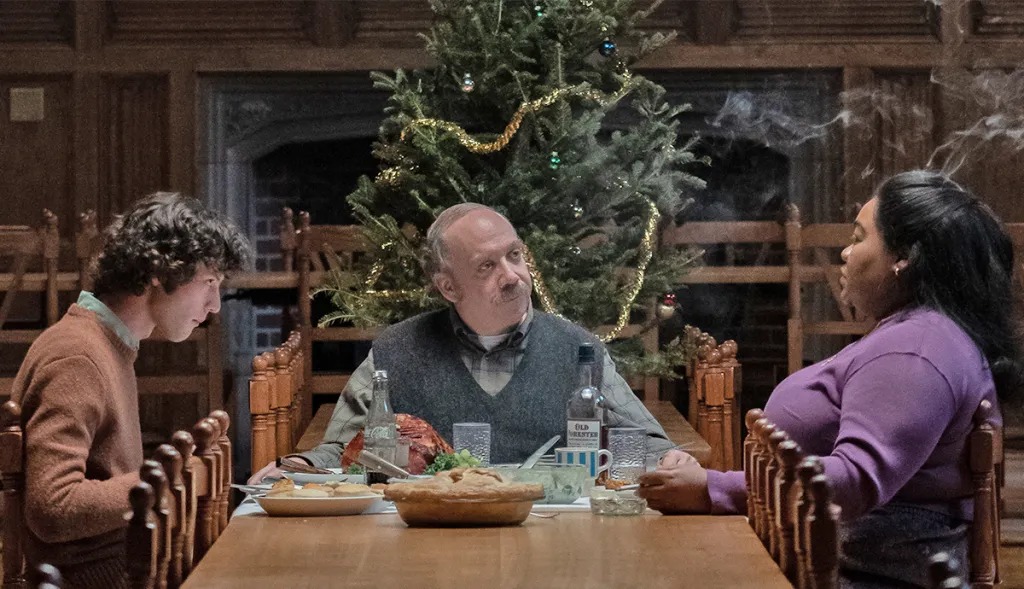
From left to right: Dominic Sessa, Paul Giamatti and Da’Vine Joy Randolph make for unlikely Christmas guests in The Holdovers.

DISCLAIMER: This is from a blog of four reviews I originally posted on March 2, 2024. The original blog has been removed.

At first, you’ll wonder if The Holdovers is the right movie for the Christmas Season or a bad movie for the Season. Not every Christmas movie is a guaranteed hit and there have been some bad ones in the past. Can The Holdovers do all the right moves?

There have been Christmas movies in the past that start as downers but then develop into a film that doesn’t just celebrate Christmas, but celebrates humanity too. It’s A Wonderful Life is possibly the biggest such film that comes to mind. Here we have another story. Set in 1970, we have a teacher at a boarding school whom all the students hate and has no real family or friends. A student of his who gets left behind at the school during Christmas because of his mother leaving him behind for Christmas with her new boyfriend. The school cook who has lost her son in the Vietnam War and feels the hurt at Christmas time. Can the Christmas spirit be present with these three together?

In a film like this, it’s hard to sense if this film has a social theme. We see see how so many of the Best Picture nominees have a social theme in the film which has something to say. I can’t really sense a theme or topic in this film that stands out in a grand way. If a theme made in a soft way, I think it’s about classism and elitism. We should remember Paul Hunhan is a teacher at the Barton Academy boarding school full of boys of some of the most privileged backgrounds. He teaches the classics and is not afraid to fail them if they’re bad, even if the student’s father is wealthy and powerful. That annoys his boss Dr. Woodrup as one of the students Hunham failed, the father stopped donating and that stopped Woodrup from being promoted to Princeton. Adding to the theme of elitism, Hunham himself was a student at the school and attended on a scholarship. Hunham almost sank his future after he deliberately hit one of his Harvard classmates with a car, but Barton was sympathetic enough to hire him as their classics teacher. Adding to elitism is the cook Mary Lamb: an African-American woman who was able to get her son Curtis to attend the Academy because of her employment. After he graduated, he had to pay his way through college and enlisted in the army to do so, only to die in the Vietnam War.

There’s no doubt the themes of privilege and classism abound in this film. There are also parts in the film that remind us all that privilege and classism is not a shelter for everything. The one who best reminds us of that is Angus Tully. Angus is a student who actually does very well in Hunham’s class, but still shows the common troubling behavior of teens, which gets on Hunham’s nerves a lot. Over time, Hunham learns Tully is not the typical privileged brat he sees him as. He learns that Tully is a lonely boy from a broken home. Tully first tells Hunham his father’s dead, but soon learns his father is in a mental hospital. A privileged background doesn’t prevent you from having parents with mental illness. On top of that, Tully has a mother who seems to care more about her new boyfriend than him. That’s another thing with privileged children; having hyper-ambition parents who care more about themselves and often neglect their kids. While Hunham and Mary appear to be victims of a system of classism and privilege, Tully appears to be one living in this privilege but experiencing the harsh side-effects of it. Seeing Tully’s background could give you empathy for Barron Trump! Even that scene where they show a memorial on Veteran’s Day and they memorialize the alumni killed in wars, it’s a reminder that privilege won’t stop you from dying young in a war.

I know I talked a lot about privilege and classism in this film, but it’s an underlying theme in the story. The story is about three different people who don’t want to be together trying to have a Christmas together. We have the classics teacher who has made the boarding school his home since his job and has no problem making a loner of himself or being hated by the students. We have one of his students who can’t stand Hunham and is frustrated with having no one for Christmas. We also have the cook who is not only struggling to be happy after the death of her son but trying to find reason to live. Can they have a good Christmas? Can they get along together? In the end, the Christmas becomes a time when they warm up to each other and get to understand each other better. Angus doesn’t see Hunham as a jerk teacher and starts to understand his love for the classics. Hunham doesn’t see Angus as a jerk student, but rather a boy who needs the closeness of his family. Most importantly, to be reunited with his mentally ill father. Mary Lamb falls in love with the janitor Danny and is reunited with her sister and her family. That scene with the four celebrating New Year’s together shows they did have a Merry Christmas after all. Even if Hunham would get fired for his actions being out of Barton protocol.

This is another great achievement from Alexander Payne. In the past, most of his films have been stories about a man’s feelings of failures. The films he’s done in the past have won him acclaim and even three Best Director nominations. Here he takes a change of direction with a Christmas story with a man as the protagonist, but also as much a story of a student who’s lonely and a cook who feels empty on the inside. It’s a story that makes for the most unlikely of Merry Christmases and somehow makes the merriness happen. We should also thank scriptwriter David Hemingson for that. Hemingson has established himself as a renowned sitcom writer. This is his first film screenplay and it comes out shining. It gets into a deep story but it also remains humorous and keeps the Christmas merry.

Excellent acting again comes Paul Giamatti. If you’ve seen Giamatti act before, you know he knows how to do excellent character work. Giamatti has worked with Payne before in 2004’s Sideways: the film that got Payne his first Best Director Oscar nod. Here, Giamatti is the perfect fit as the curmudgeonous sadistic teacher who actually is a disheartened man who becomes an unlikely friend to a troubled teen. Also worthy of respect is Da’Vine Joy Randolph. Her performance of the cook who lost her soon and tries to keep from hurting is great. Especially since you could sense that there would be a time she can’t hold it in any longer. Her performance stands out and even makes you think the story is as much about Mary Lamb as it is about Hunham. Also great is the performance of Dominic Sessa. He has never acted before and he had the luck as the prep school he attended happened to be the location of this film’s shooting location and he caught the eyes of the casting directors. He’s the right fit in playing a boy who’s smart and arrogant about it, but lonely and hurting on the inside. Sad Fact: Sessa’s own father died when he was 14. Also a great job of Eigil Bryld with the cinematography. Normally for a Payne film, it does a good job of capturing the region. This cinematography was different as it added to the story.

Some of you may remember I wrote a review of a film from the VIFF called The Sacrifice Game. Isn’t it a coincidence that two films of similar storyline of boarding school students left behind during Christmas in the early-70’s get released this very year? Sure, one is a dark comedy while the other is a supernatural horror thriller, but it is quite the coincidence!

The Holdovers is an unlikely Christmas film that does what a Christmas film should, despite the story appearing to pave the way for something depressing, at first. In the end, it’s about three people unlikely to be friends whose lives improve because of each other. An unlikely treat for those lucky to see it.

2023 Oscars Best Picture Review: Barbie

Margot Robbie (right) stars as Barbie and Ryan Gosling (left) star as Ken as Barbie bring the legendary dolls to life.

DISCLAIMER: This is from a blog of four reviews I originally posted on March 2, 2024. The original blog has been removed.

Unless you’ve been under a rock, you would know that Barbie was the big hit movie of 2023. You may also ask did it deserve its box office success or its Oscar acclaim?

I actually learned about the Barbie movie over a year before its release. I saw photos of it on social media. During the time, I thought it was odd. A movie about the Barbie doll coming to life? Could it work? Would it be a dud? I know Greta Gerwig was directing it. I already knew Greta had established herself as a force to be reckoned with in films like Lady Bird and her adaptation of Little Women. Nevertheless I was skeptical that even a director with her accomplishments could make a good film about the Barbie doll. It was up for the release and the reception to tell the full story.

I have to say before I saw it in theatres, I first thought this would be a fail waiting to happen. A big-budget movie about Barbie dolls coming to life didn’t sound like a winner to me at all. Then once the film hit the theatres, it was obvious Greta created a winner. Instead of the film about Barbie dolls, the film’s focus was about feminism and how the patriarchy had made it hard and continues to make it hard. One would ask “Why would one make a movie with a feminist focus by including Barbie dolls?” Simple. Ever since the Barbie doll came, it has been widely blamed for the image problems of young women and commonly seen as “setting the woman’s movement back.” We’ve all heard the arguments and the controversies for decades.

Here, Gerwig settles the score. She creates a world of different Barbie’s based on the owner’s own making of the Barbie. In the middle is “Stereotypical Barbie:” a carefree girl who lives a life of blissful joy which comes to a screeching halt as her owner goes through her frustrations of life. She attempts to go to the real world and the Mattel headquarters to sort things out, only for Ken to piggyback his way in and adopt a patriarchal attitude as a way to fix his own identity crisis.  That leads to the group of Ken’s overtaking Barbieland and claiming it as their own. Meanwhile Barbie’s frustrations grow and grow even after she meets her owner, who happens to be a Mattel employee. Her owner’s frustrations become her own. It’s through meeting women in the real world that don’t look like her and are happy that she gets a sense of what happiness is. Over time, Ken learns he doesn’t have to start the patriarchy in Barbieland to get his sense of self-worth back, but Barbie’s still in a struggle.

It isn’t until he finally meets Ruth Handler, the creator of the Barbie doll, that she finally gets her sense of self back. I feel that scene at the end where Barbie meets up with Ruth is the best scene as it settles the score on the Barbie doll debate, too. After decades of debate and dispute about the doll, we get a moment in the film that finally settles the score about the doll and the image it’s to project. It’s through that ending we learn Barbie was not meant to be the stereotypical ditzy blond we commonly see it as. The Barbie doll was meant to be the epitome of her daughter Barbara. Something beautiful. Mattel may have toyed with the Barbie doll over the decades, but that scene finally settles the score on the matter. The Barbie doll is the result of mother-daughter love. And Stereotypical Barbie finally gets a sense of the never ending story of herself, as well as the human touch which is better than anything she could get in Barbieland.

Top respect should go to Greta Gerwig. Even without the whole Barbie phenomenon of 2023, Gerwig, who directed and co-wrote the film with husband Noah Baumbach, deserves credit for making a hit and a critical success for something that many felt was a bomb waiting to happen. She takes a common theme about the Barbie doll, of how many feel it is a bad influence to young girls and feminism as a whole, and makes it thought-provoking. Despite it being a thought-provoking film, she also keeps it comical and even entertaining to watch. I mean we are talking about a movie about Barbie dolls. Nevertheless, the film shows it can be funny and entertaining and still be able to get its message across strongly. As well as settle the score on the Barbie doll itself. Not to mention, achieve the first ever billion-dollar blockbuster directed by a woman! Congratulations, Greta, for doing all what we thought was impossible!

The film also finds its strength firstly in the acting of Margot Robbie. To take a character like “stereotypical Barbie” and make her three-dimensional without compromising the comedy is an excellent effort. They always say comedy is the hardest thing to do. Try doing comedy while trying to send an important message at the same time. Robbie succeeds in doing that. Also succeeding in achieving that is Ryan Gosling as Ken. Ryan gives personality to the Ken doll that the actual Ken doll has seemed to lack over the years. He succeeds in making Ken an insecure one and one to see patriarchy as the answer to his self-esteem. The performance is as bizarre as it is comical and entertaining. He even manages to make comedy of the patriarchy. Also worthy of acclaim is the performance of America Ferrera. While Barbie and Ken bring on the entertainment, it’s the character of Gloria who brings the movie’s darkness. America succeeds in creating an insecure Mattel employee whose personal insecurities influence Barbie’s insecurities and finding herself happening along Barbie finding herself. Also adding to the film is the narration from Helen Mirren. Her narration adds more charm.

For technical credits, Barbie has to get the biggest respect. Creating something like Barbieland and the Barbie dolls that live there is as much of an accomplishment as the film itself. First, there’s set designers Sarah Greenwood and Katie Spencer. They succeeded in making Barbieland into a land of Barbies that we can’t see anyone else doing a better job. It’s as big and colorful as it should be. Also top respect for costume designer Jacqueline Durran for designing the right type of costumes that look like perfect looks for Barbie dolls but very wearable for the actors and actresses. And then there’s the music. Those who saw it will know there are musical moments without the film being a full musical. Songs like “What Was I Made For?” “Dance The Night,” and “I’m Just Ken” add to the entertainment factor of the film. You can thank the many established songwriters who added their talents to this film.

For technical credits, Barbie has to get the biggest respect. Creating something like Barbieland and the Barbie dolls that live there is as much of an accomplishment as the film itself. First, there’s set designers Sarah Greenwood and Katie Spencer. They succeeded in making Barbieland into a land of Barbies that we can’t see anyone else doing a better job. It’s as big and colorful as it should be. Also top respect for costume designer Jacqueline Durran for designing the right type of costumes that look like perfect looks for Barbie dolls but very wearable for the actors and actresses. And then there’s the music. Those who saw it will know there are musical moments without the film being a full musical. Songs like “What Was I Made For?” “Dance The Night,” and “I’m Just Ken” add to the entertainment factor of the film. You can thank the many established songwriters, and main musical writers Mark Ronson and Andrew Wyatt, who added their talents to this film.

Barbie is more than just a humorous story. It’s a story that takes on the patriarchy, highlights feminism and has something to say about a doll that has delighted billions of girls. And thousands of boys, too. It also lives up to all the “Barbenheimer” hype of the summer of 2023 and entertains the theatregoer easily.

2023 Oscars Best Picture Review: Anatomy Of A Fall (Anatomie d’Une Chute)

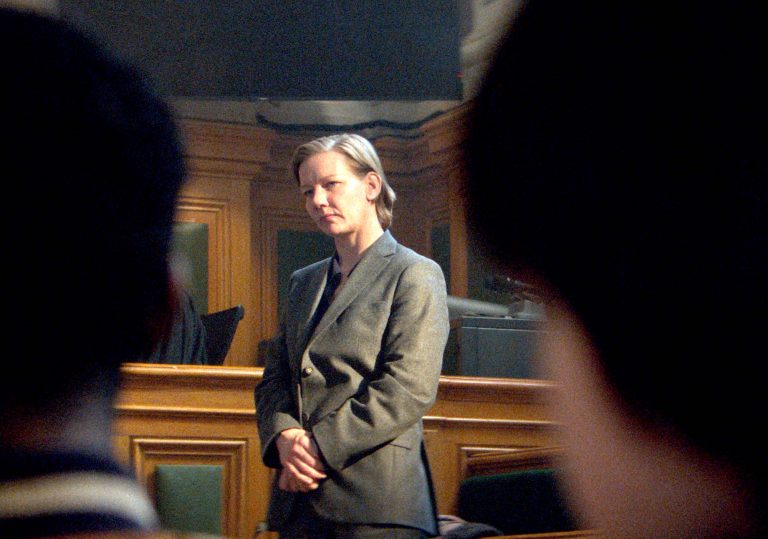
Sandra Huller plays writer Sandra Voyter suspected of killing her husband in the courtroom thriller Anatomy Of A Fall.

DISCLAIMER: This is from a blog of four reviews I originally posted on March 2, 2024. The original blog has been removed.

Anatomy Of A Fall first appears to be a common courtroom drama with a story of intrigue. Over time, you’ll learn it’s a film that’s a lot more.

Courtroom dramas have caught our intrigue time and time again. We’re presented with a criminal scenario or a legal scenario, but it’s up for us to decide whether they’re guilty or innocent or who to side with in a dispute. We learn the verdict and we’re left to decide if it’s the right verdict or not. This story is a unique story. It presents a case of a death from a fall. The deceased is the French husband of a German novelist. The fall happens from a chateau in a remote mountainous area of Grenoble. The first to notice the fall is the seeing-eye dog of the blind son. Questions arise. We learn of the troubled marriage. People turn against the woman. The prosecutor is determined to prove her guilty. The son watches despite his blindness, and seems like he doesn’t know what to think. Could he hold the truth? Could his seeing-eye dog also provide clues to the truth?

This isn’t simply a story of whether Samuel’s death is a murder, a suicide or an accident. It’s a story that develops over time with each new fact exposed, opinions from people in the story coming about, and your own opinions being formed. As we learn of Sandra Voyter, her turbulent marriage, and her recent liaisons, some of us are tempted to look down upon her and even suspect her of possible murder. As we learn about Samuel and his immaturities and later of his depression over the last few years, will that change our mind? The film is as much about how we see things and see people as it is about our story itself. Even possibly exposing sexist attitudes we didn’t think we had. There’s even the angle of the trial as seen through Daniel: the child caught in the middle. A blind boy, he has the biggest sense of the friction his parents have been going through. He lost his father and he’s at risk of losing his mother if she’s found guilty. During the time, he doesn’t know what to think of his mother and often feels lonely. Almost as if Snoop, his seeing-eye dog, is the only one who loves him and he can trust. Sometimes your concern shifts from how Sandra will be found by the courts to what will happen to Daniel. It’s like the film is two stories in one. Even Daniel’s testimony at the end will make you reconsider your stance in the case.

Top respect goes to director/writer Justine Triet. Triet has become only the eighth female director to be nominated for the Best Director Oscar. This film is actually a project she co-wrote with Arthur Haran for actress Sandra Huller to star in after the two worked together in 2019’s Sibyl. She creates a great story that presents a death and the question if it’s an accident or a murder. She presents it as a story of a French-speaking wife and a German-speaking husband who use English as a common ground to sort things out, but it adds friction. The death, the courtroom drama, the turbulent marriage, the communication barrier, and the son caught in the middle adds to the story. Even the ending which allows you to draw your own conclusion of the incident adds to the film.

Along with Triet, there was great acting from Sandra Huller. Her acting in this story helps create the character along with the actions and allows the audience to make their decisions in the case. Huller is as much of a storyteller as Triet herself. Also great is the performance of Milo Machado-Graner: the son caught in the middle. There are many times in the story, some thanks to camera shots of the courtroom drama, where one can think the film is as much about Daniel as it is about Sandra. He’s trying to make sense of what is happening. He is suspicious of his mother but is scared he will lose it all. There are times he tries to be tough with him teaching himself piano by sound clips, but you can tell he could break down. It seems like the dog Snoop is his one friend, especially with his sheltered upbringing. Graner makes him a boy you want to hug. Adding to the film is Messi The Dog as Snoop. Through Messi, we see Snoop is more than Daniel’s seeing-eye dog and best friend. He’s also one that hold clues to what could expose the truth. Additional great acting performances include Samuel Theis as Samuel Maleski, the husband that struggled with mental illness whose struggles threatened the family, and Antoine Reinartz as the prosecutor who will get you wondering if he wants justice done or simply to have Sandra found guilty.

This film has been lauded with buzz since the Cannes Film Festival. The film won the Palme d’Or at the and Triet became only the third female director in history to win. You know how I talked about Messi The Dog adding to the story? At Cannes, Messi was even given the Golden Dog Award for his efforts! Even after Cannes, film festival after film festival it was entered in would have this come away as the big winner. The film also won six European Film Awards. The film was not France’s official submission in the Best International Feature Film category. I assumed it’s because there’s too much English in the film, but other articles are suggesting there may be politicking.

Anatomy Of A Fall is a great legal drama that tells the story of a death in question and doesn’t only leave its fate to the juries, but for the audience to decide for themselves what they believe to be the truth. Even Triet herself won’t say if Sandra is guilty or not. All your call!

2023 Oscars Short Films Review: Live-Action

It’s interesting when the Academy deliver their nominations for feature-length films, they’re mostly for English-language films. Most of them being American films. Yet the nominees for the short films categories are often multilingual. For the films nominated for the live-action category, we have  films in French and Danish. We also have three English-language films, but two are from the UK. Not as much foreign language as the animated films but still it tells how these categories are among the most international of them all.

What’s interesting about the short films in the live-action is that many are from up-and-coming directors, as is the common case in this category, but we also have one British film directed by Wes Anderson! Also in the film are renowned star actors like Benedict Cumberbatch, Ben Kingsley, Dev Patel, Ralph Fiennes and Richard Ayoade. The other films also show actors of renown like Brittany Snow, Leif Andree and David Oyelowo. So there’s something about short films that make well-known actors want to pursue them.

Without further ado, here are my thoughts on the Live-Action short films nominated for the Oscars:

The After (dir. Misan Harriman) – Dayo is a successful businessman in London. One day, he drives his daughter to the top floor of a parkade to meet up with his wife. Suddenly a man wielding a knife commits a massacre all over the parkade. The man stabs his daughter to death. The wife, heartbroken, jumps to her death as Dayo fights to restrain him for the police. Time passes. Dayo is resigned from his position and makes his pay an Uber driver. He has cut off all contact from his friends and colleagues and won’t even meet with crisis management counselors. Although he keeps to himself, it’s obvious he’s still hurting on the inside. As he waits for his latest customers at the airport, he takes the picture of his family and sings “Happy Birthday.” The daughter of the family he’s to drive looks very much like his own late daughter. He tries to restrain his emotions at first as the parents make their way to the car. During the drive, the couple are consistently arguing in front of the child, but the daughter is sensing something is wrong with Dayo. Dayo still tries to keep his cool. As he gets out lets the family off at their house, the daughter goes to hug Dayo and Dayo just breaks down. The parents are shocked by what they see and leave him, but Dayo picks himself up.

How do you live again after you’ve lost it all? This is the type of question we don’t normally ask ourselves or don’t want to think about but unfortunately, there are some people who have to do exactly that? This is a story that does a great job of showing the before-and-after of a tragic incident that claims the lives of Dayo’s wife and daughter. Throughout the story, Dayo is the storyteller through his actions and his emotions. Even without dialogue, you can sense what Dayo is saying through his body language. He doesn’t know how to live again or deal with his emotions. It’s right after the breakdown he has after the daughter hugs him that Dayo knows he has to continue on, despite how hard it will be. This film which is the directorial debut film for Misan Harriman tells a gripping story with a profound message. David Oyelowo does an excellent job in his performance in both scenarios of the story. If they could give Oscar nominations for performances in short films, I’d say give one to David!

Invincible (dir. Vincent René-Lortie) – The film begins with a young boy in the driver’s seat in a car named Marc who telephones his mother, but doesn’t say a word. His mother tells him to come home, but police lights flash. Rather than surrender to the police, Marc drives the car off the cliff into the water. Going back weeks earlier, Marc is on a family vacation having fun with his family at the lake. He plays with his little sister but is embarrassed of how she chickens out with her finger over his lighter. This is the last set of fun Marc will spend with him before being sent to the youth detention centre. The first day, Marc can’t stand being in a sweltering room with no way to cool off. He ignites the sprinkler system which the officials put him on a stern warning. A councillor tries to deal with Marc and tells him how he has what it takes to be a smart positive influence on others and can’t understand why he’s always getting in trouble. One day, the official sees progress in Marc and how he helps others. The officials decide to take the boys to a nearby community pool. it appears Marc is having fun with all of them but when the councillor isn’t looking, Marc does his latest escape. Marc runs into a car but as the woman enters a store to call the ambulance, Marc steals it, attempting to take his escape further. As Marc stops, he calls his family. The mother, aware the police are pursuing Marc, pleads for him to return as the sister tests her pain with the candle.

This is a story inspired by a troubled 14 year-old boy from Quebec who killed himself as he drove into a lake in 2008. The story haunted the people in the area for many years. The boy, Marc-Antoine Bernier, was a friend to the director. Here, it appears the director is using his film to bring some respect back to Marc. Marc was an intelligent boy capable of a lot of good, but kept on getting into trouble. We all have known a kid like that in our childhood. Although this is a story inspired by a real-life person and based on true events, there may have been events or happening added to the story. Only Marc knows what really happened. Nevertheless Vincent makes a good effort to redeem Marc from the story he tells and even tries to get us to feel some empathy for him. We’ve all had those years when we were younger when we all felt we were trapped mentally, if not physically. If Vincent doesn’t make you feel empathy for Marc, he does make for an intriguing story. That’s why I make this film my Should Win pick.

Knight Of Fortune (dir. Lasse Lyskjær Noer) – Karl is at a multi-chapel funeral home where he comes to mourn his wife. Left alone, he can’t bring himself to open the casket. He tries to adjust a light but it breaks. Frustrated, he goes to a bathroom where he encounters another widower named Torben. Torben claims he can’t open the casket for his wife. Karl goes with Torben to the chapel and helps open the casket. As Torben attempts to say his “last words,” a family comes in. They’re the real family of the deceased woman including the real widower. They allow Torben and Karl to stay. When the widower is at a loss for words, Torben is able to say the right words as if the woman really was his wife. Karl leaves Torben angrily but he later learns from the funeral directors that Torben lost his wife in a boating accident three years ago and never had a real chance to say goodbye. Outside in a nearby bench, Karl notices Torben. Instead of anger, Karl laughs and invites Torben to the chapel where his wife is. Torben is able to open the casket and Karl is able to say his last goodbyes. As Karl gives his wife one last kiss Torben sings “Knights Of Fortune.”

Another story of loss and coping. Although this story deals with the subject of death in a gentler manner, and even includes humor, We all know that loss is never an easy thing to deal with, but it needs to be dealt with. This is a story of a widower struggling to properly say goodbye encountering an imposter who knows the right words to say goodbye to a woman he’s never really met, but makes like she was his wife. Once Karl learns about Torben that he’s not simply an imposter, but a hurting man who uses funerals of wives to say the goodbyes he always wanted to say to his own wife, could Torben be the very person to help Karl deal with his grief? This is a story of grieving, healing and saying goodbye that is greatly different from other stories. Nevertheless it does offer a message of healing and hope. It’s ironic how this imposter is exactly what Karl needs to properly deal with is loss and say goodbye, and a friendship that really shouldn’t be, happens.

Red, White and Blue (dir. Nazrin Choudhury) – Rachel, a waitress in a diner, looks at a pregnancy test and sees a positive result. Rachel is a single mother who has difficulty to support her two children. She also lives in Arkansas where abortion is illegal, thanks to the overturning of Roe v. Wade. She plans a trip for an abortion procedure in Illinois where it is legal, but it’s more than she can afford. One day, a woman customer who somehow knows what Rachel is dealing with leaves her a tip which makes up the remainder for her abortion trip. Soon, she leaves her son Jake with a friend as she takes her daughter Maddy on this trip. This is the first time out of Arkansas for both of them. Before they go to the clinic, they go to a carnival as it’s just before Maddy’s birthday. Maddy wants a merry-go-round ride, but it’s more than Rachel can afford. She agrees to one ride and Maddy chooses the elephant. At the clinic, Rachel learns she’s late for her appointment but through past recollections and as the receptionist learns the dirty facts, she tries to make it urgent.

No doubt this story is about abortion. Especially in post-Roe v. Wade United States. The thing is this story is more than that. You know the story is about the pursuit of an abortion, but it’s not what you originally think at first. You think it’s about an impoverished mother getting an abortion because she’s two-and-through, but things change as you learn more information. You wonder why on earth would a mother take her young daughter on an abortion trip? Soon you learn there’s more to the reality of unexpected pregnancy and abortion that meets the eye. Including a lot of upsetting truths. It’s also surprising how in a story that has a theme that hits close to home and presents a story that many would find upsetting, it is still able to have a heart-warming ending that works. That is something in film that is very tricky to do, but Choudhury accomplishes it!

The Wonderful Story Of Henry Sugar (dir. Wes Anderson) – Based on a short story written by Roald Dahl, Henry Sugar is the pseudonym of a wealthy bachelor who loves to gamble away his inherited riches. Thing is he never seems to have enough and wonders how can he get more money? He learns the legend of a man from India named Imdad Khan who learned the fine art of levitating and seeing with is eyes closed, thanks to the teachings of a Great Yogi. Thing is as the doctors were studying Imdad, Imdad tells his story and dies suddenly. Henry tries through great lengths to master this technique through all he can learn. Once he finally masters the sight trick, he goes out gambling and wins big! Problem is all this money isn’t making him any happier. At first he thinks the right way to give the money away is to throw it off a balcony. After it causes a riot, police recommend Henry develop a better method. Henry then spends the next twenty years traveling the world, gambling, and donating his winnings to hospitals and orphanages.

This is the last of the five shorts shown in the shorts.tv reel. After seeing four stories that were either depressing, too serious or had dark subject matter, it was refreshing to end the reel with a light-hearted comedy. The story succeeds in making the tale amusing. Already we have a major director directing it and four major actors — Cumberbatch, Kingsley, Fiennes and Patel — acting in it. Nevertheless the story telling, set changes, and the acting of all make it a delight to watch. It makes for a “guilt-free guilty pleasure” as I like to call such things. That’s why I make this film my Will Win pick!

And there you have it. Those are my reviews of the five films nominated in the Oscar category Best Live-Action Short Film for this year. That also completes all my reviews for the Oscar-nominated short films. Those short film categories are usually the hardest to pick a winner. You think you know what will win, but end up surprised in the end. We’ll see how it all goes on March 10th.

2023 Oscars Short Films Review: Animation

It’s interesting with seeing the reels of the shorts films, the Animation nominees are often the ones with the least total running time. They go by so fast, the shorts.tv reel add in a couple of other shortlisted films that got their honorable mention.

Anyways without further chit-chat, here are my reviews of the nominated animated shorts:

Letter To A Pig (dir. Tai Kantor) – The story begins telling of a boy hiding in a pig sty from Nazis who seek to put him in a concentration camp. The Nazis can’t find him. Fast-forward many decades later. The man tells his story to school students on Holocaust Memorial Day. He tells of how he credits the pigs in the pig sty for saving his life. He even wrote a letter to the pig. As he reads it aloud, one boy gives a taunting “oink,” while a female student listens intensely. As she engages herself in the story, she imagines herself and her classmates coming across a giant almost monstrous pig and them holding him prisoner in a trap. As they hold the pig prisoner, she can feel her nose metamorphose into a pig snout. Soon she feels sympathy for the pig and lets the pig go. As the pig is set free, he shrinks into a piglet and she hugs him.

This is an impressive story. It’s a story of a man who tells how a sty of pigs — animals he had been taught his whole life to regard as filthy and disgusting — helped spare him from dying in the Holocaust. As the young girl hears the story, she reflects on her own feelings of human hatred directed towards a pig in her mind and how she develops sympathy soon after and learns to love the pig. The story has its themes of collective trauma, fear and identity. It’s done in an impressive style that consists of a mix of 2D pencil drawings with minor colorization and mixing it with live-action images. The film is as much about the imagery as it is about the story. That’s why I give it my Will Win pick.

Ninety-Five Senses (dirs. Jared and Jerusha Hess) – The story begins with a man telling his views of human senses and colorful images about from the words he tells. At first you get the impression, this man is friendly. Then you hear his story. This man is on death row having his last meal. The capital offence he committed was arson of a repair shop he was fired from. He loved the jobs, but couldn’t handle being fired. He responded by setting it ablaze, forgetting the shop was also a house where the family lived above. As he anticipates his last meal, he looks over his past with regret, but also a sign of hope in the afterlife. He even has an outlook of how all once a person died, each of the five senses fade in their own way one by one. After a life of only five senses, he looks forward to the 95 senses in the afterlife.

It’s very rare you hear a story of a man awaiting execution to be told with a light-hearted spirit or even with some optimism. Never mind including humor. The man, voiced by Tim Blake Nelson, does a great job in telling his story without it becoming a common “Sob Story” you’d expect from a Death Row inmate. The story comes with some surprises for those who watch, like you wonder how a man that sounds so friendly would end up on Death Row. The film even ends on a humorous note. The story not only tells of the incident and of his observations and hope, but it does so in including in all five of the human senses. The story is told through six different animation styles and a multitude of colors that’s a delight to watch, despite the dark subject matter.

Our Uniform (dir. Yegane Moghaddam) – This film is where Yegane tells her story of growing up as a girl in Iran right after the Islamic Revolution. She talks of how the female teachers taught the girls to shout anti-American, anti-Israel and anti-UK messages on a daily basis. She talks of the uniform she was required to wear at school and of how the women there were firm in how all girls should wear their clothes in a proper manner and have all their hair hidden in a hijab. She talks of the difficulty she had in the hijab covering her hair that was longer than the hijab cloth, which got on the women’s nerves. She reflects on how growing up, she was taught under the new revolution to feel like she was inferior to men or below men.

No question this is a film of how a girl was indoctrinated with sexism not simply at a school, but from a system implemented by the ruling regime. The theme of the story is to do about clothing and the strict religious regulations of how girls should wear their clothing according to the new regime. The story is told with stop-motion imagery using clothes or fabrics of the clothes she wore as a child. The images drawn or painted on the clothes as well as the stop-motion movements of the clothes do a great job of telling her story. The use of clothing in the animation of telling the story is vital since clothing has a lot to do with what life was like under the regime. It makes the images as vital to the story as Yegane’s retelling. Hiding all your hair in a hijab and wearing a dress that covered everything was the new law in Iran and the film shows it in a unique way.

Pachyderme (dir. Stephanie Clement) – A woman retells her story of how as a young girl, she would often stay at the cabin of her grandparents. Her grandfather’s stern manner leaves her with a feel of fear and discomfort. The cabin was located by a lake. The cabin bedroom she sleeps in has a displayed elephant tusk the grandfather names “Pachyderme,” pointing in its direction in the hall. The room would give the girl and eerie sense about it through the wood imagery and the creaking of the boards. Even though the grandparents would say there’s nothing to fear, she felt there were monsters to take her. She goes to a lake where a woman had drowned some time earlier and feels spirits drawing her to its depths. Some time later, the grandfather dies and Pachyderme is split in two. As she returns to the cabin following her grandmother’s death, she takes both pieces of Pachyderme to the lake to bury it in the water. One of the two pieces is not completely immersed.

This film has to be the darkest of the five. In reading articles about it, it deals with the subject of incest. Incest itself is disturbing enough for audiences so it makes sense that it’s told through subtle imagery and storytelling that hides the actual facts. The theme of how she regards her grandfather as a monster and how it’s represented in Pachyderme adds to the storytelling, including the burial at sea. The ending where she attempts to bury the two pieces of Pachyderme in the water remind us she can bury a horrific memory like her grandfather’s terrible ways, but the small piece sticking out reminds us the bad memory can’t completely be buried. The imagery of the story is told through 2D images that appear as common images one would remember from storybooks they read. Possibly the monster that is her grandfather is epitomized through the common images of monsters we read in our children’s books of the past. It’s charming in its imagery as it is disturbing to see and listen to the harrowing story.

War Is Over! Inspired By The Music Of John And Yoko (dir. Dave Mullins) – The film starts in a battlefield of war. One soldier has a chess set where he appears to play by himself. After he makes his move, he writes his move on a piece of paper and attaches it to the leg of a messenger bird. The bird flies to “enemy territory” and gives the message to an “enemy” soldier who also has a chessboard and looks like he’s playing by himself. After he makes his move, he writes his move to a message for the messenger bird to deliver. Over time, the intrigue grows with the soldiers on both camps. As the bird delivers message after message, the anticipation on what the next move will be or who will win appears to quell the enmity between both sides. Then checkmate! But the sergeant is disgusted by what he sees. He reminds the camp they’re enemies and the battle must begin now. The soldiers on both sides line up with bayonets and all ready to do battle against the “enemy.” The battle begins and bloodshed ensues. On the field one soldier notices the messenger bird is shot dead. Just as the two soldiers from the chess game confront each other, it’s there from a message that slips out that one realizes the other is his chess rival. They drop their guns. All drop their guns when they see the written message “War Is Over.”

This is a creative story Dave Mullins directs and co-wrote with Sean Ono Lennon and Brad Booker produces through the inspiration of John Lennon’s legendary Christmas song and the message “War is over if you want it.” The one 3D-computer animated film nominated in this category this year, this is a film with a montage appearing to have a World War I setting and sends a message that still matters today. There may be a winner in a chess game but there are no winners in war. The scene where all the soldiers are intrigued and excited by a chess game against a player from the “enemy” side sends the message that enmity is something war creates and provokes, and is often unnecessary. The ending where the bloody battle is instantly ended with the written message “War Is Over” also sends a message of how many battles are in vain. The story first seems to be a story that’s either cute or “fluffy,” but the ending of the bloody battle with “Merry Christmas (War Is Over)” sends a significant message that is as important today as it was when John and Yoko recorded it back then. That’s why I give it my Should Win pick.

And there you have it. That’s my review of the five films nominated for Best Animated Short Film. Interesting that in a time where animated features appear to be dominated by 3D computer animation, only one of the five nominated films is such. That’s what I like best about this category. It opens itself up to various styles of animation, rather than going with one that’s all the rage.

2023 Oscars Short Films Review: Documentaries

Once again with the Academy Award nominations being awarded for the biggest feature-length films of the year, the AMPAS Academy also rewards the short films in three categories. I’m lucky to live in Vancouver where I can see the short films on the big screen.

The first set of films I will be focusing on is Documentaries. In each of my blogs about the short films, you will also get my predictions for which films Should Win and Will Win:

The ABC’s Of Book Banning (dirs. Sheila Nevins, Nazenet Habtezghi and Trish Adlesic) – This documentary focuses on recent regulations implemented in American school systems in the past ten years to ban certain children’s books. Most notably in Florida. There are three classifications: Restricted – disallowed to children unless permission from parent; Challenged – at risk of being banned from school libraries; and Banned – completely banned from school libraries. The books banned are mostly to do about the themes of racism and racial empowerment, sexism and female empowerment, and LGBT pride. The authors are unhappy and the children can’t fathom why they’re banned and are disappointed with the reading material they are allowed to read.

This is a smart documentary that highlights the problem from all angles. It doesn’t just show the classification system but also the books that have fallen prey to this system. We hear verses from the book and we sense why they’re banned, but still wonder what’s the problem? We hear from some of the authors of these banned books and what they have to say. We hear what the children have to say and how they can’t understand why they’re banned and what they’re left with are books with weak material. You’re left feeling for those children and the lack of knowledge they’ll be receiving. You’re also left wondering about how the USA — a nation that advertises itself as “the land of the free” — can allow for book banning to happen. I thought book banning and book burning were considered “Un-American!” Not anymore? That’s why I pick this as my Should Win and Will Win picks.

The Barber Of Little Rock (dirs. John Hoffman and Christine Turner) – In this documentary, we are introduced to Arlo Washington. He started as a barber in Little Rock, Arkansas to help raise and provide for his younger siblings after his mother died shortly after his graduation. Over time, he progressed to opening his own barber shop, then his own haircutting school, and then opening a loan company that gives loans to African Americans and other impoverished people the banks normally reject. The film not only showcases what Washington has accomplished but also interviews some of his loan customers from his bank and gets them to describe systemic racism.

The best thing about this documentary is its insightfulness. It touches on a topic we commonly hear about, but know very little of the stories of people who live it. We learn of the man who beat the odds, but he’s not hoarding all his wealth to himself. He’s a man who knows the problem and is willing to create things to empower people like never before and even fight a centuries-long problem like never before in the community. The film also reminds us that what he’s fighting is a nation-wide problem. The opinions from his interviewed clients about the topic of economic discrimination and systemic racism will open your eyes to the very people who have been hurt by this. Although Washington is doing a great job fighting it in Little Rock, he can’t fight it alone and there’s lots to be done nationwide. This documentary is very much an eye-opener.

Island In Between (dirs. S. Leo Chiang and Jean Tsien) – The film is about S. Leo Chiang, a Taiwanese-born American filmmaker, who returns to his nation of birth, but to an area he only knows from his family’s past military duties. The part of Taiwan he returns to is the Island of Kinmen. Kinmen is a set of Taiwanese islands that are closer to Mainland China than the main island of Taiwan. Actually the area of Kinmen he lives in has just a three-mile separation from the island city of Xiamen through the Tuyu Islet. As he sees this seemingly-short gap of water between the two islands and the rusty military guns that sit by the coast, he reflects how he was taught Taiwanese pride in his childhood and of anti-China propaganda he was taught. He talks of his confusion of his citizenship as he mentions of using his Taiwan passport to return to the US, but use his American passport to visit China. He talks of radio messages sending messages of freedom to the citizens of Xiamen and continue to be sent. He talks of the fear of war with Mainland China that could erupt and how tensions appeared to be easing in the last twenty years. One of the breakthroughs was a ferry system that could allow Taiwanese people to visit Mainland China that went well until the COVID pandemic hit.

This film serves as a reminder of the Cold War we forgot still exists. The Iron Curtain that was broken down in Eastern Europe in the early 1990’s overshadowed that hard-line Communism still exists in a few nations like the People’s Republic of China. Those unfamiliar with history will need to know China underwent a Cultural Revolution shortly after World War II which separated the Communist mainland from the capitalist Taiwan. The two nations have been bitter political enemies since the start. There was warfare between the two in the 1950’s. Despite the war ending many decades ago, the fear of another war still continues despite the guns rusting away on the coasts of the island. Chiang shows how all this has had a hard time for him establishing his identity. The national politics, the use of passports and the recent slow breakdown of political barriers leaving him wondering how should he identify himself? Chinese? Taiwanese? American? This is another documentary that’s insightful about a topic we so easily overlook.

The Last Repair Shop (dirs. Ben Proudfoot and Kris Bowers) – This film focuses on a shop in Los Angeles that repairs musical instruments. It’s not just any repair shop. This repair shop repairs musical instruments for the 80,000 school students in the Los Angeles Unified School District area free of charge. It’s the last shop of its kind left in LA. Featured are the repair people: Dana, who repairs stringed instruments; Paty, who repairs and cleans brass instruments; Duane, who takes care of woodwinds; and Steve, who repairs and tunes pianos. In the film we learn Dana is a gay man who had to be closeted in his early years, even as he did music in his prime. Paty, a single mother, first appeared to have a limited future as a music teacher until a chance to show her skills opened doors for her and a better income for her family. Duane used to be a banjo player who performed for the President of the United States. Steve learned music in his home nation of Armenia until a war in 1990 where his father was killed caused his family to flee to the US. The film also shows some of the students whom benefit from the repairs performed. Most are from underprivileged areas. The film ends with a final symphony with all.

This is one of the least heavy documentaries of the five nominated. This is a film that will remind you not to take things for granted. We learn of the students whom are benefiting from this. Students that value the music lessons and see ambition in their instruments and their lessons. Students that wouldn’t have much of a chance elsewhere, or would come at a cost. We learn of the people in charge of the shop. We learn of their backgrounds and how music either was always part of their life or changed their lives for the better. We learn of how some like Paty have this as an opportunity to beat the odds and have something better for herself and her family. As we watch the final symphony, we see how for all involved that music is not just music. It’s a crucial part of their lives and represents a future of promise for the young. This is not simply a documentary that’s light-hearted. It’s as much insightful as it is a delight to watch and enjoy.

Nǎi Nai & Wài Pó (dir. Sean Wang) – Two grandmothers. Both in-laws. One grandmother goes by the name Nǎi Nai. The other goes by the name Wài Pó. One is in her 80’s, but still feels young. The other is 94, but feels like she’s 100. They both live in the same house and sleep in the same bed. The two talk of their history and of how they first met. The two talk of how both of them, each different in their own way, manage aging and still do their best efforts to maintain a vital life. The two also talk about the fears of aging. Especially as one looks through an old personal phone list and notes how it has the numbers of those that are deceased.

This is a documentary that’s sweet, funny and sad at times. We see two grandmothers of the filmmaker who go by different names and live together. Their friendship is surprising since in-laws are known to be at odds with each other. They show how they continue to pursue vitality in their ages and will do it in their own way, whether by one doing cultural sword arts or one drinking shamelessly. They also show that they won’t shy away from some of the dark realities of aging. They know that despite the vitality they pursue and odds they aim to beat, there are some sad reminders of some realities around the corner. It’s a mix of bitter and sweet that is impressive to watch. Including the ending where one calls Sean a brat!

And there you have it. That’s my review of the five documentaries nominated in the category Best Documentary Short Film for this year’s Oscars. I know I described many of them as “insightful,” but all of them are eye-openers that will get you to see more about topics you may already be familiar with, topics you never know about or even topics you may have overlooked before.

My Predictions For the 2022 Academy Awards

The date of this year’s Oscars have been moved up an extra two weeks from the 2021 awards. The pandemic is in the midst of dying down and more people are heading back to the theatres. This year was better for me for movie watching. I saw enough films to make up 93 of this year’s 125 nominations! I only streamed one contender this year and it was just yesterday!

This year’s Oscars are to be held on Sunday March 12th. Jimmy Kimmel returns to host for the first time in five years. What’s your guess the Will Smith slap will be in many of the jokes? Yes, it was a shocker last year, but I know the Will Smith/Chris Rock rivalry is something that goes way back! We can’t get enough of these Hollywood feuds, can we? The show promises to be good. Hope it’s not as long as last year’s. And to think last year they did all sorts.of tricks in an attempt to shorten it! Boy did it fail! Anyways this year’s Oscars should be enjoyable and those attending Oscar parties should have fun. So without further ado, here are my picks for the winners of the 2022 Academy Awards:

BEST PICTURE

The annual tradition for Olly Gibbs to do an image of the ten Best Picture nominees is back for the tenth and last time! What can I say? All good things must come to an end! Great stuff with this year’s ten! And thanks for the great images over the years. I’m happy to have seen nine of the Best Picture nominees on the big screen. It always looks better on the big screen. I wrote two sets of reviews of the Best Picture nominees: one from All Quiet to Everything Everywhere; the other from The Fabelmans to Women Talking. In the meantime here are my opinions of the Oscar chances of the ten Best Picture nominees:

All Quiet On The Western Front  Last year, West Side Story was the reboot of a former Best Picture winner to get nominated. This year, it’s All Quiet On The Western Front. It does seem odd for a World War I drama to get a reboot but after you see it, it makes sense. We live in a time of great cynicism of our leaders. Often we wonder what the point of war is all about. Is it about the people? Or the leaders’ egos? It comes at a good time now as Ukraine is undergoing a war all for the sake of a President’s lust for power. This is a film that is deserving to win Best Picture but there are others that have better chances.

Avatar: The Way Of Water –  The first Avatar movie was worthy of winning Best Picture, and it almost did! The sequel faced a challenge of bringing back the magic of the first Avatar while creating a story that differs from the first. The film succeeds in delivering a new story and returning the audience to the world they experienced watching the first. The thing is the film has a lot of technical nominations but is the only Best Picture nominee without a single acting, directing or writing nomination. It’s because of that I don’t consider it a favorite to win Best Picture.

The Banshees Of Inisherin– Normally the Academy turns up their nose to comedies. I find that funny because if you ask any actor, they will say comedy is the hardest thing to do! This year, there are two comedies that are frontrunners to win Best Picture. Additionally, both of the heavily-favored comedies have four acting nominations to boot! First up is The Banshees Of Inisherin. It starts as a story that seems boring; a lifelong friendship ended because one thinks the other is dull. As the story develops, the rivalry gets more intense and bizarre. Like why would someone with a grudge want to cut their fingers off? Its twists and turns and surprises all around make this a bizarre tragicomedy and the film I predict to be the Most Likely Upsetter to my pick to win.

Elvis – Is it possible.to make a movie about The King that looks like material that belongs on the big screen? Baz Luhrmann answers that with a big fat “Yes!” A lot of the best material of the film comes from the direction and creativity of Luhrmann. Top highlight, however, is the dead-on performance of Austin Butler. His performance of Elvis through the various stages of his life was eye-catching and would keep your attention. This film was loaded with Oscar buzz from the start but just like Power Of The Dog last year, its buzz faded fast.

Everything Everywhere All At Once –  I know I mentioned it’s very hard for comedies to get Oscar love. Well try a movie that involves going through various alternating universes. Doesn’t sound like a top Oscar contender, does it? Well, that’s what Everything Everywhere All At Once is! It’s a ‘film of the absurd,’ but a very entertaining one as Evelyn goes through her various alternate lives in entertaining style. Very well done and very entertaining. That’s why I give it my Should Win and Will Win pick!

The Fabelmans- Normally a film about a filmmaker as a child directed by that very filmmaker would first come across as egotistical. However we’re talking Steven Spielberg. For those whoever wondered what inspired his most thrilling and most remarkable works, there’s your answer. At a time when people have been so down about so many things happening in the world and even near where they live, the film is a reminder that the dream is worth shooting for. That having a great imagination can still go far. Even in a time of great pessimism right now.. Even during the most difficult times. A film like this would normally be considered worthy of Best Picture and it was a heavy favorite at one point, but it tuned out to be the biggest fader thanks to low box office results.

Tár – This is an accomplishment for director Todd Field. It seemed like he was bound to have a major Oscar contender any time soon, but it was a matter of waiting. Finally he does it with Tár. The cornerstone of the film is the performance of Cate Blanchett as Lydia Tár. It’s through her performance we’re drawn to a story of a musical conductor’s rise to the top and sudden downfall. It’s also Field’s direction that makes the film on of the best of the year. Despite it being great, there are other films that have better chances to win Best Picture.

Top Gun: Maverick – The norm for Hollywood sequels for big hits is to wait two years, possibly three. There have been other films with longer waits, but they’ve mostly been flops. Now a sequel for Top Gun 36 years after the original seems hard to buy. I know there’s a lot of rebooting happening, especially of entertainment from the 80’s, but would a sequel for Top Gun work after this much time? Tom Cruise, director Eric Kosinski and the dream team of writers proved that it can. It can create a believable story set in the present and bring back the excitement of the first with adding new flares. Exciting film to watch and may have good chances of winning Best Picture, but normally the Academy doesn’t reward a film like this Best Picture.

Triangle Of Sadness- This is a film that caught a lot of people by surprise. A shocking story of a young model/influencer couple on a cruise with the mega-rich and they get lost at sea. The film consists of a lot of bizarre humor from the food choices of the rich to their behavior to the bizarre sinking of the ship to even the death of the donkey on the island. One can say this film is the crowning achievement for director Ruben Ostlund. It’s a dark comedy that comes as more entertaining than one would expect. It has a lot of Best Picture qualities, but its chances are slim compared to many others.

Women Talking –  This is another film that will catch one by surprise. This is a well-directed story that touches on a topic that’s rarely talked about. It’s also a shocking reminder that even is these times of modernization, there are still these religious communities that have their own society and own rules separate from the outside world and a clearly dominated by the patriarchy. This story also shows how women who had been denied so much are able to achieve their own empowerment when they band together. It’s a slow story that catches your intrigue over time. Despite it, I feel it’s the film with some of the least chances of winning Best Picture.

BEST DIRECTOR

Should Win and Will Win: Daniel Kwan and Daniel Scheinert – Everything, Everywhere All At Once

The Academy has been known to have interesting picks for their Award winners. Sometimes they will give it to the legends with a lengthy career and sometimes they’ll give it to newcomers with a fresh unique idea. This year, it looks like the favorite to win the Best Director Oscar is a duo of directors known as “The Daniels.” Kwan and Scheinert have had their start with doing music videos and short films that caught a lot of eyes. They’ve only had one other feature-length film they directed together. This film is not only the best they directed together, but also an excellent film-of-the-absurd that people will find very entertaining. Even if most won’t understand it, they will love the comedy of it. This is a very complex story which must have been difficult to put all together, but The Daniels mastered it! Deserving Oscar winners.

BEST ACTOR

Should Win and Will Win: Brendan Fraser – The Whale

The most interesting thing about this year’s nominees is that sixteen of the twenty acting nominations are for first-time nominees: the most ever! The Best Actor category, which is normally the most veteran-friendly category and has the least first-time nominations, is completely filled with first-time nominees! For this category I pick Brendan Fraser’s performance to win. Many people were not up for seeing The Whale. I can understand because it is a depressing story based on a stage play. Fraser does an excellent performance of a 600 lb. man who’s coming close to the end of his life and comes to terms with a lot of hard truths in his life while attempting to make peace with the people around him. He also plays his role as an oversized person with sensitivity and with respect. Usually the Best Actor category is one of the most decisive categories, but this has been a tough battle between Fraser and Austin Butler in Elvis. The Oscar year began with Butler the heavy favorite as Elvis but I feel it’s Fraser’s turn on Oscar night.

BEST ACTRESS

Should Win and Will Win: Michelle Yeoh – Everything Everywhere All At Once

This year achieved a feat of four Asian actors receiving Oscar nominations for the first time! Three of them are from Everything Everywhere All At Once. Michelle Yeoh herself made history as the first Asian actress to be nominated in the Best Actress category! It’s easy to see why she is nominated. Her story is very complex going from a simple business owner to travelling through so many universes as she contemplates the life she could have had. Those who’ve seen the movie will know this is a very complex thing to do to deliver a performance with so many complex characters and put it all together. Michelle is very deserving of the win.

BEST SUPPORTING ACTOR

Should Win and Will Win: Ke Huy Quan – Everything Everywhere All At Once

Everything Everywhere All At Once is not only the story of Evelyn. It’s also of her family in the many universes, including her husband Waymond in the Alphaverse. Quan delivers a performance that adds to the story and is also able to steal the show from Evelyn at times. This role is also the role Ke Huy has been waiting a long time for. Until now, he’s been mostly remembered as a child actor for roles like Short Round in Indiana Jones And The Temple Of Doom and Richard “Data” Wang in The Goonies. Over time, he took on a career in film production but only recently returned to acting. It was Crazy Rich Asians, the film that starred his co-star Michelle Yeoh, that made him want to return! The timing couldn’t have been better because this performance is worthy of the Oscar win!

BEST SUPPORTING ACTRESS

Should Win: Angela Bassett – Black Panther: Wakanda Forever
Will Win: Kerry Condon – The Banshees Of Inisherin

Very often the major Oscar category that’s hardest to predict is the Supporting Actress category. Favorites often do win in this category, but this is a category with some of the most shocking upsets. This year still leaves many undecided. Angela Bassett won the Golden Globe. Jamie Lee Curtis of Everything Everywhere All At Once won the SAG Award. Kerry Condon won the BAFTA (British Academy Award). Those three are the biggest favorites. I myself feel Angela Bassett deserves to win because of how well she played Queen Ramonda. I feel it will go to Kerry Condon. Even though I don’t have her as my Should Win pick, I feel she’s still deserving as the sister who is helpful to Padraic and his friends and seeks a life outside of Inisherin.

BEST ADAPTED SCREENPLAY

Should Win and Will Win: Sarah Polley – Women Talking

This is the film with the most Canadian content.The film is based off a novel from Manitoba-writer Miriam Toews. The writer/director is Sarah Polley. Most Canadians still remember her as Sarah Stanley from Road To Avonlea, but she’s grown into a major force in directing and writing. This is a powerful story where most of the action takes place in a single room and is involved in making a tense decision. The story is full of fear, anger, hurt, frustration and hope. This is a film with an important message to send and it does so with a story that’s full of depth and human emotion. That’s why I feel Polley will be a deserving Oscar winner tomorrow.

BEST ORIGINAL SCREENPLAY

Should Win and Will Win: The Daniels – Everything Everywhere All At Once

This is another tight category as it’s the Daniels against Martin McDonagh’s script for The Banshees Of Inisherin. I predict that to be the script most likely to upset. I still have a feeling that Everything Everywhere All At Once will be the script that wins. It’s a complex story that goes over so many universes and yet still manages to pull it all together at the end. It’s because of this complexity that I predict the Daniels to take the Oscar in this category.

ADDITIONAL CATEGORIES:

Alright. Now that I’m done speaking my mind on the major categories, I will be straightforward and give straight predictions of the technical categories. Only in very few categories where I feel I’m qualified to make such a judgement will you see me give a Should Win pick. So here goes:

BEST ANIMATED FEATURE

Should Win and Will Win: Guillermo del Toro’s Pinocchio

BEST CINEMATOGRAPHY

Should Win: Roger Deakins – Empire of Light
Will Win: Mandy Walker – Elvis

BEST COSTUME DESIGN

Should Win: Ruth E. Carter – Black Panther: Wakanda Forever
Will Win: Catherine Martin – Elvis

BEST DOCUMENTARY FEATURE

Will Win: Navalny

BEST FILM EDITING

Should Win and Will Win: Paul Rogers – Everything Everywhere All At Once

BEST INTERNATIONAL FEATURE FILM

Will Win: All Quiet On The Western Front (Germany)

BEST MAKEUP AND HAIRSTYLING

Will Win: Mark Coulier, Jason Baird and Aldo Signnoretti – Elvis

BEST ORIGINAL SCORE

Should Win: Volker Bertelman – All Quiet On The Western Front
Will Win: Justin Hurwitz – Babylon

BEST ORIGINAL SONG

Should Win: “Hold My Hand” – Top Gun: Maverick
Will Win: “Naatu Naatu” – RRR

BEST PRODUCTION DESIGN

Will Win: Florencia Martin and Anthony Carlino – Babylon

BEST SOUND

Will Win: Top Gun: Maverick

BEST VISUAL EFFECTS

Should Win and Will Win: Avatar: The Way Of Water

BEST AMINATED SHORT FILM and BEST LIVE-ACTION SHORT FILM

Predictions can be seen in this blog. Click here.

BEST DOCUMENTARY SHORT SUBJECT

Prediction can be seen in this blog. Click here.

JUST ONE MORE – MOST LIKELY OSCAR UPSETTERS

Sometimes I like predicting which upsets will happen to my main predictions for wins. I know I predict Dune to clean up in all of its technical categories but the Oscars have always had a surprise or two and I’m expecting surprises for this year. Here are the six biggest surprises I anticipate, and they’re listed in category order:

  • Austin Butler for Best Actor in Elvis
  • Jamie Lee Curtis for Best Supporting Actress in Everything Everywhere All At Once
  • Martin McDonagh for Best Original Screenplay for The Banshees Of Inisherin
  • James Friend for Best Cinematography for All Quiet On The Western Front
  • Top Gun: Maverick for Best Visual Effects
  • Ice Merchants for Best Animated Short Film

And there you have it! Those are my predictions for the 95th Academy Awards. Tune in tomorrow night where you can see the winners and maybe a spontaneous shocker!

2022 Academy Awards: Best Picture Reviews – Part Two

It’s something that if you see all ten Best Picture nominees, that means you would have seen 65 of the 125 Oscar nominations! Possibly more than most Academy members!

A single blog having all the Best Picture nominees reviewed would be too exhausting to the eyes. Makes sense to split the ten Best Picture nominees over two blogs. You read the first. Here is the second review of this year’s Best Picture nominees:

The Fabelmans – “Movies are dreams that you never forget.”

After I saw this film, I’ve been telling people this is a reminder that for every big-name director, there was a child with a dream. We’ve seen films before of children being enchanted by film. This is Spielberg’s chance to tell his own story. Essentially that story of Sammy Fabelman is the story of ‘Stevie Spielberg!’ It all started when Sammy’s parents Mitzi and Saul took him to see The Greatest Show On Earth and they told them of the magic of movies: from both the scientific and artistic side. Sammy tries to remake the train crash scene with his toy train set and film it with an 8mm camera… and that was the making! One thing I have to say is that what’s missing in the theatres nowadays are films that make people want to chase their dream. I don’t know about you but if I saw this film as a child, it would make me want to be a film maker. Even adults who grew up with Steven Spielberg movies and have been blown away by them would want to see the story of how it all started.

There are many scenes where one can see that this is how it all started for Spielberg. The scene with Sam biking will remind many of E.T. The scene where he does his war films will remind many of Saving Private Ryan and other war-themed films he’s done. The scenes where he experiences anti-Semitism will tell people of what inspired Schindler’s List. Speaking of which, it’s not to say the dream doesn’t have its rocky moments. We are reminded of times when the dream faced some bumpy paths. There was how his filming exposed Mitzi’s concealed love for Bennie and would lead to the friction in her marriage to Burt. There’s the anti-Semitism Sammy went through being the only Jew in his Northern California town. There’s that time Sam did not want to shoot a movie for years because it would mean using the camera Bennie gave him. It’s funny how when he was young, he insisted to his father “It’s not a hobby,” and as a teen Sam wanted nothing to do with it. I guess the message the film tries to give the audience is that if the skill is in you, the dream can’t die no matter how hard you try to end it.

Top admiration to go to Steven Spielberg. It’s not easy to do a semi-autobiographic story of the director without it getting egotistical. Instead of something egotistical, we get an inspiring story. On top of it, this isn’t any director we’re talking about. We’re talking Spielberg. His films have thrilled us since the late-70’s to now. The film showed he was the type who went that extra mile in adding affects to his films even when he was young. Sometimes I think this film is Spielberg’s gift to us.

Young actor Gabriel Labelle was great in his performance of Sam Fabelman. It was not an easy task playing a boy with film dreams but going through the frustrations of teenagerhood. He did an impressive job. Michelle Williams was also excellent in playing the troubled mother. It was not easy playing the mother that supports her son’s dream but going through a troubling marriage. Also great was Paul Dano in playing the father caught in the middle. Judd Hirsch was also great in the brief scene he played the eccentric uncle. In addition, John Williams gives a great score to go with the film.

Tár – This is a story that we often see of a toxic personality falling from the top of their game. If there’s one thing we all learn as we get older, it’s that if we want to excel and be among the top, we need to have some amount of arrogance and some amount of ruthlessness to get there. Lydia Tár is exactly that case. Yes, she’s condescending to those that think differently. Yes, she does get this feeling that she owns the show when she really doesn’t. And yes, her controlling personality does not leave her when she’s with the women she loves. One thing we often forget is that Lydia Tár’s toxic control-freak persona is something very common in show business. We see it time and time again. Most commonly from the men in show business. This film shows it’s even possible for a woman to be this controlling and manipulative. It’s very easy to try and go from the top of your game and then face the comeuppance of a downfall as your actions catch up to you. That’s the story of Lydia Tár. It got to the point everyone had to turn on her. The suicide of Krista Taylor was the beginning of the end.

The film is a straightforward story of a conductor on top of her game who faces a downfall and then finds new life in the aftermath. Despite that, it still has to capture the essence of the conductor and their music. Despite Lydia Tár being a control freak of a person, like most people at the top in arts and entertainment are, it also has to capture Lydia’s passion for music. The film itself has not forgotten about Lydia’s passion for music as it shows itself throughout the film. Music is a common theme throughout the film and it captures the essence excellently.

The brains behind this piece is Todd Field. Todd has had other films that looked like potential Best Picture nominees like 2002’s Far From Heaven and 2015’s Carol (which Blanchett also plays lead) that have “missed by that much.” This time, he finally gets it! While the two aforementioned films are timepieces, this takes place in modern times. It’s an excellent work about a toxic musician facing their comeuppance in modern times. Also making the film soar is Cate Blanchett. Her performance as a prima donna conductor owns the film from start to finish. She keeps her character interesting and helps the audiences into sharing her passions. Although Blanchett practically owns the film, supporting performances from Nina Hoss as her wife and Noemie Merlant as her angry assistant also add to the film.

Top Gun: Maverick – I’m sure the idea of a sequel to the original Top Gun had been an idea ever since the film became a hit. It was possible one could be out two or three years after the first. Most sequels are out in that time, and it’s mostly duds in such cases. A sequel thirty-six years after its original release seems like quite the gamble. Sure, there has been a lot of this retro-80’s stuff coming back and yes, there has been a lot of rebooting and remaking, but a sequel? Can a Top Gun sequel work with a sixtysomething Tom Cruise?

Peter Craig and Justin Marks were able to write a story to serve as the catharsis for the Top Gun sequel. The story ended up being a believable story of Maverick who’s on the verge of moving from pilot to teacher, but was born to fly. In the meantime, he has to teach a new generation which includes the son of Bradshaw. It’s a story that makes sense to have. In addition, it’s a story that gives the effects of flying a fighter jet. Most of us will never fly in one. The first Top Gun film was a hit because it gave the thrill of flying a fighter jet. This film continues to give us that feel without making us forget the physical toll flying such a jet can take on the passenger.

Top marks go to director Joseph Kosinsky. It was no easy task to direct this sequel; a sequel to a film that came out when he was 12. A director with proven work in science fiction was needed for a film like this an Kosinsky was the right one. He delivers a sequel that has a sensible story and keeps the action active and dazzling. The dream team of scriptwriters also did a very good job in delivering a story that’s believable and a story that isn’t too similar to the original film, like most film sequels are.

Tom Cruise returns to give his best acting in many years. Maverick was the role that made him a superstar in 1986. To play Maverick 36 years later was no easy task. It was not easy playing a man who has aged over time, but still had that young love for flying big. Tom did it very well. Jennifer Connelly was also good as Penny, but her role was not as developed. The set of young actors to play the new recruits were also very good. Miles Teller was not only good as Rooster, but he was able to steal the show from Maverick many times. Glen Powell was easily dislikeable as Hangman, Nevertheless the main attraction to a film like this is the effects. Again, this film delivers in its effect to give the audient the feel of what it’s like behind a fighter jet at supersonic speed. It’s what makes a movie like this!

Triangle Of Sadness – This is a rare case of a comedy with a message to deliver. There are a lot of themes in this film to take note of. One is social status. The story goes from the young model/influencer couple who debate about paying for a date to the various business people and socialites. They flaunt their riches, they enjoy their time without a care in the world, they all have their dinners of choice. The workers on the ship are just there to do their job. All that changes after the heavy rocking of the ship and its shooting down. The scene of the ship rocking is especially key as we see the Russian oligarch not only share control of the ship with the American captain, but also them shouting both anti-capitalist and anti-socialist sayings on the intercom.

In the aftermath, the eight surviving passengers are on an island with nothing. There’s also the theme of power. On the ship, the rich had it all while the workers did what they wer told and has basic living conditions. After the sinking the Filipino woman who was a cleaner on the ship is now the leader because of her survival skills. Power going from the bottom to the top. It also shows how even she can use her power to get what she wants and how power can even be an addiction for her.

The film doesn’t just deliver a message about classism and superficiality. It does so in a unique fashion. First it starts with a male model who makes less than his influencer girlfriend. Then it’s an argument at a restaurant which then leads them to this cruise with the mega wealthy. The cruise introduces us to them and their mindsets. Then the ship rocks furiously with everyone getting sick on board. Then the ship is torpedoed which leads to the eight survivors on what appears to be a deserted island. The time on the island gives a new structure with the former cleaning lady leading and the other survivors co-existing. It’s a clever arrangement of a story mixed with the bizarre and the disgusting to go along with it. Nevertheless the message doesn’t get lost. Nor does the story of the model/influencer couple lose its status as the prime story.

Top accolades to go to director/writer Ruben Ostlund. This is a unique tragicomedy that lampoons the rich but also reminds us how addictive power can be for even the smallest of the small. It has a lot of bizarre humor and even treads on the disgusting, but it all works when you look back on it. It’s actually a smart edgy comedy. Harris Dickinson and the late Charlbi Dean were also very good playing the couple. Their roles weren’t too deep, but they did well in playing the young and superficial pair. There were scene-stealers in this film. The most notable being Dolly de Leon as the cleaner-turned-leader. She was excellent in going from just a cleaning lady to becoming the leader with all the unfairness that comes with it! Also a scene stealer is Zlatko Buric as the Russian oligarch who helps endanger the ship with the captain.

Women Talking – If there’s one thing we’ve learned in 2022, it’s about how religion is often used to control women. That is one world issue felt big in 2022 with the loss of Roe v. Wade and also with the Women’s Revolution in Iran. Here we’re presented a story of a community whose religious beliefs create a community separate from the rest of secular society. It’s a community with strict values unchanged for centuries. This strictness causes a problem as there’s a rapist in the community threatening the women. The men have not made any effort to protect the women from this madman so they have to organize things themselves. It’s in this conversation that they have to decide, to stay and fight or to leave all at once before the men return? Even though leaving seems like the best choice, how will they do it? How will the children be raised properly? Will the boys be raised to treat women with respect? There is a lot to think about in this film. August, the university-educated token male in the discussion, serves as the image of hope for the women. He’s the one man in the community they can trust to raise the boys right.

The film is done very smartly. It presents the issue and the vote which leads to the discussion. It’s fair to say 85-90% of the film involves the women meeting in the hall for the discussion. That’s possibly the most critical part of it. While the men who dominate the community are away, the women finally get their moment to discuss things and make the choice to do something of their own choosing. When you hear them talk, it’s not simple common blabbing. These are the women speaking their fears, their anger, the hurts they’s endured, their passions and their families who mean so much to them. The discussions get very heated with all that’s happen, but they all have a bond that’s like a sisterhood that they show near the end. Even though it is primarily about the women, it’s also about August as he is their sense of hope to make the community better. He does it at the sacrifice of having to lose the woman he loves. It hurts him, but he knows it’s worth it.

The biggest praise of this film should go to writer/director Sarah Polley. Those of us living in Canada have seen Sarah develop over the years first when she was a child actor in the Road To Avonlea TV series, then seen as the next “it girl” in films like The Sweet Hereafter, Go and Existenz, only to drop acting and move in the field of writing and directing. She has come of age greatly over the years and one could call this film her crowning achievement so far. She does an excellent adaptation of the novel into a film that will get one intrigued of what will happen, what will be decided upon. I’ve often felt since the story is mostly in the same room, it can be adapted into a stage play. We’ll see. As for the acting, it’s hard to pick a standout. All the women here did an excellent almost-unselfish job of portraying their characters well. If I could pick the standouts, they would have to be Jessie Buckley, Rooney Mara and Claire Foy. A tough call. Ben Whitshaw also did an excellent job as playing the man watching, observing, and providing both wisdom and hope.

And there you go. There’s my second blog of my review of the Best Picture nominees. My predictions for the Oscar wins I anticipate to have by Saturday.