Oscars 2023 Review: Best Animated Feature Nominees

This year makes it the first year I had the luck to see all five nominees for the Best Animated Feature. A lot of good films. Most are family-oriented but some have some adult appeal. Three are American made with one from Japan and one from Spain. Here are my reviews of the Best Animated Feature nominees:

The Boy And The Heron

Anime may or may not be to your liking. but Hayao Miyazaki makes anime films worth liking. If you’re familiar with Miyazaki, his film Spirited Away won the very second Oscar in this category. This film is his fourth film to be nominated in this category and his first in ten years when he went into retirement.

Here he ends his retirement to return with a story about a boy who lost his mother during World War II and doesn’t know how to deal with a new stepmother, an upcoming baby brother and a new school. He thinks he can fake a rock attack from a school bully to get out of his problem but a mystic heron who speaks to him has clues to how he can encounter his mother.

In many ways, this story is quite similar to Spirited Away. The path the boy Mahito takes is very similar to the labyrinth Chihiro in Spirited Away took. Both children begin the story as they face a difficult change in their life. Both children find a place that takes them to a supernatural world which they would find themselves imprisoned in and facing obstacles. Both would see imagery of beings that represent their parents or parent. In Mahito’s case, he’s led to an underground world led by a Heron and then to an image of who he thinks is his deceased moth, only to learn she’s made of water. It’s as Mahito learns he has to fight his way out of the society of parakeets that he’s able to come across his long lost mother, although she comes across as a different image.

Once again, Miyazaki succeeds in creating a world that is mystical, frightening and colorful. His films are known for capturing people’s imagination with mesmerizing imagery and dazzling colors. He’s one of few who know how to continue to innovate with 2D animation. His use of animal characters to represent the demons the child is trying to fight is present again here. With this film, it’s a human living inside a heron that is the one to guide Mahito with the ability to resolve with his new mother, fight his way out of the kingdom of parakeets and and meet his mother. The film shows Miyazaki’s magic is not lost. In fact it’s very active even after almost ten years of retirement. Miyazaki and Studio Ghjibli do it again!

This film has had a lot of awards buzz. For all the buzz in winning the Best Animated Feature Oscar, it’s seen by many as a rivalry between this film and Spider-Man: Across The Spider-Verse as the two most likely to win. This film has won the Golden Globe and the BAFTA. It also finished second at the Toronto Film Festival’s People’s Choice award, won many critics circle awards and was nominated for seven Annie Awards winning two. Although the Spider-Verse film, which I will review later, has more awards, this film’s big wins show it can upset.

The Boy And The Heron is one of the few animated films this year that can impress older viewers. It has what it takes to help the audience escape into a hugely imaginative world.

Elemental

In the 21st Century, it’s the team of Disney/Pixar who has delivered the most in animated films. Their films have won this category eleven times in seventeen previous nominations. They’ve done a lot to reshape the way animated films are done starting with 1995’s Toy Story. Their impact has been noticed by how other film companies do their films. So much so, Disney/Pixar is no longer alone at the top. Now they have rivalry from Walt Disney Studios whom have experienced a 3D renaissance with their films, DreamWorks Animation who pioneered Shrek, Sony Pictures Animation, Laika Studios and Netflix Animation.

I hate to complain to those that like this film, but it’s one Disney/Pixar film that isn’t all that innovative. We’ve seen their magic with toys in the Toy Story movies, insects in A Bug’s Life, monsters with Monsters Inc., fish in Finding Nemo, feelings in Inside Out and souls in Soul. Their past films have even been nominated for the Best Pictures Oscar. Here, I get the sense I’ve seen this before. It’s a case of the four natural elements of the earth trying to co-exist but those belonging to the fire element are most shunned and she falls in love with a water man. Something tells me I’ve seen better and more innovative from Pixar.

Despite this feeling like something common of expected from Pixar, it does keep Pixar’s reputation for quality and perfection in animation intact. Once again, we see Pixar deliver quality images without a glitch. Not even the appearance of the characters has an image of something out of place. On the topic of animation, Pixar again succeeds in taking the viewer to an incredible universe. Element City is a sight to behold and a world to mesmerize audiences, just like the worlds in their previous films have done. Also the story itself is another case of how Pixar can take a serious issue and turn it into a film enlightening for the whole family. Here, it’s  the theme of systemic racism and xenophobia. It’s an intense topic but this film succeeds in sending a positive message about overcoming prejudices.

It’s interesting with the awards clout this year. In almost every type of awards with the Best Animated Feature category, this film has not won but found itself a nominee or finishing second or third. The big shocker was at the Annie Awards. They earned six nominations at that awards but not Best Feature!

Elemental offers nothing really original or innovative for a Disney/Pixar film. It does, however, still keep alive Pixar’s reputation for delivering top notch animation, dazzling effects, and a good story. Pixar keeps on delivering!

Nimona

This is a unique story of how a defamed knight is rescued by a troubled shapeshifter girl who is just the friend he needs. This is one story that will catch you off guard as two unlikely people become the best of friends and what each other need to overcome their biggest obstacles. For Ballister, it’s to get his reputation, his freedom and his honor back. For Nimona, it’s the false image of her being seen as a monster: an image going back 1,000 years ago and bestowed by Gloreth. Both have social alienation in common. One is looked upon as a monster. The other is regarded with contempt for being a commoner trying to be a knight.

It’s also about a villain who will do whatever she can to control things and make things their way. She doesn’t want a commoner like Ballister as a knight while the queen is willing to break down that barrier. So she secretly gives Ballister the sword that will kill the queen. She also tries to keep the myth of Nimona being the black monster alive to all those in the town. Just as the truth is revealed, the Director won’t quit and will deliver one last seize of power.

Just like Elemental is great at creating Element City, Nimona does a great job in creating the kingdom. It’s a town that mixes in the tradition of knighthood with the technology of the modern world and the common imagery of future worlds. It’s also a place that will capture your imagination as you watch.

This is a story that’s great and entertaining. This is the third film from Big Sky Studios to be nominated in this category. This is also the third straight year an animated film shown on Netflix is a nominee in this category. Seems like Netflix has become a challenger for top animated films. Last year, they delivered the winner: Guillermo Del Toro’s Pinocchio. Looks like Disney and DreamWorks have a future threat on their heels!

Nimona is an excellent enjoyable animated film. It offers a unique story that will have you laughing, dazzled and entertained.

Robot Dreams

Usually in this category, it’s common to have an independent nominee or two. This year, the independent nominee is the French/Spanish film Robot Dreams. It’s worth checking out if you are up for something different.

This is a charming two-dimensional story of a lonely dog in New York who’s lonely. He decides to buy a robot to be that friend. It works that summer as the two have a great time after great time. Then the robot is stuck in the beach and the beach doesn’t open until June 1st. During that whole time, the dog patiently waits while trying to make new friends. The robot still lies on the beach with colorful dreams and hopes of reuniting again. Then things take a turn for the shocking come spring. This leads to the happy ending you didn’t expect with the Earth, Wind and Fire song “September” reminding them both they’ll still be together one way or another.

This is not the first time an animated film without dialogue has been nominated in this category. This is one film that relies on facial expressions, body language, and the various images and sounds to tell its story. It does an entertaining job, especially in the various scenes it has and the switches from dreams to reality. The addition of music also adds a boost to the film.

This is a great creation from Spanish writer/director Pablo Berger. For this film, he hired French animation director Benoit Feroumont whose works include The Triplets Of Bellville and The Secret Of Kells. It’s a fun story that turns New York to look like Zootopia. The film is full of humor, a good mix of original music and past hits, of a few sad moments and even a couple of shockers. You might think you won’t like a story with no dialogue but it works from start to finish. Not a boring moment.

Robot Dreams is the independent threat in this category. It’s a fun story of friendship, the long wait, an unexpected change and a different kind of happy ending.

Spider-Man: Across The Spider-Verse

Five years after the first movie, the Spider-Verse is back! Once again, Miles Morales is the central Spider-Man. This time, there’s a Spider-woman in his life named Gwen Stacey who’s also a teenager like him. While the first Spider-Verse film was more comedic, this film was more dramatic. It’s not just the villains they have to fight, but they also rival each other. Animosity between the Spider-people start and disunity and even Gwen’s expulsion happened. Meanwhile Miles and Miguel become enemies.

This is not a story of a beginning, middle and an end. This is a beginning, middle and a cliffhanger obviously to set up for the third Spider-Verse movie. The film can get confusing as there are so many Spider-men and Spider-women and they don’t all meet. The film does its best to keep it all intact and keep us the viewer understanding the story

For me, the highlight of the film has to be the mix of various styles of animation. When I go see an animated film, a great animated film is not just about the story. It’s also about animation that dazzles the eyes. Writers Phil Lord and Christopher Miller learned some new animation styles after working in The Mitchell’s vs. The Machines. Lord and Miller along with the direction team made a smart move when they decided to have a different artist do each different universe. Six different animation styles were used in this film. They all make for a delight to watch as the story progresses over time.

The awards buzz has been quite something for this film. I mentioned during The Boy And The Heron that this is their biggest rival. For the Animated Feature category, Spider-verse has won the Critics Choice award, the Producers Guild Award and the Annie Award as well as the six other Annie categories it was nominated in. It has won numerous critics circle awards and their sound mixing and visual effects have won awards of their own competing against many live-action films. It has a good chance of winning the Oscar here but I know in this category, they’re not too friendly to sequels. And the first Spider-verse film won in 2018.

Spider-Man: Across The Spider-Verse keeps the excitement from the first Spider-Verse movie alive. It also has its own drama and a new batch of dazzling animation styles, and a cliffhanger that makes us hungry for the next Spider-Verse film!

And there you go. My look at the films nominated in the Best Animated Feature category. I saved my Should Win and Will Win picks for my blog of Oscar predictions tomorrow.

2023 Oscars Best Picture Review: Oppenheimer

Oppenheimer will get you questioning whether J. Robert Oppenheimer (played by Cillian Murphy) deserves to seen as a hero or villain, or neither.

Would a film about J. Robert Oppenheimer attract crowds to the cinema this summer? Oppenheimer proved to have the right stuff to make it happen.

When the film first arrived, there was the big question. Would a film about the inventor of the atomic bomb fly or would it flop? Would today’s audience care about a story of the inventor of the atomic bomb? Especially with this being a film with a budget of almost $100 million. Would it be a box office hit during the summer? In addition, does the film justify its three-hour running time? Oppenheimer surprised all naysayers by answering “yes” in all cases. It even succeeded in being a hit right while the Barbie phenomenon was in full-swing. No wonder 2023 will be remembered as the summer of “Barbenheimer!”

This film succeeds in justifying it’s importance. It’s easy to develop a fascination for the man who pioneered the “Nuclear Age.” Hiroshima and Nagasaki are still as intriguing and haunting today as they were when the bombs were dropped in August 1945. Even how this would pave the way for the introduction of the nuclear bomb and how it would cause the most intense moments of the Cold War of the past can make people intrigued in the man that started it all. Even though the most intense days are gone, it doesn’t mean the threat is no longer. There’s still Communist China, North Korea and even Putin taunting the world with threats. As long as nuclear bombs exist and are ready to use, J. Robert Oppenheimer will remain a man of intrigue.

The film can’t just be about building the nuclear bomb. The film is about the man himself. Oppenheimer himself started his career off as an aggressively ambition physics professor who had a clever and creative way of describing complicated things. It’s after he learns of nuclear fission in 1938 that he senses that it’s something that can be weaponized. The timing of this comes just as World War II dawns. The Manhattan Project is commissioned in 1942 to create such a weapon. J. Robert, who was Jewish himself, knew of the importance of stopping the Nazis. J. Robert didn’t simply agree to create such a bomb for the sake of having one created. He created one because he sensed the Germans themselves could learn of this and create one of their own. The war ends in Germany without a single use of such a weapon, but as its relevance is questioned, J. Robert suggests it could end the war in the Pacific. The bomb is tested successfully and that prompts President Truman to order them used in the war.

Then Hiroshima and Nagasaki happen. Everything changes for Oppenheimer. He is now ridden with guilt, feeling responsible for all the deaths that happened. The American people, on the other hand, see him as a hero for ending the war. President Truman, full of excitement with winning the war, taunts J. Robert’s empathy and rejects his wish to end further atomic development. It’s at the 1954 hearings that J. Robert, his legacy and his ties to communists are put under question and he has to confront himself on who he is. Eventually his arrogance and competitiveness would take his toll on him in the end. He’d have to face the music of the new world order he helped pioneer.

It’s also about the personal side of the man. J. Robert was a man of ambition in his early days of studies. He was also a man who thrived on knowledge and frequently consulted with Albert Einstein many times, relying on his knowledge. He was a man who liked difficult things and took an interest in the mystical and the cryptic. He was also the husband of Kitty Puening, but the marriage was rocky and riddled with J. Robert’s infidelity. His ties to communists in the intellectual community, and even with wife Kitty being a former writer for a communist newspaper, is something that could easily cause the suspicion in the 1950’s communist crackdown. J. Robert Oppenheimer was as much a complicated person as he was an important part of history.

This film should be seen as the crowning achievement of writer/director Christopher Nolan. His career has spanned over half a century starting in 1998 with Following, making his North American breakthrough with 2001’s Memento. His career would be full of landmark films like The Prestige, The Dark Knight, Inception, Interstellar, and Dunkirk. Until this film, only the latter has earned him an Oscar nomination in directing. He’s frequently delivered remarkable storytelling and has often found big box-office success, but many feel he’s missing the big renown he deserves. This film, which is an adaptation of the 2005 book American Prometheus, not only makes us take interest in the man who pioneered the nuclear age, but take us into the times and in the person Oppenheimer was. He succeeds greatly in creating a film that keeps out intrigue in the man himself as our intrigue into the creation of his bomb. Definitely the best film in an illustrious career he’s created.

We should also give many top accolades to Cillian Murphy. As much as this is Nolan’s masterpiece, we should also admire Cillian for making the film work for his portrayal of J. Robert. He does a great job in portraying the man and his genius, his weaknesses, his arrogance, and his hidden frailties. Definitely one of the film’s biggest highlights. Also excellent is the performance of Emily Blunt as Kitty Oppenheimer. Not only does she show her struggles with J. Robert’s infidelity and the potentially-destructive work he’s carrying out, but she’s able to tell J. Robert bluntly some awful truths about him, the world and all he caused. Also excellent is Robert Downey Jr. playing Lewis Strauss, the former colleague who turns against him and vilifies him in the end. Additional excellent performances come from Matt Damon as Ge. Leslie Groves who’s cynical and fearful of J. Robert’s work, Florence Pugh as J. Robert’s “other woman,” and Tom Conti as Albert Einstein, whom J. Robert often confides in and confesses to.

The technical feats of Oppenheimer are also excellent. There’s the cinematography of Hoyte van Hoytema, a frequent collaborator of Nolan’s, who did a great job of using the black-and-white and color imagery to showcase the two sides of the story. There’s the excellent editing from Jennifer Lame which showcased the story well and justified the film’s three-hour length. There’s also the costuming, hairstylists and makeup personnel that did a great job in recreating the looks of the past. The production design team also did a great job in their recreation of past buildings and the empty town meant to test the bomb’s effects. There’s also the great musical score from composer Ludwig Goransson that adds to the suspense and eeriness of the film and the sound team that delivers the right sound mixing needed for the story.

Oppenheimer is a deserving summer movie hit, an accomplishment for Christopher Nolan, and one of the best films of 2023. It’s a film that can get you feeling sorry for a historical person we should really hate and also show how important the story of his invention is for our times.

2023 Oscars Best Picture Review: Killers Of The Flower Moon

Lily Gladstone (L to R), Robert de Niro and Leonardo di Caprio star in Killers Of The Flower Moon, a true crime drama that’s also an ugly part of history.

Killers Of The Flower Moon is a film of a crime story we often forget. It’s one we need to be reminded of, especially because of the times we live in.

Let’s face it. American Fiction may show how bad the entertainment industry is at dealing with entertainment featuring African Americans. How easily we forget Hollywood has also had a terrible history in it’s depictions of Native Americans. I’m sure those “Cowboys And Indians” movies come to mind, and boy did they age badly! The depictions of Native Americans have been better over the years, but imperfect. Sure, we have Dances With Wolves, but stereotypes are still present in a lot of entertainment or Indigenous actors lack presence and proper depiction in films.

As bad as the depiction of Native Americans are in Hollywood films, it’s nothing compared to the treatment of Native Americans in its centuries of history. We’ve all learned the history. The influx of settlers and the ruling colonialists throwing them off their land, the various “Indian Wars,” the reservations created, their own Residential School system, it’s a sorry history. Sure makes those games of “cowboys and indians” you used to play an embarrassing memory, doesn’t it? Here, we have an incident that has gone forgotten over the years: The Osage Murders that happened almost a full century ago.

We see the story. The indigenous are forced off their land into anywhere. The Osage were one such people lucky to find their own wealth through natural resources. Soon, the Indigenous of Osage were wealthier than the white people. However court orders white guardians to guard their wealth. One man enters the community and plays an elder to get the wealth. His nephew even falls in love with an Osage woman he’s the driver of and eventually marries her. Then the crime happens,. Many Osage in the town are killed, including three of the women’s sisters. Even the nephew is prompted to give his wife insulin poisoned with heroin and she nearly dies. As she recovers truths are unraveled and soon the elder and his sheepish nephew face the music for what they’ve done.

This story’s presentation of the murders and the crime can be seen through many angles. The thing about the film is that it not only focuses on the murders but it also focuses on the greedy white men, most notably William Hale, who sought to take that very wealth. Over time, crime comes to the town of Fairfax, Oklahoma with murders coming with the greed. Sounds like your common mob story, but that’s what it became. A story of a white mob killing the Indigenous people for their riches. As much as this is about rich Indigenous people being killed in the name of greed, it also comes across as an unnoticed “Indian War.” You’ve heard the history. Hundreds of Indian wars between white settlers and the Indigenous peoples. The war ends with many of the Indigenous killed and they’re forced off their land. In this story’s case, it appears as a war over the riches and who should have control. Once again, white people feeling they should be calling the shots. And in the state of Oklahoma in the 1920’s. The Osage had many signs sensing something would be wrong. From white people showing up in their towns to the alert they received from the 1921 Tulsa race riots to marching in a parade along with the Ku Klux Klan just behind them. A lot of signals. And with these murders happening around the time the FBI was being formed, the film succeeds in making this incident look like the incident that pioneered the FBI to be instituted.

Even with this being a crime story, it’s also a love story of a love that blossomed and died because of this. Ernest Burkhart drives Molly and falls in love with her. The love appears genuine between the two. They marry with Hale’s blessing and form a family. Then tragedy comes with many of Mollie’ sisters and her family dying ugly brutal deaths. Meanwhile Ernest is constantly under Hale’s thumb. He’s constantly torn between the love of Mollie and his loyalty to following Hale’s orders, including his order to give Molly insulin laced with heroin. Mollie would have been the last of her sisters to die, but she survived. Over time, secrets unravel. That last scene between Ernest and Mollie narrowed the story down. What should have been love between the two became betrayal and near-murder.

This is another good achievement from Martin Scorsese. In all of his sixty-five years in film making, Scorsese isn’t afraid to dive into new territory or try new things. This film he directed and co-wrote with Eric Roth is a telling story of the incidents that happened and how it affected a peoples. It shows how a story of a crime committed in the name of greed from almost a full century ago is a case of the systemic racism many Americans believe to be the right thing and insist on having.

There are some Indigenous film critics that feel this story could have been done better if written by an Indigenous writer. I do agree an Indigenous scriptwriter would have done a better job of telling this story from the side of the Indigenous people. Nevertheless, this is a crime story. If you’ve seen Scorsese’s past works, it seems as though Scorsese is the master of crime dramas. He does an excellent job of showing the crime that happened and the greed that fueled it. He also succeeds in showing the Indigenous people in a dignified manner and stays away from the common cliches white writers normally give Indigenous stories. Even the ending as the present-day Osage people are shown celebrating themselves is a big change of pace and worthy of admiration.

The acting of Leonardo Di Caprio as Ernest is good, but this is not his best effort. I’ve seen better acting from him before. Nevertheless he does succeed in making you question the history. Did Ernest truly lover Mollie? Or did he marry her to get her riches at the cost of her life? Ernest did have involvement with murdering her sisters and their families, but did he want to intentionally kill Mollie with her laced insulin? Di Caprio’s acting will make you question. Of all the acting, the standout is the performance of Lily Gladstone. She succeeds in making it look more like Mollie’s the film’s protagonist as Mollie’s the one caught in the middle. Lily does an excellent job of acting without overacting. Her performance really tells a lot of the story of a women going from being in love to going through unimaginable tragedy to almost being a victim herself to herself achieving her own independence. She’s also good at conveying despite braking free, there’s still the hurt of betrayal left behind. Also excellent is Robert de Niro as William Hale. Having worked with Scorsese many times, de Niro does a good job of showcasing Hale as the community “elder” who’s a crime boss when people aren’t looking. That’s something common in mob stories, but de Niro succeeds in making Hale look like exactly that.

Additional good acting performances come from Cara Jade Myers for her performance of the rebellious Anna Kyle, Jesse Plemons as investigator Thomas Bruce White, and Tantoo Cardinal as the grieving and sick mother Lizzie Q. Rodrigo Prieto does a great job with the cinematography. Thelma Schoonmaker does a great job with the editing, but it does leave you questioning whether the film should be 3.5 hours long. The production design is excellent in recreating 1920’s Fairfax. Jacqueline West does a great job in costume design in accurately recreating the Indigenous costumes flawlessly. Finally the score and music composed by the late Robbie Robertson add to the drama of the story and the triumph at the end.

Killers Of The Flower Moon is a great story showing how a crime spree is very reflective of systemic racism. It also does a great job not only recreating the story, but showcasing the people that were in the middle of it, both perpetrators and victims.

VIFF 2020 Review: Time

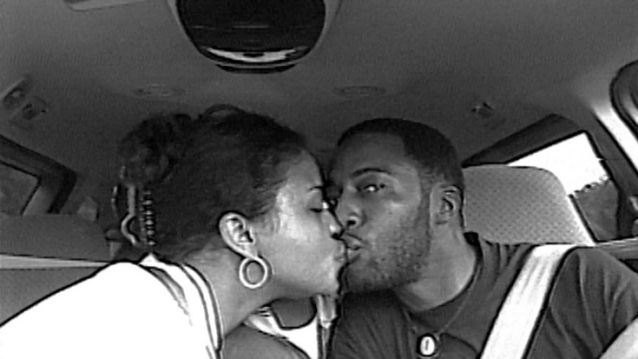
Time is a documentary of how Sibil Fox Richardson (left) fights for the freedom of her husband Robert (right).

Normally I don’t like to see documentaries. I’ve seen enough one-sided documentaries in the previous decade to turn me off them. However I took an interest in Time. Injustice to African-Americans has been a heated topic this year and I felt Time was worth seeing.

The documentary consists mostly of filmed footage from court appearances, church appearances and camera phone videos of various moments and shown in black and white. The film begins with Sibil Fox Richardson trying to get a result back from the legal system for the freedom of her husband Robert. Robert was sentenced to prison for 60 years for an armed robbery he committed. It was his first offence. It’s a sentence many, including Sybil, feel is unjust and she’s working to get him freed.

The story is a long process as Sibil is trying to get a result or even a simple answer from the Louisiana Justice Department. It’s been a long wait over years. Each time she’s been calling, she gets a message that they don’t have a result or even an answer for her. Even when they give Sibil a due date when they’ll have it ready, it’s the same response: no answer.

You may ask how did this all start? It was in the 1990’s when Robert and Sibil had plans to start a business of their own. They planned on starting a sportswear store of their own in Lafayette. It seemed destined for promise as sportswear was all the rage in the 1990’s and Lafayette is a big football town. However business didn’t go as well as they hoped. The two decided to rob a bank in 1997; Robert did the robbery and Sibil drove the getaway car. They were eventually caught and convicted. Robert’s sentence was 60 years in prison and Sibil’s was 2 1/2 years.

Since Sibil’s release, she’s been able to get her life together. She’s been able to maintain a successful career, become a responsible member of the community, and has had six children — all boys including two twins — through Robert. She’s also done a very good job of raising her sons. Her oldest son graduated from a medical college. Her twins are also very good academically. One son is on the school debating team and plans to pursue a career in justice.

One thing is still missing. Robert is not free from prison. His prison sentence was excessive. Sibil has stayed loyally married to Robert during the time and it has been her goal to get him out of prison. It’s a goal in which she’s been struggling with for years involving lawyers, court appearances, legal department negotiations, and even media interviews. She even has a life-sized picture of Robert in his prison uniform glued to a cardboard cutout in the kitchen. It’s a reminder to her and her sons what she’s fighting for.

The battle is undoubtedly a personal one. She loves Robert unconditionally, but it’s hard seeing him imprisoned. It’s hard for her to see it both as a wife and as a mother. She knows how hard it is for her sons to see their father imprisoned. It’s hard when the Justice Department promises something by a certain date, and even has a time limit by law, but they don’t have the answers and it is delayed. She’s polite about it over the phone to whoever she calls about it, but her angry feelings become obvious once she hangs up. It’s also a personal burden for her with her being the getaway driver of the robbery. She served her time, raised her family well, received forgiveness from others, but something’s missing. She may have been forgiven by others, but she never asked her own mother for forgiveness. She’s even seen at her local church during a service asking for forgiveness from her community.

SPOILER WARNING: Do not read this paragraph if you don’t want to know the ending. However at long last, Robert is free. We see the video of the day Robert is released and driven home by Sibil. The trip ends with a kiss: the first kiss during Robert’s freedom! The family celebrates with a backyard barbecue. The final act of the celebration is the family can take the cardboard picture of Robert and burn it on the barbecue.

This is a case of the right documentary at the right time. Systemic racism has been a very heated topic of 2020. George Floyd isn’t the first African-American to be killed at the hands of police. Police brutality has caused the deaths of many African Americans for decades. However when the news and video hit the public eye, the outrage grew. It was like the outrage over a common injustice had been hidden for so long and just exploded at that moment. Like a bubble bursting. It’s especially frustrating when they live in a country with a president who denies the wrongdoing and wants to label protesters ‘thugs’ and ‘extremists’ all for the sake of winning the upcoming Presidential Election. And talk from right-wing media pundits who remind the public of crime statistics involving African Americans aren’t helping to put out the fire either. The outrage was not restricted to the United States. Protests were worldwide as people were united in solidarity not only of what happened in the US but of racism in their own countries.

This documentary is about another failure of the system towards African-Americans: the justice system. In the 1980’s, a lot of Tough On Crime acts were enforced into law. This has especially hurt African Americans as prison populations escalated and African Americans make up more of the percentage of prisoners that white prisoners. Much of the problem is predominantly black neighborhoods being overpoliced and black convicts receiving harsher prison sentences. While crime by whites have gone either overlooked or underpunished.

The documentary gives a very good example of this injustice. It puts a human face on what it’s like to be the wife of a husband of a harsh prison sentence. Times like these make you wonder what they’d give a white man who committed the same crime. Sibil comes across as a strong woman who’s determined to beat the odds on the outside, but her inner frailty soon becomes obvious. She ends a phone call with the justice board politely despite the disappointing news, but speaks her anger about how she feels about it. She isn’t afraid to speak her mind about the racism she senses once the call ends. She’s proud of how her sons have grown up but she is still upset that they’ve all only known their father behind bars. She talks of how difficult, but necessary, it is to keep her family intact. She even wrestles with the personal demon of being part of the crime. She served her full sentence long ago and appears to have more than made up for it, but personal things like repentance to those she hasn’t repented to still bother her. The use of personal camera work is best at showing the human side of the matter because it gets the honesty of what’s happening.

The film focuses on the injustice, but it also focuses on rays of hope. Getting Robert freed from prison isn’t the only ray of hope in the film. The first ray of hope is seen in Sibil’s own life and parenting. Sibil is an oddsbeater. She refuses to make a repeat offender of herself. She’s become a responsible person in her community and church. She acknowledges the past wrongs she and her husband did and wants to move forward. As for parenting, statistics state children of parents in prison most likely grow up to become criminals themselves. That’s not the case for her sons. Their oldest graduates from a medical college. Both of her twins do well in high school and one is active on the school debating team. He plans on pursuing a career in justice. I’m sure seeing the unfairness his father endured is probably what fuels his ambition. The husband’s freedom is also a symbol of why it’s important never to quit on doing the right thing. There are a lot of injustices to overcome, but it’s worth it no matter how hard it gets.

The biggest praise should go to director Garrett Bradley. This film won the Best Director award in the US Documentary competition at the Sundance Film Festival (the first African American director to win this award), the Charles Guggenheim Emerging Artist Award and the Filmmaker Award at the Full Frame Documentary Film Festival.

Bradley does an excellent job in showing the images that tell the story. With straight film footage that doesn’t have a voiceover and allows the main subject do most of the talking, we get a no-nonsense undistorted story and a proper unmanipulated point of view. Filming takes places from multiple angles and we get the truth exposed. It presents the solution, but also with the huge problems it overcomes. Showing the images in black and white is appropriate because while justice shouldn’t be black and white, the system has turned it into a black and white issue. Even titling the film Time adds to the film’s quality. It’s about time served, time to rebuild your life, time to make a family happen, time to raise your children, more-that-necessary time behind bars and the seemingly-endless time to make justice for your husband happen. Above all, the time to tell the whole story and time to expose the problems in achieving the solution.

Time is more than just an excellent non-nonsense documentary that does an honest portrayal of its theme. It’s the exact documentary we need at a time like this. Also it’s a reminder that ‘Liberty and Justice for all,’ should mean all! No exceptions!

Oscars 2019 Best Picture Review: The Irishman

Irishman
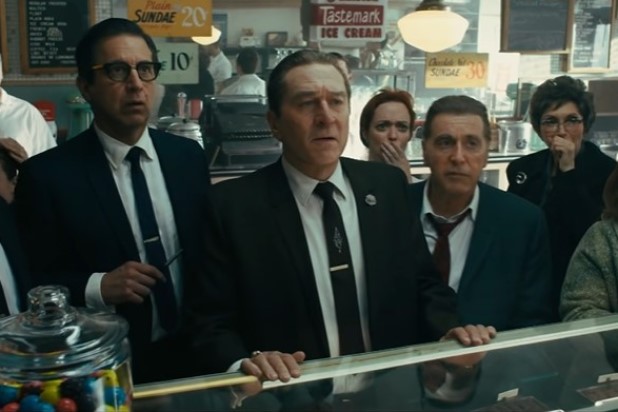
Robert de Niro (second from left)  plays Frank Sheeran and Al Pacino (second from right) plays Jimmy Hoffa in Martin Scorsese’s The Irishman. A story about loyalty and betrayal.

Just when you think Martin Scorsese has done everything he could in film, along comes The Irishman. This film may not be his best, but it adds to his stack of films one can call great works.

Martin Scorsese is undoubtedly the master of gangster films or Mafia films. We have sensed there would be successors in the likes of Quentin Tarantino, but that has not yet come to be. Tarantino has his own gangster style, but Scorsese films are the Mona Lisa’s of gangster movies, if you can truly call a gangster movie a Mona Lisa! Scorsese has shown his versatility in film making since the beginning of this century. His films since the new century began have taken a wide range of genres from epic to fantasy to a family film to business-scam drama to dark comedies to religious biopics. However when watching The Irishman, his first gangster movie since The Departed, it only seems natural that gangster movies were what Scorsese was born to do. Although films in the other genres he tackled are very good, it just seems natural that way. Even the excitement of having Scorsese ‘all-stars’ like Robert De Niro, Joe Pesci, Al Pacino and Harvey Keitel adds to the excitement. Additions like Ray Romano, Bobby Cannavale and Anna Paquin also add to the excitement.

Now the film has a lot of common elements you’ll expect from a Scorsese gangster movie. It tells of a man and his involvement with the mafia and of his daily duties. It also goes back to his past in how he developed the right type of insensitivity to become as consistent hitman. It also tells of some of his more legendary kills. The film also adds something different. It adds in the story of the ‘vacation of a lifetime.’ It’s not something you’d expect to be in a Scorsese film, but it’s done in a fashion you’d expect to see from Scorsese.

However it’s the aftermath that one would not expect to see in a Scorsese film. It’s like it almost shifts to a completely different film for the last half-hour. That’s what hit me about the film. It not only tells the story of a man who committed a lot of murders and also allegedly committed the murder of the man behind the most intriguing missing person case in the past half-century. It tells of the aftermath of how he would come to regret his actions over the years. Even of how he appeared to have it all and win it with fear during his lifetime, but would be doomed to die alone. You can pinpoint exactly where in the scene where Peggy ask Frank about Jo and Frank calls a distraught Jo up trying to comfort her, but knowing he’s the one who killed her husband. That’s a change of pace from Goodfellas about a mobster who lived the mob life, was imprisoned for it and regrets nothing. Even before the scene of the killing of Hoffa, there are freeze-frame montages that mention of the aftermaths of others involved in the Philly mob Frank Sheeran and Russell Bufalino were a part of, including those shot dead or imprisoned for life.  I think the whole theme of the movie wasn’t just mob life, but how everyone involved pays in the end.

Now one thing we should remember is that we should not completely embrace this story as a true story, even though it’s very accurate. The film is based off the book I Heard You Paint Houses by Charles Brandt. Brandt is a former homicide prosecutor, investigator and defense attorney and he’s the man who interviewed Frank Sheeran shortly before his death. During the interview, Sheeran told of his life as a hitman and of his own involvement with Jimmy Hoffa. Sheeran confessed it all to Brandt months earlier and saw a priest the last few months of his lives so he could die with a clear conscience in December of 2003. The case of Jimmy Hoffa is still unsolved and his body has never been found. The FBI have had a lot of stories and sources, but it’s Sheeran’s story that’s the one they’re most going with. However there are still some naysayers that are claiming that Sheeran lied in the interview. Whatever the situation, this missing case is still unclosed. I won’t completely call Sheeran’s story the whole truth, but I believe he makes a strong case and it’s hard for me to sense him lying.

Once again, Martin Scorsese proves himself to the be master of gangster movies. Quentin Tarantino may take ruthless killers to a new level, but Martin is still the master. This film that he directs with a script written by Steve Zaillian is a complex film to pack into 3 hours and 20 minutes. Usually if a film is that long, I would expect the director to justify it. Martin has delivered a lot of three-hour films in the past, but I’m convinced he has justified the time here. If you yourself are one of the people that has been fascinated by Jimmy Hoffa and his missing story, this will be a film that will intrigue you.

It’s not just the story that will intrigue you, but how the Scorsese/Zaillian creates it and arranges it from beginning to end. It starts as the audience visits a nursing home, tours around seeing family after family and comes across a lonely man: Frank Sheeran. Then it jumps into 1975 and the story of how Frank, his wife, his mob boss Russell Bufalino and Russ’ wife Carrie were going on a ‘trip of a lifetime’ from Philadelphia to Detroit. Then it paves on how it led to all this from Frank’s days of truck driving to introduction to the mob to being a hitman for hire to a close friend of Jimmy Hoffa. The story shows of Hoffa’s rise, downfall and attempted comeback. It also shows Frank’s struggle of who should he be loyal to: Hoffa or the mob? It slows the moment of the ‘big day’ down and it delivers the aftermath with feeling that cuts deep. Also it treats the film as if Sheeran is giving us an interview. Almost like we’re Charles Brandt! I have to say the format of the film works and will keep one intrigued whether they’re a fan of Scorsese films, fan of mob films, or just have an interest in Jimmy Hoffa. It’s interesting how the film begins with “In The Still Of The Night” and it’s nice to hear and is replayed at the end, but it sounds haunting at the end. The film and its layout of the story makes it work.

Big credit to Robert de Niro for playing the role of Frank Sheeran. To do Frank, he has to cut deep into the man and how he went from a fearless killer who was able to adopt the coldness of killing to being the man with regrets in the end and wants to die with a clear conscience. Robert does an excellent job of it. Also excellent is Joe Pesci playing the mob boss who wants to call the shots of Sheeran and Hoffa. Pesci really knew how to steal the scenes in the film. Al Pacino was also great as Hoffa. He did an excellent job in delivering a multi-dimensional and complex performance of a man in history who was just as complicated as he was a legend. There were a lot of good supporting performances from Ray Romano, Bobby Cannavale and Harvey Keitel. However one of the biggest standout performances came from one with little dialogue: that of Anna Paquin. Her role of Peggy Sheeran required her to say with her physical actions and facial expressions and she did an excellent job. Even one of the few spoken lines she had in the film “Why haven’t you called Jo?” would pave the way to where the film changed from a story of mob work to the story of regret.

The film should also be admired for its technical merits too. There’s the visual effects team that did the top-notch CGI effects to take the ages of de Niro, Pesci and Pacino back 30 years without them needing heavy make-up. It’s not just the actors acting younger than their ages but the CGI too! There’s also the costuming of Sandy Powell and the set designs by Bob Shaw and Regina Graves to take the film back to the 1950’s, 1960’s and 1970’s. There’s also the inclusion of music into the film that takes the film back to its set times. The score from Robbie Robertson also ads to the film.

The Irishman may be a true story, or it may be one big lie. However you put it, it’s a very telling story that paints a vivid but dark picture of what might have happened in one of the most intriguing missing cases ever. It’s also another film Scorsese directs and puts together in excellent fashion. It’s easy to see why it’s another contender for this year’s Oscars.

Oscars 2019 Best Picture Review: Once Upon A Time In Hollywood

Once Upon A Time
Leonardo di Caprio (right) plays a legendary movie star and Brad Pitt (left) plays his stunt-double best friend in the surprising Once Upon A Time In Hollywood.

Normally when one hears of another Quentin Tarantino film, some will look forward to it while others will think “Not more blood and guts!” Even when I heard Once Upon A Time In Hollywood was about the Manson murders, I too was expecting that and killers with no mercy and no regrets. Instead I got more than I thought. And you will too.

It’s interesting that this is a fictional story of a friendship taking place around a real murder that happened. We have a movie star whose heyday seems to be fading just like Hollywood’s Golden Era. Rick Dalton was part of that Golden Era too. If there’s one person that doesn’t leave Rick, it’s his best friend Cliff. Even Cliff has trouble finding work because of what he’s rumored to have committed. Not to mention getting fired for having Bruce Lee injured in a sparring competition on set. Also this happens around the time of the Manson murders. Some could argue that Hollywood’s Golden Era ended with the Manson murders. Others like Tarantino could argue it ended before.

On the subject of the murders, the film does a good job in presenting the Manson family as people that were brainwashed into being evil. It does seem that Manson created a cult of followers to carry out his evil deeds and were every bit as blood-thirsty as him. One thing we should remember is that the murders took place at the former home of record producer Terry Melcher. Charles Manson first came to California with the dreams of becoming a musician. He was first approached by Beach Boy Dennis Wilson who introduced him to Melcher. Melcher was the producer who took one of Manson’s songs and rearranged it for the Beach Boys. No doubt Manson was furious and that’s why he wanted blood. I always wondered why did they kill anyone in Melcher’s house? Why didn’t they save their attack on Melcher and Melcher alone? I always wondered that. However that scene where the girl from the Manson family talks how she wants blood and doesn’t care answers that question for me. It’s obvious they were blood-thirsty and they didn’t care if Melcher was no longer there. As far as they were concerned, the five at the house were worthy of being killed just by being there.

One thing people frequently think of when they hear of a ‘Tarantino Movie’ is ‘blood and guts.’ Tarantino has developed a reputation for that, and for ruthless merciless villains with no regrets. There wasn’t as much of that here in the film, but there were a lot of scenes which would make one nervous. The biggest of which was when Cliff visits Spahn Ranch just to simply drop off a girl who goes by the name Pussycat. Also that scene when Booth walks into Spahn’s house. Those scenes will make anyone nervous, especially those that know the story behind the Manson murders.

What a lot of people overlook in a Tarantino film is that Tarantino has a love for film as a whole. Many of his latest works, if you look closer, have a style of cinema mixed into his story. The two Kill Bills, Inglourious Basterds, Jackie Brown and the Deathproof part of Grindhouse show Tarantino paying tribute to cinema genres of decades past. The style can be a film noir style, or a cult move style from decades past or a spaghetti western style or even an Asian style. Just look closer. However he does his story, even his most brutal and bloodiest stories, with a style of film genre mixed in. Here, it’s obvious this film is about his passion for the old Hollywood: the Hollywood that was one glorious city. That was Hollywood before the Manson murders. However you can still see how Tarantino shows Hollywood in possibly the last of its golden age in this film. Tarantino himself talks about growing up as a child in Hollywood in the 60’s and being mesmerized by its charm. I think that’s what he’s trying to incorporate in this film.

I know I mentioned that Tarantino’s films are known for have ruthless, merciless villains and that you should not expect to see sentimentality in a Tarantino film. In fact I’ve sometimes joked that the ending of the Hateful Eight is the most sentimentality you’ll get out of a Tarantino film. Of course even in this film,  there will be some type of merciless bloodshed. We’re talking Quentin Tarantino! Despite the ending being as brutal as you’d expect of a Tarantino film,  there are some moments of feeling in the film. There’s that scene where Dalton is between shoots of Lancer and is sitting near his eight year-old co-star Trudi Fraser. He breaks down because he can’t remember his lines, but Trudi gives words of encouragement, which gives him the drive to deliver an excellent performance. I’ll admit I was not expecting that. Another thing I was not expecting in a Tarantino film was the depiction of Sharon Tate. There’s that scene where Sharon goes into the movie theatre to watch herself in The Wrecking Crew, a screening which Booth is attending too. She’s thrilled to see her face on the screen. She’s also happy to see the audience loves how she’s making a klutz of herself on screen. That scene of an actress and her dreams. That shows another side of Tarantino few knew.

SPOILER ALERT: Ending Revealed In This Paragraph. Now there was a lot of concern about the making of the film. The Tate family was especially concerned about Sharon’s murder being exploited. One can understand. Her murder has already been exploited enough with people’s intrigue of the Manson murders. Instead the murder doesn’t happen at all. For those that didn’t notice, the film also leaves out the marital troubles of Sharon and Roman Polanski as well as the fact Sharon was pregnant at the time of her murder. This story is more about the friendship of a fading Hollywood legend and his stuntman double who stays with him through think and thin. It takes place during the time of the Manson murders, but there’s a twist of plot which both Cliff and Rick are involved. In short, we don’t get what really happened in the film. This is another case where Tarantino plays around with history just like he did with Inglourious Basterds and with Django Unchained. Instead he gives us the history that we want. And right at the end, we see Rick go to Sharon Tate’s party. Sharon and her friends are happy and safe from harm, and you leave the theatre satisfied knowing that’s how it should be.

Quentin Tarantino does it again. I have to say this is the least blood and guts I’ve seen in a Tarantino film. Mind you this is is less about blood and guts than it is about a unique transition in Hollywood. It’s Golden Days were fading and Hollywood was going in a new path. Many major movie stars saw television as a domain of wash-ups back then. However Tarantino reminds you of a charm of Hollywood that didn’t leave, but just changed for a new era. It’s not the same, but it’s a charm all its own. As I mentioned previously, we’ve seen Tarantino incorporate many different past style of films when he tells his stories. He doesn’t just simply tell a story, he adds an atmosphere and a feel to his films. We see it here again as we get various feelings through various scenes.

Top acting credits have to go to Brad Pitt. Funny how he’s nominated for the Supporting acting category for the Oscars while Leo is nominated in Lead. The film does belong to Cliff Booth as it is mostly his story. He’s the friend of Rick’s through thick and thin, he’s the stuntman who has trouble finding a job, but he’s the right person when trouble arises near his house and has what it takes to stop it. Brad does an excellent job of creating the character of Booth and owning the film. Leonardo di Caprio was also excellent as a fading movie star. The role of Rick Dalton reminds you that behind the glamor of movie stars, they still faced difficulties such as pushy producers, demanding directors and an industry that considers even the most legendary actors disposable. Yes, even back then, the powers that be in Hollywood still believed an actor was only as good as their last opening weekend. Leo was good at showing the insecurities of Rick, but ending on a positive uplifting note. Leo’s performance as Rick was just as arresting as Brad’s performance as Cliff and the chemistry between the two were excellent.

It wasn’t just Brad and Leo that made the film. There was Margot Robbie who gave a 3D performance as Sharon Tate. She did a great job of showing Sharon as a girl with big dreams and big hopes. There’s also Mike Moh’s performance as Bruce Lee. Note that the Lee family were angered how Bruce was made to look egotistical. However Quentin stands by his claims. There’s the performance of Julia Butters as Trudi Fraser. She’s in the film for one brief scene, but she steals it. The actors who portrayed members of the Manson family were also good as a team. The film also has a lot of great technical efforts like Robert Richardson in cinematography, Arianne Phillips in costume design, and the production design team in setting up the various sets. The film also shows another Tarantino film trademark: excellent music. The film had to have excellent songs from that era to fit the film. Tarantino delivers an excellent selection of songs from the late-1960’s that fit the movie perfectly.

Once Upon A Time In Hollywood is less about Tarantino’s blood lust than it is about his love for cinema and the days of Hollywood’s Golden Age. It also ends unlike any Tarantino film before. Which is what makes this film so unique and worth seeing.

Oscars 2019 Best Picture Review: Joker


Phoenix
Joaquin Phoenix showcases a villain in the making in Joker.

“I thought my life was a tragedy. Turns out it’s a comedy.”

At first you’ll think a film like Joker is yet another popcorn movie. I mean the film about the eventual making of Batman’s most legendary villain. what more can you expect? Actually it goes beyond what you’d expect.

This film is interesting, and I don’t mean interesting in a negative way. We live in a time where superhero movies are the call of the day. We love heroes. We even consider anti-heroes like Deadpool a guilty pleasure. Very rarely do we get a movie of the origins of the villain. Before this film, I’m sure there were all sorts of ideas for a villain film, including a few ideas in the past for a Joker film, but it never came to full fruition. I always felt that if there was to be a first major ‘origin of a villain’ film for a superhero franchise, there would be a Lex Luthor movie before any Joker movie. I was wrong!

One thing about the Joker is that there have been several stories of the original of the Joker from DC Comics. Actually the original story of how the Joker came to be is in 1940 that the Joker fell into a vat of chemicals which left his skin and appearance the way it is., as well as the chemicals making him insane. Another 1951 story is that the Joker was a normal person until Batman interfered with him and he fell into a chemical vat. Interesting to know that Jerry Robinson who created the Joker never paid too much focus to his origin, just the villain he became.

This is one story of the evolution of the Joker that’s like no other. The film presents Gotham City as a big city full of crime and being run as a plutocracy in which mayoral candidate Thomas Wayne supports, but wants to take to higher levels. It seems like their one escape from the hell is through watching The Murray Franklin Show. Meanwhile Arthur Fleck is one of the marginalized people. He’s mentally ill, possibly from a head injury from his abusive childhood, but he just wants to make people smile and laugh. Whatever attempts to do so backfires and it seems like he’s dragged down by them. He tries to get a girlfriend with a mother in his own apartment but that falls apart. The mental illness consumes his mind and it interferes with his life. On top of it, his mental illness made him look like a fool with a clip run on a late night show. However it’s right after receiving an answer for what he dug for about his mother that he loses it. He threw in the towel for what he wanted to be and just explodes. He already got a good sense that he was good at revenge by that subway shooting. Following the revenge shooting he gave on a fellow clown of his, he got a sense that he was actually destined to be a person of revenge. However his biggest act was yet to come on the Murray Franklin show. He had an act that was an act of entertainment mixed with an act of revenge on Franklin. That started the wave of anarchy and mayhem in Gotham City  which would pave the way for the Joker to be king and would lead to the murders of Thomas and Mrs. Wayne in front of Bruce.

The thing about this story about the Joker is that it’s obvious the Joker story is meant to be dark just by the way it starts. It presents Gotham of a place of doom and gloom and Arthur as one of it’s many casualties. His mental illness is also portrayed in a dark manner with its symptoms and how he’s dealt with by the government. Actually mental illness has to be the biggest theme of the film. I don’t know if there’s a specific mental illness that is exactly like what Arthur has. I’m sure it’s possible because I remember the son in Parasite is left with a mental illness that has him laughing at the wrong times since his skull fracture. Whatever the situation, Fleck lives in what appears to be a prison of his mind that is common with a lot of people. Fleck’s mental illness has him write down statements of truth rather than statements of humor for his comedy routine. Those statements seem to echo that of many other people with mental illness. I think that’s the biggest thing that grabs people about the film, about how Fleck’s struggle is a common struggle with many.

The ending becomes an ending one should expect as Arthur Fleck is supposed to end as the Joker in the movie, right? However we get a lot more. The marginalization of the majority of Gotham City is reflected well inside Arthur Fleck. Recently he snapped. He’s already committed revenge against his mother and his coworker by shooting them. However it becomes obvious those two were all dress rehearsals and that he was planning for his biggest act on Murray Franklin. You could tell something was up by the way he walks to the Franklin studios in his Joker outfit and dances around. However even if you did anticipate Arthur would get his revenge on Franklin on live TV or not, I’m sure most did not expect the mayhem of a Gotham City riot to happen and this anarchy to happen either just after the Joker’s appearance on the show. Also some might not have expected the ending to be a case of both the Joker arriving and the legend of Batman just starting.

Now there was some talk when the movie first came out that there was fear there would be some copycat violent incidents. When you look at the film, it’s a film that features a lot of disturbing things like mental illness, marginalization, incels and vigilantism. There’s even that line just before Arthur shoots Murray: “What do you get when you cross a mentally ill loner with a society that abandons him and treats him like trash? You get what you fucking deserve!” No violent incidents have come of it. And even if one did, I believe it is not the responsibility of the filmmakers. I learned a long time ago in the 1990’s that you can say all you want how influential entertainment is on certain people or society, In the end, it;s not responsible. People are responsible for their own actions.

First off, the biggest accolades have to go to Joaquin Phoenix. This was a captivating character to play, but also a complex character to play as well. To portray this version of the Joker on the big screen was not an easy thing, especially since the character lives in both a fictional world of chaos and a mental world of chaos. Joaquin made it work, and in a way that keeps one in their seat. Also this may make history as the first-ever performance of a superhero character to win an Oscar. Additional accolades have to go to Todd Phillips. This movie he directed and co-wrote with Scott Silver worked beyond anyone’s expectations and even won moviegoers in the process.

For acting, it appeared Phoenix had the most developed role of the film while the other roles lacked dimension in comparison. However the performances did a lot to show their presence and add to the film rather than just be something for Phoenix to work off of. There was Frances Conroy who played Arthur’s mother and she did a good job of portraying her character’s own mental illness. There was Robert de Niro who did a good job as the host that’s friendly one minute, mean the next. There was Zazie Beetz who plays Arthur’s love interest. Technical efforts in the film were also excellent. There’s the cinematography by Lawrence Sher, the costuming by Mark Bridges, the makeup work, the production design, and of course the musical score by Hildur Guðnadóttir. I’m a fan of film scores and Hildur was excellent in delivering a score to fit a dark and disturbing world as well as the chaos in Arthur’s mind.

Joker does present a unique story of how one of DC Comics’ most legendary villains came to be. However it’s a lot more as it takes us into the character’s mind and into the world of mayhem he lives in. And it connects with you in a surprising way.

Animated Movies Review

2016 was a stellar year for animated movies from Zootopia to Moana to Kubo And The Two Strings to Finding Dory. 2016’s line-up gave people lots of reason to come to the movie theatres. 2017 was very lackluster in comparison. We’re talking about a year when The Boss Baby was nominated for Best Animated Feature and even the mere existence of The Emoji Movie. 2017 almost made it look like if Sausage Party were released that year instead, it would be a Best Animated Feature nominee! However the best animated movies of 2017 slowly made its way on the screen in the latter months of 2017. I was lucky to see Ferdinand, Coco and Loving Vincent: three of the best of the year.

Ferdinand

Ferdinand

When I was about to see Ferdinand, I wondered how they would able to take the small story and turn it into a feature-length picture. I myself remember an animated short made by the Walt Disney studios made decades ago that was very humorous. However I wondered how would a feature-length adaptation play out?

The story starts out well with an entertaining look, but a bit of sadness at the beginning. As it progresses to adult Ferdinand, Ferdinand is funny and charming as a husky but flower-loving bull. John Cena adds to the characterization of full-grown Ferdinand. The characters of Lupe, Una and the other bulls add to the story.

There were times I wondered how will they get to where Ferdinand is scouted out by his accidental outburst? How will it be written out? Although it’s not true to the fable, the writers were able to create a way for Ferdinand to be discovered and sent to the bull rings to fight.

Another case that had me wondering was right in the middle of the story. It had me wondering how on earth the story would have a happy ending? Of course the film needed to have a kid-friendly happy ending, but in a situation where the bull either becomes a fighting bull who dies in the ring or to the slaughterhouse as meat? Nevertheless the writers were able to make the story work with good events to the plot and not just simply drag it out over the time. Even creating an ending where Ferdinand wins over the crowd and getting them to want him to live works for the film.

For the most part, Ferdinand is not all about the type of intricate story you’d expect to find in a Disney/Pixar film. Instead Ferdinand is about creating a charming modern adaptation of the short fable with charming and entertaining characters. It succeeds in charming the audience as well as entertaining the children. Despite the story being elongated into a feature-length picture, the film does not waste time. It succeeds in being entertaining. It also adds in some other elements that gets one nervous of what will happen to Ferdinand, even if they know the story. The story works in its feature-length and will not disappoint fans of the fable. It’s also good at winning crowds too as it made a good $282 million at the worldwide box office.

coco

Coco

Very often you know the Disney/Pixar collaboration will deliver something fresh and original in its arsenal that’s able to win us over. This year, they deliver Coco. Coco is unique because it’s of a Mexican family situated in Mexico. The question is will they make something original and unique entertaining to the public?

The team of writers and animators at Disney/Pixar are known for their innovations and their frequently-successful way of trying new concepts. First there was 1995’s Toy Story: the first-ever 3D animated feature. Then came A Bug’s Life which created an engaging story revolving around insects. Then Finding Nemo not only told a story about fish, but successfully took us to another world. The Incredibles was good at teaching morals in an entertaining way. Ratatouille made an entertaining story involving a rat. Wall-E magically gave us an engaging story about two robots in love with very little dialogue. It was Brave where they not only gave us their first female protagonist, but welcomed a female writer on their ‘dream team.’ And there was Inside Out which made character out of emotions.

Coco is not just a new movie from the Disney/Pixar collaboration, but a new chapter for them. They hired Mexican/American writer Adrian Molina as the scriptwriter along with Matthew Aldrich. Molina had already been part of Pixar as a 2D animator for Ratatouille, a storyboard artists for Toy Story 3 and Monsters University, and even wrote the script for Walt Disney Studios’ The Good Dinosaur. The voice cast is predominantly of Mexicans or Mexican Americans. Disney/Pixar even hired a ‘cultural consultant’ group of three Mexican-Americans including one former CEO of the Mexican Heritage Corp to make sure they were doing a film respectful of Mexican people.

The result is a film that has garnered praise even from both critics and even Mexican-American communities. The film even received excellent reviews from Latin American film critics. The film was also a top box office winner having grossed $730 million so far. Even in Mexico, it spent three weeks at #1 in the Mexican box office and grossed a total of $57.8 million in Mexico.

Now the film itself does what Disney/Pixar films have a reputation for: taking the audience to a new world. Here they give an excellent depiction of the Land Of The Dead that looks very intricate and maybe too big, but succeeds in making sense to the viewer. Once again the animation team does an excellent job in creating this new world and even the smallest detail is done with perfection. Once again Disney/Pixar is tops in animation quality.

However there was one time I was confused by the story. I’ll admit like most, I thought Ernesto was the great-great-grandfather. I was shocked when I learned that Ernesto killed Hector with poison. It left me wondering if Miguel’s great-great-grandfather was in fact a dirty killer. Even seeing Ernesto send Miguel to die in the cenote pit left me shocked. ‘Why would Ernesto do this to his own great-great-grandson?’ It’s in the pit with Hector that we learn that Hector is really the great-great-grandfather. That was a relief. It was there where it became better sense why Miguel needed to redeem the name of the family through the spirit of Hector. The story was very well-written and very entertaining. Also the song ‘Remember Me’ is an excellent song for the movie that makes for the perfect tearjerker moment you don’t feel manipulated by.

One again Disney/Pixar delivers a masterpiece in Coco. It is as top-quality as it is magical to watch.

kinopoisk.ru

Loving Vincent

Now the previous two films in which I just talked about are both the more family-friendly films. Loving Vincent is the polar opposite of both. It’s not cute, it’s less family-friendly, and it’s not even 3D computerized animation. It also didn’t even make $10 million at the box office. Nevertheless it is charming in its own ways.

The film is a plot where Armand Roulin is asked by his father Joseph to deliver a letter from Vincent Van Gogh who died a year earlier to his brother Theo. After learning Theo died, Armand looks to find the right person to give the letter to. Throughout the journey, Armand tries to get the answer to whether Vincent’s death was a suicide or not? He was released from a hospital after found to be in good mental capacity six weeks before.

Armand comes across many people in Vincent’s life. Some have positive things to say. Some negative things. All have something to say about the person of Vincent, the various people he met with or fought against, and his personal feelings before his death. This still leaves Armand confused and his question of Vincent’s death unanswered. It’s right after Dr. Gachet promises to give the letter to Theo’s widow that he learns van Gogh’s suicide wasn’t of mental agony, but to free himself and his brother. Later Armand receives a letter from Theo’s widow thanking him.

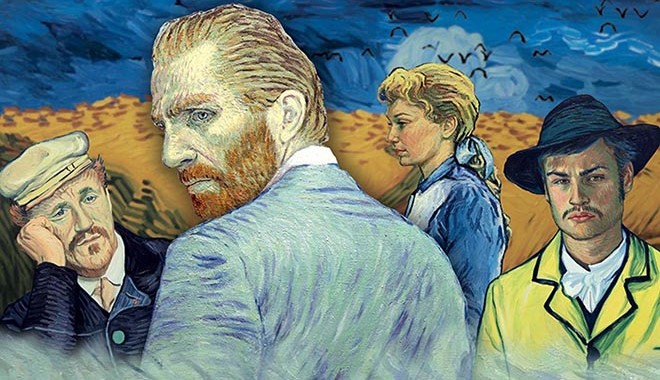
This animated film about Vincent Van Gogh couldn’t be a simple animated film. Instead this is a film in which the images were done by 100 painters trained to paint like Van Gogh. The object of the film was to create a story involving characters of people Van Gogh painted and was close to in his life across a backdrop that’s just like the paintings he painted. Basically an animated story about Van Gogh that captures the essence of Van Gogh’s art. The story may be fictional, but it succeeds in playing out like a Van Gogh painting. It even gets one that knows very little about Van Gogh’s works or his life intrigued. It even gets fans of Van Gogh’s art admiring the film for capturing the essence of the artist and his works. I also like how the film ended as “Vincent (Starry Starry Night)” was playing. It would make those who never understood what the song was all about understand it better.

So there’s my look at three of the best animated films of 2017. All three are nominated for an Oscar for Best Animated Feature. All three are enjoyable in their own way.

Oscars 2016 Shorts Reviews: Animation and Live-Action

Cinema

I’m lucky to be living in Vancouver. It’s one of the few cities one can be able to see the nominated shorts in a big-screen theatre. Gives me a chance to review them myself and even make a should-win pick for myself. This year is quite an array of nominees in both animation and live-action. So without further ado, here are my thoughts on the nominated shorts:

ANIMATED:

-Blind Vaysha (Canada/France): dir. Theodore Ushev- This is a unique 2D animation story of a Bulgarian folk-tale. A story of a girl with one eye that can see the past and one eye that can see the future and cannot live in the present. The story also shows the attempts of others to fix Vaysha’s blindness. The linocut-style animation, however, was unique and had a lot of style and flare to it.

The story doesn’t really end. Instead the film ends asking the audience their perspective. It has a unique narrative point and I get why it’s done that way, but I often wonder if the film ended on the right note.

-Borrowed Time (USA): dirs. Andrew Coats and Lou Hamou-Lhadj – At first you’ll think this is a family-friendly story at the beginning but soon learn it’s not such as you move on. It’s a dark Western story of a man returning to the spot of a family tragedy from his childhood. The hurt comes back from it and he decides to do something drastic but something happens.

I have to admire Pixar animators Coats and Hamou-Lhadj for making a brief departure from their traditional family fare and doing something more mature under Quorum Films. No, it’s not R-rated like Pear Cider And Cigarettes but it’s dark enough to be adult. I think this short is most likely to upset my pick for the winner.

-Pear Cider and Cigarettes (Canada): dirs. Robert Valley and Cara Speller- Now this is a refreshing R-rated alternative. It sometimes reminds you of a Grand Theft Auto video game or the film Waltz With Bashir. However it is a personal story from director Valley. It’s a story that makes you wonder how far would you go for a friend? Especially if that friend is selfish, conniving, irresponsible and manipulative?

It’s a story that entertains and charms and even gets you to hate Techno too. Sometimes I wonder why was he friends with that jerk? I don’t know if it’s because it was set in Vancouver or because it was an R-rated alternative but it won me over and I make it my Should Win pick.

-Pearl (USA): dir. Patrick Osborne- This is the first VR short to be nominated for an Academy Award. A musician and his daughter travel in a hatchback with a song as a bond between the two. We see the two age, the daughter mature into a musician of her own and have her own version of the song. The viewer gets a 360 degree view of the whole 5-minute story.

Looks like something Richard Linklater would do. Actually it might remind you of Waking Life. An excellent short that’s entertaining and will touch you too. Might even make you go to iTunes and download No Wrong Way Home.

-Piper (USA): dirs. Alan Barillaro and Marc Sondheimer- This is the short shown before Finding Dory. A baby bird looking for food on the beach with her mother looking on and guiding her. Pixar does it again by delivering a clever, charming, and entertaining short with the dialogue absent and the animation as detailed to a tee as it gets. It’s excellent, but it’s something we’ve come to expect from Pixar even with their shorts. Nevertheless this is my Will Win prediction.

And those are my thoughts for the Animated Shorts up for the Oscar. A lot of styles of animation between Canadian and American companies. All five were very entertaining. We’ll see who wins.

LIVE-ACTION SHORT FILMS

This year there are no films with English as the language of the majority. All five are from European countries. Here’s the rundown:

-Ennemis interieurs (France): dir. Selim Azzazi – A man from Algeria seeks to be a French citizen but the interrogator at immigration has big questions for him about meeting with a group of Algerian men back some years ago which led to him being arrested and imprisoned for two years. The interrogator keeps insisting he answers but he’s very reluctant to do so. Even to the point of neglecting his chances of French Citizenship. Why? What will make the man give his answers?

It’s a story that appears boring at first but grows with intrigue with each minute and with each new detail. The interest builds over time. It even makes you wonder why is he withholding the names of the other men? Feelings of brotherhood? Fear of retaliation from them? Also this may be about an incident in the past but it’s very relevant, especially with the Paris bombings happening in November 2015. This is my Will Win pick.

-La Femme et le TGV (Switzerland): dirs. Timo von Gunten and Giacun Caduff – Elise is a woman who wave her Swiss flag at the passing TGV train to Zurich every time it passes her house at 6 in the morning and 6 in the evening . After that she bicycles to her job at the town patisserie. It’s her daily routine for 30 years; a routine she doesn’t want to change. One day, she comes across a letter that was thrown to her by a man who goes on that daily TGV. He’s a man from France looking for work. The two develop a friendship only by mail and packages. Over time she hopes to meet this man. Then one day the train stops coming. It’s changed route? How will she deal with the change? Will she ever see the man?

It’s a charming comedy that has you engaged with the character (based on a person who has existed and did wave her Swiss flag at passing TGV trains). Gets you thinking about the woman. Is she an eccentric? Is she naive? Lonely? Unpredictable ending but a happy one.

-Silent Nights (Denmark): dirs. Aske Bang and Kim Magnusson – Inger is a young Danish woman who helps at the Salvation Army during the day and looks after her ailing mother at night. Kwame is a Ghanian immigrant who came to Denmark for a better future and to support his wife and children at home. However he’s been left homeless and makes money from recycling.

They both meet as Kwame agrees to help. The two develop a mutual friendship and even progress into something more. However it’s put to the test when Kwame steals money from the charity to pay for his daughter’s malaria treatments. Even though Kwame is banned for life, Inger forgives him and still loves him. Then Inger’s mother dies and she learns about Kwame’s family in Ghana just as she learns she is pregnant. It’s over between the two. However Inger sees Kwame one last time where she gives him advice, and something else.

It’s obvious that this story is about the immigrant situation in Denmark and the difficultly of the times for all. It presents both Inger’s side and Kwame’s side. However it’s more. It’s about a love that’s true. Inger loves Kwame so much, she’s willing to forgive him for all the terrible things he did. It makes the choice she makes for her and her baby look like the right thing. This is my Should Win pick.

-Sing (Hungary) dirs. Kristof Deak and Anna Udvardy – Zsofi is the new girl at a school. She most looks forward to singing in the choir. However on her first rehearsal, the instructor talks of a choir competition where the prize is a performance in Sweden. She also tells Zsofi her voice is not ready for the choir and tells her to lip sync. Along the way, Zsofi finds a friend in star singer Liza. The two become good friends. However Liza notices Zsofi not singing but others. When she brings this up with the instructor, she not only admits it but tries to convince the children it’s the right thing for the competition. All of which leads to a surprise ending and the ending you think is right.

Often I question what the point of this film is. Is it about competitiveness to the point the ‘lesser’ singers are not allowed to sing for the sake of the big prize? Or is it a reminder of Hungary’s past communist regime; of how those that fit in are allowed to and those that don’t aren’t, but make like everything’s okay?  Even the choir director could remind you of a communist dictator on retrospect. Whatever the point, the story was entertaining and sweet. Reminds you of the joys of childhood and the right thing paying off in the end.

-Timecode (Spain) dir. Juanjo Gimenez – It starts as a check for a woman on a security job during the day. One day she learns of a broken car light. Upon viewing the video of what happened, she sees the worker before her dancing before hitting the car. She decides to give him a dancing video of her own. Video after video follows. Then on their last day, magic happens.

At first you think the man is something eccentric but this story builds into something that ends on a bizarre note. A very good film.

And there are my thoughts on this year’s nominated shorts. Now remember both categories are the hardest to predict the winner. For example, last year the consensus of critics ranked Stutterer the least likely to win Best Live Action Short and it won. Even Annie wins for Piper and Pear Cider and Cigarettes are not a guarantee that either will win.

With my shorts predictions out of the way, I just have my main predictions for all the categories to deliver. But not before my last Best Picture summary. Coming up tomorrow morning.


Oscars 2016 Best Picture Summary: Part 1

I know I’ve done individual reviews of Best Picture nominees in the past. This year I thought I’d try something new. I thought I’d do summaries of the nominees. Three blogs analyzing three of the nominees. It’s something new this year and I hope you like it. For my first summary, I’ll be reviewing the first three Best Picture nominees I saw: Arrival, Hacksaw Ridge and Moonlight.

ARRIVAL

arrival
Amy Adams knows how to communicate with aliens in Arrival.

When you learn Arrival is about aliens, I’m sure you have an idea of what you’d anticipate what a movie about aliens would be about. However, you’re in for a big surprise.

This is probably the first movie about aliens to earn a Best Picture nomination. The film appears to set up for a story that would most likely lead to big-time action sequences. Instead we get a film that’s very intellectual in dealing with aliens. Don’t forget Louise is a linguistics professor who was hired for this duty because of her language expertise. In this film, the focus is on communication. Louise has a way to communicate with the aliens and earn their trust even while those around her grow more hostile to the beings. Louise’s gift for communication goes beyond the aliens and she’s able to say to General Shang the words his late wife said to her. It’s like she has a sense for this.

Even with all this, the film is not just about aliens and preventing a human-alien war. The film is about Louise trying to heal after her daughter’s death. Her marriage is no more as well and she’s looking for her purpose. It’s even about Louise and her ability to foresee the future and the possibilities they can unfold. Louise is the central protagonist whom the whole story revolves around. She finds her true gifts at a time she least expects it and she’s able to find her life again. It’s almost like this alien invasion is like a godsend to her life. Right after her daughter dies, she learns of her purpose to the world and to others.

Denis Villeneuve did a top job of directing this film. He already has a reputation for films like Maelstrom, Incendies and Sicario. He’s also been hired to do the Blade Runner sequel. This film he directs is very tricky but he does all the right work for it. The script by Eric Heisserer is very smart and very deep. It does a very good job of getting the right moments of action and the right moments of drama pieced out.

The story also rested on the performance of Amy Adams. She knew the story was primarily about Louise and she had to make it work. Although the role didn’t have too much in terms of character development, her performance was solid and it held the story together. The supporting performers may not have had as big of roles but they still did well with their performances. Jeremy Renner definitely could have had more depth in his role. The music from Johann Johannson and Max Richter fit the movie perfectly. The visual effects were also excellent and just what the movie needed.

Arrival is a very intelligent movie. It’s an alien movie not like one you’d anticipate at first but you will leave the theatre pleased.

HACKSAW RIDGE

hacksaw-ridge
Hacksaw Ridge is about Desmond Doss (portrayed by Andrew Garfield) in both his convictions and his sacrifice.

Mel Gibson is back. This time he has Hacksaw Ridge. It’s a war drama that’s about more than just the war.

This film makes for an interesting topic: conscientious objection. I know all about it. For years I went to a Protestant church where the people were known for their anti-war beliefs. Conscientious objection is something that’s bound to make one question their morals and even act out of hostility. I know that we have conservative pundits who insist that fighting in a war is the definition of patriotism and will even use scriptures to justify why was is the right thing. Upon release of this film, I was anticipating a conservative backlash against it. So far no ‘Diss The Doss’ movement has happened. No movement to have his Medal Of Honor posthumously revoked. Nothing. It’s a good thing because the film does make one reconsider what defines a ‘patriot.’ I’m glad this story was told.

One of the biggest complaints from conservatives in the last 40 years has been either the negative depictions of religion or lack of positive depictions of religion in movies. True, this is not the Hollywood where the Hays Code calls the shots. For those that read my review of Of Gods And Men, I have a quote from Barbara Nicolosi about why that’s the problem. That explains why it’s hard to get a pro-religion movie to compete for Best Picture nowadays. There’s a fine line of showing a film with a positive depiction of Christianity without it being schmaltzy, hokey or overly sentimental. Plus with all the ‘game changers’ in the last few decades, writing a winning script or creating a winning film is just that much of a challenge.

I feel they did a very good job in Hacksaw Ridge. It was a very good story of the persecution Desmond Doss had to face for his beliefs. It was a very gritty story of the war and all the damage it caused. Some say the graphicness was comparable to Saving Private Ryan. It was an honest portrayal about someone’s faith. However there was one point when I felt it was borderlining on hokey during the scenes of: “Please, Lord. Help me find one more.” I know that was something Doss said in real life but I’m just wondering if it could have been done better.

This film is the first film directed by Mel Gibson in a decade. I know he had to take a break as he had a very public meltdown with the things he said about others and problems with alcohol. You could rightfully call this film the redemption of Mel Gibson. He directs an excellent film that took a lot of effort to make. 14 years to be exact even while Doss himself was still alive going from one writer to the next until finally they had the right script and right story thanks to Andrew Knight and Robert Schenkkan. Gibson and the writers did an excellent job with the film with the story and the depiction of war.

In addition, the story was made thanks to the performance of Andrew Garfield. This was more than just a war story. This was a story of a person’s heart and soul. Garfield knew he had to personify Doss in his convictions in order to make this story work. He did it excellently. It’s hard to pick out any supporting players who stood out. None of the roles of the supporting actors were as developed. However Teresa Palmer did a very good job as Dorothy Doss and portraying the concerned fiancee, as is Hugo Weaving as the father Tom Doss and Vince Vaughn as the hard Sargent Howell. The visual effects and the sound mixing were top notch, as it should be in a film like this. The score from Rupert Gregson-Williams fit the film excellently.

Hacksaw Ridge is a surprising film. Who would’ve thought that the best war movie in years would be about a man that didn’t fire a single bullet? Definitely a story worth telling.

MOONLIGHT


moonlight
Mahershala Ali (right) portrays a mentor to a boy named Chiron (played by Alex Hibbert at left) in Moonight.

At some point, you gotta decide for yourself who you’re going to be. Can’t let nobody make that decision for you.

This year’s surprise critical success is Moonlight. It’s a very unique film like no other seen this year.

The film is unique as it sets itself around three key periods in the life of Chiron. There’s his childhood where he’s known as Little, there’s his teenagehood where he’s simply known as Chiron and there’s his adulthood where he’s known as Black. The film does tell a story of a man who you think would die young. He has all the ingredients: gay, living in inner city Miami, a verbally-abusive mother addicted to crack, arrested at a young age and a future of being a pusher himself. Somehow he finds the will to survive. He’s able to withstand the bullying he faces for being gay, he’s able to decide his life to the best of his abilities without his mother. Often it’s not the best choices he makes in his life but he finds the ability to survive. You wonder how does he do that? Was it from that brief time with Juan and his mentoring? Was it the love from Kevin he always knew was there? I remember that scene of Little in the school dancing classes dancing like he was in 7th heaven: his escape from the bullying. Was it a spark within Chiron himself? Whatever the situation, it results in beauty at the end.

The film is not just about Chiron. As one can see, it showcases the lives of many different African-American people living in the inner city. It may show some of the more negative depictions like drug dealers, poverty and drug addicts but it also shows positive images too like in the case of Juan and his girlfriend or even in music being played. It showcases some surprising things as well as how Juan the pusher can be a very smart man. It even dispels some myths we have of inner city people. Like how Juan was good at handling Chiron’s homosexuality and gave him words of comfort while Paula acted out in hostility. Usually you’d expect ‘gangstas’ to have a homophobic attitude. It showcases what it’s like to be black and gay in the inner city. It also showcases people’s insecurities. It is overall one man’s attempt to find himself in the harsh world that he lives in. Yet despite all its harshness, it becomes something beautiful in the end.

The film is a triumph for Barry Jenkins. This is actually his second feature as a director. His first film, 2008’s Medicine For Melancholy, won a lot of attention and even earned him many directorial debut awards. Moonlight is only his second feature. This film which he adapts a script from a drama school project from Tarell McCraney is a masterpiece in both the story and its direction. The script is also excellent that there is not too much dialogue but is able to say lots even in the silent parts. Another quality of the film; it says a lot while saying very little. Overall the film is a real delight to watch and leaves one wondering what Jenkins will have next.

The three actors who portrayed Chiron– Alex Hibbert, Ashton Sanders, and Trevante Rhodes- all did a very good job with the role and portraying him at the right ages. Mahershala Ali was excellent as Juan: the pusher who becomes a mentor to little Chiron for that brief period of time. Ali had to bring the right charisma and character for a role like Juan to work not just in his scenes but to have an influence throughout the whole film. He did a stellar job. Also excellent was Naomie Harris. Possibly the one actor or actress to be a part of all three scenes, Harris was excellent as the drug-addicted mother Paula. She had to go through three stages with her role from a simple crack user to a crack addict to recovering in rehab. Each time she had to give her role dimension and inner depth to keep it from being cardboard. She did excellent too. There were additional supporting roles that were also good like Janelle Monae as Teresa and Andre Holland as the adult Kevin.

The technical bits were also excellent. The film was edited very well, the cinematography from James Laxton was possibly the best of the year. The score from Nicholas Britell was excellent but the inclusion of track music from classical to Latin to funk to hip-hop to Aretha Franklin to Motown really added to the feel of the movie. Almost feels like an anthology. In fact that scene when Kevin sees Chiron (as Black) after so many years and plays the classic Hello Stranger is one of the best scenes of the film.

Moonlight is a story of a young black man coming of age in the big city but it’s a lot more too. Those who’ve seen it will know why this film is a masterpiece.

And there’s the first of my Best Picture summaries for this year. Next one coming up in a few days.