VIFF 2018 Review: In The Shadows (Gali Guleiyan)

in_the_shadows_2_-_300_dpi-h_2017
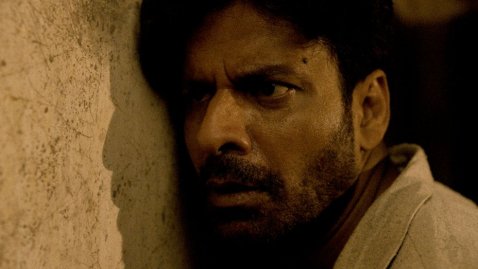
Manoj Bhajpayee plays a secluded man who soon finds himself connecting with the outside world again in In The Shadows.

One of the first features I saw at the VIFF this year was the Indian film In The Shadows. I left with a lot of mixed feelings about it that I still have.

The film begins with Khuddoos: a storekeeper and a loner in Old Delhi. He is distant from other people but prefers getting whatever closeness he can from them through surveillance cameras he has put up through the neighborhood. His only friend Ganeshi visits him on a daily basis. One day, he catches something of his interest. Next door lives a family with a 14 year-old boy named Idris or ‘Idu.’ He lives with his family consisting of his mother Saira, currently expecting her third child, and his father Liakat who owns a butcher shop. Liakat expects Idu to help with the business and do deliveries. However he wants to spend time talking with his friend Ginny who is lucky to attend school. When Saira learns he didn’t do the delivery expected and saw Ginny, she gives him money for Liakat to cover it up. When Liakat comes home, he eventually learns the truth and reacts violently to Idu. Khuddoos hears it through the wall. He is shocked from what he hears.

Both try to move on from that incident. Liakat apologizes to Idu and says he won’t do it again, but Idu doesn’t believe it. Meanwhile Khudoos can’t get the incident out of his mind. He tells Ganeshi about it. He knows how lax the police are about dealing with cases of abused children, but he’s determined to help. Life continues on for the two. Idu spends more time with Ginny and tells of his dream of escaping his father. Khuddoos manages his shop and tries to do business as usual. However the incident doesn’t leave Khuddoos’ mind. He even misses meet up with Idu by a few second.

Then it happens. Saira needs to give birth and Idu and his younger brother are the only ones there. But Liakat isn’t there. Idu has to do all the work. The doctors arrive too late. The baby dies. Both the father and the mother take it hard. However Idu feels it’s Liakats fault and isn’t afraid to say it in his face. Liakat reacts violently to which Idu responds back with violence. That leads Liakat to become even more violent. Khuddoos hears it and tries getting the police after the situation. The police are too slow to respond.

Idu has had it. He wants to run away. He’s fully convinced his father’s a monster. He tells Ginny, but Ginny mentions that he will miss him. Meanwhile Khuddoos does what he normally does; goes to the same restaurant to eat and gets drunk. The manager tries to boot him out for good because of his constant drunkenness, but Khuddoos tries to state his case, that he is hungry. Khuddoos knows he has to leave his seclusion behind. Soon Idu makes a break for the train station to finally leave Liakat behind, but the father spots him at the station. Upon returning home, Liakat says neither he nor Saira will be out of his sight.

Enough is enough. On a quiet night, Idu sees Liakat asleep. Idu smothers him. As he does, Khuddoos breaks through the walls. Liakat is dead. And Khuddoos goes into the room. Witnessing a photo, he wipes the dust off and sees the image of the boy. The others come across Khuddoos’ cameras in his hideout.

The film is intended to be a psychological drama. It’s a case of a man who’s cut himself off from the world but slowly comes back in once a domestic disturbance happens. I get how writer/director is trying to draw a connection with a man in self-seclusion, but the overall film didn’t make too much sense. It may be because of my expectations. I was expecting Khuddoos and Idu to meet, that Khuddoos would be the one who rescues Idu from any further harm. I’m sure most were expecting the same result. Somehow I can’t see the point of Khuddoos not meeting face to face with the boy as the ending drama unfolds. I’m sure the director had his reasons for having the story that way– that the two never meet — but it didn’t make a lot of sense. Jain could’ve simply made two films, or left the story of Idu on its own.

Despite the story being confusing, I do give credit for Manoj Bajpayee for portraying a character with a lot of personal demons who’s trying to break free from his own personal exile. I also give high marks for Om Singh portraying a boy who wants to break free from his own prison which isn’t in his mind. It’s at home. Shahana Goswami was also very good at portraying the mother in between it all.

In The Shadows is a psychological thriller that attempts to tell a two-in-one story, but it doesn’t entirely make too much sense in the end.

VIFF 2018 Review: One Cut Of The Dead (かめら お とめる な)

One Cut Of The Dead
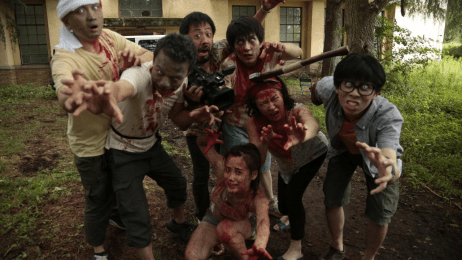
A zombie show and its making make for an entertaining movie in One Cut Of The Dead.

Every VIFF I make the effort to see some of the later shows, including the latest during the weekends at the Rio. The first I saw was the Japanese movie One Cut Of The Dead. It turned out to be a hilarious time.

The film begins with us seeing a young girl about to kiss her zombie boyfriend before killing him. Then Director Higurashi yells ‘Cut!’ This is a scene from a zombie movie being shot. However this is the 42nd take. The director is obviously frustrated. He berates the actress Chinatsu by telling her she lives a lie. He even abuses the actor Ko as he scolds him for his performance. However Nao, a middle-aged make-up lady, recommends a thirty-minute break to overcome the stress, to which the director accepts begrudgingly.

During the break, the two from the scene drink and talk with Nao while the crew and director go outside. Nao talks of how this used to be a water filtration during World War II and even demonstrates to them her hobby of learning self-defense. She even tries to teach them the Pom method for when being attacked by the back, but suddenly a severed arm comes flying in. Then we see the best boy Kazahara is a zombie. One of the techs has become decapitated. They’re all freaking out. But Higurashi likes this. Now that there are real zombies happening, he feels he can get some real acting out of them and calls action as the zombies are around.

It’s up to the three to flee their way out of this zombie mayhem. They leave the water site and try for the van. It doesn’t work out. Chinatsu goes into hiding, but is soon spotted by a zombified man. Ko tries to protect her, but time is running out as all zombies are after them. Meanwhile Higurashi is seizing each moment to shoot their parts. As they run for their lives, they head to the top of the facility.  Chinatsu senses Ko is a zombie and that is the case. In the meantime, she has to deal with Nao who’s on the attack. At the end of it all, Chinatsu battles Nao and has no choice but to kill Ko in passion. Higurashi complains she didn’t do the scene right but she kills him on the spot. Chinatsu then goes to the area of the building where she stands in a star made of blood in triumph as the credits roll…

…and then we go back to a month earlier. There’s a channel in Japan that’s about to be launched: The Zombie Network. The channel has called Higurashi to direct an uncut zombie show as part of the channel’s opening. Higurashi has never really done zombie movies, but the network accepts him because of his motto of his films being ‘fast, cheap, but average.’ Elsewhere his daughter Mao has developed a reputation as a crew person. Frustrated with the junk she gets at work, she wants to develop into a career of filmmaking of her own. The mother Nao used to be an actress until she met Higurashi. Her marriage and the birth of Mao led her to forget about her dreams. She didn’t mind it, but now it’s become mundane as she tries to kill her time with hobby after hobby, including video lessons of self-defense.

Higurashi meets with the people to do with the script of the film entitled One Cut Of The Dead. The first rehearsal is crazy because Chinatsu brought her baby and they can’t rehearse well. Chinatsu also has issues as she is a major heartthrob and her agent says that being in a movie with too much blood can interfere with her star status. Also at the first rehearsal is nerdy Kazahara, a crewman whose stomach doesn’t go well with hard water, and a man with a drinking problem. Mao is originally disinterested in the project until she learns major teen idol Ko will be a part of it. This comes as moody Mao is about to move out of the house. Higurashi tries to forget about Mao’s move out until he talks with one of the men playing a zombie and he talks of how he misses his daughter. However when the actor who plays the director doesn’t show, people recommend Higurashi play the lead. Before Mao leaves, she talks with her mother Nao about her ambitions. Nao asks Higurashi to be a part of it.

Then comes shooting day. You can bet this could be a big break for Higurashi. First trouble is the crew man with the stomach issue drank hard water and the portaloos for the film and crew aren’t here! Secondly the man that’s supposed to play the zombie drank a whole bottle of sake and is drunk on the floor! The director tries to continue with shooting with the crew trying to help out however they can. Then the craziness. When it comes for the zombie’s part, Higurashi has to carry the drunken man to make him move into his part. Then comes the crew man with the stomach problem. He has to go outdoors and… you know. The crew try to help as much as they can. Mao tries to step in to save what she can. The network people are in an area away watching everything that is happening live and they don’t know what to make of what’s happening. Then Nao really gets into her part. The director knows she has to be controlled but she’s able to Pom her way out. She requires sedation! Then there’s the camera crane required to do the ending shot. It feel from the roof and is broken. So Mao and Higurashi organize a human pyramid for that long final shot. After a lot of misses, it finally happens with Mao being the camera girl on top. The whole insane craziness works to perfection. The show is a success!

The film is very creative and very fun. The film starts out as a zombie movie which we first think is a simple short film. Just for reference, the VIFF is known for showing a short film of 20-30 minutes before the actual feature. Most features with a short before the start list the short in the program. I myself thought that was the case. It was a short film meant to be shown before the actual feature. Then it became evident that it was a case of the short zombie show followed by the making of the zombie show from start to finish. That was very smart of them to do such a thing. Plus they make the story work. The making of the film is a story of its own in how this director is placed with this demand from the network, they try to get things ready for a month, the rehearsing starts out shaky, and then the director and his wife find themselves actors. Then there’s the hairiness of shooting as one actor got himself drunk on sake and one crewman has a bad stomach because of the hard water and one camera breaks. It’s like from start to finish, it looks like something that would fail or fall apart, but it works in the end.

Funny thing about the film is that it includes the family element of it all. The director has a reputation of being “fast, cheap, but average.” The daughter has earned her own experience on the set and feels she can establish herself. She feels it’s time to move out. The father doesn’t take the move-out well at all. Meanwhile the mother is a former actress who quit to become a full-time mother and housewife. She killed her time by adopting hobby after hobby, but her daughter gives her a chance to be an actress again by recommending her for the film. In the end, it helps bring the family together.

The film has been known for its surprise success in Japan. I don’t know about ‘fast, cheap, but average,’ but the film was produced by Tokyo acting and directing school Enbu Seminar at a cost of only $70,000 to make and made by mostly unknown actors. The film made its debut at the Udine Far East Film Festival in April where it won the second-place audience award. It has since been invited to 60 film festivals. Back in Japan, it made a box-office run starting in June. The film had modest expectations. Enbu Seminar hoped that 5,000 tickets would be sold during its box office run. Instead it became a big hit in Japan already amassing $24.4 million and is now the 13th-highest grossing film in Japan right now. When I went to see it for its 10:45 showing at the Rio, the theatre was surprisingly packed. Word has gotten around.

Top kudos to writer/director Shinichiro Ueda for inventing the story and making it come alive. His two-shows-in-one was fun to watch and very winning. The whole cast also has to get top kudos for helping to make this story come alive in a very entertaining way. They have as much to do with the movie’s surprise success as Ueda. You have to admit that it’s very rare to have a film within a TV show within a film. Excellent job!

One Cut Of The Dead proves to everyone who sees it why it’s the surprise hit in Japan. It’s the ‘guilty pleasure’ movie you won’t feel guilty about enjoying!

VIFF 2018 Review: Theatre Of War (Teatro de Guerra)

Theatre of War
Theatre Of War features six soldiers from the Falklands Islands War telling their stories of battle and aftermath.

Many people will consider the Falkland Islands War of 1982 a ‘forgotten war.’ Theatre Of War will show you six men who can’t forget it: the soldiers.

First off, I’ll answer what most of you are already asking; What are the Falkland Islands and why was a war fought over them in 1982? The Falkland Islands are a set of islands 300 miles east of the coast of Argentina. They’re 4,700 square miles wide and the population is almost 3,400. The islands were discovered by Europeans starting in the 16th century and were thought to be uninhabited. It was in the 18th century when Europeans started making the islands inhabitable with the French inhabiting the east island and the British inhabiting the west island. France eventually surrendered its ownership to Spain years later. The British captured the east island a year later, but a war was never started. Over time, the Spanish took over and the Argentineans, who refer to the islands as the Malvinas, attempted a garrison in the 19th century. Over time, the British asserted their rule over the land in 1832.

It would continue to be under British rule even though the Germans sought to own it in 1912. Naval conflict abounded with the British winning. However the Argentineans started another garrison in 1982: 150 years after British rule was declared. It was then Prime Minister Margaret Thatcher started what would be remembered as the Falkland Island War. The war lasted 10 1/2 weeks and left over 900 dead. The UK won the war and British rule was reasserted.

In this documentary, we are introduced to six men: three British, three Argentinian. On the British side is Lou Armour: marine corporal, David Jackson: a young soldier at the time, and Sukrim Rai: a Nepalese immigrant who fought for the UK. On the Argentinean side is Gabriel Sagastume, Marcello, Marcelo Vallejo and Ruben Otero. Throughout the film, they tell of their experiences of what it was like to go to war at such a young age. Lou Armour actually led the British Marines. They also talk of the struggles they’ve had with their lives in the years that followed. A lot of them tell of their stories of dealing with post-traumatic stress disorder, especially when it came into their lives quite late.

The unique thing about this documentary is that they don’t just talk about their stories. Very often, they act out their stories. We see all six at the pool and one talks of an incident in 2004 when he nearly drowned himself. We see two at an empty discotheque as one tells of his story of loneliness in a bar. We see one British and one Argentinean soldier showing copies of magazines published around the time of the war. It’s interesting what each magazine had to say. We see one Argentinean use tiny plastic army men to tell the story of how Argentinean soldiers first claimed the Falkland Islands and the battle that started the war. We see the six in a rock band as one ‘singer’ shouts out “Have you ever…” and tells of instances only a soldier can ever experience both in battle and in post-battle life.

However this wasn’t just simply a vanity effort what they were doing. The six also visited Argentina to tell their stories. There were times the six went to schools together telling children their stories of the war. There were times they even had to answer questions from the children. However the most interesting moment came near the end. The soldiers had six 18 year-old Argentinean men dress up like them to re-enact a moment from the war. As the soldiers were dressing them up in their war uniforms or applying scar make-up, they were telling their stories. One even showed another what it was like to wield a knife in battle. It’s interesting as they told their stories to the boys, it showed the luxury these 18 year-old boys of today have. They don’t have to be called up for battle. They can live their care free life. That was made evident just as it led to the end scene where the young men re-enacted the battle at the former soldiers’ directions.

The unique thing about this documentary is that it shows the foolish side of war. We have six men from both sides and they tell their stories. They made to be made to look like heroes in their own country but they don’t feel like heroes. They even made spoof of the political situation behind it. One scene includes soldiers in face masks of Margaret Thatcher and the Argentinean president locking lips. The film even showed that this is of a war in which the opposite sides can have a peaceful disagreement. We see that in one scene where an Argentinean and a Brit talk of the history of the Falklands/Malvinas. Both feel strongly that those islands belong to their country, but they’re able to disagree peacefully without enmity or even a fistfight.

The interesting thing is that these six soldiers did this documentary just as they were about to perform in an onstage docudrama called ‘Minefield.’ Before they performed in the play, they had the opportunity to do all this. The soldiers reunited and sorted out their differences. They went to places where they experienced these traumatic events in their lives to recreate the moment. They went to schools to educate the young children of Argentina. They even met with six young Argentinean men to give them the experience of what it is to fight in a war about a set of islands none of them really knew. This is an important docudrama worth seeing because it does tell you a lot of how a simple war that lasted three months can change lives forever, most for the worse. The film doesn’t simply show how foolish fighting over a small set of islands are, but makes other wars of past look foolish too.

Lola Arias did a very good job in creating a meaningfully documentary of what many consider a meaningless battle. Lola takes a lot of incidents from the school visits, the meeting with the young actors, the on-stage work, and various scenes solely for the documentary and brings it all together. It’s pieced together in a mixed way that may seem like it doesn’t go in a straight pattern. Maybe Arias had her reasons for doing so. She does however include a lot of important scenes and a lot of poignant moments throughout the documentary. It may not appear to have ended in a solid manner but the whole documentary tells a lot.

Theatre Of War isn’t just about six soldiers coming together, settling their differences and making peace. It’s an important reminder of that war and it shows how war is something you can’t leave behind. Even long after you’ve dropped your guns.

VIFF 2018 Review: United Skates

United Skates
United Skates is a unique documentary that shows how vital roller skating is for those that do it, and why roller rink closures hurt.

It’s usually good to take a break and watch a documentary that doesn’t have a political agenda heavily shown. I was able to see that in United Skates.

The film begins by showing various African-Americans going out and having a good time on skates. Very soon we see some of the more sensational moves that are frequently seen at the rinks. They’re stylish or they’re acrobatic. Whatever it is, they’re all out to have a good time. Young or old, single or with family, they’re all out to have fun. This is a phenomenon that has been going on for decades nationwide. A place where various African-American skaters have their own moves and their own fanfare.

Soon into the movie we learn how roller rinks are considered a top getaway for African Americans. Roller rinks may have had their biggest heyday in the late-70’s and early-80’s for most Americans, but African-Americans kept it lasting long after that. It was a getaway from the harsh realities of daily life. It was one place they could take their kids away from the harsh realities of urban living. It was also a place where the first hip-hop and rap artists found a stage to perform on. Yes, roller rinks were an integral part of the early years of hip-hop culture. When night clubs and radio stations, even the soul and urban stations, wouldn’t give those artists their time, roller rinks gave them their stage. Coolio and Salt ‘N Pepa can vouch for that. There are even scenes in Straight Outta Compton that show NWA perform at roller rinks during their early days. In fact there was even a case in the 90’s where two roller rinks in Los Angeles would be the different domains of two rival gangs: the Bloods and the Crips. When one rink closed, the other rink became neutral territory for the two.

The documentary shows how roller rinks have gone from commonplace nationwide starting in 1982 to disappearing gradually starting in the 90’s to today being probably one tenth of what it was. Modern times have proved to be a very trying time for roller rinks. Gentrification has been a pressure with turning a lot of top recreational areas into land for condos. Roller rinks, commonly seen as something of the past, have fallen prey and have seen closures. If an African-American family wanted to take their family to a roller rink, they would have to travel a longer distance.

We even meet a family from Los Angeles before the closure of the World On Wheels rink. The mother has a huge love for roller skating as she has been doing it since her child hood. She was able to share that same love with her children. When they go to World On Wheels, it is family time. It is time for the kids to show their decorated skates, time for all to show off their moves, and a time for the son who has behavioral disorders a place to avoid getting in trouble. Then World On Wheels closes in 2013. They show closing day. The rink tries to make a party of it. Young and old come to have fun one last time. We see people in their late-50’s early-60’s — people that were a part of the ‘roller boogie’ heyday– skate around with the same love. The closing day is as much a day of heartbreak as it is of fun.

Then the rink closes. We see how the owner tries to take everything out of the rink from the lockers to the concessions. We also see how the family tries to cope. They drive hours to a different rink, but face heat because the wheels their skating with are too small.World On Wheels welcomed their skating wheels with open arms. Also the rink has an urban night or soul night. African-Americans undergo security checks. There’s no security checks for white families. It’s obvious the family doesn’t feel welcome here. It gives a sense that these rinks are out to exclude African-Americans. The pressure hits the family hard too as the son committed a crime and has to spend time in prison. The film shows other rink closures too and how much it hurts those that love it.

However like one former rink owner says, patience is the true test for anyone. Over time, there would be skate clubs abounding over social media where people can go out an skate, whether it be in parks or outdoor rinks. Also World On Wheels reopens after popular demand. The re-opening is welcomed with open arms. And the family that was the centrepoint of the story can now skate as a family wearing whatever wheels they want to. We also see the son, just out of prison, having fun again.

It’s obvious the film has a point. The film obviously is showing how roller rinks are important for the vitality of African-American families. It was roller skating where there were a lot of segregation protests. Even roller rinks in the 60’s were a focal point as African-Americans simply wanted to skate on the same rinks as whites. They didn’t want to be confined to blacks-only church halls. It also shows how important roller rinks were towards hip-hop musicians. However the documentarians Tina Brown and Dyana Winkler allow the people to tell their stories. There’s no narration here. Some graphics that tell a lot but it’s the people from the owners to the families to the hip-hop musicians who tell their story about roller rinks and why they don’t just simply love it, but consider it a key part of themselves. You can bet the audience will feel the energy. There were many times people were cheering on the moves and they gave the film a big applause at the end.

United Skates has a point to say, but it doesn’t just simply say it. It shows it. It also makes you open your eyes and notice that roller rinks aren’t simply a relic from the ‘roller boogie’ phenom. They’re now and they vital.

NOTE: The website of United Skates has a page where you can donate to keep roller rinks open. Their goal isn’t just to show how important they are, but also to get the viewers to help keep them open. If you want to donate, go to: https://www.unitedskatesfilm.com/donate

VIFF 2018 Review: Studio 54

studio 54
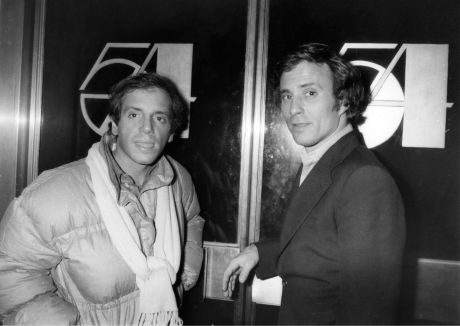
The documentary Studio 54 is where co-founder Ian Schrager (right) finally tells the story of how he and Steve Rubell (left) did illegal dealings in the night club iconic with the disco era.

There are some things iconic with disco from the 1970’s. There’s the film Saturday Night Fever, the music of Donna Summer, and the night club Studio 54. Co-founder Ian Schrager has mostly been quiet about his years of Studio 54 and how he and Steve Rubell ran it. In the documentary Studio 54, he finally breaks his silence.

The film begins as Ian Schrager is about to have the book of Studio 54 published. Ian starts talking about his upbringing. He grew up in Brooklyn. He came from a neighborhood mostly of working class Jewish families who worked in hopes that their children would have a better life. Ian met Steve Rubell in college. He attended Syracuse University where he earned a BA and later earned a JD from St. John’s Law School. It was through a fraternity at Syracuse that he met Steve Rubell.

It was the mid-1970’s. Two important things were happening. Firstly, Manhattan had lost its charm. It became dumpy and seedy with the times. Instead of being this place of charm and pizzazz, it had fallen on hard times where it was full of crime and X-rated lewdness and trashiness. Secondly was the emergence of disco music and its style of partying. Already in areas of Brooklyn and Queens, there were night clubs or discotheques that were very popular with their free-spirited dancing and flamboyant styling. The feel of disco came at the right time as it was right after the end of the brutal Vietnam War and the Watergate scandal left many Americans disheartened. It’s like Ian said, “People were tired of being serious.”

Ian and Steve took it into a chance for opportunity. The first thing they did was rent out a theatre that was originally an opera house and was last used as a CBS Studio. Steve and Ian hired workers, most gay men, for months to do all sorts of construction and all sorts of decorations. They also hired Jack Dushey as their financial backer. It was their vision to create a night club no one on earth had ever seen before. Even before opening day, they went around advertising to celebrities that this was the place to go to.

Opening day, Studio 54 is a big hit.Celebrities do show and lots of people from the public were let in too. From that period on, you had what could be an oasis from the real world as you had all sorts of people of race, gender, sexual orientation and class status getting in and having a good time. While people mostly shunned others out in their day-to-day lives, people came together in Studio 54 and had a good time. The place was seen as a must-visit for celebrities and they had a blast with the dancing atmosphere and the special one-of-a-kind effects and decorations in the place. News had come about that Studio 54 was the place to be.

However there were some realities that would come about. First of all Studio 54 was known for Ian and Steve to go out into the crowd of people outside and pick-and-choose who got in. They let in a lot of people, especially gay men, but they left others out. At first people were understanding, but a backlash would soon brew. Also there was the hidden secret that there were people using drugs in Studio 54. The club had a reputation for freeness and drugs were part of it. Then there was the fact that Studio 54 couldn’t wait for their liquor license at first and relied on catering permits during their waiting period to serve liquor. The authorities didn’t overlook that and soon they had Studio 54 closed temporarily. It put a damper in a lot of attendee’s lives. It was within time that Ian and Steve finally did get the liquor license.

However the success of that would only be temporary. Soon Steve gave an interview to Playboy that was ‘Only the mafia does it better.’ He also said ‘don’t tell the IRS about our practices.’ That’s all it took for the club to get raided. What was found was cocaine with the intent to traffic and $2 million in unrecorded under-the-table money. The arrests of Schrager and Rubell made headlines. Soon Studio 54 was no longer the place to be. The club reopened, but for a life of only a few months. The two hired Roy Cohn and had recruited an army of lawyers to defend their case. In the end, the two plead guilty and were sentenced to 3 1/2 years in prison. They were let out after serving one year each.

After Studio 54, both Rubell and Schrager looked for other ways to succeed after their release. They tried their hand at opening new night clubs that fit with the 80’s times. Constantly before the opening, Rubell would be interviewed about Studio 54’s infamy. Rubell would confess that they did a lot of wrong things and that they both changed and smartened up. Rubell’s time to redeem himself after Studio 54 was short-lives. Rubell had AIDS and he died of it in 1989. Schrager was luckier as he would later open the night club Palladium and manage the Morgans Hotel Group. Ian married twice and has fathered three children. He even received an unconditional pardon from Barack Obama in January 2017; three days before Obama stepped down from his presidency.

The documentary is a film that allows Schrager to tell his whole story and break the silence of what he was holding back for a long time. Over the 35 years since his release from prison, Schrager has worked to make Studio 54 a thing of the past and establish himself as a responsible successful businessman. He has succeeded in doing so and even gives lectures for people involved in business.

However the film also reminds us of what we knew of Studio 54 and what we didn’t know. For a long time, it was seen as a place for celebrities, disco dancing and culture of freeness. It was a place where hundreds of celebrities came to visit or eventually became regulars. It was also a place which gave many gay men a sense of belonging. We should not forget that the 1970’s was a time when a lot of laws criminalizing same-sex activity were being struck down and declared unconstitutional. Gay men who were long seen as outsiders or scums of the earth were now given a sense of belonging and a sense of freedom and Studio 54 was the place in New York to do it. Even Steve Rubell who kept his homosexuality hidden from his own family found Studio 54 as a place where he could freely love.

One thing is that the image of Studio 54 as a place for celebrities and dancing would make it too iconic to the disco era. Many claim that it was the closure of Studio 54 that led to the end of the disco era and the slow fading of the freeness that came with it. We should remember that the 1980’s would come about heavy stock trading and Wall Street becoming the place to do intense business. There was also the AIDS epidemic as it not only took the life of Steve but the lives of many construction men and dancers. The documentary does give the sense that when Studio 54 died, that’s when these ugly realities came to be. The documentary even shows of Ian and Steve’s friendship and how it was something that still lived on after Studio 54’s demise. Upon Steve’s death, Ian felt it was like losing a brother.

Studio 54 is unique for that it tells all from those survivors who had a big impact in the business. There’s Ian and there’s Jack. There were also some men who did a lot of the construction and renovating. There was also Steve Rubell’s brother who told his side from what he witnessed of Steve. The film includes a lot of imagery through photos and footage. The film also includes a lot of disco music that was part of Studio 54’s heyday. Seeing Studio 54 almost takes you back to that time and you can feel the freeness of that era.

Studio 54 is the ideal documentary for those who still fondly remember the disco era of the 1970’s. It brings back a lot of memories and tells you things you never knew about the place to your surprise.

VIFF 2018 Review: Patrimony (Tátova volha)

Patrimony
A mother and daughter, played by Tatiana Vilhelmova (left) and Eliska Balzerova, share mother-daughter time during a trip to solve a family secret in Patrimony.

For my first feature of the VIFF, I saw a Czech film entitled Patrimony. The film makes for an entertaining comedy about a subject one would not find comedy material.

The film begins with a funeral for a musician: a trumpeter. The wife, a fashion designer herself named Eva, finds herself lonely and she feels she will be left completely alone. The daughter Tereza is also hurting. She calls his phone just to hear the answering machine to hear his voice. Meanwhile she’s also struggling with her battle with cancer. Despite being helped by her husband, she feels she needs time to be with her mother.

As the daughter visits, the first thing they do is lay his ashes to rest; at least the urn as the mother wants them on his cactuses. However the daughter stumbles across a possible secret in her father’s coat. She sees a drawing of her father and a child. It’s not hers. She notices it’s from a boy names Tomas. Tereza has always been raised to think she was an only child. Could her father have fathered a child with another woman? Even her mother confesses that both she and Ludwik had extramarital affairs. It is from that revelation they decide to go on a trip to find Tomas, using Ludvik’s Volga Gaz 21.

The first visit is with family members in a nearby town. They learn more about Ludvik and his past. They also encounter a lot of crazy happenings inside the house as she has three daughters of various ages to look after. As they go on to their next place of visit, both women discover a sense of freedom when they go from place to place from country farms to town carnivals. Eva herself finds herself interested in other men. However Tereza is not immune from realities as she still has her cancer battles and the status of her marriage in question. Also revealed from Eva is that she was just as adulterous as Ludvik during the marriage.

The next place they visit is an elderly person’s home. One of Ludvik’s ex-lovers is there. She herself has a lot to say about Ludvik and even gives away another big secret they never knew. No doubt that gives Tereza a lot of concern on her mind. At the same time, it appears Eva doesn’t want the ‘love son’ of Eva to be a reality.

It’s then a visit to a family member out in the countryside. They’re a couple who farm apple trees. The husband used to lead, but he now has a mental condition where he’s despondent most of the time, but suddenly becomes the farm boss in an instant. During the visit, her husband comes to assist. It’s there where he confronts her on the status of the marriage. She gives him the hard truth. Just as he’s stating his case, the farm head goes back into his phase as the ‘farm boss’ and orders those around to get to work and pick apples. All including Eva, Tereza and her husband help out.

It’s there where the husband confesses his truths about the marriage and gives Tereza a day to think it over. It’s also through that visit that they learn the Eva knew about Tomas all along and even played step-mother at times. She kept it a secret from Tereza the whole time. The film ends as the two are in pursuit of Tomas and Tereza has made her decision about the marriage.

There are two unique things about this film. The first is that it makes a comedy of what would consider to be a dark situation in people’s lives. One would think the grieving process of a death, a bout with cancer, and learning of a family secret would not combine into a comedy, but it does. It does it very well with a mix of humor and drama. The film however doesn’t stray away from the emotional aspect of the situation and what has happened. Nevertheless the blend of the humorous and the serious works here.

The second thing about the film is that you think the story is about one thing, but it turns out to be about something else in the end. You think that the film would end with the daughter and the mother seeing the son Tomas. However it doesn’t end that way. Instead it’s about hidden truths unraveled. At first it’s made to look like a truth Eva doesn’t want to know, but instead it’s a truth Eva tried to hide from Tereza. Who knew that Eva made a better closer mother to Tomas than Ludwig did? At the same time, it’s about a mother/daughter relationship as the two are slowly healing together as they’re going on this pursuit. The rockiness of Tereza’s marriage is brought to light, but that too is helped by the trip, in a surprising way.

One of the common themes of the film is the topic of death and the nearing of the end of one’s life. It begins after the death of Ludvik. It starts with a focus of how Eva will live without Ludvik. It also focuses on Tereza and her bout with cancer. She thinks it’s fatal while the mother reminds her that her chances of survival are still very good. It deals with family and ex-lovers who have either felt the strains of aging or are themselves in the closing chapter of their lives. It’s a theme which is dealt with in good sensitivity in this film but also blends in humorous elements. It’s a tricky job to do where the fine line can easily be crossed, but Jiri succeeds in doing it.

Jiri Vejdelek directs and co-writes with Iva Jestrabova an excellent story that’s full of real feelings and emotions, but also made comical at the same time. Eliska Balzerova does a very good job of balancing the dramatic with the comedic in her acting. Tatiana Vilhelmova is also very good as the daughter coping with everything around her. However the two show an excellent mother/daughter chemistry that makes this story work. The supporting characters also did their jobs well as their characters came across as believable and very three-dimensional.

Patrimony is a very smart Czech comedy that’s very entertaining. It follows a smooth story line, but it doesn’t end the way most would anticipate it to. Maybe the plot you thought it would be about wasn’t the main plot after all.

VIFF 2018 Shorts Segment: Escape Routes

Cinema

With every VIFF, it’s a goal of mine to see at least one shorts segment. I had the good fortune of seeing a segment as my first VIFF show. The segment titled Escape Routes consisted of six shorts by Canadian directors. Three of them were filmed in BC. All six were intriguing to watch.

The Subject (dir. Patrick Bouchard): We see a body on the table. We see a spike coming out of a foot at first. Then we see it start to be dissected. What’s happening is a whole lot of imagery happens around his body and coming from out of his body. Then when he’s dissected in his upper chest, we see a steel inside.

What’s happening in this film is the animator dissecting his own body. This film is the animator using self-dissection to show what his works are all about. His emotions, his memories, his fears, all go into his work. A couple of religious entendres may be telling how it plays into his fears. Even the artistic patterns that form around his skin give a picture about what the animator is saying about himself and how it plays into his works.

Girl On A Bus (dir. Matthew B. Schmidt): The film begins with people questioning about a girl who disappeared. Then the film shoots to a scene on a bus. A teenage/young adult female is one of the passengers and she’s just relaxing and looking at Instagram photos. The bus takes a break at a gas station along the highway. She uses the outside bathroom and changes her hair, makeup and clothes to something very different and takes social media pictures. The driver can’t recognize her and thinks a passenger is missing. As police are questioning the ‘missing girl,’ she gets interrogated and gives misleading questions. She mentions she’s running away but doesn’t say why. She leaves the interrogation booth. A picture from a child identifies her as the missing, but she walks away when asked.

At first, it seems like a nonsense film. A girl changes her look but is labeled missing? Then you get the sense of what’s happening. She says she’s running away but gives a vague answer why. When told to stay at the booth as the police leave temporarily, she leaves. When asked if the photo of her on a child’s pad is her, she doesn’t answer and walks away. It makes more sense later on. She comes across as a girl who wants to escape from it all. It’s not apparent exactly the reason or reasons why, but it’s obvious she wants to escape from everything. Only on social media would she want to be around people. I can identify because I had those same feelings when I was her age. A very good short story of a film.

Best Friends Read The Same Books (dir. Matthew Taylor Blais): The film consists of no sound at all, but of images of plants, colors, bushes, parks, coasts, and the director reading a book in various places and various seating positions on a bench. The film ends with a set of colors.

I’ll take it for what it is. This is the director trying to film in an abstract sort of way. The images, around various areas of Greater Vancouver, are meant to tell about his surroundings and reading the same book.

Train Hopper (dir. Amelie Hardy): The film begins with a passage of Allen Ginsberg’s poem America. Then cuts into a video of a young man who’s a customer service agent working at his desk with his headset. Later we catch the young man around trains on the train tracks. Then we see him hopping on the trains between the cars and going along for the ride. We even see his self-recorded videos of him during the trips. Within the second-half of the film and video footage, we hear the man talk about his dreams and his imagination and why he takes these trips, which include trips crossing into the United States. The film ends with audio of Ginsberg’s America.

The film begins with a statement that the Beat Generation is not dead. The whole film is a picturesque reminder that even in this day and age, there are still young people who still dare to dream, who dare to still want to live their dream out. This film shows it with this young man who’s a customer service agent by profession, but dreamer by passion. An excellent cinematic portrait.

Acres (dir. Rebeccah Love): The story begins with a young man working on a farm. Later on, his sister, her husband and a former girlfriend of his join for dinner. They talk about him managing his father’s farm after his death, as well as a dispute over use of the land that will require legal attention. The sister and brother-in-law leave for home but the ex-girlfriend decides to stay overnight. Possibly to help him with his situation. She is a photographer by passion. The two were in love while they were in college. This is happening while they’re talking of a way to properly mark the burial site of his father’s ashes. He had ambitions of becoming a businessman, but passions in his life that involved travelling caused him to leave everyone behind, including the family and even her. She tries to get to the bottom of this. Especially since this caused their break-up. Eventually they do rekindle.

The film is a picturesque way of showing a real-life situation. It’s a quiet situation, but one that needs to be discussed and resolved. The filmmaker does it with good storytelling and honest dialogue.

Biidaaban (dir. Amanda Strong): This is the one short that’s fully animated. There’s one young person of Indigenous decent, Biidaaban, and an older Sasquatch shapeshifter Sabe. They live in the same dwelling. They communicate with what you first think is a smartphone, but is actually a mystic rock that creates images and dialogue. Biidaaban seeks to collect sap from maple trees in a neighborhood. Sabe will assist Biidaaban. As they collect the sap, they are suddenly taken over by spirits and enter into a mystical world.

Upon the film’s Q&A, we learn the film is not just about Indigenous legends and myths. It’s also about gender-fluidity as Biidaaban is a gender-fluid youth. From what I remember about the Q & A, the gender-fluidity does tie in with Indigenous culture. The whole film was very dramatic and very mystical. The genre of animation allows the viewer to feel the imagination of the film and capture the mysticism.

All six shorts were very intriguing to watch. Even with one more thrilling than the other, and one not trying to be thrilling at all, all had something to say. Sometimes you wondered if all six fit the term Escape Routes. Some of the subjects or plots in a film or two didn’t look like physical escapes at all. However many of them turned out to be escapes of the mind. Escaping isn’t just about a road to somewhere.

Escape Routes was an excellent selection of six Canadian shorts. Each were different in their own way. All of them had something to say. And all would come off as an escape from something. You had to see it to know it.

VIFF Is Back!

Cinema

Yes, the Vancouver International Film Festival is back for 2018. Yesterday began the 37th installment of the Film Festival. This year promises more excitement, more films and more events.

The biggest thing VIFF will have for this year is Creator Talks and Master Classes. Slated lecturers include The Good Place writer Michael Schur, Canadian writer/director Patricia Rozema, production designed Paul Austerberry, director Paris Barclay, rapper RZA and a Showrunners event where they feature nine writers all on one stage. There will be other events too like giving director Jean-Marc Vallee a Tribute Award and a fundraiser event featuring Jane Goodall.

As for volunteering, this year there were 1200 volunteers signing up. Bigger than last year. One thing that’s changed is now volunteers are all owed to do a minimum of four shifts. That’s different from the old minimum of 32 hours. Volunteers and free films are the same situation as last year. As for my volunteering, I will do a wide variety of things like assist with the virtual reality exhibit over at the Centre for Digital Media, do ushering duties at the International Village, or do office work for the Exhibitions team.

This year’s roster of films promises a lot of attractions This year’s VIFF claims to show over 300 shorts and feature films from 84 countries or regions. As of press time, 14 films are official submissions for the category of Best Foreign Language Film for this year’s Oscars. One thing is that while most films are shown twice or three times during the fest, there will be more films that will get only one showing during the fest. There will even be a fourteen-hour three-film trilogy at the VanCity Theatre. La Flor by director Mariano Llinas will be shown as the three films will be aired consecutive nights. Canadian films will remain the focus as has been in past Festivals.

This year’s top sponsors include Telus, Telefilm Canada, Christie screens, CinePlex, Delta Airlines, Lexus and Creative BC. SuperChannel will take over the People’s Choice awards again.

As for highlights, here’s a list of some of the films headlining the VIFF:

  • OPENING GALA: The Hummingbird Project. Canadian director Kim Nguyen highlights competitive stock trading in this film starring Salma Hayek and Jesse Eisenberg.
  • CLOSING GALA:  The Front Runner – Jason Reitman delivers a film chronicling the rise and fall of Democratic candidate Gary Hart. Hugh Jackman plays Hart while Sarah Paxton plays ‘other woman’ Donna Rice.
  • Boy Erased – Rising star Lucas Hedges stars in this film about a young gay male forced into conversion therapy by his heavily-religious family.
  • Can You Ever Forgive Me? – Melissa McCarthy stars in this biographical film of Lee Israel: one of the biggest literary fraudsters of modern time.
  • Cold War – A Polish film about a showbiz couple who try to love and perform just shortly after the end of World War II. Director Pawel Pawlikowski won Best Director at this year’s Cannes festival.
  • Collette – Keira Knightley stars in this film of revolutionary French writer Sidonie-Gabrielle Collette. Her relationship with her husband comes into play.
  • Everybody Knows – Iranian director Asghar Farhadi, who’s won the Best Foreign Language Film Oscar twice, directs Javier Bardem and Penelope Cruz in a story about mistrust and deceit.
  • The Favorite– Yorgos Lanthimos, whose most famous work is The Lobster, returns with Emma Stone and Rachel Weisz starring in this comedy on who can win the most praise from the queen.
  • The Grizzlies – The story of a teacher who tries to start pride in a Nunavut town by building up a local lacrosse team.
  • The Happy Prince– British actor Rupert Everett writes, directs and acts in this film of the last years of Oscar Wilde.
  • Non-Fiction – Olivier Assayas tells a humorous story of the marriage of an actress, played by Juliette Binoche, and her publisher husband who’s fearing the ‘death of print.’
  • The Old Man And The Gun – David Lowery directs what is believed to be Robert Redford’s last film as an actor as bank-robber Forrest Tucker.
  • A Private War –  Rosamund Pike stars in this biographical film of war correspondent Marie Colvin.
  • Shadow – Chinese film from Zhang Yimou directs a kung fu romance that promises to be an unforgettable story.
  • Sharkwater Extinction – Rob Stewart directed 2006 documentary Sharkwater highlighting how important sharks are to the ecosystem. This sequel shows the threats sharks face in today’s world.

So this is what this year’s VIFF has in store. It all starts September 27th and it all ends October 12th. Definitely lots to enjoy

My Predictions For The 2017 Oscars

Chocolate Oscar

The Oscars will be awarded Sunday night. Jimmy Kimmel will be back. Last year’s ‘envelope guardians’ from PWC, Brian Cullinan and Martha Ruiz, won’t be for obvious reasons. I’ve seen enough movies and shorts to make up 90 of the nominations here. And to think just before Christmas, the only big-time contender I saw was Dunkirk. Whatever the situation, I succeeded again for the seventeenth year in a row in seeing all of the Best Picture nominees before Oscar night.

And now here are my predictions:

BEST PICTURE WRAP-UP:

Interesting how last year I did ‘summaries’ where I reviewed three in one blog. This time I had the energy to do one blog per film. So here’s my summary. All titles have links to my reviews:

-Call Me By Your Name– This is an excellent story about a love that’s meant to be, but is only temporary. It’s best quality is the story happening in a picturesque background. Excellent film, but I don’t think it has what it takes to win Best Picture.

-Darkest Hour– This is one film that was not considered a huge threat to the Best Picture race, but it did it. It has a lot to admire, especially Oldman’s acting. However I don’t think it has what it takes both as a picture and in terms of campaigning to win.

-DunkirkThis is a film that first appears like it has Best Picture material. This makes for n excellent case, but the script is lacking and there’s no single acting performance that stands out for this year. Excellent film, nevertheless.

-Get OutThis is one of the Top 3 bets for Best Picture. It has a lot of what it takes to win, and especially since this is a come-from-nowhere story. However the Academy has never taken well to horror movies. I think this is the first ever to be nominated for Best Picture? I think the Academy will back off in favor of the ‘other two’ contenders.

-Lady BirdThis is a charmer of a film and one of the more significant films of the year. It’s a film written and directed by a woman and sends the message about how much of an impact women can have in film. Excellent work, but usually the Academy doesn’t normally reward movies where a teenager is the central character.

-Phantom ThreadThis is a film that had the luck of a ‘late surge.’ The film was first seen having its best chances in nominations in Day-Lewis’ acting, Anderson’s writing and Bridges’ costuming. Instead it also acquired Best Picture and Best Director. Very good film, but lacks the muscle of some of the other contenders.

-The PostThis is another excellent Spielberg film. However it doesn’t compare to some of his more legendary works like Schindler’s List or Saving Private Ryan or even E.T.: The Extra-Terrestrial. Not this time Steven.

-The Shape Of WaterThis is the one film of the bunch that I can truly describe as ‘having it all.’ Top acting, top directing, top script, and even a lot of pluses along the way like top set design, excellent costuming, excellent make-up and excellent music. This is my pick for Should Win and Will Win.

-Three Billboards Outside Ebbing, MissouriThis is a film packed with top acting and a top script. I liked it because of its unpredictability. I don’t think it will win Best Picture, but I think this is the film that has the best chances of upsetting The Shape Of Water.

BEST DIRECTOR:

Should Win & Will Win – Guillermo del Toro, The Shape Of Water

How many of you have seen Pan’s Labyrinth? How many of you fell in love with that film? I’m one that has. I’ve been waiting for the longest time for Del Toro to get his acclaim as a director. Finally he gets his chance with The Shape Of Water.

BEST ACTOR:

Should Win and Will Win – Gary Oldman, Darkest Hour

Many people have felt that Gary Oldman is one of the most underrated actors around. He’s given us a lot to appreciate ever since he burst onto the scene with Sid And Nancy. After so long, he finally gets his long overdue respect. And if you saw Darkest Hour, you’d know it’s for all the right reasons.

BEST ACTRESS:

Should Win and Will Win – Frances McDormand, Three Billboards Outside Ebbing, Missouri

Frances knows how to mix the comedic with the dramatic. Those who saw Fargo ought to know. That’s where she won her first Best Actress Oscar. I read that Frances tried to adopt John Wayne as an influence for Mildred Hayes. In retrospect, I think she was dead on! It’s no wonder she’s favored to win her second Oscar here.

BEST SUPPORTING ACTOR:

Should Win and Will Win – Sam Rockwell, Three Billboards Outside Ebbing, Missouri

This year’s favorites for the acting categories are rather predictable. All of them have won the Golden Globe, The SAG and the BAFTA awards. The Oscar is a forgone conclusion. Same here for Sam Rockwell. Nevertheless he is deserving of it as he does some excellent character acting that makes him unrecognizable.

BEST SUPPORTING ACTRESS:

Should Win and Will Win – Allison Janney, I, Tonya

I’m sure all of you can name at least one movie where you saw Allison Janney catch your eye in a supporting role. Primary Colors, American Beauty, Nurse Betty, The Hours, Hairspray, Juno, The Help, The Way Way Back, the list goes on. Even if the role is small, she helps make the movie. Now it’s her turn for Oscar glory, and rightly so. She’ll leave you wondering if the movie’s about Tonya or LaVona.

BEST ORIGINAL SCREENPLAY:

Should Win – Jordan Peele, Get Out

Will Win – Martin McDonagh – Three Billboards Outside Ebbing, Missouri

It’s a tough call between the two scripts. I’d like to see Get Out because everybody loves a come-from-nowhere story. I think it will go to Three Billboards on the strength of it Best Picture buzz.

BEST ADAPTED SCREENPLAY:

Should Win and Will Win – James Ivory, Call Me By Your Name

I can see why it’s so highly acclaimed. It plays out like a lot of European films, even though it’s actually a love story about two Americans in Europe. Nevertheless the best choice in this category.

BEST ANIMATED FEATURE:

Should Win and Will Win: CoCo

2017’s line-up of animated movies really couldn’t compare to that of 2016. We’re talking a year where The Boss Baby was nominated and there was even the mere release of The Emoji Movie! However it’s like they saved the best for the end of the year with Ferdinand, CoCo and Loving Vincent. A lot of people loved the humor of Ferdinand, but I went with CoCo. I always love it when an animated movie takes you to another world, and CoCo is the movie that did it this year.

BEST ART DIRECTION:

Will Win: Paul Denham Austerberry, Shane Vieau and Jeff Melvin, The Shape Of Water

BEST CINEMATOGRAPHY:

Will Win: Roger Deakins, Blade Runner 2049

BEST COSTUME DESIGN:

Will Win: Mark Bridges, Phantom Thread

BEST DOCUMENTARY FEATURE:

Will Win: Faces Places

BEST FILM EDITING:

Will Win: Lee Smith, Dunkirk

BEST FOREIGN LANGUAGE FILM:

Will Win: The Square (Sweden)

BEST MAKEUP AND HAIRSTYLING:

Will Win: Darkest Hour

BEST ORIGINAL SCORE:

Will Win: Alexeandre Desplat, The Shape Of Water

It seems like every time John Williams creates a film score, it gets nominated. Actually his score for The Post–which had bigger nomination expectations than his score for The Last Jedi— didn’t get nominated! That’s odd. I always considered a nomination for John Williams a default. Whatever the situation, Alexandre Desplat looks to be the film composer most poised to be the next great one. He won for The Grand Budapest Hotel and he’s highly likely to do it again.

BEST ORIGINAL SONG:

Should Win & Will Win: ‘Remember Me’ from CoCo

BEST SOUND MIXING:

Will Win: Dunkirk

BEST SOUND EDITING:

Will Win: Dunkirk

BEST VISUAL EFFECTS:

Will Win: Blade Runner 2049

BEST LIVE-ACTION SHORT FILM:

Click here for reviews and predictions.

BEST ANIMATED SHORT FILM:

Click here for reviews and predictions.

BEST DOCUMENTARY SHORT SUBJECT:

Will Win: Edith+Eddie

JUST ONE MORE – TOP OSCAR UPSETS

Here are the five upsets I feel are most likely to occur:

  • Three Billboards wins Best Picture
  • Willem Dafoe wins Best Supporting Actor for The Florida Project
  • Jordan Peele wins Best Original Screenplay for Get Out
  • ‘This Is Me’ from The Greatest Showman wins Best Original Song
  • A Fantastic Woman from Chile wins Best Foreign Language Film

And there you have it. My predictions for this year’s Academy Awards. The 90th edition. I’m expecting them to show a lot of memories of the past. One thing I hope for this year is that they have all their envelopes right. Whatever the situation, it looks to be one entertaining night.

Oscars 2017 Best Picture Review: The Shape Of Water

Shape Of Water
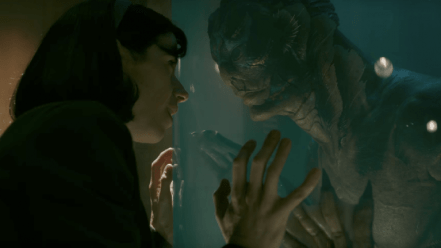
Sally Hawkins (left) plays a mute who develops a bond with a sea creature (played by Doug Jones) in The Shape Of Water.

At first one would think that The Shape Of Water is another science fiction movie with a bizarre story, but it turns out to be a story that’s a lot more than that.

Eliza Esposito is a mute woman in Baltimore in 1962. Orphaned at a young age, she lives in an apartment just above a movie theatre and works as a janitor in a secret government laboratory. She only has two friends. The first is Giles: a gay advertising artist who lives next door to her. They often eat pie and watch entertainment together. The second is Zelda: an African American woman she communicates with in sign language. It’s through Zelda she can tell her biggest secrets.

One day, a creature is brought to the laboratory. It’s a sea creature from South America captured by Colonel Richard Strickland. Right when she sees the creature, she notices something about him. That the creature has some human-like traits. Both Zelda and Eliza sense something wrong with Colonel Strickland as he comes across in a gruff manner. They also notice he brought a cattle prod that has blood on it. Eliza notices the blood travels in a unique pattern.

Later Strickland is attacked by the creature, bleeding badly and lost two of his fingers which get reattached shortly after. As Strickland is being tended to, Eliza wonders who is this creature and what do they want from him? Eliza soon develops a bond with the creature and discovers it’s a humanoid amphibian. She gives him eggs to eat, music to listen to, and communicates with him through sign language.

There are different plans people have for this creature. General Hoyt wants Strickland to dissect it for the possibility of an advantage in the Space Race. Scientist Robert Hoffstetler, who is secretly a Soviet spy, tries to convince his masters to keep the creature alive for scientific study. The Soviet spymasters disagree and want him euthanized.

When Eliza learns of Hoyt and Strickland’s plans for the creature, she tried to persuade Giles to assist, but he rejects at first. It’s after a failed attempt at hitting on the pie man that he agrees to comply. Zelda is also opposed to it at first, fearing for but her job and Eliza’s, but she agrees to help. Hoffstetler tells Eliza he’s aware of her plan and is willing to help.

The plan is to help the creature escape where no one can see. Zelda keeps a close eye on the coast. Hoffstetler helps in the distracting of the surveillance cameras just as Zelda makes the adjustment, and even has a bomb on the power base set to explode at the right minute. Giles rents a truck and paints it to look like the laundry pick-up truck. Eliza is able to get the creature into the laundry bin. Just as it appears that Giles is about to get stopped by security, Hoffstetler injects sleeping medicine into the guard’s neck. The pick-up and escape is successful, but not without smashing Strickland’s new blue Cadillac!

Eliza keeps the creature in her apartment. She keeps it in her bathtub which she mixes with salt and plants. She plans to release it into a canal in a few days one it opens to the ocean. She’s well aware that Strickland still wants the creature. Strickland even meets with Eliza and Zelda to interrogate, but both are able to keep the truth hidden from him.

Back at the apartment, the creature leaves Eliza’s suite and visits Giles’ suite. He takes an interest in his drawings and the television, and thinks one of his cats is food! The creature runs off again just after he slashes Giles’ arm. Eliza goes searching for the creature and finds him in the movie theatre staring at the screen. The relationship between Eliza and the creature grows. She becomes more than just his protector, but his lover. She herself can even acquire the ability to make shapes with water. She even tells all to Zelda, to her surprise. The creature even helps Giles heal from his wounds. Giles eventually opens up to him just after. Eliza gets sexually involved with the creature even to the point she tries to flood her whole bathroom to have underwater sex! Much to the disappointment of the cinema owner down below!

However time is running out for all. General Hoyt gives Strickland an ultimatum of 36 hours to return the creature back. For not helping with keeping the creature, Hoffsteler is told by his superiors he will be extracted in two days. However the creature’s health is failing and he will have to be returned to the water. The day Eliza planned to take the creature to the canal comes. Giles agrees to help drive the creature to the canal when the day comes.

Meanwhile Hoffsteler meets with his handlers and is shot, but not until Strickland intervenes and shoots the handlers dead. He forces Hoffsteler to reveal who took the creature. Strickland then goes to Zelda’s house. To the shock of her and her husband, Strickland arrives and threatens Zelda to reveal Eliza has been keeping the creature. Zelda then telephones Eliza and Giles warning them of Strickland. The time to take the creature to the canal is now. The creature wants Eliza to come with him, but Eliza insists it’s better for him to go alone. The scene ends on a dramatic note and an ending that’s unexpected, but is the right ending for the film.

This does make for a bizarre story of a recently-discovered sea creature and a woman’s romantic connection to the creature. We’ve seen Beauty-And-The-Beast type of movies before like King Kong or Creature Of The Black Lagoon. The funny thing about this is that it actually succeeds as a romance. The first thing that makes it work is that there’s a real connection between the woman and the creature. Rightly so because Eliza is the first to connect with the creature and connects with him in the biggest way. All Eliza had before was her job and the friendships with Giles and Zelda. Here she finds a being that she not only connects with, but becomes her soul mate. The one that completes her. They were two lonely people who were united by fate of the most impossible kind. You could understand why the ending made sense. It was through the magic of the creature’s healing that she is able to live in his world and his world only.

The most interesting thing of the film is its connection of the various arts. It’s more than just nostalgia. It reminds you of the charm and the feel of such entertainment back then that most people overlook. However it’s through those various arts that the sea creature gets a sense of human vitality and even embraces it into his own life. The art he comes across helps him communicate in the human world and gives him his human-like qualities. From the music Eliza plays to the images on the movie screen to even watching a hokey episode of Mr. Ed on Giles’ television, the entertainment is his connection to his human traits. It even helps him experience his feelings of love which he has for Eliza. You could understand why that one scene where Eliza was not a mute –that musical number where she dances with the creature– makes sense. It’s through art that she’s able to express her love for the creature: the one being that doesn’t make her feel like an outsider at all.

The creature doesn’t just affect the lives of Eliza, but of the two closest to her too. Soon after Giles has a change of heart and helps the creature’s escape, Giles opens up to the creature and soon makes him a part of his own art. As Zelda helps the creature escape, she too develops an inner strength in her and is able to stand up for herself to her husband. It’s something to think about. The three main characters are all misfits in 1962 Baltimore. Eliza is a mute, Giles is gay, and Zelda is black. However it’s through this creature that Eliza finds a soul mate, Giles finds a purpose and Zelda finds an inner strength.

I give top credit to Gullermo del Toro. The story he directed and co-wrote with Vanessa Taylor is comical and had a lot of good drama, but it’s the human element that shines in the story line. Del Toro would admit in an interview that this is inspired by The Creature From The Black Lagoon and always dreamt of seeing Gill-Man succeed in the romance to Kay Lawrence. I can sometimes see hints of Pan’s Labyrinth in the story. It’s interesting how he creates this story that romanticizes the entertainment of the time as well as reminds us of the hysteria of Communism at the time too, as well as the racism. All of this makes the charm of the film.

The acting is the biggest strength of the film. The best comes from Sally Hawkins in playing a mute who best communicates to the sea creature with her feelings and with the power of art. Richard Jenkins is also excellent as Eliza’s loner friend who finds a new purpose in life through the creature. Another excellent performance is from Octavia Spencer playing the friend closest to her side. Also very good acting from Michael Shannon. You often wonder if Strickland is heartless or just plain under the thumb of the Colonel. You know he’s troubled when you see the amount of pills he takes. Excellent work for Doug Jones. One again, he does excellent work as the creature in Guillermo del Toro’s movies. Most of you remember him as the Faun in Pan’s Labyrinth. You could say Doug Jones is to del Toro’s movies what Andy Serkis is to Lord Of The Rings’ Gollum.

The film has a lot of excellent technical aspects too. There’s the costuming and make-up team that made up the costume of the creature, as well as the visual effects team that made the ‘blue effect’ of the creature’s skin. There’s the production design team that made an excellent set that dates back to the early 1960’s to a tee, even with the movie theatre. There’s Luis Sequeira that designed the right costumes and outfits for the actors as well. Finally, there’s the mix of the music of the time mixed with the imaginative score of Alexandre Desplat. Desplat knows how to compose for a movie.

The Shape Of Water is more than just a creature-and-woman romance we’re familiar with. It succeeds in having the feel of an actual romance and successfully convey the feelings of love. In the end, the romance looks so right! That’s its magic.