VIFF 2025 Review: Christy

Christy is about female boxing legend Christy Salters-Martin (played by Sydney Sweeney) who had more than her fair share of fights.

It’s very rare to see a sports film at the VIFF. Christy was one of the feature attractions of the Festival. It’s more than a film about a pioneering female boxer.

We see Christy Salters-Martin just about ready for a fight. She talks about all she went through to get there. The film flashes back to 1986 in her hometown in West Virginia. A teenage Christy Salters is into sports. She also spends a lot of time with a girl named Rosie. Rumors are going around that they’re more than best friends. The rumors upset the mother. One night, Christy attends a fighting group. She caught the attention of a boxing promoter named Larry. He believes she’s worth promoting. Christy is reluctant at first, feeling it won’t give her much of a future, but she eventually accepts.

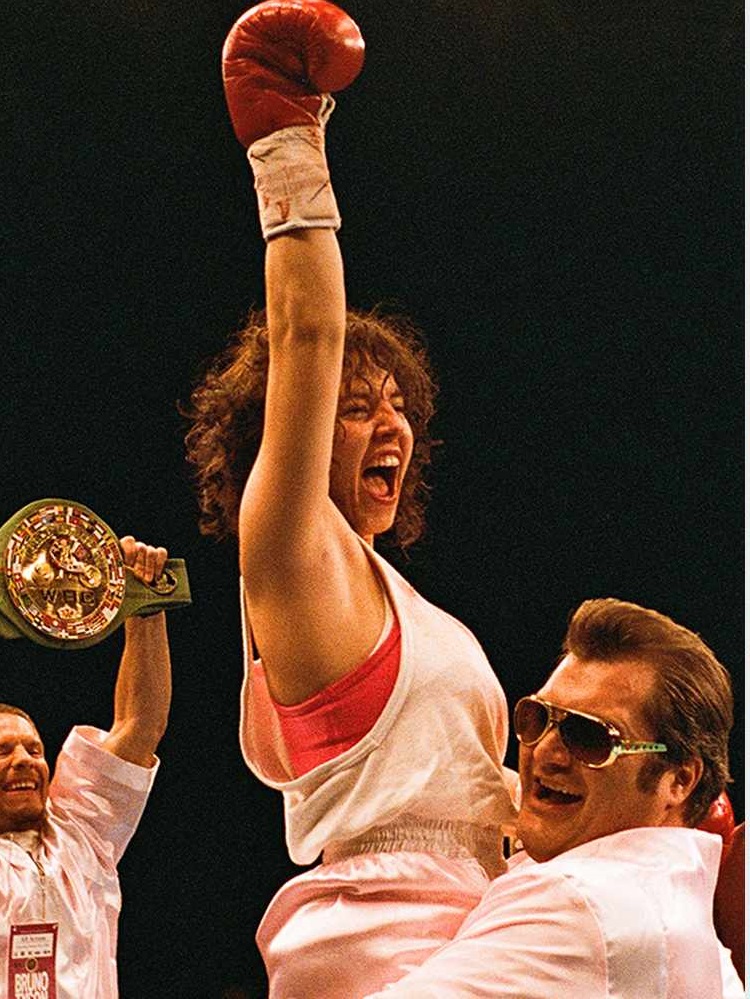
Larry finds a local boxing coach named Jim Martin. Jim is not at all interested in training a female boxer at first but when he sees Christy punch, he sees promise in her. He believes with his coaching, she can become the best female boxer in the world. As Jim trains Christy, but he’s very suspicious of her behavior. He notices she’s a lesbian and she’s more masculine than other women. He gets her to wear a pink uniform with pink boxer trunks and give her the name the ‘Coal Miner’s Daughter.’ He even gets her to marry him. Over the years, Christy does become the top female boxer in the world. She even gets legendary boxing promoter Don King to pay attention to her and promote her in 1996. It’s after that Christy helps to pioneer the sport of women’s boxing. She becomes known for her fierce fighting and her trash-talking of her opponents. She’s also noted for calling some of her opponents ‘lesbians’ despite the secret she’s hiding.

Things change in 2003 as in one of the most hyped-up fights in women’s boxing, Christy will face the challenge of Laila Ali, daughter of legend Muhammad Ali. Once again, her title of World Champion is on the line. In a highly broadcasted fight, she loses by KO. The marriage between her and Jim Martin also starts showing friction as Jim has been getting more and more controlling over her and even abusive. Adding to the difficulty, she tries to get her mother to listen to her situation but she is so flattered by Jim, she sooner takes Jim’s word over Christy’s.

In 2010, Christy is still training in the gym, but Jim is busy training new younger fighters, male and female. Christy is unhappy about this because she still wants to fight. Jim also notices Christy meeting up again with high school friend Rosie. Jim, fueled by cocaine he and Christy both do, starts becoming more controlling of her and watches her every move, threatening to kill her. He even gets Christy to participate in super-lewd videos which upsets her mother. Once again, the mother takes Jim’s word over Christy’s.

Soon Christy develops a bigger sense of assertiveness at the urging of Rosie. Jim responds to it one day by stabbing her four times and shooting her. Miraculously, Christy survived and is able to get help from a driver to the hospital. At the hospital, Rosie is by her bedside, to the disgust of her mother. With the family by her bedside, the father and son care about her condition but the biggest thing her mother cares about is her being a lesbian. It’s there she finally puts her mother in her place. Christy recovers faster than the doctors expect. She returns to the gym and is greeted warmly by all. They are also shocked that she wants to get back into fighting. Jim is put on trial where Christy delivers a scathing speech making him confront what he did and is sentenced to 25 years in prison. The film ends with the start of one of Christy’s fights!

Normally when you go to see a biopic of an athlete, one would expect it to be about their long rise to the top. Christy is different. It does showcase a story of a boxer who wins and pioneers women’s boxing to new heights. In actuality, it becomes more about Christy Salters breaking free from her controlling and abusive manager at a time that was now or never. It’s also of Christy assuming her identity and dealing with a mother who cared more about what she thought than what Christy felt. You could understand why that fight at the end was important to Christy, win or lose.

There have been films of female boxers before. The two best known are 2000’s Girlfight and 2004 Best Picture Oscar winner Million Dollar Baby. This film is a biopic of a legendary female boxer. At a film festival, one would expect to have films that take filmmaking to new or unique artistic directions. This film isn’t as artistically inclined as most of the films at this Film Festival. One unique direction the film goes into is that it focuses on Christy and the intensity of what she goes through. It focuses on her fighting wins, her fighting losses and her abusive relationship with Jim.

It may be common for any protagonist of a film to dominate the focus of the whole film, but it’s important here as it is Christy’s tough will that gets her through the hardest of times. The abuse she endured at the hands of Jim Martin is just as important as her fights. You can understand why that fight in 2010 with Christy at the age of 42 was an important part of the film. If there’s a message to sense in this film, it has to be Christy Salters is a woman of many victories but her biggest victory was outside the boxing ring.

This film is great work from director David Michod. With the story from Katherine Fugate, Michod co-adapts the story with wife Mirrah Foulkes and creates a film that will keep you intrigued from start to finish. He does a great job in getting the actors to do their parts well. Sydney Sweeney is not only unrecognizable as Christy, but she delivers an excellent performance from start to finish. She will let you know she is not simply performing the role of an athlete. It’s about a person and her grit. Ben Foster is also as unrecognizable as Jim Martin and he succeeds in making him into a cocaine-fueled controlling megalomaniac. You will end up hating Jim. Merritt Wever is also great and hard to recognize herself as the mother Joyce Salters. It’s completely different from her Nurse Jackie role she’s known for but she does a great job of making the mother look like the parent you can’t trust. Cinematographer Germain McMicking did a great job of the shooting angles and the close-ups. The musical score of hits mixed with original music from Antony Partos fit the film well, but some hit songs were years behind the year of the scene!

Christy is more than just a biopic of a successful boxer. It’s a film that shows Christy Salters had bigger battles outside the ring. It may be imperfect, but it is a compelling story.


2023 Oscars Short Films Review: Live-Action

It’s interesting when the Academy deliver their nominations for feature-length films, they’re mostly for English-language films. Most of them being American films. Yet the nominees for the short films categories are often multilingual. For the films nominated for the live-action category, we have  films in French and Danish. We also have three English-language films, but two are from the UK. Not as much foreign language as the animated films but still it tells how these categories are among the most international of them all.

What’s interesting about the short films in the live-action is that many are from up-and-coming directors, as is the common case in this category, but we also have one British film directed by Wes Anderson! Also in the film are renowned star actors like Benedict Cumberbatch, Ben Kingsley, Dev Patel, Ralph Fiennes and Richard Ayoade. The other films also show actors of renown like Brittany Snow, Leif Andree and David Oyelowo. So there’s something about short films that make well-known actors want to pursue them.

Without further ado, here are my thoughts on the Live-Action short films nominated for the Oscars:

The After (dir. Misan Harriman) – Dayo is a successful businessman in London. One day, he drives his daughter to the top floor of a parkade to meet up with his wife. Suddenly a man wielding a knife commits a massacre all over the parkade. The man stabs his daughter to death. The wife, heartbroken, jumps to her death as Dayo fights to restrain him for the police. Time passes. Dayo is resigned from his position and makes his pay an Uber driver. He has cut off all contact from his friends and colleagues and won’t even meet with crisis management counselors. Although he keeps to himself, it’s obvious he’s still hurting on the inside. As he waits for his latest customers at the airport, he takes the picture of his family and sings “Happy Birthday.” The daughter of the family he’s to drive looks very much like his own late daughter. He tries to restrain his emotions at first as the parents make their way to the car. During the drive, the couple are consistently arguing in front of the child, but the daughter is sensing something is wrong with Dayo. Dayo still tries to keep his cool. As he gets out lets the family off at their house, the daughter goes to hug Dayo and Dayo just breaks down. The parents are shocked by what they see and leave him, but Dayo picks himself up.

How do you live again after you’ve lost it all? This is the type of question we don’t normally ask ourselves or don’t want to think about but unfortunately, there are some people who have to do exactly that? This is a story that does a great job of showing the before-and-after of a tragic incident that claims the lives of Dayo’s wife and daughter. Throughout the story, Dayo is the storyteller through his actions and his emotions. Even without dialogue, you can sense what Dayo is saying through his body language. He doesn’t know how to live again or deal with his emotions. It’s right after the breakdown he has after the daughter hugs him that Dayo knows he has to continue on, despite how hard it will be. This film which is the directorial debut film for Misan Harriman tells a gripping story with a profound message. David Oyelowo does an excellent job in his performance in both scenarios of the story. If they could give Oscar nominations for performances in short films, I’d say give one to David!

Invincible (dir. Vincent René-Lortie) – The film begins with a young boy in the driver’s seat in a car named Marc who telephones his mother, but doesn’t say a word. His mother tells him to come home, but police lights flash. Rather than surrender to the police, Marc drives the car off the cliff into the water. Going back weeks earlier, Marc is on a family vacation having fun with his family at the lake. He plays with his little sister but is embarrassed of how she chickens out with her finger over his lighter. This is the last set of fun Marc will spend with him before being sent to the youth detention centre. The first day, Marc can’t stand being in a sweltering room with no way to cool off. He ignites the sprinkler system which the officials put him on a stern warning. A councillor tries to deal with Marc and tells him how he has what it takes to be a smart positive influence on others and can’t understand why he’s always getting in trouble. One day, the official sees progress in Marc and how he helps others. The officials decide to take the boys to a nearby community pool. it appears Marc is having fun with all of them but when the councillor isn’t looking, Marc does his latest escape. Marc runs into a car but as the woman enters a store to call the ambulance, Marc steals it, attempting to take his escape further. As Marc stops, he calls his family. The mother, aware the police are pursuing Marc, pleads for him to return as the sister tests her pain with the candle.

This is a story inspired by a troubled 14 year-old boy from Quebec who killed himself as he drove into a lake in 2008. The story haunted the people in the area for many years. The boy, Marc-Antoine Bernier, was a friend to the director. Here, it appears the director is using his film to bring some respect back to Marc. Marc was an intelligent boy capable of a lot of good, but kept on getting into trouble. We all have known a kid like that in our childhood. Although this is a story inspired by a real-life person and based on true events, there may have been events or happening added to the story. Only Marc knows what really happened. Nevertheless Vincent makes a good effort to redeem Marc from the story he tells and even tries to get us to feel some empathy for him. We’ve all had those years when we were younger when we all felt we were trapped mentally, if not physically. If Vincent doesn’t make you feel empathy for Marc, he does make for an intriguing story. That’s why I make this film my Should Win pick.

Knight Of Fortune (dir. Lasse Lyskjær Noer) – Karl is at a multi-chapel funeral home where he comes to mourn his wife. Left alone, he can’t bring himself to open the casket. He tries to adjust a light but it breaks. Frustrated, he goes to a bathroom where he encounters another widower named Torben. Torben claims he can’t open the casket for his wife. Karl goes with Torben to the chapel and helps open the casket. As Torben attempts to say his “last words,” a family comes in. They’re the real family of the deceased woman including the real widower. They allow Torben and Karl to stay. When the widower is at a loss for words, Torben is able to say the right words as if the woman really was his wife. Karl leaves Torben angrily but he later learns from the funeral directors that Torben lost his wife in a boating accident three years ago and never had a real chance to say goodbye. Outside in a nearby bench, Karl notices Torben. Instead of anger, Karl laughs and invites Torben to the chapel where his wife is. Torben is able to open the casket and Karl is able to say his last goodbyes. As Karl gives his wife one last kiss Torben sings “Knights Of Fortune.”

Another story of loss and coping. Although this story deals with the subject of death in a gentler manner, and even includes humor, We all know that loss is never an easy thing to deal with, but it needs to be dealt with. This is a story of a widower struggling to properly say goodbye encountering an imposter who knows the right words to say goodbye to a woman he’s never really met, but makes like she was his wife. Once Karl learns about Torben that he’s not simply an imposter, but a hurting man who uses funerals of wives to say the goodbyes he always wanted to say to his own wife, could Torben be the very person to help Karl deal with his grief? This is a story of grieving, healing and saying goodbye that is greatly different from other stories. Nevertheless it does offer a message of healing and hope. It’s ironic how this imposter is exactly what Karl needs to properly deal with is loss and say goodbye, and a friendship that really shouldn’t be, happens.

Red, White and Blue (dir. Nazrin Choudhury) – Rachel, a waitress in a diner, looks at a pregnancy test and sees a positive result. Rachel is a single mother who has difficulty to support her two children. She also lives in Arkansas where abortion is illegal, thanks to the overturning of Roe v. Wade. She plans a trip for an abortion procedure in Illinois where it is legal, but it’s more than she can afford. One day, a woman customer who somehow knows what Rachel is dealing with leaves her a tip which makes up the remainder for her abortion trip. Soon, she leaves her son Jake with a friend as she takes her daughter Maddy on this trip. This is the first time out of Arkansas for both of them. Before they go to the clinic, they go to a carnival as it’s just before Maddy’s birthday. Maddy wants a merry-go-round ride, but it’s more than Rachel can afford. She agrees to one ride and Maddy chooses the elephant. At the clinic, Rachel learns she’s late for her appointment but through past recollections and as the receptionist learns the dirty facts, she tries to make it urgent.

No doubt this story is about abortion. Especially in post-Roe v. Wade United States. The thing is this story is more than that. You know the story is about the pursuit of an abortion, but it’s not what you originally think at first. You think it’s about an impoverished mother getting an abortion because she’s two-and-through, but things change as you learn more information. You wonder why on earth would a mother take her young daughter on an abortion trip? Soon you learn there’s more to the reality of unexpected pregnancy and abortion that meets the eye. Including a lot of upsetting truths. It’s also surprising how in a story that has a theme that hits close to home and presents a story that many would find upsetting, it is still able to have a heart-warming ending that works. That is something in film that is very tricky to do, but Choudhury accomplishes it!

The Wonderful Story Of Henry Sugar (dir. Wes Anderson) – Based on a short story written by Roald Dahl, Henry Sugar is the pseudonym of a wealthy bachelor who loves to gamble away his inherited riches. Thing is he never seems to have enough and wonders how can he get more money? He learns the legend of a man from India named Imdad Khan who learned the fine art of levitating and seeing with is eyes closed, thanks to the teachings of a Great Yogi. Thing is as the doctors were studying Imdad, Imdad tells his story and dies suddenly. Henry tries through great lengths to master this technique through all he can learn. Once he finally masters the sight trick, he goes out gambling and wins big! Problem is all this money isn’t making him any happier. At first he thinks the right way to give the money away is to throw it off a balcony. After it causes a riot, police recommend Henry develop a better method. Henry then spends the next twenty years traveling the world, gambling, and donating his winnings to hospitals and orphanages.

This is the last of the five shorts shown in the shorts.tv reel. After seeing four stories that were either depressing, too serious or had dark subject matter, it was refreshing to end the reel with a light-hearted comedy. The story succeeds in making the tale amusing. Already we have a major director directing it and four major actors — Cumberbatch, Kingsley, Fiennes and Patel — acting in it. Nevertheless the story telling, set changes, and the acting of all make it a delight to watch. It makes for a “guilt-free guilty pleasure” as I like to call such things. That’s why I make this film my Will Win pick!

And there you have it. Those are my reviews of the five films nominated in the Oscar category Best Live-Action Short Film for this year. That also completes all my reviews for the Oscar-nominated short films. Those short film categories are usually the hardest to pick a winner. You think you know what will win, but end up surprised in the end. We’ll see how it all goes on March 10th.

2023 Oscars Short Films Review: Documentaries

Once again with the Academy Award nominations being awarded for the biggest feature-length films of the year, the AMPAS Academy also rewards the short films in three categories. I’m lucky to live in Vancouver where I can see the short films on the big screen.

The first set of films I will be focusing on is Documentaries. In each of my blogs about the short films, you will also get my predictions for which films Should Win and Will Win:

The ABC’s Of Book Banning (dirs. Sheila Nevins, Nazenet Habtezghi and Trish Adlesic) – This documentary focuses on recent regulations implemented in American school systems in the past ten years to ban certain children’s books. Most notably in Florida. There are three classifications: Restricted – disallowed to children unless permission from parent; Challenged – at risk of being banned from school libraries; and Banned – completely banned from school libraries. The books banned are mostly to do about the themes of racism and racial empowerment, sexism and female empowerment, and LGBT pride. The authors are unhappy and the children can’t fathom why they’re banned and are disappointed with the reading material they are allowed to read.

This is a smart documentary that highlights the problem from all angles. It doesn’t just show the classification system but also the books that have fallen prey to this system. We hear verses from the book and we sense why they’re banned, but still wonder what’s the problem? We hear from some of the authors of these banned books and what they have to say. We hear what the children have to say and how they can’t understand why they’re banned and what they’re left with are books with weak material. You’re left feeling for those children and the lack of knowledge they’ll be receiving. You’re also left wondering about how the USA — a nation that advertises itself as “the land of the free” — can allow for book banning to happen. I thought book banning and book burning were considered “Un-American!” Not anymore? That’s why I pick this as my Should Win and Will Win picks.

The Barber Of Little Rock (dirs. John Hoffman and Christine Turner) – In this documentary, we are introduced to Arlo Washington. He started as a barber in Little Rock, Arkansas to help raise and provide for his younger siblings after his mother died shortly after his graduation. Over time, he progressed to opening his own barber shop, then his own haircutting school, and then opening a loan company that gives loans to African Americans and other impoverished people the banks normally reject. The film not only showcases what Washington has accomplished but also interviews some of his loan customers from his bank and gets them to describe systemic racism.

The best thing about this documentary is its insightfulness. It touches on a topic we commonly hear about, but know very little of the stories of people who live it. We learn of the man who beat the odds, but he’s not hoarding all his wealth to himself. He’s a man who knows the problem and is willing to create things to empower people like never before and even fight a centuries-long problem like never before in the community. The film also reminds us that what he’s fighting is a nation-wide problem. The opinions from his interviewed clients about the topic of economic discrimination and systemic racism will open your eyes to the very people who have been hurt by this. Although Washington is doing a great job fighting it in Little Rock, he can’t fight it alone and there’s lots to be done nationwide. This documentary is very much an eye-opener.

Island In Between (dirs. S. Leo Chiang and Jean Tsien) – The film is about S. Leo Chiang, a Taiwanese-born American filmmaker, who returns to his nation of birth, but to an area he only knows from his family’s past military duties. The part of Taiwan he returns to is the Island of Kinmen. Kinmen is a set of Taiwanese islands that are closer to Mainland China than the main island of Taiwan. Actually the area of Kinmen he lives in has just a three-mile separation from the island city of Xiamen through the Tuyu Islet. As he sees this seemingly-short gap of water between the two islands and the rusty military guns that sit by the coast, he reflects how he was taught Taiwanese pride in his childhood and of anti-China propaganda he was taught. He talks of his confusion of his citizenship as he mentions of using his Taiwan passport to return to the US, but use his American passport to visit China. He talks of radio messages sending messages of freedom to the citizens of Xiamen and continue to be sent. He talks of the fear of war with Mainland China that could erupt and how tensions appeared to be easing in the last twenty years. One of the breakthroughs was a ferry system that could allow Taiwanese people to visit Mainland China that went well until the COVID pandemic hit.

This film serves as a reminder of the Cold War we forgot still exists. The Iron Curtain that was broken down in Eastern Europe in the early 1990’s overshadowed that hard-line Communism still exists in a few nations like the People’s Republic of China. Those unfamiliar with history will need to know China underwent a Cultural Revolution shortly after World War II which separated the Communist mainland from the capitalist Taiwan. The two nations have been bitter political enemies since the start. There was warfare between the two in the 1950’s. Despite the war ending many decades ago, the fear of another war still continues despite the guns rusting away on the coasts of the island. Chiang shows how all this has had a hard time for him establishing his identity. The national politics, the use of passports and the recent slow breakdown of political barriers leaving him wondering how should he identify himself? Chinese? Taiwanese? American? This is another documentary that’s insightful about a topic we so easily overlook.

The Last Repair Shop (dirs. Ben Proudfoot and Kris Bowers) – This film focuses on a shop in Los Angeles that repairs musical instruments. It’s not just any repair shop. This repair shop repairs musical instruments for the 80,000 school students in the Los Angeles Unified School District area free of charge. It’s the last shop of its kind left in LA. Featured are the repair people: Dana, who repairs stringed instruments; Paty, who repairs and cleans brass instruments; Duane, who takes care of woodwinds; and Steve, who repairs and tunes pianos. In the film we learn Dana is a gay man who had to be closeted in his early years, even as he did music in his prime. Paty, a single mother, first appeared to have a limited future as a music teacher until a chance to show her skills opened doors for her and a better income for her family. Duane used to be a banjo player who performed for the President of the United States. Steve learned music in his home nation of Armenia until a war in 1990 where his father was killed caused his family to flee to the US. The film also shows some of the students whom benefit from the repairs performed. Most are from underprivileged areas. The film ends with a final symphony with all.

This is one of the least heavy documentaries of the five nominated. This is a film that will remind you not to take things for granted. We learn of the students whom are benefiting from this. Students that value the music lessons and see ambition in their instruments and their lessons. Students that wouldn’t have much of a chance elsewhere, or would come at a cost. We learn of the people in charge of the shop. We learn of their backgrounds and how music either was always part of their life or changed their lives for the better. We learn of how some like Paty have this as an opportunity to beat the odds and have something better for herself and her family. As we watch the final symphony, we see how for all involved that music is not just music. It’s a crucial part of their lives and represents a future of promise for the young. This is not simply a documentary that’s light-hearted. It’s as much insightful as it is a delight to watch and enjoy.

Nǎi Nai & Wài Pó (dir. Sean Wang) – Two grandmothers. Both in-laws. One grandmother goes by the name Nǎi Nai. The other goes by the name Wài Pó. One is in her 80’s, but still feels young. The other is 94, but feels like she’s 100. They both live in the same house and sleep in the same bed. The two talk of their history and of how they first met. The two talk of how both of them, each different in their own way, manage aging and still do their best efforts to maintain a vital life. The two also talk about the fears of aging. Especially as one looks through an old personal phone list and notes how it has the numbers of those that are deceased.

This is a documentary that’s sweet, funny and sad at times. We see two grandmothers of the filmmaker who go by different names and live together. Their friendship is surprising since in-laws are known to be at odds with each other. They show how they continue to pursue vitality in their ages and will do it in their own way, whether by one doing cultural sword arts or one drinking shamelessly. They also show that they won’t shy away from some of the dark realities of aging. They know that despite the vitality they pursue and odds they aim to beat, there are some sad reminders of some realities around the corner. It’s a mix of bitter and sweet that is impressive to watch. Including the ending where one calls Sean a brat!

And there you have it. That’s my review of the five documentaries nominated in the category Best Documentary Short Film for this year’s Oscars. I know I described many of them as “insightful,” but all of them are eye-openers that will get you to see more about topics you may already be familiar with, topics you never know about or even topics you may have overlooked before.

VIFF 2022: Music Pictures: New Orleans

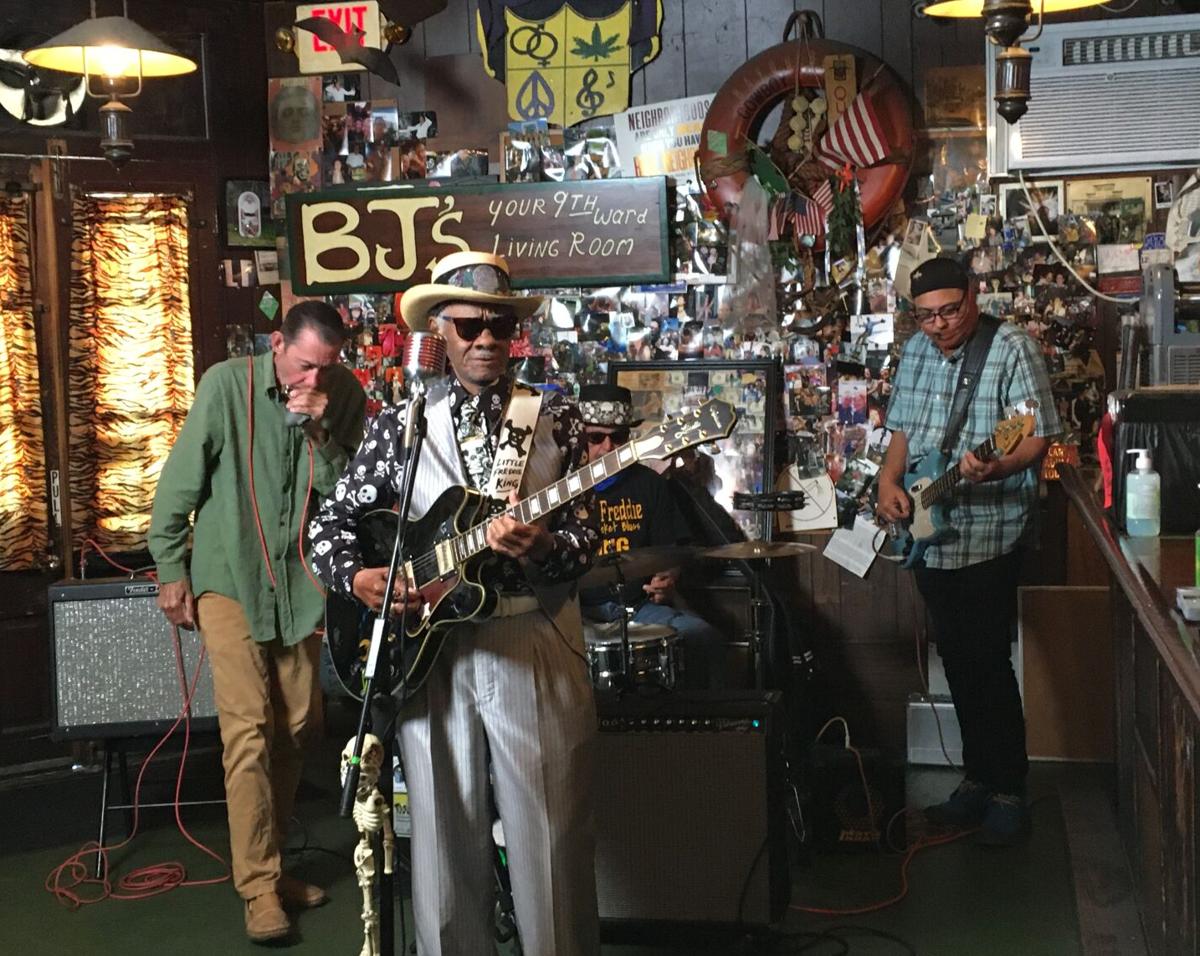
Blues legend Little Freddie King one of four legendary New Orleans musical acts featured in the documentary Music Pictures: New Orleans

Sometimes if you’re tired of documentaries that try to push a one-sided political message, a musical documentary can fix that. The documentary Music Pictures: New Orleans is an insightful documentary of a town with a century of a music legacy.

The film begins with Irma Thomas. She has been dubbed the Soul Queen Of New Orleans. They show her as she’s finishing up a recording session. She had a Top 40 hit in 1964 with “Wish Someone Would Care.” She’s had many songs and albums on the R & B charts. However she’s often been overlooked by the likes of Aretha Franklin or Tina Turner. She tells of her career. She’s had a career since she was 19. She has had cases where she has been a victim of racism in music. Nevertheless she’s fought on and continues to record. She also tells of living in New Orleans, of her experience, of her loves, of raising a family.

The second part comes after the passing of one of Thomas’ band members. Leading the funeral parade is led by the Treme Brass Band. The vignette then focuses on Treme Brass Band leader Benny Jones. The marching brass band is an important part of New Orleans. They’re the band that would perform during festivals, especially Mardi Gras, and funeral processions. Benny was born in a family of musicians and he always wanted to be a part of it. He even married a woman who had family in music. The film goes into how he founded his first brass band, the Dirty Dozen Brass Band, and then goes into his latest brass band, the Treme Brass Band.

The third vignette focuses on blues legend Little Freddie King. King was actually born in Mississippi and moved to New Orleans when he was 14. He recorded his first album in 1969. In 1976 he did a European Tour with Bo Diddley and John Lee Hooker. However his second album didn’t come until 1996. Since then, he has been more active and has release twelve albums since. King has performed at the New Orleans Jazz and Heritage Festival since 1980 and is a charter member.

The fourth and final vignette is with Ellis Marsalis Jr. He himself is a renowned jazz musician who comes from a family of musicians and is widely regarded as the patriarch in the “First Family Of Jazz.” However in his latest venture, he finds himself working with his youngest son Jason and Jason’s daughter Marley Marsalis in recording his latest album For All We Know. Jason plays xylophone and Marley plays percussion and piano. Returning to a family project was the furthest thing from his mind before this project. Over time, it grew to be something he liked doing and he became happy returning to family roots. In the end we have an album of three generations of Marsalises. Also in the end, it would be Ellis’ last work. Ellis died in April 2020: one of the earliest fatalities of the COVID pandemic. The film also shows images of New Orleans’ legendary night clubs closed because of the pandemic.

For those who like music, New Orleans is a city that has some of the biggest music history. I mean what first comes to mind when you hear New Orleans? Most likely it would be things like Mardi Gras, Dixieland, brass bands. Those that know music will know that it’s the sounds of New Orleans that would be most influential in some of the biggest music of the 20th Century and sounds that are very influential today. The town gave birth to jazz before it took over all of the US. The brass bands of New Orleans are influential in the sound of jazz. New Orleans didn’t give birth to blues, but New Orleans did a lot of shaping of blues. New Orleans has done a lot of shaping of soul music, too.

This documentary is a good reminder of how New Orleans has been quite the shaper of music. It originated sounds and shaped a lot of sounds. This documentary gives good examples of New Orleans musicians and vocalists who have had an impact on these sounds. The film shows a soul legend who is often overlooked, a leader of a legendary brass band, a blues legend, and a jazz father. Through out the documentary, we learn of what led them to their sounds. Some may be for income, some to marry, some because they loved it, each one had their unique story. All of them did talk of the ups and downs. They talk of successes and setbacks. However as we hear each story and listen to the music, we get a good sense of it.

The final vignette of Ellis Marsalis and his family is especially poignant because it’s a reminder that New Orleans should not just be admired for the music of its past. New Orleans is also very much in the present of music and in the future. That is especially made aware in the vignette as he works with son Jason and granddaughter Marley. That was unique that such a vignette was done. The film could have been about Ellis, his life and the careers of his two famous sons Brantford and Wynton, but instead it focused on Ellis with his youngest son and granddaughter. Almost like a legend passing down sounds to the younger generations. And just before his death.

This is a very good work from writer/director Ben Chace. Chace is not known for doing documentary films. His previous films Wah Do Dem and Sin Alas are live-action fiction films and has only previously written and directed a single documentary short. This is his first attempt at a feature-length documentary and it’s impressive. It doesn’t offer any tricks and twists one would see in modern documentaries. Nevertheless it allows the musicians to tell the story. It allows the viewers to hear the music. It allows viewers also to witness other behind-the-scenes looks at making music and working with musicians. It’s a film one who is into music would take a lot of interest in. Especially those that would want to pursue music as a profession. Chace picks out the most signature sounds of New Orleans music, matches them up with New Orleans’ biggest living examples of the sounds, and shows off how they embody the sound of their genre and the sound of New Orleans.

Music Pictures: New Orleans is a great documentary showcasing musicians, both individuals and groups, and how their sound has an impact not only on the sounds of New Orleans but on musical genres as a whole. It’s as much about its past legacy as it is about its present and future.

Oscars 2018 Best Picture Review: Bohemian Rhapsody

Rhapsody
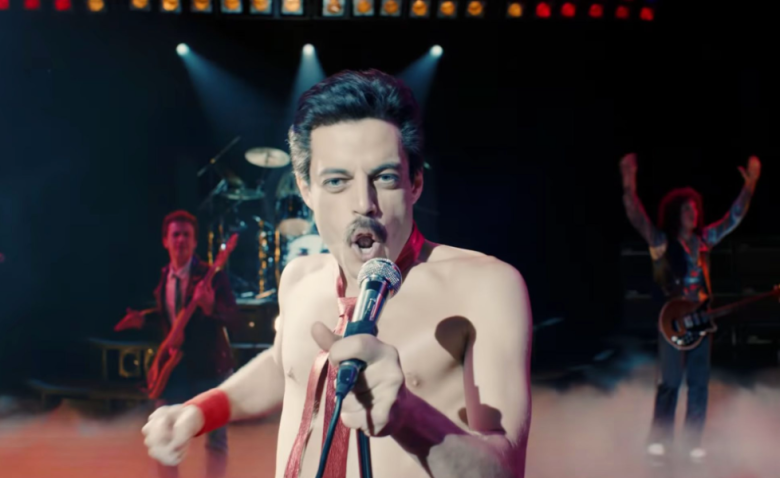
In Bohemian Rhapsody, Rami Malek captures the essence of Freddie Mercury to a tee.

The musical biopic Bohemian Rhapsody came out in movie theatres this year. We’ve seen music biographies before. The big question is does this film simply chronicle Freddy Mercury’s life? Or does it do much more?

The film begins just as Queen is about to step to the stage to perform in the 1985 Live Aid Concert. The film then flashes back to 1970 when Smile is an English band consisting of Brian May, Roger Taylor and singer Tim Staffell. Faroukh ‘Freddie’ Bulsara is a Farsi immigrant who studies and also works as a baggage handler at Heathrow airport. Freddie faces a lot of discrimination for the color of his skin and mockery because of his hyperdontia which makes him look like he has a mega-overbite. However Freddie does lose himself in rock and roll.

One night, Staffell quits Smile in disappointment. Freddie was there attending the show. When he sees what happened, he asks to join the band. The band gets a rocky start as they play at small college gigs, but it looks promising and Freddie fully believes in them all. The rock singer gig does not go well with his family who feels he should earn his living more ‘honestly.’ Freddie also wins the attraction of college student Mary Austin during a clothes shopping trip. They start dating and romancing.

Over time, Queen gets bigger and they soon have to record an EP. It will cost a lot of money and Freddie agrees to sell the van for money. The EP is a success and it attracts major music producers including one from EMI Records interested in the band. The band changes their name to Queen and Freddie even legally changes his name to Freddie Mercury. The band is acquired by John Reid, Elton John’s manager, and assistant manager Paul Prenter. They bring the band to a gig on BBC’s Top Of The Pops where the band lip syncs Killer Queen. As success grows, including success in the US, Mary and Freddie get engaged. However soon after Freddie learns of his bisexuality.

The band try to record their album A Night At The Opera and the song Bohemian Rhapsody, but the song is too long and hard to perform. On top of that, producer Ray Foster is antagonistic on the band for both the song and the music for the whole album. After Foster refuses it as a single, Freddie gets a local DJ to play Bohemian Rhapsody. The song opens to a lot of negative reviews, but also scores big on the charts worldwide. However Freddie starts an affair with Prenter and has to call off the engagement with Mary. Mary is devastated, but agrees to remain friends.

In the film, the band has continued success in the early 1980’s with We Will Rock You. However the band experience tension both by Freddie’s lavish partying lifestyle and the increasing controlling ways of Prenter. Freddie even cheats on Paul with a waiter, but the waiter tells Freddie to find him after he finds himself. The friction between Freddie and the band grows to the point Freddie leaves the band to record a solo album upon the direction of Prenter. However it becomes obvious how much Prenter wants a piece of the action and Freddie both breaks up with him and fires him.

Soon Freddie learns he has HIV right when the devastating AIDS epidemic was at its most troubling times. He returns to the band confessing it was wrong for them to leave. They’re offered an appearance at the 1985 Live Aid Concert which will be broadcast worldwide to raise money for food supplies during the famine in Africa. This will be the band’s comeback concert, but it will take a lot of effort to bring the band back to their level of performance.

Just before the concert, Freddie confronts his parents to make peace with them. Freddie is also supported backstage by a pregnant Mary along with her husband David. Bob Geldof is hoping for a lot of call-in donations through this concert. Then Queen get on stage and it’s like they never missed a step. The crowd is blown away, television crowds are dazzled, and the donations accelerate like nobody’s business. Queen was back and alive!

There have been musical biographies in films done many times before. In order to make a winning story about a musician, the film will definitely have to include the music. That’s what made the musician great. The film will also have to include key events of the person’s life: the artistic moments, the triumphant moments and the struggles, even any tragedies. It’s all a matter of deciding the right moments for the right beginning, middle and end of the film.

The film does a smart move in making the Live Aid Concert the pivotal moment for Freddie Mercury both as the scene where the movie starts before flashing back in time and ultimately ending. The film also does a good job in picking out moments such as when Freddie joins the band Smile, changes it to Queen, first hits it big with Killer Queen releases their iconic Bohemian Rhapsody, faces friction as well as declining fame in the early 80’s, Freddie’s HIV diagnosis, and their return to winning the public at Live Aid.

However the film also risks disappointing a lot of Queen fans because of how inaccurate the story is. Despite Jim ‘Miami’ Beach being the film’s co-producer and May and Taylor being music consultants, The five biggest inaccuracies Queen fans are most likely to notice are, firstly, Freddie was actually introduced to Brian May and Roger Taylor of Smile by singer Tim Staffell when Staffell wanted to pursue further studies. Secondly, We Will Rock You was written and recorded in the late-70’s rather than the early-80’s. Thirdly, John Deacon was actually Queen’s fourth bassist rather than the original bassist. Fourthly, Queen never split up nor did they get back together at Live Aid. Freddie may have had solo work — the most famous being Barcelona: the duet with Montserrat Caballet — but Roger Taylor also had a solo album too. Fifthly, Freddie learned he was HIV-positive in 1987: after Live Aid. Those that know the true Queen story will know that a lot of these moments in the film were mostly common music-movie cliches rather than the truth about Queen.

Despite failing a lot of Queen fans with some of the inaccuracies and cliches, the film does succeed in a lot of ways and even presents some truths even Queen fans knew. Freddie did credit his extra teeth for his singing, he adored his cats, he held outlandish parties, the song Bohemian Rhapsody was considered too long and too ridiculous at first, Freddie did keep his ordeal with HIV and AIDS private as he did not want to be an object of pity, and finally his friendship with Mary Austin lasted until his death and she did live next door to him even while married to David. The film does stick to the truth in a lot of areas, including that of how Paul Prenter was a controlling person in Freddie’s life. However another added quality is that the film does an excellent job of capturing the essence and feel of Queen’s music. Those that haven’t heard much of Queen’s music will experience songs they never heard before. Those that are fans of the band will fall in love with the songs again. Also those that want to be rock musicians themselves will be inspired to pursue their dreams after watching the film. You not only hear the music, but you can also get the feel of a rock performer too.

The film has already grossed $844.4 million worldwide at press-time with $210.6 million coming from North America. However the film has also faced a ton of heat during the awards season. The cause for all of this was for director Bryan Singer. As you know, Singer has faced criminal charges of being a sex offender. How it happened that Dexter Fletcher stepped into directing the remainder of the film upon the departure of Bryan Singer is that Singer was fired after having violent clashes with Rami Malek. Singer, and not Fletcher, was credited as the film’s director. The awards season has seen the film win many accolades which many have voiced their displeasure about. Possibly due to hostility during the #MeToo movement, many are speaking their mind as if they’re saying a win for Bohemian Rhapsody is a win for a sex offender.  I personally feel that Fletcher should have been credited as director. However despite the fact that Singer was fired, people are still unhappy. Makes you wonder what will satisfy them all? Denying the film a release and trashing it altogether? This is a reflection on how toxic and bullying the free speech of social media can be.

Anthony McCarten in cooperation with Peter Morgan may have written a story that was more cliched than truth, but it did capture a lot of the essence of Queen and a lot of the essence of Freddie Mercury. As for the ending, I can understand why they went for the heavy drama by ending with the Live Aid Concert. I’d rather they went with the moment Freddie records The Show Must Go On. Those who know the story behind that will recognize it as one of the biggest triumphs of Mercury’s career and a testament of his mental toughness.

The film also captured the essence of Brian, John and Roger well too. Co-director Dexter Fletcher did a very good job of picking up where Singer left off and creates an exciting experience for the audience. However the biggest triumph is the performance of Rami Malek. Until Bohemian Rhapsody, he was facing the common difficulty of actors of Middle Eastern descent with limited opportunities. It almost seemed like the biggest thing he would ever be known for is playing the Pharaoh in the Night At The Museum movies. This also was not an easy task because Malek was not originally a fan of Queen. However that all changed when he was given the role. Malek was excellent in his performance and will blow away anyone who sees this film.

The actors portraying Brian, Roger and John — Gwilym Lee, Ben hardy and Joseph Mazzello, respectively — also added to the film. Lucy Boynton was also excellent as the friend Mary Austin. Even minor performances like Tom Hollander as Jim Beach, Mike Myers as Ray Foster, and Allen Leech as Paul Prenter did very well with the roles they were given. Julian Day did a very good job with the costuming, Aaron Haye did an excellent job with the set design, and the producers did a very good job in choosing the right songs for the film.

Bohemian Rhapsody has some noticeable errors in the film. However the film succeeds in capturing the spirit of Freddie Mercury, capturing the music of Queen and capturing the experience of a rock star. No wonder it dazzles those that see it.

VIFF 2018 Review: Ben Is Back

Ben Is Back
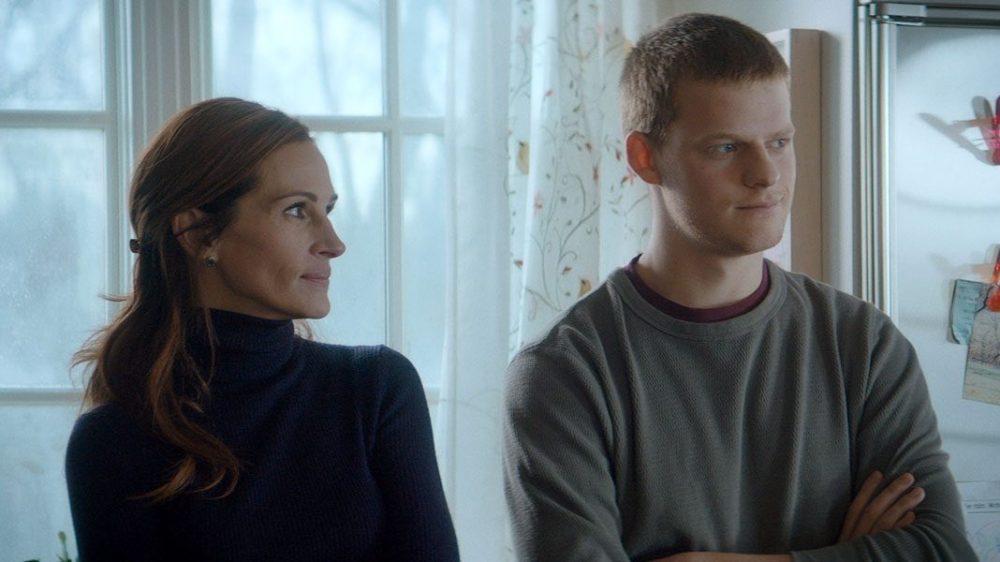
Ben Is Back is about a son (played by Lucas Hedges) returning home from rehab for Christmas, but under the watchful eyes of his mother (played by Julia Roberts).

Another movie from the VIFF anticipated for bigger release later on is Ben Is Back. The film consists of a lot of dark subject matter, but does feature a lot of elements that make it worth seeing.

It’s Christmas Eve in a New England home. The Burns family is rehearsing at church for the Christmas play. Unbeknownst is that their son Ben has returned from rehab to spend Christmas with them. He sees that the house has an alarm system since he was sent there. Smart parents. When the family arrives, they are shocked to see him there. Ben has fun with his two younger half-siblings at first, but mother Holly, stepfather Neale and sister Ivy are nervous. Holly decides 24 hours and Ben must be in her supervision. Ben agrees.

On Christmas Eve, she tries to take his mind off things by going to the mall. The first person they see is the doctor: the one who prescribe painkillers he claimed weren’t addictive, but were. Holly gives the doctor a piece of her mind. To take Ben away from the frustration, she takes him to a store. Ben notices Clayton, the town pusher, going down an elevator. As Ben appears changing in a store,  Holly notices Ben is taking too long and suspects the worst. Holly shouts to get Ben out.

After that, they go to a church hall that’s holding an AA meeting. In the hall are two or three teens Ben deals drugs to, including one that wants to meet up with Ben later and get ‘done.’ Ben agrees, but that infuriates Holly to the point she takes him to a cemetery and tells him to pick his grave.

The family with hope the Christmas play will take their mind off things, until they see the mother of one of Ben’s ‘customers.’ The daughter died and the mother is looking distraught. Ben is moved to tears during the show. Coming home, they find the house broken into and the dog is stolen. The father pins the blame on Ben. Ben feels he has to help the family out and get the dog back. Ben learns the dog is with Clayton who’s holding it hostage for money Ben owes him. Ben and Holly go out together to get it solved. However there are people who want Ben dead.

Ben soon leaves Holly on his own pursuit to get things done. Holly takes the other car and searches like mad to find Ben. Holly finds herself in the home of the mother of the deceased daughter. Holly tries to be friendly with her. The mother gives her something in case Ben overdoses. Ben meets with Clayton to get the dog back, but Clayton expects a favor involving drug trafficking. While Holly feels lost, Ivy calls and says she’s able to track Holly and Ban through her iPad. As Ben does the ‘favor’ for Clayton, Clayton ‘pays’ him with a special pill. Meanwhile Holly senses Ben in a solitary location, thinking he’s dead. The story ends with a hugely climactic moment.

I’m sure when a lot of you first heard the premise of the film, some of you probably thought “I know where this is going.” The film I’ll bet you were thinking about is Rachel Getting Married. It does seem like it’s starting in similar fashion as Rachel Getting Married where a child who’s in rehab returns home for a special occasion. One thing to say is that a child returning from rehab during a holiday or a festivity is a common occurrence in real life and something a lot of families experience on a day-to-day level. It’s a story that can be played out in real life hundreds of different ways. Some may be redeeming and some may even be tragic.

Ben Is Back is a different story from Rachel Getting Married. Kym goes through her struggles at home, but returns back to rehab as a stronger person. Those who saw Rachel know that’s the main theme is about healing and the struggle to achieve it. Ben Is Back is a different story. Ben Burns is home for 24 hours in a town that’s full of memories of his drugged past. On top of it, Ben is a former dealer who is responsible for leading other teens of his town to their own drug addiction, including one fatal. You hope that Ben stays as strong through the fight the way Kym was, but you see that Ben succumbs to a lot of the pressures along the way. The film ended with a different ending from the message of hope Rachel appeared to have. True, Ben’s ending was more dramatic and almost ended up making for a tragedy, but it made for its own story.

One of the key themes of the film is that of family relations. Without a doubt, the biggest relation of focus is a mother for her son. Holly has seen the hardest of the issue. She has to lay down rules for Ben during these 24 hours. She is also very suspicious Ben will back to his old ways during that time. One key scene is when Ben is talking about drugs to a teen he saw during an AA meeting. Infuriated, she takes Ben to a cemetery and tells him to pick his grave. Of course that was very impulsive and very wrong of Holly, but it represents the frustration of dealing with a child of drugs Holly is supposed to have a ‘tough love’ attitude about it, but doesn’t go about it best. The whole film is a case where Holly wants to keep Ben sober during that period of time, but the events become a case where it’s down to where she just wants him to be alive.

Other family relations play a part in the film. There’s the sister Ivy who’s very nervous about Ben coming home feeling he’ll be a wreck again. In the end, she becomes the one who is best in helping Holly find Ben. Then there’s the stepfather Neal Burns. He feels a load of contempt for Ben and his addiction. When the dog is stolen, Neal touts the whole blame on Ben. Even while Holly is searching, Neal doesn’t bother helping, even referring to Ben as ‘that drug addict’ instead of his own stepson. It’s only until the end that he’s willing to help.

One weak thing about the film is the ending. I know that it ends right at the very moment of the drama, but it does seem like it ends the film abruptly and way too soon. I know directors have two or three alternate endings for a film, but it makes you wonder if this was the right choice for ending?

This is a good film for writer/director Peter Hedges. It may not be his best film as he has had bigger accomplishments in the past, but this is a film Peter can be proud of. Peter’s son Lucas has become one of the biz’s rising stars right now. It started happening with Manchester By The Sea and he’s been on a role. This film is one of two films he plays a lead role in. I have not seen Boy Erased, so I can’t compare. He does a very good very intense performance here. His career can only get better. However the film belongs to Julia Roberts. Even though Lucas plays the titular character, Julia stole the show as the mother. Her emotions and feelings shown in the film are like so many mothers in that situation. She played the part excellently and stole the show. There were other minor performances that were very good like Courtney B. Vance as the stepfather with an axe to grind, Kathryn Newton as the nervous sister and Michael Esper as the heartless drug supplier.

Despite the abrupt ending, Ben Is Back is an excellent movie about the struggles of drug addiction. You might first think it’s a rehash of Rachel Getting Married, but it tells its own story.

Oscars 2017 Best Picture Review: The Post

Post
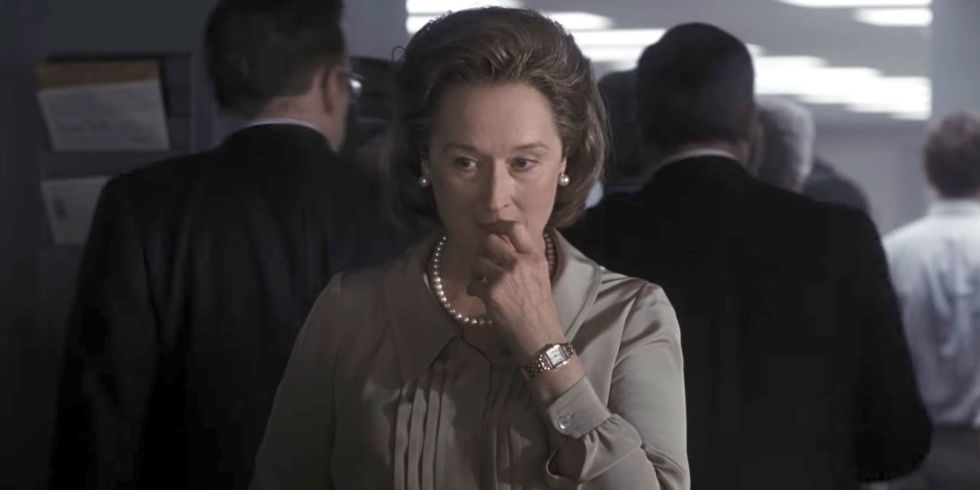
Merly Streep plays newspaper head Katharine Graham in The Post.

The subject matter of The Post doesn’t sound like the type of subject matter that would win a big crowd, but it is a film worth seeing.

The story goes back in 1966 during the Vietnam War. Military analyst Daniel Ellsberg is in Vietnam with General Robert McNamara to document the progress of the war. McNamara admits to Ellsberg and President Johnson that the war is hopeless but has confidence in the effort, leaving Ellsberg disillusioned.

Years later, Ellsberg is now working for a military contractor and comes across classified documents showing the US’s decades-long involvement in the conflict in Vietnam going back to just a few years after World War II ended. Ellsberg discloses the documents to the New York Times.

It’s 1971. Katharine Graham is head of the Washington Post. It’s been a position she mastered with a lot of difficulty as it’s commonly seen as a ‘man’s position.’ Even though her family founded the Post, the position of the head went to her husband Philip instead of her. It was right after Philip’s suicide that Katharine became head. It’s not easy for a female to be head of a newspaper. Especially someone like Graham who has a good work ethic, but lacks experience and is constantly overruled by the aggressiveness of the men of the Post. On top of that, she seeks to gain an IPO for a stock market launch to propel the Post to greater strength. The Washington Post however is second-fiddle to the New York Times which always has the biggest news scoops, even the scoops of what’s happening in Washington.

Editor-in-chief Ben Bradlee is one of the men who work for her. He tries in vain to be one step ahead of the New York Times in coming up with the latest scoops, but falls short each time. Meanwhile McNamara, who is a friend of Graham’s, confesses to her of how he’s the subject of bad news in the New York Times. It’s through their constant expose of the government’s deception of the American public. However a court injunction blockades any further publication of such news by the Times.

Ellsberg is willing to provide the documents and opportunity to the Post to publish the stories. As they look through the stories to publish, lawyers to the Post advise against publishing the story, fearing the Nixon administration will press criminal charges. Graham seeks advice from McNamara, Bradlee and Post chairman Fritz Beebe of whether to publish. It’s made even more frustrating when the lawyer note that since  the sources are the same as the New York Times, Graham herself could be charged with contempt of court. It’s a gamble. Graham risks terminating the newspaper her family established. Alternatively, the Post won such a legal battle, it would establish itself as a major journalism source, much on the same level as the New York Times.

She agrees to have the story published. The White House retaliated by taking both the Times and the Post to the Supreme Court to argue their case of publishing classified document information being a First Amendment Right. Both newspapers receive almost unanimous support from the other newspapers in the US and they win their Supreme Court battle 6-3. An infuriated Nixon bans the Post from the White House. And the rest is infamy… for Nixon.

The film is more than just about a top secret story that needed to be exposed and makes journalism history. The story is also about the newspaper behind the story. We shouldn’t forget that this came at a time when The New York Times was the newspaper that delivered the biggest news about what was happening in the Oval Office and the ones to do it first. Even though the Washington Post was the newspaper of Washington, DC, it was more of a second-fiddle newspaper like the newspapers of the rest of the cities. The New York Times lead and all other newspapers, including the Washington Post followed. This story allowed the Washington Post take pole position towards what was happening in Washington. This would also allow for the Washington Post to be the prime newspaper to go to upon the breaking of the Watergate Scandal. Even despite the Post competing against the Times, they united when they faced the heat of the freedom-of-speech debate and won together.

The film is not simply about a history-making story, a legal breakthrough or even a milestone for a newspaper. It’s also the personal story of Katharine Graham and how she had to achieve greatness for herself. Katharine Graham was born into the paper and assumed control of it right after her husband died. It was always tradition that a man headed the newspaper. After the suicide of her husband, she headed it. The paper her ancestors founded and the paper she wants to propel into marketability. This news story could help be the boost she needed, but the court injunction against the New York Times causes her to put it on hold. Basically she’s gambling everything with this touchy story: the Times, her status as a leader, her role as a woman with power, her role as a mother, even her own personal freedom. In the end, that one decision caused left all of us convinced she did the right thing. She did more than just allow a story. She did more than boost the profile of the Washington Post. She created a breakthrough in freedom of speech and freedom of press. On top of that, she earned the respect from her male colleagues. That was rare back in the early 70’s.

This story is very relevant to the present. We always hear those words ‘fake news.’ We have a feeling that Donald Trump is like a big brother monster who wants to control everything. There are often times in which I wonder if the times of Nixon were worse than the times of Trump. I know all about Nixon and his lust for control. Whatever the times, the story and the court ruling against government censorship of the press serves as a reminder to all citizens that the press has the right to publish the truth to the public. The ruling of the New York Times vs. The United States of America back then was clear: “‘In the First Amendment the Founding Fathers gave the free press the protection it must have to fulfill its essential role in our democracy. The press was to serve the governed, not the governors.” That ruling still applies today.

Leave it to Steven Spielberg to direct a story that will capture our intrigue. Some would describe this type of story as a ‘boring story.’ Steven Spielberg knows how to direct it into something interesting and have us glued to the screens. The screenplay by Josh Singer and Liz Hannah also creates the right interest and intrigue. They’re able to take the chain of events surrounding the publishing of the story and turn it into a story of intrigue. Even a story from a humanist side.

Once again, Meryl Streep delivers in creating depth in a public figure. She gave Katharine Graham the right dimension and the right humanistic tone to make the story work. Tom Hanks also does an excellent job in his role as Ben Bradlee. He delivers in the character very well as he adds some dimension to Bradlee too. The supporting actors may have minor or limited roles, but they add to the film too. Janusz Kaminski does an excellent job of cinematography and John Williams again delivers a fitting score.

The Post is a journalism story that will keep one intrigued. It’s a story that’s very relevant today as it’s also about our own right to know the truth.

Oscars 2017 Best Picture Review: Darkest Hour

Darkest Hour
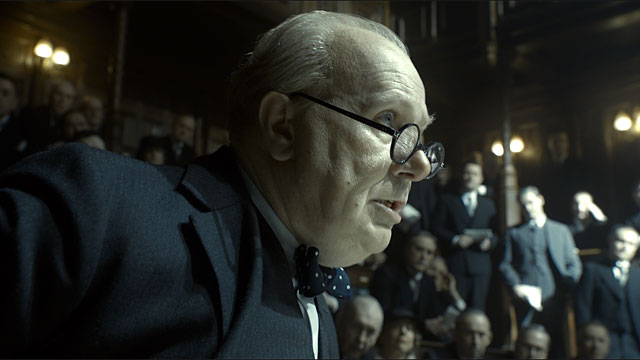
Darkest Hour is the story of Winston Churchill (played by Gary Oldman) and his struggle to convince the people of the UK that fighting Hitler is the right thing to do.

Usually around the latter part of the year, historical dramas are common for release. Darkest Hour is one, focusing on Winston Churchill and World War II. The question is does it fare well as a film? And does it have relevance to the present?

The film is set in May 1940. World War II had just begun eight months ago with the fall of Poland. France is next. The film hits hard in the UK as they fear war is looming. It hits so hard, Prime Minister Neville Chamberlain is pressured by the opposing Labour Party to resign for not doing enough. Neville needs to find a successor, but his first choice, Lord Halifax, declines. He goes for his second choice: Winston Churchill.

Now Winston Churchill was seen as a bad choice as the successor to Chamberlain. He has a bad record with his roles in the Admiralty, the Gallipolli Campaign During The First World War, his views on India, and his support for Edward VIII during the Abdication Crisis. Even his own personal manner is of question as he is oafish and has a reputation for infidelity and a quick temper. He’s even temperamental to his new secretary when she mishears him, but his wife Clementine gets him to come to his senses.

King George VI encourages Churchill to form a coalition government along with Halifax and Chamberlain. Churchill’s first response to Hitler’s invasion of France is fast and immediate: no surrender to Hitler and fight if we have to. He made it clear on May 13 1940 in his ‘blood, toil, tears, and sweat’ speech.

The speech is not well-received by the Parliament. They think he’s delusional. The Nazi army is too powerful. It even gets flack from King George VI. The French Prime Minister thinks he’s delusional for not admitting the Allies lost in the Battle Of France. People in his party offer Churchill to accept Hitler’s offer to negotiate for a peaceful end to the War, but Churchill declines. He does not trust Hitler.

The situation gets frustrating to the point both Halifax and Chamberlain are looking to use the Italian Ambassador as a route to negotiate peace with Hitler. Both plan to resign from the Government if Churchill doesn’t comply, hoping to cause a ‘vote of non-confidence’ to allow Halifax to become Prime Minister. Meanwhile Churchill is trying to seek support from the US with President Franklin Roosevelt, but he declines as the US signed an international agreement preventing military action in Europe years ago.

However war is pressing. The UK find themselves in battles in Dunkirk and Calais. Churchill, against the wishes of the War Brigade, orders a 30th Infantry Brigade in Calais to organize a suicide attack to distract the Nazis allowing the soldiers in Dunkirk to evacuate.

The defeat at Calais causes the War Cabinet to want to negotiate with Germany. However as Churchill is about to make his way to Parliament, he receives support from his wife, support from King George VI fearing exile if Germany wins, and support from a group of citizens in the London Underground he takes to parliament. Even members of the Outer Cabinet and other members of Parliament give him their support. News comes that the evacuation in Dunkirk ‘Operation Dynamo’ is successful. At parliament in front of cabinet members and members of the War Cabinet, Churchill delivers his speech of ‘we shall fight on the beaches’ to the support and applause of all, even Halifax and Chamberlain.

Lately there have been a lot of biographical films that don’t thoroughly focus on the person’s life, but instead focuses on the one moment that defined them as a person. We saw in Lincoln how getting the Emancipation Proclamation made constitutional and the political fight to get it done is what defined Abraham Lincoln the most. We saw in Capote that it was the making of In Cold Blood that would become Truman Capote’s biggest legacy of a writer, and would eventually lead to his downfall. Here we see the period of one month how Churchill couldn’t just simply say that Hitler needed to be fought, but had to convince the people and especially the parliament that fighting him is the right thing.

Such a situation in our world history is not uncommon. If you remember Lincoln, you will remember that Abraham Lincoln had to do political campaigning in order to get the Emancipation Proclamation made constitutional. The Proclamation itself was up for vote in the House. Just a reminder that even the most righteous political laws still have to go through the same political processes. Even for powerful speeches, it’s about saying it at the right time and the results to follow. We may remember how back in 1987, Ronald Reagan stood at the Berlin Wall and said, “Mr. Gorbachev, tear down this wall!” This is something JFK could have told Nikita Khruschev to do, or Nixon telling Brezhnev to do, or even Reagan himself telling Brezhnev or Andropov to do, but it would not result. The Soviet leaders were just that stubborn and dead-set on their rigid ways and dismiss what the POTUSes said at hot air. But Reagan said that just during a time when it appeared the Cold War appeared to be thawing and Gorbachev was the first Soviet leader to appear cooperative with the US, but not without its friction. That sentence is memorable because the Wall did come down in a matter of two years.

Here in Darkest Hour, we see another example of how words that are true in conviction and the right thing to say still faced political opposition. When Churchill was placed as Prime Minister, he didn’t waste time in speaking his opposition to Hitler and that the UK should not surrender. However those in the office all thought his words were deluded. They knew of the Nazi army and the invasions it’s caused already in less than a year. Hitler and the Nazi army were just that menacing. They also saw the efforts, or lack thereof, from the previous Prime Minister fail. On top of that, France had just fallen to the Nazis. They were simply afraid.

It was easy for people to think of Churchill’s words as deluded. He already had a reputation in the British parliament of being quite the buffoon. In fact the opening scene of the film shows his buffoonish nature. Churchill knew in his heart that the UK had to fight the Nazis, but he had to convince the British parliament. And he had to do it fast. Over time, more tyranny from the Nazis occurred and the UK was feeling the heat. Churchill was denied support from US president Franklin Roosevelt because of an agreement signed the year before. That negotiation for peace from the Germans would seem like something one would cave into and it was easy to see why the British politicians thought it right, even though we all know it to be wrong.

The last fifteen minutes of the film just as Churchill is about to deliver the ‘fight on the beaches’ is a very powerful scene as it shows how Churchill is able to win support in his stance from his wife, the King of England and even people on the subway as he makes his way to parliament. I don’t know if that really happened to Churchill in real life, but that subway scene is a powerful scene. Sometimes I think that scene is telling me that all too often, the common person has a better sense of what’s right than the people in power.

For the most part, the film is as much of a biographical drama as it is an historic drama. The film is very much about the speeches of Churchill and the start of the mission of British forces to fight Nazi Germany. The film not only focuses on Churchill’s quest to fight in the war, but his quest to convince the people in political power to believe him. It focuses on Churchill as a man of great conviction, but also a man of noticeable flaws. That had a lot to do with why people first thought he was a madman or deluded. It reminds you that a head of state can sometimes be reduced to a pawn in their political building. The film does remind people of the common saying that: ‘What’s right isn’t always what’s popular and what’s popular isn’t always what’s right.” Churchill knew in his heart he was right, but he had to fight to make it believed by all. It was necessary as the Battle of Dunkirk would soon happen

It’s interesting how Darkest Hour is release in the same year Dunkirk is. I find it very appropriate because it was actually just right after the Battle Of Dunkirk and the subsequent evacuation that Churchill delivered his speech of “We shall fight on the beaches.” The fight on the beaches of Dunkirk and the evacuation and rescue mission was the first significant sign of what the UK needed to do to win against the Nazis. Churchill was there to pay all respect to those heroes, the survivors and fatalities, who were a part of it.

Director Joe Wright and writer Anthony McCarten deliver a very good historical story. However there are times when it does feel like it’s completely restricted to being about Winston Churchill. I understand what the story is all about, but they could have explored some additional angles to go with it. Without a doubt, the film is owned by Gary Oldman. He does an excellent job of delivering a performance of Winston Churchill. His depiction of Churchill first appears cartoonish at the beginning, but the depth and dimension develops over the film and he really comes out shining.

Although the film is dominated by the portrayal of Winston Churchill, there are supporting performances from Kristin Scott Thomas as Clementine Churchill and Lily James as Elizabeth Layton that are able to steal the moment. Also capturing the moment are Ben Mendelsohn as King George who slowly supports Churchill and Ronald Pickup as Neville Chamberlain who supports Churchill despite his own political downfall. The film also does an excellent job in the technical aspects such as the Production Design to reconstruct parliament, costuming from Jacqueline Durran and the makeup and hairstylists to fit the era, the cinematography from Bruno Delbonnel and the musical score from Dario Marianelli which capture the intensity and triumphs of the moments.

Darkest Hour is more than just an historical drama or biographical drama. It’s an excellent film about standing by your convictions without crossing the line of being preachy.

DVD Review: Sing Street

sing-street-banner-3
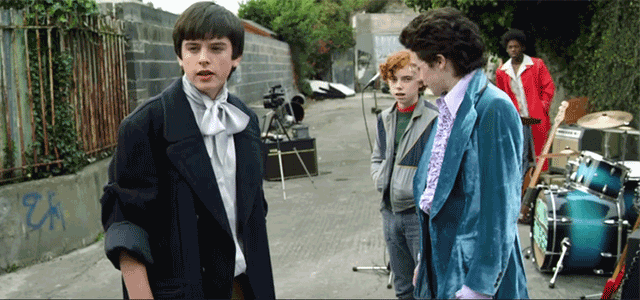
Sing Street is about a band in Dublin led by Conor (Ferdia Walsh-Peelo, left) , a boy with musical dreams.

2016 was seen as a weak year for comedies, unless they were animated. Possibly the most overlooked gem of 2016 was the Irish musical comedy Sing Street. I passed it up when it first came out, but I finally saw it recently. I’m glad I did.

We see Conor Lawlor strumming his guitar in his bedroom. Conor is a 15 year-old boy living in a shabby suburb of Dublin in 1985. Right now, Ireland is going through difficult times. It’s economy has been hit hard and many young people are fleeing to the UK, most notably London, for a future. His family is also going through difficulties as his father is struggling in his architecture practice and is struggling in his marriage and drinks excessively. Because of that, Conor is taken out of his high-class Catholic school and put into an all-boys free state school in Synge Street. A move older brother Brendan objects to, knowing how terrible the priests are there.

Things don’t go well for Conor on the first day. Being the new kid, he gets bullied. On top of it, he has the principal Br. Baxter giving him a hard time because he’s wearing brown shoes instead of black shoes in the dress code. Conor does end up with a bully name Barry but he makes a new friend in Darren who has big-time entrepreneur dreams. Conor also meets a 16 year-old girl named Raphina living at the orphanage nearby the school. He learns that Raphina is a budding model who’s headed to London. Conor impresses Raphina saying he’s in a band.

Now it’s up for Conor to create the band with the help of Darren. Darren is quick to act as Conor is introduced to Eamon: an awkward looking teen with a passion for music and can play many an instrument. Conor is able to meet a local black teen who is mostly shunned away from the others and two other awkward but musically-inclined students from his school. They start out pretty flat together and create a demo tape of popular 80’s songs. Conor gives it to Brandon but he’s unimpressed. He instructs Brandon not to be a cover band but do their own original stuff. That helps Conor to meet with Eamon to compose a song about his infatuation with Raphina: The Riddle Of The Model. The boys try on various costumes for filming a video and Raphina even volunteers to be their makeup artist and ingenue.

The song and video impress Brendan, feeling they’re off to a good start. However Conor’s rocker image of dyed hair and makeup gets on the nerves of Br. Baxter who insists in turning all boys into men at the school. Baxter even grabs Conor and washes the makeup off his face in a bathroom sink with hot water. But Conor and the band are undaunted. They continue making music and Raphina even advises that Conor be known as Cosmo. Conor develops the self-confidence to stand up to school bully Barry. The romance between Raphina and Conor heat up too, despite Raphina claiming an older man is her boyfriend. Conor even talks of sailing to London with Raphina.

However things soon take a turn for the worse. Conor’s parents are on the verge of separating with the mother moving in to her new lover’s place. Plus Raphina doesn’t show up when Sing Street are shooting a Back To The Future style video for their song Drive It Like You Stole It. Raphina later revealed she was set to leave for London, but her boyfriend abandoned her. A disheartened Conor breaks up with her. The breakup affects Conor in writing new songs for the band.

However it’s Brendan who encourages him to get back with Raphina and get back into playing. It’s through Brendan’s own personal feelings of past failures that drive him to give Conor the advise. Sing Street have a chance to perform a gig at school. Conor even offers Barry a chance to become a roadie for the band to escape his abusive household. The band performs their gig to the delight of the school and a condescending Br. Baxter looking on in disappointment, but they saved the best for last. The film ends not as one would expect but one that would leave the audience happy and hopeful.

I won’t deny this is a common story you’d expect to see in a film. I’m sure the story of a person growing up in a trash-bin of a city starting a band has been done before. The thing with this story is that for a common story like this to work again, the characters have to connect with the audience. They have to make the audience want them to succeed. The film succeeds in making the audience want Conor, or should I say ‘Cosmo,’ and Sing Street to succeed. The film succeeds in making the audience want Conor win Raphina’s love. The film succeeds in making the audience want the bullying of Barry to Conor to end and for Conor to get even with Br. Baxter. The connection of Conor with the audience is one of the biggest elements of magic in this story.

It’s not just the connection of Conor with the audience. It’s the connection with Raphina too. You get a sense Raphina is the right one for Conor, despite being confused about her love to her older boyfriend. However you get a sense that Conor will win her love. Raphina believes in the band and believes in Conor. You can see it in her eyes. Also Raphina shares Conor’s dreams of leaving for London. Seeing how unpromising Ireland looked with its economic drabness back then and the people seeing the priests as ‘rapists’ leaves you sensing life would be better for the both over in London.

It’s also the connection with Brendan with the audience too. Brendan is the first character in the film outside of Conor that’s easy to like because Brendan believes in Conor’s talents. Brendan’s also the type of brother that would be honest about how Conor is doing. Even after he disses what Sing Street does at first, he will give Conor words of encouragement. He will give Conor music albums to give him a sense about what makes rock and roll. It’s Brendan’s embrace of music in both its past influences and future directions that become a huge boost for Conor. However it’s also Brendan’s past failures that we get a better understanding. We see why Brendan pushes Conor in that scene after the parents’ separation and he throws a violent fit over his past failures. Because Brendan views himself as a failure who doesn’t have a chance, so he wants Conor to chase his dreams and be the one that has what it takes to go to London. It’s easy to feel for Brendan. It’s also easy for a viewer to see their own feelings of failure and regret in Brendan too.

With this being a film about a rock and roll band, the music has to be as important as the story itself. Brendan’s embrace for music is a big quality of the film, but it has to rub off on Conor as he’s the one with the gift of music. The film gets focused on the themes of music like themes of love, themes of heartache, themes of frustration, themes of emptiness and themes of hope. We learn about the ‘happy-sad’ feeling that we all get, but may  not know it. The ‘happy-sad’ element is definitely influential in music. Now once all the themes and elements of music are put together, the film has to have catchy songs. The film succeeds in doing so with songs like Riddle Of The Model, Drive It Like You Stole It and Brown Shoes. Brown Shoes made the perfect end-number for the school show. Even music from other musicians like Duran Duran, The Cure, The Jam, and many others add to the theme of music in the film. The film is as much about music as it is about love and dreams.

Writer/director John Carney succeeds in delivering an enjoyable film to the big screen. Music has been a common theme in past films of his like Once and Begin Again. He succeeds here again in delivering a film that’s enjoyable and keeping you engaged in the story. The film featured a very good debut performance for Ferdia Walsh-Peelo who was 16 years old when this film debuted at Sundance 2016. Ferdia is actually a singer who has performed professionally as a child in Ireland for years. This is his first acting role and he does an excellent job. Lucy Boynton also did a very good job in playing Raphina. The best thing is she made Raphina appear older than she really was. Jack Reynor was also very good as Brendan. He made Brendan into a likeable character, but also made you feel for him too.

Sing Street is a musical comedy that delivers excellently. It delivers a story and characters that connect with the audience very well. It also delivers entertaining music, which is what a film about a rock and roll band should do.

Oscars 2016 Best Picture Summary: Part 3

Most of you have already seen my first summary or even my second summary. This last summary will have a look at the last three Best Picture nominees I saw. They were Lion, Hidden Figures and Hell Or High Water.

film-lion
Dev Patel plays Saroo Brierley, an Australian searching for his family back home in India in Lion.

LION

Lion is one of those films which came out of nowhere to surprise everyone who has been lucky to see it.

We have seen many against-all-odds stories in the past. This is something because this is a true story of something that really was against all odds. It wasn’t just about making it happen but also of the family relations Saroo has developed over his lifetime. What will happen? Will he leave the family he’s always known? Is the family he’s searching for still alive? The best quality of this story is that it keeps us intrigued and hoping Saroo reunites, but also has us concerned of what will happen after.

Another quality of this story is that it does not forget the cause of the problem. Saroo is seen as the lucky one who was able to reunite with his family after all these years. However throughout the film, especially at the beginning, we see the cause of the problem. Saroo was unsupervised when he boarded the express train. The language barriers caused problems. Even Saroo’s mispronunciation of Bengali words caused problems. The train stations of Calcutta are loaded with stray children ready for abductors to prey on, and station police looking the other way. Even the missing posters advertised before his adoption were no good as his mother is illiterate. India failed Saroo and Saroo succeeded thanks to Google Earth and his fierce will. The film at the end lets people aware of the problem; 80,000 children go missing in India each year. The film’s website informs people of how they are making a difference in aiding to protect children in India.

This film is an accomplishment for the Australian film industry. I don’t know if Australia has ever had a film nominated for Best Picture before. This is director Garth Davis’ first ever feature length film. Bet you wouldn’t believe that. Luke Davies did an excellent job in adapting Saroo’s biography into a winning screenplay that keep the audience intrigued and hoping for the best in the end. Dev Patel’s performance as Saroo was the highlight as he did a great portrayal of a young man who’s angry on the inside and knows what he needs to do. Nicole Kidman was also excellent as the mother who appears grateful on the outside but has some inner hurt waiting to come out. Young Sunny Pawar was also very good playing the young Saroo. He was cute but he didn’t take it overboard. He played his part well. The film also featured top notch cinematography from Greig Fraser and excellent original music from Dustin O’Halloran and Hauschka.

Lion is an excellent film featuring a story you won’t forget. A surprise contender this year and a worthy one.

hidden-figures
Hidden Figures is the story of three African American women working for NASA who broke new ground and brought down racial barriers.

HIDDEN FIGURES

It’s good that we have a film like Hidden Figures to tell us about a piece of history that we never knew about.

The film comes at the right time as it deals with a lot of situations that are relevant in our world. This may be set in the early 60’s and revolves around a moment in space history but it has a lot of situations relevant to today. One is of workplace racism. It’s not as bad now as it is then but there are still a lot of unsolved problems. The second is of technology being so good, it can replace workers. These three women had iron wills. They knew they had potential, they knew they had what it takes and they wouldn’t let racism or the threat of modern technology stop them from reaching for their achievements.

The year of 2016 was a crushing year. It was a year that constantly reminded us that there was still a lot of racism to overcome. Despite the improvement over the decades, it was able to show its ugly head with low employment rates and police beatings. This is a film that reminds us that racism can be overcome. When you look at it, the women were doing this all during a turning point in the history of African Americans. African Americans in Virginia had less rights than they do now and discrimination was perfectly legal. Back then there were still separate washrooms for colored people, separate library books for white and colored people, and police beatings during civil rights marches. The women overcame these barriers and they opened doors for other colored people for generations to come.

This is only the second film Theodore Melfi has directed and written. This is the first feature-length script Alison Schroeder has written. Does come across as like something you’d get from Hollywood, but it’s not a weakness. It does all the right moves. Taraji Henson was great as the protagonist Katherine Goble-Johnson, but the show-stealer was Octavia Spencer. She was not only good at playing a woman who wouldn’t let technology kill her job, and the jobs of 30 other black women, but she was a colorful scene-stealer too. Janelle Monae completes the trio as one who just wouldn’t say die to her ambitions. The male actors were mostly supporting roles but Mahershala Ali was the biggest one as Jim Johnson, Katherine’s new husband. The mix of Motown music mixed in with the original score from Hans Zimmer, Pharrell Williams and Benjamin Wallfisch also added to the spirits of the movie.

Hidden Figures showcases a little-known fact about a big moment in American space history. It’s also the right uplifting movie needed at this time.

hell-or-high-water
Hell Or High Water is about two Texas brothers on a robbing spree and a policeman (played by Jeff Bridges, right) trying to chase them down.

HELL OR HIGH WATER

I missed Hell Or High Water when it first came out in the theatres in August. I admit I was caught up in the summer fare and I overlooked it. I finally saw it recently and I’m glad I did.

One thing is I miss seeing is crime comedies. You know, the dark comedies featured in crime stories. This film has a good amount of comedy to it with their failures at robbing first. Even the situation where the brothers rob the Texas Midlands Bank and pay the mortgages they have with the bank off with the robbery money is full of surprising irony. It’s not even the robbery spree that has all the comedy. There’s the comedy when the rangers visit the places they question. There’s even comedy with that hard waitress at a restaurant they eat at: “What don’t you want?” The comedy doesn’t last as the story gets darker later on. However it does end on an ironic note as the now-retired Officer Hamilton does meet up with Toby Howard, perfectly free, and inquires of the robberies he and brother Tanner committed together.

One thing about this crime drama is that it has a lot to say. We have two brothers–Tanner who appears to have no redeeming values and Toby who’s as cool as a cookie– robbing various branches of the same bank. You see signs advertising debt relief. You hear from people– both family and people the brothers run into– talking of their own economic hardships. You see the indigenous people, who are still referred to as ‘Indians’ with their own outlook on things. Mostly negative. Looks like this story has a lot to say. Even hearing Alberto Parker say that he believes the true criminal is the Texas Midlands Bank does get you thinking. Maybe it’s the Bank that are the true robbers around here.

This is actually the first American production from Scottish director David MacKenzie. He has a reputation back in the UK with films like Young Adam, Hallam Foe and Starred Up. His first American production is top notch and really delivers as both a crime story and an offbeat Western. This is also an accomplishment for writer Taylor Sheridan. Already having made a name for himself in Sicario, he delivers again in what is actually his second feature-length script. Of all acting performances, Jeff Bridges is the one that was the best. He delivered a top job in character acting from head to toe. He was completely solid in character. Chris Pine was also good as the brother Toby who’s smart, tries to play it cool and possibly the one person in the world who could see redeeming qualities in brother Tanner. Ben Foster was also a scene-stealer as Tanner who a complete ruthless loose cannon who appears to have a bone to pick with everyone over anything and possesses a false sense of invincibility. Gil Birmingham was also good coming across as the wise partner who plays it cool. The country music in both recorded format and original from Nick Cave and Warren Ellis fit the film perfectly.

Hell Or High Water makes for an intense thrill ride that’s big on thrills but also takes you to the heat of the moments. The story even gets you thinking. Now why did I miss it during the summer?

That does it. My final summary of the Best Picture nominees for 2016. After seeing Hell Or High Water, that makes it 16 straight years of seeing all the Best Picture nominees before Oscar night. My predictions for the wins coming on Saturday.